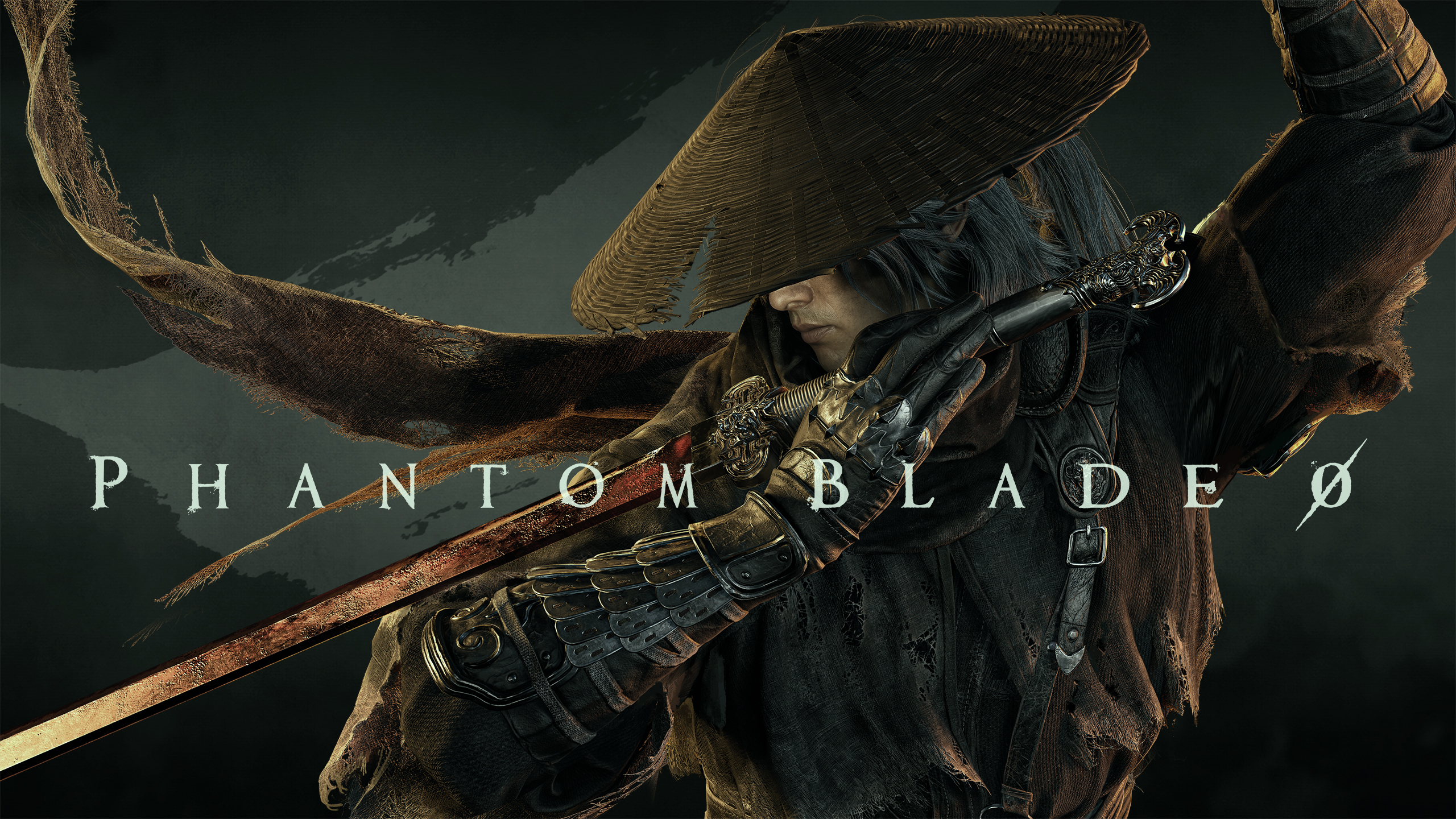
Phantom Blade Zero hands-on: The yin and yang of kung fu spectacle and Soulslike challenge
Phantom Blade Zero is more than boss fights. Yet it's in its fast, balletic, and frenetic duels that it best captures the breathless suspense of a clash between perfectly matched opponents in classic martial arts movies, like Bruce Lee's ten-minute fight with Chuck Norris in The Way of the Dragon, or Michelle Yeoh and Zhang Ziyi's showdown in Crouching Tiger, Hidden Dragon.
If you've played a modern third-person action role-playing game, especially one heavily influenced by Dark Souls, much of this will feel familiar. Actions like heavy attacks and guarding require an energy resource called Sha-Chi, while it's just as important to react to an adversary's color-coded attacks so that you can dodge or parry accordingly.
And yet the execution feels very different.
For instance, Phantom assassin Soul doesn't just hold out his blade in front of him to anticipate an attack when guarding; he strikes the incoming blade, reflecting the yin-yang philosophy of Chinese kung fu, where offense and defense are one and the same.
Martial arts, particularly in wuxia films, often feel like a dueling dance, which might also lead you to think of the heavily choreographed and scripted sequences of a cinematic action game like God of War or Uncharted. These moments exist in Phantom Blade Zero, yet they also can't be described simply as quick-time events, as you still often find yourself fully in control of Soul's actions moment to moment.
As Soul journeys into shadowy martial world of the Wulin, following a duel that leaves him gravely wounded and with just 66 days to live, there's another tension I can feel over Phantom Blade Zero's direction: is this a cinematic third-person action-adventure that makes you feel effortlessly heroic, or a punishing Soulslike that makes you work for every inch of progress? From my hands-on time of its first chapter, it balances between both.
Enter the Wulin
S-Game founder and game director Soulframe Liang spent about a decade making smaller games, including three mobile titles, before pivoting to AAA. He's conscious of the pull between a modern, accessible experience and the hardcore games he grew up with.
Chapter 1 sends Soul upstream through a valley overrun by enemies driven to madness by a plague known as Transcendence. Soul is a highly skilled assassin from the outset, so he can quickly dispatch many of them with his primary weapon, Sanguine, an aptly named one-handed sword with a blood-red steel blade.
But exploration and discovery are also key to this action role-playing game. I find cliff faces bearing scars of sword swipes that mean they can be climbed. I also encounter obstacles that hint at tools I have yet to find, like anchor points that evidently need a grappling hook to cross otherwise impassable chasms, or a sack hanging from a tall tree that calls for a bow. Other details, like a message in Chinese characters etched onto a wall, hint at mysteries still waiting to be revealed.
For Liang, this is all about deepening the world of the Wulin for players, while maintaining the original direction of making a playable kung fu movie.
"The most important thing is we have raised the density of the experience, but it's not necessarily about making it bigger," Liang explained. "We have a very nice map but rather than packing it with thousands of side quests, we make several, very deep and dramatic side quests, about wuxia, or revenge. We raised the density of the experience rather than the quantity."
The Wulin's sense of mystery also comes from how the level is designed and presented. The map is stylized as a Chinese ink-wash painting, and more of the artwork fills in as you explore and rest at bells.
"It gives you a rough sense of direction, but it's not so precise, so it still leaves you certain room to explore," said Liang, who previously studied architecture at Tsinghua and Yale before applying that training to game world design instead. "What we’re doing with Phantom Blade Zero is bringing modern design language and then using art and design to change that into an immersive experience, and not a checklist of side quests or very clear guidance of maps. We still want to keep the authenticity from the golden age of games."
Being authentic but fresh
S-Game takes authenticity very seriously in Phantom Blade Zero, especially during its extensive motion capture. A fight against a formation of seven swordsmen involved capturing seven performers at the same time. For a fight against a Chinese dancing lion, the studio enlisted a lion dance grandmaster whose art has been passed down for more than ten generations.
Hong Kong martial arts legend Donnie Yen is also heavily involved with the game. He portrays Mó Yuan, Soul's father, and also serves as a creative consultant, bringing his “family stunt team” for the motion capture.
"Donnie gave a lot of great ideas in choreography and also taught us some aesthetic and philosophy of what kung fu is, what swordplay is, and he taught us not only the look of the movement but what underlines the movement, which has also helped evolve our game to a new level," Liang said. "He's also been super busy these last two years acting and directing his own movie, but he would do anything he could to support us. Sometimes, when he has a weekend to rest, he would fly from Europe to China on Friday night, help us with motion capture, then fly back to Europe on Sunday afternoon. It's crazy, but really moving, and we really appreciate it."
Even more attention has gone into the 55 weapons Soul can wield, each of which took a month of motion capture to record. Many are first wielded by bosses and become yours once you defeat them, so when a female boss uses a weapon, the studio has a female performer capture her moves, keeping them distinct from Soul's when he picks up the same weapon. For Liang, all of this painstaking effort is for the player's benefit.
"It increases the quality and density of the experience [rather] than scope," he explained. "We do one month of mocap, but for players it just feels natural to play, and you don't feel anything weird. You don't feel how many skills there are, but if you look at it in detail, there are tons of actions and executions, with tons of connecting movements."
That commitment to authenticity also means subverting stereotypes of what a culturally Chinese game looks like. The valley has a bamboo forest, a hallmark of classic wuxia films from A Touch of Zen to House of Flying Daggers. But toward the end of Chapter 1, Soul reaches a tower with more modern steampunk elements, modeled on a 3D scan of a real abandoned steel factory in Beijing. Even the Chinese dancing lion, with its authentically captured dances and a soundtrack of drums played by real masters, gets a playful twist in its second phase, when the music turns into more modern-sounding rock and roll.
"We don't want to create some stereotype of Chinese or Asian culture," said Liang. "We're not only Chinese but a new generation, and the image of China today may also include robots or high-speed trains. So we're going to present that as a new generation of Chinese creators."
Redefining difficulty
I did get to fight that dancing lion, which appears much later in the game, but I never saw its second phase. The first phase alone is an incredibly challenging fight. It demands diligent study of the lion's movements as you evade attacks ranging from the armored spikes around its head to its fire breath.
Not that Phantom Blade Zero throws you into the deep end. Chapter 1's bosses, including Jagged Steel, a frenzied brute whose bleed-inflicting weapon shares his name, Peng Meng, a hard-hitting axemaster, and The Hunt, a masked Hunter of the Order, each build on what you've already learned. That said, the game isn't afraid to tuck a few secret bosses off the beaten path that I was clearly not yet ready to face.
It all underlines that Phantom Blade Zero's knack for cinematic spectacle doesn't come at the expense of making you work for victory, and undisciplined button-mashing is severely punished.
Yet S-Game has also taken steps to ease frustrations common to other Soulslikes. You don't lose any resources on death, and bells sit close to boss encounters. I eventually depleted The Hunt's health bar, only to watch him return with a second phase and a second health bar while I had no heals left. It was a relief to learn that after dying and respawning at the checkpoint, I could pick up from the second phase.
You can also drop the difficulty from the default Pathbreaker mode to the more forgiving Wayfarer mode. It's not only about making the game easier, either; S-Game is also catering to hardcore players who want more of a challenge. Hellwalker mode uses adaptive AI, so enemies read your habits and change their attack patterns in real time. 66 Days mode turns the story's countdown into a hard limit on how many times Soul can die before the game ends for good.
"66 Days mode is unlocked in New Game Plus," Liang said. "We didn’t want people to feel too frustrated in the first run, so we wish for as many people as possible to finish the story and feel how the hero is thinking. The second run is about pure gameplay and challenge!"
Phantom Blade Zero launches on the Epic Games Store on October 29, 2026.