News
Warhammer 40K: Dark Heresy Puts You In The Boots Of An Imperial Inquisitor Ready To Get Their Hands Dirty
A
Alyssa Mercante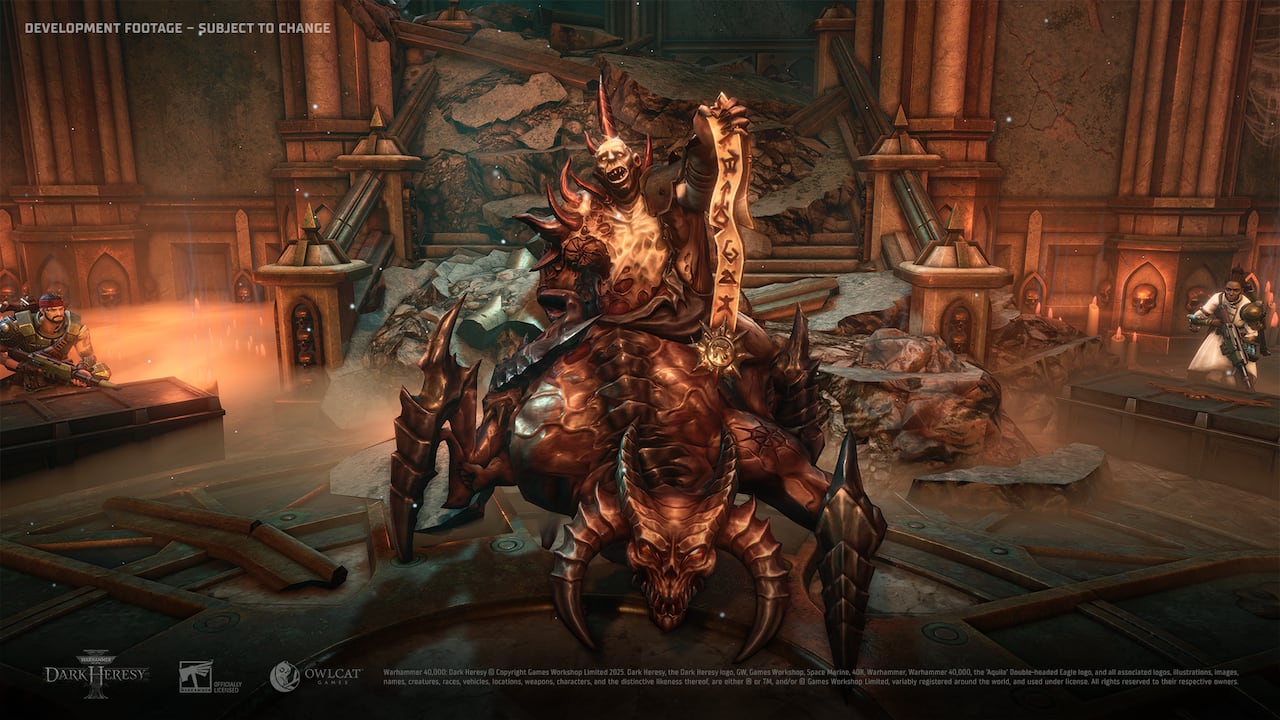
Dark Heresy promises a rich, dense RPG that will let players set their own moral boundaries, which they’ll likely question at every step of the game. You’re not in the Calixis Sector to right wrongs or help the struggling citizens; you’re here to ensure that no one is doing anything that isn’t in service of the Imperium, or without express permission.
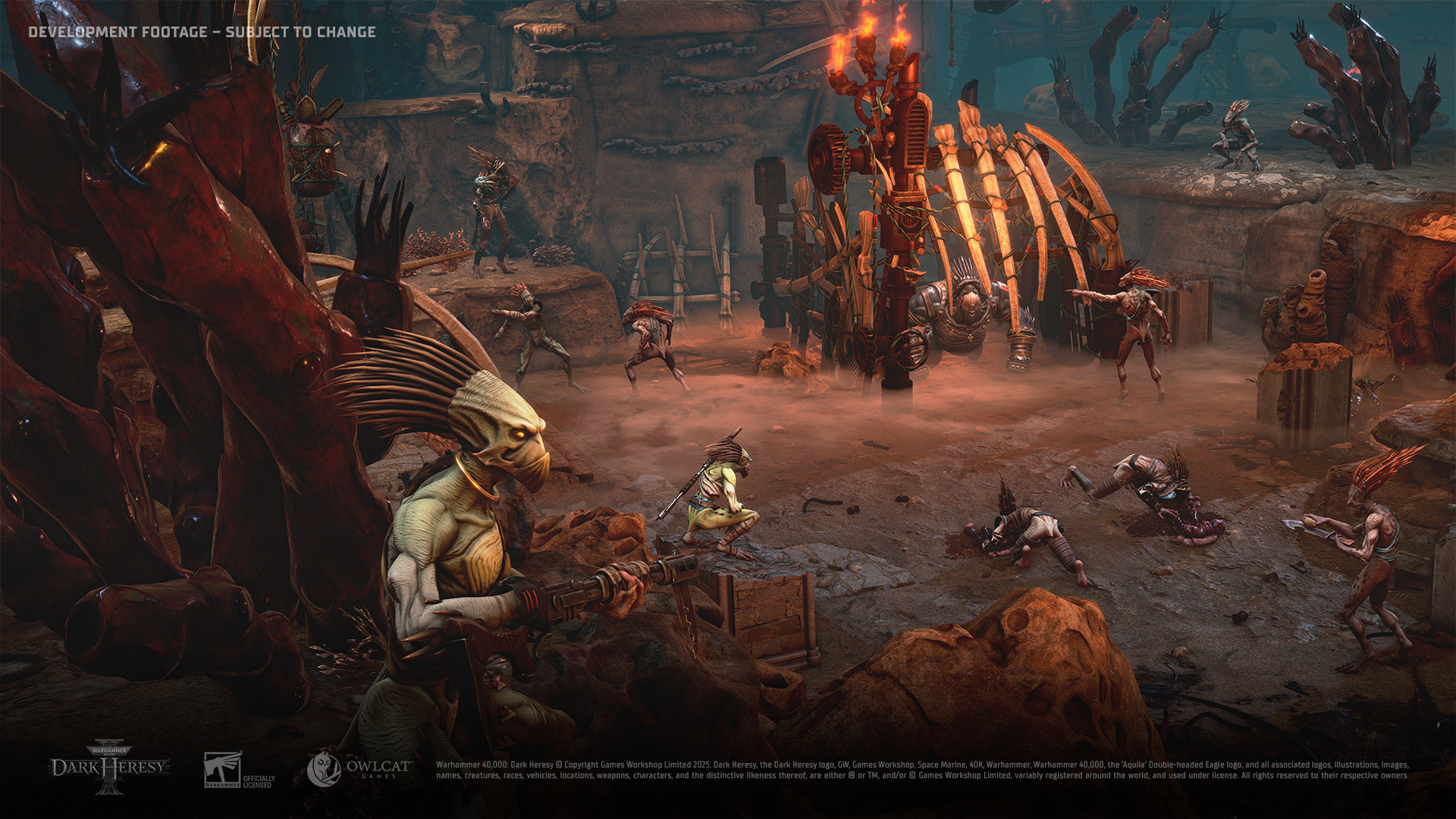
During the hands-off demo, Shestov drops in about 15 hours into the first chapter, amongst the bottom levels of a hive city, toxic muck lapping at its shores. There are drugs down here, crime, mutants, and death, a lot of death. Someone is killing people, and we want to know why. “Not because we give a shit,” Shestov says, “But because someone is making decisions without the Imperium’s say.”
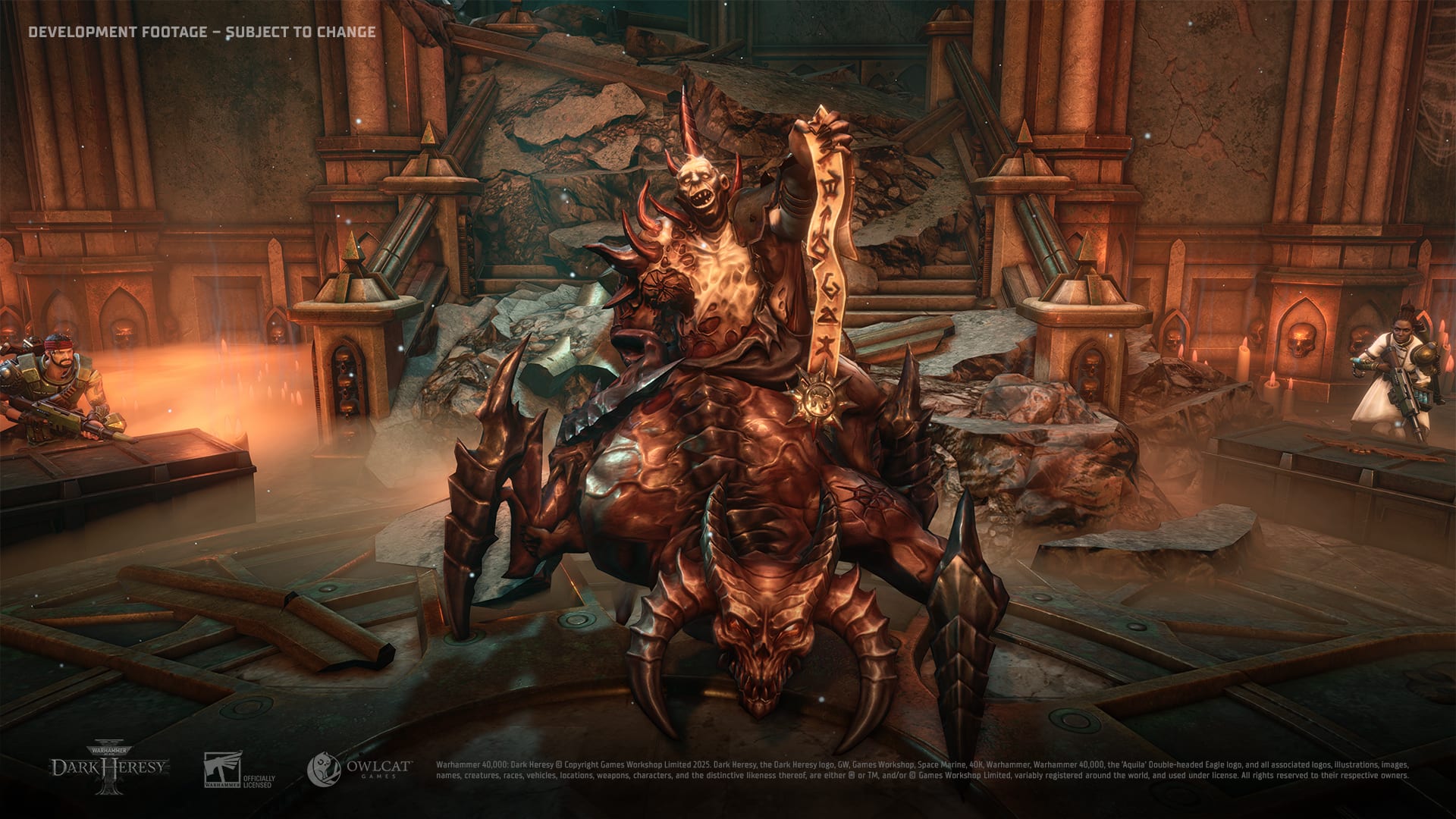
As he navigates the squad around the space, Shestov proudly points out visual details like a wall painted with the faces of missing folks, a man willingly dipping himself in a pool of toxic liquid, and a brief cutscene after he chooses to ”look around” a giant drill.
“I’m proud of it,” he smiles. Owlcat upgraded visuals “in every possible department” for Dark Heresy, requiring them to drastically change their internal work pipeline as they couldn’t use assets from previous games—Dark Heresy isn’t a sequel to Rogue Trader, it’s an entirely new story.
And in this story, Owlcat wants to lean into investigation and research. After all, as an Inquisitor, your word is gospel, and if you’re being called in to find answers about dead miners or missing supplies, you’ll want to do your due diligence to ensure you’re making an informed decision, right?
Shestov shows us how you’ll investigate cases in Dark Heresy by looking for clues and consulting your crew, who all bring their own expertise to the table. A weapons expert can tell you how that bisected body lying on the blood-soaked metal floor in front of you was likely cut in half by a laser, while a medic can give you clues as to when.
Eyeball icons indicate the goals for specific investigations, while a journal helps you track them and conduct additional research as needed. During the hands-off demo, we’re taken through an investigation called by Inquisitor Millicentilia, who wants to know why her excavation crew went missing. The squad surveys the room where they were last seen, investigates each goal, and draws some conclusions before speaking with Millicentilia, who pushes back on certain points but accepts others.
“Usually, in a detective game, people wonder, what do the developers want from me?" Shestov says. But Warhammer 40K: Dark Heresy doesn’t have a “right” or “wrong” answer to its investigations, and has no narrative designer gently proding you down a specific path. “The game of deduction is played by the player, in their minds,” Shestov says. This investigation led us to a dungeon where the workers are being held captive, segueing seamlessly into turn-based combat.
“Here’s my little boy,” Shestov jokes as he selects a giant Ogryn (an abnormally large, mutant human) from the party and sends him into the room holding the captives. “I’m sure he won’t die.”
What follows is a lengthy turn-based combat moment that includes some new features, like concentration abilities. “Normally, cRPGs don’t have a sniper that can kill you in one shot,” Shestov says. But in Dark Heresy, certain enemies will telegraph a "concentration ability” like a grenade throw or a rather large attack with an arching blue line. It’s an “I will kill you if you don’t do something,” warning, Shestov says. You must break that enemy’s concentration before a timer runs out (which can be done by damaging them enough, or perhaps destroying their morale so they second-guess themselves), or you’re toast.
As the fight unfolds before us, the Ogryn becomes a human shield for the captives, protecting them from incoming fire. Shestov grins—that’s clearly why he sent him in there, to be a bullet sponge as the rest of the squad fights their way in behind him.

He shows off a “precise attack” ability that lets players focus on where to direct their incoming strike (i.e., an enemy’s head, arms, legs, heart), which will drastically alter an encounter. Shooting someone in the head will prevent them from using abilities, while going for their arms will render a weapon useless, or their legs will immobilize them.
The team at Owlcat is also very proud of Warhammer 40K: Dark Heresy’s new morale system, which, if utilized properly, can scare enemies so bad they’ll surrender to you. If you build it up enough, perhaps by killing an enemy faction leader, they’ll concede the battle. “Not many games will offer less gameplay,” Shestov jokes. “But it’s like chess—if you’re winning, why keep going?”
Warhammer 40K: Dark Heresy seems poised to expand upon Owlcat Games’ impressive lexicon of RPG titles. It’s familiar but new, sprawling but focused, and as dark and dense as you’d expect a game set in the Warhammer universe.
We don't have a release date for it yet, but you can wishlist the title right now on the Epic Games Store.