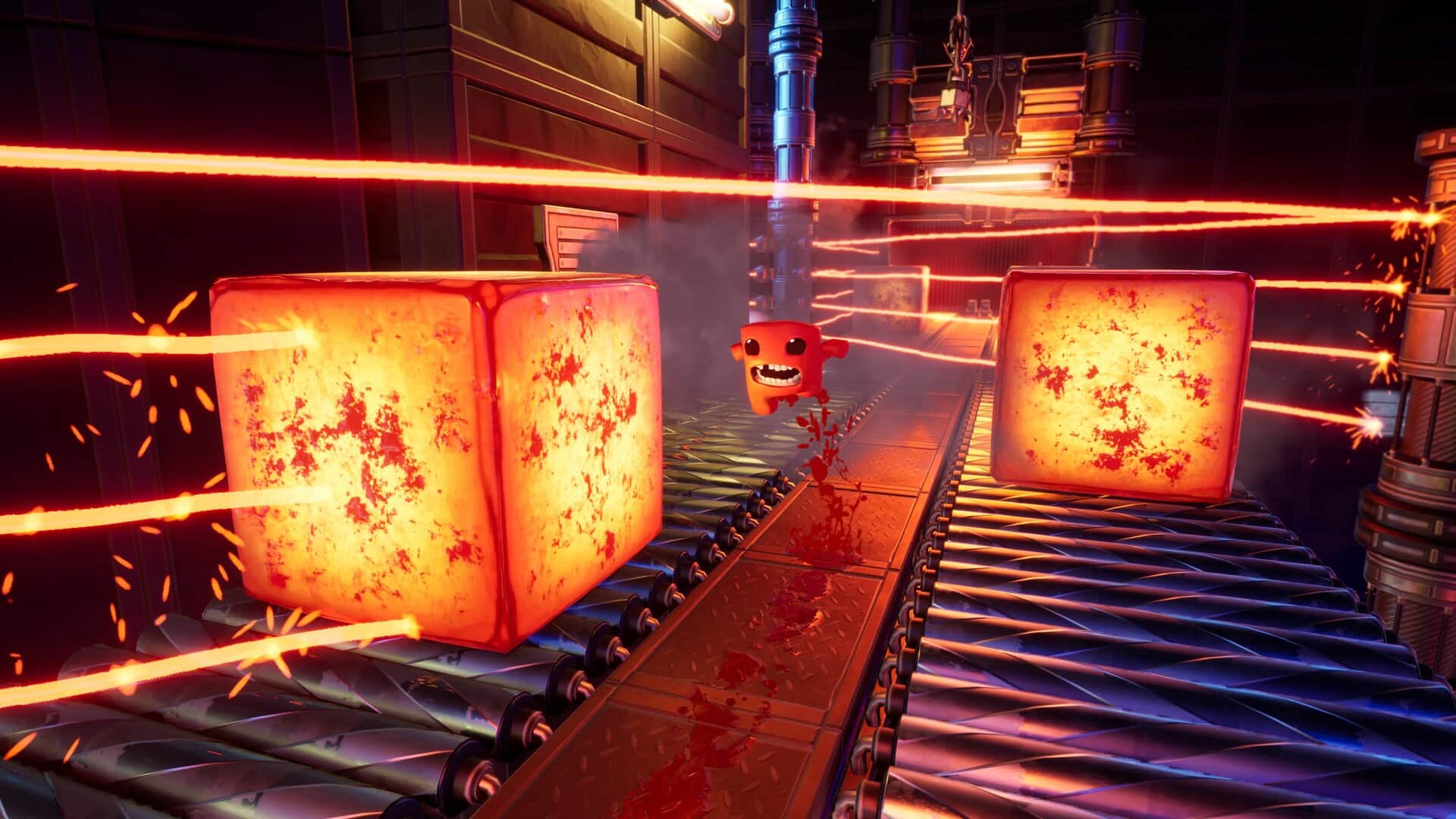
How Super Meat Boy 3D Keeps its Gory Identity
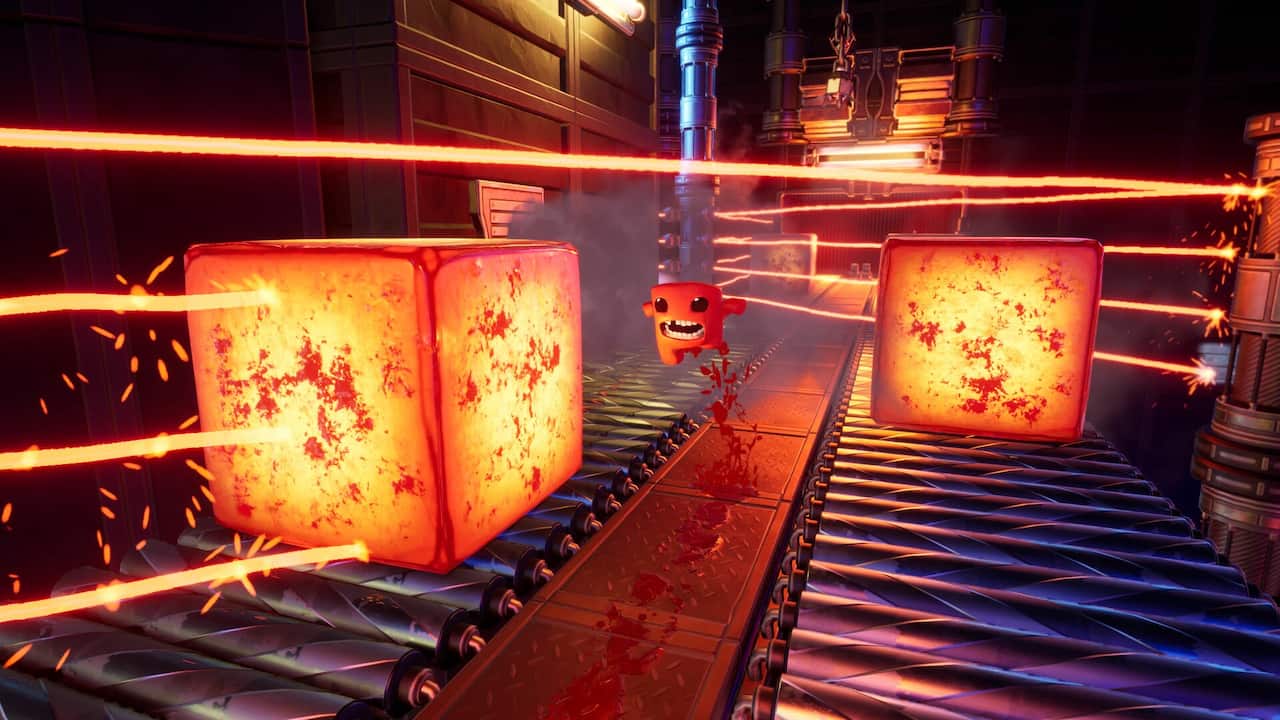
It seems like going from 2D to 3D is the natural progression for platforming games, especially if you want to keep reiterating and providing new experiences for players. After all, gaming’s biggest platform mascots have done so: Mario, Sonic the Hedgehog, and Pac-Man. Super Meat Boy is following those same footsteps.
Originating as a 2D platformer, Super Meat Boy stood out with its grotesque visuals and gory effects—not in a horror sense like Resident Evil, but in a more comical, masochistic way. Its sequel, Super Meat Boy Forever, took the 2D formula of its predecessor and became an auto-runner, giving it a much wilder gameplay experience than before.
Super Meat Boy 3D is now following the footsteps of gaming’s greats by becoming a fully fledged 3D platformer. We spoke with co-developer Sluggerfly’s art director, Dominik Plassman, and Team Meat’s co-founder Tommy Refenes about why Sluggerfly was the perfect fit for Super Meat Boy 3D, the biggest challenges in designing levels, and the importance of art and special effects.
Before working on Super Meat Boy 3D, Sluggerfly was best known for the 3D collectathon, Hell Pie. In this game, you follow a cute little demon named Nate, who has to go around gathering ingredients to make Satan a birthday cake. You can see why Team Meat approached Sluggerfly with Super Meat Boy 3D. Both Hell Pie and Super Meat Boy have the same juvenile yet charming aesthetic. It feels like a match made in heaven (or hell, in Hell Pie’s case).
Plassman agrees, “We were working on 3D platformers since we started the studio. Our other games are also a bit weird and strange, so I think the aspects in Super Meat Boy and the humor that's in there just made sense.”
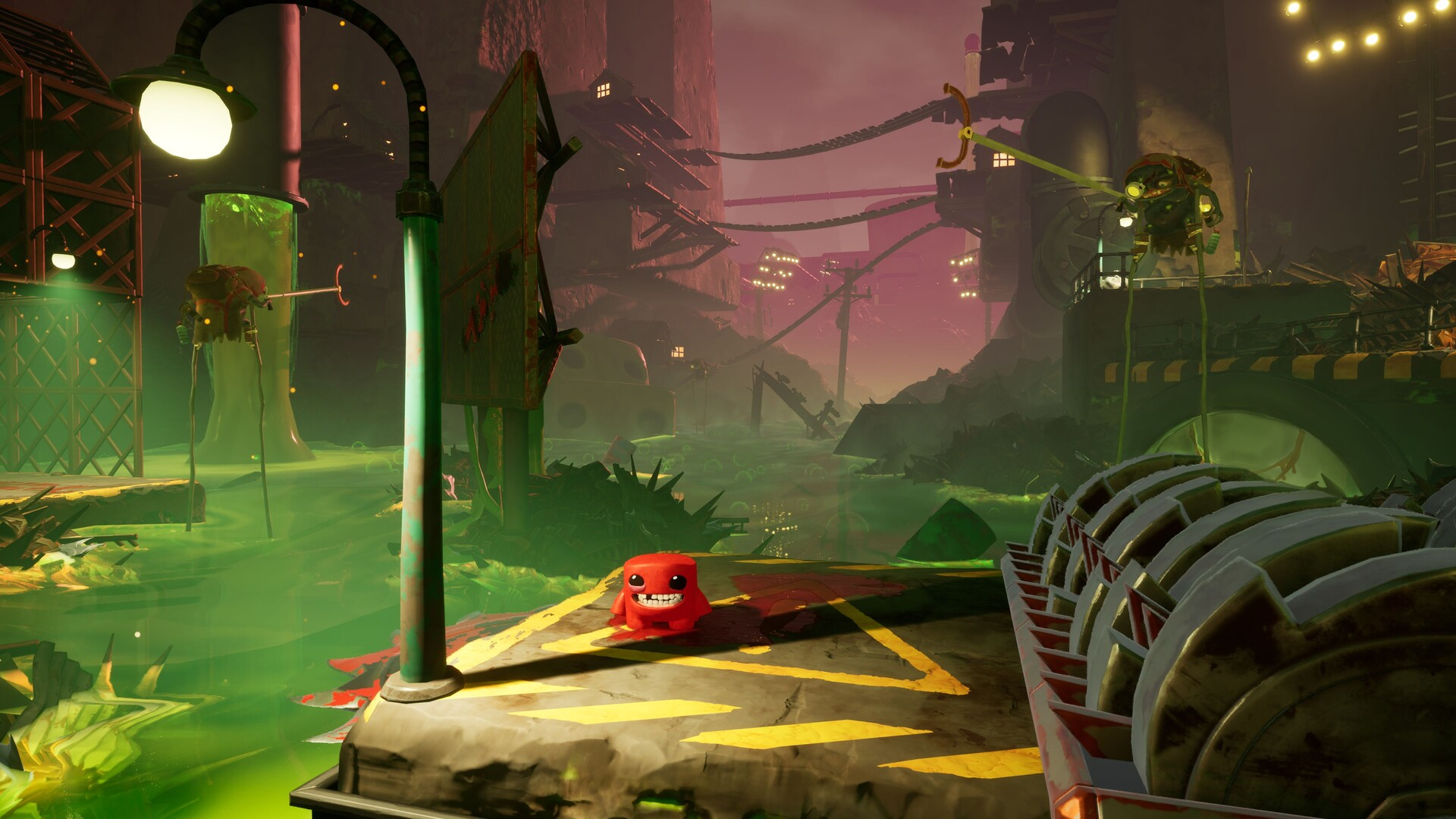
“Sluggerfly is great. I played Hell Pie, and I knew they had the sense of humor that would lend itself well to a new Meat Boy game,” Refenes explains. “I knew they would have fun with it, and because of that, I knew they would do a fantastic job with Super Meat Boy 3D.”
Sluggerly immediately said yes when Hell Pie publisher Headup Games told them that Team Meat was thinking about creating a new Super Meat Boy game. Sluggerfly then went into prototyping to make sure that Super Meat Boy would even work in a 3D environment.
“After the prototype, we went straight into production. So everybody was happy with the result and thought that it worked,” Plassman says, noting that the communication and process of starting up the project were straightforward. “People came to us!”
The artistic process
Hell Pie was a massive undertaking for the studio at the time, with around five people and only two artists to create assets.
For Super Meat Boy 3D, Sluggerfly wanted to raise the quality of the art itself. The studio expanded its art team and streamlined its production process in order to be more organized and plan better.
“Hell Pie looked fine. It was this old school PlayStation and Nintendo 64 look, basically, and we knew that we wanted something more modern and a bit more polished for Super Meat Boy,” explains Plassman. “So I personally think that going from Hell Pie to Super Meat Boy was a big step upwards.”
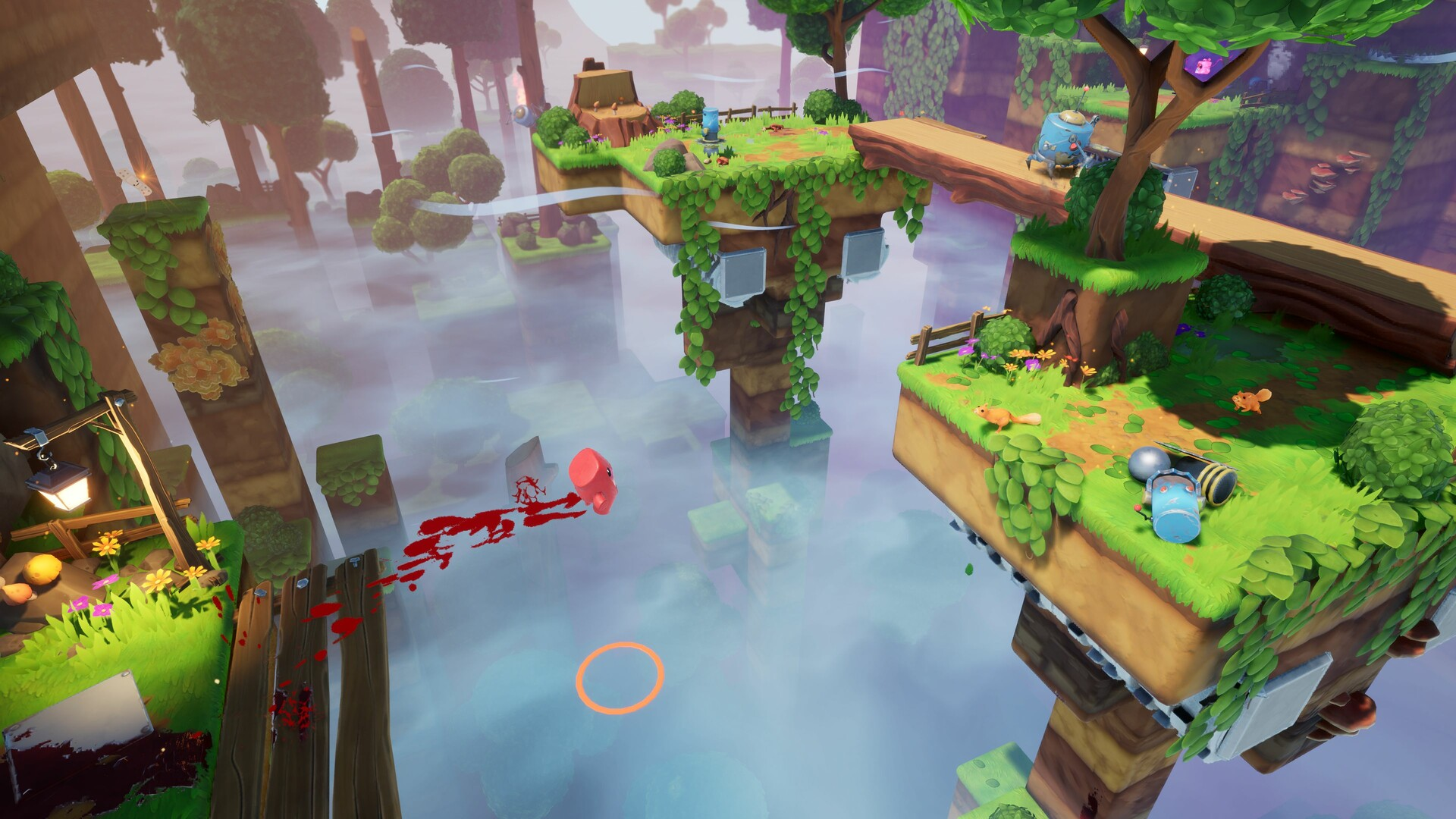
Meat Boy himself wasn’t a huge challenge to create in 3D. After all, he’s literally just a red meat cube. But the bigger hurdle was the environment around him. When it came to designing Super Meat Boy’s 3D levels, the biggest challenge was balancing readability while keeping detailed environments, as achieving a certain amount of detail results in a loss of legibility. “This is why we tried a lot, especially lighting and colors,” he says. “It took some time to find this balance and to build levels that not only look nice, but also work from a gameplay perspective.”
Meat Boy leaves a trail of blood behind him whenever he traverses through the levels, which also serves as an important gameplay function, letting players retrace their steps. Sluggerfly wanted to make deaths more dramatic, too. When Meat Boy died in previous games, he would simply explode. But in Super Meat Boy 3D, they wanted to add more personality and depth to make him die in more gruesome ways, such as dissolving in acid or getting cut in half.
“I think some gore and some funny deaths just need to be in there,” Plassman explains. The team wanted to incorporate their established sense of humor from Hell Pie into Super Meat Boy 3D. “In Hell Pie, we basically implemented every messed-up thing we could think of,” he laughs. “So we turned it back a bit, but I think there's still a lot of weird stuff you can see and find in Super Meat Boy 3D.
A natural transition
So far, the reaction to going 3D has been received positively, with fans thinking that it's a proper evolution of the series. They’re interested to see how the precise movement and style of Super Meat Boy translate to the third dimension. "It just seemed like the right thing to do. Making a 3D Meat Boy is a no-brainer for fans,” Refenes explains. “There wasn’t any scepticism because the philosophy behind every Meat Boy game is still there: Perfect the controls, then build levels around those controls.”

Going 3D gives Sluggerfly the creative freedom that isn’t in 2D to create new possibilities with old feelings for fans of the previous games. “Meat Boy feels like Meat Boy, even if it's 3D, and I think it will be interesting for people to just see what they can do in this new environment,” says Plassman.
Those who enjoyed the previous games will like Super Meat Boy 3D because it’s challenging and rewarding, just what they’d expect from the series. But it’s also a great place for newcomers to hop in too, especially if they like demanding platformers.
Refenes says, "Meat Boy is just Meat Boy. It’s on more platforms now, there’s a mobile game, and the 3D game is the next iteration of it, but at its core it’s the same as it ever was: It’s a well-designed, fun to play, super challenging game with a lot of blood."
Super Meat Boy 3D is available for wishlist on the Epic Game Store.