How Teddy Roosevelt, Tokyo’s Shinjuku Station, and rust inspired futuristic train sim RAILGRADE
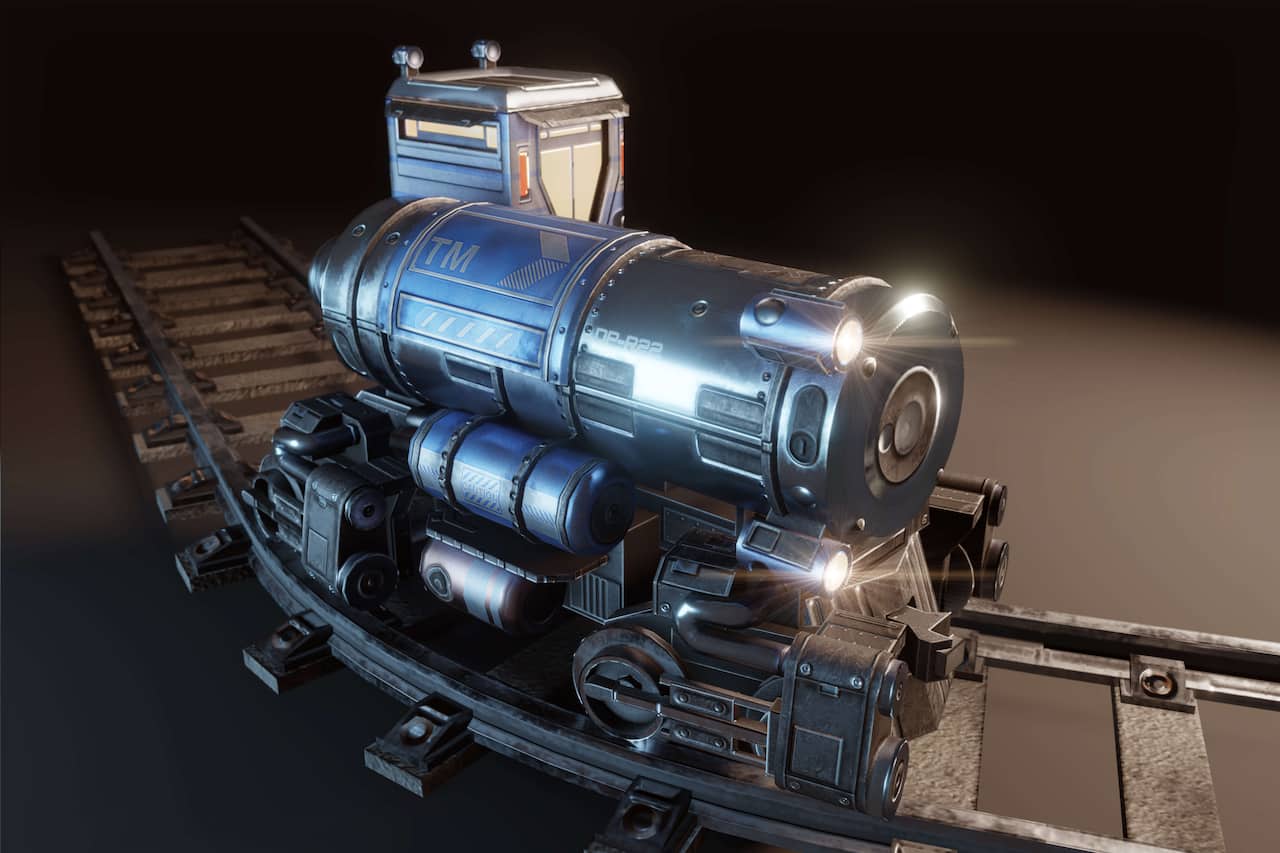
At first blush, RAILGRADE is a meticulously detailed train simulator set in an alternate future that mashes together off-world industry with a ‘70s aesthetic. But beneath the beefy train simulator are layers of complexity that also imbue the game with a deep level of strategy and business simulation.
Lead game designer Daniel Dressler said he was inspired by the likes of Railroad Tycoon and Transport Tycoon, and that the team at Minakata Dynamics set out trying to capture what would have happened had those games continued to evolve over the past two decades.
The result is a game set in an alternate future created by one tweak in real-world history, and driven by the design and aesthetics of Japanese train sets and Tokyo’s Shinjuku station.
We chatted with Dressler about his leap from working on real-time strategy indie darling Tiny Metal: Full Metal Rumble, how a chance encounter on Twitter led to this latest project, and why he believes logistics are so much fun.
Before forming Minakata Dynamics, you worked at AREA35 on, among other things, TINY METAL: Full Metal Rumble. What lessons did you take away from bringing that game to so many platforms?
Daniel Dressler, lead game designer on RAILGRADE: Haha! Oh, you've made me remember some tough years. On the good side, I learned that shipping multiple consoles at once is easier than it appears. It requires discipline throughout development, but pays off at the end. But to be honest, the most visceral lesson I remember: never do multiplayer again.
Not as a sole programmer, at least. After shipping multiplayer on Valve's Steam, Nintendo's Switch, and Sony's PlayStation, I realized during that entire time I was dedicated to making multiplayer work: the game itself was not improving. In general, that is, I think, the biggest downside to being a solo programmer. Any days you are focused on one small aspect of the game are days other aspects are not improving.

What made you decide to leave AREA35 to form your own company?
Dressler: Good question. The answer is: I am rather opinionated and wanted more control over development to invest more into the areas I thought were important.
Of course, like all entrepreneurs, I feel a desire to impress how hard and how much I suffered, but I don't think that is true. I am very thankful to AREA35 for how smoothly they enabled me to make the transition. I first quit my job in late 2018 and continued under contract to help finish up TINY METAL: FULL METAL RUMBLE for AREA35. Thus, at that point, I had the revenue to pay my wage and the contractual freedom to start work on my own projects again.
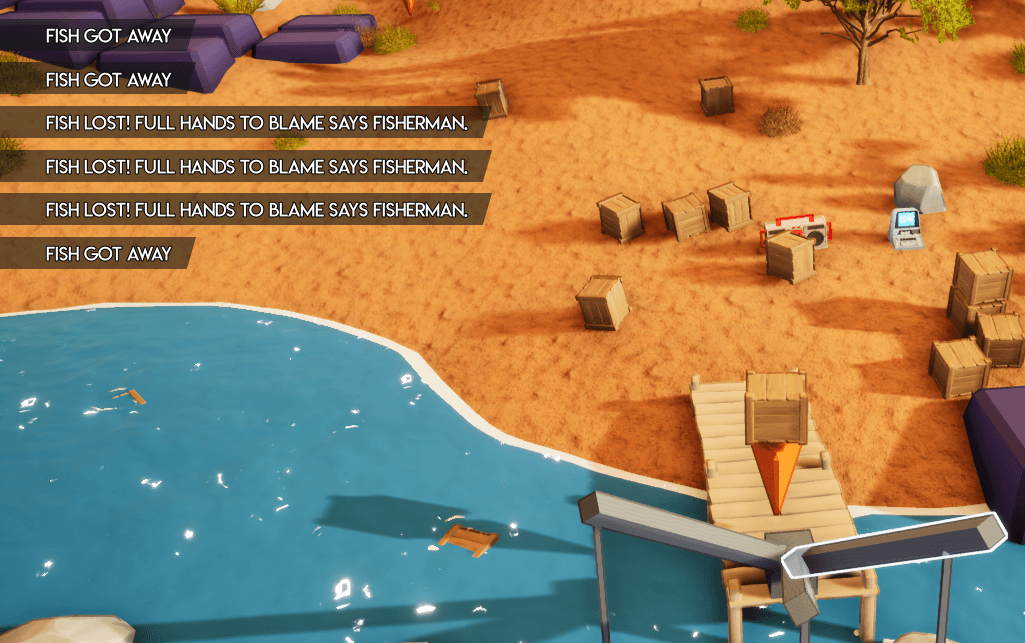
So, I started a project which was …. not RAILGRADE. I started making a cozy island life sim. My goal was to have the alive village feel of Tropico with a third-person player character. In essence, Tropico merged with Animal Crossing. Granted, at the time, I thought it would be Tropico merged with Factorio, but I was wrong. Looking back at my development screenshots, I was adding features like a fishing minigame, a boombox to play music, and manual housing construction. All of those are cozy-life sim, not automation-sim at all.
The challenge when making a game from scratch is you need to develop all the boring systems alongside the fun gameplay systems. I'd spend a week making a settings screen and options manager, but meanwhile, the gameplay is standing still.
You see, most game devs start with no experience shipping commercial games. So, they spend all their time on gameplay and visuals. I had the curse of experience, which kept me spending time on the boring un-promotable aspects of finishing a game, like achievements, maintaining a console port, settings, main menu, save systems, etc. All things required which do not improve a game's public perception.
How did you go from forming your own start-up to starting work on RAILGRADE?
Dressler: At this point in the timeline, it is early 2019. I was making slow progress on my island sim, and I knew it. My plan was to develop until the game was playable and presentable before showing anything to the public, but with so much of my time going into boring-required systems, it would be a long year before I could start promoting.
In fact, this might be the first time I've ever shown these screenshots publicly. One day I was scrolling through Twitter, and I realized something fundamental: Twitter is really depressing if you are not popular as a game dev.
I wanted to do something nice: encourage another struggling indie dev. So I searched the #gamedev tag and found a guy working on a project I thought was neat and started paying attention to his work. That guy was ReticulatedBantha, and that project is what would become RAILGRADE.
Over the next couple of months he would post the occasional gif or screenshot, and I would encourage him. In time, I convinced him to release a demo on itchi.io instead of dropping his project outright. Once his demo dropped, I played through, made game design notes, hassled him a bit on my design ideas, then figured if I had such strong opinions, I should offer a partnership. He said yes.
That is how RAILGRADE started development. He had a fun gameplay loop, and I had the boring yet vital code which could turn his gameplay tech loop into a full game. The idea was he would continue working on gameplay code, and I'd be responsible for “everything else” including paying for art.
I had a budget saved up for my island sim, so I used that to fund RAILGRADE. This may sound like a side note, but I think it was a key driver of our success: we had money to pay for art.
Most indies try to figure out ways to cheap out on art. Either by learning to model themselves, using asset packs, or using art styles like low poly or pixel art. We had a good chunk of money to hire an artist to make high-detail assets.
Now again, I want to avoid giving the wrong impression. I was not rich. My budget for art was an amount I think many other programmers could easily afford. To give a sense of scale, it was about equal to one year's tuition at my local public university in Canada. Or about enough money to buy half of an entry-level new car. The important aspect was not the amount of money, but rather the willingness to spend it for the game.
When did development on the game actually start and how has the development team grown over time?
Dressler: ReticulatedBantha started experimenting with train gameplay back in 2014. Then by late 2018, when I first saw his work, he had redone his codebase several times.
In early 2019 we officially partnered, and RAILGRADE development started in earnest. Until late 2019 we were developing mostly in secret. At such a point, we started light promotion to prove market fit, so I could take those tweets and show a publisher we had potential.
By early 2020 we had secured a slot at BitSummit, a bunch of publisher contacts, and even an Epic Games MegaGrant! By mid-2020 we had funding, and I was able to hire my first employee: Chris! Chris has been vital to the final look of RAILGRADE. He implemented all the high-detail terrain and high-performance optimization for the Switch. Without the MegaGrant, I would never have been able to start hiring, so I am super thankful for Epic's early support.


How would you describe RAILGRADE?
Dressler: Our project name for RAILGRADE was Project Spaghetti. RAILGRADE is all about building up complexity layer by layer. The net result should be a network so convoluted and unique you feel impressed at what you've built.
Add in an alive feeling world, and the net result should be a true sense of pride in your accomplishment. You went from rags to riches through your own planning and construction. RAILGRADE’s campaign takes place in a retro-future divergent from our own by a single key event: Roosevelt's Trust Busting never occurred.
Without his trust busting, corporations grew in power and influence. They secured stronger IP rights and patents. To the point where innovation ground to a halt. With such strong patent rights, no one can invent anything new without getting sued by their competition.
In our world, we innovate through efficiency. We focus on doing more with less. In the world of RAILGRADE patents have closed off that path, so innovation occurs by securing more material to do more with more.
Thus the world turned to space to secure more resources. If you cannot build a bigger TV using less material, your next best choice is to use more material. More and more. The technology makes RAILGRADE look 40 years in the past, but in actuality, RAILGRADE takes place hundreds of years in the future. They just happen to be using technology stuck in the 1970s.
Corporations colonize new worlds to secure additional production capacity. Earth has become a garden planet, profiting from the off-world industry. The working class have themselves migrated off-world in search of jobs. Kids grow up not dreaming of becoming programmers, but rather lawyers. Lawyering is a good job; they can negotiate patent licenses. Lawyers' offices have beanbag chairs and ping-pong tables; it's a cool job.
What sort of games and other media inspires the look and play of RAILGRADE?
Dressler: Our major gameplay influences come from Railroad Tycoon, Transport Tycoon Deluxe, and of course, Factorio.
Railroad Tycoon and Transport Tycoon Deluxe, of course, come from the late 1990s, and that genre mostly stopped in time. We asked ourselves what the genre would look like if development had continued apace for the past 20 years. Our answer was the genre would integrate the deep factory automation aspects invented by Factorio. We set out to build that game, the game which should have existed but didn't.
So you set out to recreate what would have been the evolution of a genre that has remained, to some degree, static over the past couple of decades. How did RAILGRADE, itself, evolve over the game’s development?
Dressler: We've evolved about four times. First was when we secured our publisher, now Epic Games Publishing, but at the time, they were The Irregular Corporation, which allowed me to expand the art budget five times and overall scope two times. Then Epic Games acquired The Irregular Corporation. That allowed us to further expand our goals and introduce branching.
Yeah, it sounds rather vital in hindsight, but early on, RAILGRADE’s railroads could only be single lines or loops with no branching. Most other train games use signals to allow branching. I thought signals were hard for players to learn and, overall, just not fun to use. One day I took my family to a small, mostly abandoned amusement park north of Tokyo. In this park was a toy section, including a small house filled with plastic toy trains. If you grew up in Japan, you likely had Purarail as a kid. It is a sort of plastic rail, a play system for toy trains. Think of it like Brio, but Japanese and plastic. I grew up with Brio as a kid, wooden toy trains, but the plastic rail was different: it had switches. Simple switches, ones which just pushed a train straight, left, or right.
Seeing that was the eureka moment. We did not need complex switching logic. We needed a simple system of branching where trains decided their branching destination. Of course, simple to the player does not mean simple to implement. I think many train games use signals because, while it is tough for the player, the rules are simple for programmers to implement.
We spent the next several months implementing systems and logic to support this new, simple branching method. Let me impress on the reader just how much code exists behind the scenes to make branching appear easy. We have an entire network path finding calculated behind the scenes to set up reasonable default branch preferences. We have look-ahead logic to avoid trains constantly locking up. We have lock-up detection warnings.
We have smart switches which allow a facsimile of the complex signal logic possible in Factorio.
The net effect is branching in RAILGRADE is intuitive and approachable. You can learn branching in a couple of seconds instead of going off to YouTube to watch a tutorial, as most players do when playing other similar games.
That learning curve was the major blocker for branching in RAILGRADE, so I am super proud of the entire team's effort to solve it and make a game any player can approach and play.

RAILGRADE’s trains and tracks have a very distinct look. What inspired the game’s aesthetic?
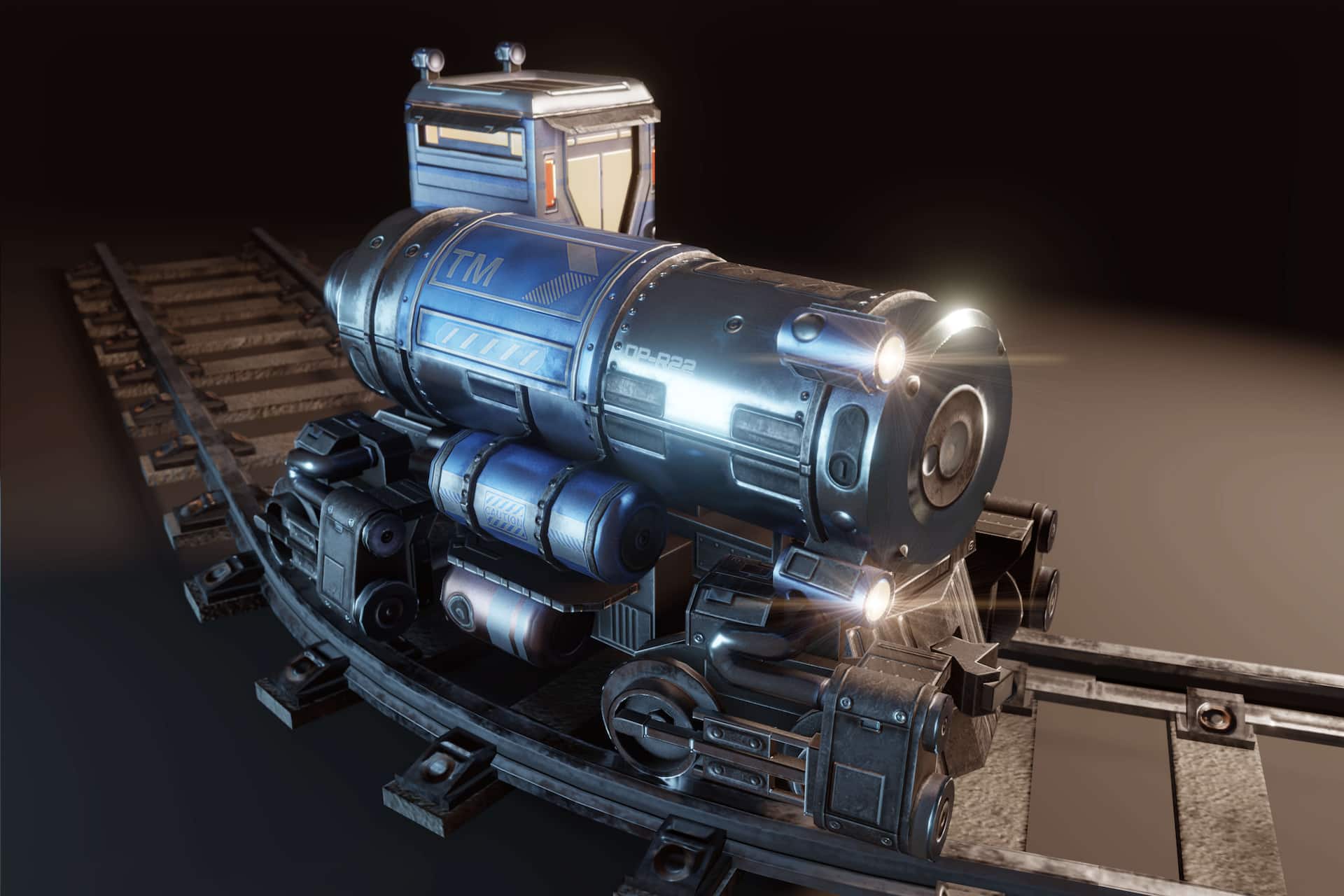
Dressler: Japan. To be exact, there exists a weird juxtaposition in Japan I wanted to capture. If you've ever ridden the Yamanote from Shinjuku station, you've noticed an oddity. In the world's busiest station, in one of the world's richest countries, there are massive rusting iron girders right across the track. You cannot help but stare. Rust, next to pristine trains.
This is true all over Japan. You might have multi-million dollar homes which have never received even a quick pressure wash to remove rain residue. Yet all the cars are new and gleaming.
One of the most dangerous things on the roads of Japan, for me at least, is the silver fuel tankers. Not because of the fuel contained within, but because the tankers are polished so fine the tank is a giant mirror. It is tempting as a driver just to watch your own car in the mirror behind the tanker. It is mesmerizing, and I never remember seeing a tanker so clean and polished as I've seen in Japan.
That's the juxtaposition I wanted to capture in RAILGRADE. Clean engines with a backdrop of gritty industry. Pure shine against pure grim.
And RAILGRADE isn't just about building a train track and loading it up with these shiny trains, it's also about managing the success or failure of a space colony. How did you blend those two ideas together?
Dressler: Core to the experience we wanted was your actions as the player should feel meaningful. Typical train sims feel lonely. As if you are playing by yourself in a dead world. We wanted RAILGRADE’s regions to feel alive. As if the people you are helping are real people who need your help.
Thus to me, the two ideas are interconnected. Trains only have purpose if they are serving people. Of course, you could imagine people don't need trains, they could use trucks, but if you play RAILGRADE’s campaign, you'll find the secret to why trucks are not used

You talk a lot about the game’s layers of complexity. How do you go about making something seemingly as boring as logistics into a fun mechanic for gameplay?
Dressler: Oh, but it is not boring at all! Logistics lends itself to gameplay like butter to bread. Think about our real life; logistics drive where we live, and what we buy. The mechanics of logistics are the mechanics of risk and reward come alive.
If you invest in building a new railroad, will new residents move in? Will the industry expand? If it expands, your challenge increases. You must deliver freight from across the country. Your reward is more complexity and more work, but also the funding to achieve a bigger network. Misspend, and your network will start to collapse on itself. Your railroads become parking lots for expensive upkeep charging engines.
Succeed, and your network will flow like clockwork. Every cog is your brilliant design.
RAILGRADE hits Epic Games Store at 10 a.m. ET on Sept. 29, and if you purchase it by Oct. 6 you’ll get 10 percent off.