7 games about exploring and understanding alien worlds
I’ve done it, you’ve done it—trampled across the surface of an alien planet, cutting a violent swathe through its environments (and inhabitants). Video games often ask us to slice away whatever obstructs our path, stopping only to craft items out of plants, minerals, and internal organs.
Not all extraterrestrial game worlds are designed to be carved up for loot, though. Some want you to learn the ins and outs of their ecosystems, living by their rules and coming to understand all the flora and fauna that call them home. Below are seven of our favourite alien lands to explore, uncover, and (ultimately) understand.
Ultros
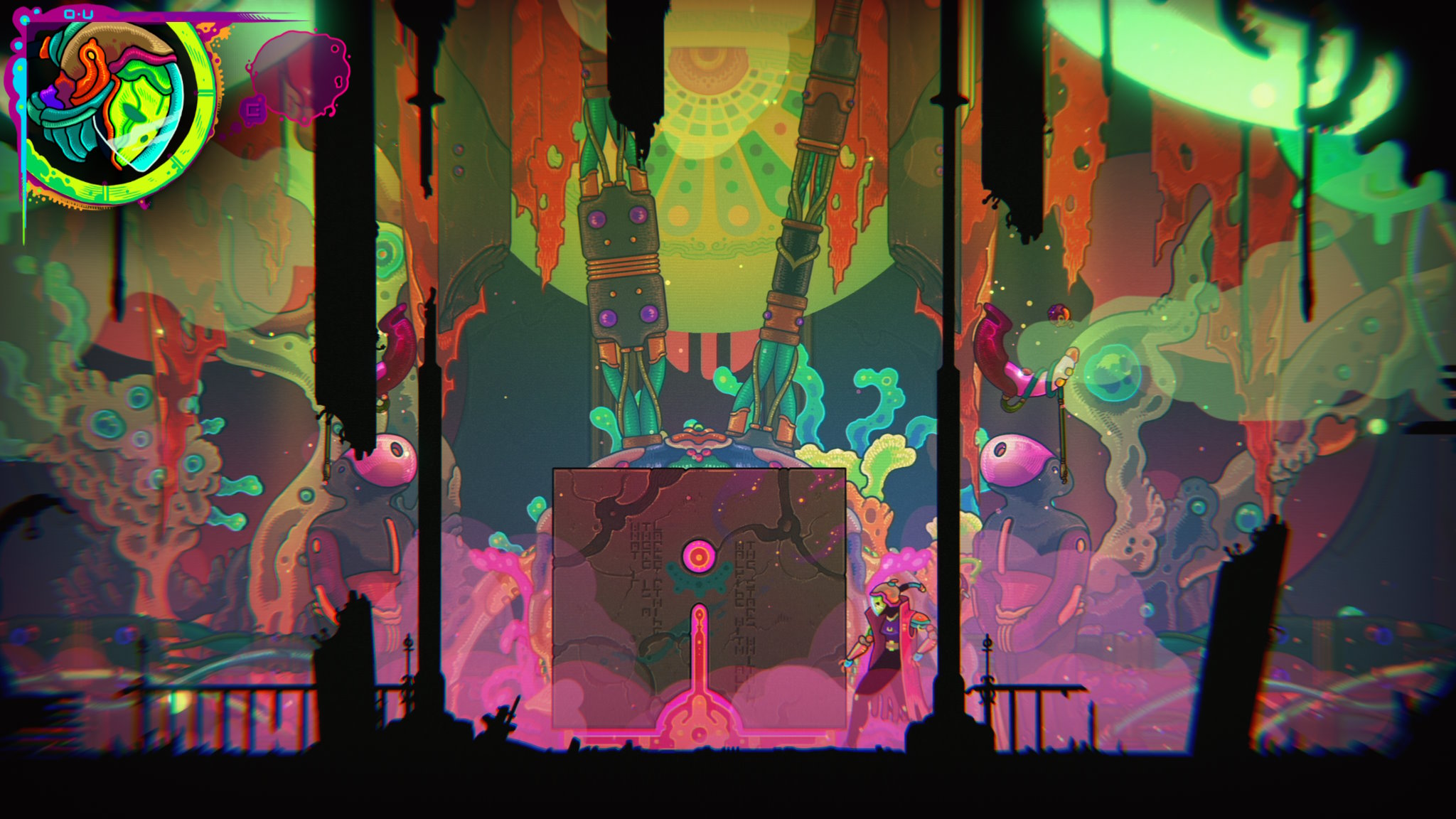
Admittedly, Ultros starts with violence. One of the first items you pick up in this time-loop Metroidvania is a sword to clear the path forward. But as you journey through its breathtaking world, handsomely rendered in psychedelic hues, you learn where to exercise restraint. The creatures that seem to be after your hide are simply hungry, and just as satisfied eating seeds or fruit. You grow new paths by planting seeds, coming to recognize the telltale layouts that best fit the alien flora, from big fruit trees to creeping vines.
Ultros rewards your accumulated knowledge, especially with a system that doles out upgrades and improves abilities depending on the food you eat. Through repeated play and gradual changes to the environment, you come to internalize the world’s demands and its secrets, gradually learning that the “best” way forward is not always the obvious one.
The Eternal Cylinder
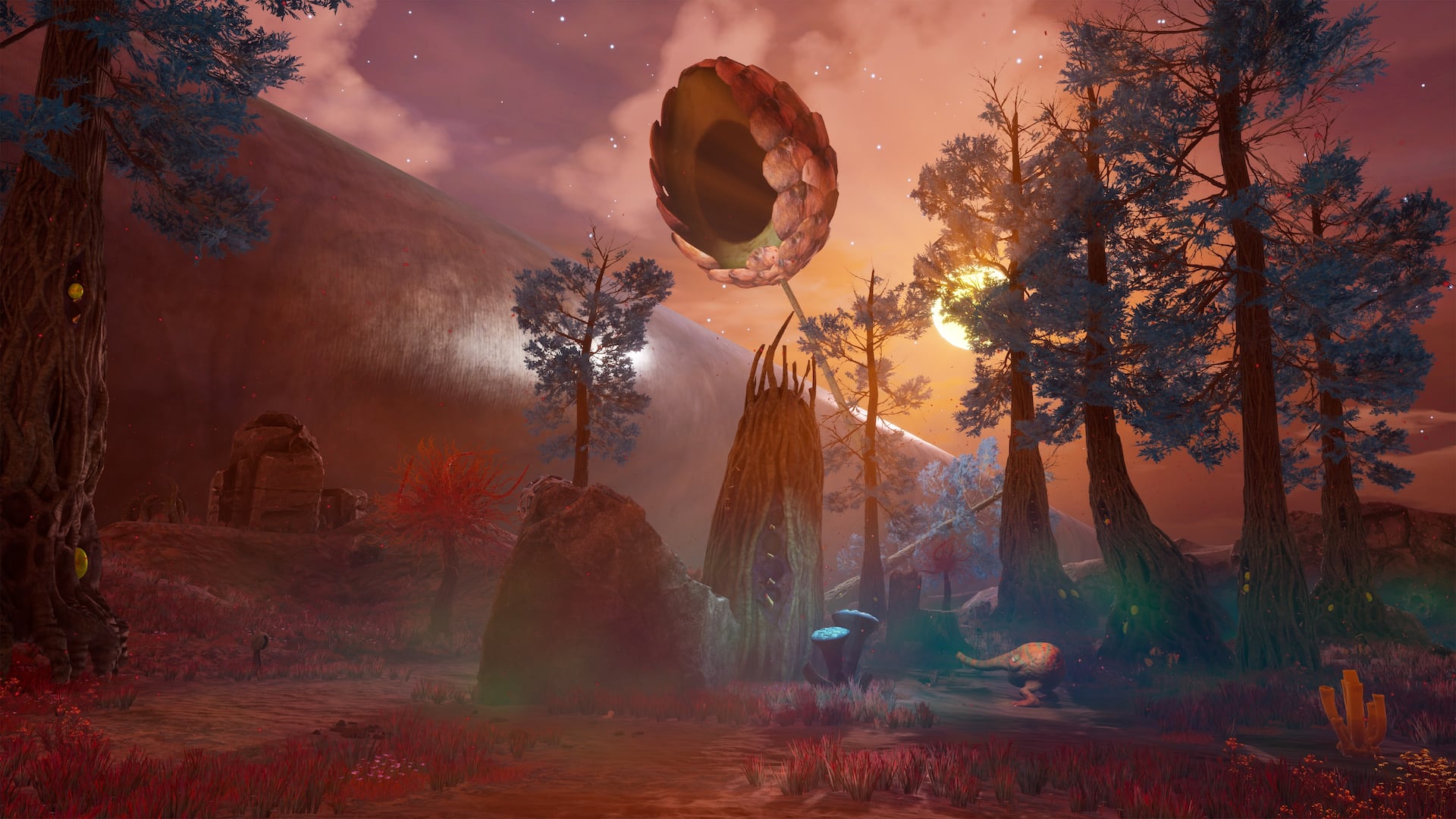
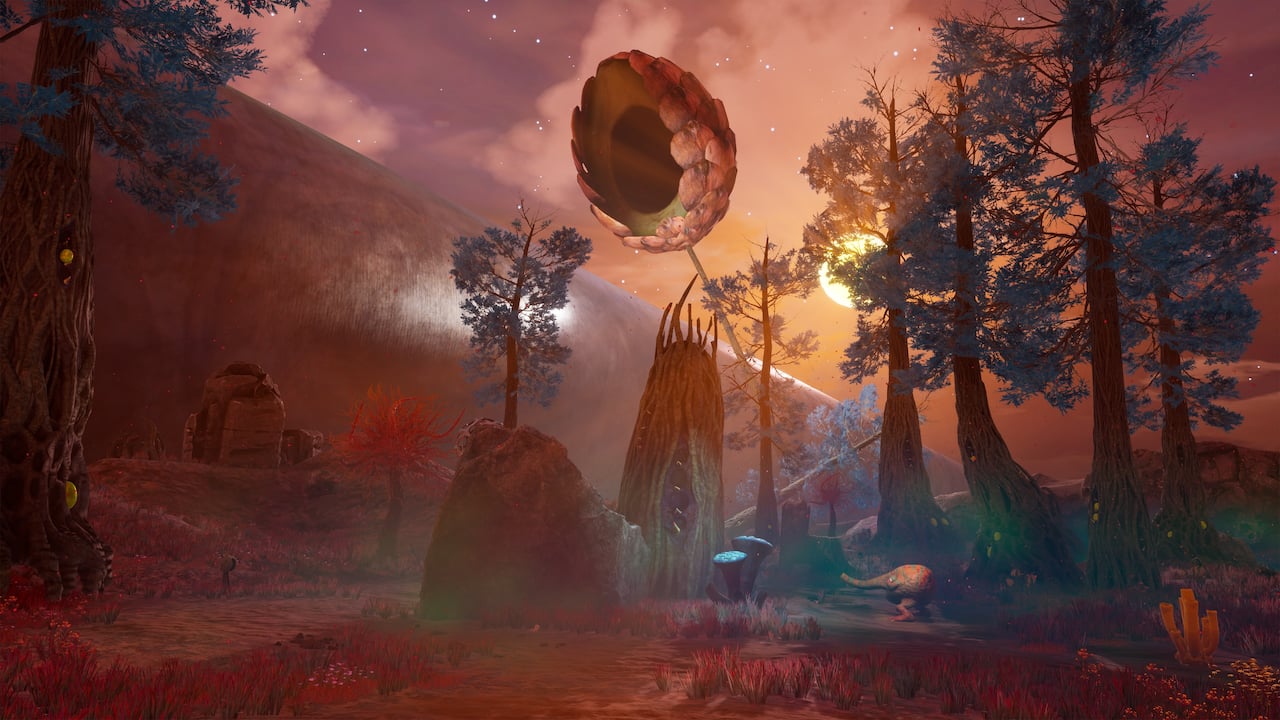
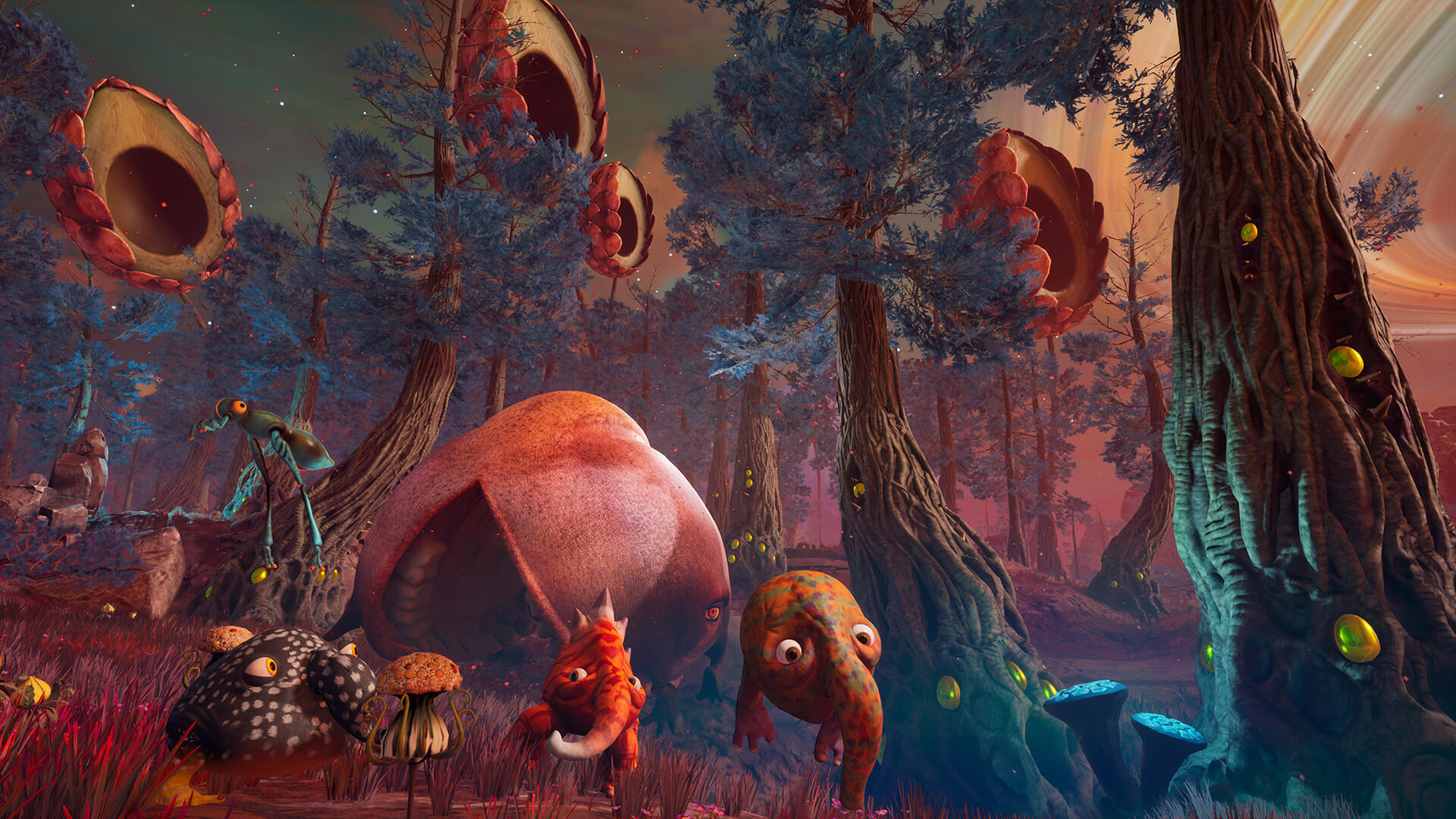
The Eternal Cylinder is also about eating your way to victory, but not as an outsider. The creatures you control, the Trebhums, are just one of this imperiled planet's inhabitants, squat little bipeds at the mercy of much larger (and odder) beasts. The Trebhums’ advantage is their ability to mutate, swiftly altering their bodies according to whatever they ingest. One plant lets them trumpet loud noises out of their trunks to frighten predators, while another alters their bodies to slowly extract valuable water from any stored materials.
But even these advantages aren’t a guarantee of survival. The Trebhums travel in small packs because they’re easy to lose to predators, like one that resembles a flesh-colored rock until you get close enough for it to open its gaping mouth. The alien landscape of The Eternal Cylinder may be pleasantly strange and whimsical, but that certainly doesn’t make it any less dangerous.
Rain World
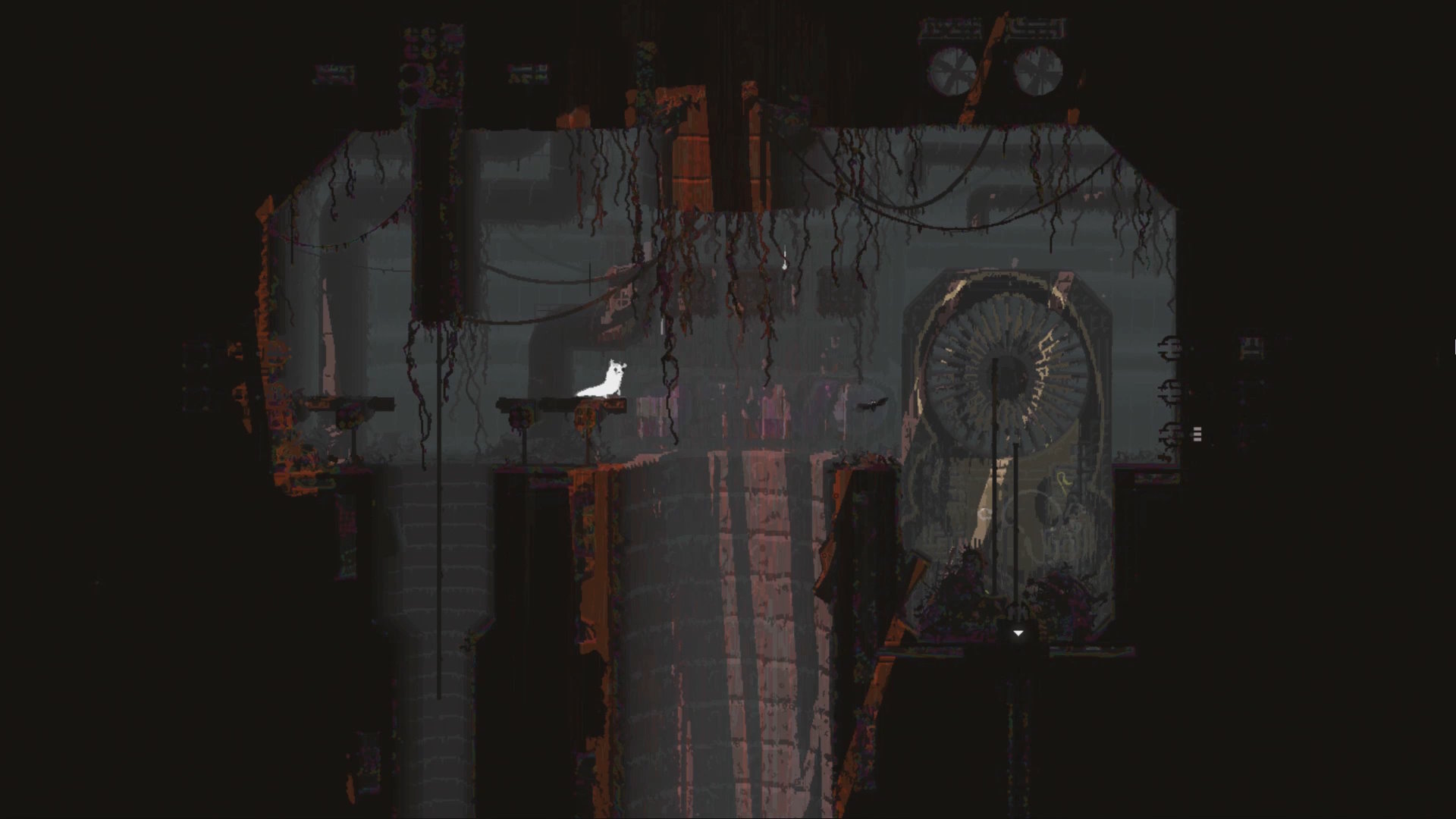
The wastes of Rain World are no more welcoming for your chosen critter, the slugcat. Dodging predators by slinking through industrial ruins, you must search for enough food to comfortably hibernate through lethal periods of pounding rain. Rain World feels uncommonly alive. Its creatures aren’t locked to specific rooms to serve as obstacles—they roam the world just as you do, looking for food of their own. As with many of the games on this list, Rain World is about experimenting to build knowledge of a mysterious place: what you can eat, which areas connect, whether you can slip past two angry lizards preoccupied with their own fight, and what the deal is with those bristling red tendrils on an otherwise normal-looking pole.
Jett: The Far Shore
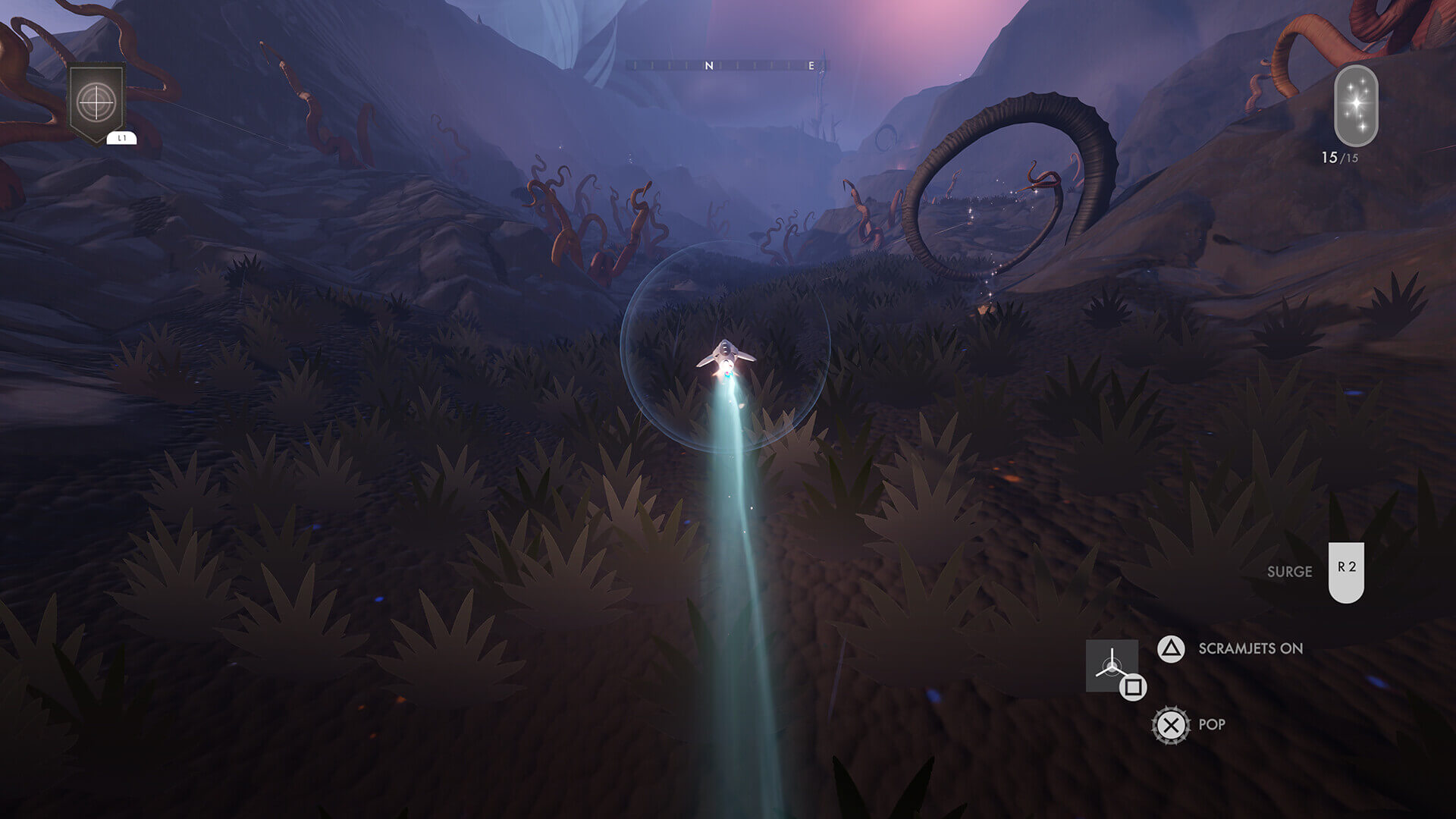
Not many games make you feel as small as Jett: The Far Shore. Sure, everything looks big whenever you enter first-person, directly controlling a human scout who has traveled across space, seeking the origin of a holy signal. But in the ship-view where you spend the bulk of your time, the camera zooms out. Way out. Your ship looks tiny against the plains, the mountains, the ocean. Your mission is to understand this new world and find a way to preserve your way of life, logging your discoveries as you journey slowly across the planet's surface.
Subnautica
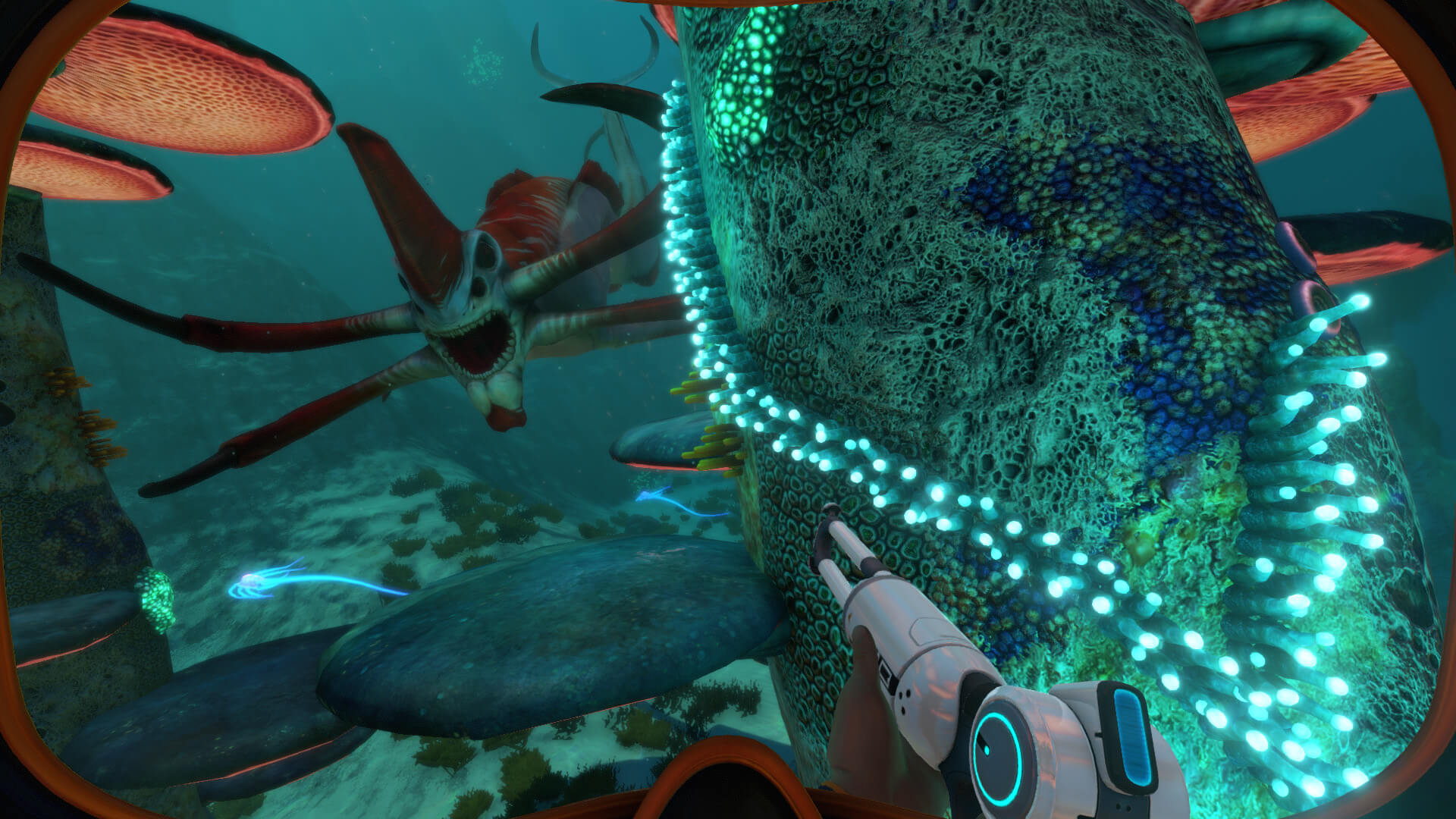
There are plenty of crafting and survival games about bleeding a world dry. It’s fitting then that the oceanbound Subnautica and its semi-sequel Subnautica: Below Zero achieve a scale that makes such a feat feel impossible. As in Jett: The Far Shore, you feel small, but this time you feel small even in first-person. The water seems to stretch endlessly, as impressive as it is intimidating. Many of the ocean creatures are mind-boggling in their size, to the point where the best you can hope for when facing a hostile one is to slink away unnoticed. The goal, after all, is simply to escape the planet—because it truly does not feel like a place where humans were meant to tread.
In Other Waters
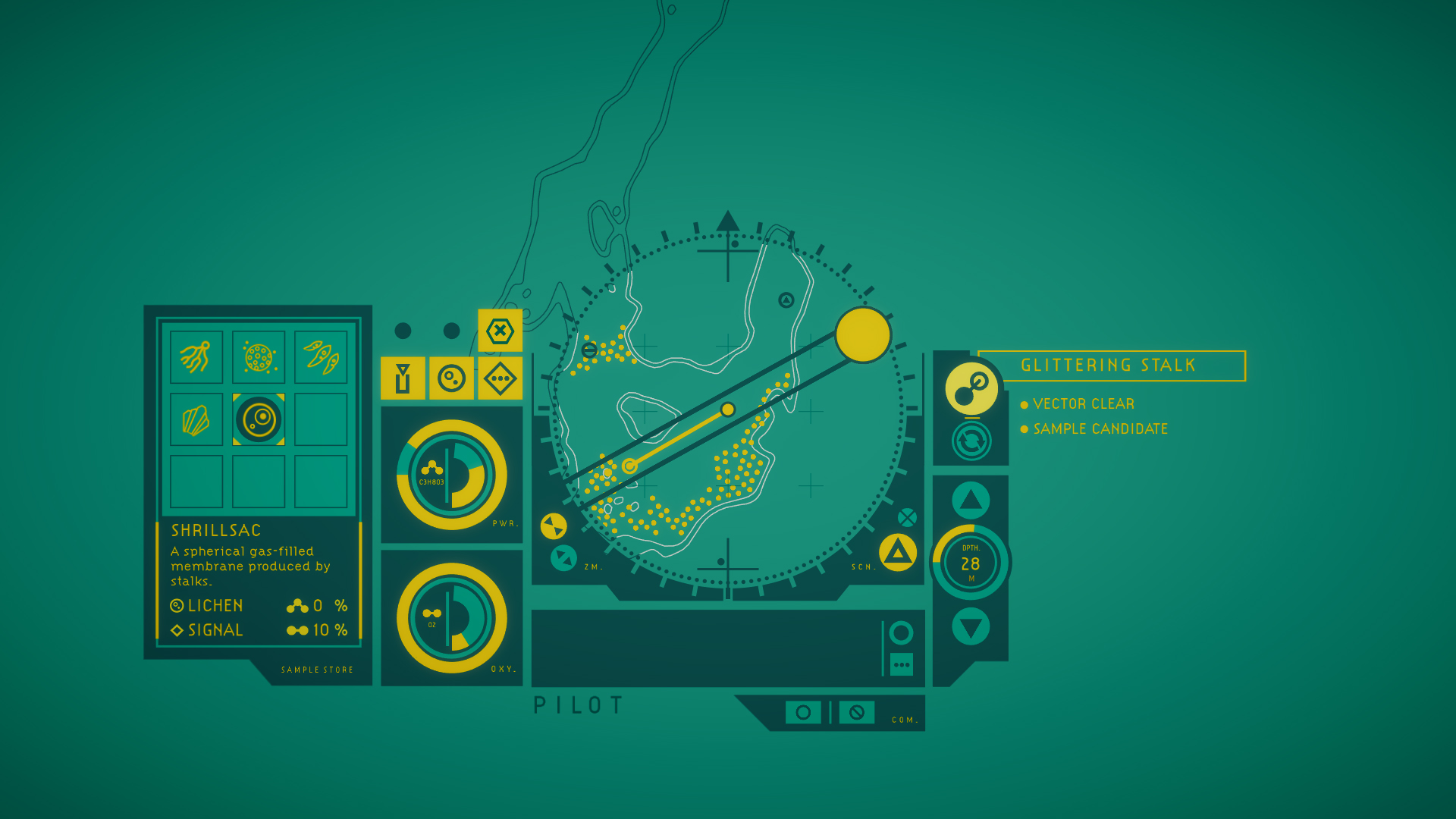
By contrast, there’s great tranquility to the undersea world of In Other Waters. Here, too, your goal is to understand, filling up a research log with more and more detail. Focused on storytelling and exploration, In Other Waters features one of the most unique depictions of its alien landscape—you technically can’t see what it looks like at all. Instead, everything you see is filtered through the yellow-and-blue display of a high-tech diving suit.
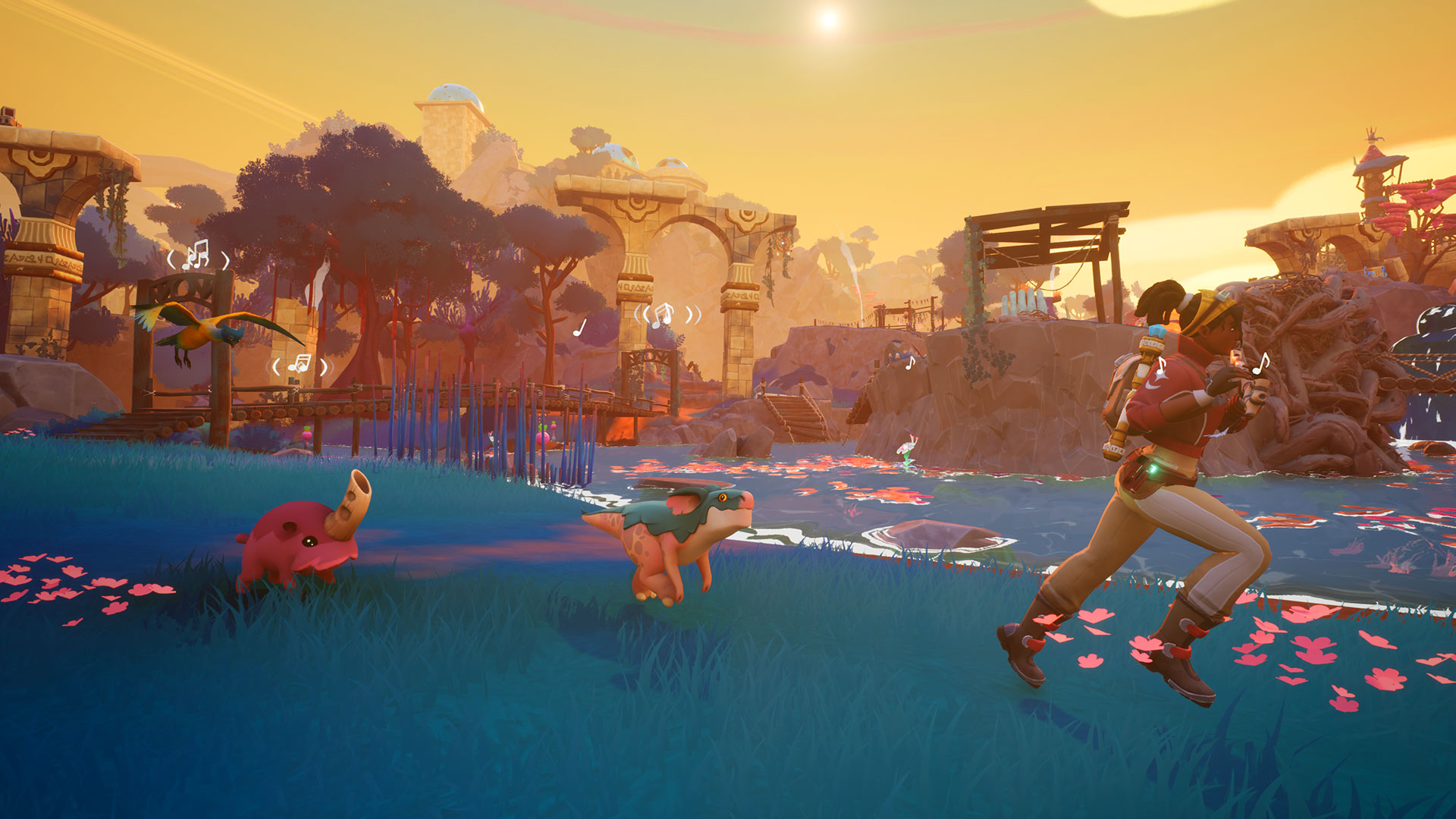
Creatures of Ava
Although Creatures of Ava casts you as a newcomer to its title planet, it diverges from the other games on this list by featuring a populated world. The humans who hope to rescue the flora and fauna of Ava must learn the ways of the Naam, the native inhabitants whose settlements dot the surface. You’ll circle-strafe creatures driven to aggression by a strange disease, but you’re not harming them—you’re absorbing the disease into an ancient staff. Elsewhere, you’ll play a Naam instrument to convince creatures to follow you, making use of their unique abilities and eventually teleporting them off-world in hopes of escaping an approaching cataclysm.
Please explore responsibly.