Against the Storm: Don’t sink under the challenge of roguelike city building
The dream of any city builder, whether that’s an actual town planner or a player of the bustling management sim genre, is to sit back and admire their creation as it operates like clockwork.
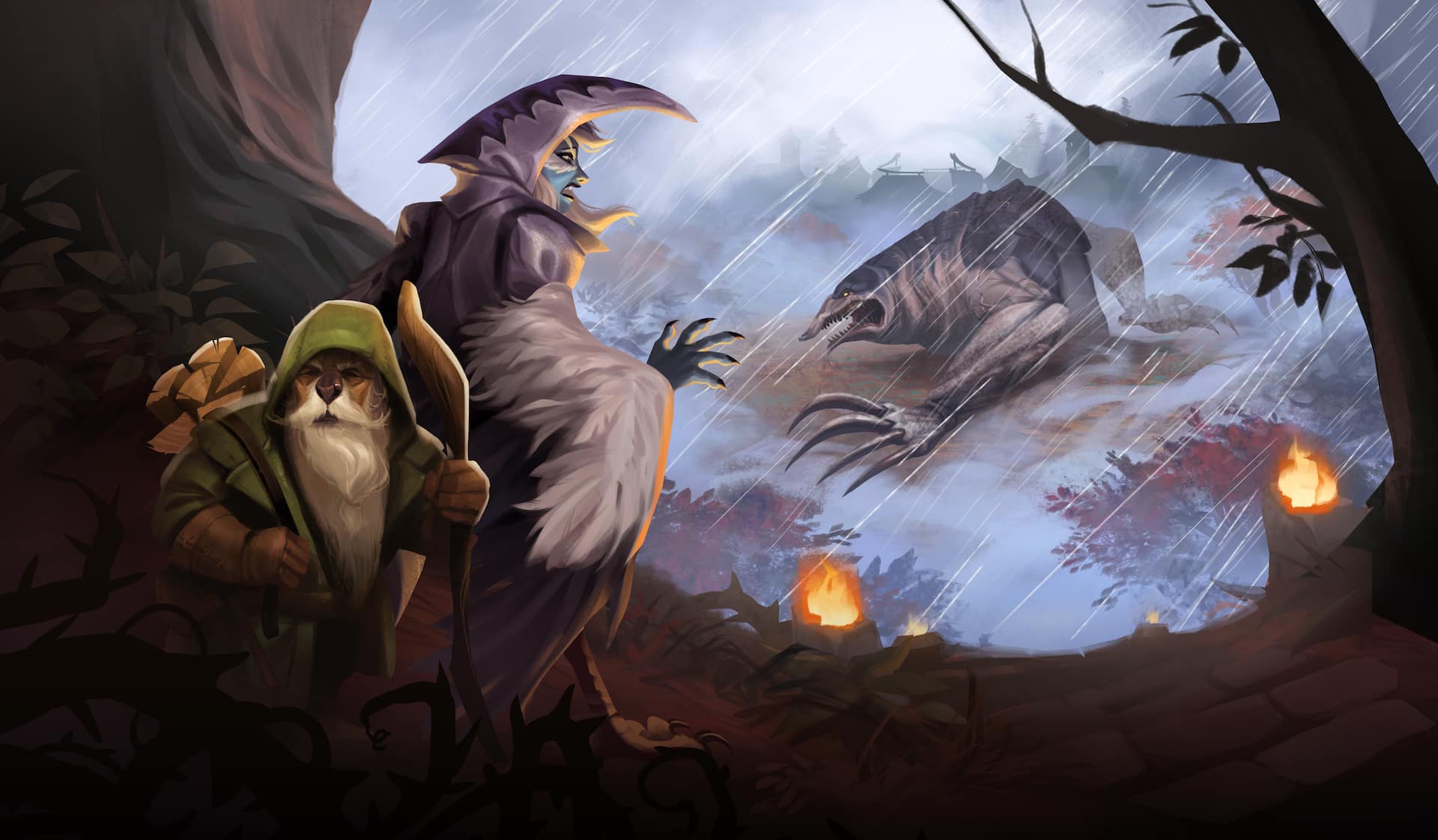
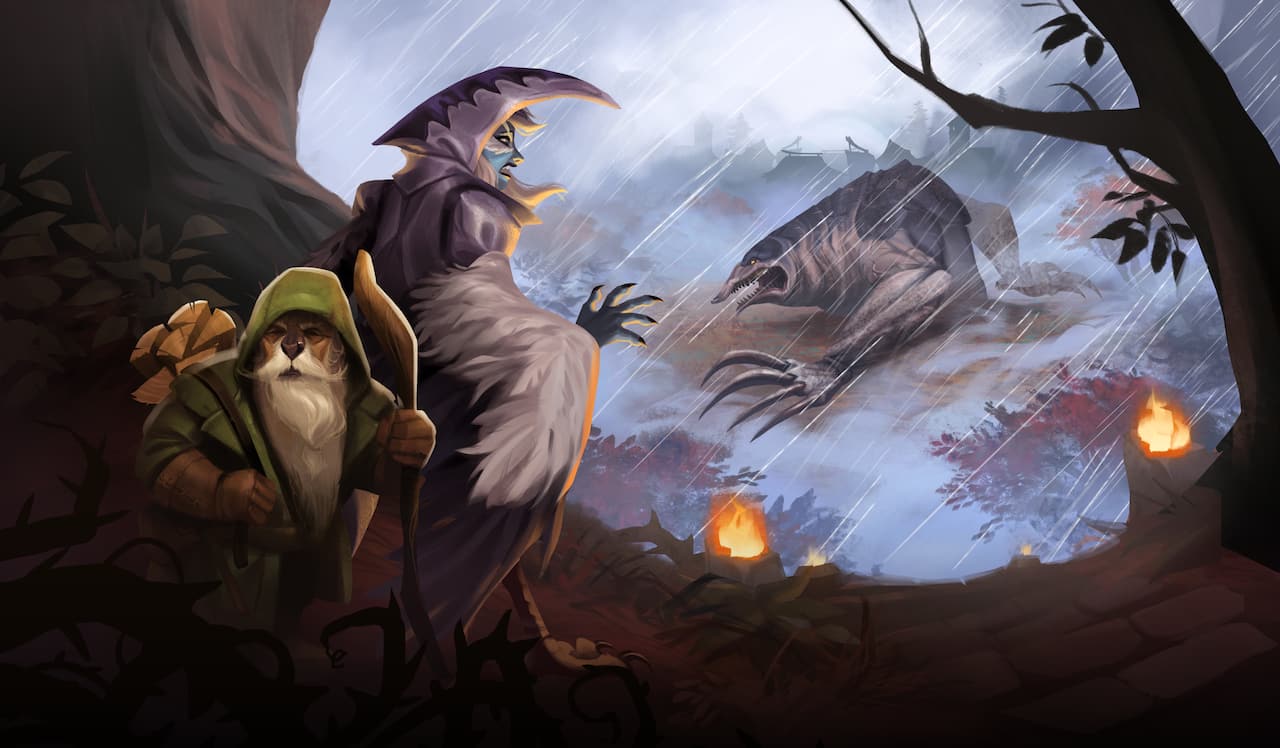
In roguelike city builder Against the Storm, that dream simply doesn’t exist. You’re not building a metropolis set to endure through the ages. Instead, with the imminent threat of apocalyptic storms set to wipe your progress, you’re building a fragile staging post designed to get a step closer to defying the Blightstorm for good.
One year after the game’s 1.0 release, we caught up with Eremite Games Co-Founder Łukasz Korzanowski who told us how introducing chaos to a genre that prizes predictability took it in an exciting new direction.
Changing the rules of the game
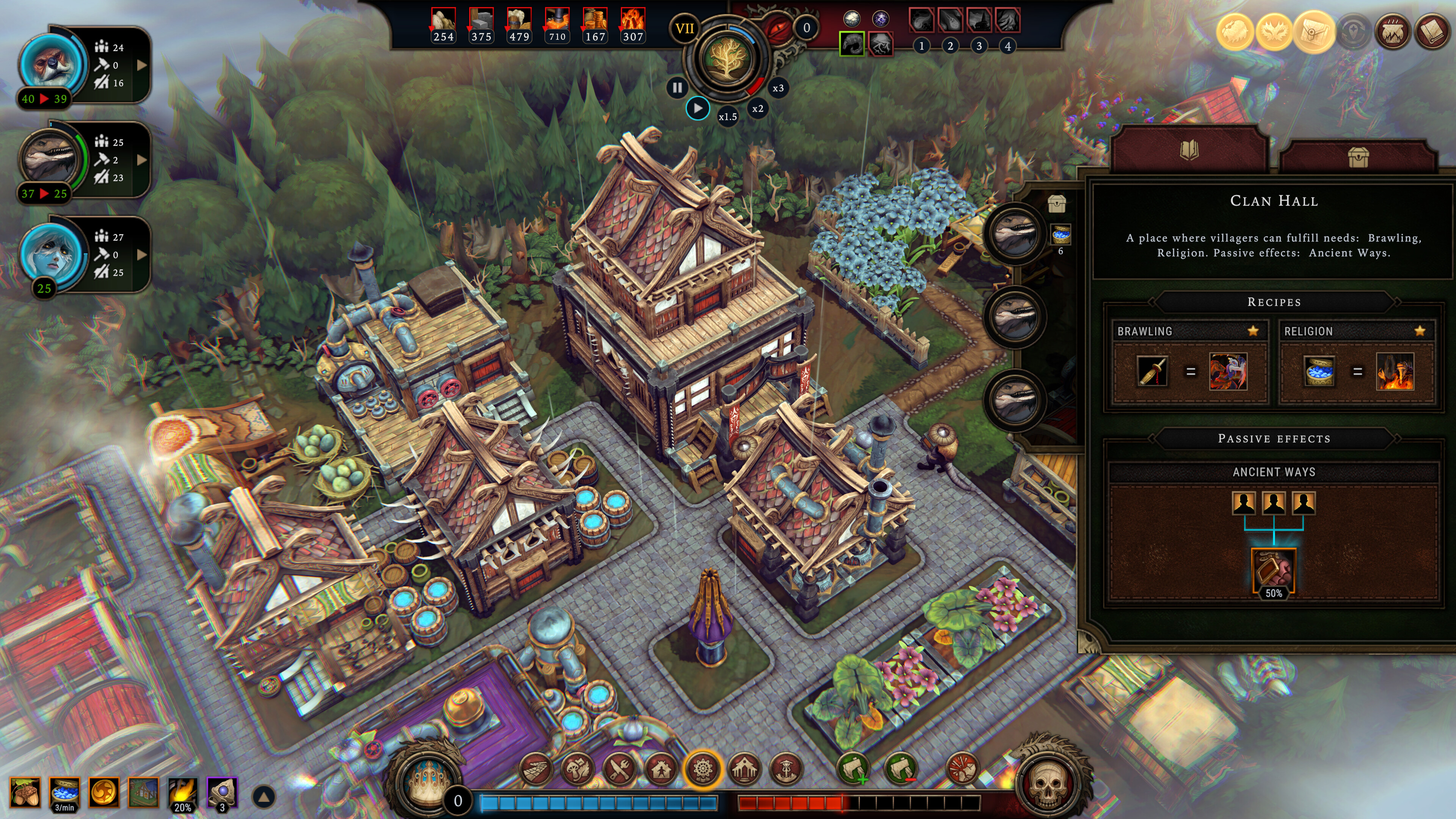
“We wanted to address a very specific problem we saw in the city building genre,” says Korzanowski. “Often, the exciting choices and trade-offs are gradually replaced by micromanagement. To fix this, we decided to capture what we feel is the best part of any city builder: the early game, the first two hours which revolve around surviving, solving overlapping problems, and planning the layout of the new city.”
Their focus on the early game presented its own issues. Restarting the beginning stages means players rush through an increasingly familiar set-up process; the building production lines and basic resources often are the same before late-game specializations could blossom, and the rules of the game don't change. But what if they did? That’s where the limitless variety and emergent gameplay of the roguelike came in. Now the rules of the game change, each and every time.
AtS levels begin with a warehouse and a Hearth, the vital furnace at the heart of your settlement, as well as a smattering of basic building blueprints. From there, you’re navigating chance—whether that’s the resources available on the biome your caravan stumbled upon, the buildings on offer, wares transported by roaming traders, or the quests and glade events offering opportunities to win your Scorched Queen’s hard-earned approval.
At first, the very concept seems like an impossible challenge for designers and players alike. City builders depend on established pathways and dependable and consistent resources. But there’s nothing stopping AtS from offering players production buildings with no trace of their requisite resources in sight. Thankfully, villagers are as capable of weaving fabric from algae instead of cotton, or fermenting wine from mushrooms if no berries are to be found, but more foolhardy players can still risk building a butcher with no supply of insects or meat, or accept a quest to increase your villager’s leisure without a clue how to build the necessary taverns, let alone stock them with ale and wine.
And you’re not lacking pressure beyond the weight of your own decisions between these randomly determined options. Villagers demand you satisfy their physical needs with food, shelter, amusement, and even decoration, and all the while, the mounting Queen’s Impatience threatens to recall you from your mission in a fit of dissatisfaction. As well as your ruler, your actions anger the forest itself, which becomes ever-more hostile with stacking negative effects that can demolish morale or obstruct your goals. The resulting three-way tug-of-war produces significant tension, making the prospect of a self-sustaining creation possible in something like Cities: Skylines pure fantasy.
It may be initially overwhelming, at least until players unlock the permanent upgrades and tools that lead them to excel and complete their settlement goals in record time, but Korzanowski wants players to be destabilized by the pressure of competing demands.
“We were worried that this might turn off some players—especially those who prefer more relaxed gameplay and endless expansion of their cities—but we also felt that this was an untapped niche that perfectly matched our own gaming preferences,” he says. They knew from the start they wanted the drama that stems from clear win and lose conditions.
“Finding the right balance between fun and frustration was anything but easy,” he adds. “Even now, we’re constantly tweaking and fine-tuning to get closer to that perfect sweet spot—where the game is just challenging enough, but not too overwhelming. To be honest, I don't think we'll ever quite get there; it’s an impossible task in such a complex and systemic game.”
Relentless experimentation
The reason Eremite Games got as close as they have to that elusive sweet spot comes down to relentless experimentation and their willingness to listen to their growing community.
In Early Access, AtS received an update every two weeks to keep on top of the team’s new ideas and an ever-expanding wishlist from players. When the game moved from Early Access to 1.0 in December 2023, it brought a wave of players with fresh ideas of their own and (rightly) higher expectations.
The team quickly found their rapid pace of experimentation and big balance changes had to proceed with more caution. Players got attached to their favorite strategies, whether that was relying on well-fed and entertained villagers for a Resolve win or a more exploratory approach, which depends on uncovering new glades to ransack for gifts to curry favor with the Queen.
Korzanowski says he gets the expectation for stability. “You've memorized the recipes and developed your strategies, then the developers are forcing you to relearn parts of the game!” ”Experimental updates” are now tested by their most dedicated players on an opt-in basis, letting the team of six devs maintain that demanding pace of UX refinements, highly anticipated features like fishing, and a steady supply of new perks and resources while delivering the polish expected from a retail release.
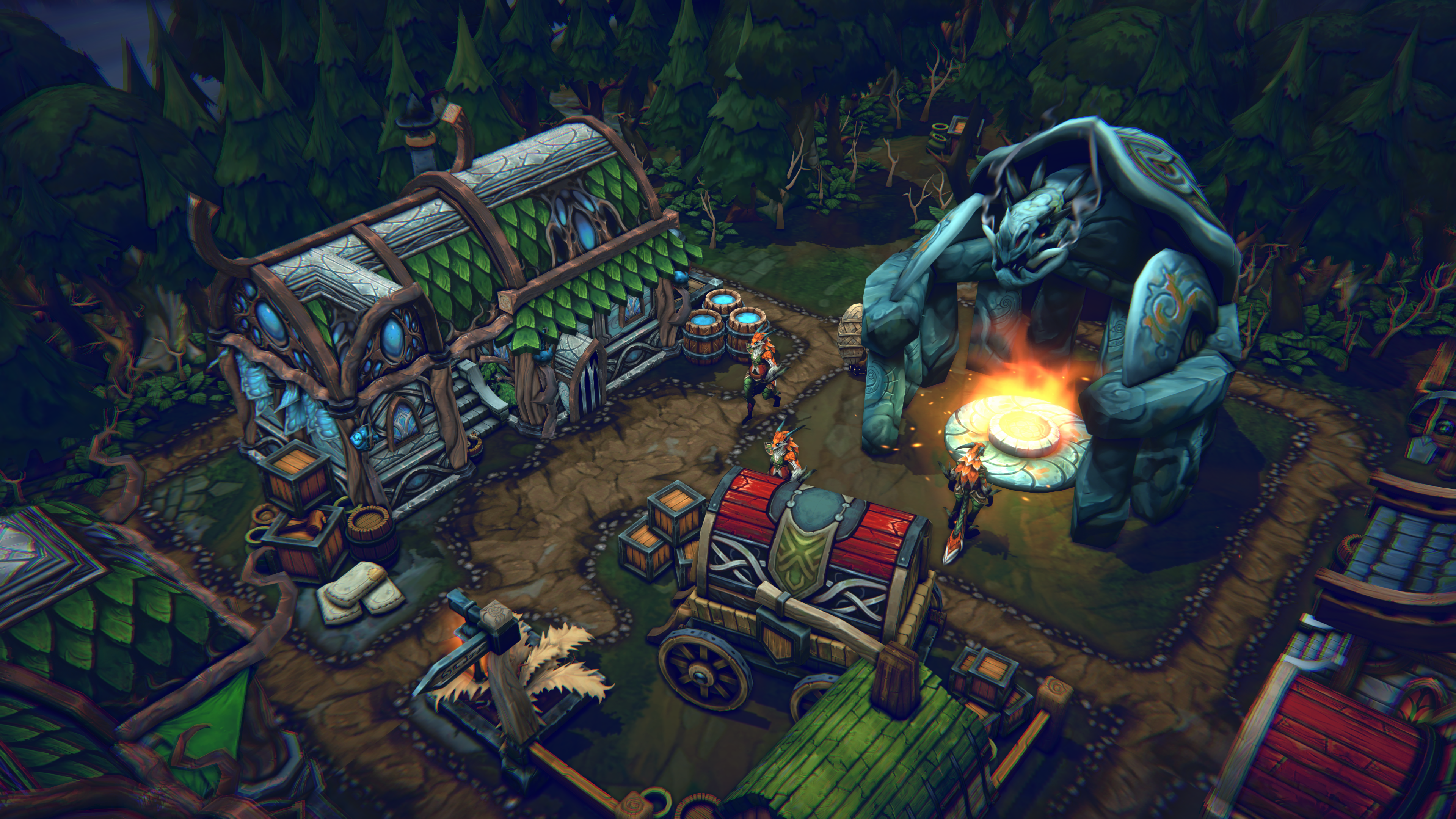
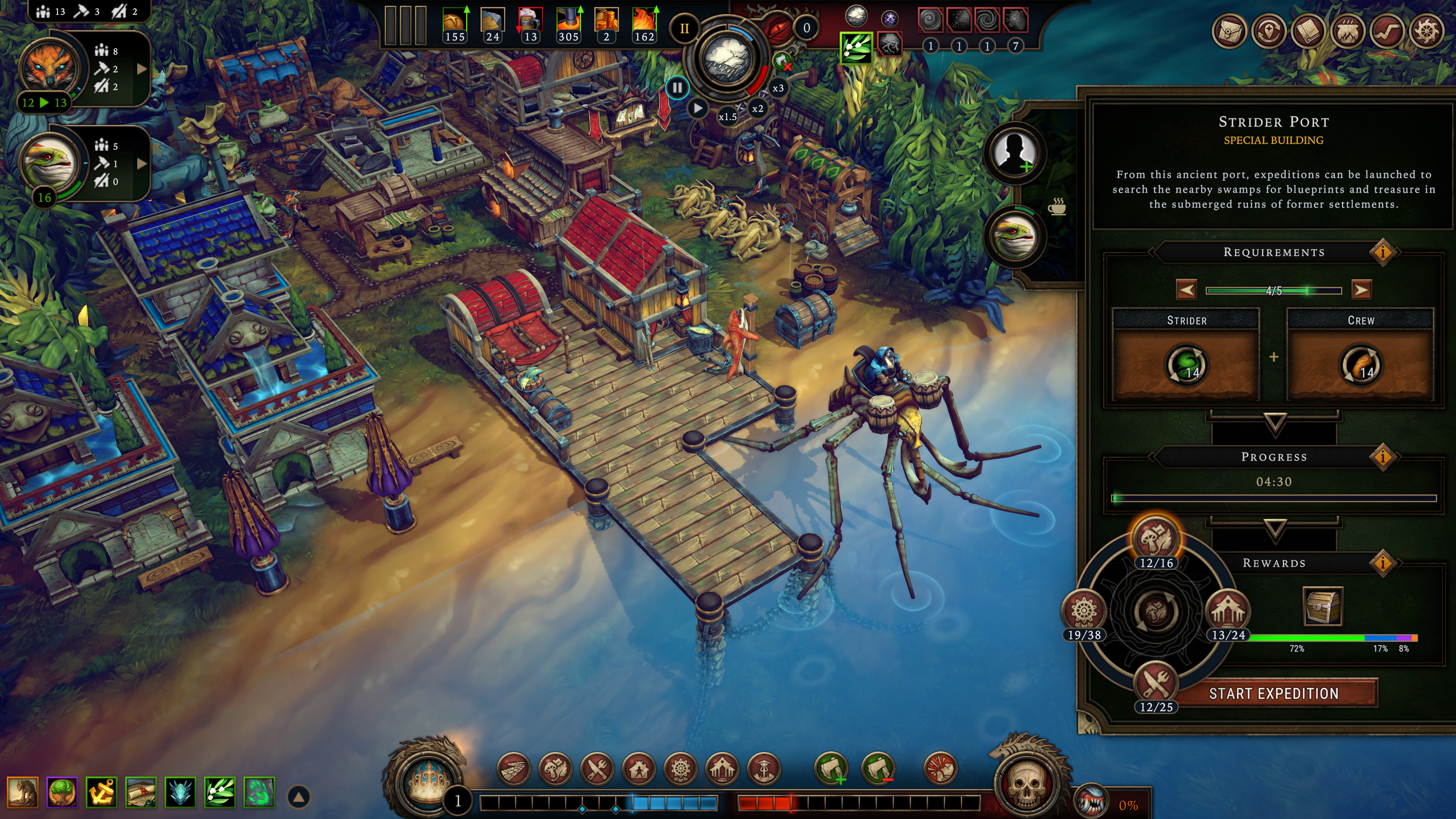
September’s Keepers of the Stone DLC brought in new waterside biomes in the Coastal Grove, which adds seaborne expeditions powered by the spindly-legged Water Strider to compensate for the inability to expand out into the waterways, along with the barren Ashen Thicket biome, which is degraded by the forces of industry and weather. And, most notably for Korzanowski, the addition of Frogs, the porridge-loving amphibian stonemasons who recently became the sixth species added to the game. Unsurprisingly for a water-loving race, they’re as suited to their habitat as they are to the AtS world.
Rainy winter nights
That world emerged from a desire to apply Brandon Sanderson’s worldbuilding advice: Take a known premise, tweak just one element, and see where it leads. Perpetual rain stood out, its floods lending itself to the roguelike wipe before the inevitable reset, and the developers built out a whimsical fantasy setting that has adapted to unending downpours.
Coats become all-important for a society that evolved to survive in constant storms, and their Rainpunk machinery is particularly unique—both in its striking, copper-plated visual design and in the ways it opens up hydraulic-powered tech in a setting that otherwise leans hard toward anthropomorphic medieval fantasy.
AtS isn’t the only Polish city builder around in recent years. As well as sharing a genre, these titles share a revealingly catastrophic attitude to the weather: Against the Storm has its apocalyptic floods, Frostpunk has its frozen wastes, and Floodland its submerged ruins.
When asked exactly why Poles are so down on their climate, Korzanowsk certainly had gripes to share. “The weather in Poland can be quite capricious, especially in the rainy autumns,” he says. “Our nation also remembers the devastating floods that hit certain regions of our country, including our hometown of Lower Silesia, earlier this year and several times in the past. [...] But all in all, we Poles also like to complain about things, often for no reason, so our views on the weather may be a bit exaggerated!”
Korzanowski prefers to stay indoors in bad weather like that endured by the residents of the Smoldering City and hopefully share some co-op roguelike and survival game sessions with the Eremite team. Even if the team is busy preparing version 1.6 and an upcoming collaboration with an as-yet-unnamed indie dev, they’ll make time. “Luckily, cold winter nights are coming,” he says, “there'll be plenty of opportunities.”
Against the Storm is out now on the Epic Games Store.