
Notizie
Celebrating character conclusions with Uncharted 4: A Thief’s End
S
Stephen Wilds
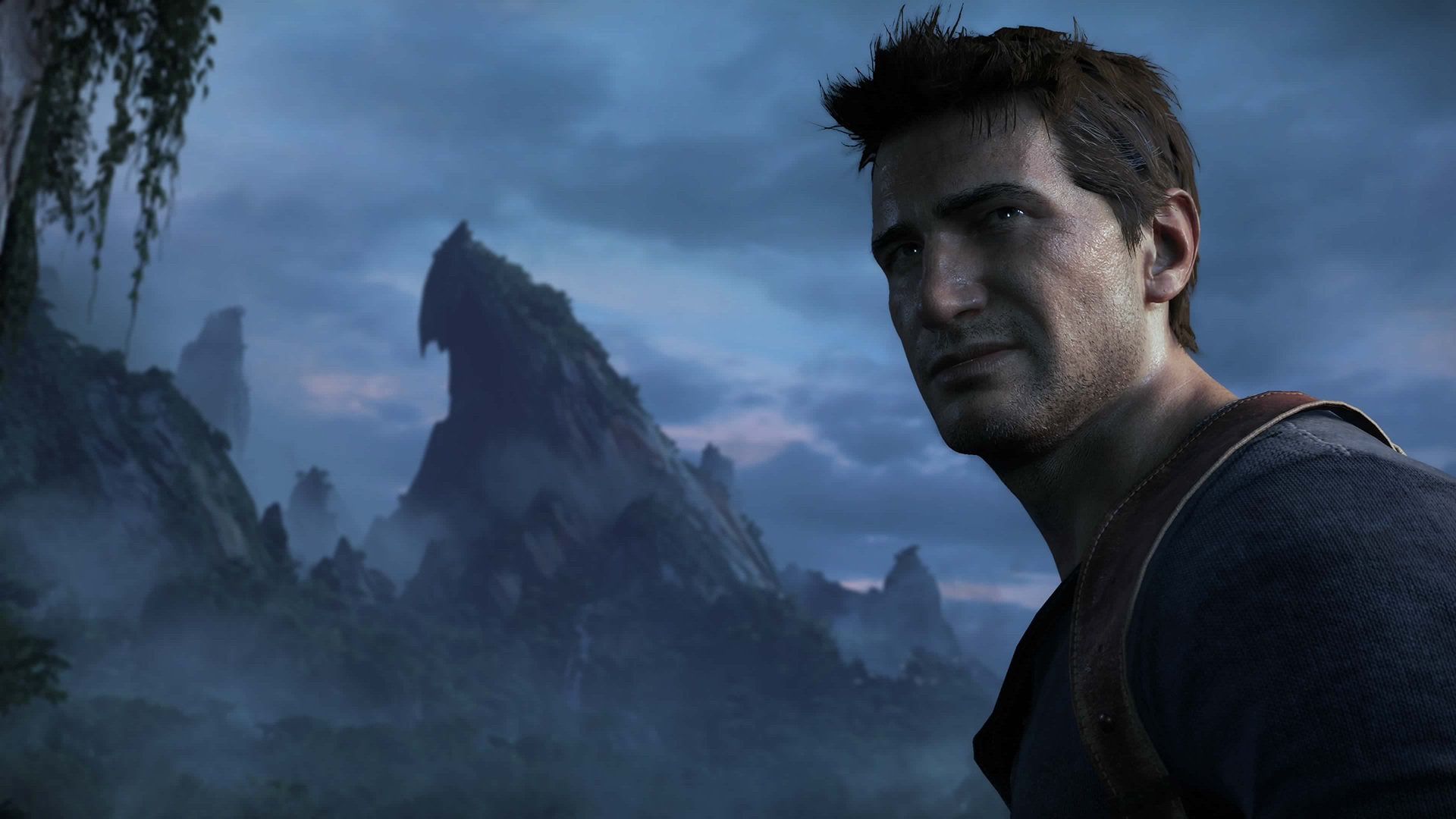
Nathan Drake is a treasure-hunting history buff, the Indiana Jones type with more wisecracking and gunfire. Some call him rakish, but that’s just his aggressive charm that makes him hard not to root for. Drake is the scrappy orphan archetype who needed to do big things, always feeling like he had something to prove, with a huge chip on his shoulder about the lot life dealt him. Naughty Dog, the developers of the series, are masters of character work and telling cinematic stories. Even four games in, we’re still learning more about our main character, building connections, cementing his name, and understanding why he’s so eager to be a man of action.
Uncharted 4 catches up with Drake having seemingly learned that there are more important things than treasure, or at least that the life he was leading wasn’t healthy and was likely going to leave him alone or dead. He has a normal job, one where he went from discovering lost civilizations to salvaging copper wiring to pay the bills, and it’s clear he isn’t thrilled about it. Nate is a changed man, to the point that he’s even turning down more "slightly" illegal jobs (no permits) that would generate bigger paydays. He’s bored, but isn’t willing to give up what he has now with Elena Fisher, even opting to skip out on free beers with co-workers to spend time with her and stay out of trouble. All of that changes when Sam, his long thought-dead brother, shows up in trouble. Now he has a worthy excuse.
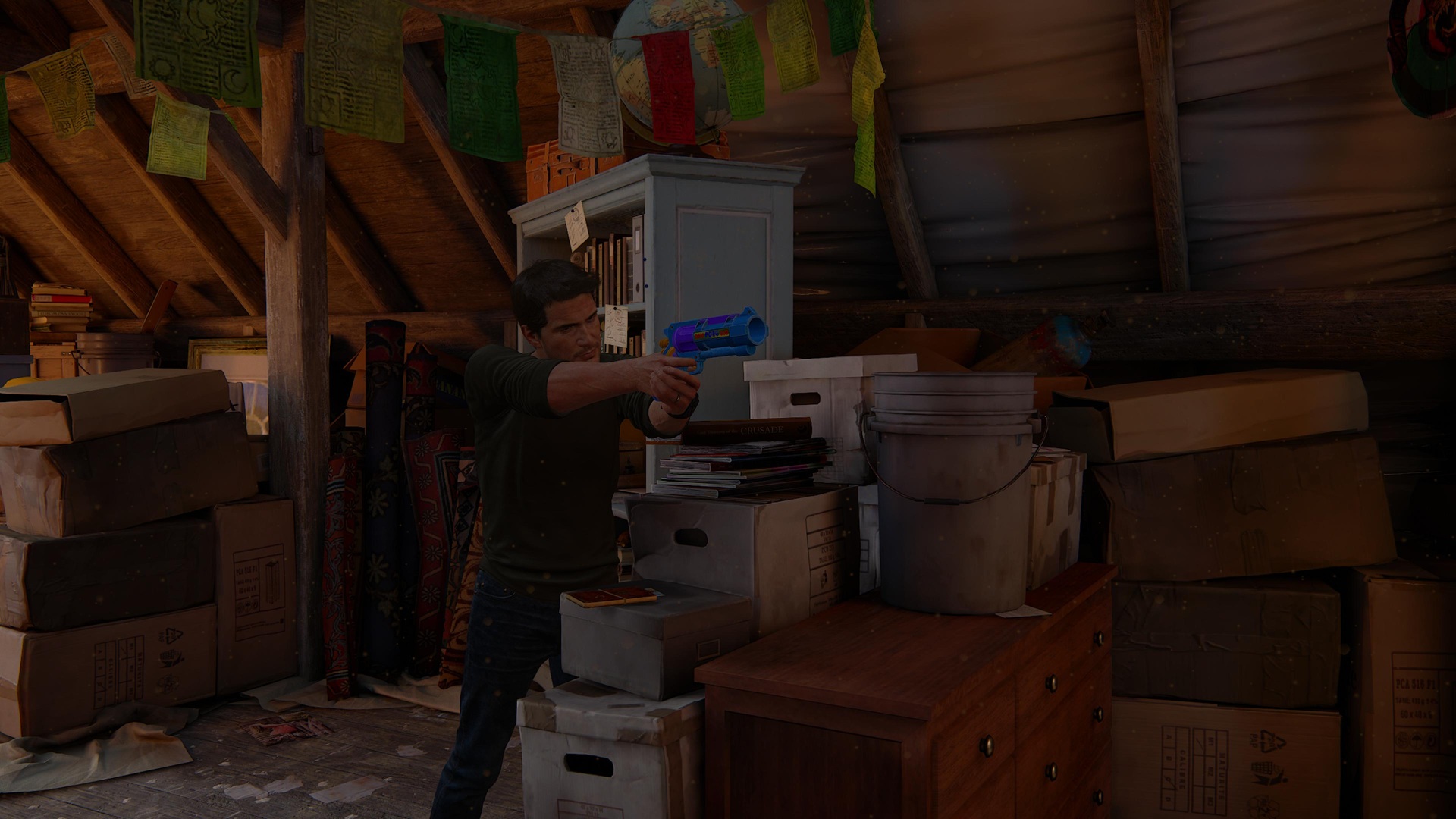
Before that, we’re shown what Drake’s life is like now, why he chose to finally settle down with Elena after their tumultuous relationship from the previous games. Aptly titled "A Normal Life," chapter 4 starts us in the attic, where we walk through the memorabilia of his old exploits, a hall of fame for the glory of the old treasure hunting days. It’s a wonderful moment for those who played through the games and wanted to enjoy the trip down memory lane. His past isn’t forgotten, just tucked away not-so-neatly and barely spoken about. We find out later that he hasn’t even contacted Victor “Sully” Sullivan in two years, perhaps too afraid it would tempt him to re-embrace the lifestyle. There’s an enjoyable segment where we see that Drake has been keeping his skills sharp with a toy gun and makeshift targets before dinnertime calls him back to reality.
While the lovely couple eats a mundane meal in the living room on another typical weekday, Elena explains how she’s bad at editing and talks about her new article, but Nate is zoning out, looking at a framed picture, thinking about exploring far-off places. He used to be a thrill-seeker, and here he is, eating more peas and thinking about calling it an early night. Everyday life can be so depressing. The scene afterward is almost perfect, though, showing why they’re so good together. They play Crash Bandicoot on an actual PS1 to decide who’s going to do the dishes. Sure, it’s fan service, especially with the original boot-up sounds, but many of us have been in these very real moments. It ends with Elena sensing some discontent in the man she’s known for so long, even saying that maybe he should take that illegal job, and asking, “Hey, are you happy?”
Once he has an excuse, however, Nate lies to Elena for several weeks. She’s almost seen as an antagonist to Nate’s adventuring, the thing the players enjoy so much, but she’s quite sympathetic in that we understand her position. The wife of Nathan Drake knows what she married, but the fact remains that he doesn't even trust his wife enough to tell her about his brother, or anything remotely truthful. She has no clue her husband is out there risking his life, or for what, and he does it under the guise of protecting her. Elena knows he’s just lying to himself, even when he swears it’s different this time; she can see some of that old Nathan Drake that used to upset her. The confrontation, the realization of how he almost threw it all away and didn’t even go after her, are tough and uncomfortable moments, but feel real and necessary.
Nate was helping his brother, re-bonding with him, making up for lost time, and probably dealing with a ton of regrets that weren’t quite voiced out loud. Even past the lies, Sam is a bad influence on him, a representation of what he could have become had things gone differently, or maybe if he’d just continued down his previous path. Even the bad guy, Rafe, tries to offer Nate the chance just to go home and forget about all of this.
In a testament to this being an older, wiser Drake, once the lies are all revealed and he realizes they don’t need the treasure to save Sam from danger, Nate wants just to head back home. The gold and the glory aren’t as important anymore. The thrill of the hunt doesn’t sway him like it once did. This story doesn’t simply stop; the tale has an ending and a final confrontation, but it seems more about him fighting for that life he wanted so badly: his family and friends, all relationships forged in danger. On a deeper level, this series has earned that kind of pathos over time.
Naughty Dog themselves said that Uncharted 4 is about “work-life balance” between what we’re passionate about and what’s most important. As cheesy as it sounds, many people deal with this every day. It sounds so stereotypical, but it’s also what many of us want, even if it isn’t what we’re doing. After this last adventure, the ending sees Nate and Elena making this conscious choice to find a compromise between illegal, explosive, death-defying stuff and sitting bored at home with boring jobs they hate. The life they have in the epilogue is quite different, not only in their location (a place similar to the painting Nathan got lost in during their meal) and new business, but with the new addition to the family: Cassie. The last bit of the game sees players taking control of the Drake offspring and discovering her parents’ secrets, which they finally decide to tell her about. It’ll be her choice if she wants to take these risks, embark down that path—life is a circle after all—and continue the Drake legacy.

This kind of conclusion is something that feels final—maybe not for everyone involved, but certainly for Nate. All good things must come to an end, but Drake didn’t have to die to find a little stability in his life or be killed off to free up the spotlight, as we saw with The Lost Legacy. It’s not just an ending to another great adventure, but a long goodbye to everything they’ve done, and it’s heartfelt. This is the type of farewell that doesn’t overstay its welcome; it's simple and clean, closing the book on an extraordinary life.
Never say never. Someone could always choose to reactivate him, maybe even a final fight to save his daughter, but this feels like it, especially with what Neil Druckmann said about the series: "There's no story left for us to tell." He called this game the "payoff" for everything else. The conclusion hits harder because we’ve seen Drake through the years, and we know his connections with people. I’m not sure if it’s a perfect ending, but it feels close and incredibly genuine without being overly emotional. Writing good endings is hard, but when they’re done well, they can add so much more than what a thousand decent sequels could, and that's something worth celebrating.