الأخبار
Cloudheim guide: How classes, weapons, and XP work together with pinball combat
D
Dave Tach
Wrapping your mind around its cleverness could take hours. In this Cloudheim guide, we’ll turn hours into minutes by explaining the nexus between classes, weapons, and XP.
Cloudheim classes
Like so many games, you have to choose a class near the beginning, at a point when you know almost nothing about Cloudheim. Good news: You can’t make the wrong decision because these classes are malleable. You’ll never be stuck in one forever, but you’ll spend the first few hours specializing in the one you pick first.
To make that choice a little easier, here's a brief overview of each Cloudheim class.
Breaker class
Breakers are the muscle in Cloudheim.
They carry axes, greatswords, and hammers. They also deal bonus damage against armored enemies, which is especially handy in boss fights. Their skills can employ fire and deal area of effect (AOE) damage.
Leveling up Breakers increases your Strength stat.
Ranger class
Rangers are fast fighters designed with combos in mind.
They enter battle with kamas (which are like scythes), katanas, and the ability to dual wield weapons. They deal bonus damage to vulnerable enemies, and their skills focus on mobility and quickness.
Leveling up Rangers increases your Speed stat.
Runeblade class
Rudeblades are ranged spellcasters who carry swords and phantom blades.
They specialize in inflicting elemental damage, and their offensive spells come in ice and lightning varieties. They also cast healing spells at will and create an automatic area-based heal when they finish combos.
Leveling up Runeblades increases your Magic stat.
Sentinel class
Sentinels are a defense-focused class.
They carry weapons focused on defending. Like their Runeblade counterparts, they have an AOE heal that deploys automatically after finishing combos. Their skills deliver utility and control.
Leveling up Sentinels increases your Vigor stat.
Combining classes
One of Cloudheim’s most interesting conceits is that you don’t have to choose one class forever. You also don’t have to change your character to change your class—you just have to equip a weapon. In Cloudheim, your weapon effectively determines your class.
The more you use a given weapon, the more you’ll upgrade that class. Cloudheim calls this "mastery." Use a weapon in combat, and your weapon will gain XP as you gain XP. At a certain point, you’ll max out your weapon’s XP and master it. As you level up, you can also earn new skills through each class’ menu.
Imagine that you began as a Runeblade, equipped with a sword. If you equip two swords, you’re doubling down on the Runeblade upgrade path. The more you swing your swords, the more you’ll upgrade that class.
But then you’re having trouble with a boss, and you remember that Breakers carry heavy weapons that give you advantages against boss enemies, so you create an axe. Now, whenever you use that axe (equipped in your second weapon slot alongside your sword), you’re leveling it up through the Breaker class. The more you use the axe, the more you’ll upgrade the class.
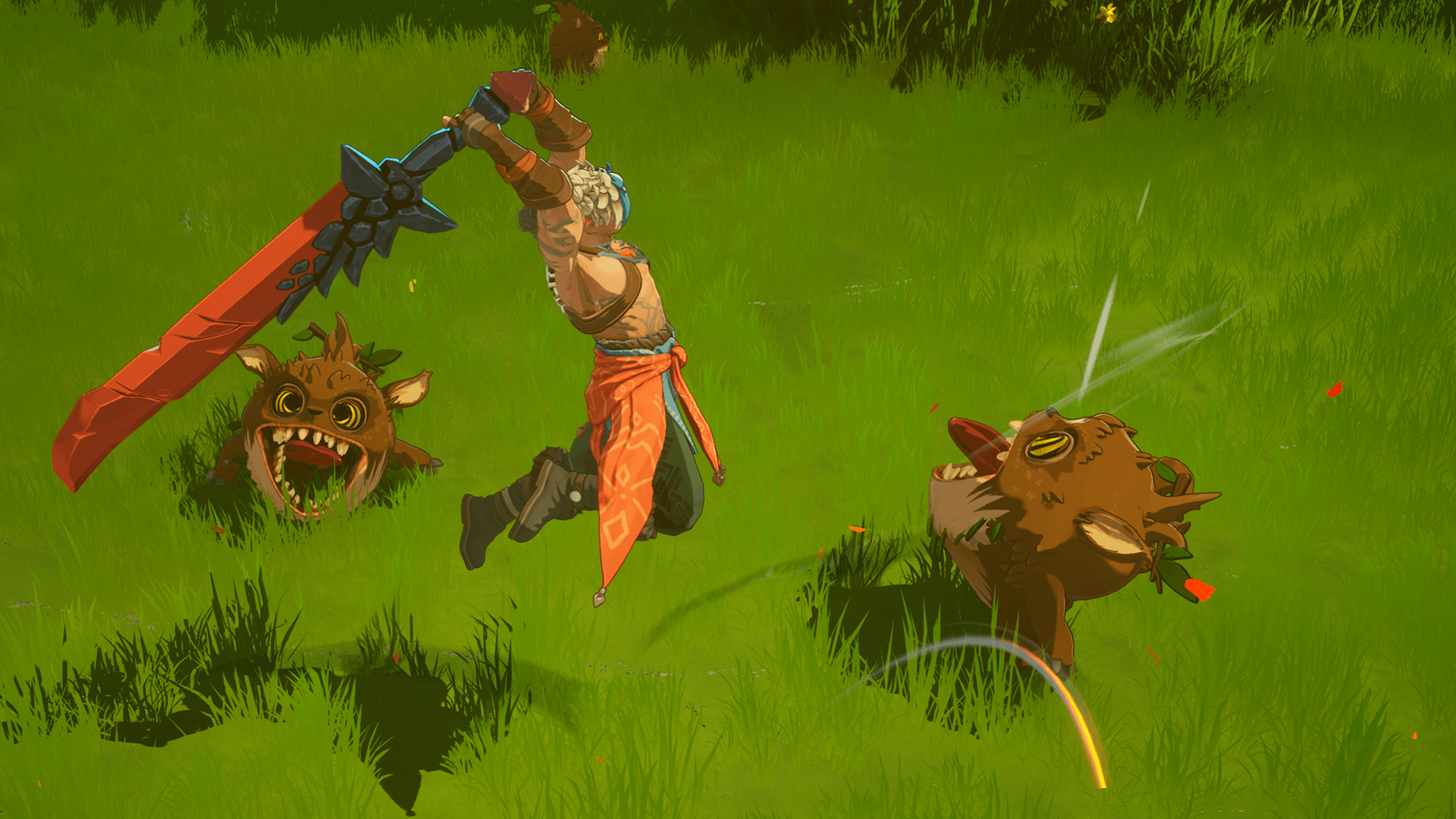
Cloudheim’s weapons and character classes are a breeding ground for experimentation, and finding out what fits your style is a big part of the fun.
Earning XP and leveling up
Like approximately 37 billion other games, you’ll earn experience in Cloudheim. Earn enough XP, and you’ll increase your level. But how you earn XP is varied, and it offers a great incentive to do many seemingly unrelated things that all help your character.
Crafting, fighting, fishing, and harvesting all reward you with XP, and you can see your progress as a big bluish bar at the bottom center of your screen. In other words, you don’t have to fight to level up. Doing these other things is super beneficial.
When you level up, you’ll increase your Magic, Speed, Strength, and Vigor stats, based on the weapons you’ve used. You'll also unlock class skills along the way.
Mastering combat
It’s entirely possible to play Cloudheim like a generic action game where you just swing your weapon at the baddies, but that’ll only make things harder. Cloudheim’s combat is based in both physics and combos. The sooner you understand this, the more successful you’ll be.
The physics part of Cloudheim’s combat starts with impulse attacks. Though they may not seem so at first, they’re every bit as important and effective as attacks from your weapons.
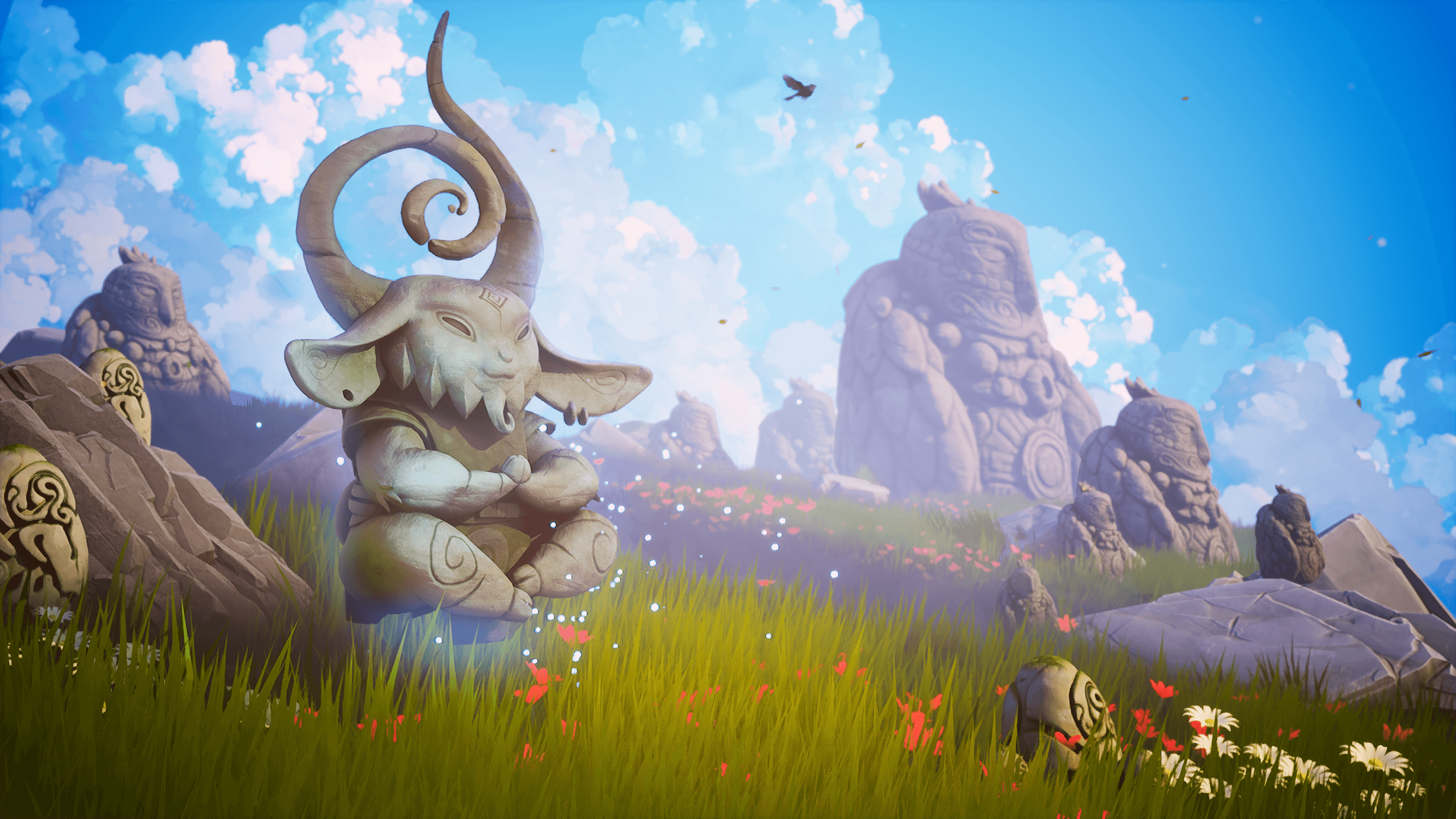
Think of impulse attacks as a way to fight without your weapons. They come in four varieties: launch, pull, push, and smash. Each deals impulse damage as your enemies bash into each other and the world around them.
The more they bounce and bash, the more impulse damage they receive. As you’re fighting, look for opportunities to punt your enemies around the battlefield like a pinball, to lasso them into slow motion, and attack as they float through the air. Or better yet: lasso them to you and then kick them into enemies, because more impulse attacks mean bonus damage.
The higher your level, the more impulse damage you’ll deal. Also, impulse attacks deal heavy armor damage, and enemy resistances have no effect on them. What we’re saying is that they’re both awesome and essential.
Cloudheim’s combo system builds on impulse attacks and damage, just as works when you attack with your weapons. Every weapon has a built-in combo, and every attack in the combo becomes more powerful, so there’s a reward for ruthless aggression. Also, some characters even get bonuses at the end of a combo, like the Runeblade, who gets a little healing. You can often keep your combos alive by dodging or kicking.
Whether you’re playing solo or with a group of players, every successful attack increases your combo score, and the higher the combos you score, the more loot you earn.
If this chaotic combat sounds interesting, you can grab Cloudheim on Epic Games Store today.