Control Resonant: a paranormal frontier clashes with humanity in a Manhattan filled with mystery and awe
Jesse Faden, standing on a busy street somewhere in New York, stepped through a doorway into the Oldest House in 2019, beginning a descent into a paranormal world that would change her forever. Over six years later, her brother Dylan is stepping in the opposite direction.
Control (Opens in new tab), as creative director Mikael Kasurinen puts it, is about Jesse’s rise to power as the director of the Federal Bureau of Control (FBC). It is a journey that begins in the familiar and quickly dissolves into the unknown, pulling players into a reality filled with paranormal entities, terrifying extradimensional beings, and a mystery so vast that the game’s conclusion only begins to scratch its surface.
“That was her destiny,” Kasurinen said. “The first five minutes of Resonance open with Dylan taking steps outside the Oldest House.”
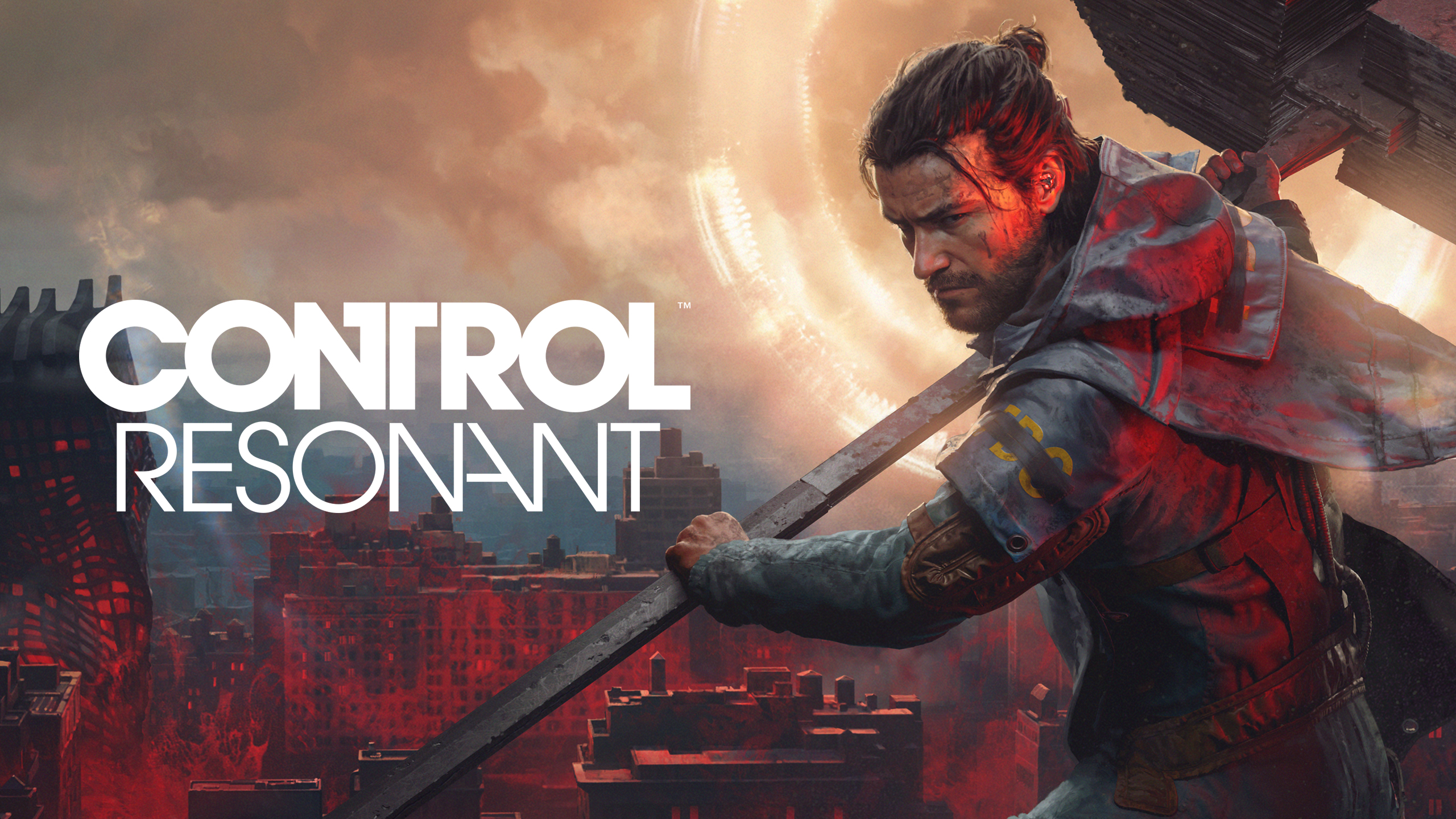
Now, as Control Resonant (Opens in new tab) approaches its 2026 release, Jesse’s brother Dylan is taking his first steps into a version of New York City no one will recognize, escaping a place he has involuntarily called home for nearly his entire life. Where Jesse’s journey was defined by containment, Dylan’s path moves outward, into a world he has never truly known. His story, still deeply rooted in the paranormal, becomes one of discovery and an attempt to understand what it means to be human.
“There’s a reverse journey here. That also brings a reversal of space." — creative director Mikael Kasurinen.
“There’s a reverse journey here,” Kasurinen said. “That also brings a reversal of space. The Oldest House can feel oppressive and claustrophobic. Dylan is used to that. Now, stepping into the sunlight, it’s something new for him. What’s normal to us is strange to Dylan.”
Remedy views Control and its sequel as siblings, much like the duo of protagonists that anchor the paranormal action adventure and its RPG-leaning follow-up. Each game complements the other while pushing in different gameplay and narrative directions.
Control, like Remedy’s catalogue of other mystical single-player narrative adventures, follows Jesse Faden as she fights her way through a monolithic office building occupied by members of a secret federal agency overtaken by extradimensional forces. That influence is described as an “earworm” you cannot get out of your head. Jesse pushes through it all with a single goal: to find her brother.
In the end, after battling through a series of horrors including corpses, unsettling scientific experiments, and phenomena that defy human understanding, Jesse finally reunites with Dylan. After a lifetime apart following his abduction by the FBC, she frees him from the corruption that has overtaken the Bureau.
We learn more about Jesse and Dylan’s childhood in Ordinary, Maine, where they suffered the loss of their parents after a catastrophic event caused by a mysterious slide projector, revealed in the DLC that followed Control. We last see Dylan falling into a coma, and that is where we pick up with him once more.
From Bureau to Borough
Dylan is not just awakening to a bureau in crisis. He is becoming independently conscious for the first time in years, only to find an entire neighborhood overtaken by multidimensional entities both known and unknown.
The player's perspective follows him from a brutal, endlessly labyrinthine office building filled with paranormal experiments into a more open, modern, and dimensionally warped version of New York City. Strange anomalies and once-contained creatures now roam a city that was once entirely oblivious to the Federal Bureau of Control’s existence.
“You’ll see things that are ordinary,” Kasurinen said of elements like trees and cars. “And then you’ll see these creatures walking next to them. There’s this sense of emotional terror out in the daylight that’s not easy to achieve.”
Much of Control Resonant is still shrouded in mystery, as Kasurinen and the rest of the development team at Remedy want players to feel shock and even fear on their first playthrough as they experience this warped version of Manhattan for the first time. What catastrophe led to the Hiss and other entities breaking out of the Oldest House remains unknown, but something new has emerged, and the FBC is not ready to control it.
Dylan’s story brings together a mix of the familiar and the unfamiliar for Remedy fans. Enemies like the Hiss and the Mold have moved beyond the Oldest House and spread into New York. The Bureau itself, though nearly destroyed by the events of the first game, is still operating as it attempts to respond to another catastrophe. While elements of this have been explored in Control and FBC: Firebreak (Opens in new tab), few answers have surfaced about their origins. Resonant begins to pull at those threads.
“A bit,” Kasurinen said. “But if you explain too much it ruins the mystery. The Hiss needs to be unpredictable, so you don’t know what’s next. If you explain everything, it also ruins much of the mystery.”
Manhattan is very much the heart of Control Resonant in the same way the Oldest House anchored Control. Remedy wanted to expand what players could experience while still preserving the sense of escalating, unknowable mystery. The studio aimed to merge the layered intrigue of Control, where every question seems to generate another, with the emotional scale of a citywide disruption unfolding in real time.
Players will likely find themselves asking similar questions as they move through transformed alleyways and streets as they once did while passing a refrigerator that must be constantly monitored to prevent it from becoming lethal.
No New York Control
That tangle of office rooms, laboratories, and containment units was somewhat open to players as they experienced Jesse’s fight through the Oldest House. It was a nonlinear experience that gave players a degree of freedom in where they went and what anomalies they encountered.
The world was broken into distinct sections of the building, often resembling real departments you might find in a corporate office. Others felt closer to something pulled from a strange nightmare. Players navigated these spaces on foot, by elevator, and sometimes through air ducts. In the world of Control, the Oldest House was always shifting, meaning new paths would open as the game progressed.
Remedy describes Control Resonant as “open-ended,” with a central hub area positioned as an FBC field office and checkpoint. From there, players can look toward distant landmarks and see other zones already impacted by extradimensional forces. Different entities, such as the Hiss or the Mold, have fully taken over certain areas, transforming their layouts and breaking their adherence to the known laws of man.
“The world is more visible to you,” Kasurinen said. “It’s open to you more so than Control, which was our inspiration for this game, and it’s more of a considered world in comparison to other games.”
Each zone tells a story about what happened there, and players can approach them at their own pace, deciding how and when to engage with each unfolding pocket of catastrophe.
We Sing, Ashtray Maze
While both Control and Alan Wake 2 (Opens in new tab) feature exploration as a core pillar of their design, some of their most memorable moments come when Remedy steps away from player-driven navigation and instead pulls up the guardrails, guiding players through tightly authored, fantastical set pieces that fully take control of pacing, space, and spectacle.
In Control, the Ashtray Maze stands as the clearest expression of that philosophy. It is a shifting, reality-bending labyrinth where Jesse Faden moves through a fully reactive space that transforms around her in sync with music, turning a hostile extradimensional structure into a surreal, rhythm-driven sequence of combat and motion. What begins as disorientation inside an impossible architecture gradually resolves into momentum and flow, as the environment itself becomes both obstacle and rhythm, responding to the player in ways that feel choreographed yet still immediate.
“We Sing” in Alan Wake 2 pushes that idea in a different direction, transforming narrative progression into performance. In the sequence, Alan Wake is pulled through a shifting, stage-like version of his own story, as the world around him becomes a choreographed music video that blends combat, storytelling, and self-reflection into a single uninterrupted experience. It is less about navigating space and more about being carried through it, as the structure of the level constantly reasserts itself around performance and spectacle.
“We’re familiar with what the players love about those scenes,” Kasurinen said, unwilling to say anything about Control Resonant’s potential narrative beats.
Kasurinen, while outlining the creative pillars Remedy adhered to during development of Resonant, noted that the team hopes the sense of awe players felt in Control will not only return, but expand in step with a world that now stretches far beyond the confines of the Oldest House.
“There is a sense of awe that we want to trigger as people go into this world,” he said. “It’s a mix of fear and excitement, and a mixture of those things hitting at the same time.”
In Control from the Beginning
Kasurinen, who served as game director on the first Control, had been thinking about what might come next long before the original released in 2019. Even during development of the first game, the team was already seeding ideas, environmental details, and narrative fragments that could later be revisited or recontextualized. At the time, those elements were less a roadmap and more a series of possibilities left deliberately open-ended.
He began pitching what would eventually become Control Resonant in 2020, while also providing high-level direction for Control’s two DLC expansions (Opens in new tab) released that same year. In those early conversations, the sequel existed more as a conceptual direction than a defined project, something that evolved gradually as the studio assessed what the universe could support next.
“A lot of those early years were setting the stage,” he said, noting that the concept did not receive official approval until 2022. Remedy, he explained, operates as a multi-project studio, which meant several major productions were already in motion simultaneously, including Alan Wake 2. “We stack projects in a way where they don’t collide with each other.”
That structure allowed Resonant to develop in parallel with other large-scale titles, but it also meant the team had to be intentional about when and how ideas matured. Nothing moved forward in isolation.
Once the decision was made to set Resonant within New York City, the team was faced with a more immediate and practical question: whether their existing technology could support the kind of world they wanted to build. Much of that evaluation centered on Northlight, Remedy’s proprietary engine and toolset. At the time, the team was not fully confident it could handle the density and systemic unpredictability of Resonant’s vision.
What followed was a sustained period of technical expansion. New tools were developed, existing workflows were restructured, and internal systems were refined to better accommodate large-scale urban environments layered with extradimensional instability. It is a rethinking how the world itself could be authored and modified in real time.
That development timeline also ran alongside a broader expansion of the Control universe itself. In parallel with Resonant, Remedy was building FBC: Firebreak, a cooperative PvE experience centered on confronting the Hiss within the Oldest House. Together, these projects began to define a wider framework for what Control could become, not just as a single narrative, but as a connected ecosystem of experiences across different formats.
At the same time, Remedy’s wider catalogue has increasingly been discussed as part of what the studio refers to as the Remedy Connected Universe, sometimes called the Remedyverse. While each game stands on its own, there are recurring thematic and narrative threads that suggest deeper links across titles, reinforced through deliberate crossovers and connective tissue between stories.
Alan Wake, for example, appears directly within Control’s AWE expansion, tying the events of Bright Falls into the Federal Bureau of Control’s investigations. Elsewhere, figures like Dr. Casper Darling and Ahti the janitor carry forward across different parts of Control’s story, while echoes of other events and phenomena continue to surface across the studio’s work. These connections are presented as overlapping realities where characters and unexplained forces seem to resonate across separate incidents in ways that remain only partially understood.
“We wanted Control to be a versatile franchise, but everything had to be earned. We couldn’t just do anything,” Kasurinen said. “We had a little trouble with Firebreak, but we carefully thought everything through. We have a high level plan, including a single player and multiplayer track that includes where they overlap.”
Across all of its single-player entries, he added, the unifying structure remains consistent. Each story begins with a major catastrophe that reshapes reality in some fundamental way, forcing both characters and institutions to respond to forces they do not fully understand, and may never fully contain.
Is Remedy in Control?
Narratives for long-running franchises like Control can sometimes drift from their original creators over time. It is not uncommon for stories in games to evolve organically during development, with explanations added later, revised, or intentionally left unresolved as new ideas take shape. In that space between structure and improvisation, interpretation often becomes part of the design itself.
The Control community has embraced that ambiguity, building extensive theories around the Hiss, Jesse and Dylan Faden, Dr. Casper Darling, and the motivations behind events that are never fully explained in-game. The gaps between confirmed narrative and unexplained phenomena have become a core part of how players engage with the world.
“We have a sense of intention and trajectory for our characters,” Kasurinen said. “It’s like we put them out on a boat and kick them into water. Like with Darling, he makes an appearance of sorts. Sometimes you know exactly what you want to do. It’s also a lot of collaboration with Sam Lake as characters crossover into Alan Wake.”
In games like Control, where much of the story is delivered through audio logs, scattered documents, and environmental storytelling, the absence of direct exposition is not accidental. Instead, those missing pieces are part of a broader narrative approach that prioritizes discovery and interpretation over complete clarity.
“The simple answer is yes, we have plans,” Kasurinen said. “But plans do change.”
Control is up to interpretation
The first Control, while physically contained within the bounds of the Oldest House, carried a narrative that reached far beyond it. It moved through nightmares, interdimensional travel, god-like entities, and sentient resonance that manifests as living energy. To call it complex would be accurate, but it would also undersell how deliberately fragmented and layered its storytelling becomes across systems, documents, and shifting realities. Much of it is left unresolved, or only partially explained, inviting players to assemble meaning from pieces rather than receive it outright.
For Remedy, however, the story always returns to something more grounded: stakes.
“There needs to be a story that you understand the stakes of so when characters make decisions you understand the gravity and consequences that come from them,” Kasurinen said. “Sometimes things get esoteric and we don’t explain everything, but sometimes saying nothing is more powerful than saying something.”
Kasurinen noted that while many elements of Control appear intentionally opaque, there are often clearer emotional and narrative foundations beneath them. The ambiguity is design, allowing players to project meaning while still anchoring events to recognizable human decisions and consequences.
“It’s fun to see people create their own theories and go bonkers,” he said with a smile. “Sometimes they do go in the right direction.”
He added that he and the team at Remedy frequently observe community discussion around Control and its related projects, including fan theories that attempt to decode the broader universe.
“Our entire team is obsessed with Reddit,” he said. “Sometimes we even go, ‘oh, that’s good.’”
This openness to interpretation feeds directly into how Resonant is being shaped. While the familiar elements of interdimensional conflict and paranatural entities like the Hiss remain present, the tonal focus begins to shift. The scale may be larger, but the emphasis becomes more personal, grounded less in abstract containment and more in lived experience and human response.
That shift in perspective is reflected not only in story direction, but in how the game itself is being structured from the ground up.
The core pillars of Resonant
Even though active development on Control Resonant did not begin until long after Kasurinen first conceptualized Dylan’s journey through Manhattan, Remedy already had a clear set of creative pillars in place for what the sequel needed to be. Those guiding principles have remained remarkably consistent across the six-year development process, shaping everything from narrative structure to moment-to-moment gameplay.
Those creative pillars include returning to a living world established by Control, building character growth through RPG-style progression, designing combat that encourages constant movement and aggression, staging large-scale set pieces that evoke both awe and terror, and centering the experience on Dylan’s journey toward understanding what it means to be human. Together, they form a framework that informs every layer of Resonant’s design, from its encounters and traversal systems to the way its environments shift and react around the player.
That focus on awe and scale is especially important given how Control has expanded since its 2019 release, through multiple DLCs, a multiplayer spin-off, and narrative crossovers with Remedy’s other major franchise, Alan Wake. As the universe has grown more interconnected and structurally complex, these pillars have helped ensure that each new addition still lands with a consistent emotional impact, particularly in how it balances the uncanny with the spectacular.
“We don’t have rules we follow,” Kasurinen said in response to whether the team works from strict narrative constraints that help align the wider universe. “But there are certain character elements we try to hit. The Federal Bureau of Control, for example, is something where we try to emphasize that their attitude is that anything can be figured out if you work hard enough. They are science-oriented.”
Kasurinen explained that this approach extends to how the studio treats organizations and characters more broadly, where each faction is defined not just by its actions, but by the internal logic that governs how it believes the world works. In the case of the FBC, that logic is rigid and deeply rule-driven, even when those rules are only partially understood by the people enforcing them.
“Sometimes, yes, they follow a process and it’s almost lucky that things worked out,” he said, using a horror movie scene to illustrate the mindset. “It’s like deciding to summon the devil. You put ash on the ground and five candles. Not six. Why? We don’t know. There is this rule-based thinking.”
That adherence to structure, even in the face of the unknown, has consistently defined the Bureau’s response to the paranatural. As seen in Control and further explored in FBC: Firebreak, the organization often finds itself outpaced by the very forces it studies, relying on protocol and containment procedures that are not always sufficient for what they encounter.
That carries into Resonant, where another catastrophe sends New York into a state of widespread instability. Once again, the FBC finds itself overwhelmed, but still operating under the same instinctive reliance on procedure. Operatives attempt to contain the situation using established methods, including the application of black rock across affected structures, a material known for its ability to dampen paranatural effects. Even in the face of something unprecedented, the Bureau continues to default to process, following every available protocol in an effort to regain control.
“When it comes to characters,” Kasurinen said of what defines Control Resonant, “what we’re excited about is bringing the citizen perspective to the player. In this game we get to see ordinary people react to the actions of the FBC and these paranormal entities.”
Becoming Human Again
At its core, Control Resonant is a story about what it means to be human in a world where the boundaries of reality no longer hold. Dylan Faden’s journey anchors the experience on a personal level, shaped by a life spent in isolation, containment, and institutional control, and the possibility of something different after years of captivity. Resonant becomes, in part, about what happens when that controlled existence ends and a more uncertain form of freedom begins.
That question extends outward into the streets of a fractured New York, where ordinary citizens are suddenly forced into contact with forces they barely understand, let alone believe in. As Kasurinen puts it, this perspective is essential to the game’s intent.
“When it comes to characters,” he said of what defines Control Resonant, “what we’re excited about is bringing the citizen perspective to the player. In this game we get to see ordinary people react to the actions of the FBC and these paranormal entities.”
For Dylan, that same collision of worlds becomes an emotional confrontation with identity. His journey is not only about escaping the Oldest House, but about learning how to exist without the systems that once defined him, and confronting what he becomes when those systems are gone. As Kasurinen noted, this focus is deliberate.
“When we look back on Control Resonant and what I first told the narrative team is that I want this to be the most human story we’ve ever told,” he said.
That idea of humanity, fractured and tested, is mirrored in the citizens now living alongside paranatural collapse. Their experiences form a parallel narrative to Dylan’s, as fear, adaptation, and denial unfold in real time across a city that no longer obeys normal rules. The Federal Bureau of Control, meanwhile, continues to impose structure through protocol and procedure, even as its ability to contain events slips further out of reach.
In that contrast between institutional control and human response, Resonant finds its central conflict. The collapse of reality is a spectacle of anomalies and a pressure test for how people survive and redefine themselves when the systems they rely on fail.
Related Links

Control Resonant opens up as you get stronger — and as characters start trusting you