News
Crimson Desert wants to transcend genre boundaries
G
George Yang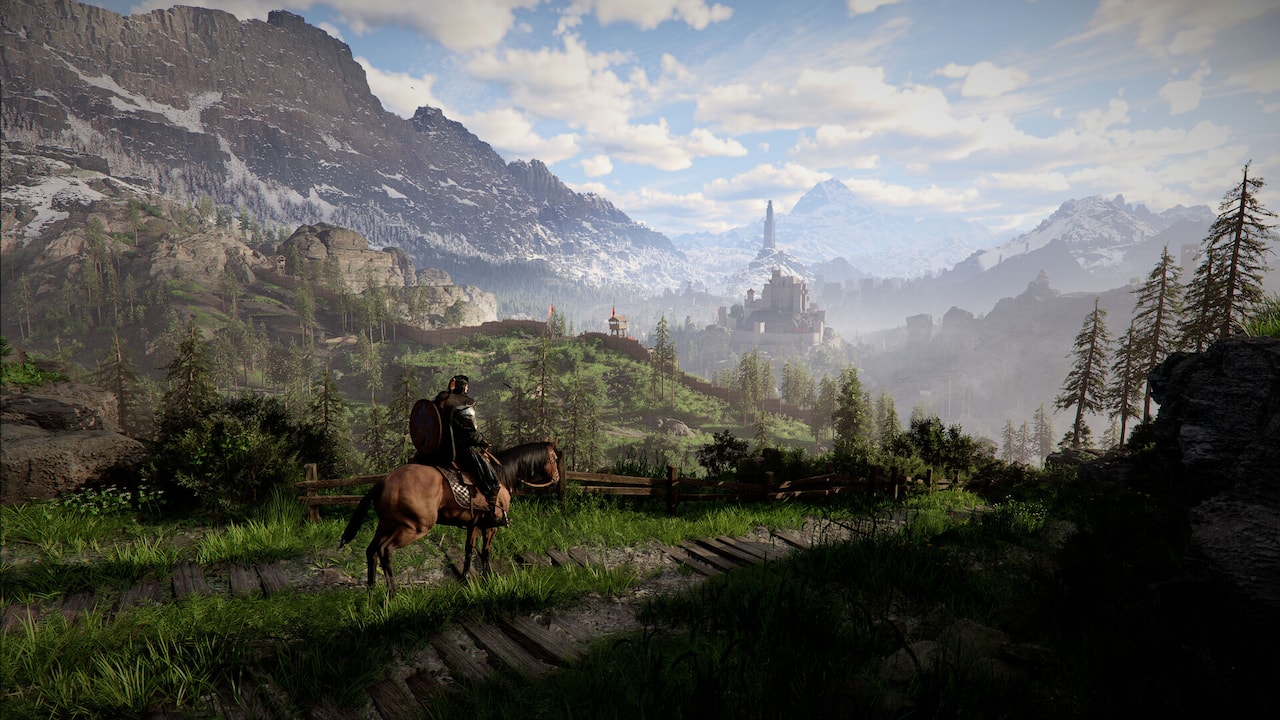
“It comes down to design ethos,” says Pearl Abyss's Marketing and Public Relations Director Will Powers. “Every time we talk to the development team about this, they're very vocal about creating content around the game and the guiding principle to make things that are fun—and not only fun, but woven together and systemically structured to be part of the world itself.”
Sure, beating someone at arm wrestling doesn’t win you anything, not even some money. But is it entertaining? Definitely.
Defining itself
Crimson Desert was first revealed all the way back in 2019 as a new massively multiplayer online game (MMO) that also served as a prequel to Pearl Abyss’s other MMO, Black Desert Online. Since then, however, Crimson Desert has shifted to a singleplayer action-adventure game.
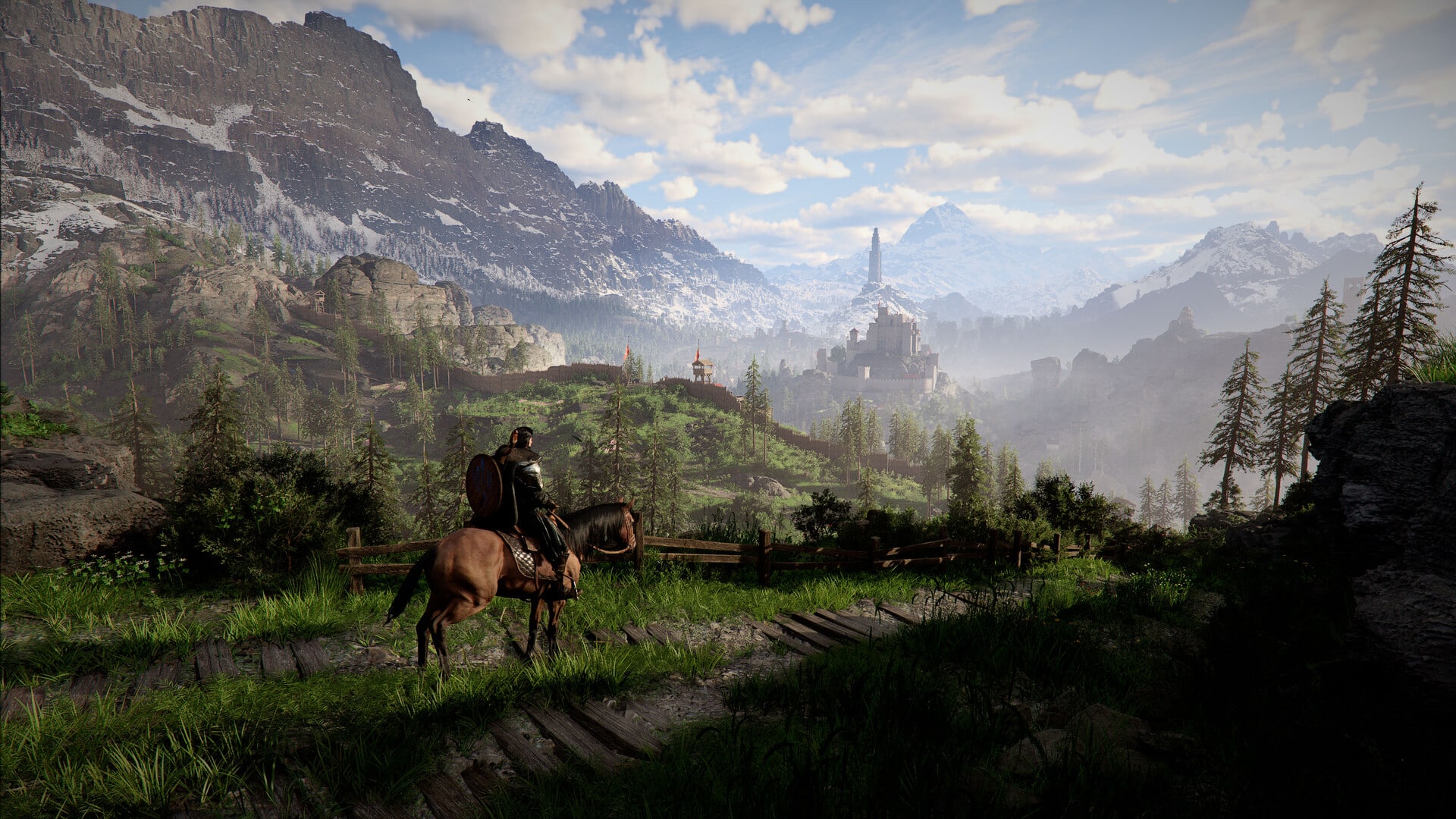
Crimson Desert takes place on the fictitious continent of Pywel. Kliff and his fellow Greymane group members are attacked by the Black Bear bandits. Many are killed, and Crimson Desert depicts Kliff's subsequent journey to reunite with the few remaining. While I was only able to experience the first few chapters, it felt like the real story is the narrative you create for Kliff within this giant open world. Every side quest completed and dungeon explored adds to his lore. In an interview last month with the game’s voice actors, Alec Newman, who voices Kliff, noted how extraordinary it has been to watch Kliff grow.
Over the course of my four-hour journey through the beginnings of Crimson Desert, I noticed similarities between it and games like The Legend of Zelda and Assassin’s Creed. For instance, the Axiom Force is a grapple that lets Crimson Desert's main character, Kliff, interact with and fluidly move around boxes to solve puzzles—like Link’s Magnesis skill in The Legend of Zelda: Breath of the Wild. Kliff can even climb up surfaces just like Link, with a similar stamina bar that pops up to tell you how much energy he has left.
Underneath these elements, you can still feel the remnants of Crimson Desert’s initial MMO origins at times. The controls, for instance, are surprisingly complex compared to other games in the genre, at least on a controller. When I want to interact with an NPC, I first hold down the left shoulder button and then select confirm, rather than simply walking up and pressing the confirm button when prompted. It can take a while to get used to Crimson Desert’s MMO-esque idiosyncrasies, but it feels quite unique.
Crimson Desert largely benefits from its MMO origins, though. The game is defined by its open-endedness and giant world, with myriad systems that have evolved to fit a singleplayer game. One such example is the in-game economy. In MMOs, these systems largely shift as a result of player actions, but in Crimson Desert, the in-game economy adjusts automatically over time for trading purposes.
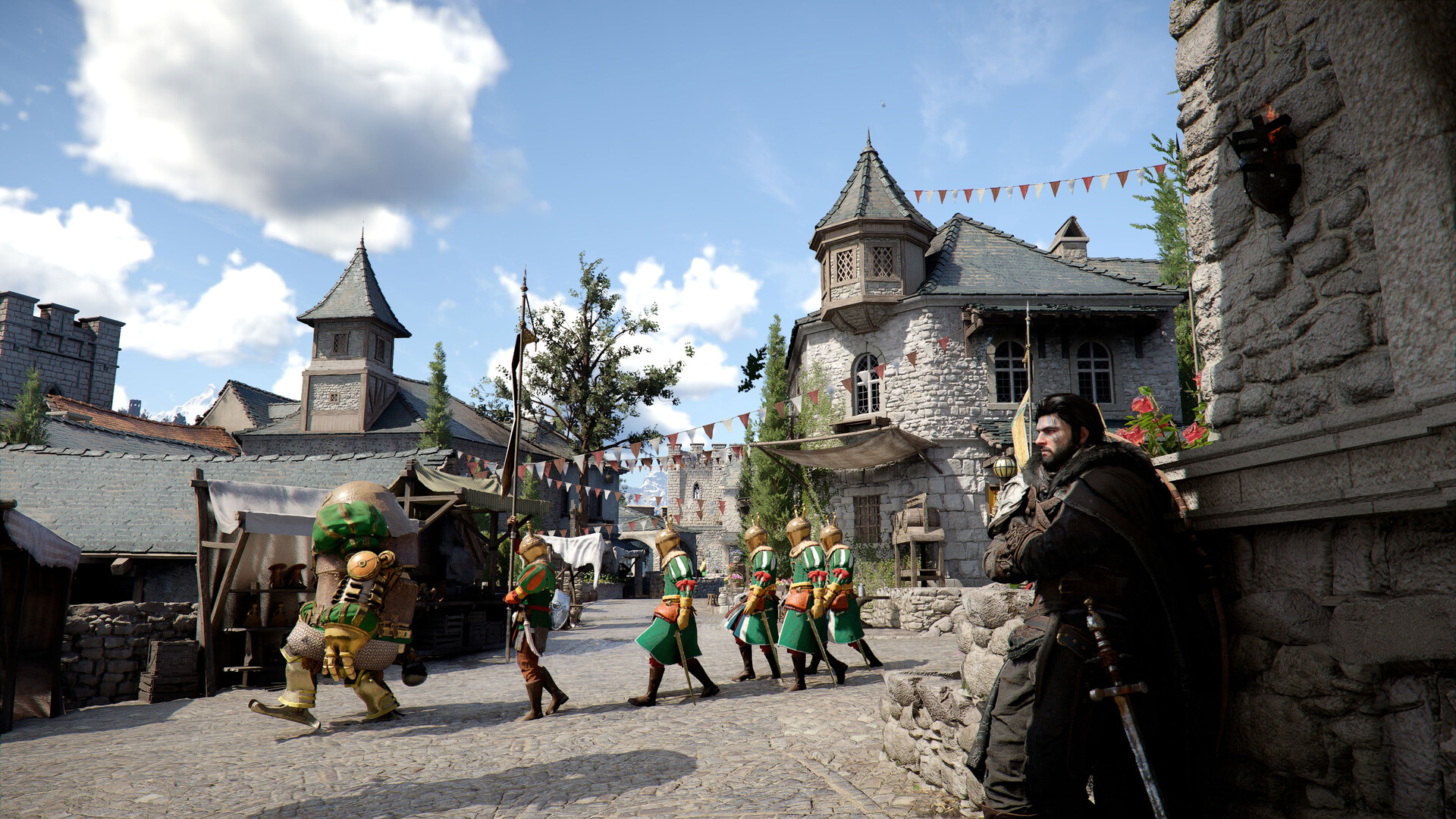
“During the development cycle, things work, and things don't work. You’re left with a choice. Do you keep pushing towards what the original concept and scope of the game was, or do you let road bumps present themselves as an opportunity of being able to pivot and let this game become its own thing?” Powers explains. “Obviously, the latter of those two is what happened here, and then Crimson Desert naturally evolved to become its own thing as a singleplayer, open-world action-adventure game.”
Mixing the past and future
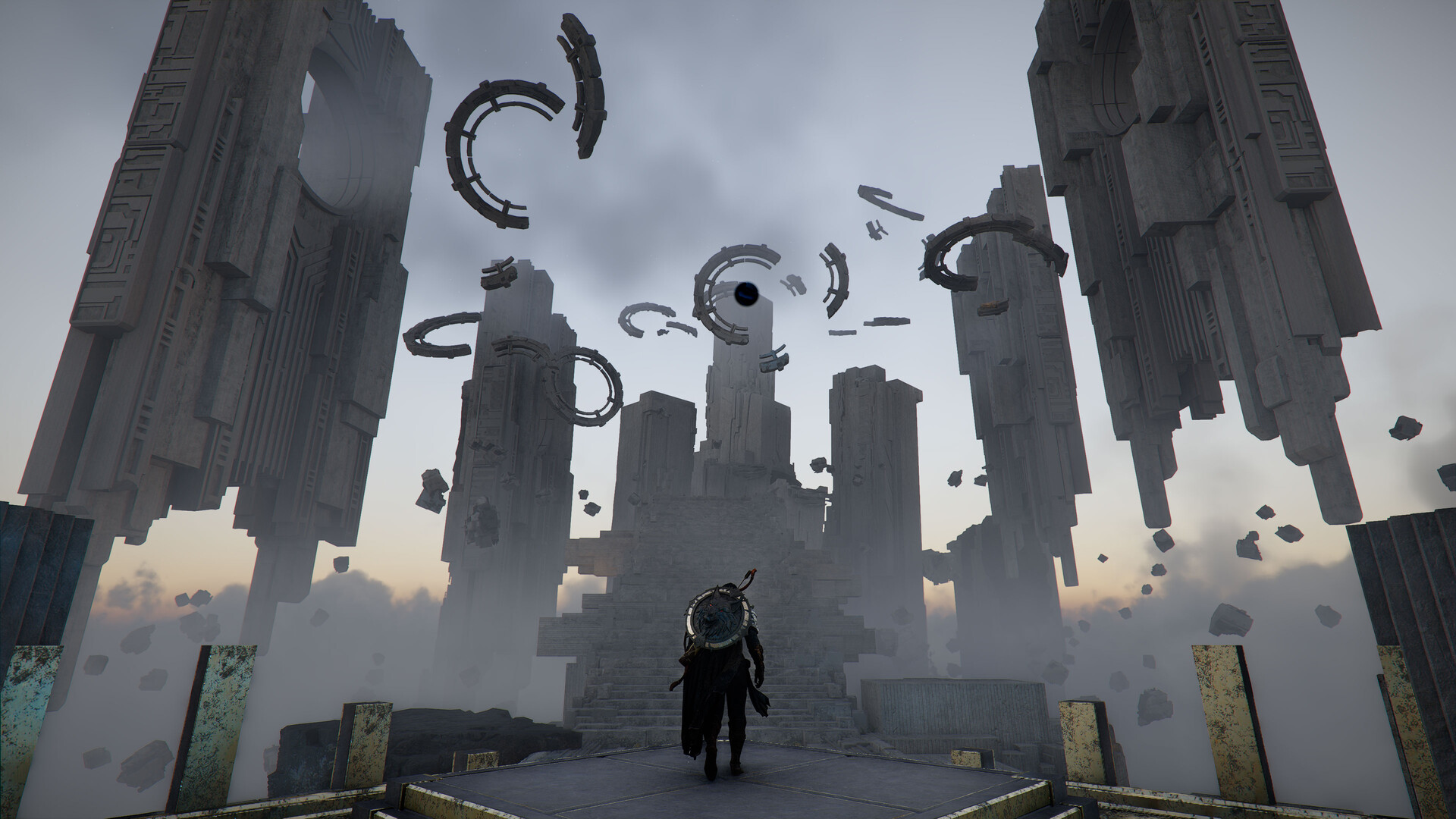
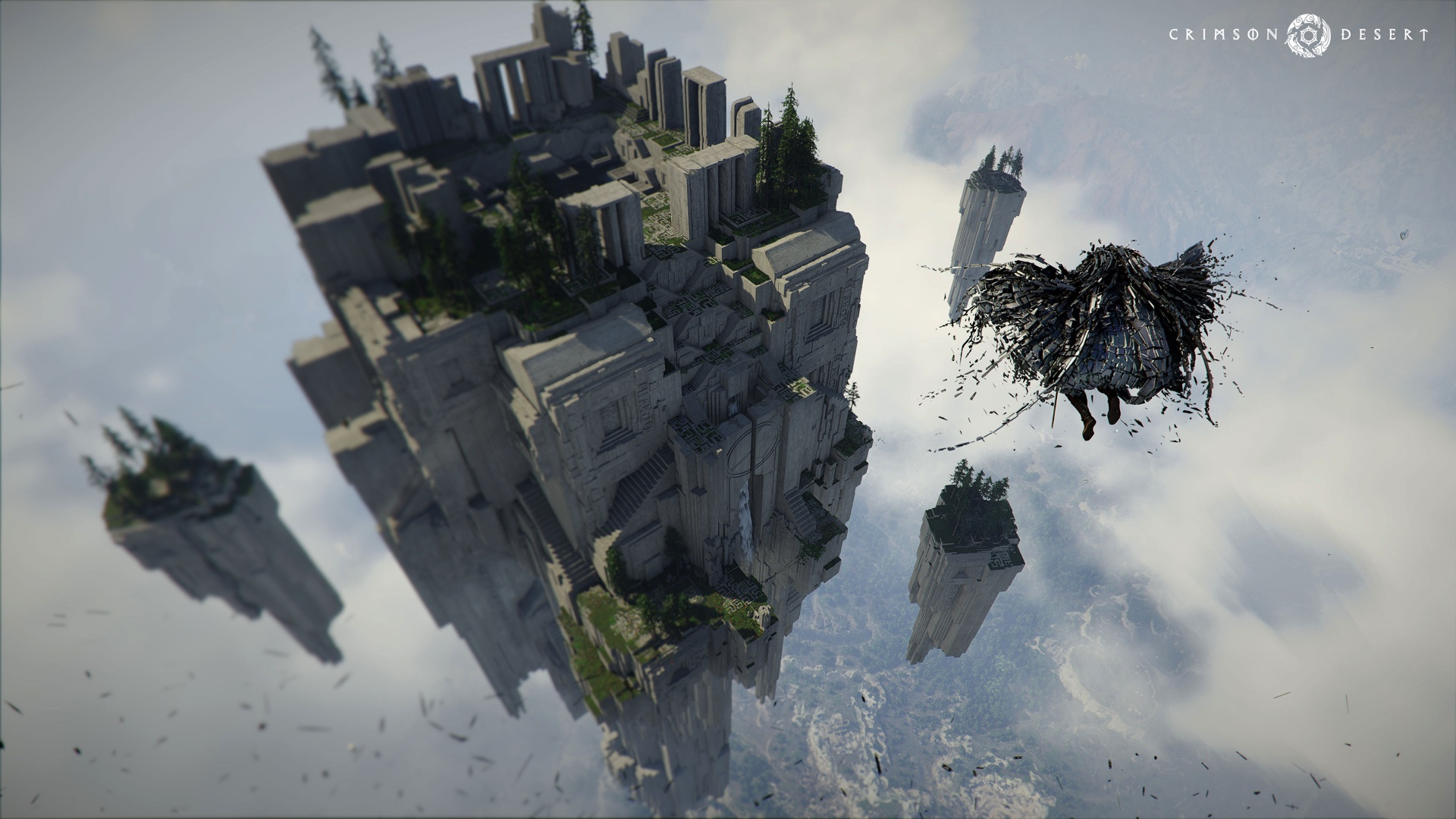
Like its predecessor Black Desert Online, Crimson Desert has a bit of sci-fi in its largely medieval European-inspired fantasy setting. Its loading screens are reminiscent of those in Assassin’s Creed Shadows, which featured geometrical blocks representing the Animus, the in-universe virtual reality machine that makes Assassin's Creed's era-hopping possible. In Crimson Desert, the loading screens are references to the Abyss, an interdimensional area that holds many secrets.
“That was a conscious artistic reference—to have a high contrast between those geometric and natural elements to serve as a differentiating factor between the mystical Abyss and the natural world,” says Powers. That contrast is one of the mysteries of Crimson Desert's world, and one that players will uncover and explore throughout the journey.
Another element that initially seems to clash with Crimson Desert’s dominant medieval setting is the appearance of machines and mechs. After all, Kliff can fly on the back of a huge dragon—so what’s a mech doing here? Well, Pearl Abyss is trying to sell a power fantasy, not necessarily a historical and grounded game like Kingdom Come: Deliverance.
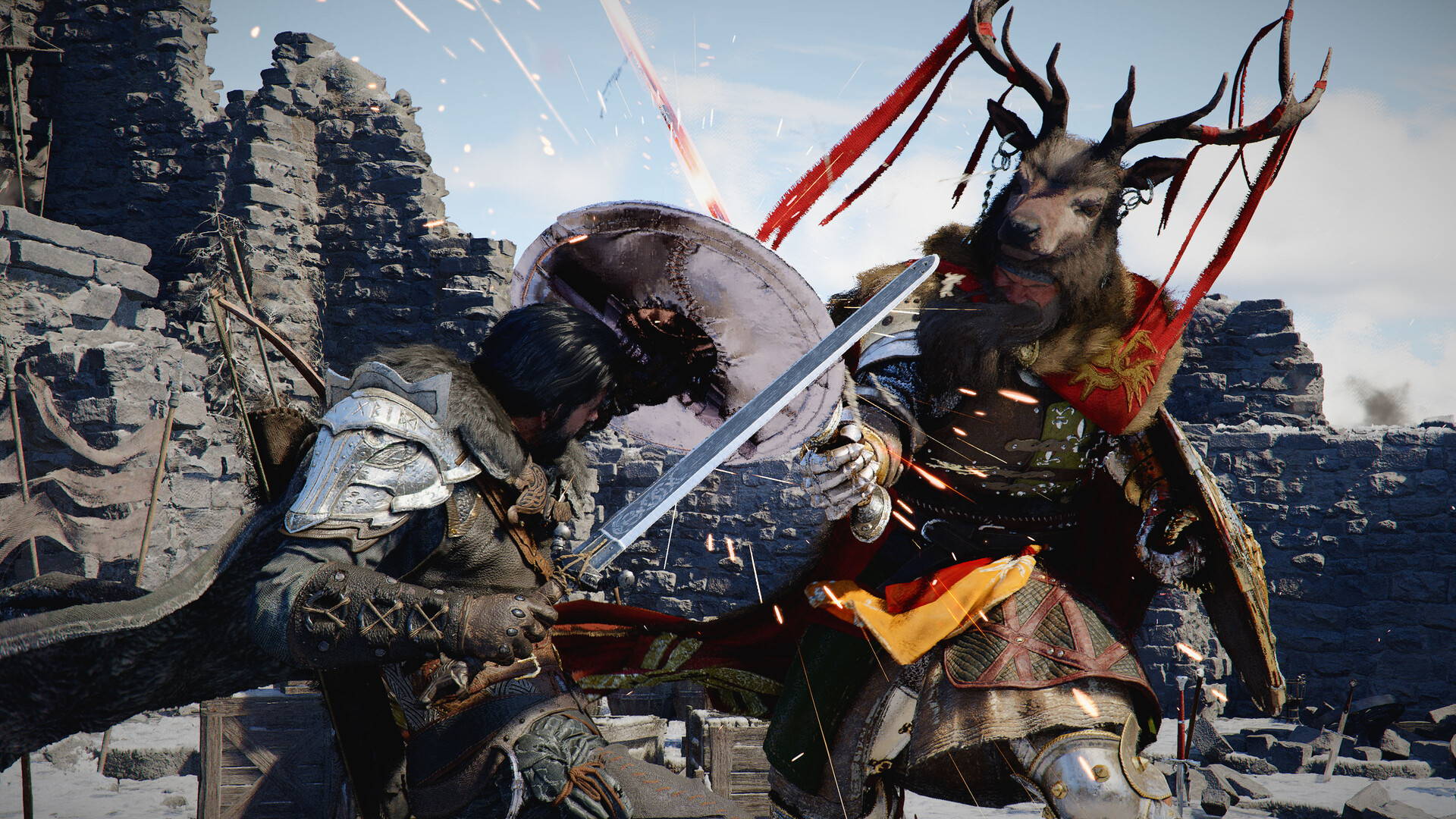
In that sense, Crimson Desert is more reminiscent of Final Fantasy XVI, where the setting is grounded, but there are over-the-top elements, especially during combat. “That could be a wrestling move that makes you feel very powerful, almost in a comedic sense—they break you away from the groundedness until it's not,” says Powers. “That contrast is really interesting from a player perspective and makes combat engaging.”
He further explains that the sci-fi elements stem from the Abyss and the region of Delica, Pywel’s science hub. The mechs are a product of dwarven machinery and Delica's scientific advancement—but there are other regions that have their own philosophical and geopolitical stances. Demeniss is the epicenter of war and politics, for instance, while the lawless (and titular) Crimson Desert is an open expanse. Pearl Abyss sought to make an enriching world filled with conflicts between factions.
“The struggles between those different factions within the world are really interesting,” explains Powers. “That's how sci-fi fits into our fantasy world, through different stances on advancement of technology within different cultures.”
Pushing boundaries
Pearl Abyss has repeatedly insisted that Crimson Desert is not an RPG. It doesn’t have mechanics common to the genre such as experience points or leveling systems. But that doesn’t mean Crimson Desert doesn’t have RPG elements. It has a ton. When upgrading skills like the Axiom Force or increasing Kilff’s stamina and other capabilities, you spend Abyss Artifacts, which act as skill points. Abyss Artifacts can be earned via quests and by defeating powerful enemies, as well as through general exploration. You’re incentivized to uncover every nook and cranny of Pywel instead of mindlessly defeating enemies for experience points like in a traditional RPG.
“We want to convey appropriate expectations to players, and the easiest way to do that is to put Crimson Desert in a bucket that is aligned with their expectations from games that they played similarly in the past,” Powers explained. “The difficulty comes in with the history of this game and the evolution of it now. There are all these systemic things that are baked into the DNA of the game that now transcend genres.”
Pearl Abyss also clarified that Crimson Desert is a full premium experience, that it would not feature any microtransactions, and that there are no current plans to implement multiplayer in the future. Part of the confusion may stem from the name Crimson Desert resembling Black Desert Online. Even so, Pearl Abyss didn’t seek to change Crimson Desert’s name after shifting away from its original MMO focus.
“There are similarities, whether it's Easter eggs or gameplay similarities that people will find between the two games,” says Powers. “And that's one of the reasons why we decided to keep the name ‘Desert,’ like this is the ‘Desert’ IP.” Black Desert Online is known for its fluid action-oriented combat, and Crimson Desert shares that. They’re just built for different audiences. One is for those who want singleplayer, and the other is for multiplayer.
Over the past several years, South Korea has been building a stronger presence in the video game space overseas with single-player hits like SHIFT UP’s Stellar Blade and Round8’s Lies of P. Now, it’s Pearl Abyss’s turn, with those previous companies laying the groundwork for Crimson Desert’s rollout and extending the reach of South Korea’s game development scene to new audiences. “This is a sophomore game—it's not a rookie endeavor, so to speak,” Powers explains. “I think that all of these companies walked so that Crimson Desert could hopefully run.”
Crimson Desert launches on March 19. If you pre-purchase Crimson Desert on the Epic Games Store you’ll get the Kliff Outfit in Fortnite at launch.