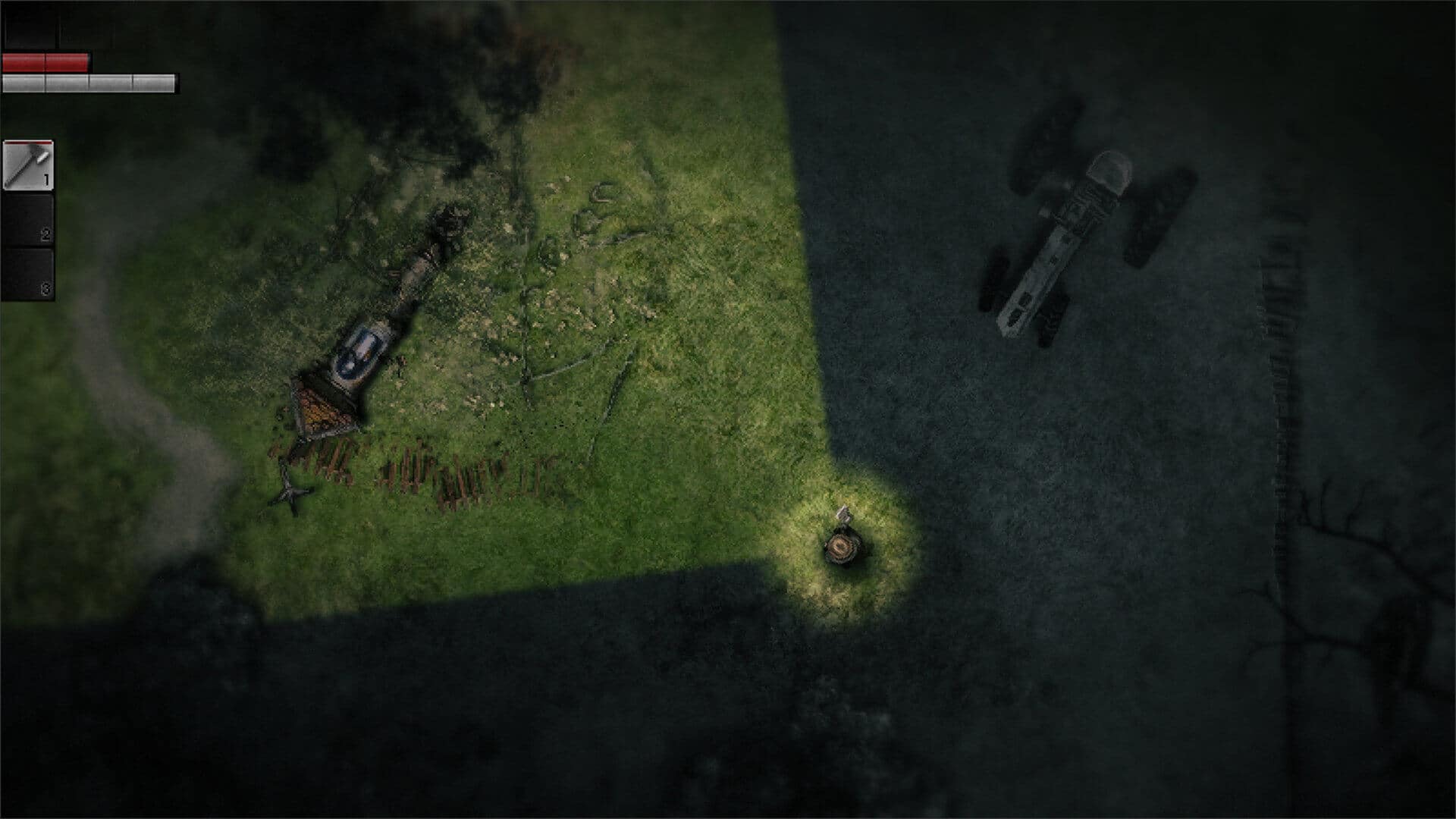
Darkwood is a horror masterpiece viewed from an atypical perspective
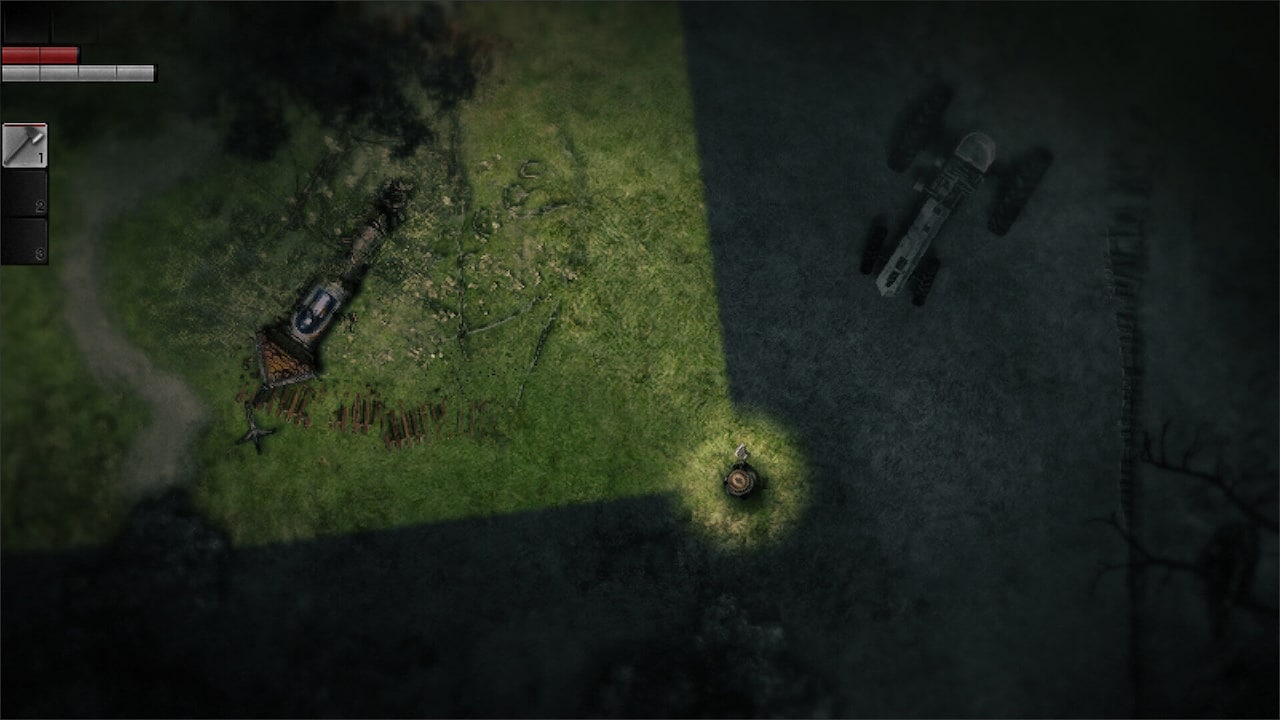
Still frames don’t quite do Darkwood justice. In-game, players view its eerie wilderness from an overhead perspective, which gives everything a look that’s more alien than outright frightening. Most top-down games cheat a little bit, setting the top-down camera at a slight angle to make the faces on their squashed character sprites visible. Darkwood, though, does no such thing—all we see of the protagonist is the top of his hat.
But spend any amount of time with the game, and developer Acid Wizard Studio’s masterful manipulation of perspective and visual trickery becomes clear. You play as a man stranded in the middle of a strange woodland, surrounded by towering trees given an unnatural height thanks to the top-down camera perspective. It’s befitting of a story where the world has been engulfed in unnatural wilderness. Seen from above, the trees look unsettling, like skin growths or scabbed-over wounds.

You begin the game in hiding, cowering in a safehouse where a system of tubes distributes fumes to deter the horrors that come out at night. What those things may be, of course, is a mystery at first. But as you scour the woods and the ruined structures within it for resources like gasoline to power the safehouse generator, the distressing atmosphere grows. With every step, you must stay vigilant not only of violent creatures but of hidden bear traps or deposits of poisonous mushrooms that explode when disturbed.
And beyond the familiar horror trappings—limited inventory space, resource scarcity, high-stakes combat—Darkwood communicates tension and dread most of all through where it places the camera and what it obscures by doing so. Your character’s range of vision appears as a cone stretching in front of him, with its clarity dependent on factors like the time of day and available light (the canopies of those hulking trees, for example, block sunlight). Crucial elements like items, enemies, and certain environmental hazards can only be seen within the vision cone, but the more static details are always visible even outside the cone: furniture, trees, doors, and other aspects of the scenery.
Leaving those other details on screen turns out to be Darkwood’s masterstroke, providing a far greater field of view than first- or third-person horror games without actually giving you much more information. In doing so, the game constantly reminds you of what you can’t see, foregrounding the spaces where something horrible might be lurking or even creeping toward you.
The sound design here helps immensely, with snapping twigs and crunching leaves that sometimes allude to a presence nearby but are sometimes just ambient noise. You can also see doors opening and furniture moving even when you can’t see what might be moving them. Such moments are most pronounced at night, when you’ve barricaded yourself in a hideout until morning and the only thing to do is wait, staring at the areas beyond your range of vision. Darkwood’s stunning grasp of atmosphere is all about empty space and how our minds jump to fill in the blanks.