How Delta Force's Monument map represents a new phase for the shooter's level design
Delta Force has always been heavily inspired by the past. Team Jade's reboot is openly indebted to NovaLogic's original run of tactical shooters (also titled Delta Force) developed at the turn of the millennium. The rebooted Delta Force's multiplayer infuses elements from NovaLogic's classic military shooters with modern technology and design ideas, while its single-player campaign is a direct remake of 2003's Delta Force: Black Hawk Down.
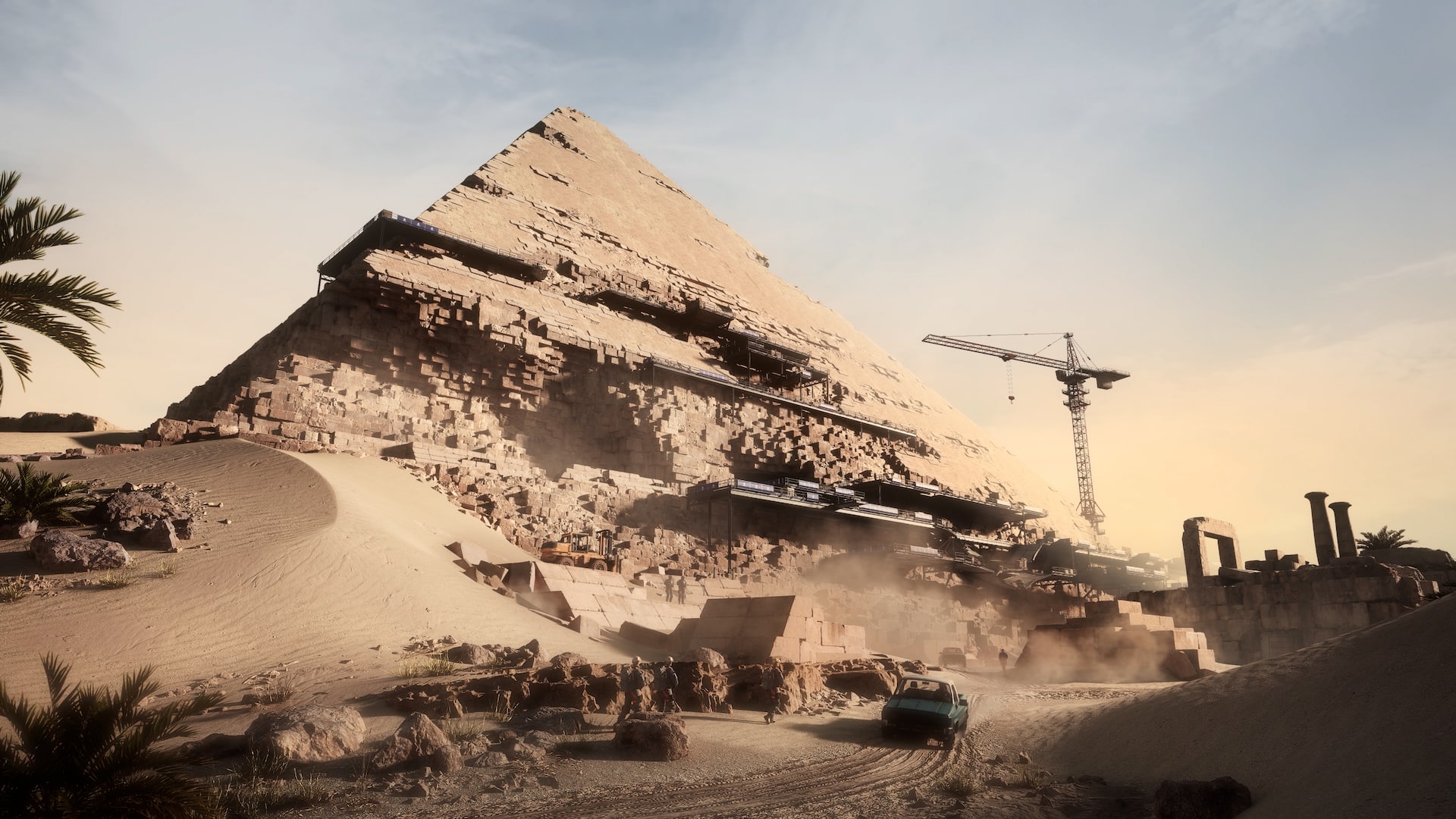
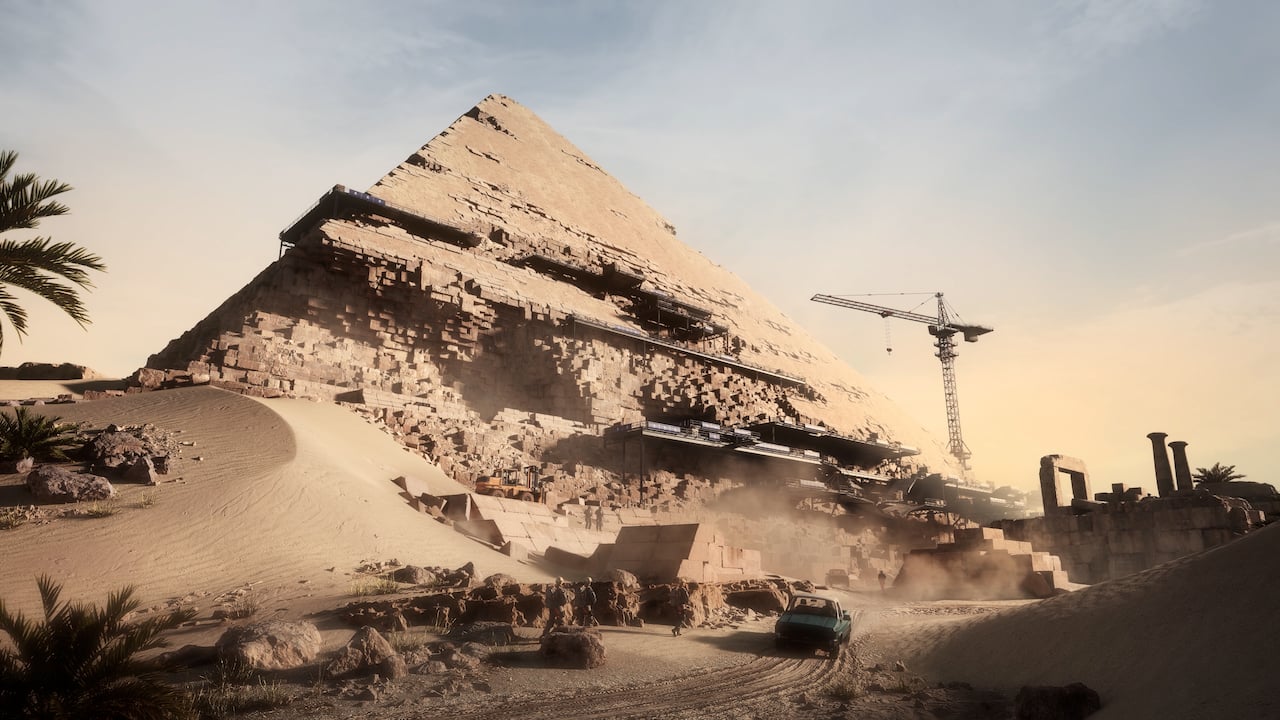
Delta Force's latest map, dubbed Monument, continues this trend, but the past also influenced it in a different way. Based on the opening mission of NovaLogic's third Delta Force game (Delta Force: Land Warrior), Monument sees players battling across the sprawling desert surrounding an Egyptian pyramid. Since Team Jade built the map around such a recognizable structure, the developer decided to do something it hadn't done for any of its previous maps—travel to Egypt and visit the Pyramids of Giza in person. The sight of such hulking ancient structures overshadowing the hustle and bustle of modern-day Cairo not only shifted their approach to building Monument, but marked a significant change in how Delta Force's maps are designed.
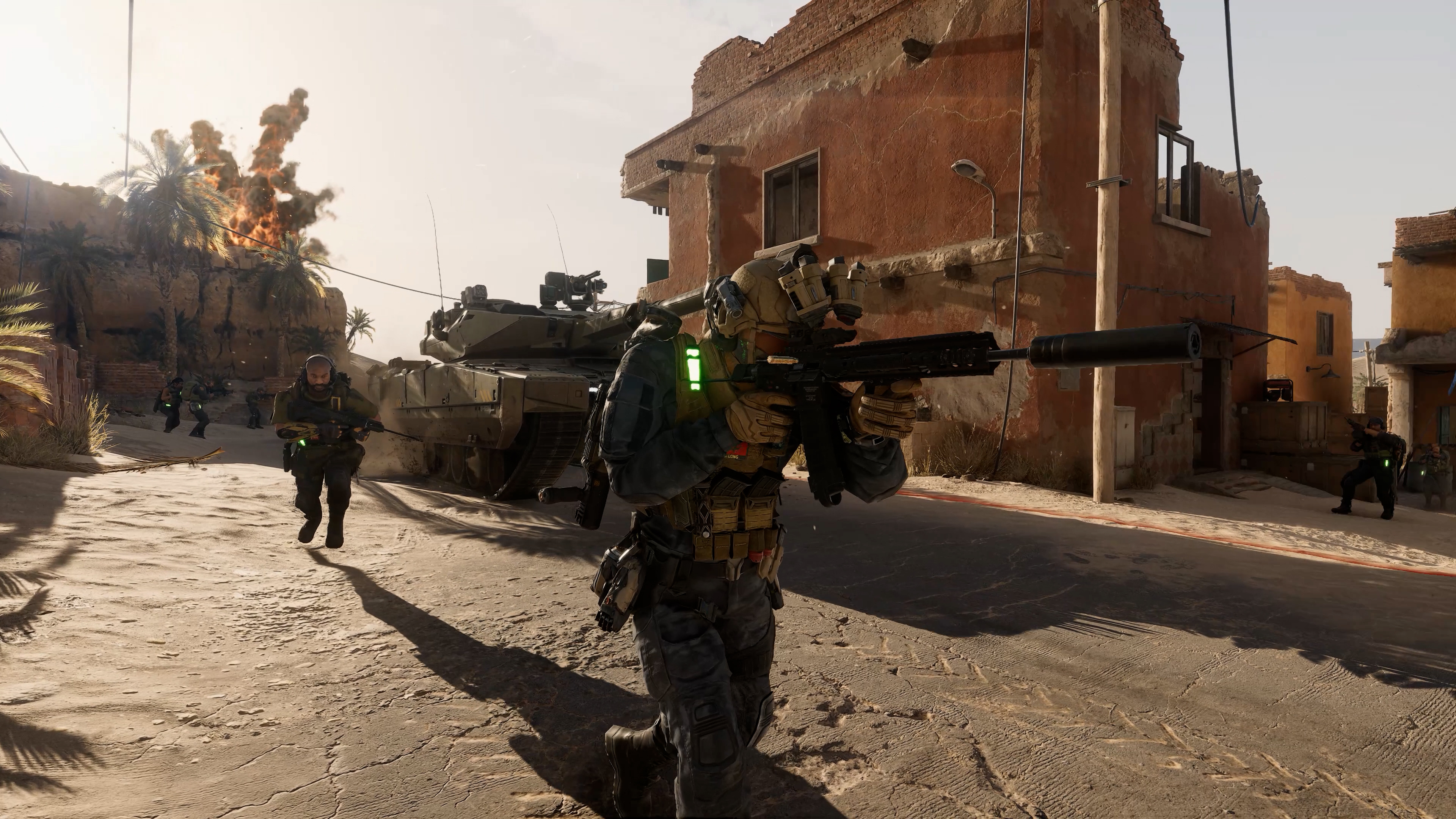
Kai Zhuang, a level designer who joined the studio back in 2020, has worked on numerous maps for Delta Force's Warfare mode, including Monument. "My passion really is about history, and I enjoy the feeling that I'm creating worlds," he says. That pivotal trip to Egypt gave the team a "really simple yet powerful takeaway: That we need to respect reality, we need to place our trust in the beauty and strength of the real world. As level designers, our job is to create gameplay within that reality, to really cement it, instead of destroy or replace it."
Over the years, Team Jade has established a rigorous process through which maps are constructed for Delta Force, starting at the conceptual level. Zhuang says the team takes a two-pronged approach to ideating maps, which involves thinking about the idea both rationally and emotionally.
On the rational side, Zhuang says the studio assesses concepts to judge whether they bring something new to Delta Force. "We try to look for stuff that's not been delivered to our gamers ever, or something we haven't touched for a very long time," he explains. "The goal is to make sure that every time we ship a new map, it feels distinctive from previous maps we've shipped in recent updates."
Once the designers are satisfied that a map concept is sufficiently new or different, they then assess it from an emotional perspective. "We have this internal model that if your idea doesn't click with yourself, this thing will not work," Zhuang says. "Do you feel this concept really speaks to you, to your heart? Do you feel this is genuinely exciting for yourself?"
If a map concept can pass these two tests, it will likely be approved for production. At this point, Team Jade will have a "kickoff meeting" with everyone involved in the map's development. The design of the level itself progresses in four phases, beginning with the level designers who spend several weeks establishing the general shape and flow of the map in graybox.
The map is also playtested at all stages, with this initial stage being particularly intense to ensure the designers' ideas bear out in practice. "We will conduct rigorous and frequent internal playtests to verify the whole experience," Zhuang says.
The second phase is what Zhuang refers to as the "art graybox" where the level designers liaise with the artists to sculpt the map in more specific detail. "They will be putting their touches on the map, on the environment," he adds.
After this, the team shifts its focus toward asset production and implementing these in the map. "The build will not be super well optimized or super stable [at this point]," Zhuang says. "We will still try to conduct as many tests as possible, but the frequency will lower a little bit."
The final stage of production focuses mainly on optimization and trying to "crush as many bugs as possible." But it's also where Team Jade finalizes the look of the map, working on lighting and "special effects" to ensure the map looks right in all circumstances. "And we will conduct frequent play tests as frequently as possible to verify everything," Zhuang says.
Team Jade’s hammered out this workflow over its years working on Delta Force, but things weren't always this streamlined.
"When we were just starting, we made this mistake of trying to introduce too many game styles into one single map, in hopes of delivering a more diverse experience for the players by adding different themes or different cinematics," Zhuang says. "This leads to maps that feel like a Frankenstein. You don't feel, 'This is a coherent map.' You feel, 'This is pieces put together that don't really speak to you.'"
By contrast, Zhuang says that Team Jade's current approach helps the team achieve "aesthetic consistency." But this approach isn't set in stone either. The team has learned much about map design since Delta Force launched last September, with the release bringing in a much larger influx of players—and with it, a much larger amount of feedback about the pros and cons of Delta Force's maps.
"The most important thing we have learned is that players want options," Zhuang says. "We realize that when players are not presented with enough player freedom or options, the games often turn into deadlocks or stalemates, and that's not a good experience for either team." This has led the studio to design its post-launch maps with more lanes and alternate routes than the pre-launch maps. "They tend to create more dynamic experiences for players," Zhuang says.
He points out that giving players more options is not just about changing their approach to map design. "We are also talking about your gameplay options, like calling in support—from a missile strike to grenades that block enemy vision." Such options are especially important on maps like Shattered, where chokepoints are deliberately made more frequent, with players required to use the tools at their disposal and break a stalemate.
All of this learning fed into the design of Delta Force's latest map, Monument. In its decision to remake Delta Force: Land Warrior's opening mission as a multiplayer map, Team Jade identified two features that they believed would bring a fresh experience for players.
The first was the pyramid itself. "It's a huge landmark," Zhuang says. "It's also a terrific visual anchor. So it gives you a really clear cue of where you are and what you are supposed to do."
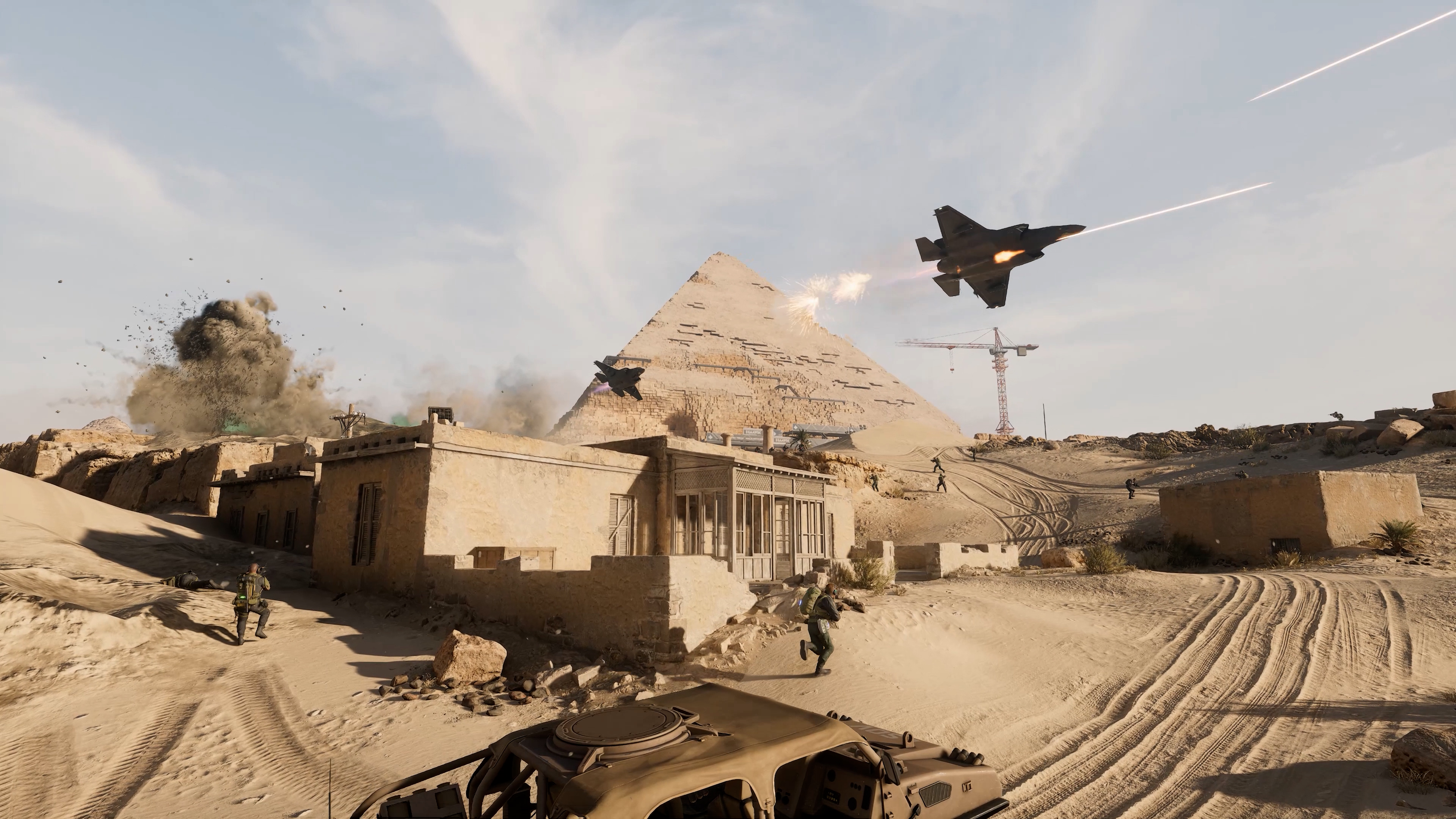
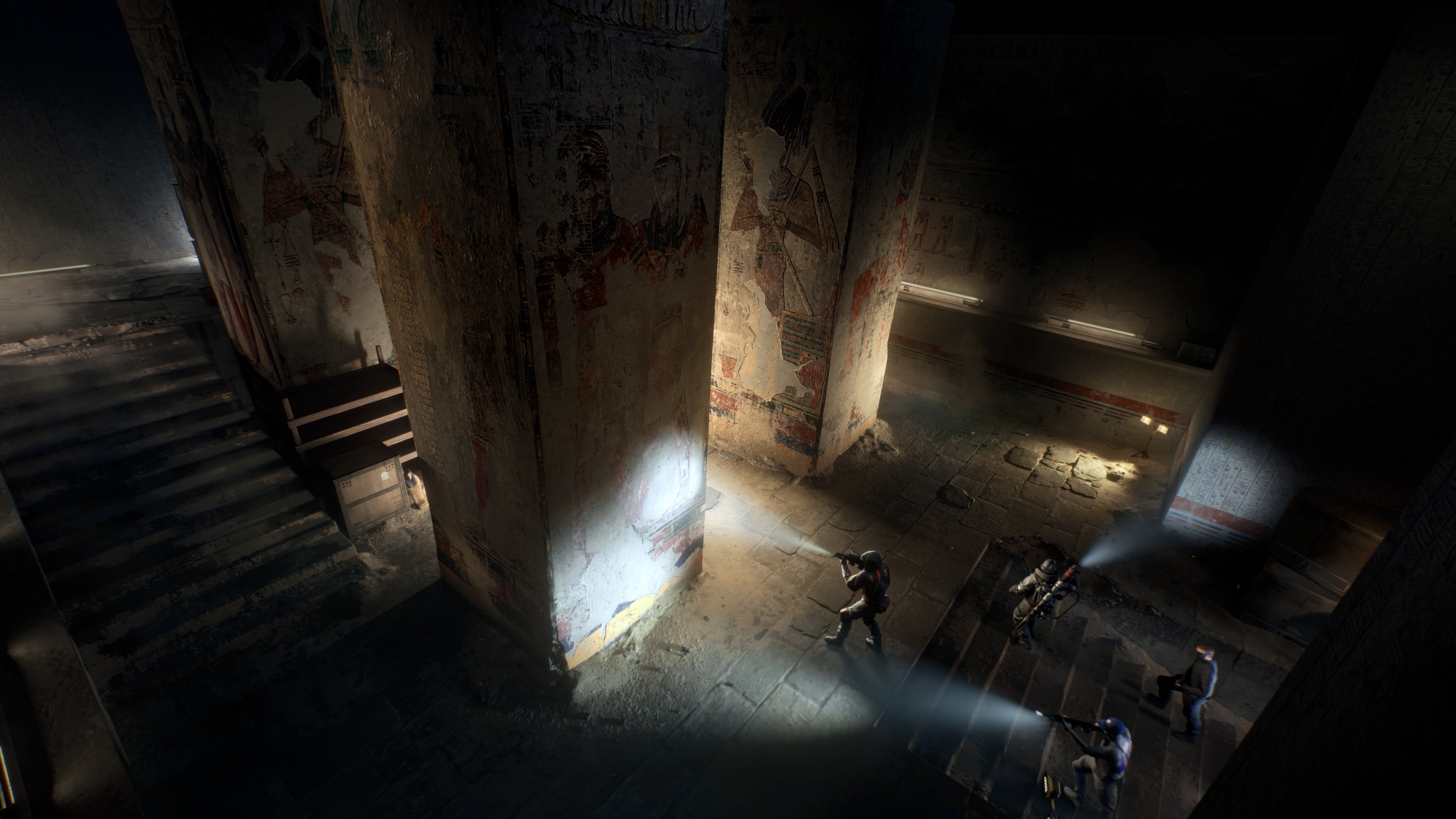
But following its play-first philosophy, Team Jade also believed the pyramid would make an interesting combat space for players. The interior of Monument's pyramid is fully explorable, its ancient pathways and tunnels carved out by tomb raiders, which facilitates frantic close-quarters combat that contrasts starkly with the wide-open desert spaces. But they also made the exterior of the pyramid a playable space too, enabling infantry and even vehicles to traverse its slopes.
"It was flat in ancient times," Zhuang says, referring to the smooth limestone cladding that originally covered all of the Giza Pyramids, now visible only on the central Pyramid of Khafre. "It's not flat anymore. It's just stones, like steps, yeah? So if we did the realistic pyramid, the vehicles would not be able to climb onto the pyramid. But of course, this time, we made this pyramid with a flattened surface."
The accessibility of the pyramid is slightly different in Warfare's two sub-modes.
"For the Attack and Defend mode, we actually closed off the top area of the two pyramids in the map, because they do pose a significant disruption to the whole pacing of the game," says Zhuang. "For the King of the Hill mode, we actually allowed players to access the big pyramid in the middle. Players really love this. They love to climb on top of it with their sniper rifles. Sometimes, they will drive their vehicle on top of the structure. There are also players who will try to slide off the pyramid."
The second aspect of Delta Force: Land Warrior's opening mission that appealed to Team Jade was the desert itself. The studio realized the desert sands could be brought directly into play by having the dunes shift in real time as a match progresses. "They provide dynamic cover for players," Zhuang says. "And it feels so much more organic and interesting for players to fight among them than just artificial boxes."
Originally, the design of Monument was driven purely by such play potential. Yet since Team Jade built the map around such recognizable structures, the developers decided to see them in person. That trip to Egypt dramatically changed their perspective on the design of Monument. What initially struck them was the simple scale of the Great Pyramid. "When we were standing at the foot of the Pyramid, we realized, even the slopes, they created crazy verticality for the map," Zhuang recalls.
The visit also provided a more acute understanding of the complex's relationship with the surrounding landscape and its proximity to the urban sprawl of Cairo. "It's like a eureka moment for us. We didn't know what the deal was with the real environment around the pyramid. Once we were there, we felt this is something we really want to deliver to the players."
Most of all, though, the developers were struck by the sense of time, the great depth of human history baked into the precisely cut stones and the surrounding landscape. "We tried to deliver that sense of history and the passage of time with our map," Zhuang says. "If you play our game, you will notice how we tried to portray the wear and tear of the graffiti inside the pyramid, how the rocks and the sands were eroded by the wind blowing for thousands of years."
Standing at the foot of the pyramid altered the team's understanding of what's important in level design. In fact, it had such an effect that Team Jade has incorporated these location visits into its design workflow, so that it can incorporate that sense of history and cultural specificity into future designs.
"We will be following this approach for our upcoming maps. We have done it several times already," Zhuang says.
Delta Force, along with the new Monument map, is available now on the Epic Games Store.