Nyheter
Face the fog in top-down action shooter DDOD
J
John Walker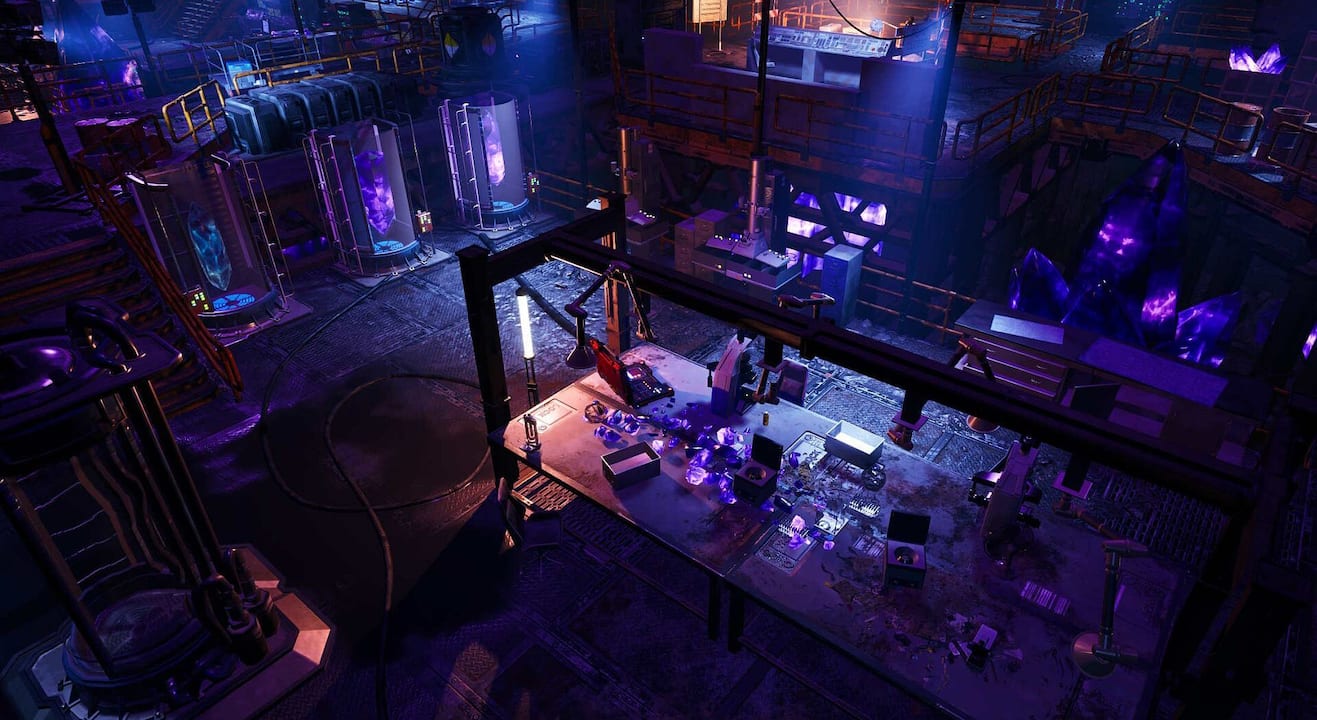
DDoD is not, technically, an extraction shooter. That’s not how developers The Future Entertainment Company describe it, anyway. Vitalii Boiko, the studio's Founder and Game Director, sums the hybrid twin-stick shooter as “a top-down action shooter,” and a “cross-platform, cross-play, player-hosted PvE co-op game set in a hostile open world with dungeons and post-apocalyptic industrial visuals.” But, rather impressively, this is only the first layer of what the team is attempting to build.
“On the surface,” says Boiko, “it’s a twin-stick shooter with exploration, progression, and combat. But the real goal is to create a constant sense of tension and satisfaction—physical, psychological, and moral.”
Having played a slice of the game, it really does immediately deliver that sense of seat-of-your-pants extraction shooter action, just without juggling loot in an inventory, and with a sense of feeling in control that means you’re not constantly on the verge of death. At times it even feels like classic top-down shooters in the vein of Alien Breed, moments when you feel super-powerful and like you’re the boss of this overworld. Then three zombie-like creatures explode out of the doors of a house you were about to raid and you're suddenly scrambling.

Ukrainian developer Vitalii Boiko, working in Canada, explains that DDoD is a deliberate attempt by the team to create a game that is “a real bet for us.” One that could be “easier to get wrong,” rather than “safer, more predictable design choices.” With this goal in mind, Boiko says the studio “naturally crystallized around a clear philosophy: to make games where the atmosphere and gunplay comes first. Not power fantasies, but survival stories. Not heroes, but people.”
Part of this is an attempt to get the player to fluctuate between moments of feeling capable, but then “uncertain” again. “We’re trying to build a game where the systems reinforce the narrative instead of existing alongside it,” says Boiko.
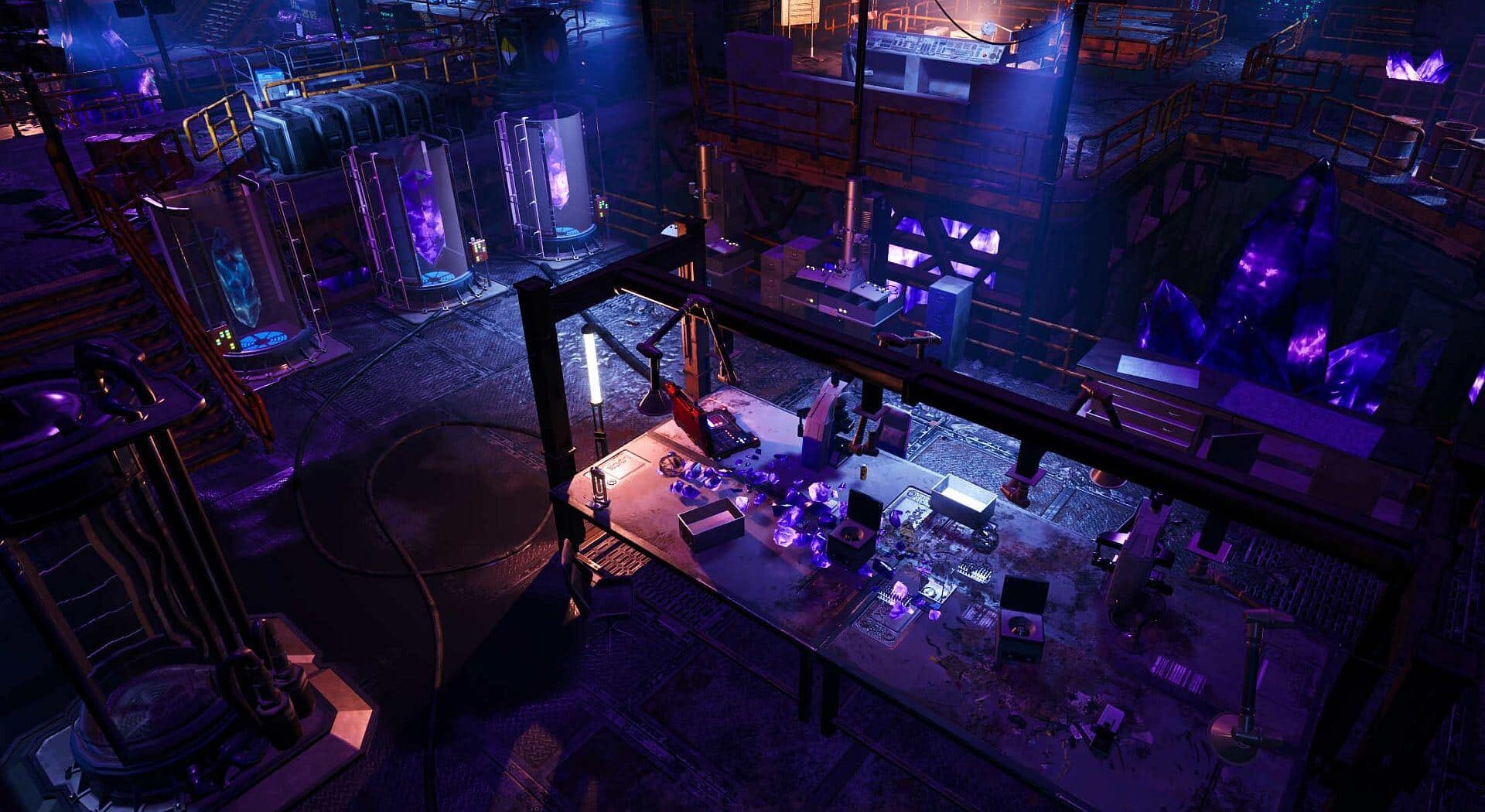
Central to DDoD’s storyline is this peculiar purple fog that lies over great stretches of the game’s world. On one level, it’s clearly there to somewhat gate the player, but it also represents a motivation to gather the tools necessary to briefly survive within it. Boiko describes the Fog as “a pressure system and combat arena,” where the limitations on how long the player can stay inside “force resource decisions.” Inside the Fog, your weapons will not fire, limiting you only to melee, while spawning tougher enemies to battle while your ability to survive deteriorates. “You can mitigate it,” says Boiko, “delay its effects, or gamble against it, but you can’t ignore it.”
Braving the Fog brings opportunity too. “Farming fogs brings valuable resources for the player for weapon extensions, crafts, and more,” Boiko says. Interestingly, there’s a system already designed that could mutate players who spend prolonged periods in the purple mist, but the team hasn’t yet decided when and how to inflict it.
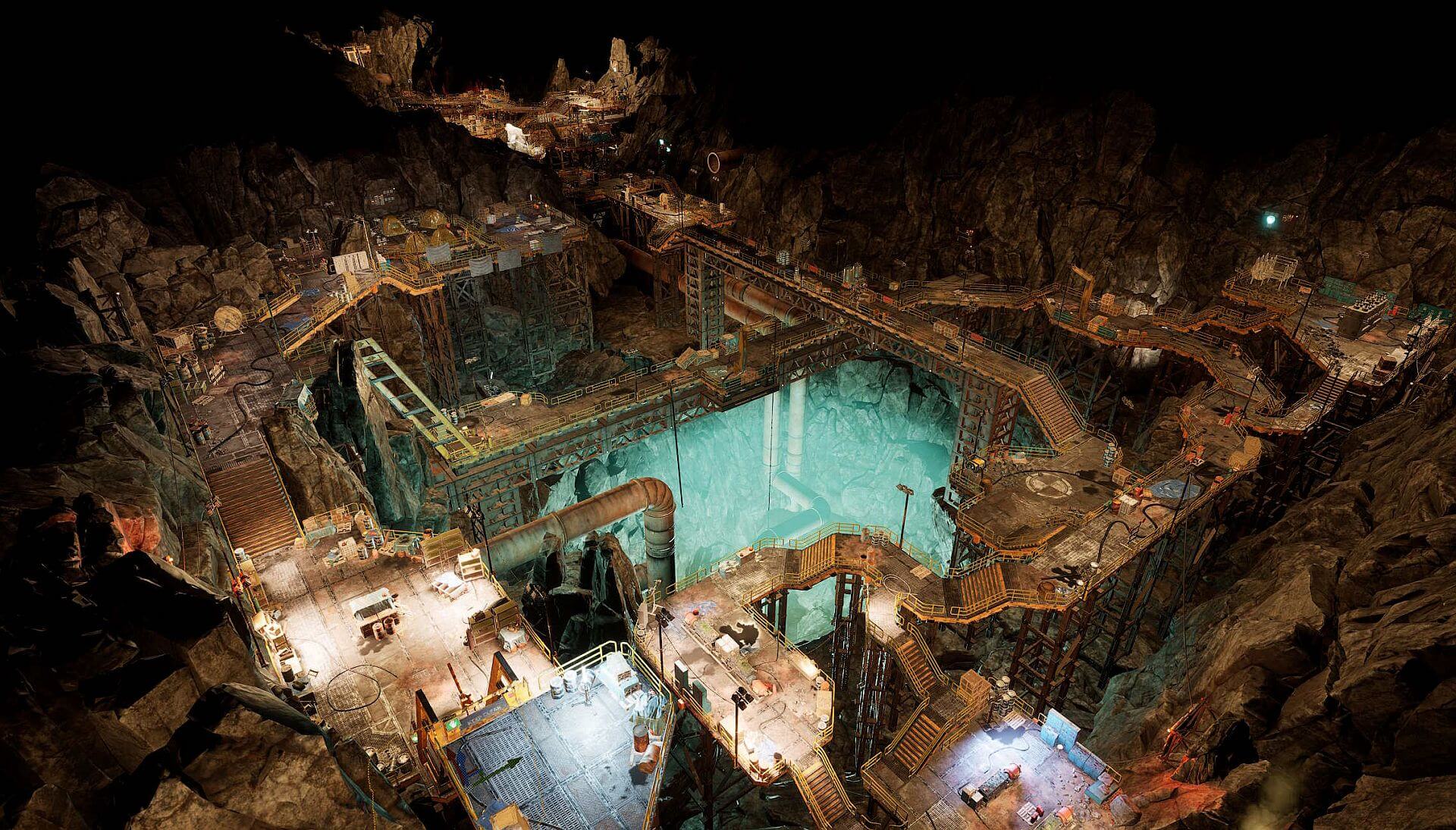
The game also takes the concepts of “runs” from extraction shooters, but The Future Entertainment Company stresses it’s never about just extracting loot or seeing how long you can survive. Instead, “each run is an expedition with intent: scouting, diving into dungeons, completing quest objectives, acquiring specific resources, or advancing faction-related goals. Death matters, but not in a purely punitive way. When you die, the world remembers.” Boiko adds: “It’s less about a single perfect run and more about a gradual understanding and adaptation.”
This approach is all about breaking that sense of exploiting systems. “We want players to constantly evaluate risk in human terms, rather than system terms,” says Boiko. “The tension doesn’t come from a shrinking circle or ticking score counter. It comes from uncertainty. You rarely know the optimal choice in advance, and the game doesn’t reward reckless perfection or overly cautious play. It rewards awareness, judgment, and sometimes knowing when to walk away.”
Alongside more familiar stumbling monsters, DDoD also features some entertainingly strange mobs to deal with. I was especially taken by the game’s enormous snails. “We wanted creatures that feel like products of a broken ecosystem, mutated by Fog, rather than monsters in the traditional sense,” says Boiko. “Many enemies are deliberately awkward, slow, or unsettling, rather than fast and aggressive. The giant snails, for example, are less about immediate danger and more about area denial, environmental control, and psychological discomfort.”
As I mentioned, Boiko is Ukrainian, and the core of the development team is still based in the war-torn country. I wondered how the ongoing invasions have affected the studio. “It is impossible to fully separate the game from the reality around us,” says Boiko. “For some team members development has continued during air raid sirens, power outages, and displacement.”
So has this influenced the game itself? “Not in a literal or political way,” says Boiko, “but emotionally. The themes of uncertainty, exhaustion, moral compromise, and endurance are not abstract to us.”
However, creating the game has also offered something to the team at the same time. “Making the game has been grounding,” adds Boiko. “It provides structure, purpose and a sense of forward motion in a situation where much feels out of control. We are not trying to make a statement about the war, but we are honest about what it feels like to live with constant instability, and that honesty finds its way into the work.”