News
Behind Football Manager 26’s delayed release
F
Francisco Dominguez
Its story begins with FM25, which set out to be the biggest shake-up since the series debuted its first 3D match engine in 2008. A top-to-bottom overhaul intended as a new beginning, it would offer a new engine, a glossy new match day experience, a UI overhaul, the introduction of women’s football, and a raft of cutting-edge tactical features.
Instead, FM25 was the Football Manager that never happened. First, it was delayed from a 2024 fall release to March 2025, and by February, it was canceled, breaking a 31-year streak of annual releases.
“Simply put, FM25 wasn't good enough,” Jacobson tells the Epic Games Store. “We were too ambitious with what we were trying to do in the time we had. There'd been lots of issues during the development cycle. Moving to a new engine is bastard hard. Moving to a new engine when you've used your own internal one for 30-odd years… it’s also bastard hard.”
The team was bitterly disappointed, but also relieved. They’d committed to preserving the series’ good name over rushing out an unfinished stinker. “There were lots of people who were disappointed we didn't release a game last year. I think they would have been more disappointed if we had released what was ready last year,” says Jacobson.
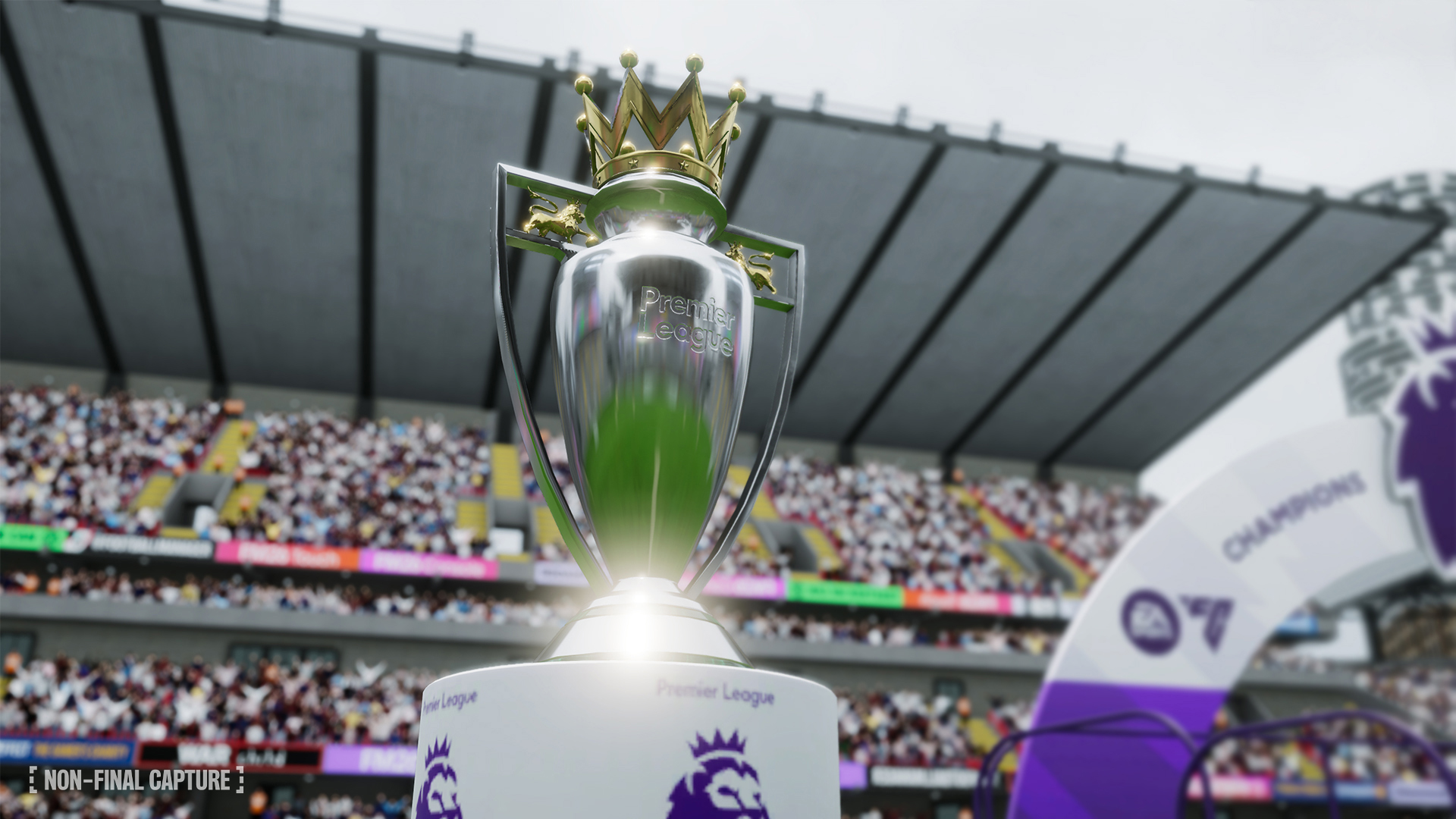
The decision was neither easy nor cheap. Wracked by guilt and doubt for months afterwards, he refuses to blame the cancellation on the added strain of reinventing a game within the annual release cycle treadmill—the only model the studio’s known. No time for regrets, which he calls a “useless emotion,” and after another year of hard graft, that long-awaited new beginning has finally arrived.
“FM26 is the first step of the next 20 years of Football Manager, it's not a continuation from FM24,” says Jacobson.
Animation revelations
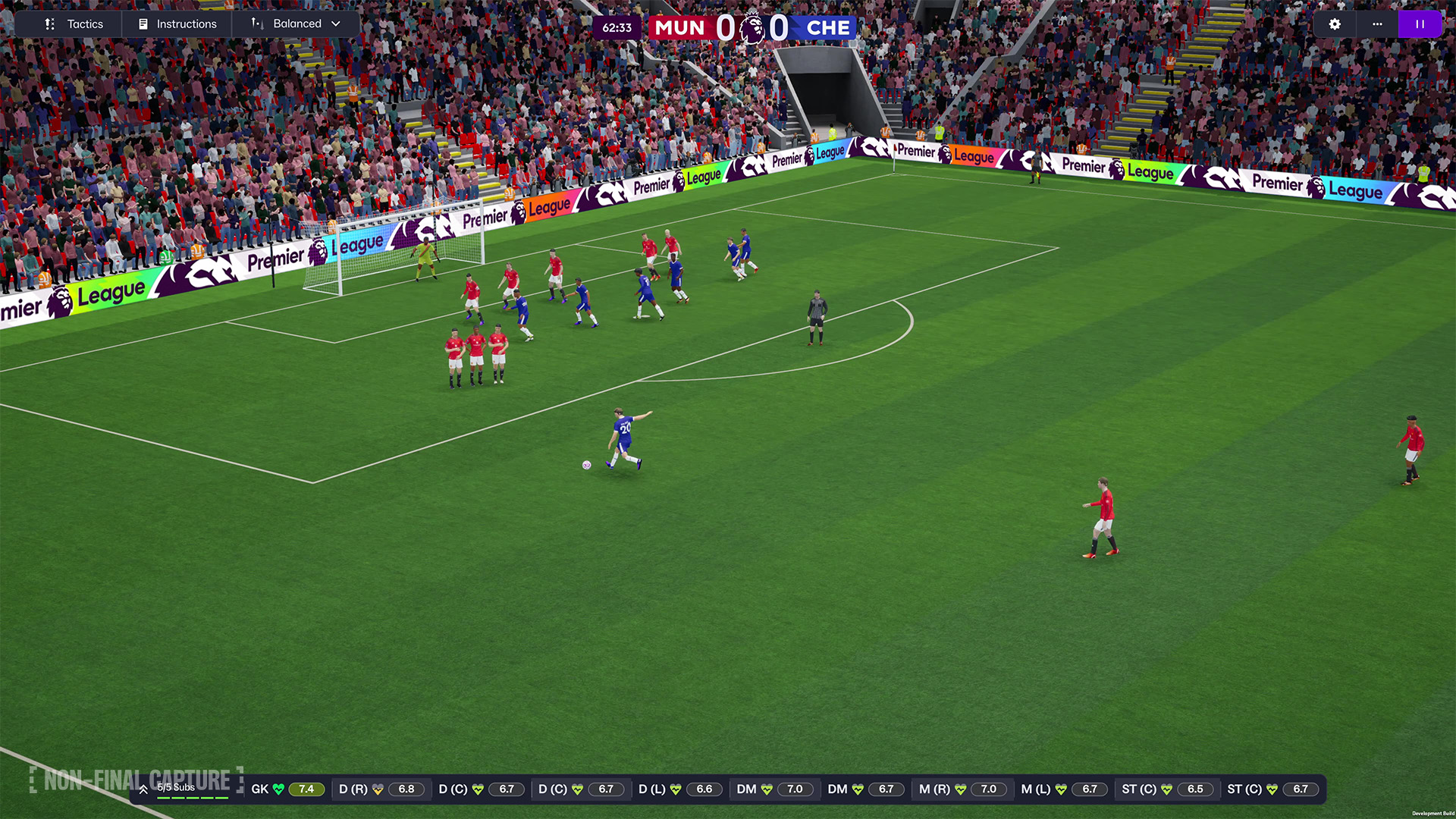
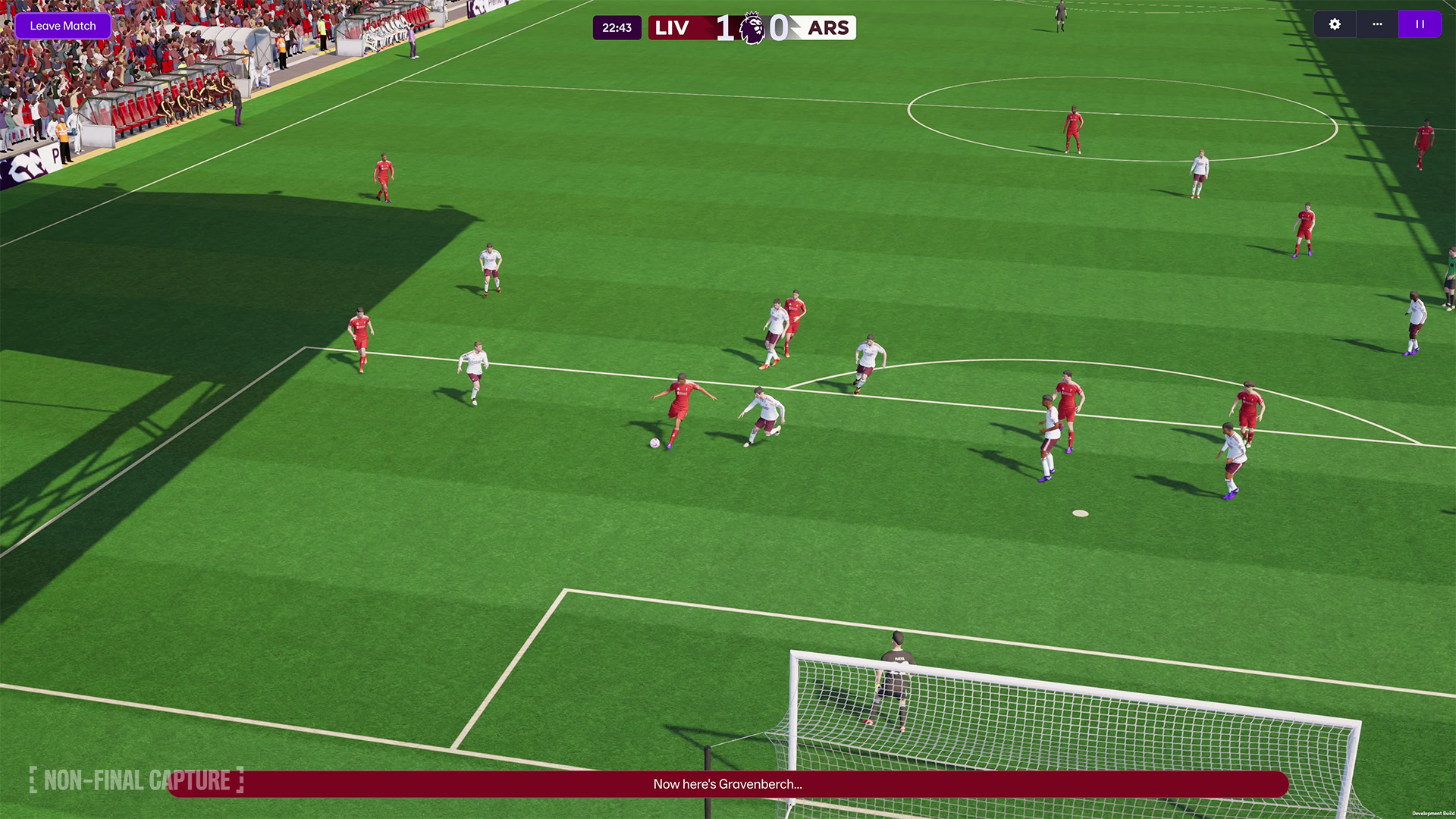
The benefits of going deep into extra time become clear when you see the new match engine in action. We’ve come a long way since that first rudimentary 3D version, and putting FM26’s realism next to the mid-2000s series entries feels like comparing Pong to The Last of Us. With authentic AI and broadcast-worthy cinematic camerawork, FM26 feels like the real deal.
That’s because it is. Hawk-Eye’s high performance cameras are a fixture at major pro football matches, used to track the ball to help referees decide when it’s crossed the goal line and to monitor players on a skeletal level to catch rules infringements like handball or offside. In the process, they’d inadvertently made a world-leading animation database now used by Sports Interactive.
“We realized that the cameras they have in stadiums for goal line technology and VAR are tracking bones. Characters in games tend to be made out of bones [3D models use skeletal animation for realistic joint movements], and it turned out that they were tracking the same amount we have inside our game!” says Jacobson. “It was a bit of a revelation to us.”
With some tweaks, on top of their own motion capture tech, they could plug Hawk-Eye’s abundant data directly into their own animation system for both men’s and women’s soccer. Every FM26 pass, shot, and flick—even the way a player glances up before launching a crossfield diagonal pass—are informed by voluminous data taken directly from broadcast matches.
Jacobson is delighted with the results. “These animations in the game now make a match experience that, in many cases—the English Premier League, the German Bundesliga—looks exactly like you're watching it on the telly,” says Jacobson. “It just adds to that extra authenticity and believability of the game world.”
A tactical revolution
It's clear the team at Sports Interactive lives and breathes football, so it’s no surprise to see FM26 rewards knowledgeable football fans more than ever before, enabling football managers to mirror the tactical sophistication of Manchester City’s Pep Guardiola or the USMNT’s Mauricio Pochettino by including out-of-possession formation management.
For Jacobson, its impact is undeniable: It’s no less than “a tactical revolution.” It's a gift for the average fan whose know-how has increased substantially thanks to advancements in sports coverage, who now understands once-esoteric matters of press triggers and transitions, the statistical probabilities of expected goals, or the nuance of a defensive line.
Take Newcastle United under manager Eddie Howe. In possession, he uses a 4-3-3 setup that balances attack with adequate defensive cover. Out of possession, they switch to 5-4-1; a midfielder joins the defense and several attackers drop into midfield. This compact defensive formation is harder to break down and limits the opponent's goal-scoring chances.
In a sense, this change doubles the tactical opportunities for players and opposing AI managers alike (who share the same toolset). Like most features, it’s designed to function just as well for more hands-off players thanks to the indispensable assistant manager, while still offering “uber depth” for those wanting all the exhaustive details. There’s also the new FMPedia feature for additional assistance, with explainers and animations for each tactic.
“It was probably easier to make the game when we had half-a-million players than it is when we have 20 million players,” says Jacobson. “We have to cater to so many more different types of audience now. Finding that balance between too complicated and too simple was a very important step for us.”
Some enduring features were cut, like Player Shouts. While berating underperformers or yelling encouragement may be true to life, their impact was never clear in-game. “We didn't want them in the game if they were crap,” he says. “And they were kind of crap.” For Jacobson, they fell far short of the model of transparency they hoped for with their new Visualizer tool.
Others received a much-needed redesign, like Player Roles, which define the strategic personality of any given position. Several classic roles were retired because they’d stopped reflecting the modern game’s out-of-possession demands. Among the cut roles is one remembered fondly by anyone who saw lavishly gifted superstars like Zinedine Zidane, Francesco Totti, and Kaká in action in the '90s and 2000s: the trequartista.
A free-roaming attacking role with no meaningful defensive duties, the trequartista was an excuse to indulge the outrageous talents of a match-winning maverick whose instincts were worth any compromise. The position has become “a meme,” an out-of-time indulgence for a slower-paced game. Jacobson, who shares my affection for Roma legend Totti, expects it to pass into series folklore like Freddy Adu, the American wunderkind whose middling career never lived up to the world-class player he once was in Football Manager.
Making up for lost time
The tactical revolution pales in comparison to the explosion of interest in the women’s game. FIFA reported almost 1 billion viewers watched the Women’s World Cup 2023, and the United States National Women’s Soccer League exceeded 2 million spectators last year. As such, Jacobson sees the addition of 14 women’s leagues in FM26—including the US NWSL and England’s WSL—less as a revolution and more as righting an overdue wrong.
“This was not just a case of sticking ponytails on the back of male models, as some games have tried to do before,” he says. “We've done it properly.”
For Sports Interactive, it was like starting from scratch when they announced the project in 2021. The game is often compared to a spreadsheet for its reliance on statistical representations of players. The team has gathered mountains of data whirring behind the scenes for over 30 years to build a network of 1,600 scouts worldwide that exceeds those used by many professional clubs (even licensed by 40 of them), rating player attributes like pace, determination, and passing out of 20.
Their women’s football data team, led by Tina Kerch, found themselves facing the same data gaps they encountered at the start of the franchise, evoking memories of the early days, when Sports Interactive scouts were sent abroad with nothing but a match ticket and an umbrella for rainy matchdays. As well as using Hawk-Eye’s game footage to deliver accurate animation and capture differences in gait and body shapes, they consulted widely across women’s soccer professionals, like Emma Hayes, the former Chelsea manager who now leads the USWNT, where she has already won gold at the 2024 Olympics. As a result of all this research, FM26’s gender-accurate injury types and recovery rates are now informed by real-life data.

Jacboson doesn’t see women’s football as cleanly separated from the men’s game, just as the game only sees variations in stats, not gender. A women’s team usually has a shorter average height than a men’s side, and a shorter goalkeeper of any gender faces shots aimed high to take advantage, whether that’s Jacobson at 5' 6" or a woman of the same height.
“We're adding women's football into the game because it's the right thing to do, it's about bloody time, and it's a great new experience for any of our players,” says Jacobson. “At the end of the day, it's one sport: football. And it's one game: Football Manager. So it's really essential to us to have it all part of the same world.”
Believing in fairy tales
In the two year gap since FM24, one of men’s soccer’s biggest developments was the revamped Club World Cup, a viewership sensation that also dispensed a total of $1 billion in prize money to what were already the world’s richest teams. The tournament’s unprecedented largesse and contribution to sporting inequality is nothing new for Football Manager, and their existing models could handle these kinds of cash injections without disruption.
In reality, it poses a balance issue: More money flowing into the game widens the gulf between the rich and (comparatively) poor clubs. To be a Football Manager player, or even a soccer supporter of any stripe, means a belief in triumph against the odds. A belief in modern day fairy tales isn’t limited to viewers of Welcome to Wrexham’s ascent through the English Football League.
Jacobson is quick to affirm that miracles happen in reality as well as in Football Manager. Leicester achieved the impossible by winning the EPL in 2015, Getafe overperformed in Spain, Atalanta in Italy. Following the good example of a well-run club can bear the same results.
Player skills benefit from dedication to a series whose average playtime hovers around 500 hours, and, no matter how comprehensive the dataset gets, it can’t account for the kinds of human failings and personal circumstances that derail so many promising players’ careers. “It's good that the game is easier than real life. We still strive for that accuracy, but if no one could ever win, then no one would play it,” he says.
Having been the architect of so many memorable in-game fairy tale endings for players whose teams defied the odds, the longserving gaffer deserves one of his own for FM26. “Fingers crossed,” he says. “Otherwise I’ll have to go and get a proper job, and I don't wanna do that!”
Football Manager 2026 is out on November 4 on Epic Games Store.