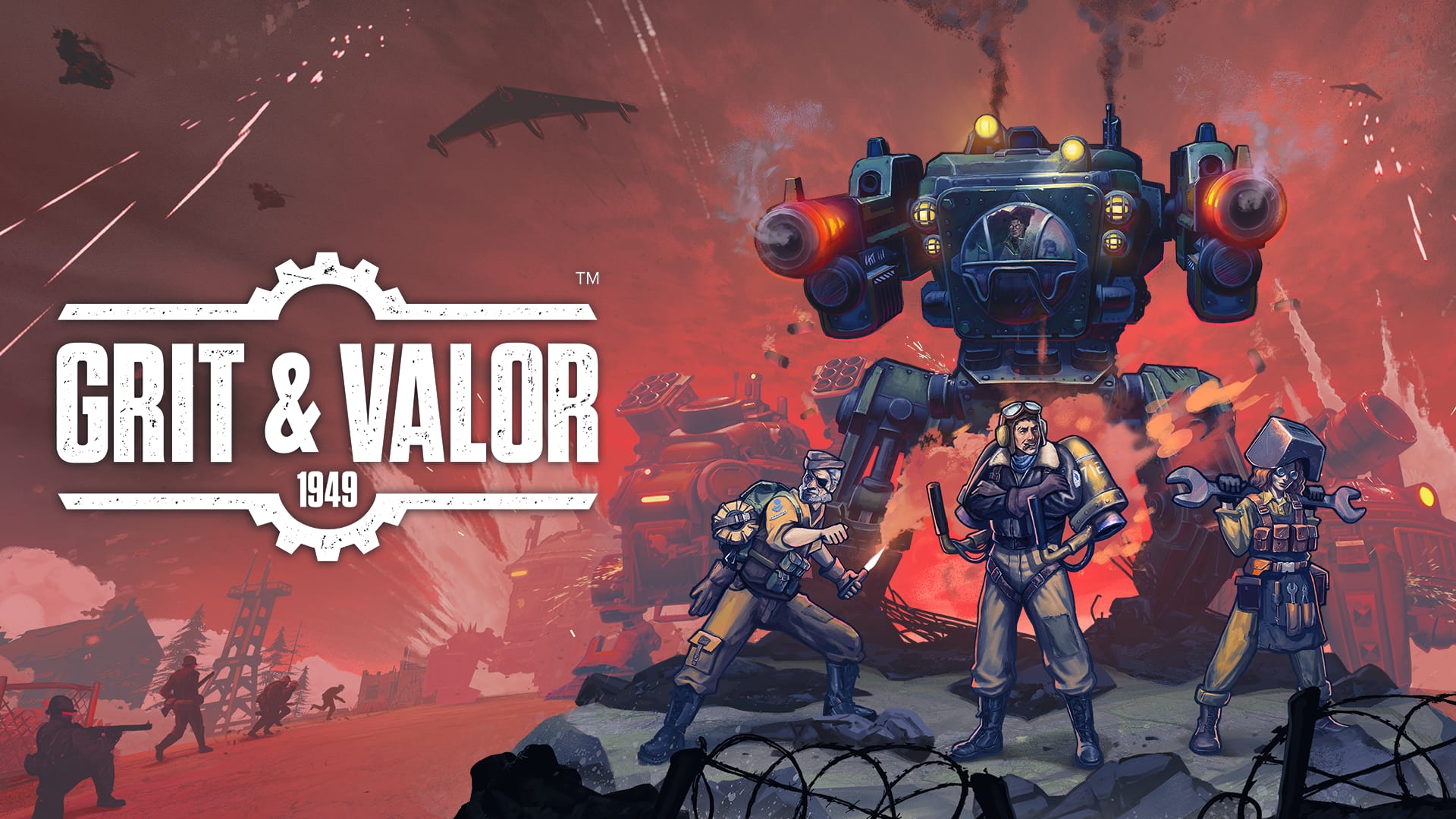
Grit and Valor - 1949 offers bite-size strategy in a dieselpunk alternative history of World War II
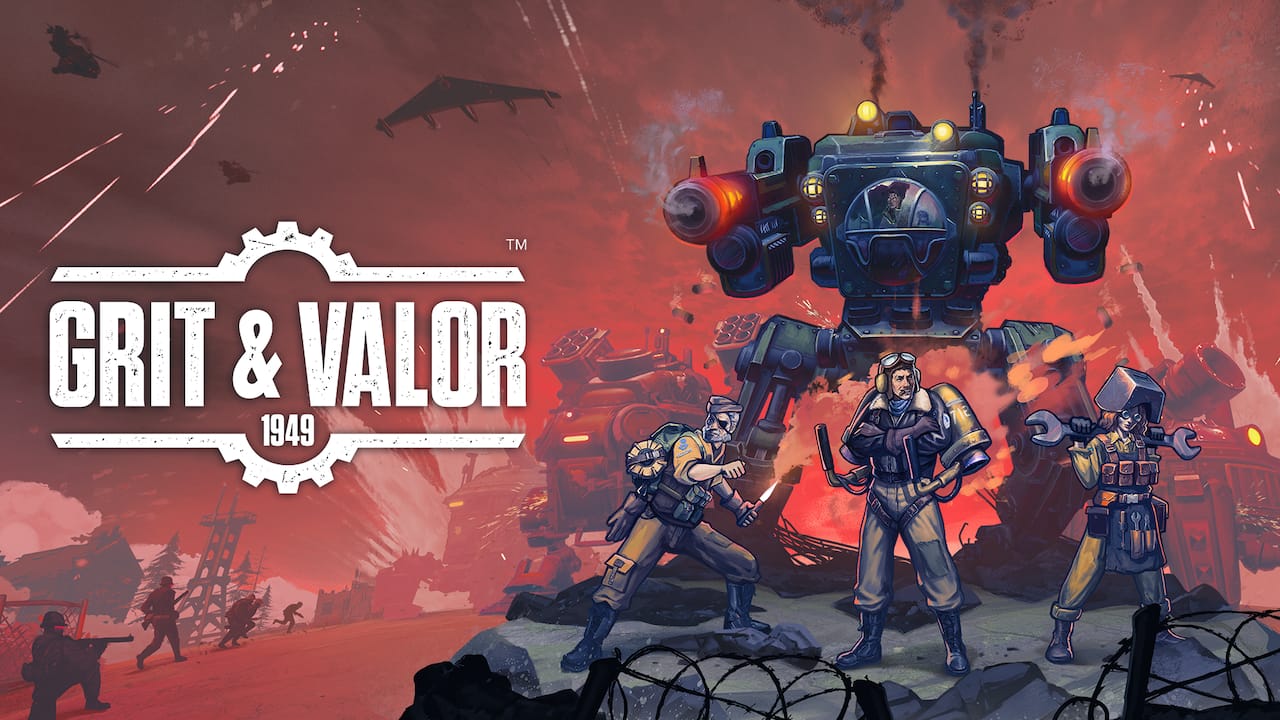
It's 1949, and Europe is on its knees as World War II rages on. That description should be enough to tell you that Grit and Valor - 1949's setting deviates from the historical record. While the premise may conjure images of Wolfenstein: The New Order, developer Milky Tea also deliberately takes an even more cartoonish turn to distance the setting from any real-world historical baggage.
"We knew we wanted to avoid all mention of the Nazis and any sort of historical event,” says producer Kevin Campbell. "We really wanted to reimagine that world at the time that set up this big evil in the world, the Axis, where the player could play as the resistance force who were massively overwhelmed by the enemy in terms of the kind of technology that they had at their disposal.” That technology, to be specific, happens to be diesel-powered mechs, while the setting fits nicely with an aesthetic the team felt was still grounded in the real world; technology has progressed, but not to the extent that it enters sci-fi territory.
Armed with your own mechs, the resistance’s goal is to thwart the Axis forces. Starting from your hideout in Scotland, you make your way down the British Isles and into Europe with the aim of detonating an EMP in the heart of enemy territory in New Germany. That was also another appeal of the World War II aesthetic, as it allowed for a campaign that would take the resistance across different regions of Europe, each with its own visuals and gameplay mechanics.
While Grit and Valor - 1949 is a real-time strategy game that takes the structure of a roguelite, which typically a defeat means starting the run all over again. The campaign is actually split across four regions: the British Isles, followed by Scandinavia, Western Europe, and New Germany. Each region also has its own mechanics to keep you on your toes, such as the circling bombers in the British Isles, the mountainous terrain in Scandinavia where having the high ground boosts your attack power, or the hedgerows in Western Europe, which you can either hide behind or plow through to leave the map more open.
"If we had all the regions stitched together, like in Hades where you play every single region back to back, it’d end up taking a few hours, and it's just too long," explains game lead Chris Skinner. "We wanted players to spend a little bit more time in each region compared to most games, where they have a little bit more time to strategize in each level, so we split them up so there are clear bookmarks between regions."
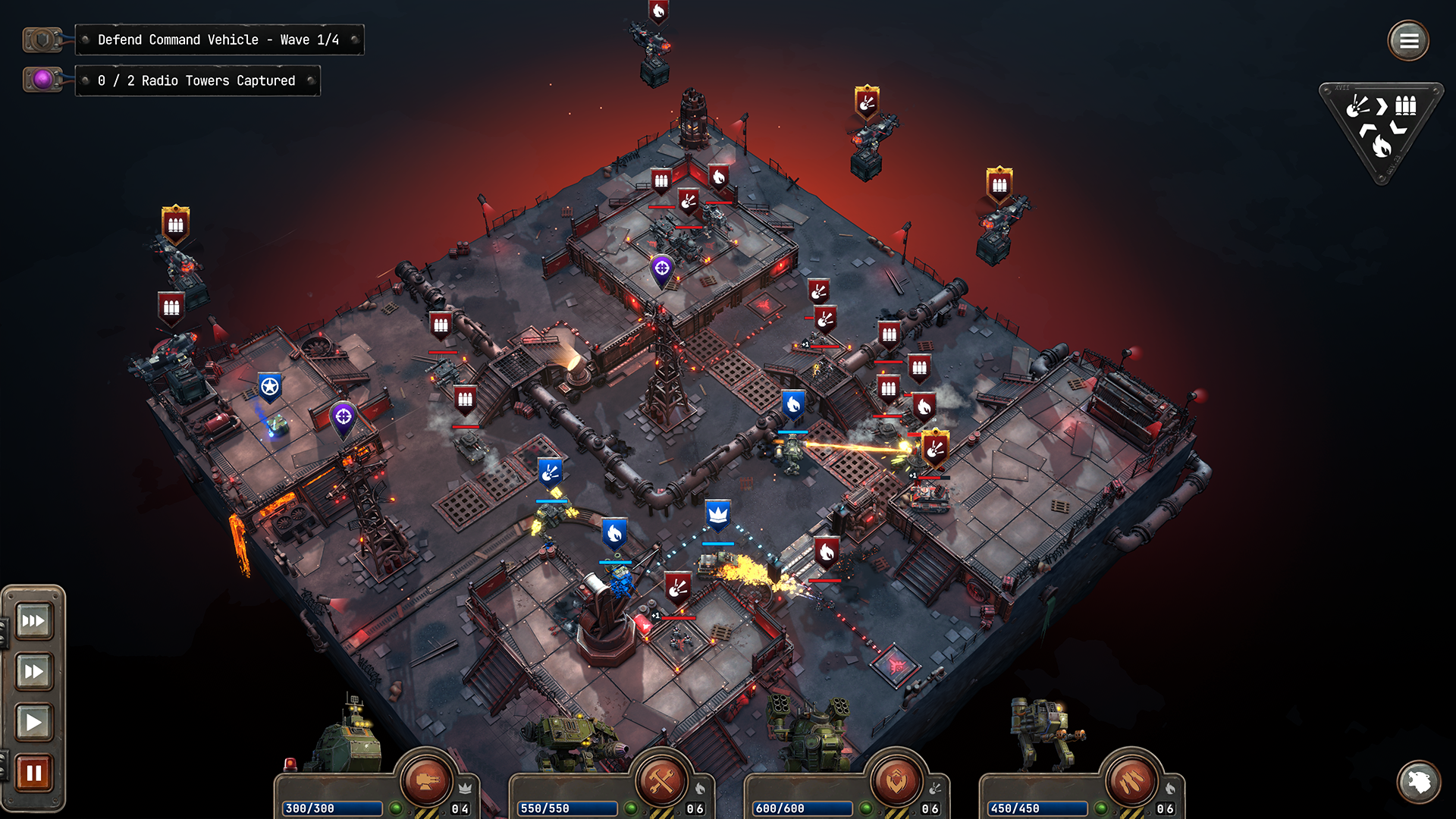
This goes hand in hand with the studio's desire to create a more bite-size experience for strategy game fans who don't have the time to commit to the kinds of hours-long sessions the genre typically demands. This can be seen from maps that start as 12 x 12 grids, and while the battlefield expands in later campaigns, it never gets larger than 16 x 16.
"We always want to try to keep it on one screen, because a lot of players aren't used to panning around the levels and also controlling their units at the same time," Skinner says of the default camera perspective, although it's still possible to zoom in very close and pan the map if desired.
Each mission is also only designed to last a matter of minutes as you're tasked with defending against waves of enemy forces that can be dropped in from different sides of the map. Within that time, you may also have secondary objectives, such as defending civilian camps or taking over enemy radio towers. Most importantly, while you obviously don't want to lose any mech units, as their damage will carry over to the next mission, the most important thing is not to lose your Command Vehicle. This also makes Grit and Valor - 1949 a bit like a tower defense game, or rather like chess as this is like the king who must be protected at all costs but who can also move around.
"In the early days, it was just a static building in the center of the map, but we wanted to move away from that and make it a little more interesting," Skinner explains. "Moving your Command Vehicle around gives you a little bit more strategy, like do I want to sort of defend from this area or defend from that area?"
The mechs may be the main attractions, and each has its own skill set, but you can also mix and match their pilots, who also bring their own unique abilities. Archie, for example, can make your mech leap across the map and deal damage to the surrounding area it lands in, or there's Emilia who can repair mechs, restoring their health over time.
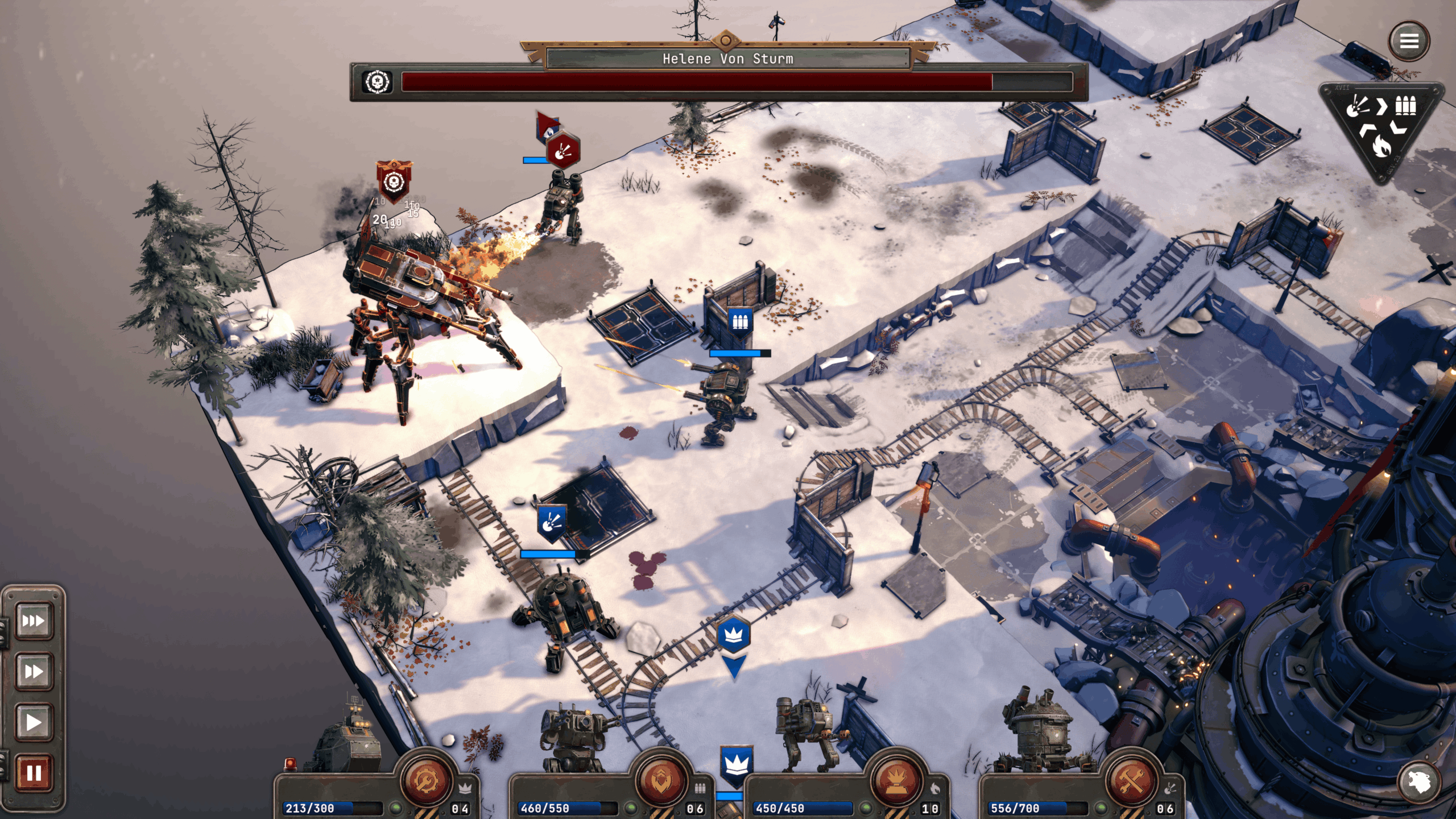
While you start each run with three mechs, which you can improve with pick-ups and rewards depending on which missions you choose next, you can also decide who pilots each mech, adding a unique ability to factor into your tactics. More pilots can also be unlocked as you complete each region and get closer to your goal of defeating the Axis forces.
But as a roguelite, you should also expect a lot of failed runs—though not without the opportunity to unlock persistent upgrades to help make the next run smoother. Among the most useful of these are Overclocks, Skinner explains: "Equipping these modules are quite big playstyle changes. Some can deal more damage to bosses [encountered at the end of each region, where the mission finally changes from defense to offense]. We also have our Command Centre, which gives you more progression within the hub, allowing you to upgrade different elements within the resistance.
"But we have tried to hit a balance where you're not super reliant on roguelite progression. We don't want the game to feel like a massive grind where you have to basically fail over and over again to eventually succeed. We are trying to hit that balance where a very skilled player could complete each region in one or two runs."
The bite-size nature of runs means Grit and Valor - 1949 has the potential to win over players who are new to the genre as well. Those who shy away from the pace of real-time tactics can also take solace in the ability to pause or slow down the action. "They were originally dev controls, but I think it does allow us to cater to more people," Skinner explains. "We found having more enemies in levels was more fun but found that some players were a bit overwhelmed, so [we] received positive feedback when we added a pause. But you can also speed up time because when you're playing through the same region multiple times, you can blast through the first few levels really quickly."
"I think a lot of people would really benefit from pause, where you can spin around the map and see where enemies are coming from, so you can really plan out your next moves more strategically," Campbell adds. "We are very different from Into the Breach in terms of gameplay, but you could actually treat the game like a turn-based game."
Grit and Valor - 1949 releases soon, and you can wishlist it now on the Epic Games Store for an August 21 release date.