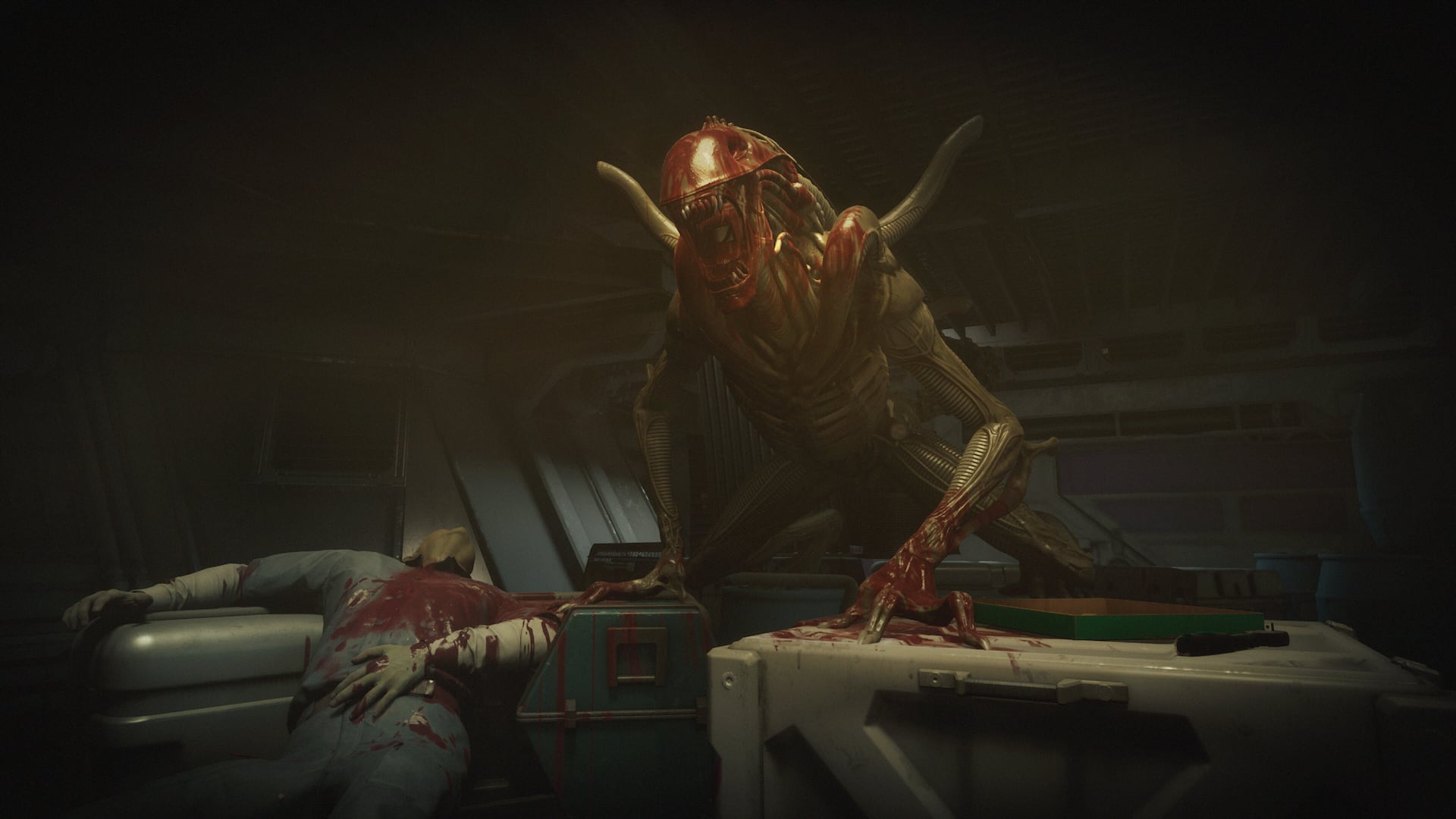
How Alien: Rogue Incursion Evolved Edition’s journey from VR to flat-screen resulted in smarter, deadlier xenomorphs
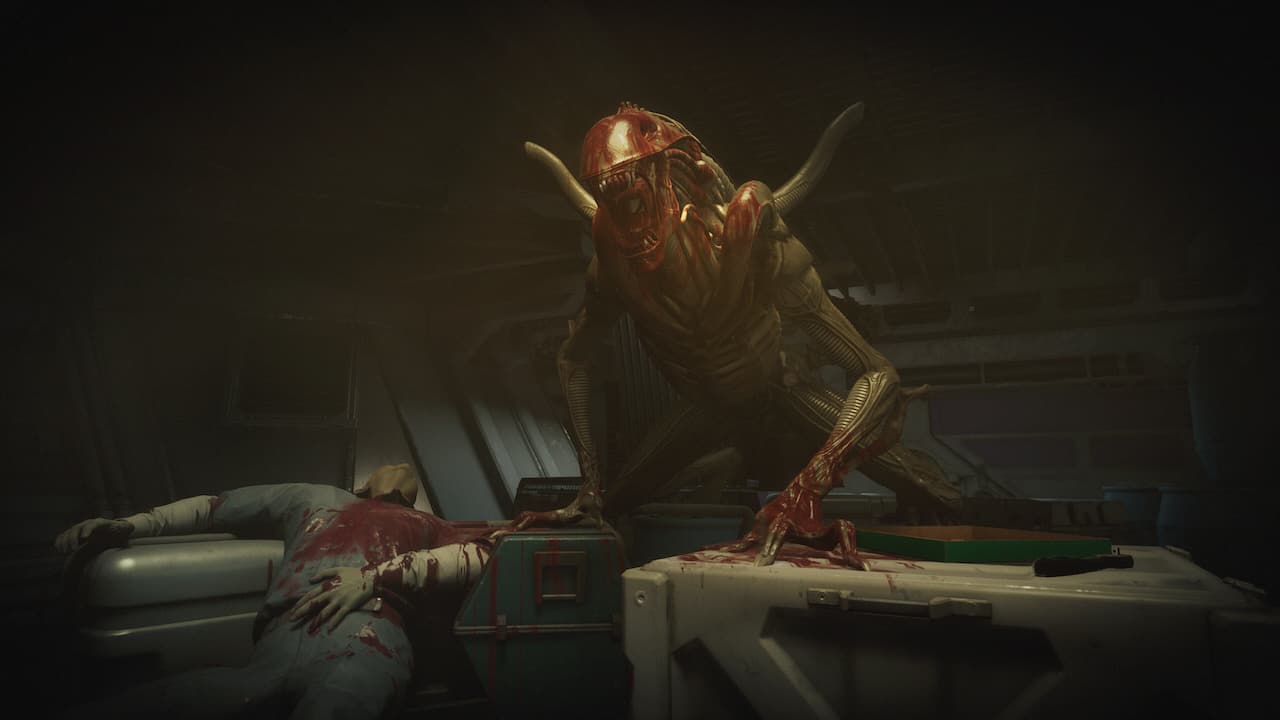
Like the titular creature that skitters through its virtual corridors, Alien: Rogue Incursion is a game of shifting forms. The Evolved Edition, which releases today, is designed specifically to be played on consoles and PC. Before that, however, Rogue Incursion was a VR exclusive experience for Meta Quest and PC VR, and before that, it was intended as a hybrid of both.
Yet unlike the hissing, slavering xenomorph, these metamorphoses did not come naturally to Rogue Incursion. The shifts to and then from VR required a significant reworking of how developer Survios' survival horror game controls, feels, and functions. "It seems like it would be very straightforward, but it's really not," says Alissa Smith, a senior game designer at Survios. "[After] everything you've done in VR, it's so different making sure that it follows the conventional norms of non-VR games."
Smith joined Survios in March 2023, shortly after Rogue Incursion transitioned from being a hybrid VR/flat-screen experience to a bespoke virtual reality title. Placing you in the role of AWOL Colonel Marine Zula Hendricks—a character previously seen in Alien comics and novels—Rogue Incursion sees players investigating a planetary settlement named Castor's Cradle at the behest of Hendricks' acquaintance, Benjamin Carver. Accompanied by her android companion Davis, Hendricks arrives at Castor's Cradle to discover it’s infested by xenomorphs.
A designer who specializes in VR development, Smith was recruited specifically to design Rogue Incursion's virtual reality experience. While Survios' survival horror game already had basic VR functionality, it lacked specific VR interactions that made the most of the hardware's unique capabilities. "How to equip your weapon, how to aim, how to open doors, navigate the world, how to interact with objects in the world…what kind of puzzles will there be?" Smith explains. "All of those are things that I had to think about and went through iterative processes of 'let's design this out.'"
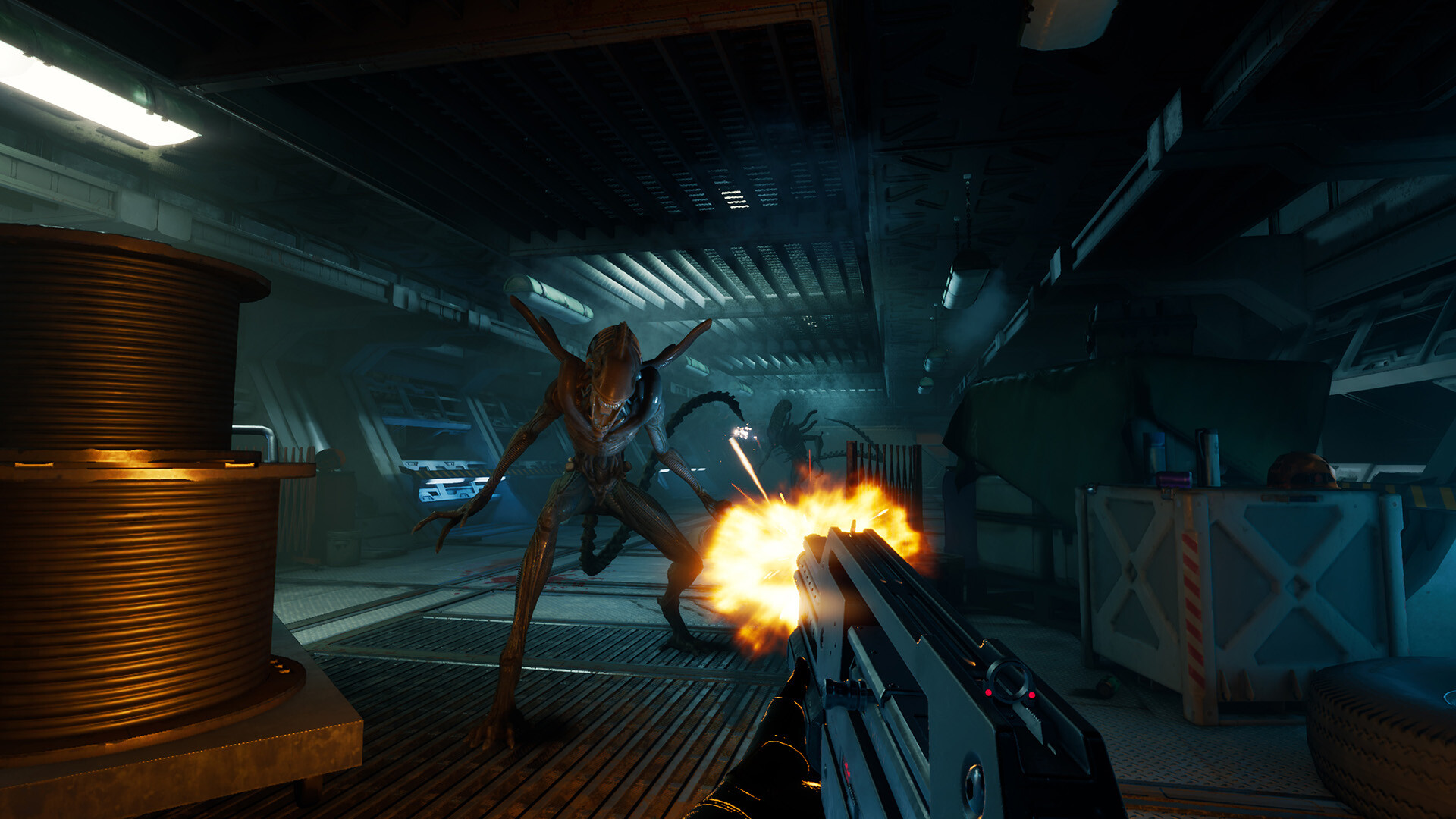
Much of this work involved ensuring the props and objects seen in the Alien films appeared and functioned appropriately in VR, such as the Pulse Rifle. While the Pulse Rifle has been seen frequently in games, Rogue Incursion needed it to look and feel true to the films while remaining a weapon a player could believably handle. "A thing that was said a lot was 'short, controlled bursts,' because in Aliens, Ripley was given a Pulse Rifle, and she was told how to use it and shoot," Smith says. "We're trying to make sure that we capture the feel from the movie."
For handling the Pulse Rifle in Rogue Incursion—such as performing functions like reloading—Smith and the team designed what she refers to as a “hand dance.” “What are your hands doing? How do you move your hands?” she says. “Let's make that a repeatable motion the player can develop a physical memory [for], because in VR, you are the controller.”
For many in-game tasks, Smith had to consider the player's physical limitations in VR. One of Rogue Incursion's key puzzle mechanics, for example, involves rewiring junction boxes by hand. This emerged as Smith searched for interactions that players could do at a “hand mitten” level. "I describe it as, if you put on a large set of mittens, that's how you can interact with the VR world," she says. "[Wearing] a big pair of mittens, I wouldn't be able to solve a Rubik's Cube, so I shouldn't try to make the player solve a Rubik's Cube."
Other interactions could be designed to align with players' everyday experiences. For example, Hendricks carries a digital map of Castor's Cradle on a glass slate, which she can consult for navigation. Smith designed this map to use familiar touchscreen controls. "Every single person who has a VR headset also has a cell phone,” she explains. “And what do cell phones have? Cell phones have maps. So I looked through Google Maps, Apple Maps, and figured out how those worked. Everyone will know how to use this if we make the interface the way that you use your phone."
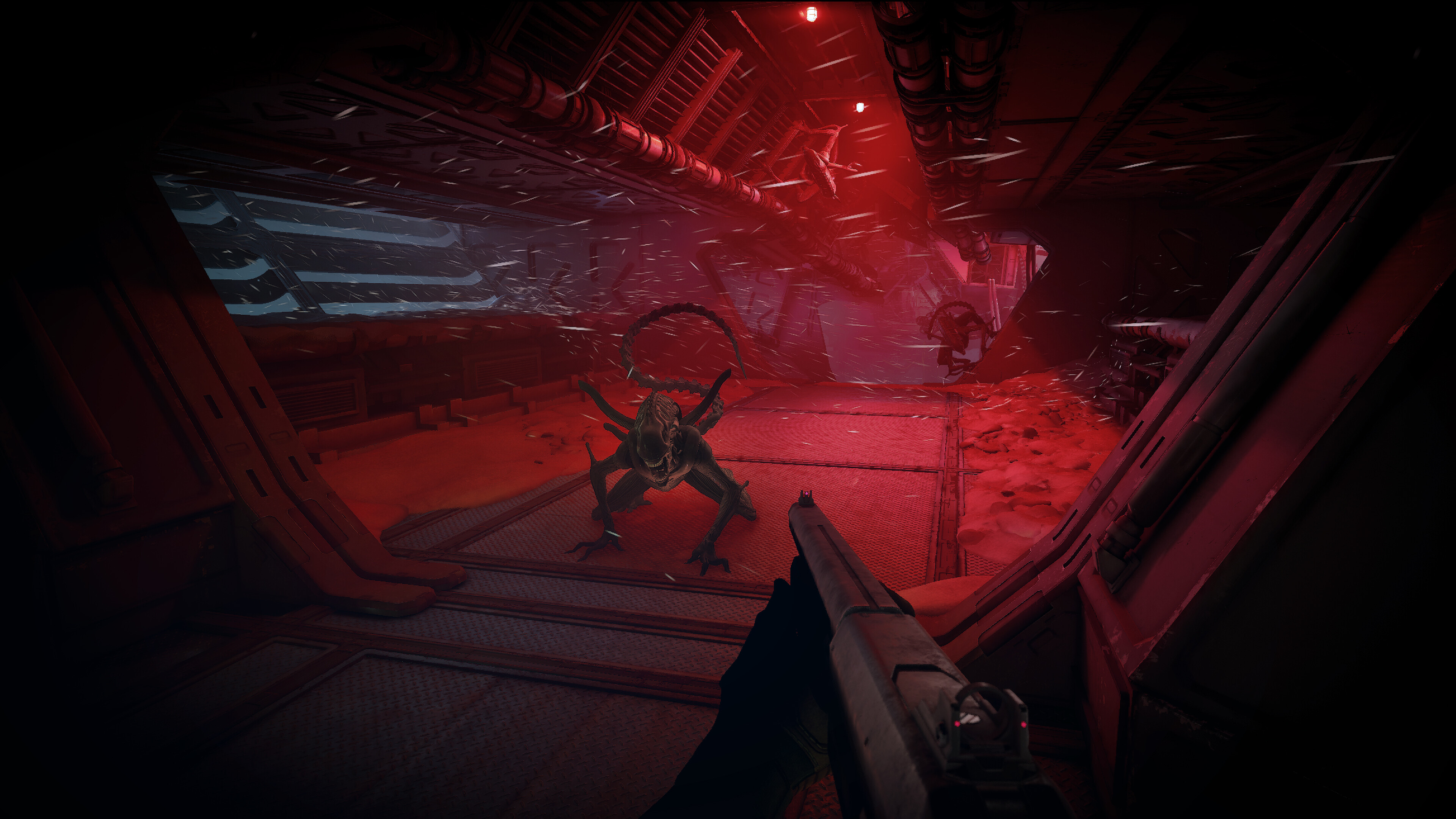
While much of the VR-specific design of Rogue Incursion focused on how players interact with the world, another key factor involved thinking about how the world impacts the player, especially given the game's horror emphasis. A major concern here was deciding how frightening the xenomorph should be. "Being respectful to the player was something that was really important to us, making sure that we weren't overcrowding their senses too much," Smith says. "It's horrifying already, just from being dark, and then [the xenomorph is] like, really close [to the player]."
Rogue Incursion released in December 2024 as a tailored VR experience. But to make the game function as a flat-screen experience for the Evolved Edition, all of these highly specific features had to be completely redesigned. Some of these changes were relatively straightforward. Interactions for picking up items and opening doors, for example, could be replaced with simple button prompts. In addition, Rogue Incursion's diegetic menu, which keeps track of your health and ammo on the player character's wristwatch, could be transposed into a HUD with few complications.
Other changes were significantly more complex. One of the most challenging was combat. Replacing Rogue Incursion's manual weapon handling with a more traditional system not only required creating many bespoke animations for reloading, but these animations also had to be designed with precision to effectively communicate the kind of shooter that Rogue Incursion is. "It's a lot of back and forth on the timing of the reload, on the timing of the weapon swap, on the different animations in between. What's the timing to go into aiming down sights?" Smith says. "This isn't a multiplayer twitch shooter. We really want this to be like 'let's slow it down just a little bit, but don't slow it down so much that it feels laggy.'"
But making these changes also provided opportunities to enhance certain aspects of the Evolved Edition over the original version. In VR, Hendricks' physical character is defined by how the player moves around. With the Evolved Edition, Survios could express Hendricks' personality more specifically through animation.
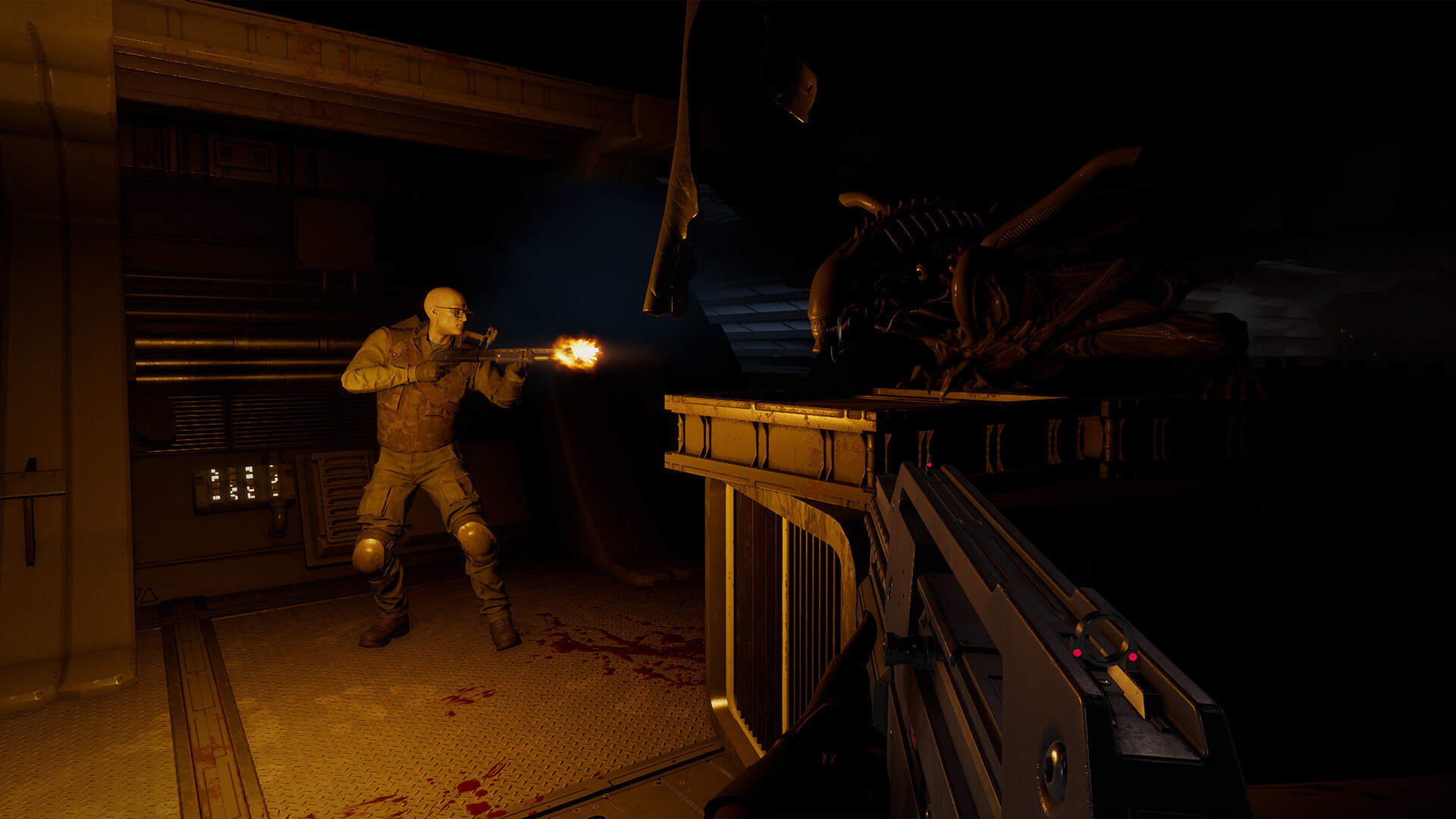
"[In VR], we didn't want to have you to be standing there and have your arms in front of you doing something that you weren't actually doing," Smith says. "In the non-VR version, we got that freedom to create these cinematic moments. We dug into them as deep as we could to make sure that you could feel that story, you could feel her struggle that she's going through."
By far the biggest change Survios made for the Evolved Edition is to the aliens themselves. Without the palpable immersive qualities of VR, Rogue Incursion's combat encounters lost much of their intensity. To address this, Survios reworked xenomorph encounters and behaviors to be more frightening and more unpredictable. "The xenomorph encounters needed a lot of love in order to keep their soul from the VR version…so we made the alien smarter,” Smith says. “We made them be able to stalk the player. We made them be the intelligent pack animals you see on film. We made sure that they became more involved, more intelligent [and] deadlier."
Ultimately, the goal of the Evolved Edition is to make a game that doesn't just feel like a reverse VR port, but rather actively replaces the added player immersion brought by VR with a sense of character and threat suitable for a conventional video game. "[Zula] didn't get as much screen time as we had wished she [did],” Smith concludes. "So being able to take her and make her shine and being able to distribute her to a wider audience, who will get to experience this game and fight for their lives and uncover the story, I think that's really something that is amazing."
Alien: Rogue Incursion Evolved Edition is now available on the Epic Games Store.