How CenterPoint Gaming made crosshairs portable across PC games
It’s easy to take crosshairs for granted, to think of them—if you think of them at all—like commodities as mundane as orange crop forecast yields.
You launch a game, you grab your weapon, and there it is, floating, dead center on your screen. Maybe it’s a simple dot, sitting still to add some precision to your attacks from guns, spells, or swords in a digital world. Maybe it’s a circle, stylized with thin, neon lines to fit the overall aesthetic of the game’s world. It could be simple crosshairs. Or maybe it’s a center dot surrounded by crosshair-like lines that widen as you hold down the trigger to fire, indicating bullet spread. Thoughtfully designed by the game’s creators, they’re as free and expected as restaurant water.
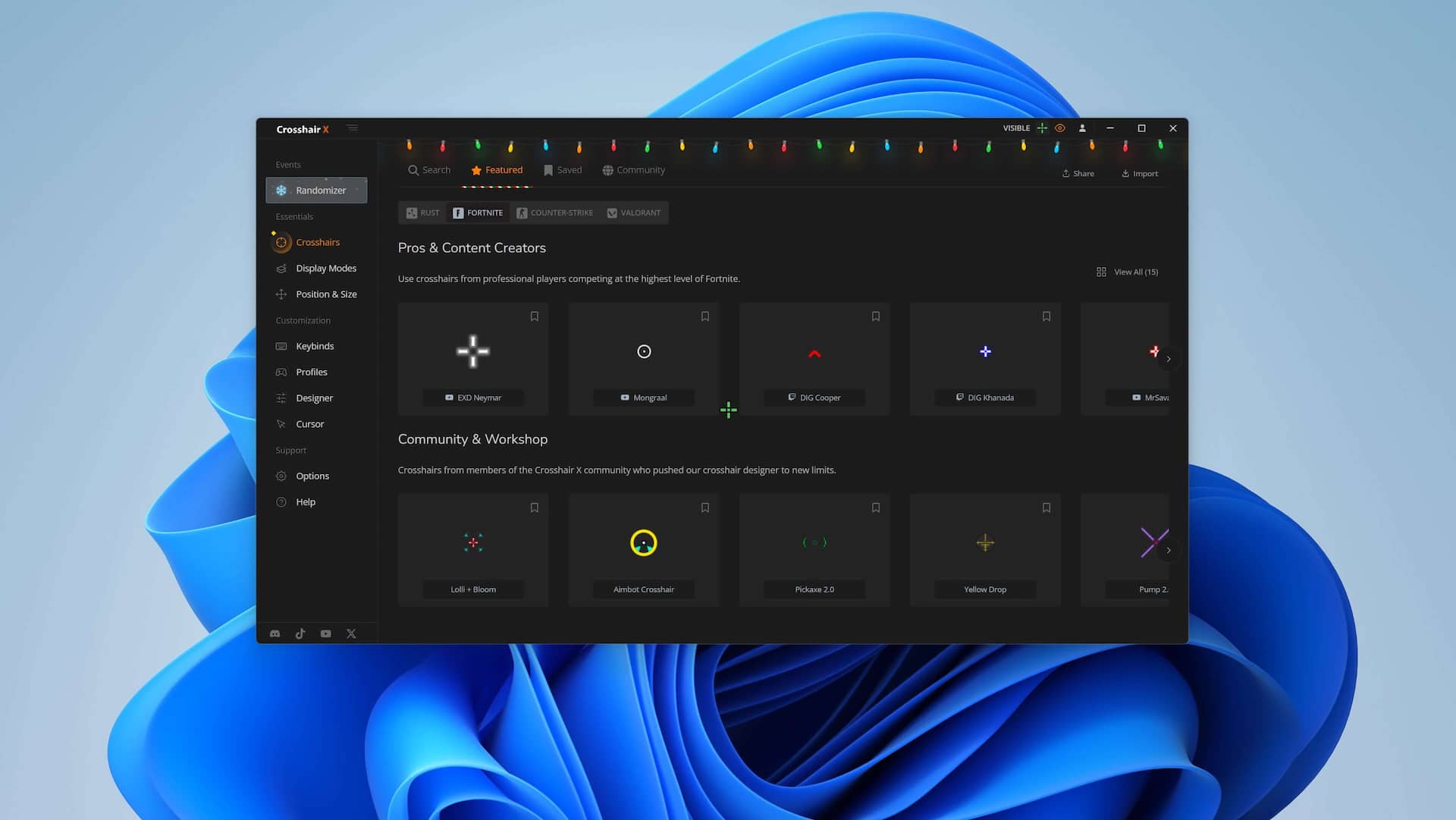
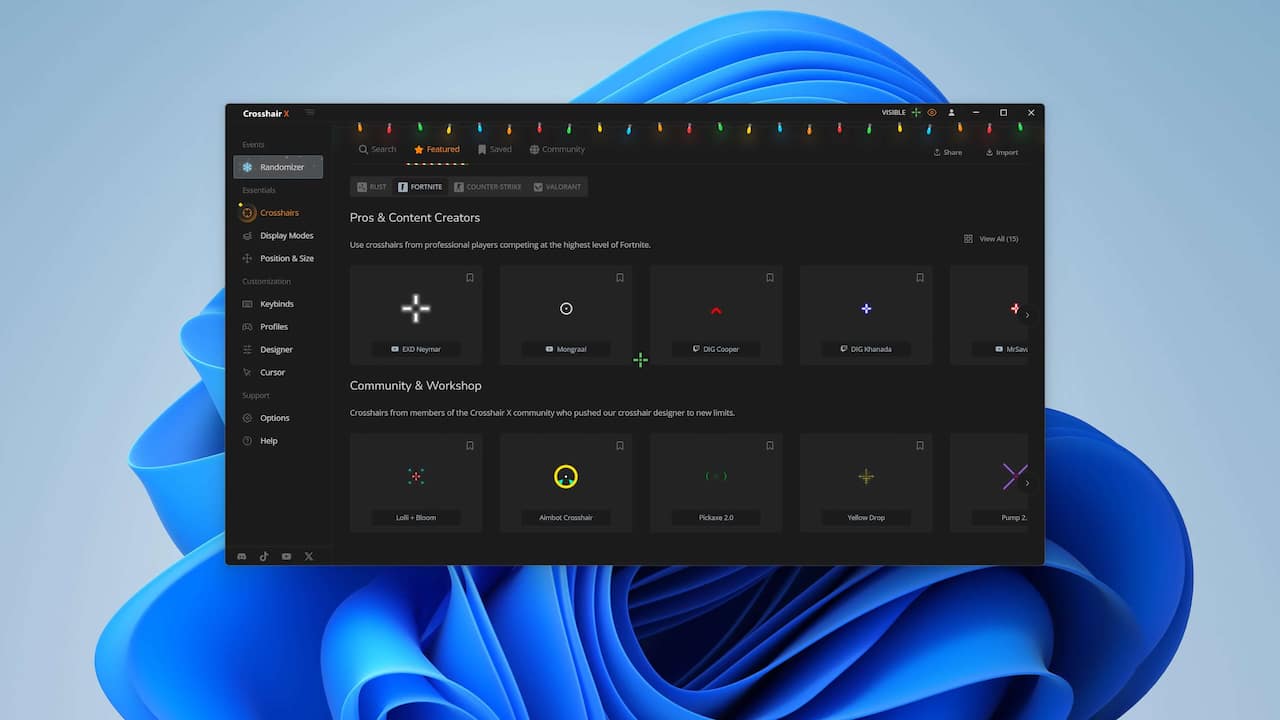
Matt North and the developers at CenterPoint Gaming do not take crosshairs for granted. They’re the creators and evangelists behind Crosshair X, Crosshair V2, and Scope X, three programs designed to elevate players’ crosshair experience across every PC game you own through effectively endless customization that even goes beyond whatever options come baked into your gaming monitor.
We spoke with North recently about the player passion that underlies the software, the technology that underpins it, and how a persistent bug coupled with a persistent attitude transformed him from “a big fan of the software” to the person leading their support, community, and serving as CenterPoint’s marketing and software product manager.
A rusty start
North’s path to CenterPoint Gaming began with Rust. A few years ago, he was creating cinematic content for YouTubers based on developer Facepunch Studios’ multiplayer survival game using Crosshair X, CenterPoint Gaming’s flagship product that includes, among many more features, access to fully customizable crosshairs. He used Crosshair X to produce videos.
“So let's say they wanted a really cool sequence of gameplay, or maybe they wanted something that was set up, but kind of really sold the idea behind their wipe. Obviously, they're very into that specific game—it's a survival game—and they wanted some clips for that. Basically I was doing that freelancing, and I was using Crosshair X to help me make that happen.
“So I was using some overlays that I had produced myself, but I noticed something: Whenever you imported those overlays into Crosshair X, the overlay would be a couple pixels offset. Not intentionally, but it was a bug. It was in the software. So for a year and a half, I pestered George [Guba, CenterPoint Gaming founder and CEO], telling him every week or every other week, ‘Hey, this issue is still present. We need to fix it. We’ve got to do something about it.’ And then I think after those one and a half years, he was just like, ‘I'm so sorry. We’ve got to do something about this bug. Please come work with me, and I'll make sure that we never neglect our users or their needs.’ And that was kind of it. I was bugging him about this issue, and then we finally got it resolved.”
Guba’s LinkedIn tells the succinct origin story of CenterPoint Gaming. He started working on Crosshair X the day after losing his job as an Amazon Web Services cloud engineer in early 2020, using savings and the help of his partner to bootstrap the company.
Five years later, and he’s still in the game. “I think I'll be doing this for the next 30 years,” he wrote.
The idea behind Guba’s app resonated with North.
“Obviously, I'm speaking a bit on behalf of George now, but I know for a fact that the reason why he created core idea behind Crosshair X and Crosshair V2 too is a lot of the games that he played back in the day—like Rust, for example—didn't have their own crosshair customization options—or the ones that were there weren't super customizable. And so it was really this need for having a personalized crosshair that really fit his needs in any given game. Doubly so when you think about it, because if you make your crosshair in Crosshair X, it's the same across any other game. If you play Counter-Strike, it's one type of crosshair. You can't really have that and then put it over, who knows, in Apex Legends or Fortnite. It swaps. So it really is about giving the user all the power in the world to make sure they get the exact crosshair that they want across any game that they like.”
Your crosshair, everywhere
CenterPoint Gaming currently has three products. Crosshair V2 is a free download that includes several crosshairs built in. Crosshair X is a paid product that includes access to both customization and community-created crosshairs. Scope X uses related technology to magnify portions of your screen, just as the name implies.
The technology that underlies the software is surprisingly simple.
“We have two different display modes,” North said. “The first mode that every user gets to use with Crosshair X, specifically an invisible Chrome window, is the best way I can put it. Except in the middle is where the crosshair is present. And so this window, of course, is overlaying anything below it. So just imagine like a Z depth or like a Z stack of all your windows you might have open, and then that just goes on the very top. That's what we tell Windows, basically.
“The only downside is that with this particular technique, you're unable to have it shown in full screen. However, our second display mode in Crosshair X does allow for full screen usage, and we use Game Bar mode. So that would be the Game Bar that we utilize with the widget that basically allows it to go full screen.”
The decision to separate the software from the games they work with is deliberate, North said. They believe that it keeps users safe generally and specifically from getting flagged in-game.
“We don't inject or we don't hook into games, and that's a very specific stance that we took,” he said. “We do have some competitors that do this, but we wanted to be as fair as possible and to make sure that we've had no worries from our users. It's all about making sure that we're not doing something which could put our users in danger. You may or may not know this, but whenever you hook or inject into games, you basically run the risk of getting flagged. If you don't have any reason to hook or inject into a game, well, that's kind of weird. That's kind of suspicious. So we really try to do our best to make it seem as fair as possible and make sure that our users aren't getting any flag unnecessarily.”
North said that he’s constantly checking, but they’ve “never received any official data that would indicate anyone has ever gotten banned” from using CenterPoint’s products. He knows that some have claimed otherwise, but he suspects that their products get the blame for actual cheating software.
“So it's really this gray zone where we have to keep legitimizing our existence and just showing, OK, we're just customizability software, a free and a paid one, that anyone can really use, and we're not doing anything to harm our users. So no one's ever gotten banned, but we do get reports, unfortunately, where people disguise their bans as them having gotten for using our software.”
From fan to collaborator
“I needed something that would help me make my aim consistent,” North said, thinking back to his early days with Crosshair X. “I was tired of having limited options, and the options that were there weren't particularly great. And so having something like Crosshair X, where you have a third party tool that gives you exactly the crosshairs that you like, not only in just one game, but any game and every game, was a well-needed quality of life that I was really in need of.”
In the years since, he’s settled on a small, neon pink crosshair. His best guess is that somewhere between 250,000 and 300,000 concurrent users are using their own preferred crosshairs every day—including crosshairs from popular streamers and content creators.
If you’re feeling up for some customization, you can download Crosshair X, Crosshair V2, and Scope X on the Epic Games Store today.
Note: Managing Editor of the Epic Games Store's Newsfeed Craig Pearson used to work for Facepunch Studios on Rust.