खबरें
How Drop Duchy went from solo prototype to smart, stylish roguelite
A
Aron Garst
“I’d been leading teams and working on big franchises for years,” Oger says. “But I wanted to work on something more creative.”
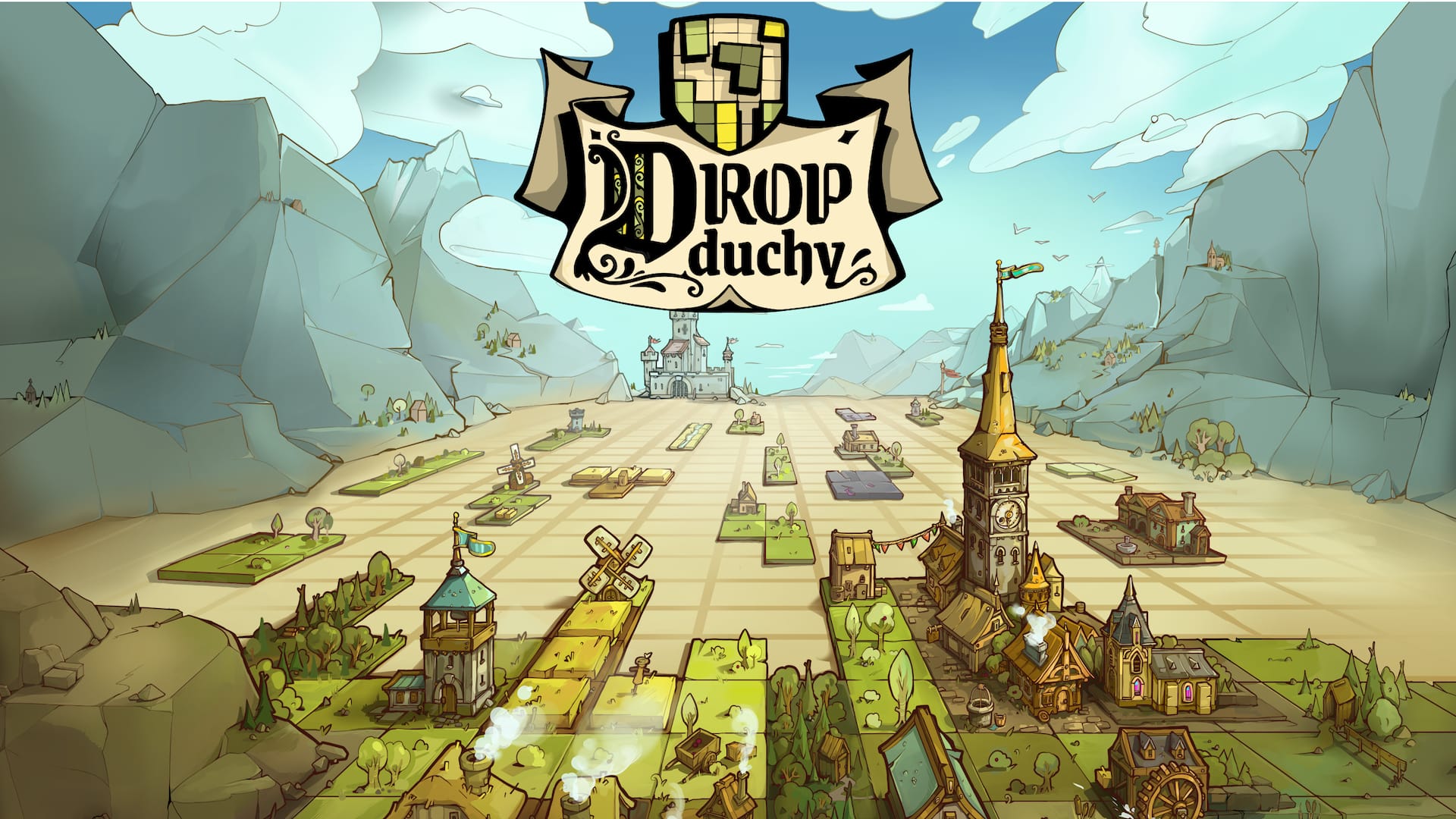
That curiosity became Drop Duchy, an endlessly replayable roguelite strategy game about building medieval cities and armies on a grid.
What began in early 2023 as a solo project with a handful of puzzle mechanics grew piece by piece into a fully funded indie title with a four-person team. Years later, Drop Duchy is a polished blend of board game sensibilities, deck-building strategy, and light tactical combat. At its core is Oger’s design philosophy: Keep it simple, but let players dig deep.
Pieces of the puzzle
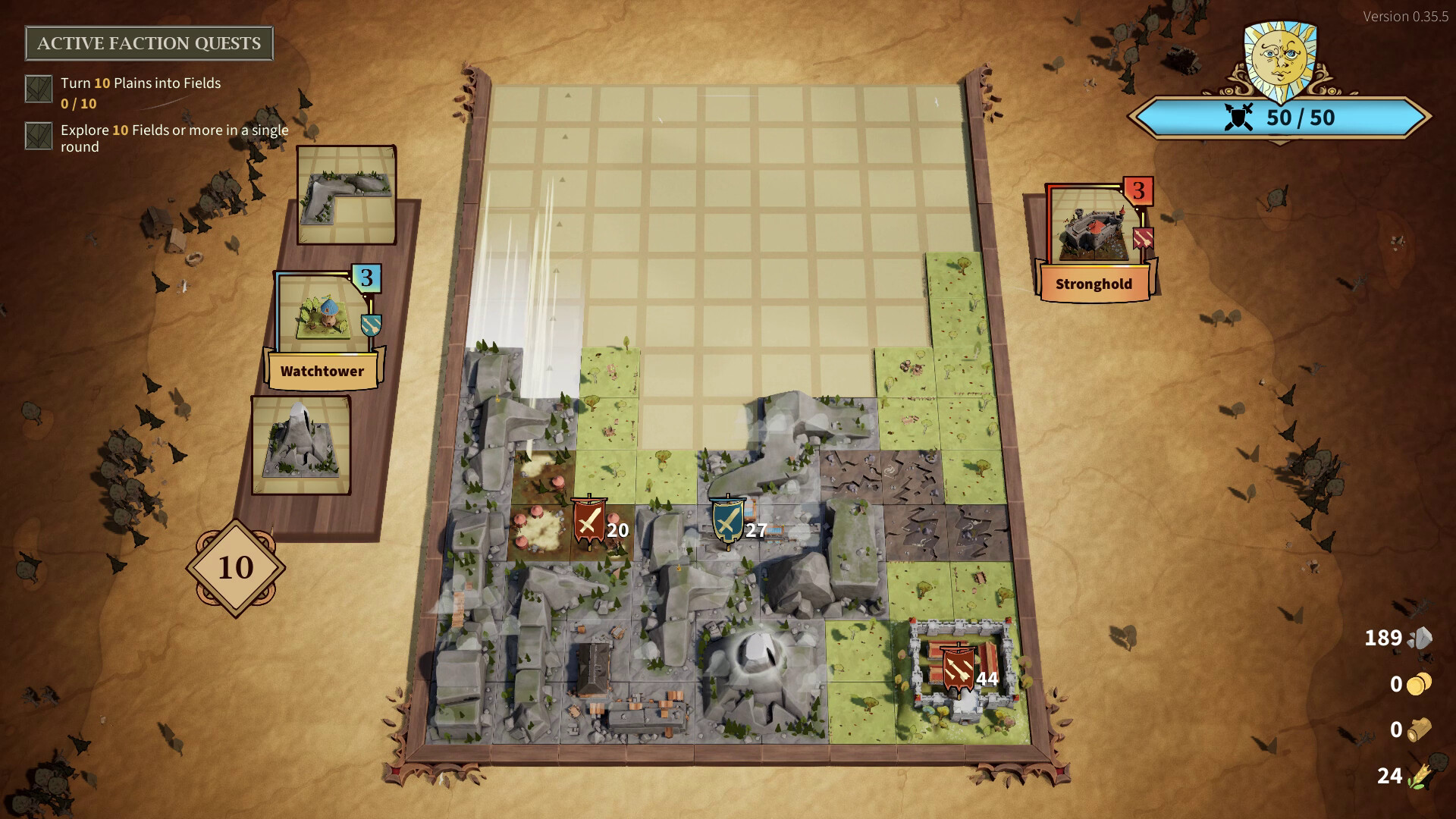
The building blocks of Drop Duchy seem wildly different, but actually fit together wonderfully, like an ideal session of Tetris. Players drag and drop a few dozen tetromino tiles to construct medieval cities and militaries, grow their influence, and prepare for battle. Its grid-based system is easy to learn, but the depth lies in placement, an idea Oger borrowed straight from classic puzzle games.
“People see the medieval theme and strategy layer, but underneath it all, Drop Duchy is basically a tile-placement puzzle,” Oger says. “I’ve always been a huge board game fan, and Tetris was a point of reference too. I wanted something that captured that feeling of fitting pieces together in a way that always matters.”
In early prototypes, the game looked like a stripped-down arcade puzzler. Tiles fell from the top of the screen, and players had to make quick decisions to survive and rack up points.
My City, a strategic, evolving board game where players build and expand their own city across different eras, was another primary source of inspiration that Oger brought in to help shape his game. He wanted something that would provide a different experience every time it was played. Oger found that roguelite mechanics, one of the hottest trends in gaming, were a great fit to make Drop Duchy more than just a single-session puzzler.
“The deck-building roguelite part was a clever way to add replayability,” Oger said. “It also gave the game rhythm. You could go between puzzle sections and something more strategic, and that back-and-forth is what made it fun.”
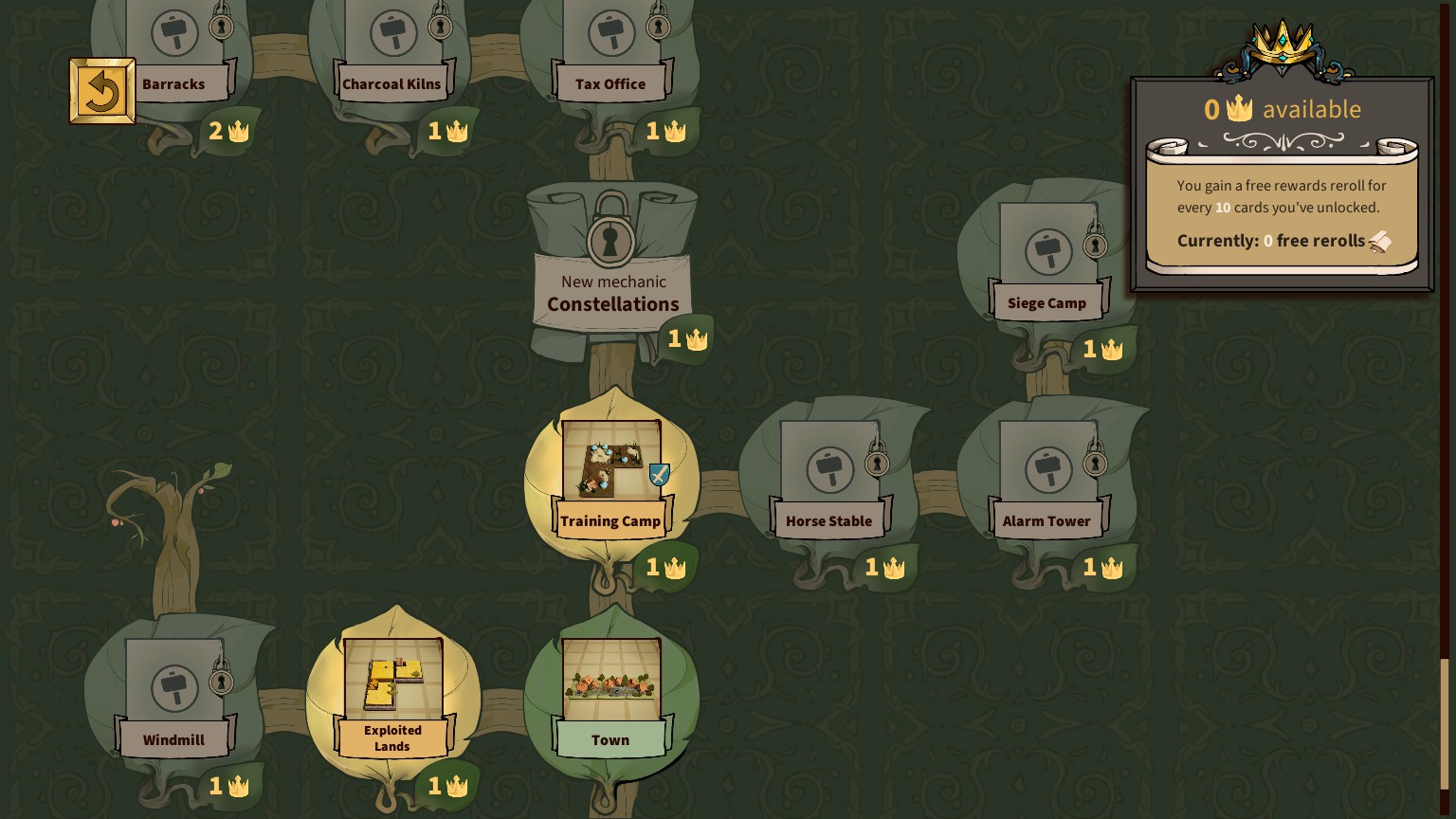
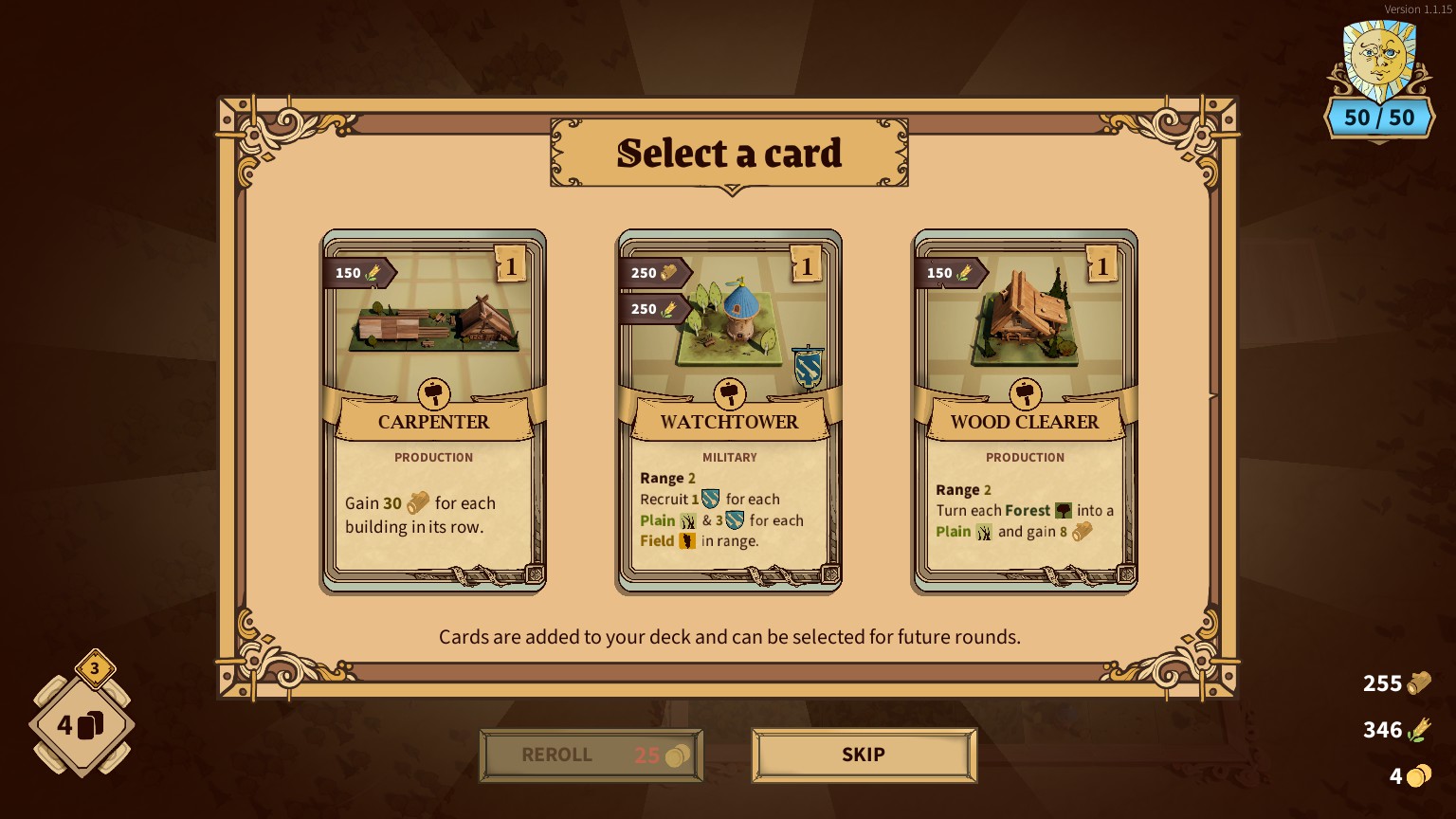
Tiles became cards that players could unlock, upgrade, and add to their deck. Placing a farm would now generate resources if placed alongside plains, while a watchtower would generate as many archers as the nearby plains and fields allowed. Suddenly, the puzzle board became a playground for experimentation, with every piece carrying weight and potential.
Players would then choose their next puzzle challenge by selecting one of several stops along a path. Puzzle sessions became more complicated and challenging as their deck and their enemies’ deck grew larger and more leveled-up.
“What’s cool about tile placement is that there’s no ‘right’ answer,” Oger said. “You’re solving problems, but in a way that feels creative.”
Board games also informed the game’s pace. While Drop Duchy has roguelite elements, Oger wanted it to feel relaxing rather than punishing. Many other roguelites are fast-paced and challenging, often punishing players for not making quick decisions or sticking to a predetermined plan early on in their run.
“Roguelites are often very intense, but I wanted to capture the feeling of sitting down to play a board game,” he said. “You can take your time and really enjoy the puzzle aspect, but there’s still enough challenge to keep you coming back.”
Oger knew the pressure that roguelikes and roguelites could place on players. He spent a good amount of the pandemic at home trying to battle out of hell in Hades. The satisfaction that Supergiant's creation provided helped push him to add something similar to Drop Duchy.
The pressure to figure out where to place your L-shaped axe-wielding troop camp fell by the wayside. In its place comes a different type of pressure, one that pushes you to anticipate where you would place your next three buildings among the rows of plains, forest, and mountains.
Finding the right setting
The original prototype was built with impressive speed. The thematic choice of a ruler watching over his lands came soon after.
The medieval flavor was inspired by Oger’s love of tabletop games, as well as his childhood fascination with European history. That shift gave Drop Duchy its identity. The name itself, which was an early placeholder that emerged out of Oger's fascination with alliteration, was Oger’s way of signaling that this wasn’t an overly serious medieval strategy game.
“It’s not meant to be grim or gritty,” he says. “I wanted a lighter tone. You’re managing a duchy, but you’re also playing with blocks.”
The medieval aesthetic allowed him to build a satisfying progression loop. Players don’t just place abstract shapes; they’re laying down villages, castles, markets, and fortresses. That thematic connection made even small victories feel more tangible. Oger believed that it was far more interesting and satisfying to build a fortress than to clear a line. It added meaning to what was happening on the board, and the strategy brought in a story.
Oger also wanted to add depth via different classes, called factions, that offer different ways to play. The Duchy, as the game's name suggests, is the base class of the game, and offers the most straightforward gameplay. Other factions mix things up. You have the Republic, which gears gameplay toward building a city rather than a military. There are buildings that focus on trade and business. For these, Oger took inspiration from the Republic of Venice. You also have the Crusader, which is a counter to the Republic. Its primary gameplay focus is on building a powerful military.
Uncomplicated combat
For all its strategic depth, Drop Duchy keeps combat intentionally simple. Battles are resolved nearly automatically based on the player’s preparation and troop composition. There’s no micro-managing units or issuing commands mid-fight; the emphasis is on how players plan and build before the battle begins.
“I didn't want to make a game within a game,” Oger says. “There are so many games where the strategy layer is fun, but then you get into a fight and it’s like a second game you have to learn. I wanted it to feel like a payoff.”
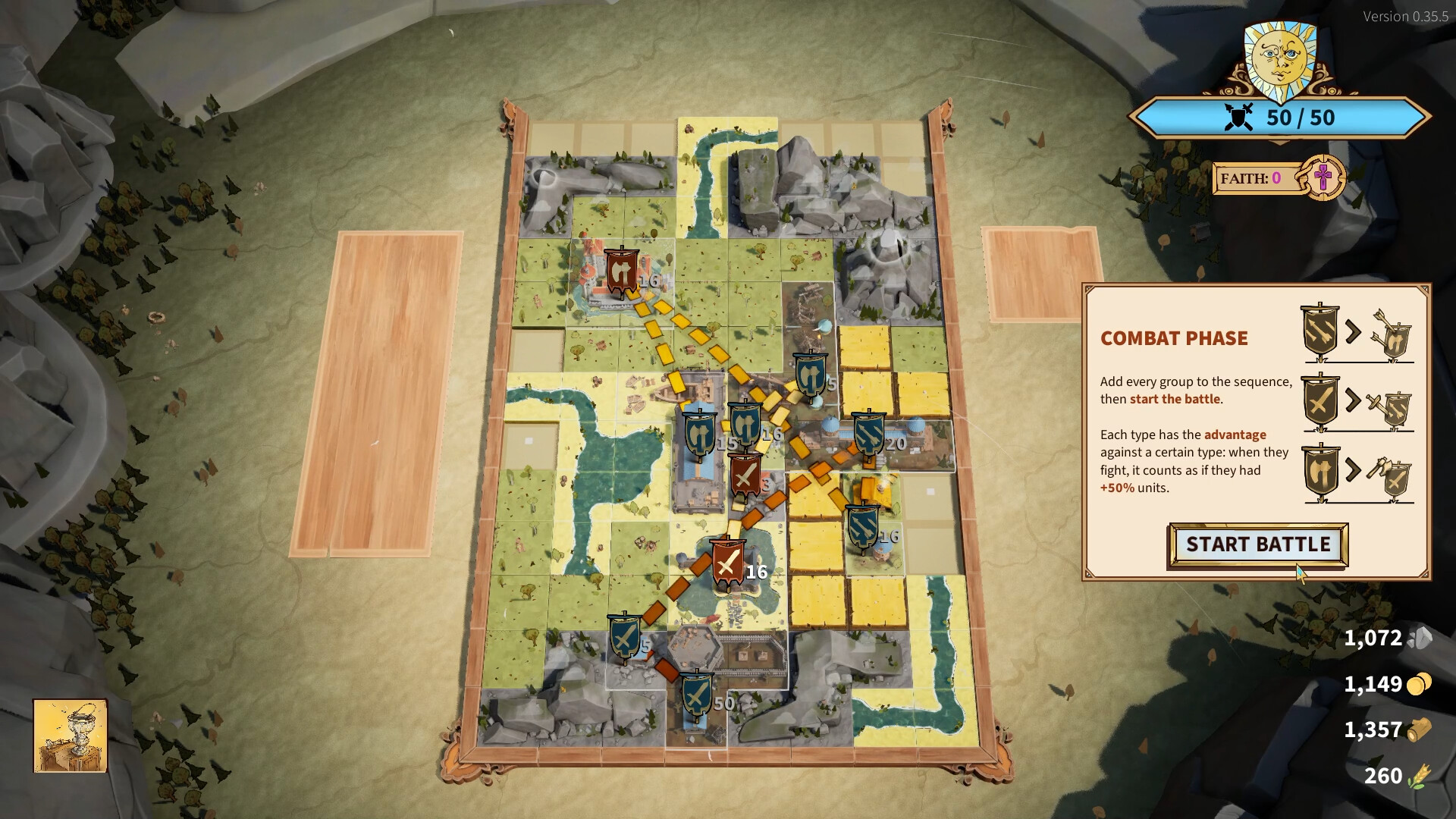
As players work through the board, military pieces gain troops. The Duchy, for example, has three different types of troops, each wielding their own easily identifiable weapon: archers, axe-wielders, and swordsmen. There is a familiar triangle system: Swords are effective against bows, axes against swords, and bows against axes. At the end of a round, the player chooses which camps will attack which enemies in sequence. The sequence plays out, leaving a victor. If the player loses, the remaining enemy troop balance is deducted from their overall defense.
It's almost like playing chess against yourself, as you also place your enemies’ pieces, making sure to limit their numbers as much as possible. The battles play out almost like a reward: a quick burst of animation and sound that reinforces the player’s strategic choices. It's like watching a plan come to life, ending in either satisfaction or stress.
That decision was partly philosophical and partly practical. As a solo developer, Oger didn’t have the time or resources to create a fully fleshed-out tactics system. Instead, he leaned into simplicity, trusting that players would appreciate a streamlined approach.
“When you strip it down, combat is just a puzzle,” he explains. “If you’ve done a good job building your duchy, you’re going to win. If you haven’t, you’ll lose and learn something.”
That focus on preparation over execution also helps keep the game approachable. He didn't want players to spend five minutes solving a puzzle and then 10 minutes playing something like Age of Empires with his combat system. While Drop Duchy's systems can be overwhelming at times, it's easy to remember the core of the game is a Tetris puzzler.
Putting the pieces together
For Oger, Drop Duchy was always more than just a game—it was a way to prove that he could create something on his own. After leaving Ubisoft, he joined a small startup. While it wasn't quite the right fit, it still gave him a complete view of how games of a smaller scale are pitched, funded, and made. It gave him the confidence to branch out on his own.
Drop Duchy, while partially birthed from a passion for board games, is the ultimate example of economic game design. This wasn't a passion project that had lived in Oger's mind for years while he worked at Ubisoft. He actually had a bunch of different ideas and concepts when he set off to make his own game.
The feedback he got on most of those ideas all came down to the fact that he'd never be able to prototype them. They were too complicated.
"I took the one idea that was the simplest, simplified it even further, and then went with it," Oger said, adding that Drop Duchy was originally supposed to be more of an RTS, but those ideas were cut early on. Now that the game has had a successful launch, Oger sees Drop Duchy as both a project and a launchpad.
“This was me proving I could make something on my own terms,” he said. “It’s a foundation for future games, but I’m also proud of it as a standalone experience.”
His team has already released some additional content for Drop Duchy, and they are focused on balance updates and other new content. Oger has taken the success so far as permission to work on bigger and bolder things with his studio. He's far from announcing anything new, but looks forward to going through his creative process once more.
Drop Duchy isn’t flashy, but it’s a perfect example of thoughtful design. By combining the satisfying spatial reasoning of puzzle games, the strategic depth of roguelites, and the charm of tabletop aesthetics, Oger has created something that feels both familiar and fresh. It's also helped to see players spend dozens of hours trying to create broken builds.
“The best part is seeing people play it in ways I didn’t expect,” he says. “That’s when you know you’ve made something interesting."