खबरें
How RoadCraft puts giant physics-powered machinery at the heart of disaster recovery
D
Dave Tach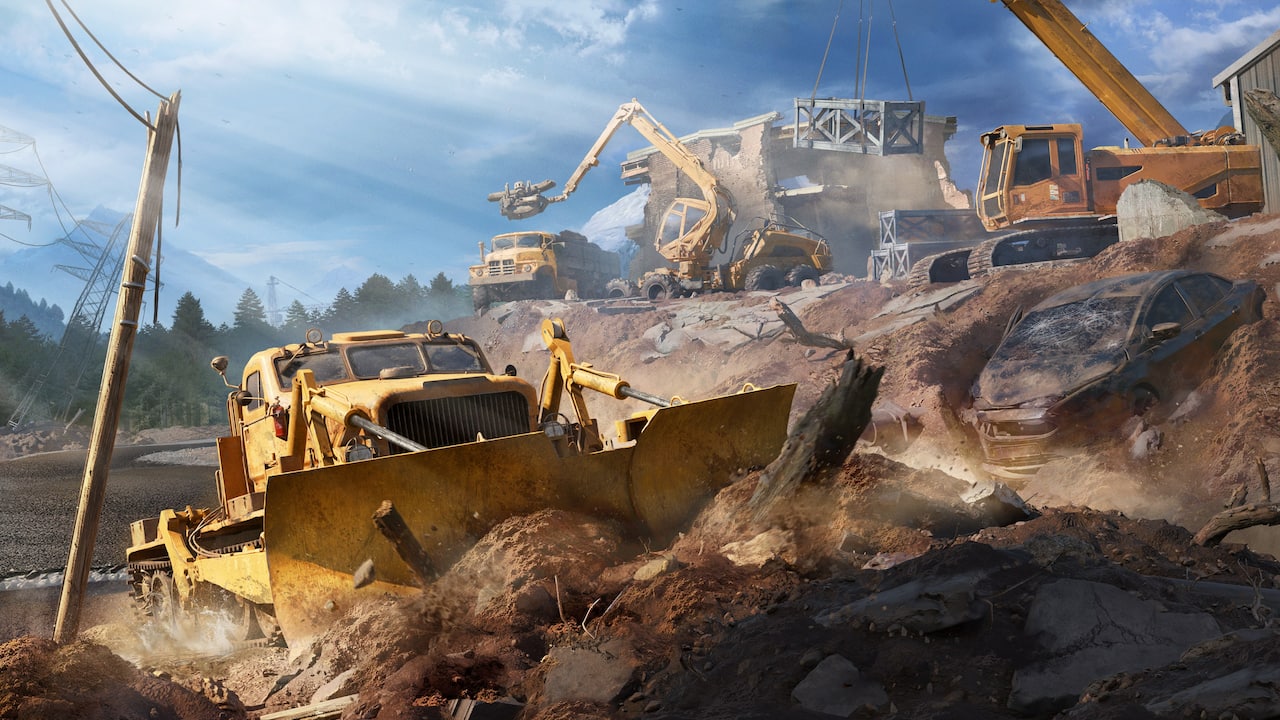
Somewhere out past the nearby shoreline, a massive storm creeps across the sea, absolutely guaranteeing ruin and destruction to come. Soon, Mother Nature will bend and mangle those palm trees and overwhelm these roads, drowning them in flood waters. Every bit of precious infrastructure is at risk.
This is RoadCraft, a simulation game from the developers at Saber Interactive and publisher Focus Entertainment. And it sent me here not to prevent disaster, but to mitigate it. So I get to work, a one-man disaster relief and recovery crew.
I drive around the area, lifting the fog of war around the unfamiliar map. I hop from my truck to other vehicles, clearing out debris. I launch my truck’s winch at stubborn obstructions, clearing pathways and safeguarding important equipment. I plot a course around the town and watch my (AI-powered) coworkers’ convoy pick up and deliver their goods.
RoadCraft’s game loop is a diverse mix of vehicle-powered objectives, taking place in vast open sandboxes. Players show up as disaster looms, or they show up after it strikes. Either way, you’re here to help—slowly, deliberately, and with more horsepower than you can shake an industrial revolution at.
“I'd say RoadCraft relies on a balance between exploration, transportation, terrain manipulation, the creation of new paths, and restoring new factories,” Focus Entertainment Senior Creative & Brand Manager Yann François told Epic Games Store. “In many cases, you start by scouting the environment and then plan your resource transport convoy routes. These routes sometimes require you to clear a path of debris or obstacles blocking your way, or even to build your own road. Ultimately, these maneuvers help you build new logistical infrastructures, which will enable you to advance into a new part of the map, and thus continue rebuilding the region.”
The work that you do—connecting a factory to a warehouse, for example—earns you experience points that unlock a growing arsenal of heavy equipment. RoadCraft gives players more than 40 vehicles to acquire, from bulldozers to cranes and beyond, and there’s plenty of space to use them in. RoadCraft ships with eight maps, each of which is four square kilometers in size. You can rebuild solo or with three other players, switching between roles and specific jobs. Variety is everywhere.
“Our goal has always been to make a game that is fun to play,” said Lev Danilov, Project Lead Game Designer at Saber Interactive. “This is not a hardcore simulator of some specific monotonous job. We truly understand the appeal of such games for niche audiences, and they will always find an opportunity to take a specific role in RoadCraft. For example, playing in co-op lets you designate roles among party members for someone to be, for example, a dedicated crane operator.”
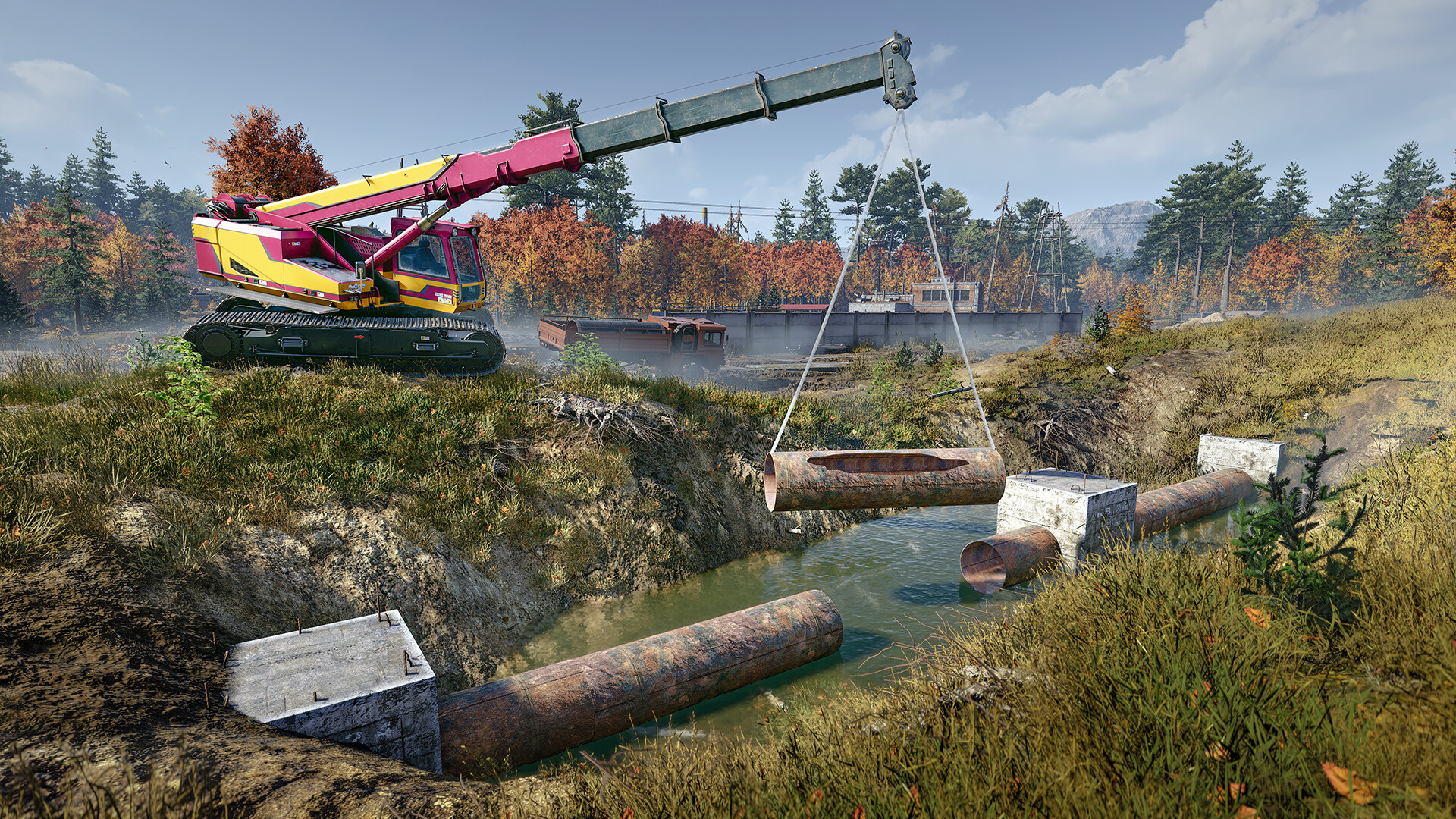
Whether you’re playing alone or with friends, there’s almost always a menu of activities to choose from. “The objectives are deliberately structured that way so at almost any point you can switch up the gameplay if you want something different—from driving to operating cranes, to cutting wood, to managing company routes,” Danilov said. “The maps are your sandboxes, and the order in which you achieve your goal is entirely up to you.”
A significant upgrade to Saber Interactive’s physics engine underpins many of the things you must do in RoadCraft. The developer has been making games powered by vehicles that drive through extreme environments for years, and the physics engine is a huge part of that—MudRunner and SnowRunner included. The upgrade isn’t simply cosmetic, though it is certainly a visual upgrade. It’s actually fundamental to the entire premise of RoadCraft.
“All I can say is that this new iteration of Saber Interactive's engine enables certain elements, such as sand, to behave in new physical ways, but that’s not it!” François said. “These material behaviors have also made it possible to develop a whole new gameplay based on their manipulation, starting with the creation of improvised or consolidated roads using sand, then asphalt combined with it.”
RoadCraft’s distinguishing feature begins, Saber Interactive Project Tech Lead Sergei Kogut told us, with Havok, a physics engine whose ubiquitous gear-inspired logo has appeared in video game loading screens for decades.
“We use the Havok Engine to handle physics,” Kogut said. “Simply put, Havok calculates the position of objects based on the physical impulses provided by the game. However, the nature of these impulses—their magnitude, direction, and causes—must be implemented by the game itself.”
That’s where things get interesting on both the gameplay and the technological side of RoadCraft. Imagine a scenario where, unlike that African town, you arrive in an area after a natural disaster strikes. Homes and businesses sit in ruins. Felled trees litter the roadways. Infrastructure is a past-tense concept. Sometimes—maybe even often—your job won’t be to simply clear the debris and restore access to infrastructure, but to build some of your own.
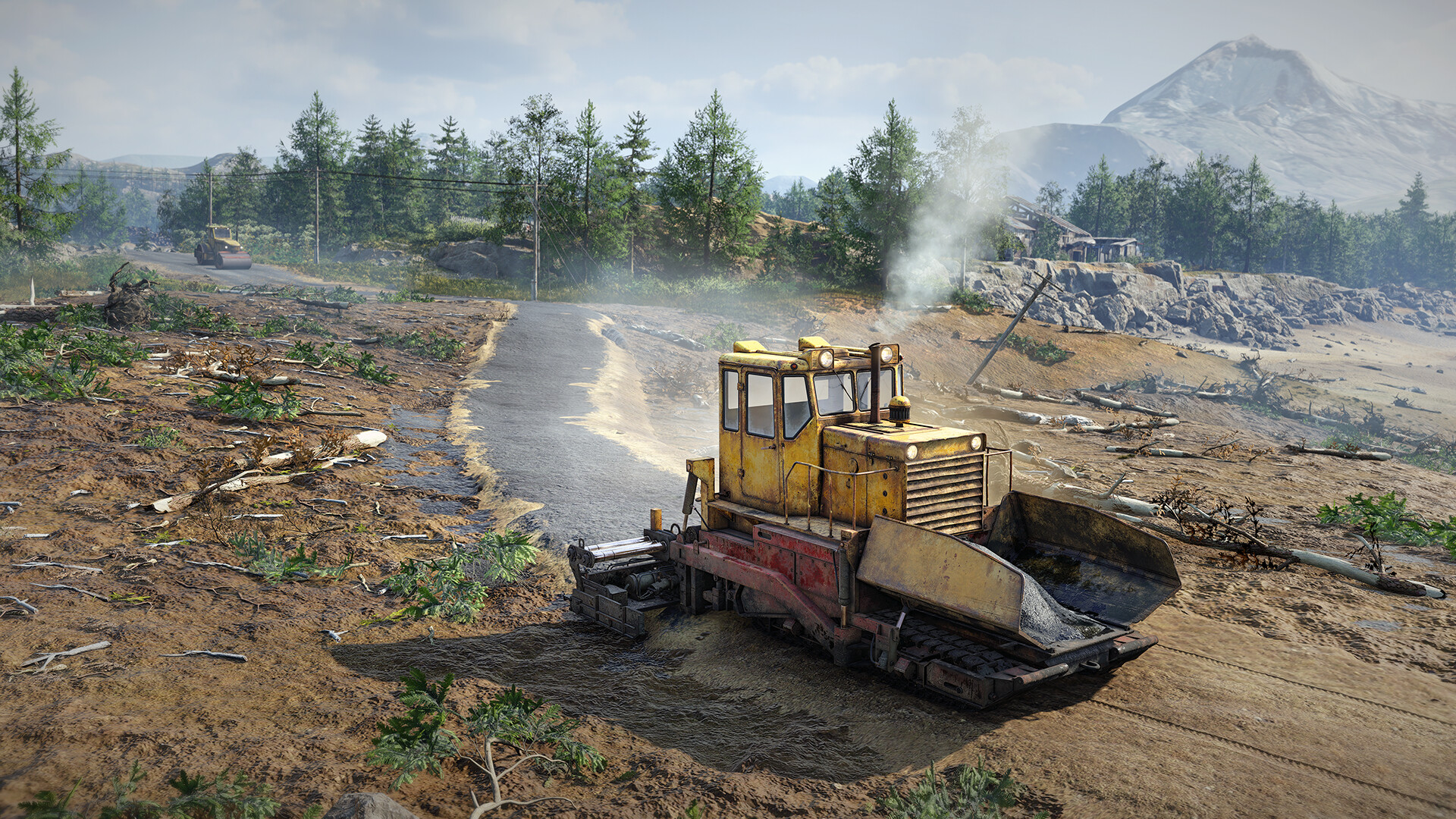
Enter Saber Interactive’s fine-tuned physics implementation, where you’ll need to employ many of the tools in your arsenal to pave the way to the future—tools not just for cleaning the mess, but for turning the muddy foundation into a sandy and gravelly road. It’s all built on a foundation of realism, but Kogut said that it’s designed to navigate the line between "realism" and "tedium."
“The question of realism often falls within the realm of game design,” he said. “Not everything that's highly realistic makes for enjoyable gameplay. For example, the grader in our game has several operating modes: one is a sand-leveling mode, which functions like an enhanced version of the brush tool familiar to anyone who’s used a 3D editor. The other is a manual mode that is highly physical, where the result depends on the physical properties of the world and the machine. The first mode is much easier and more convenient to use. But the manual mode allows you to cut into the ground anywhere and in any way you like, though controlling the grader in this mode requires significant skill, as you constantly need to keep it balanced. The ground has its own resistance and pushes the blade off course.
“This applies to all physics-based features. By default, we model them after the real world. It’s just that, at some point, it becomes clear that operating a bulldozer in real life requires experience and skills most players simply don’t have. In the end, it's a difficult process to find a balance, there's no one-size-fits-all way to do it.”
This balance is on display in a recently released raw gameplay video. At one point, the player—Yann François, as it happens—must build a bridge. The on-screen text tells him to bring the required material to the bridge construction location, and it’s easy to imagine the rumbling yellow machines gathering materials and the supply line trucks delivering them where they’re most urgently needed. But the actual construction of the bridge takes place in seconds. It’s that balance between realism and expediency on display.
“Yes,” François said, “when you do finish depositing the elements, the bridge magically appears, which can be surprising in this type of game. You have to see it as a reward for the players who spent time and effort on bringing the plates to make this bridge exist.
“When it comes to simulation, many players of the genre have no problem with certain tasks requiring a substantial investment of time, just like in real life. It's even a standard feature of this type of game to ensure that players remain immersed in their gaming experience. But, as Lev said earlier, we also wanted to make a fun game, not a literal job simulator where you have to fulfill all the tasks that construction jobs require. Saber simulation games often focus on the special relationship, sometimes tension, between players, their vehicles, and the terrain they have to navigate through. That's why driving, exploring, and transporting resources to build a bridge seemed essential for us to reproduce as authentically as possible. The path being the central part, rather than the destination.”
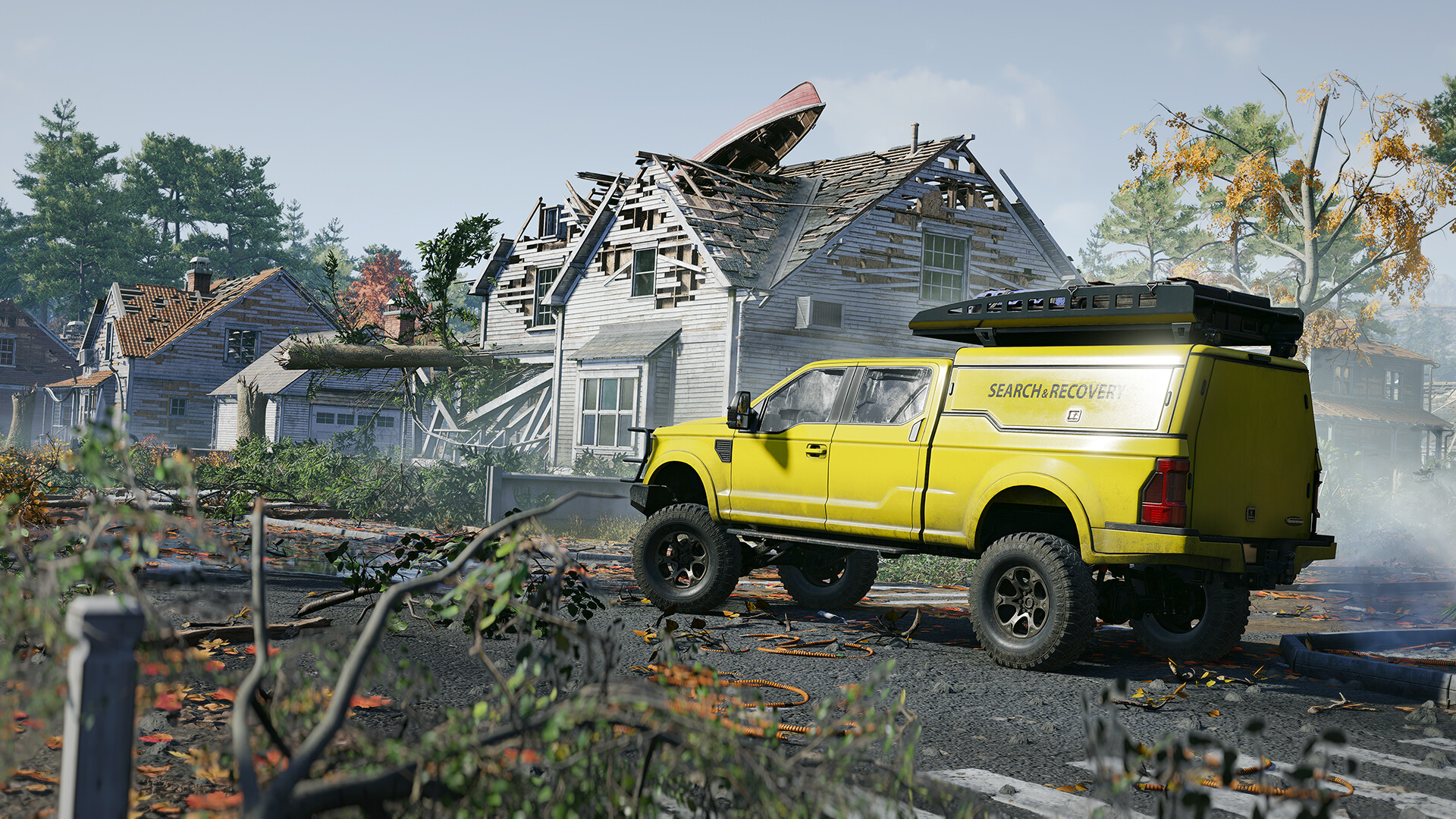
The deeper you get into RoadCraft, the more difficult the challenges become, and with greater challenges comes greater machinery. That progression is a big part of what motivates players throughout the game.
“At certain points in the progression, you'll be introduced to a whole new type of vehicle, with its associated gameplay,” François said. “On other occasions, you'll be offered a more powerful vehicle, or one with a greater loading capacity, because you'll have to complete an objective that's significantly more demanding than at the start of the game. A clear example: On the third map of the game—a forest map—you’ll have to clear a path through the woods for your vehicles. To do so, you'll have access to a tree harvester to remove certain trees, as well as a mulcher to remove tree stumps clogging up the path.”
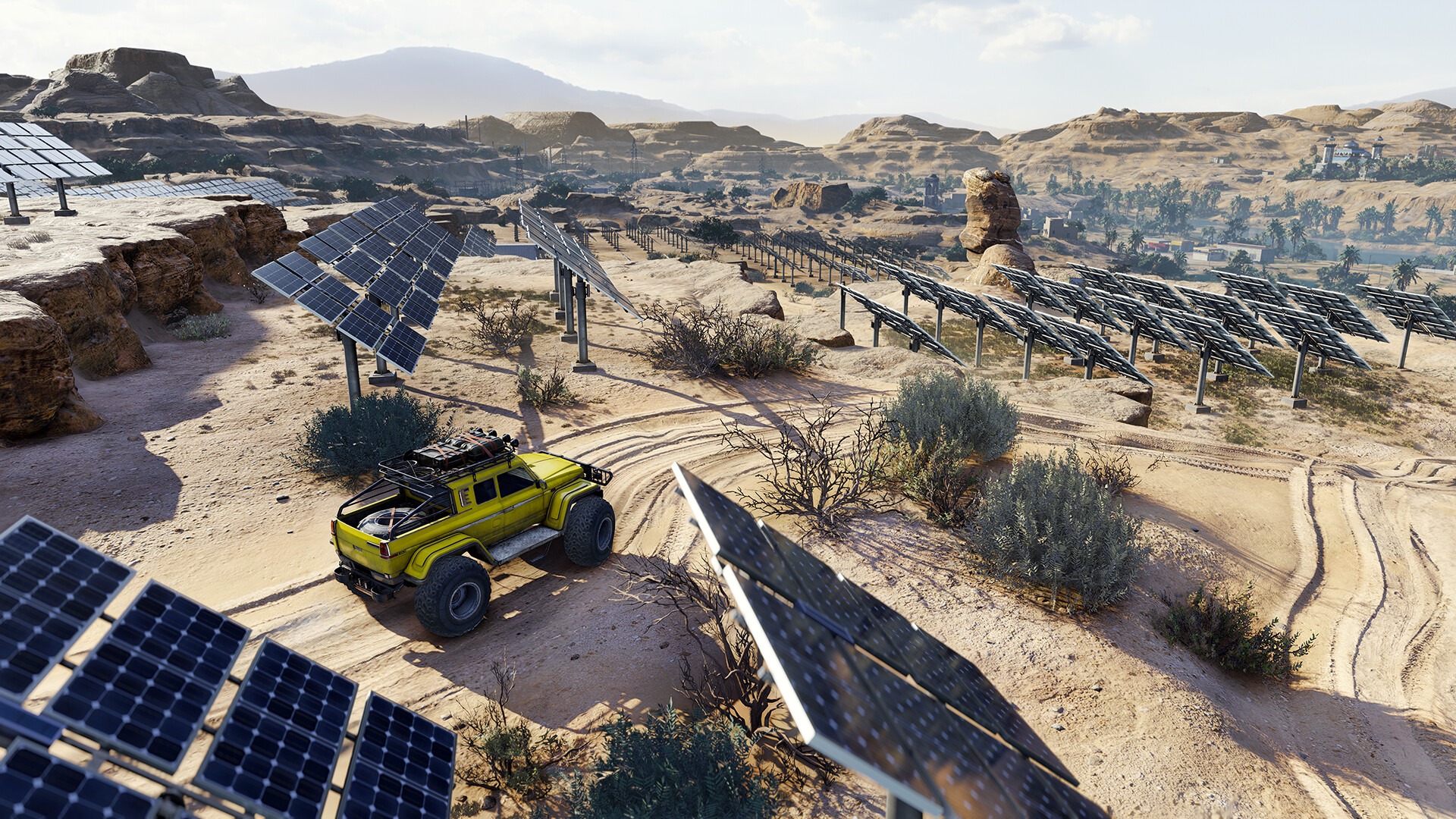
Every one of these vehicles requires a personal skill upgrade. Driving the Minuteman K350 pickup truck isn’t like operating a crane, so the ever-present challenge exists not just within the objective, but also in the tools players need to complete it. That’s what they want to pull players through RoadCraft’s desert, forest, and highlands biomes (think Iceland and Scandinavia) and throughout the game’s story, which unfolds over eight chapters.
For Yann François, perhaps the most exciting thing about the digital sandbox that Focus Entertainment and Saber Interactive created in RoadCraft is that it connects him—and the players, he hopes—to a much simpler form of play.
“The physics engine and the variety of vehicles are designed to be sufficiently advanced and permissive to enable a shared, unprecedented experience in a simulation game,” he said. “And last but not least, the sandbox aspect of the game reawakens the emulation of our own childhood, with toys and buddies in real sandboxes. And we've seen that co-op easily enables this kind of personal projection and reinvented pleasure.”