Новини
How the perfect parkour of Mirror's Edge continues to influence game developers 15 years later
M
Mat Olson
Here in 2024, Mirror's Edge is now almost as old as some of those games were when it first released—and I'd argue that DICE's work is easily deserving of the kind of praise usually reserved for the "all-time greats." More than just aging well, Mirror's Edge's take on first-person action feels just as bold and striking today as it did back in 2008.
To make the case for why Mirror's Edge is deserving of your time in 2024 (either for a revisit or a first go-around), we spoke with two game developers who deeply admire it and hold it up as an inspiration to their own work. Here's what they had to say.
City lights
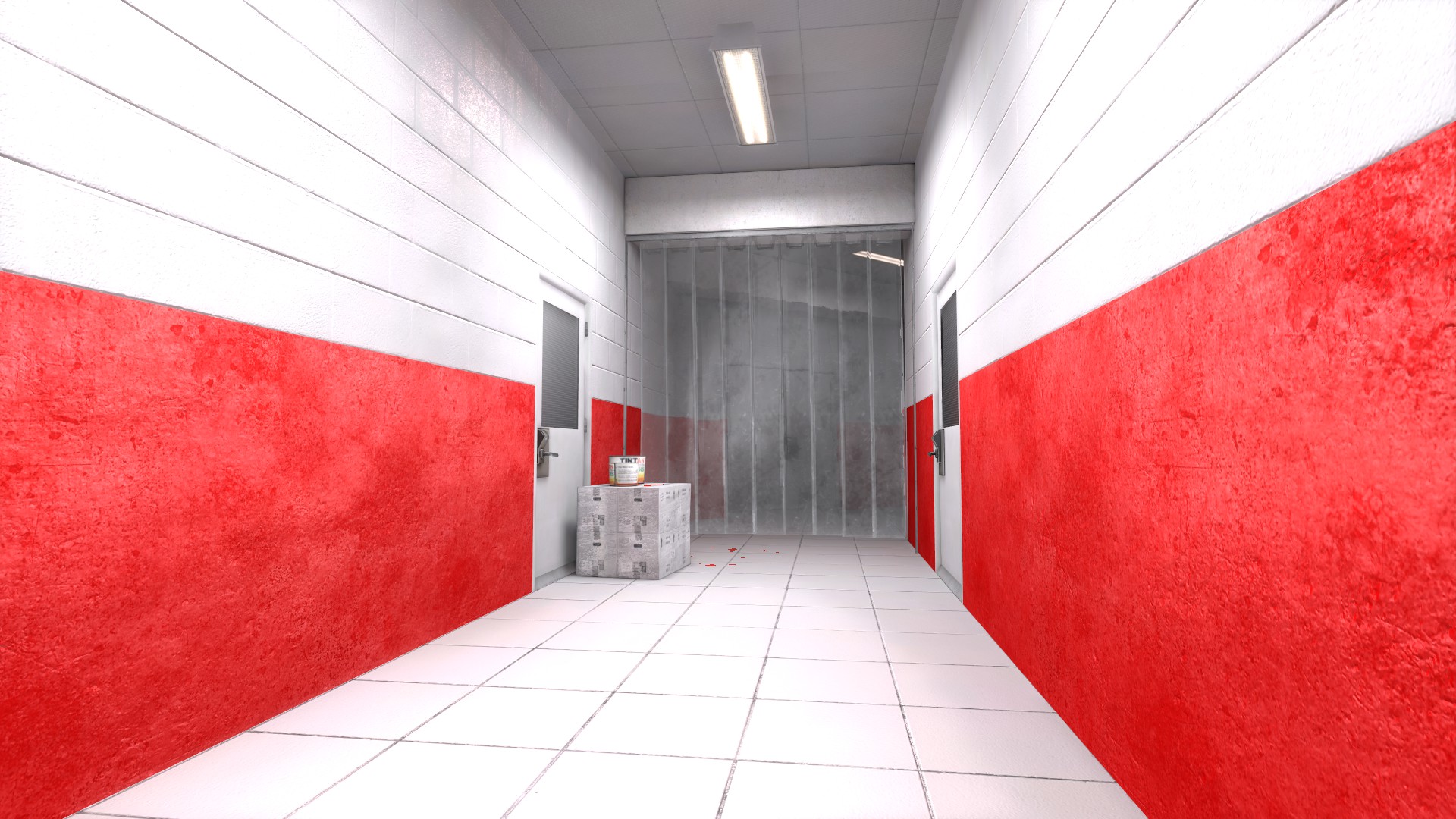
Mirror's Edge shines tremendously in screenshots. There's something immediately appealing about its look; the bright white surfaces juxtaposed with bold hues are recognizable at a glance even years later.
It's not just the presence of color that makes the city in Mirror's Edge pop, however. Anton Hand, Founder and CTO of the game studio RUST LTD., was immediately struck by the way the artists and technicians at DICE pulled off the look of the game when he played it at launch.
"I'm a 3D artist by trade," Hand says, "and the subdomain of 3D art that I spent the most time on during that time was lightmapping."
For those unfamiliar, lightmapping is a practice in 3D where the way light affects a scene is precalculated. While it's still in use today, lightmapping as an artistic practice has changed as memory limits on systems have increased and as dynamic methods of rendering lighting in games (like real-time ray tracing) have become easier to run.
"I was playing Mirror's Edge to study it almost immediately," recalls Hand. "It was an aesthetic experience for me first, and one that I was obsessed with."
DICE's commitment to a particular approach to lightmapping helps explain why Mirror's Edge still looks fantastic today. Since lightmaps are precalculated, that data needs to be loaded into memory when running a game. Just as more detailed 3D assets and higher resolution textures require larger file sizes, so do better lightmaps.
"They're using significantly higher resolution lightmaps than other games," Hand says. "They're blowing basically their whole memory budget on lightmap resolution, compared level-for-level, scene-for-scene with other games of that era."
Letting colors run
Corey Johnson, technical lead at Pacific Ember Studios, also remembers being struck by Mirror's Edge's aesthetic when he first played it.
"I had an older TV growing up," says Johnson, "and so a lot of games looked kind of fuzzy. One thing I liked about Mirror's Edge is that I didn't need to be able to see as well to play it because of the really strong contrast. I feel like it's sort of a lost art, that a lot of games now are very desaturated."
Mirror's Edge's intentional approach to color and lighting is one of the key reasons for its aesthetic longevity. The artists responsible for the game weren't tweaking the scenes and technical settings for the sake of realism, but instead a unique sort of "hyperrealism."
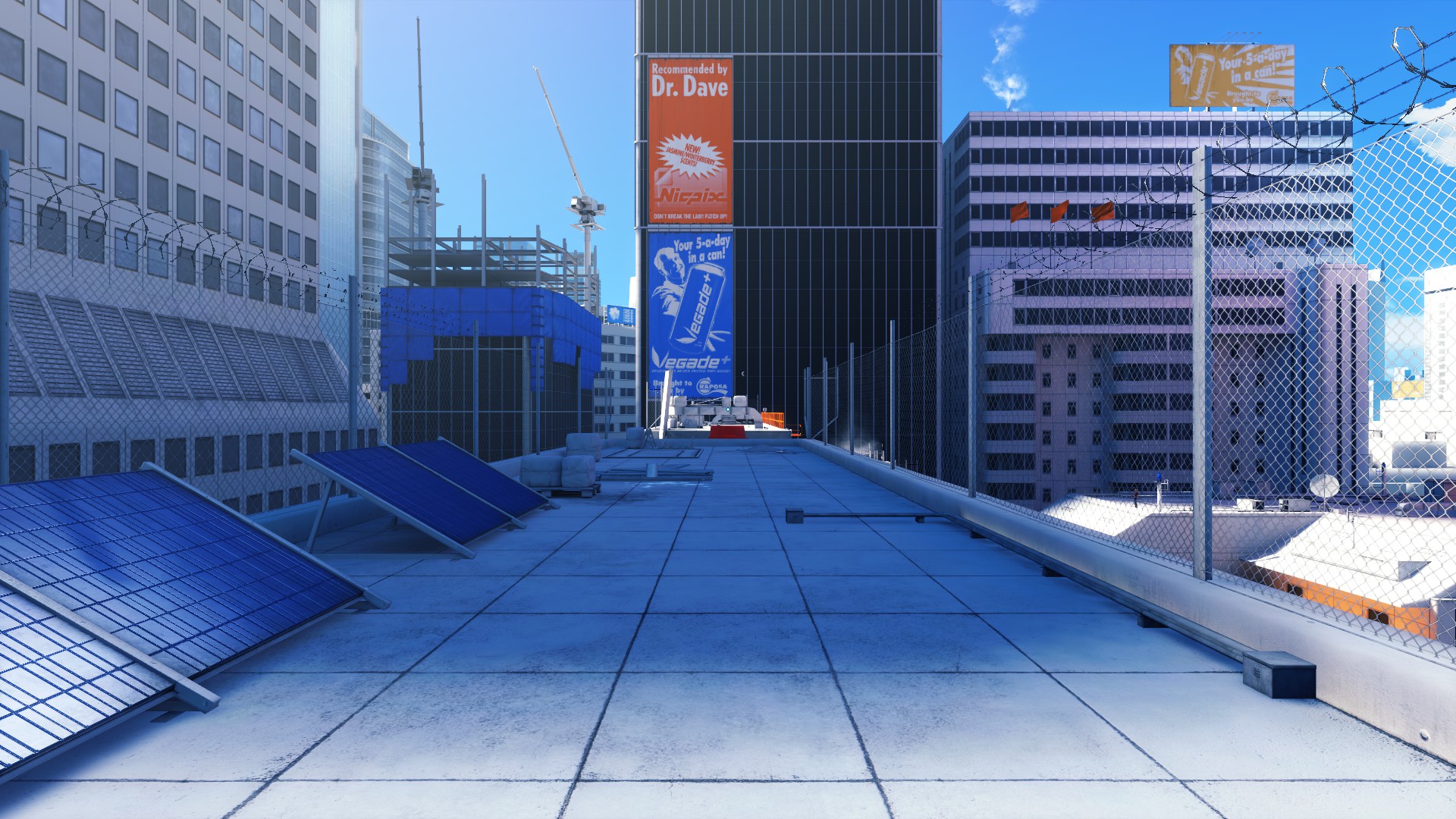
"I'm going to make an assertion that would make a lot of graphics engineers angry," says Hand. "I think Mirror's Edge is specifically beautiful because even though its treatment of form is fairly realistic—it's muted, understated, minimalist, chic, mundane—its treatment of lighting is completely unrealistic. Roughly speaking, right after Mirror's Edge came out is when physically based rendering took off."
The rise of physically based rendering tech—which can more accurately simulate how light affects different surfaces—made many games of the ten years look more photorealistic. However, it's safe to say that DICE was going for something else here.
"The way that color bounce works in this game is overdriven by orders of magnitude, it borders on cartoonish," Hand says. "It wasn't at all about trying to reproduce the real qualities of light; developers were just painting with it."
Highs and lulls
Of course, Mirror's Edge wouldn't be so easy to recommend if looks were its only strength. It's also exceptionally fun to play from moment to moment and presents a very well-paced single-player campaign overall.
"There's a really strong sense of flow," says Johnson. He particularly appreciates how DICE's developers divided up the difficulty between the game's many chapters.
"When looking at the educational arcade game I'm making, though it's for younger audiences, I think there's still lessons I can take from Mirror's Edge," he continues. "Right now the difficulty scales linearly, but maybe there are ways I can apply more progressive pacing into how the game's math problems are presented, or tune the length of a session similar to the chapters in Mirror's Edge."
"It's solid design in terms of keeping players not too stressed, but just stressed enough to keep going."
For Hand, the pacing of Mirror's Edge informs the game's identity even more than its trademark parkour-focused traversal and action.
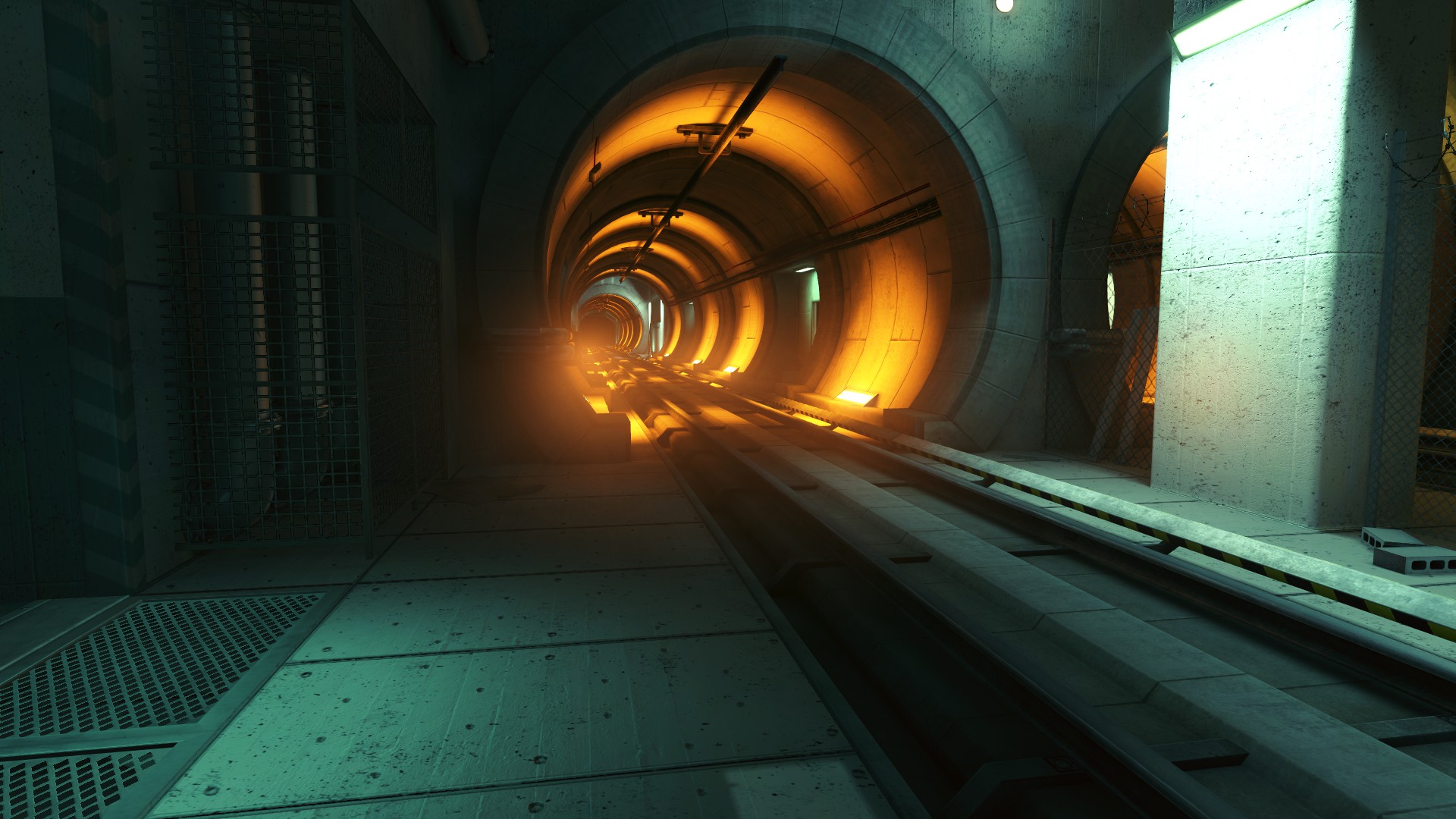
"It's always giving you these moments to digest what you just did. It has very, very ordered downtime," Hand says. "While it has these moments of intensity, it doesn't sustain them very long."
Hand goes as far to say that he doesn't think Mirror's Edge is even "a parkour game," strictly speaking.
"I think it's a game that has parkour in it," he explains. "Outside of people replaying it again and again in time trials for perfect run, I think the average person who plays Mirror's Edge—given the era it came out, where the average person brings in a lot of first-person shooter literacy around looking for items and hidden things—practically runs their body along every surface looking for things even though the narrative is 'go-go-go.'"
Hand says that inherent tension is part of why Mirror's Edge still feels so unique compared to games that followed it, including the shooters that took notes on its fluid player movement. It creates moments where DICE effectively forces the player to stop running and soak in the view.
"As an environment artist, I'm so appreciative of a developer-slash-artist willing to literally grab your head in a first-person game and go 'no, look, I found this angle while working on this level, everyone's gotta see this,'" Hand says.
Weaponizing choice
If you've never played Mirror's Edge before, then you might have heard online or from a friend who has the opinion that you "shouldn't use guns." Indeed, there's even an achievement for getting through the game without shooting at any enemies.
But the inclusion of guns is just another one of the choices that makes Mirror's Edge so fascinating to this day. Here's DICE, a studio already famous for the Battlefield franchise, building a game where guns are merely an option—and doing so in a way that's underappreciated for how smart it is.
"It's almost like I would use the guns in Mirror's Edge as a difficulty balancer," Johnson says. "You can pick up a gun and take out some enemies so you can get through a section, maybe make the platforming a bit easier. But it could also slow down the pacing."
Hand, a self-identified "strange firearms collector" who has spent years thinking about guns in games while working on RUST's popular VR sandbox game Hot Dogs, Horseshoes and Hand Grenades, also loves the way DICE worked them into Mirror's Edge. In fact, he prefers it to the way weapons were ditched in its sequel Mirror's Edge: Catalyst, which could be considered a hot take by some.
"You bring up Mirror's Edge as a game, and there's always this segment of people who'll go 'it's a pity about the guns,'" Hand says. "I firmly disagree. It's one of the fantastic things about DICE making this game—they had a way lower bar of difficulty, already working in the same engine as Battlefield, to just sprinkle a little bit of that in."
"It was the first time I had played a first-person game with guns that appeared to nod at the idea that your character is not trained with this weapon," he adds. "The recoil is incredibly heavy, they feel powerful, your character doesn't bother manipulating them mechanically so you can't reload the guns."
Still, it's up to the player whether they want to run and gun or just run, which is so important to the game's identity.
"I always find that nonviolence in a game is only meaningful if it is actually an option, and especially if it's the harder option," says Hand.
Mirror's Edge is available on the Epic Games Store, and whether you end up loving it or not, you'll be equipped to debate its merits for years to come—and believe me, we will.