Tin tức
How the Summer of Horrors has transformed Dying Light 2
J
Jeremy Peel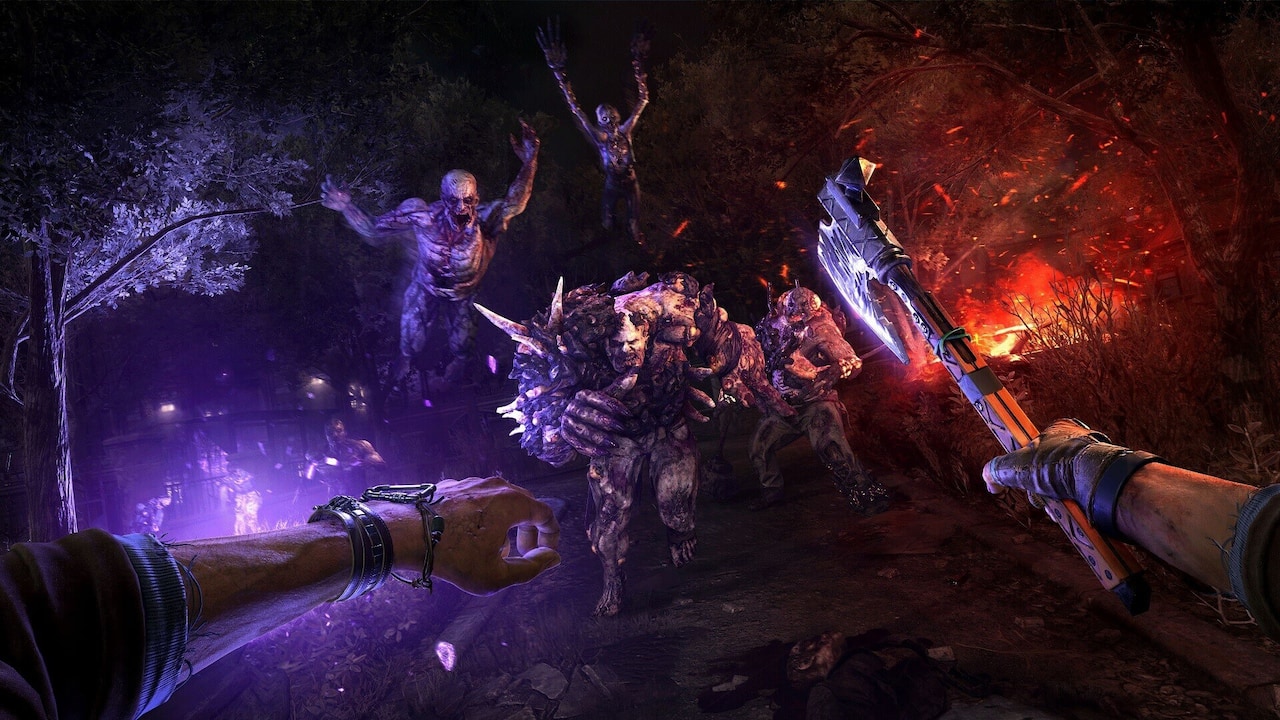
Behind the pyrotechnics and cameos, developer Techland has introduced a bunch of fundamental changes to Dying Light 2. While less showy than a comic book anniversary bash, they’re actually more meaningful displays of the Polish studio’s commitment to a game which Franchise Director Tymon Smektała expects to be supporting for five years “minimum.”

In some respects, Dying Light 2 is starting to more closely resemble its 2015 slow-burn megahit predecessor, Dying Light. At the same time, Techland is embracing utterly new ideas, courtesy of the players still sprinting around the sequel and tinkering with the game's expansive mod tools. With Smektała as our guide, we dug into the thinking behind every major amendment and addition to Dying Light 2 this summer.
Parkour can get harder, if you want it to
While we remember to take off our head-mounted GoPros before the interview commences, Smektała soon has our number as obsessive gaming freerunners. “If you get excited about parkour, you are a more hardcore type of player,” he says, “Because parkour as a game mechanic is actually very, very complex and difficult for players to grasp. It’s rapid and requires you to do a lot of inputs in a short amount of time. In a way, it can be as taxing as a beat ‘em up, or Dance Dance Revolution.”
Then you factor in the first-person perspective. “It’s naturally more difficult to judge distances and understand the space,” Smektała says. “When the 3D space is flattened to a 2D screen, it’s more difficult to maneuver and make correct decisions.”
This barrage of challenges led Techland to make parkour as accessible as possible in Dying Light 2—building on their existing models for running and jumping, but adding a number of assists that made life easier for players. “And it worked,” Smektała says. “The game reached millions of players within its first months. But then we also realized that some of our hardcore players felt that, with all of the helpers, the game lost its realism, its physicality, its groundedness.”
In response, Techland has introduced a new optional setting—a switch in the main menu that you can flip at any time to take off the stabilizers. “The assists remove some of the control you have over what you do, because the game helps you,” Smektała explains. “It prolongs your jump, it prolongs your run. Even if you leave the edge, it doesn’t allow you to fall down that quickly.” Flip that switch, and you’ll likely find yourself pancaked across the cracked tarmac of Villedor more often. But you’ll also notice a greater sense of physicality and realism, and newfound trust in your ability to steer your avatar.
Techland consulted YouTubers who specialize in Dying Light 2 parkour in order to get the new setting right. “I’m very proud of it,” Smektała says, “that we were able to run that process and involve our community.”

You can now throw and retrieve melee weapons
Techland no longer has anything to do with Dead Island, the other hit zombie series the studio originated, but the games remain close cousins. This year’s Dead Island 2 implemented a Dying Light-style dropkick—and now Techland has introduced its own take on weapon-lobbing, a Dead Island special. “Dying Light evolved from Dead Island,” Smektała says. “So definitely, the core of the experience is very similar. It comes from the same spring.”
Throwing your primary weapon is a “nice tactical decision,” though one that comes with trade-offs. It allows you to finish off an enemy from a safe distance, but can leave you vulnerable for an extended period without your favored bashing stick. It also reinforces the sense of tactility in Dying Light 2’s combat—the feeling that you’re pugilistically connecting with your enemies, rather than simply firing off abstract abilities. “This is one of the core design guides of what we do,” Smektała says. “The physicality of combat is important.”
Villedor looks sharper than ever
If you’ve been meaning to get around to playing Dying Light 2 for a while, then you can pat yourself on the back for your tardiness. Play on PC and you now get boosted graphics in Ultra mode—as well as a new and rather bleak color grading option named Harran Sunset, after the Turkish setting of the original game.
“Of course we want players to move from Dying Light 1 to Dying Light 2,” Smektała says, “but to make that happen, you need to make those players feel at home. You don’t want to alienate them. You don't want them to get lost in the new experience. So, this is our way of making that transition smoother and easier and more welcoming. We saw this idea rising as a wave in the comments of some of the community forums and on Reddit, and we said, ‘Hey, why not? This is actually a cool idea we can deliver, that is within the reach of our development team.’”
Those bumps in the night are now noticeably bigger
Parkour wasn’t the only core Dying Light mechanic that Techland sanded down in order to welcome a larger audience with its sequel. The series leans into a night-and-day system in which the open world becomes more dangerous after dark—but after analyzing its data, the studio realized that a large majority of players had barely seen the original game’s lively nightlife.
“They were too scared,” Smektała says. “When you are a developer and you make a game which consists of two halves, and suddenly you realize that a huge part of your community doesn’t play one of those halves, you feel that you have a problem.”As such, Techland rebuilt its gameplay loop for Dying Light 2, making nights more survivable and indoor areas safer while the undead were busy outside.
But as with the parkour, many missed those sharper edges—even if they tended to avoid them in the past. “That scary aspect of the night was something that really drew a lot of people to Dying Light,” Smektała says. “It’s like a forbidden fruit. It’s somewhere in there. You don’t need to touch it, you don’t need to eat it, but it's still exciting to you and makes you interested.”

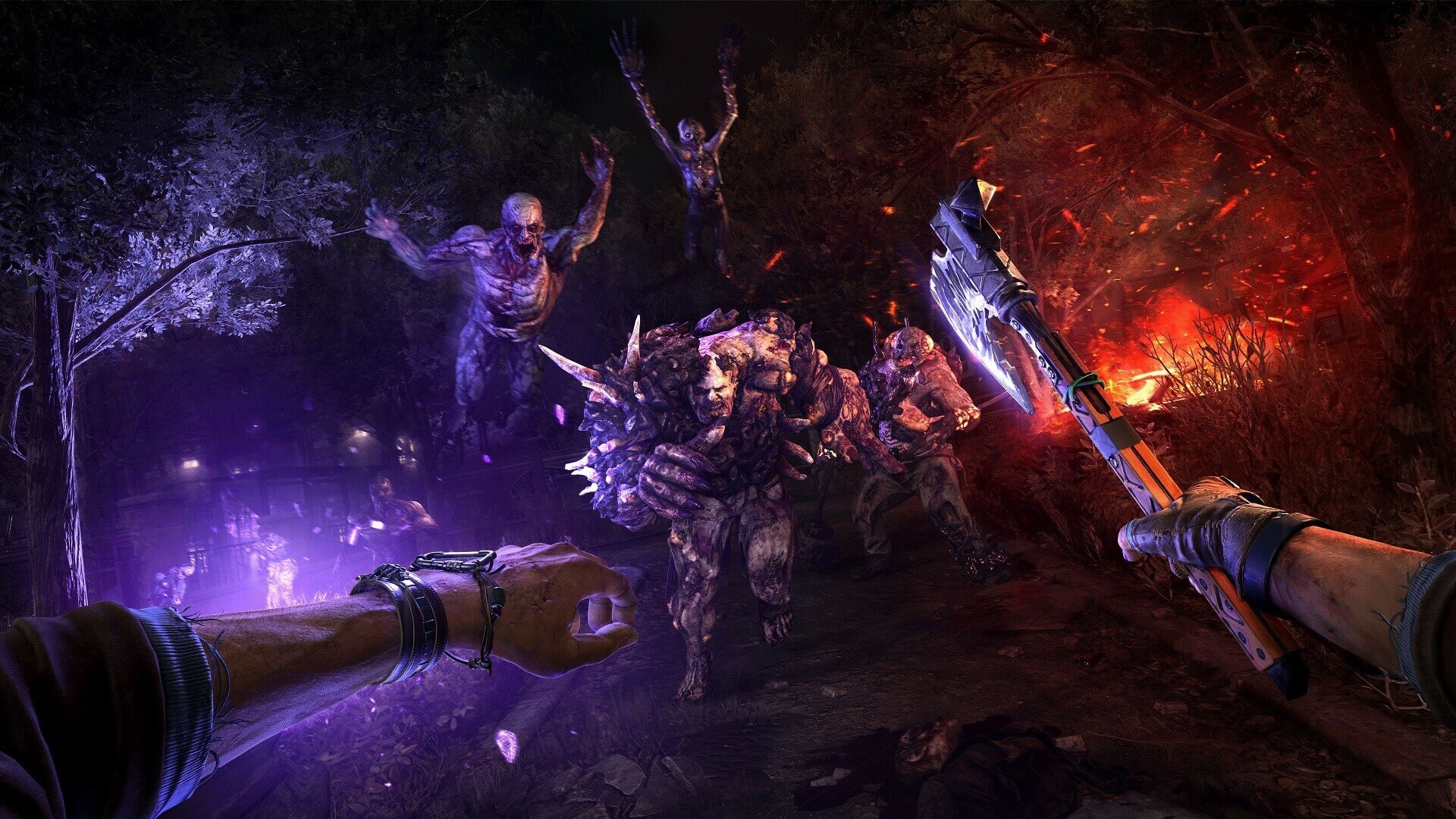
This year, Techland made some “tough decisions to basically crank up the horror volume” during Villedor’s nights—spawning bigger populations of zombies and reducing visibility, so that players cling to their flashlights and jump at shadows. Truth be told, the developers were scared too. Once they flipped this particular switch, it would impact every player, whether or not they opted in. “Unfortunately, we weren’t able to keep both systems in-game,” Smektała says. “So we made a brave decision to go with the new and scary and horror-ish one. And it feels like it really paid off, because we've received tons of very positive comments from the community.”
This kind of fear is, according to Smektała, an inevitable part of making games. “Especially nowadays, when players have so much space to express themselves in so many places on the internet, it can be harsh,” he says. “Every decision you make, you second-guess yourself: Is it really what I want to do? Maybe I should go this way, or another? It is generally very, very scary. That’s what game development is.”
Techland is spotlighting the best inventions of its community
Once Techland made a hit of the first Dying Light, it became something of a fixed format. “It is defined,” Smektała says. “It’s also holy in the eyes of parts of our community. There’s not that much space for us to experiment.”
The modders in Dying Light 2’s map-building community have fewer restrictions and hangups, however. With no responsibility to an existing audience, or to hundreds of employees, they can let loose with the mechanics Techland has built. “Community maps are a free-for-all space,” Smektała says. “Anyone can do anything there.”
The developer is keen to get those experiments in front of more eyes, and so has collaborated with mod.io to make community maps available straight from within the game, without any extra downloads or fiddling. The feature is already live on PC, and Techland also plans to add more assets to its modding toolset, including extra weapons and enemies. “Some of the creators really go wild with the ideas,” Smektała says. “There are maps that look like they were taken straight from a sci-fi movie, or where you travel through an apocalyptic wasteland on a steam train. The creativity there is really amazing.”
Techland has dedicated more than a decade to frightening its players—but sometimes it takes a modder to be truly fearless.