News
Indonesian indie game Kejora’s journey from Cuphead shoot-'em-up to puzzle platformer
J
Jason Rodriguez
My cousins and I, along with some friends from the neighboring barangay, made a dare: Each person would chip in 10 pesos (roughly 35 cents at the time), and we’d all walk through the woods at dusk. No one could tell our elders. After all, our lolos and lolas would likely scold us for taking such a risk, knowing that nuno sa punso, kapres, tikbalangs, and all sorts of elementals lurked in the forest. Whoever made it out first without running or yelling would win the grand prize, enough to buy soft drinks in a plastic bag from the nearest maglalako.
As the sun dipped below the horizon, we set about on our journey, each carrying a rosary or anting-anting in case we encountered otherworldly denizens. Barely five minutes had passed when we heard someone cry out. Did they spot a creature waiting for us above the copse of trees? Were they warning us not to step on something along the path? Were they lost and they had to quickly wear their clothes inside out? I couldn’t tell. All I remember was that we all started running for our lives. By the time we all made it out, we had to continue running, though it was mostly because our elders started chasing us with flying slippers that were deadlier than the most ferocious manananggal.
I fondly recalled that memory not just during the chase cutscene in Kejora, but also during the quiet moments as my character and her companions continued their adventure. But Kejora itself, made by Indonesia-based studio Berangin Creative, also had an eventful journey throughout its development cycle, as shared by the company’s Co-Founder and Game Director Bagaskara “Bagas” Firdaus.
The Cuphead, Studio Ghibli, and Valiant Hearts connections
“Believe it or not, we originally wanted to make a run-and-gun, shoot-'em-up (shmup) game like Cuphead,” says Firdaus with a chuckle. That was back in 2019 when the studio only had a handful of people, and the task already seemed daunting. “A run-and-gun game would be challenging to create. We’d have to design too many enemies, too many weapons, and too many stages.”
And so it was that Firdaus and the team decided to drastically switch to a different genre: a puzzle platformer. It was the best fit, especially since the studio wanted to use the character and location assets that they’ve already created. Likewise, Berangin Creative aimed to focus on Ghibli-style animation. “From an artistic perspective, the Ghibli animation style feels very hand-crafted, with a strong emphasis on atmosphere and emotion rather than spectacle,” says Firdaus. “This sensibility greatly influenced our art direction. Our goal is to design spaces that subtly support the game’s mood and narrative, allowing players to connect with the world on a more emotional level.”
The team also took inspiration from Valiant Hearts: The Great War, a multi-awarded 2014 title from Ubisoft. Featuring several characters that had unique tools and actions at their disposal, Valiant Hearts offers a compelling blend of puzzling brain teasers, stealth sections, and emotionally impactful moments that Kejora hoped to recapture.
“By the time we pitched Kejora to publishers, it had already taken the form of a fully narrative-driven puzzle game, with a design that we believed was well-developed and mature,” adds Firdaus.
Made in Indonesia
Kejora, which means “morning star” in Indonesian, takes place in a quaint village in Central Java, inspired by rural towns in the region, complete with their distinctive Jengki-style architecture. But behind this peaceful and idyllic setting lies a mystery, a curse that has afflicted the townsfolk. Now, it’s up to the titular character, a young girl, to delve deeper into the origins of the curse.
“We were brainstorming about different names for the main character,” says Firdaus. “We thought of various names that Indonesian parents would give to their daughters and we eventually settled on Kejora. It’s a beautiful name and it can also be interpreted as a light that shines in the darkness.”
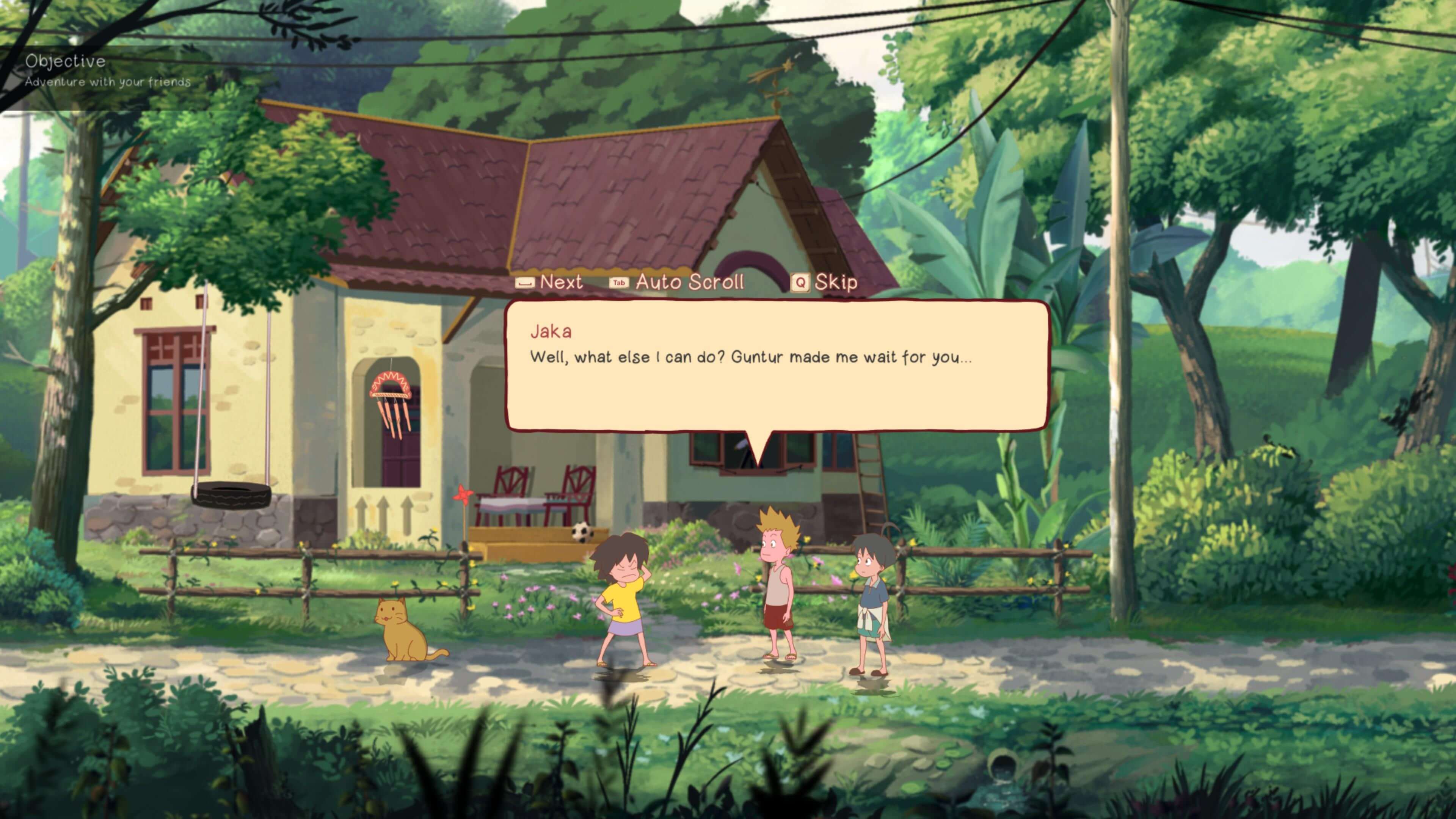
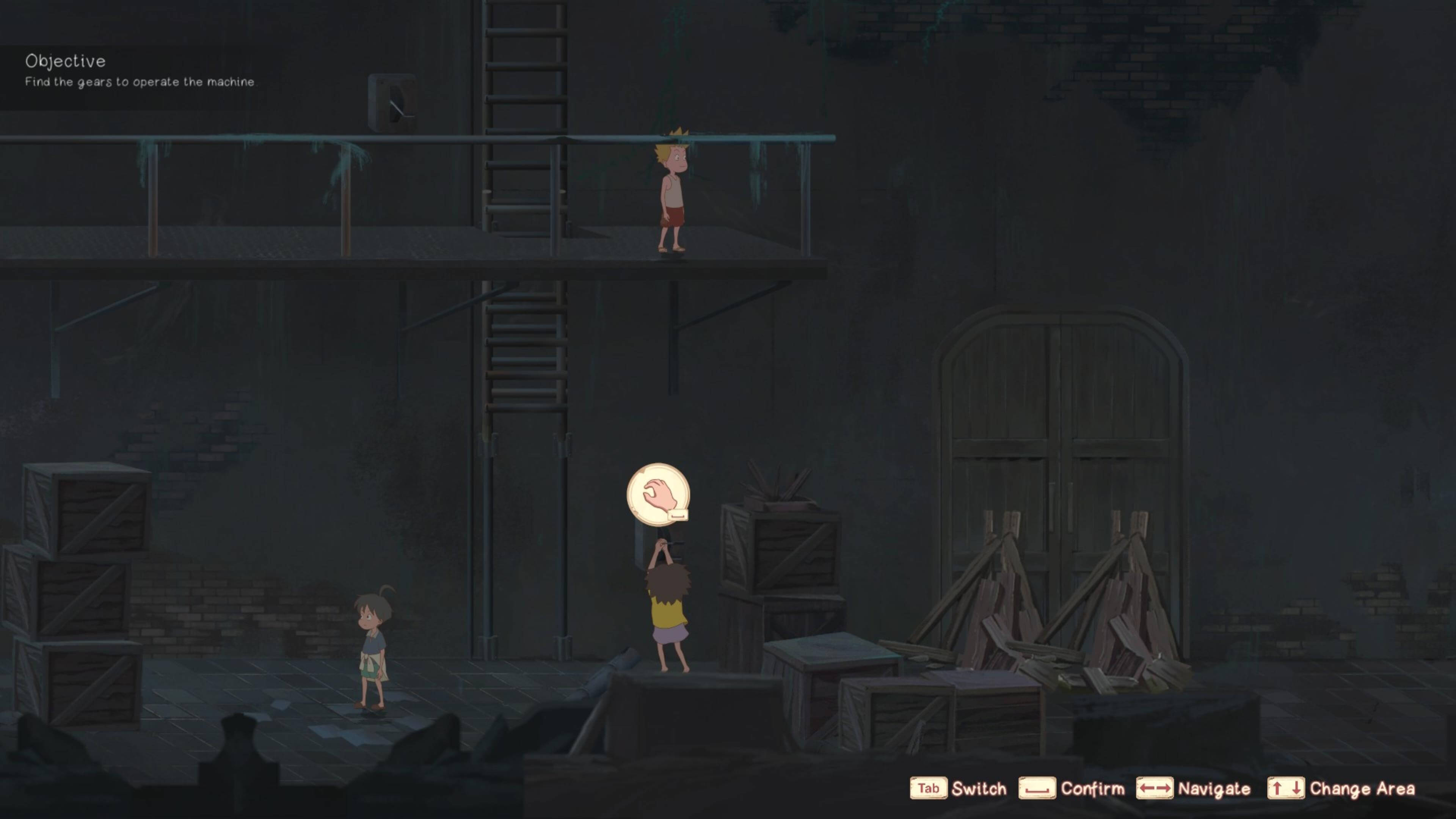
Kejora is joined by her two closest friends: Guntur and Jaka. With Kejora being the most headstrong in the group, one can think of Guntur as the brusque, no-nonsense type, while Jaka tends to be more timid and cautious. The Valiant Hearts-esque unique character actions come into play fairly early in the campaign, as you have to frequently switch to your other companions to make use of their abilities. Guntur can punch and destroy obstacles, as well as give Kejora a boost while she climbs. Jaka, meanwhile, can push objects and shoot things with his slingshot.
Puzzle sections start out simple enough. Perhaps you just need to smash a haystack to pick up an item, or maybe you only need to shoot a snake to make it slither away. Later, things can get a bit more complex, though not to the point where you’d pull your hair out. For instance, there’s an area where Kejora has to stack crates using factory machinery. Next, you need to get a boost from Guntur, then you have to shoot a lever with Jaka, before swapping back to Guntur to shatter a box.
“Just like in Valiant Hearts, we want puzzles to remain intuitive,” says Firdaus. “We included these sections if we think they fit the story and the level. But we don’t want them to be too frustrating as, otherwise, it would be hard for the player to continue.”
The Genderuwo
Kejora and her friends don’t just have to contend with brainteasers. They also have to survive the Genderuwo, a mythical cryptid that has gained infamy in Indonesian folklore, particularly in the Central Java region. The evil spirit takes the form of a large, ape-like creature with pitch-black features, though it may also change its appearance to that of a human to lure unsuspecting victims.
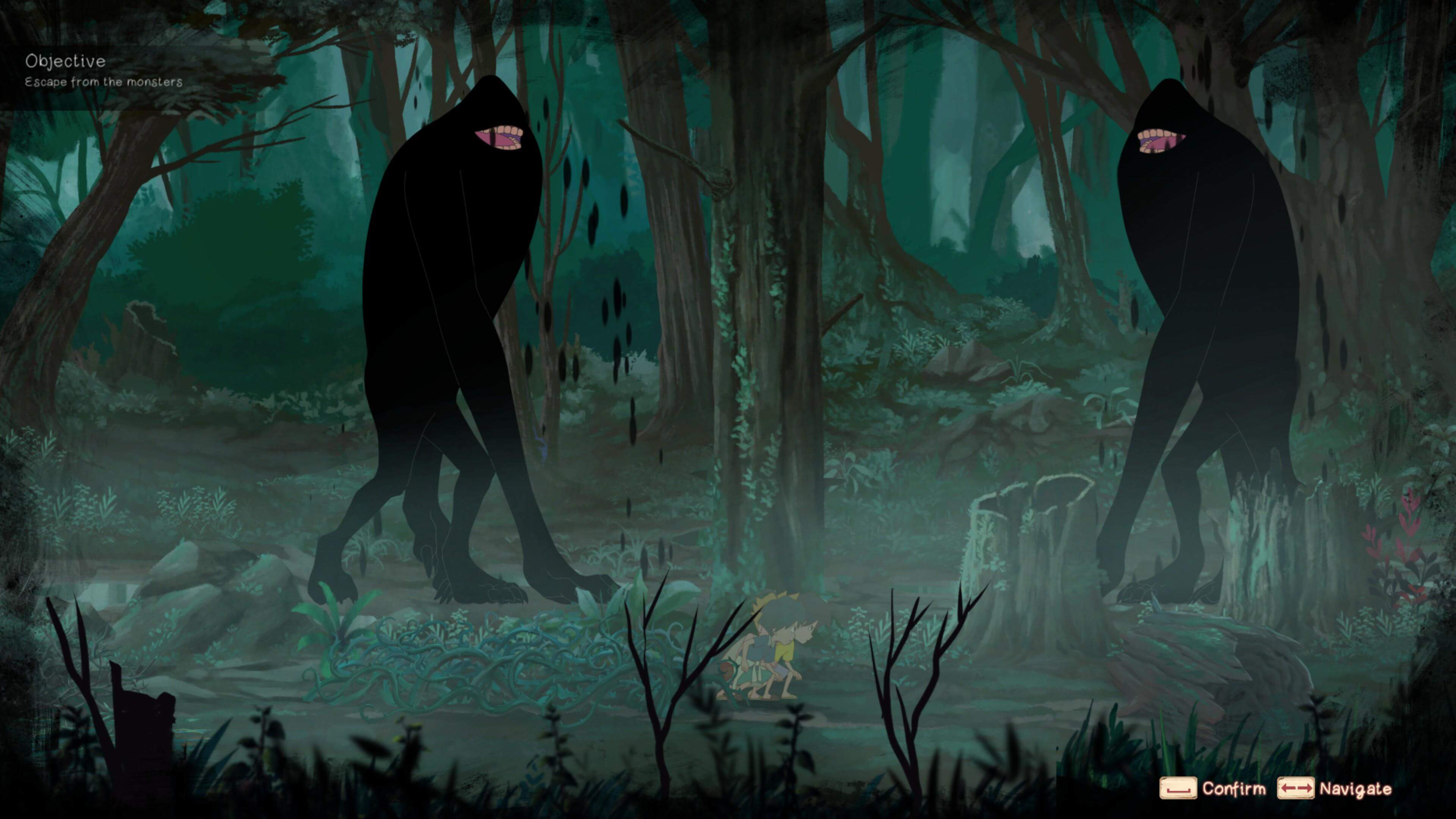
In the game, players encounter the Genderuwos during stealth sections. They resemble shadowy behemoths, with a slight Ghibli-influenced tweak that makes them akin to No-Face from Spirited Away. In these chapters, the goal is to move from one end of the screen to the other using shrubs, crates, and tree trunks to avoid detection. If you somehow get spotted, an eyeball will appear on your screen and, if you’re unable to find a hiding place soon enough, the Genderuwo will viciously slash the entire group, causing the encounter to reset.
“Here in Indonesia, we have a lot of mythological and supernatural monsters, too, such as the Barong, the Kuntilanak (Pontianak), and the Jenglot,” says Firdaus. “But we chose the Genderuwo for two reasons. Firstly, it’s easily recognizable among Indonesians, and maybe among those in Southeast Asia who are already familiar with regional folklore.”
The second reason is more practical: The Genderuwo just happens to be the easiest creature to design and animate. “There are only four animators in our studio,” notes Firdaus. “We know that the monsters will be part of the gameplay and cutscenes. If we add too many creatures or if we expand the game too much, we’d need to design more details and create more hand-drawn animations. It would’ve been too taxing for our team.”
Getting past the hurdles
Berangin Creative has been firing on all cylinders throughout Kejora’s development cycle. That said, being a relatively small indie studio in Southeast Asia presents numerous challenges.
“The biggest challenge we faced during development was how we’d work with limited resources,” Firdaus says, noting that there were only two or three people on the team at the start. "Now there are 11 of us on the team, though most of us work remotely. We have to think of which cutscenes to add, or if it makes sense to remove some sections.”
Currently at the federal level, support for game developers in Indonesia is still largely focused on ecosystem building through events, exposure, and industry programs rather than directly financing projects. Thankfully, there are initiatives like the Indonesia Game Developer Exchange (IGDX), a joint venture of the Ministry of Communication and Informatics and nonprofit Indonesian Game Association (AGI), that help with networking and visibility.
“The industry is also becoming more dynamic and interesting in recent years,” says Firdaus. “Some universities offer game development courses and there are several studios based in other cities. Game development communities of various sizes and memberships have also been established in places like Jakarta, Bandung, Bali, and many more. It’s easier now for people to come in, join communities, ask around, and learn from others.”
When asked about what lesson he hopes players would take away from Kejora once they’ve completed the story, Firdaus just smiles. “One of the central themes of the game is time. How does everyone use their own time differently? How well are we using the time we have? Are we spending that time with people we care about and are we doing things that we will remember fondly? We want players to feel emotionally connected to these themes.”
And much like Kejora’s years-long development from a run-and-gun game to puzzle platformer, and the childhood years I enjoyed with my friends and neighbors in the province, perhaps all of that truly was time well spent.
Kejora is available now on the Epic Games Store.