Mongil: Star Dive currency guide: Primordial Stars, Compasses, and enhancement materials explained
Mongil: Star Dive is a cutesy, colorful game that does a lot to set itself apart from other gacha games, but some things never change. There are a ton of currencies and names to learn if you're starting Mongil: Star Dive as a new player, and you don't want to waste the good stuff by accident.
Thankfully, most of Mongil: Star Dive's currencies and gacha systems closely mirror those found in similar titles like Genshin Impact, Honkai Star Rail, and Arknights: Endfield. Whether you're a gacha veteran or newcomer, this guide will explain all the major currencies you'll encounter in Mongil: Star Dive.
Primordial Stars
Primordial Stars are the primary premium currency in Mongil: Star Dive. Think of these like Primogems in Genshin Impact, Stellar Jades in Honkai Star Rail, or Oroberyls in Arknights: Endfield.

You'll use Primordial Stars to purchase Compasses, which are used to pull for characters and artifacts. A single Compass costs 160 Primordial Stars, and a ten pull will set you back 1,600 Primordial Stars.
There's also a separate currency called Starlight Crystals. These can be exchanged for Primordial Stars at a one-to-one ratio, so it's sort of like buying Primordial Stars, just with extra steps. Think of these like Genshin Impact's Genesis Crystals or Honkai Star Rail's Oneiric Shards.
Mongil: Star Dive also keeps a separate tally for paid and free Primordial Stars, and paid currency purchased with real money will always be used first when buying pulls. Once you've used all your premium currency, the game will start to pull from your free Primordial Stars stash.
Compasses
Compasses are the really important items in Mongil: Star Dive. Each Compass will let you pull on a specific banner, but Compasses are divided into unique types that determine which banners they're used for.
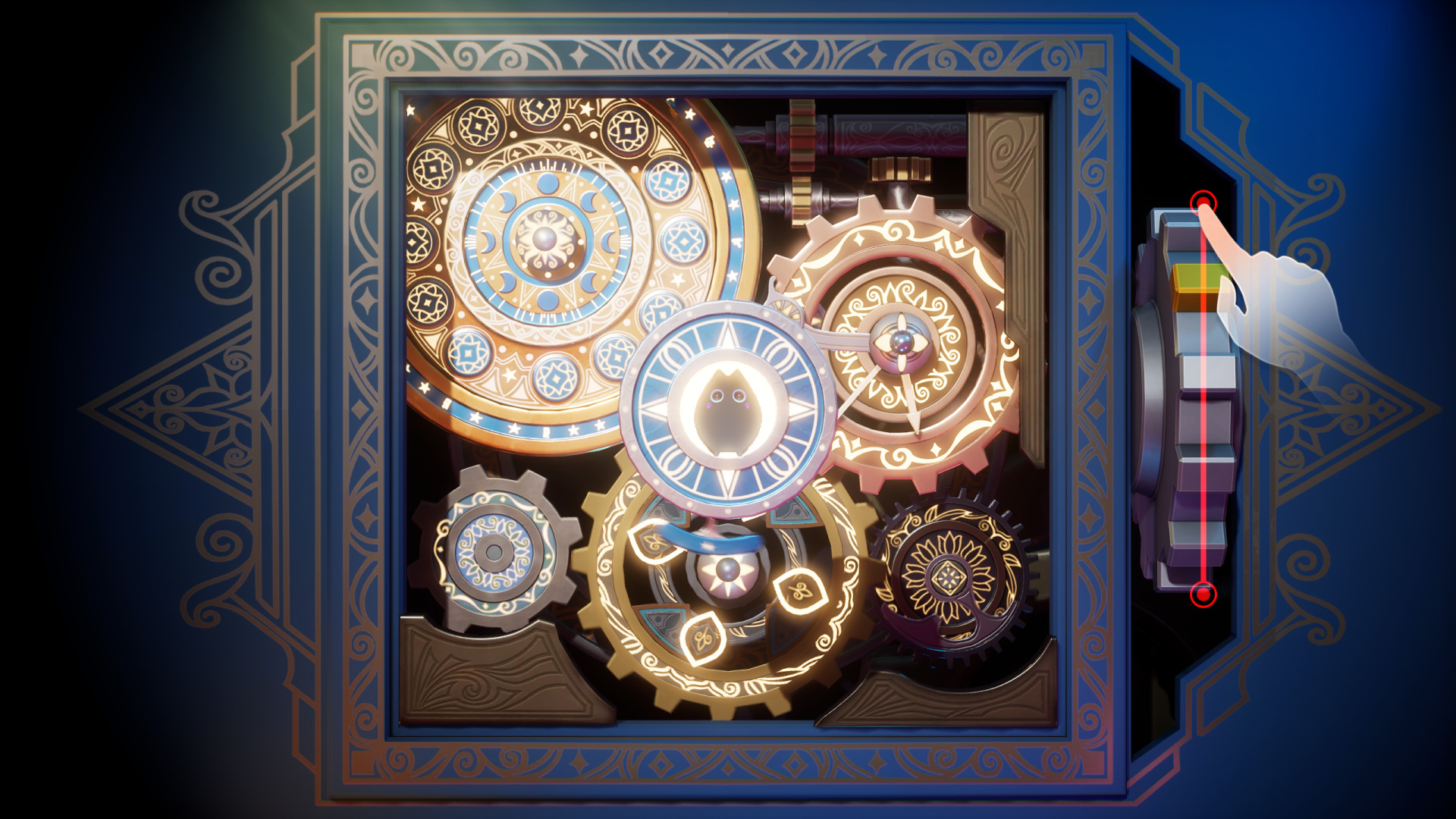
Compasses of Promise are used for standard banner pulls, whether they be for characters or for artifacts. The two permanent regular recruitment banners use these blue Compasses, letting you unlock five-star units like Flare, Ophelia, or Gabby plus a selection of five-star gear.
For limited banners, there are two different currencies. Compasses of Destiny are used to pull for limited characters like Esther. These are much rarer than the standard pulls, and they have a dark purple color scheme. Compasses of Memory are used to pull for limited weapons, and they're shiny and gold.
Each Compass costs the same amount of Primordial Stars (160), but it's best to save your currency until you know which banner you want to pull from. As a gacha game rule of thumb, it's best to save your premium currency for limited pulls. Standard pulls (Compasses of Promise) are typically much easier to earn through gameplay, events, and giveaways.
Once you've done a few pulls, you'll start to earn special currencies that can be used in the exchange shop. Threads of Fate and Threads of Promise can be spent in the Fate Exchange, while Conquest Tokens and Rift Tokens can be exchanged on their own respective shop pages.
Pulling duplicate characters will get you Seeds of Destiny, incredibly rare items used to raise a character's Awakening level. Think of these like Constellations in Genshin Impact or Eidolons in Honkai Star Rail. They aren't necessary upgrades, but pulling dupes can greatly enhance the abilities of your favorite characters.
Enhancement Materials
Once you've pulled for your favorite characters, you'll have to learn another set of currencies in order to level them up. Thankfully, Mongil: Star Dive's enhancement materials follow a very simple naming scheme.
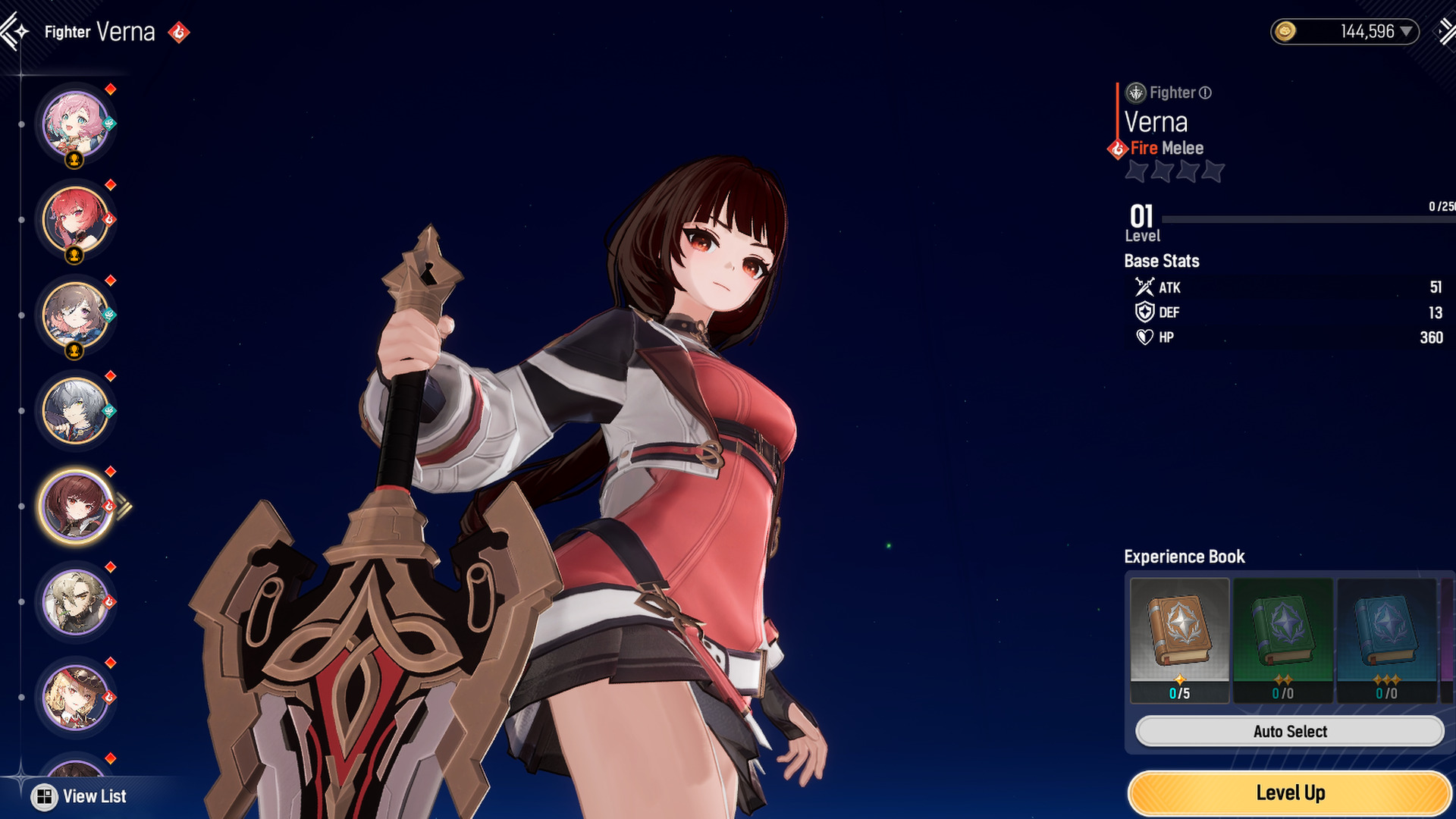
Experience Books are used to level up characters. They range from basic all the way to legendary, with rarer books awarding more EXP. You can get them from everywhere, including quest rewards and exploration. If you really need to farm them, you can hit up Dimensional Rifts and other challenging encounters for more rewards.
To improve your artifacts, you'll need to collect Enhancement Stones. Just like Experience Books, these come in a wide range of rarities that reward different amounts of EXP. These can actually be purchased from NPC vendors like Saiga, the smithy in the town of Hananis. You're limited to just a handful of Enhancement Stones per day, so check back regularly!
Other than shops, you can get Enhancement Stones from exploring the world and dismantling unwanted equipment. If you salvage gear, you'll receive Enhancement Stones based on the equipment's rarity. As you level up, you'll get access to stronger equipment more frequently, which will get you more Enhancement Stones as an added bonus.
Monsterlings and Link Chains
In addition to basic equipment, each character can also equip Monsterlings to further increase their stats. You can get Monsterlings by capturing defeated monsters out in the field. Each Monsterling comes with traits that provide incremental stat boosts to attack, critical rate, defense, and other basic attributes.
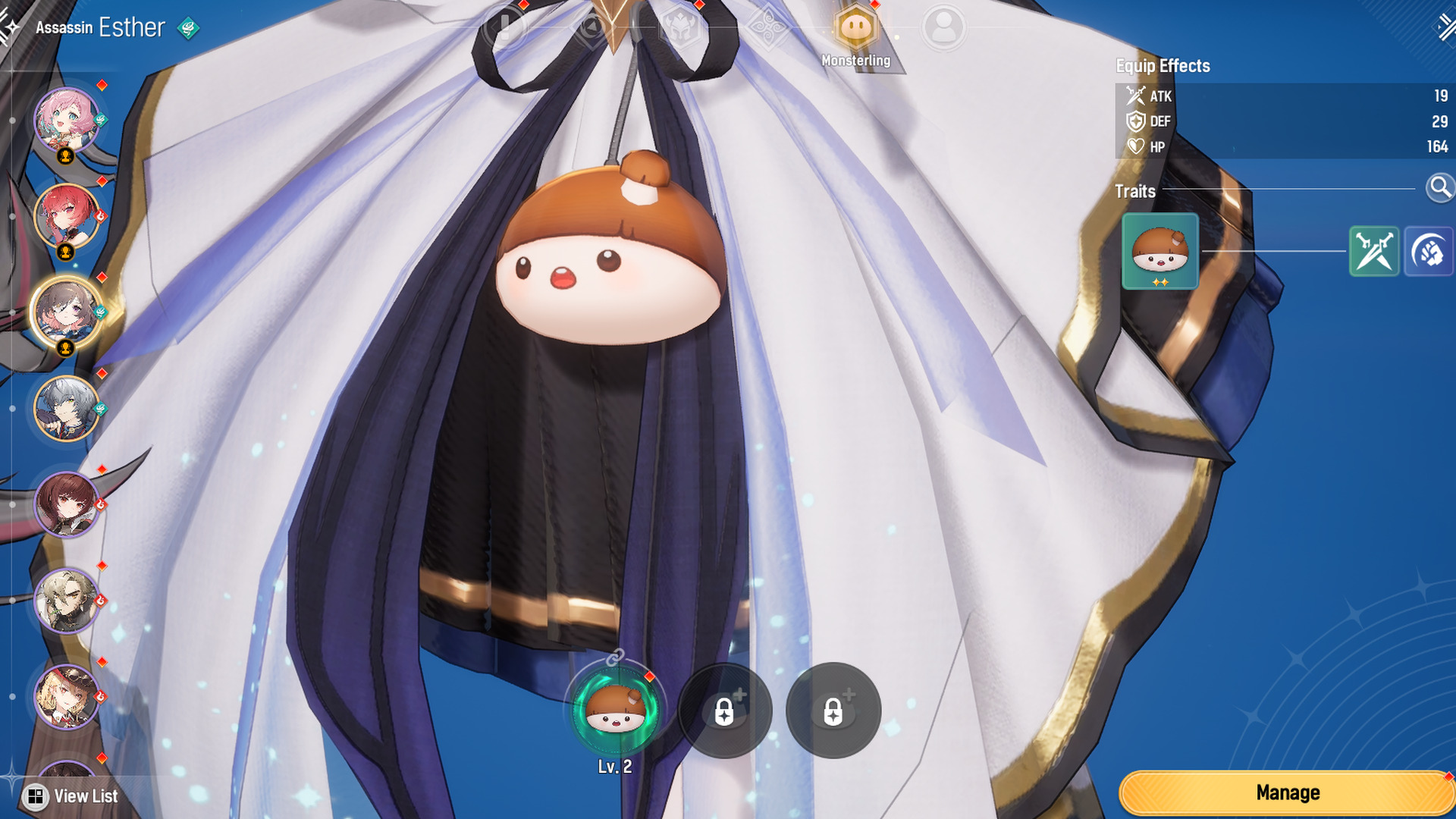
You can level up these Monsterlings with Growth Chow, yet another currency you'll need to hoard in Mongil: Star Dive. These grant EXP to the specified Monsterling, and higher rarity Growth Chow will give even more. Starting to notice a pattern here?
Certain monsters can be enhanced with Link Chains, which are a key part of Mongil: Star Dive's progression system. As you capture more monsters, you can craft a Link Chain using monster-specific crafting materials and special items called Cords of Fate. You can get these from requests, but you'll get a ton just by leveling up your feline companion Nyanners in the early stages of your adventure.
With a Link Chain, you can summon monsters to fight alongside you during battles! They'll appear and perform brief little attacks once you meet certain conditions. For example, Cappy Mama's Link Chain lets Cappy Mama slam down on top of enemies after you use a special skill with any character. There's a cooldown to prevent spamming, but it's not too long so you can bring your favorite monsters into battle pretty often.