With Mongil: Star Dive, Netmarble hopes to turn a niche monster-collector into a hit
You might not have heard of a Korean monster-catching franchise called Monster Taming, but the team behind it is betting you’re going to love their next creation, Mongil: Star Dive.
Released in 2013, Monster Taming (localized in North America under the name Creature Academy) was a top-down action combat game where players could collect and train more than 150 types of monsters and characters, exploring the world and battling through dungeons with a three-member party.
This mobile RPG defined an early era of portable gaming in South Korea and was downloaded over 10 million times in the country. The developers at Netmarble maintained Monster Taming for approximately ten years before stopping service in the fall of 2023. Now, the team at Netmarble Monster aims to revive the franchise with a sequel—and introduce the world of Monster Taming to a global audience.

To do so, Netmarble is pulling out all the stops, adding flashy new features like a full English voiceover and individually animated characters in cutscenes.
Netmarble is also bringing Mongil: Star Dive to more places. Mongil: Star Dive will be a free-to-play game with optional in-game purchases—but unlike its predecessor, Mongil: Star Dive is slated to launch on PlayStation 5 and PC in addition to mobile devices. The hope is that releasing the game on desktop and console (and localizing it in numerous languages) will make it easier for a global audience to experience the world of Monster Taming this time around.
But how to present that grand fantasy world to new players? That was one of the challenges facing Netmarble as they began development on Mongil: Star Dive.
Imagining the world of Mongil: Star Dive
The team at Netmarble Monster didn't start with a totally blank slate. “We focused on carrying over the core fun elements of Monster Taming while also adding new enjoyment,” said Mongil: Star Dive Creative Director Youjung Kim. “Heroes who were loved in the previous title (such as Cloud, Verna, and Mina) reappear, and we reinterpreted the familiar play-style of forming three-person teams and collecting monsters with a modern sensibility.”
The journey in Mongil: Star Dive begins with two of these fan-favorite Monster Taming characters, the tough-but-cordial Verna and bumbling buffoon Cloud. One day, while foraging for mushrooms, Cloud stumbles upon a mysterious monster he names Nyanners. This creature—which resembles a chubby black cat with large eyes—possesses a hidden magical power: the ability to capture and tame even the strongest of monsters. By befriending Nyanners, the three suddenly have the power to tame and capture the other creatures that inhabit their world.
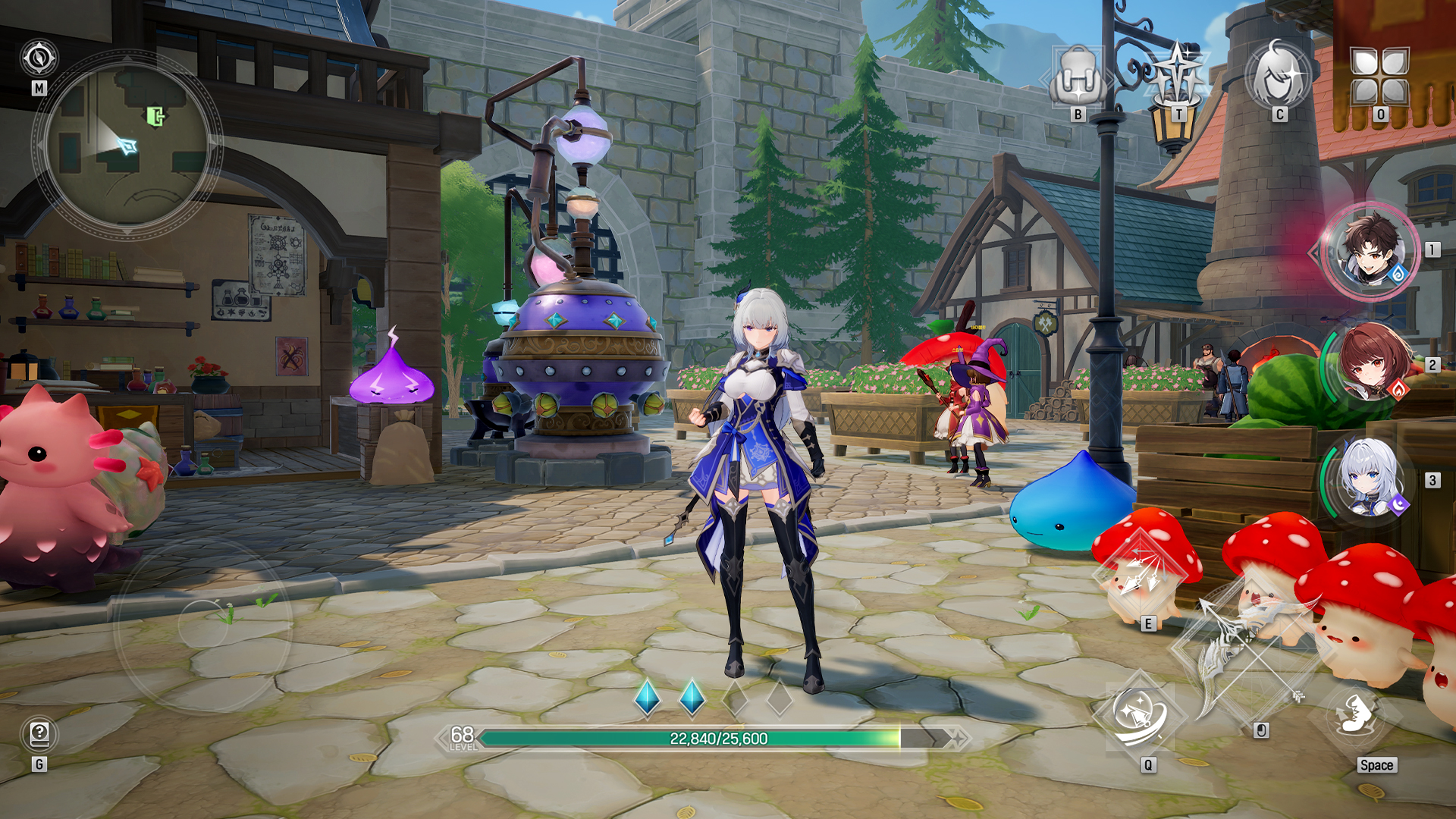
As for that world, Mongil: Star Dive is set in a quaint European-inspired fantasy land called Hananis. It's a region of towering mountains, lush forests, cobblestone streets, and cozy cottages. More importantly, it's packed with new characters to meet and a story to unravel.
“The biggest difference is the story and the world," said Mongil: Star Dive Art Director Sunkyung Lee. "To reinforce the somewhat lacking narrative of the previous game, we added new characters and incorporated deeper stories."
Netmarble plans to add more regions to Mongil: Star Dive later on, but according to Kim, the European setting fit the overall tone of the game.
“We focused on balancing between a bright and cheerful atmosphere and a profound story—making sure it was not too dark or gloomy, while still creating a narrative that players could immerse themselves in,” said Kim. "[Hananis] was the most appropriate setting to express the joy of adventure, such as receiving quests from guilds, hunting monsters, and collecting them.”
Bringing the characters of Mongil: Star Dive to life
When it came to the look of Mongil: Star Dive, Lee and the team at Netmarble went with an expressive and anime-inspired aesthetic that really helps bring the characters to life.
You can see the impact in a scene from an early demo of Mongil: Star Dive. A young woman, dressed in flowing ribbons, walks through an ethereal dimension. She struggles to take a single step because a sword has pierced her stomach. The screen fades to black, and Cloud, our affable and goofy protagonist, wakes up from the nightmare. It feels intense, but before long, Cloud and his companion Verna are bickering over who cooks dinner. And then Verna stomps on Cloud to resolve the quarrel, breaking the tension and giving us an immediate window into her personality.
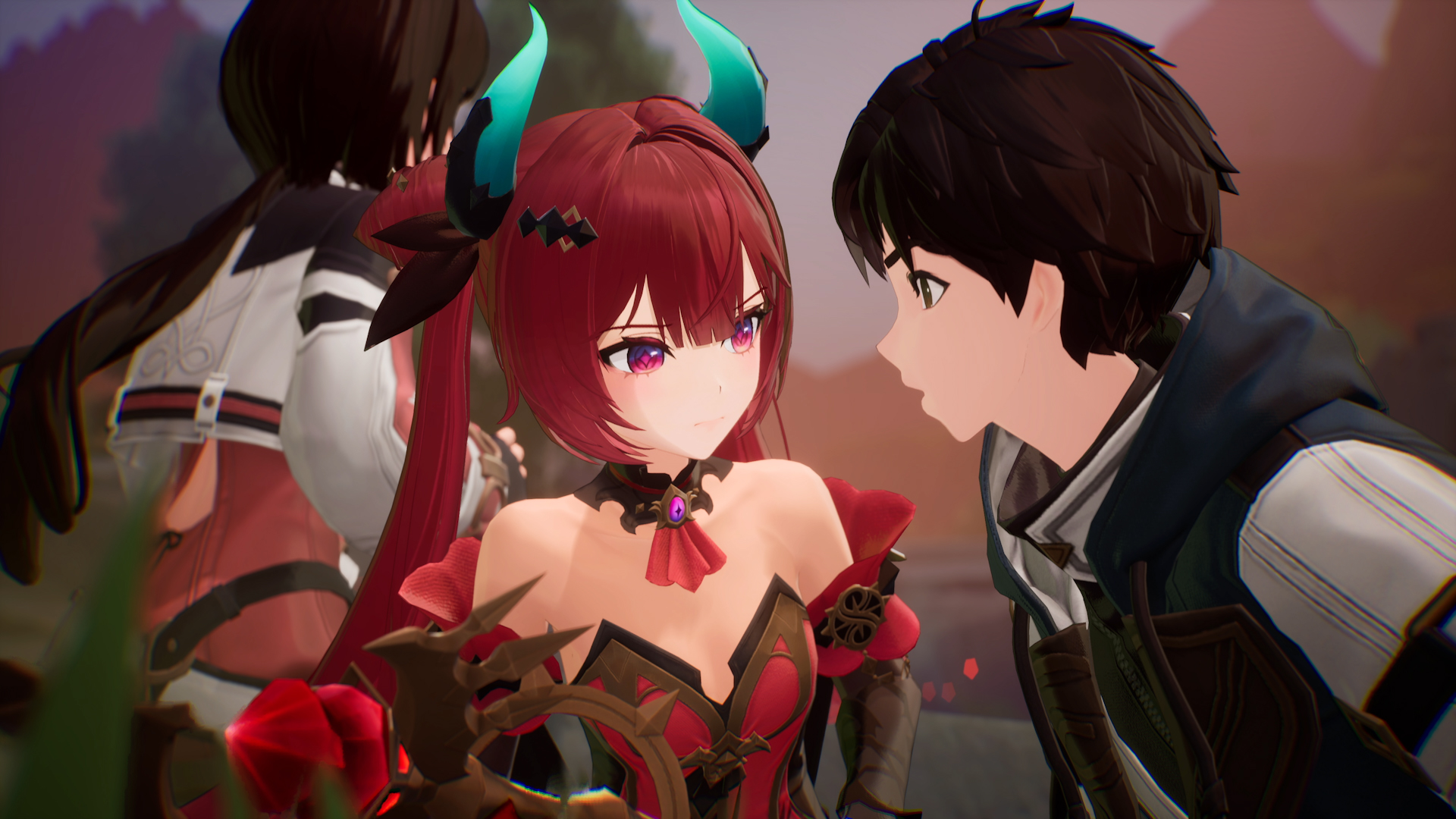
“While many gacha games adopt an anime style, Mongil: Star Dive took a slightly different approach,” said Lee. “We applied cel-shading to character faces to capture the expressive feel of animation, while blending [non-realistic photo rendering] techniques into costumes and accessories to create realistic textures and depth. Supported by Unreal Engine 5’s rendering and lighting capabilities, we achieved a high-quality visual balance between the two styles.”
Kim explained why Netmarble paid special attention to creating varied facial expressions when animating characters in Mongil: Star Dive.
"We judged that it was difficult to fully convey the subtle emotions and personalities of the characters with simple text alone, so we implemented rich facial expressions that allow players to immerse themselves more deeply in the story and to feel the characters’ emotional arcs more vividly," said Kim.
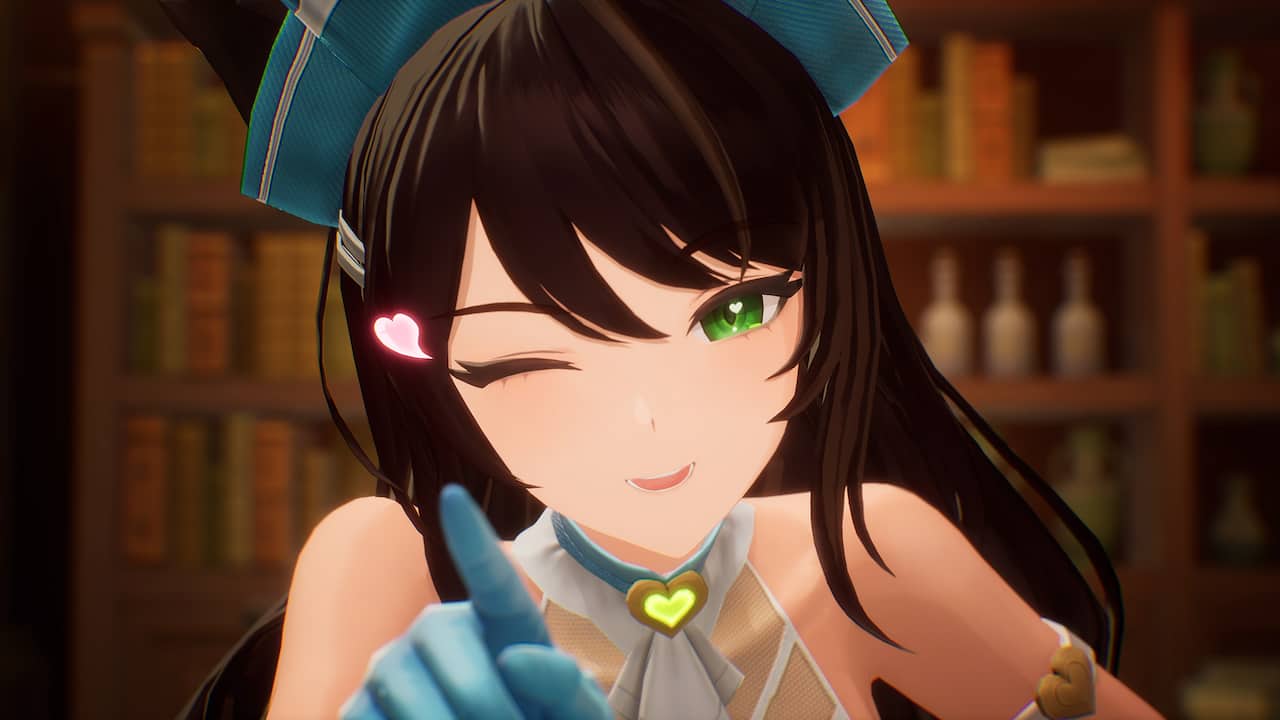
In regular conversations, Verna might roll her eyes, or you might see Cloud drift off into a daydream when he’s bored. In one particularly eye-catching scene, a woman named Hilia professes her obsessive love for monsters with so much dynamism that it almost reminded me of a Pixar film. Her eyes glow with dewy love for the monsters, and her expression goes bug-eyed as she rummages through her papers.
Mongil: Star Dive can be played in a variety of languages, and the English dub lends a sense of believability to these little character moments. Cloud, played by the acclaimed voice actor Caleb Yen, stands out in particular. He sighs with heavy relief, whines like an angsty boy, and shrieks with glee when he hugs a cute monster.
It's fun to watch—and funny. Mongil: Star Dive is all about balancing its more intense story beats with plenty of humor.
“The overall flow of the story proceeds with a serious narrative at its center, but along the way, we refresh the atmosphere through witty dialogue and humorous interactions between characters,” said Kim.
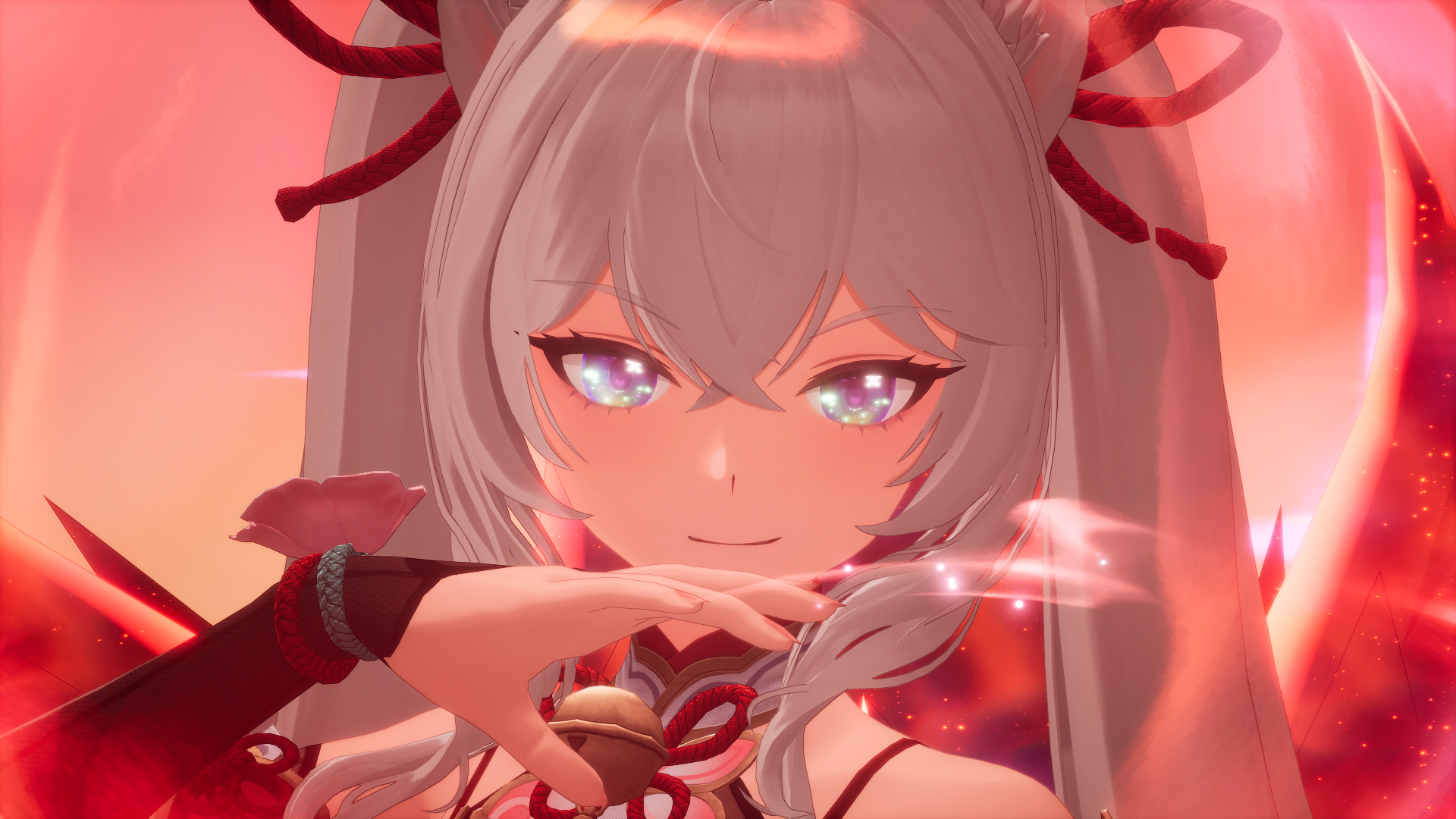
What Netmarble showed of Mongil: Star Dive so far focuses on the adventures of Cloud and Verna. Their light-hearted banter with each other and with the characters they meet injects some comic relief into the game's darker or more intense story beats. Characters use colorful language like “wakey wakey eggs and bakey,” and joke around with each other.
“In order for players to feel the charm of each character and immerse themselves in their relationships, we emphasized the chemistry created when characters with diverse personalities meet,” Kim said. “Through the delightful situations Cloud and Verna experience as they encounter various people, we sought to refresh a story that might otherwise become too serious or dark.”
The story behind the characters can be just as important as their looks, and these narrative elements were a big priority for the Mongil: Star Dive team.
“What matters most is how naturally a character fits into the world," said Lee. "At the same time, they must be instantly memorable and distinctive. A character is not truly complete just because they look appealing—it is only when they breathe within the game and are ready to interact with players that we consider them complete.”
In time, players will be able to recruit new members to their team, introducing new character dynamics to Cloud and Verna's relationship. “Through the recruitment system—the in-game gacha—players can obtain characters and artifact equipment items,” said a Netmarble representative. “We are planning both standard recruitment and limited-time recruitment events. Recruitment is an essential system that allows players to acquire new characters.”
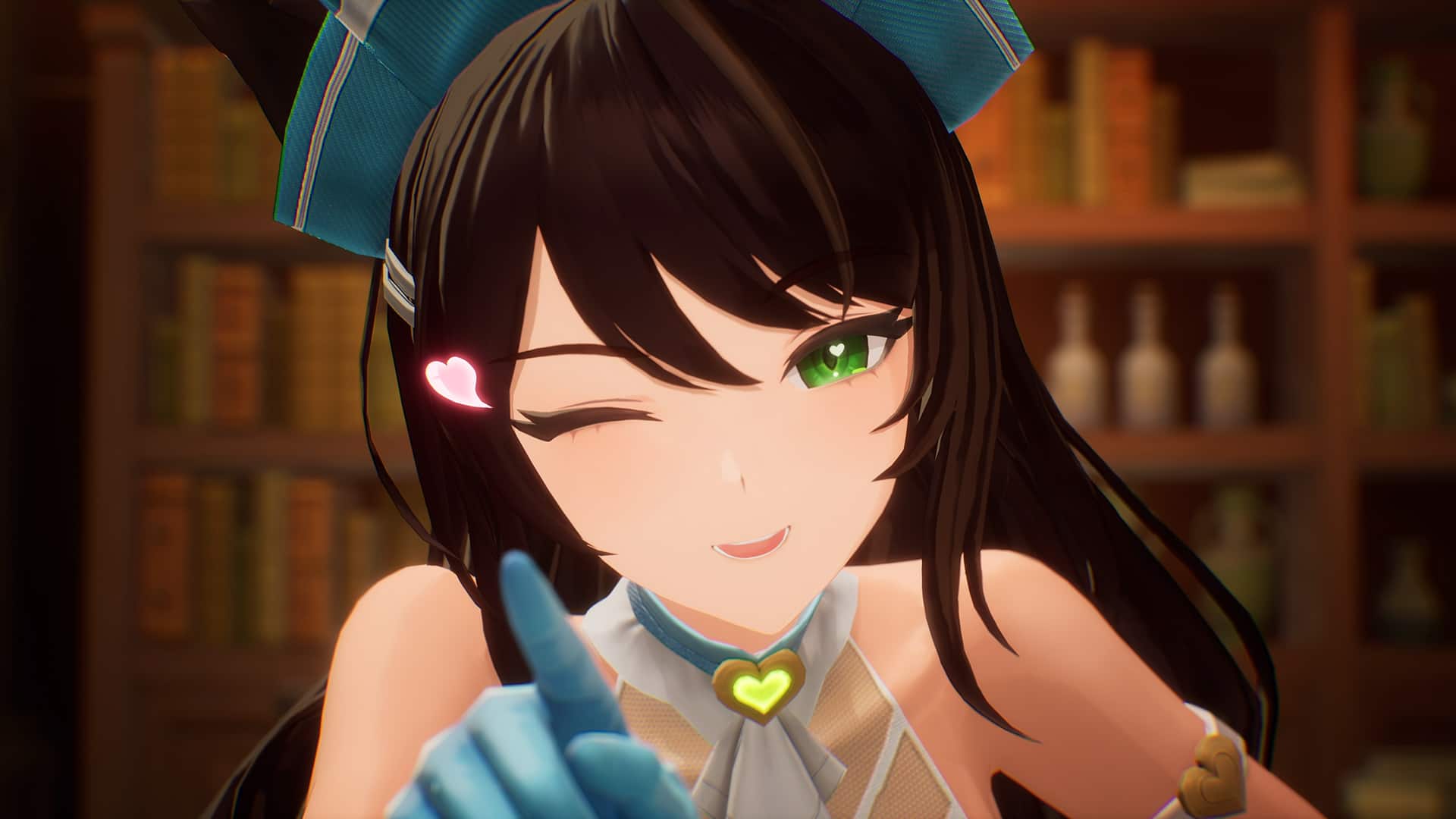
So far, Netmarble has shown off gameplay for a nurse-like character named Francis and a knight named Ophelia, but hasn't shared any further details on them or how they might factor into the story.
“Players will encounter a wide variety of character concepts—from bare-handed martial artists to medieval knights wielding spears and shields, modern firearms specialists, futuristic technology users, and magic-wielding fantasy characters,” said a Netmarble representative. “Characters are categorized into four types: Destroyer, Brawler, Assassin, and Support. Each has distinct traits, enabling players to form parties and conquer stages and dungeons strategically."
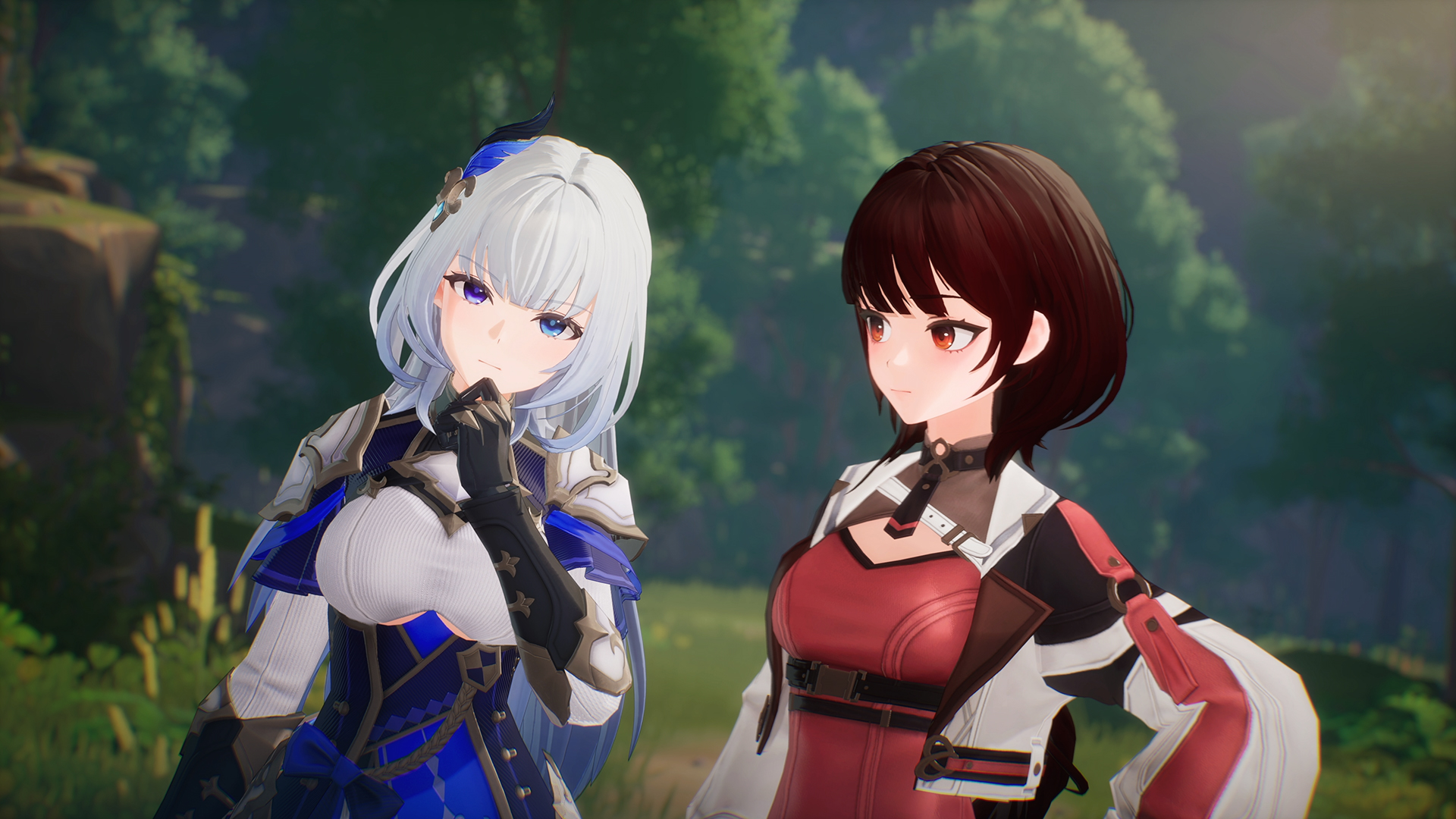
The team at Netmarble hopes that players will connect with Mongil: Star Dive's characters, and the game's anime-inspired look might help in that regard. According to Lee, Mongil: Star Dive's look is “well-suited for reinterpretation in fan art and community activities.”
This "reinterpretation" Lee is talking about can go a long way to supporting overall interest in a game like Mongil: Star Dive. If players are constantly creating fan art, cosplaying as their favorite characters, or sharing video edits of a game online, each post has the chance to go viral and grow the game's core audience. But it’s more than that—it’s also a way for players to build a deeper connection with the game. It’s the difference between players who occasionally dip into a game and those who establish a long-lasting fandom that cares about the characters and the world.
Turning monsters into creative combat aids
Since Mongil: Star Dive is a monster-collector, it also needed a vast number of visually striking and varied monsters to populate Hananis. In this sense, the team at Netmarble has had to pull double duty, creating a wide cast of both playable characters and monsters for the player to catch.
“We put great effort into designing characters and monsters that could resonate with various cultures," said Kim.
“Every character, monster, and even NPC design begins with lore-based concept art, and throughout the production process, we collaborate closely with the scenario team to ensure full alignment with the world setting,” Lee added. “The concept art team contributes creativity while also reviewing each design carefully against the lore, resulting in a distinctive and unified design identity.”
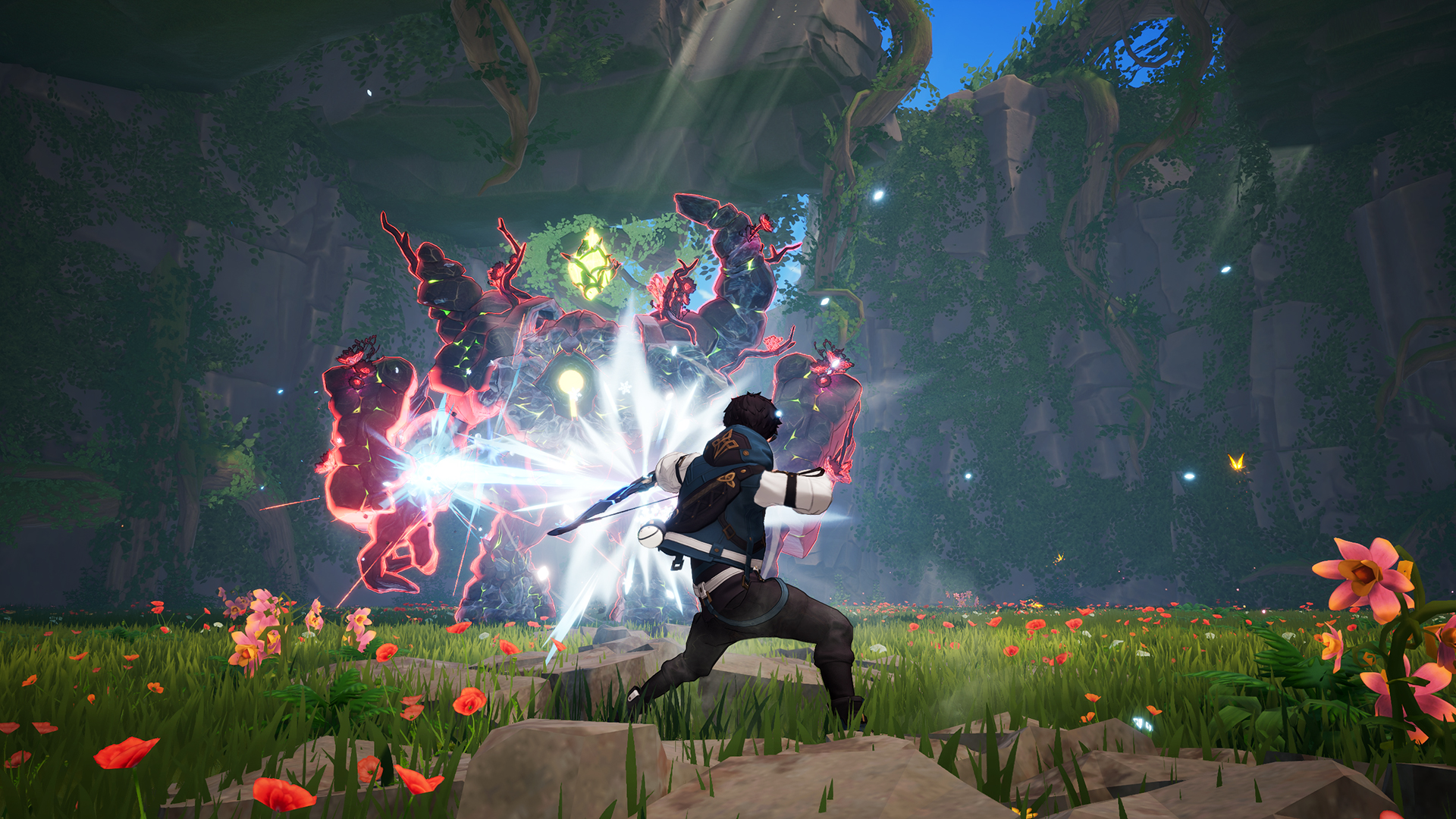
Mongil: Star Dive will launch with 150 different monster species. So far, demos and early gameplay reveals have shown several monsters inspired by the fantasy setting, like walking mushrooms and goblin-like gremlins. In one of the early fights, Cloud and Verna face off against a creature that looks like a cross between a Shrek ogre and a World of Warcraft character.
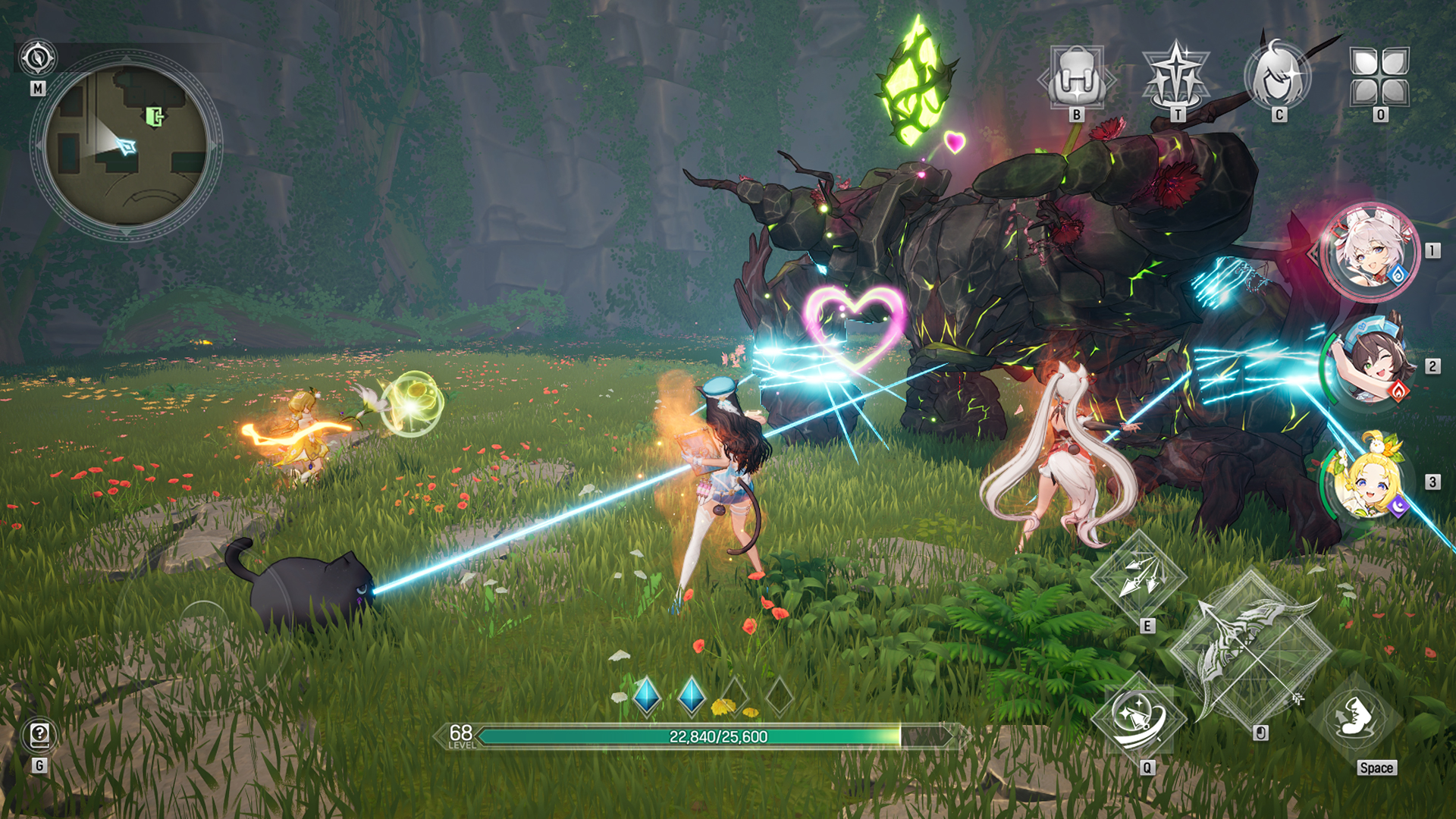
From what Netmarble has shown so far, the core of Mongil: Star Dive focuses on combat challenges—for instance, defeating a golem-like monster in five minutes or less. The pace of battle moves fast. You switch between different characters in your party, whittling down the enemy's health with special attacks and dodging its assault. Once you’ve dealt enough damage to a monster, you can use Nyanner’s special ability to bind the monster and slow it down. Deplete a monster’s energy entirely, and you might be able to catch it.
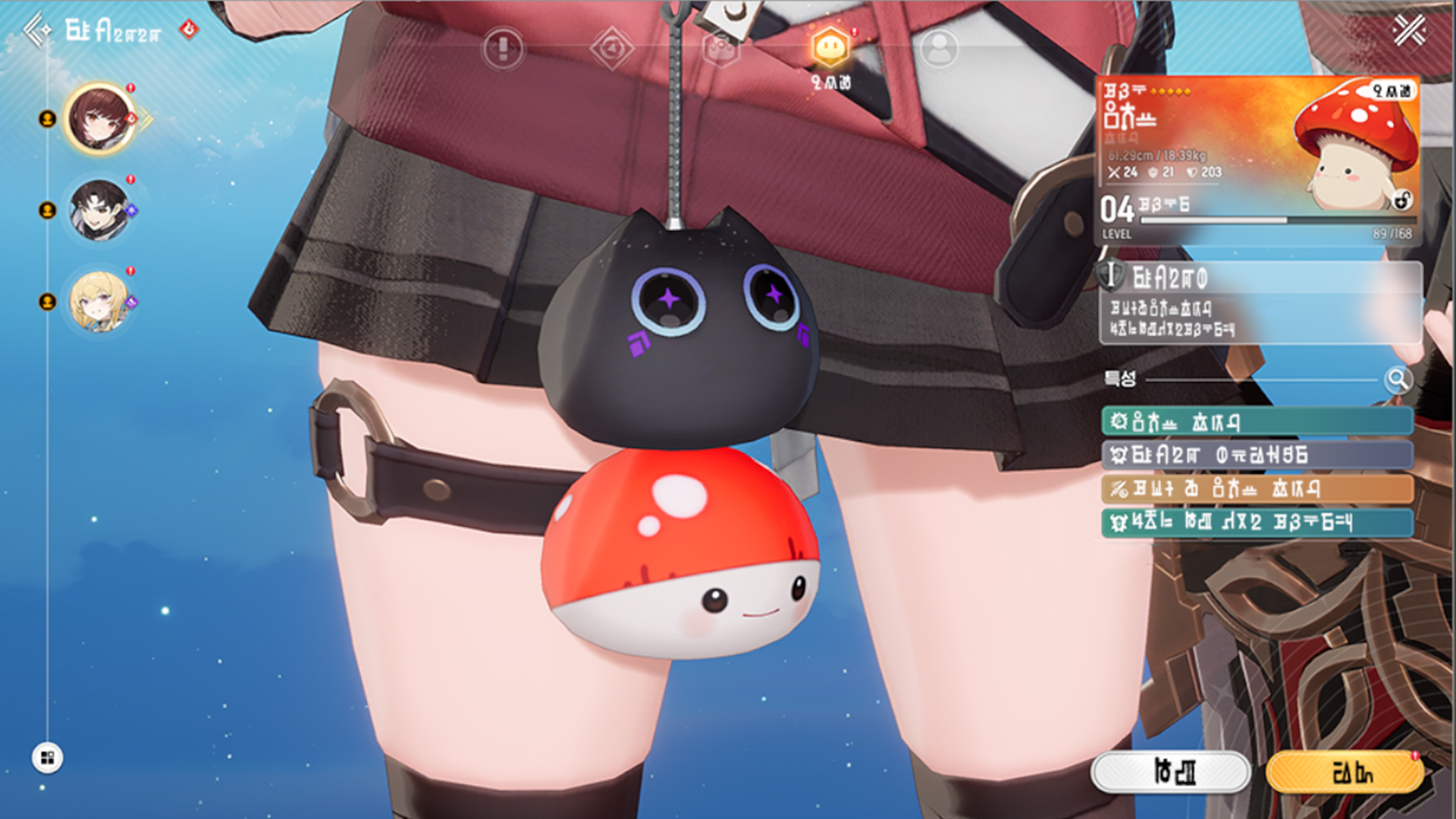
You won't use these monsters to directly battle other monsters, though. Instead, captured creatures transform into little trinkets called “Monsterlings.” Once acquired, players can equip up to two Monsterlings to add special buffs and stats to characters to aid them in future battles.
“We wanted the collected monsters not only to be gathered but also to serve an iconic role that highlights the characters even more.” Kim said, “After much thought, the idea of the Monsterlings was born. Since players usually look at the back of characters during gameplay, we designed it so that monsters could be equipped like accessories on parts of the character that enhance their appeal. We judged that this would add visual enjoyment and serve as an important point that supports the character.”
In Mongil: Star Dive, you fight with three characters on the battlefield at a time, swapping between them to max out the damage each character can do. The characters you aren't actively controlling become NPC allies and help attack the monster as best they can.
“We wanted to emphasize the feeling of ‘party play alone,’” said Kim. “Rather than simply switching between three characters to fight, we focused on providing the experience of the entire team cooperating.”
According to Jinrok Jang, a Lead Client Engineer at Netmarble, the team designed an “in-house trigger tool” to help manage all the complicated combat mechanics that go into Mongil: Star Dive.
“This tool can be applied consistently across all situations, including monster AI, player actions, and level events,” said Jang. “It allows designers to easily configure constraints or additional actions at specific HP thresholds without requiring programmer intervention. Thanks to this, diverse combat scenarios could be expanded flexibly, while the modular trigger-based system ensured stability and fast iteration.”
But it was the Link Chain system and those aforementioned Monsterlings that really brought it all together and convinced the team at Netmarble that Mongil: Star Dive is something special.
“The moment we were convinced that we had discovered the core fun of the game was when we first introduced and tested the Link Chain system,” said Kim. “The Link Chain system allows equipped Monsterlings to appear directly in battle, applying different attacks and effects, thereby expanding combinations from simply characters to character-and-monster combinations.”
“In particular, when team members equipped with different characters and Monsterlings attacked bosses together, we realized that the strategic fun and depth we intended had actually been implemented. At that very moment, we felt that the core playstyle of Mongil: Star Dive had been completed,” Kim said.
Preparing for Mongil: Star Dive’s launch and future
The development team plans to launch Mongil: Star Dive with five main episodes of content and 120 main quests. If you include all the sub-quests or mini games, there will be more than 200 pieces of content in the game at launch, in addition to 150 monster species to catch. According to Netmarble, it will provide around 30 hours of gameplay.
And while Netmarble is bringing Mongil: Star Dive to PC and console to broaden its appeal globally, it will also have to run on mobile devices, like its predecessor, Monster Taming. Bringing such a large world to phones—and making sure it works—is no small feat. According to Jang, the team “leveraged Unreal Engine’s strengths in optimization, particularly for rendering and memory in mobile environments.”
Unreal Engine 5's capabilities also helped Netmarble identify and stamp out bugs across multiple platforms.
“For quality assurance, we actively utilized Netmarble’s structured, multi-step QA process—from internal QA during development, to external validation, and finally Fun QA based on real player data.” Jang said, “With Unreal Engine’s consistent multi-platform debugging and testing environment, we efficiently identified and resolved platform-specific issues across iOS, Android, and PS5.”
These tools will allow Netmarble to deliver a “smooth service experience” to several platforms right at Mongil: Star Dive's release—but launch is just the start.
The Netmarble team already has plans to release content updates on a regular basis. Both Kim and Lee said that the developers would like to add new regions to Mongil: Star Dive, including settings inspired by Korean fantasy and futuristic sci-fi worlds. Major content updates like these will also presumably bring new characters, monsters, and stories to explore.
When asked how they're prioritizing what kinds of content updates roll out and when, Jang said that it’s up to the development team.
“Above all, we prioritize the design team’s ideas to deliver new, fun experiences to players.” Jang said, “By leveraging Unreal’s component-based system, we ensure that new features can be integrated stably into the existing code base.”
Of course, just because Netmarble values its team’s ideas doesn’t mean it’s all about what the designers think. Kim also emphasized that player feedback is an important element in creating the best game possible.
“I believe that a game is created not only by the development team but also together with the players,” said Kim. “Through previous [closed beta tests] and game exhibitions, we were able to hear players’ valuable opinions, and there was much diverse and constructive feedback about things we had not thought of, which greatly helped us refine our development direction. We will continue to communicate consistently with players through various channels to create a better game."
Mongil: Star Dive is available for wishlist on Epic Games Store. Those who want to get a head start on their adventure can sign up for pre-registration on Netmarble’s site and redeem special in-game rewards now.