
Novinky
Orwell asks: is it okay to be bad to get the bad guys?
P
Phil Hornshaw
Orwell consists of two episodic stories about a burgeoning surveillance state set in the age of social media. You play what is basically an Internet cop, using specialized software to gather information about people from their online data as you investigate who's behind a bombing and try to prevent additional attacks. Sure, your job is to save lives and stop the bad guys, but the nature of the game creates conflicting feelings about what you're doing.
The trouble, of course, is that this level of surveillance can easily be used for authoritarian ends. As you sieve through Orwell's equivalents of tweets and emails for clues, it quickly becomes apparent that the evidence you're providing isn't exactly bulletproof. Which information you decide to share with the nation's law enforcement—about whom, and in what context—can change how the story advances. It can even have dire consequences for different characters.
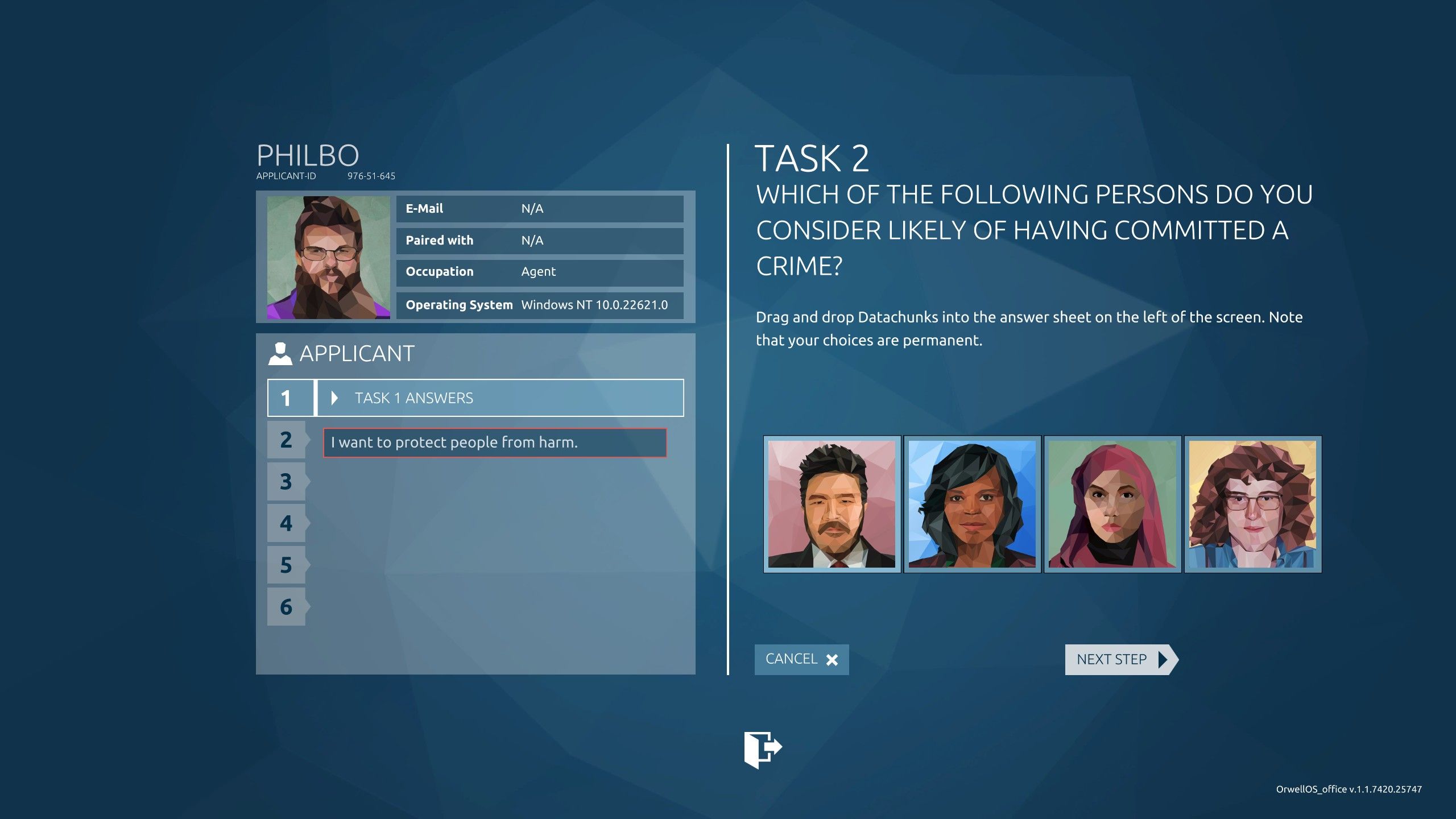
Orwell really starts to work on you when it provides you with two pieces of evidence that contradict one another. A post by a soldier in a foreign military who you know is a spy for your government suggests he's not as loyal as he claims to be—but another shows that he's actually on your side. An email from a dissident might make it look like they've joined a violent faction, while their texts show they're committed to nonviolent protest instead. In these cases, you can only pick one piece of information to share with your superiors, so it's up to you what kind of picture to paint about the characters you're surveilling. But you don't control the actions the government takes once you've provided the details, and you might end up causing unintended consequences that allow the guilty to get away, the innocent to be arrested, and anyone in between to be killed.
It all creates an unnerving feeling. Would I want someone sifting through my Twitter feed or my private emails, making judgments about me? Am I making the right calls about people's guilt or innocence based on a few pictures on their phones or the texts they've sent to people? Is it possible to use power like this with good intentions, and can I avoid negative consequences?
Pushing the player into roles they might never experience in real life—and the emotions that come with them—is one of the things I think is most exciting about video games. Orwell isn't the kind of game that delivers a fun power fantasy, but it hits on other interesting ideas and feelings instead. It has the power to make you ask yourself tough questions about what you believe, and for my money, that's one of the rarer and more fascinating capabilities of video games as a medium.
Orwell is available on the Epic Games Store.