Artikel
Out of Time seeks to harmonize a chaotic mix of ideas
D
Diego Nicolás Argüello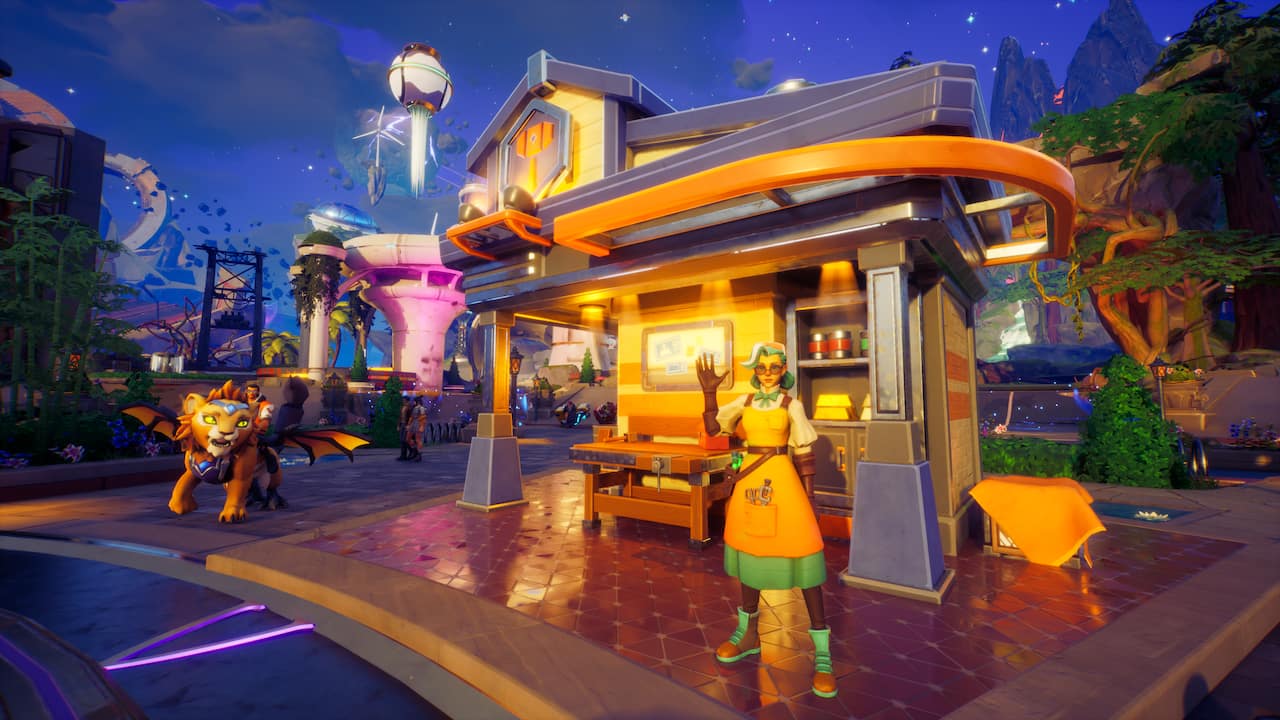
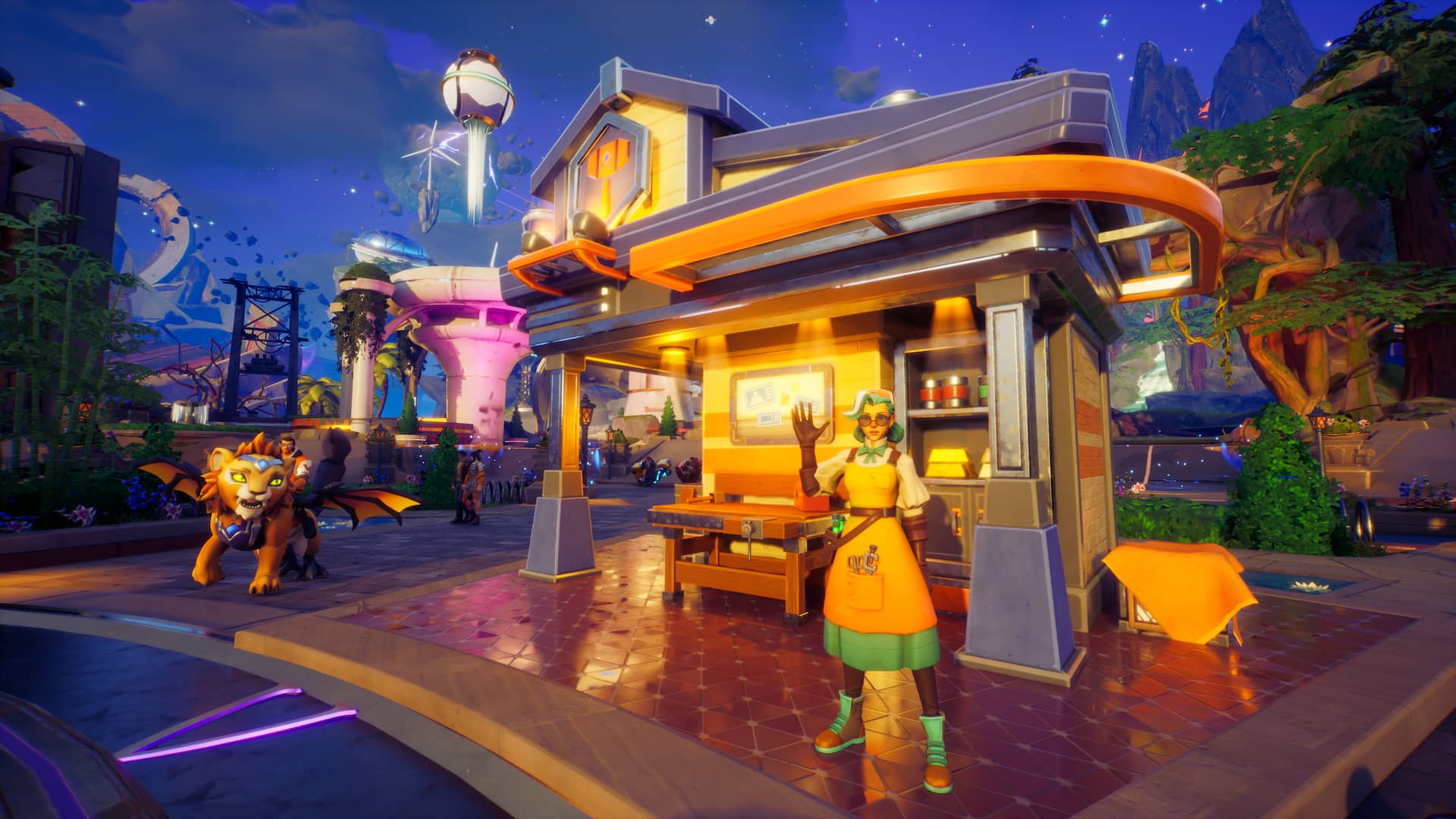
Infinitopia is mankind's new bastion, which serves as a hub for players to gather and plan expeditions together. From there, you get an overview of all the time periods that have collided with each other, from medieval biomes to cyberpunk districts. As you explore each one of the regions, defeating enemies and clearing the map until a final boss shows up, you accrue a vast assortment of gear. This allows for character progression, but also determines what kind of player you want to be, as there are no assigned roles. Instead, it's your character's gear that dictates the abilities and personality that you carry with you.
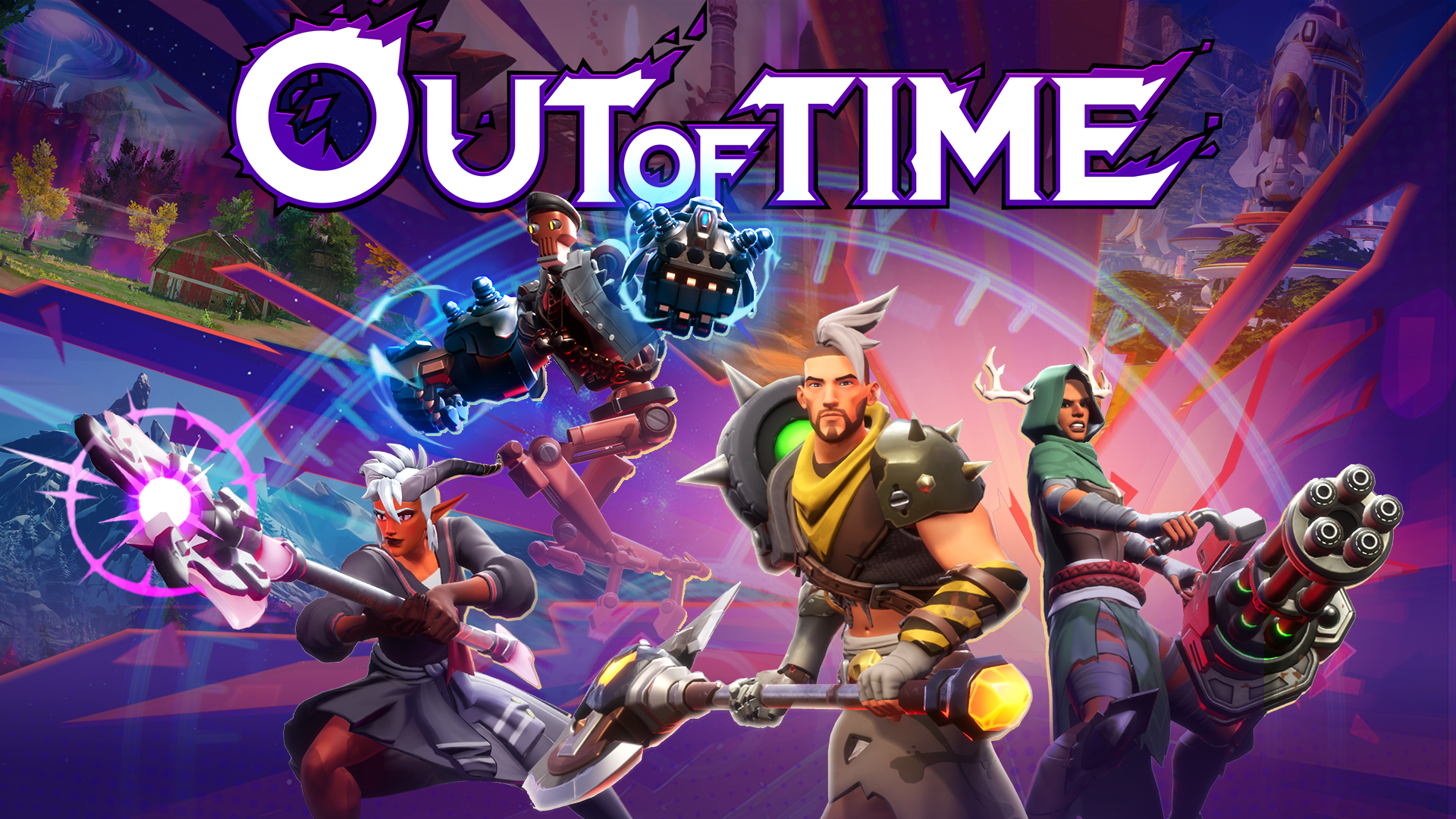
During a demo via Discord, Manticore explained the importance of your character's gear. In the presentation, the developers started with a character wearing a barbarian set, which meant that they were almost entirely focused on strength. To balance it out, players can, for example, wear a helmet that excels in health recovery and change the upper body armor to a gear piece that provides defense rather than attack power.
There's another layer to gear as well, which is tied to a mechanic called Tether. Out of Time's MMO influences lean nicely into playing with others (up to four at the time), and this mechanic elevates the prospect of synergies. In short, your character's stats are shared with your teammates, which informs the strategy when picking upgrades during a run. Everybody in a party levels up at the same time, and when it comes to choosing upgrades, the decision-making is crucial. You might be offered upgrades to, say, one of your abilities, elevating its stats and adding new effects. At the same time, another upgrade might increase the global amount of XP earned, giving a boost to how fast the party can gain levels—especially if you come across it early on.
"Once we freed ourselves from 'hey, the tank is the only person who can take damage,' once we made it so like 'oh, now that the tank is upgrading he gives it to the entire team,' that made it really fun to design these abilities and design how stat upgrades work, and actually put some decision on the player because not all upgrades benefit the whole team," Creative Chief Officer and Co-Founder Jordan Maynard said.
These decisions carry over throughout the entirety of a run. If a player has a higher chance of getting better loot after defeating a boss, even if it's individual, everybody on the team gets the same pool of items to vote for. So if the player benefits from that stat and gets an item of a greater rarity, their teammates can just vote for it and get a copy each.
Progression in Out of Time will have players pursuing better gear at all times, which works in tandem with the game's focus on eras. At launch, there'll be four eras available: medieval, modern, and wasteland, with more becoming available in post-launch updates. Each era has four zones, with subsequent ones becoming unlocked as you successfully pull off a run in its predecessor. At the same time, each zone has ramping difficulty levels, split into normal, hard, and shattered—the latter also having a total of ten tiers, with each tier being twice as hard as the previous one, according to Manticore. And of course, different eras lead to a grand variety of gear to mix and match, making for all sorts of funny and useful combinations, such as a barbarian with fire weapons or electric guitars that spit fire.
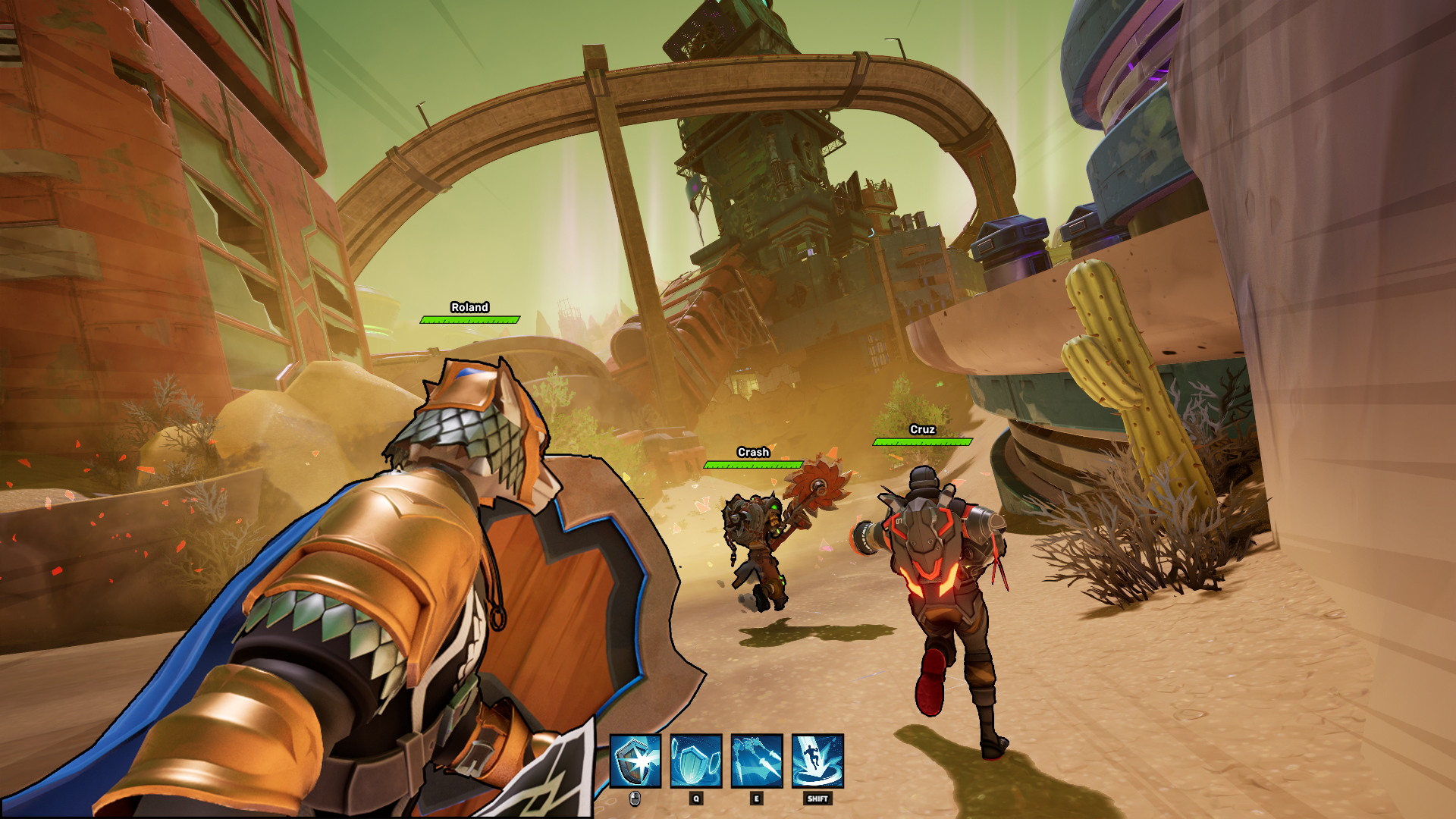
The team spoke at length about some of the games that have influenced Out of Time. From the interconnected side of things, the likes of Warframe and Destiny 2 have paved the way for how Manticore has designed loot. Depending on which weapon you're carrying, however, the experience varies substantially. Some assault rifles can auto-attack as you move freely, but switching to a minigun is more of a trade-off. While the latter presents a faster fire rate and higher damage, your character stays stationary when shooting. Others, such as the V.I.B.E. Drone, emit an area of effect around your character that can either deal damage or provide healing. In practice, it's like a fusion between the garlic in Vampire Survivors and how Lucio's weapon works in Overwatch.
Looking ahead, Manticore has plenty of ideas to grow Out of Time's foundation. While it'll be a premium game at launch rather than free-to-play, people can expect to see integration of not only new eras, but also competitive PvP modes. This also applies to user-generated content, which could range from player housing to users coming up with their own modes and sharing them with others.
Evoking the spirit of the likes of 3D co-op roguelikes such as Risk of Rain 2, but with roots cemented in MMOs, Out of Time is an intriguing mix of ideas with the potential to offer a fresh experience in the genres that have influenced it.
Out of Time launches on September 25 on Epic Games Store.