
Inside Reanimal, a new horror-adventure game from the Little Nightmares team

On the face of it, Reanimal doesn't look a million miles away from Tarsier Studios' previous games, Little Nightmares and Little Nightmares II. Like its predecessors, Reanimal is an atmospheric horror-adventure where you play as children in a nightmarish world. The Malmo-based developer certainly wouldn't be the first studio to build on its past success, and Tarsier's CEO Andreas Johnsson and Narrative Director David Mervik are conscious of those comparisons—even though the latter said that the idea of making a spiritual successor came quite organically, and was one of many other ideas the team could have pursued.
"We don't have a mold that we just revert to," Mervik said. "It so happened that the characters in this were [also] kids, so maybe that's part of what resonates with us, because we like to create these grotesque scenarios in these scary places, and there's always a nice counterpoint when you've got child protagonists rather than more empowered adult characters."
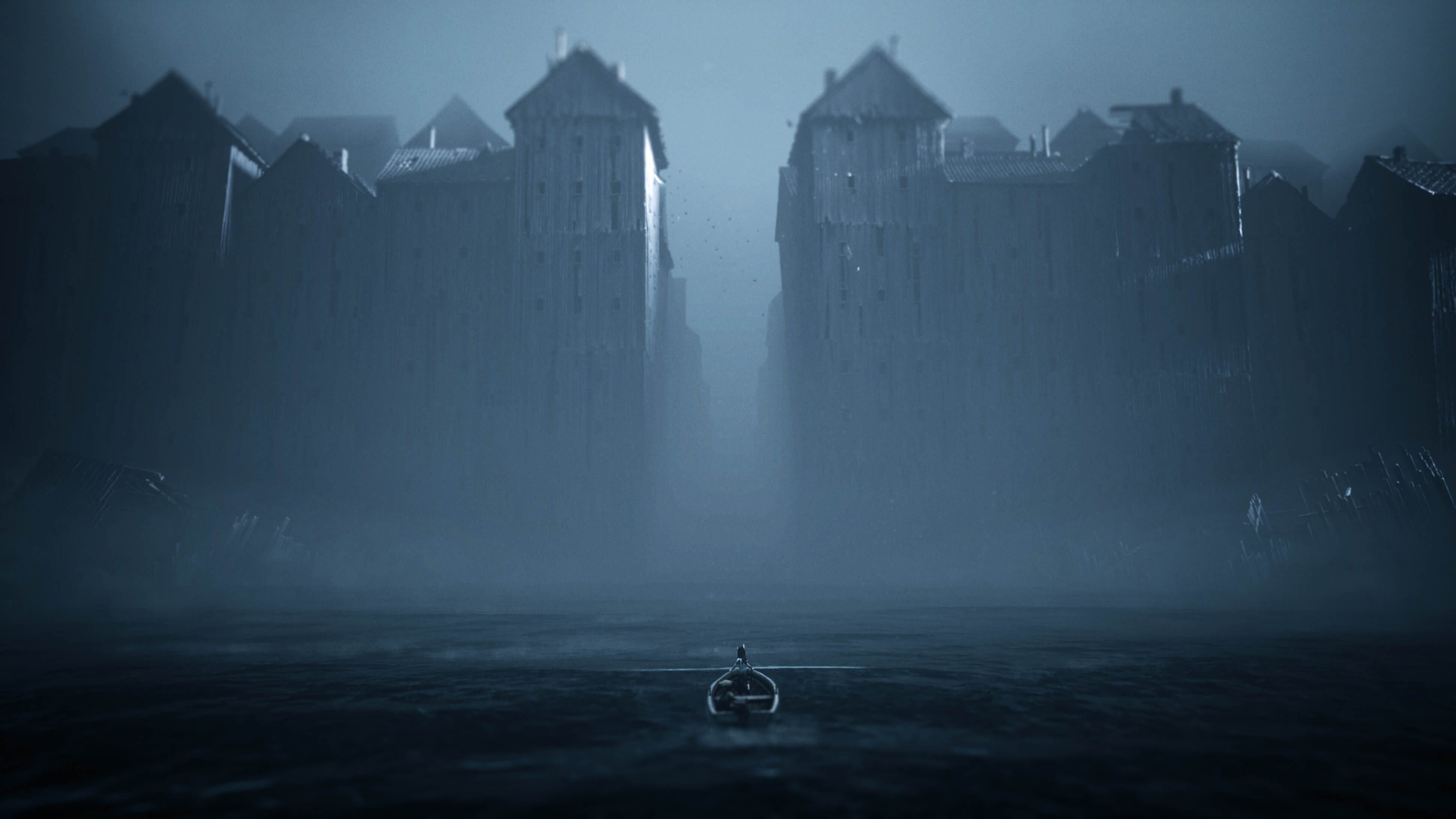
The differences between Reanimal and Little Nightmares can be subtle, but also quite stark at times. Whereas Little Nightmares was a 2.5D platformer (albeit one that still allowed you to move in three dimensions at times) Reanimal is a fully 3D adventure. In the opening sequence—after watching an unnamed boy with a sack over his head wake up from a bad dream—the first thing you can do is pilot his boat forwards up the screen instead of sideways.
Moments later, you discover another surprise, pulling a girl wearing a rabbit mask from the water. She turns out to be alive, and the pair actually brother and sister. They even talk with one another. And if the boat's size wasn’t already a hint, then by the time you reach the shore, it's also clear that this is their world—at least in the sense that they feel in correct proportion to the doors, suitcases, and fences you come across, compared to Little Nightmares’s oversized homes and giant grotesque monsters.
However, just pointing out these differences from Little Nightmares isn't enough.
"We made Little Nightmares as well as Reanimal, so there's definitely things there that can be a bit confusing, as to whether or not it's the same game, until you actually play it," said Johnsson. "When you see how people play it, it's just something completely different."
Better together
The most important difference is the brother/sister dynamic at the center of Reanimal. While Little Nightmares II also featured two characters, one was an NPC. Reanimal, by contrast, was designed as a co-op game, underlined by the idea that players experience everything together.
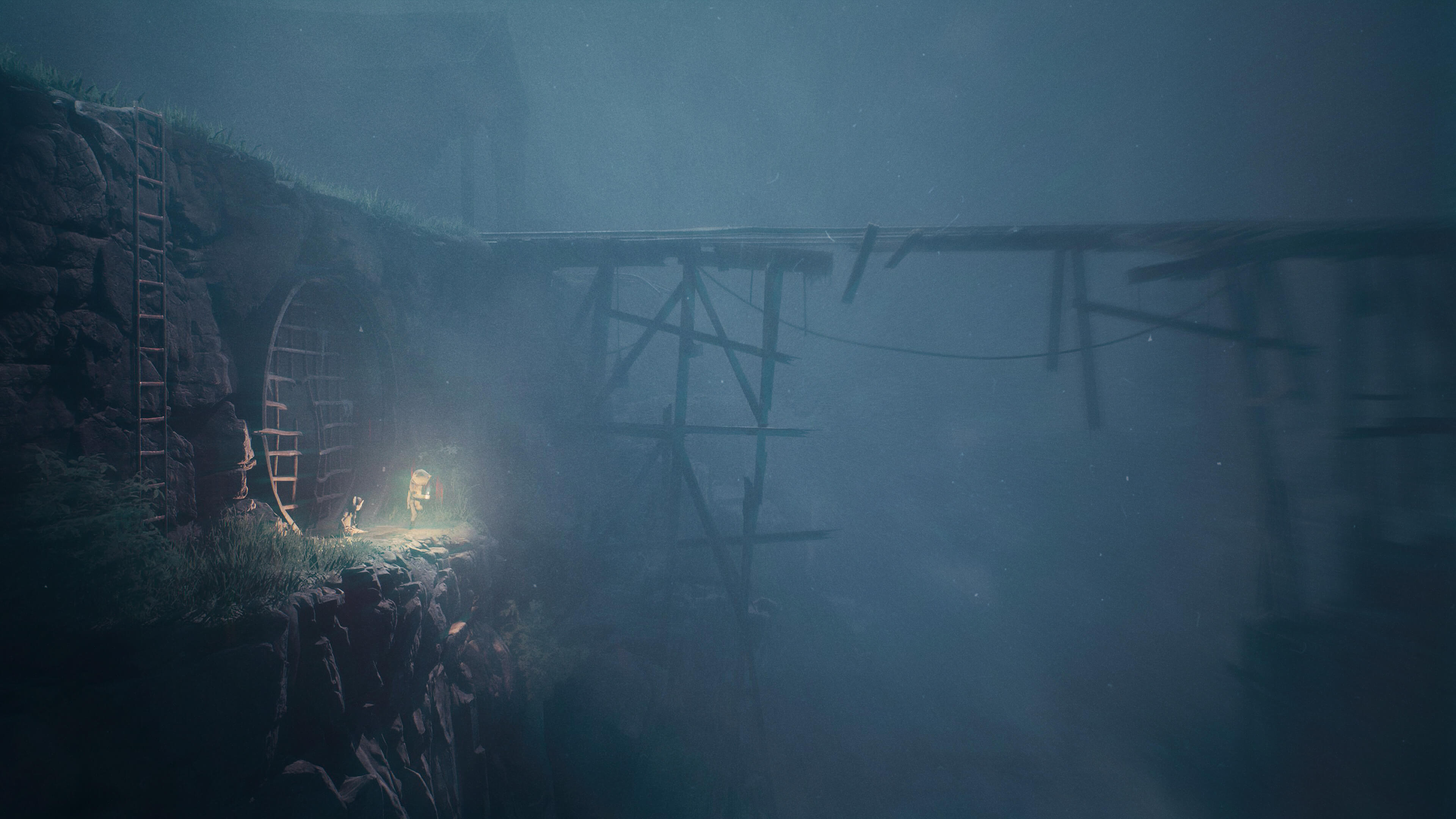
For Johnsson, it's as transformational as watching a horror movie with someone else. "When you watch with a friend, you have someone to laugh off the nervousness or just grab them, even scaring the other person, so there's some interesting thing happening there."
Creating a sense of togetherness came down to how the action is framed by the camera for both players, whether on the couch or online. Eschewing both splitscreen and each player having their own screen online (with their respective character at the center), Johnsson referred to Reanimal's camera system as "dynamic and shared." He continued, "Our game is about being scared together. And it was important to us to have a unified way of playing the game. I loved how it just pushes every scene so much more than splitscreen could ever do."
In practice, it means both characters are always onscreen together, with the camera pulling back as far as it can if they find themselves on opposite sides of the screen. Straying too far can lead to someone's untimely demise, which then means both players must restart from the last checkpoint—a blunt way of forcing players to stay together.
Reanimal also contains more elegant solutions though, especially taking into account that players may be playing online with a complete stranger. "We have really nice transitions where one of the kids opens the door and waits for the other, to kind of force them to go into the next area," explained Johnsson. The team felt vindicated watching people play Reanimal at Gamescom last year, often with complete strangers.
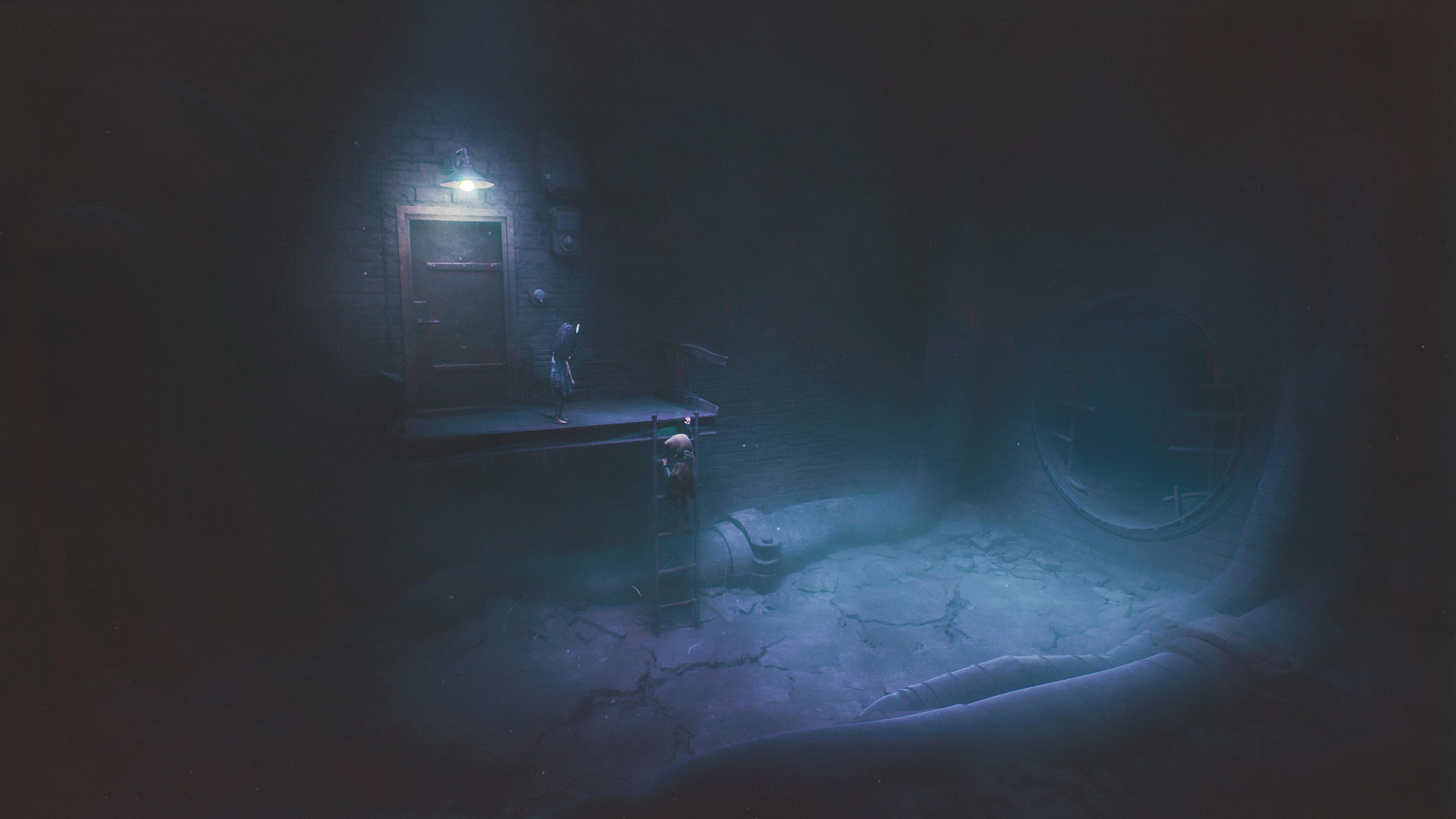
"In games, you're particularly tuned into just doing things on your own, so almost everyone would just steam off into the next room—but when then they couldn't, they would home in and see their character waving to the other one," said Mervik. "Players recalibrated really quickly: 'Oh right, so we've got to stay together!' And that was the last time they tried to leave their partner behind. Because whether you're being chased or solving a puzzle, you don't have that lone wolf mindset. You're like two actors in this scene."
That said, Reanimal’s co-op is technically optional. The game can still be played solo, with the second character simply tagging along. That aspect admittedly placed some limitations on the kind of puzzles and setpieces Tarsier could create. There was even internal debate over whether there would be different kinds of puzzles whether you played alone or with someone else, though ultimately the decision was that players will experience the same game (and puzzles) in either mode.
"The limitation we then have is the balancing act of the complexity of the AI and the potential complexity of the puzzles, but the focus of this game is not really puzzles anyway," said Johnsson. "So it turned out to be quite a good choice for us to not do a specific implementation for co-op versus singleplayer. Then it's a balancing act to make sure that the AI is not solving things for you."
Keeping it real
If there were any concerns over whether multiplayer might disrupt Reanimal’s horror, it's countered by a world and narrative that pushes an even darker and more realistic tone than the stylised Burtonesque whimsy of Little Nightmares.
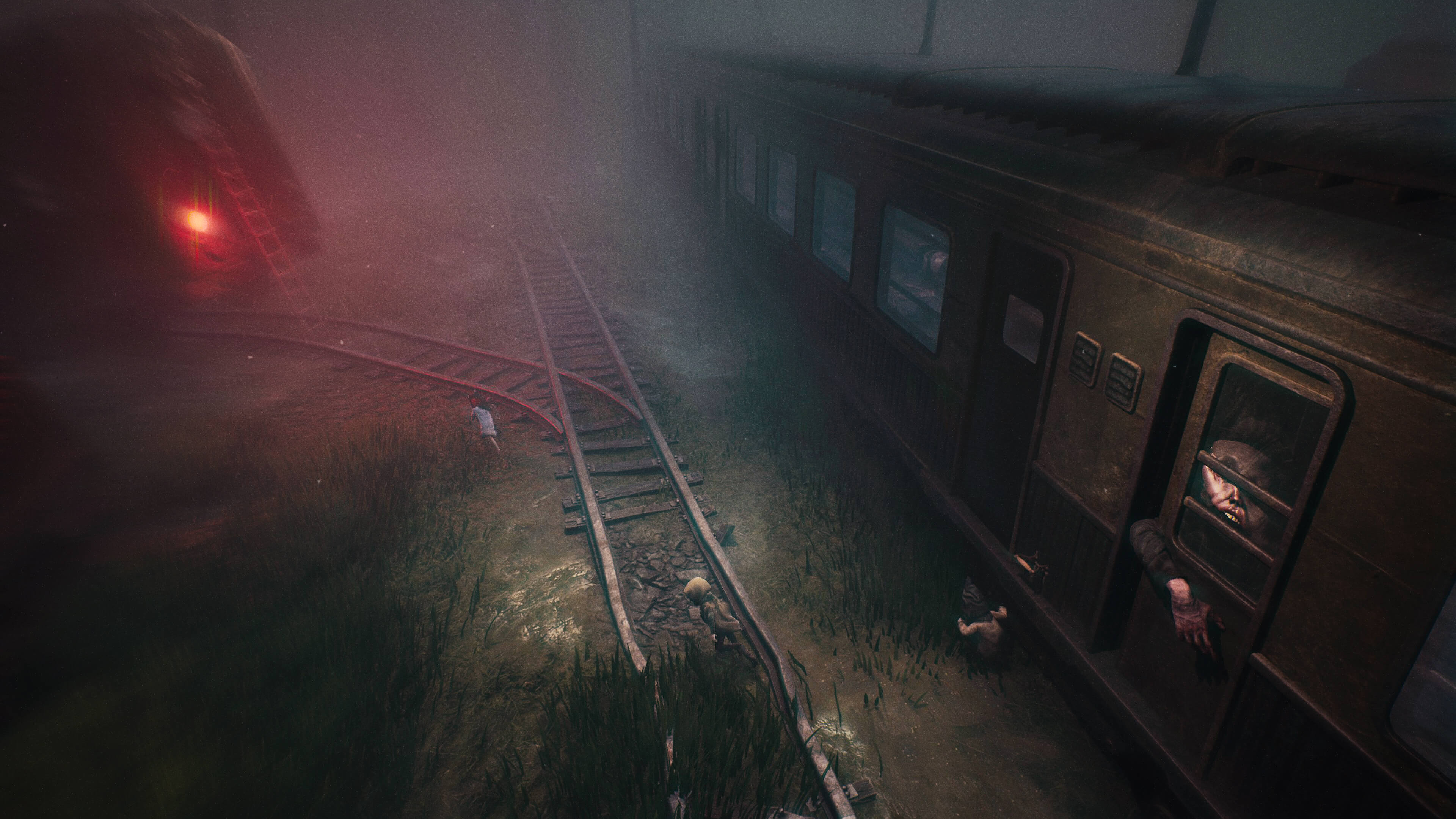
"In Little Nightmares, the focus was very much on how kids see the adult world, but this time around it's definitely more realistically illustrated in scale and proportions," Mervik said. "It's not like a twisted recollection of something like, 'Oh, I remember my teacher was this, or I remember this nurse', and we just stored that particular memory of a child. It's more like these kids have been through something traumatic, and this is the aftermath."
Tarsier is holding its tongue on just exactly what kind of horrors (be it environments or monsters) players will encounter in this terrifying adventure, save for the snippets you catch from trailers, which include a derelict battleship and an abandoned movie theater. One thing we do know is that it involves the two orphaned siblings travelling to different islands via boat to rescue their friends.
Mervik jokingly referred to the boat as multi-purpose, acting as a transportation and exploration device—including the only time you also have control of the third-person camera—as well as a narrative device.
"We didn't want the voice-over to get in the way of people playing because it can be annoying if you've got a character talking while you're busy playing, and I get more annoyed than anyone when a cutscene just stops you in the middle of playing,” said Mervik. “The boat was really nice, because every time you get a kid and you move on somewhere, you're naturally together. And all you're doing is moving forward through the water, so it's a really, really easy way to have these characters talk without feeling like you have to listen to them when you want to be doing something else."
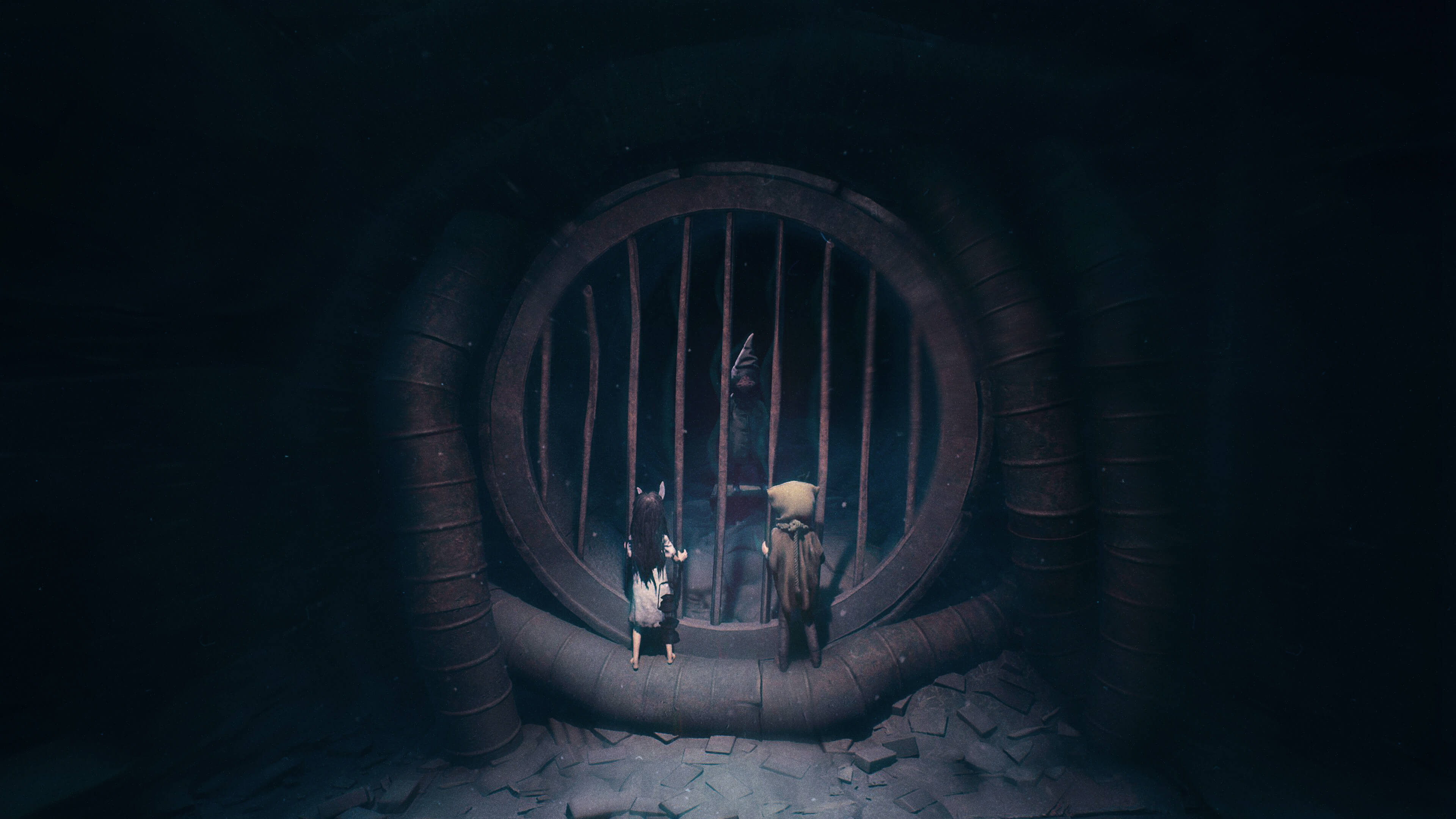
Adding voiced dialogue was something that Tarsier approached with some trepidation though, given that it wasn't featured in its previous games—though Mervik recalled that spoken dialogue was initially in the early prototype for Little Nightmares, back when it was known as Hunger.
"In early iterations [of Little Nightmares] everyone talked, but as it took shape, we thought these kids shouldn't have a voice in this world,” Mervik explained. “But this time around, I felt like there was a way we could do it without being contrary to how we build up the story and the world."
After all, in a more realistic world where you aren't by yourself but also gather more friends over time, it would feel out of place if no one talked to one another. The first test of this that Mervik made was in fact for the very beginning of the game, when the two siblings are reunited on the boat. What arguably makes the voices so effective is that they're minimal, which in turns makes them feel naturalistic.
"Kids don't really have these big speeches except in Hollywood where they're suddenly extremely articulate and have these very adult ways of expressing themselves," Mervik explained. "You ask a kid how they're doing and they're very minimal in the way they speak."
Perhaps the studio's location in Sweden also had some cultural influence. "In Sweden, no one says anything, unless they absolutely need to. Particularly in the north of Sweden, getting an answer from someone is like getting blood from a stone. But when someone says something, everyone listens because it really must be important."
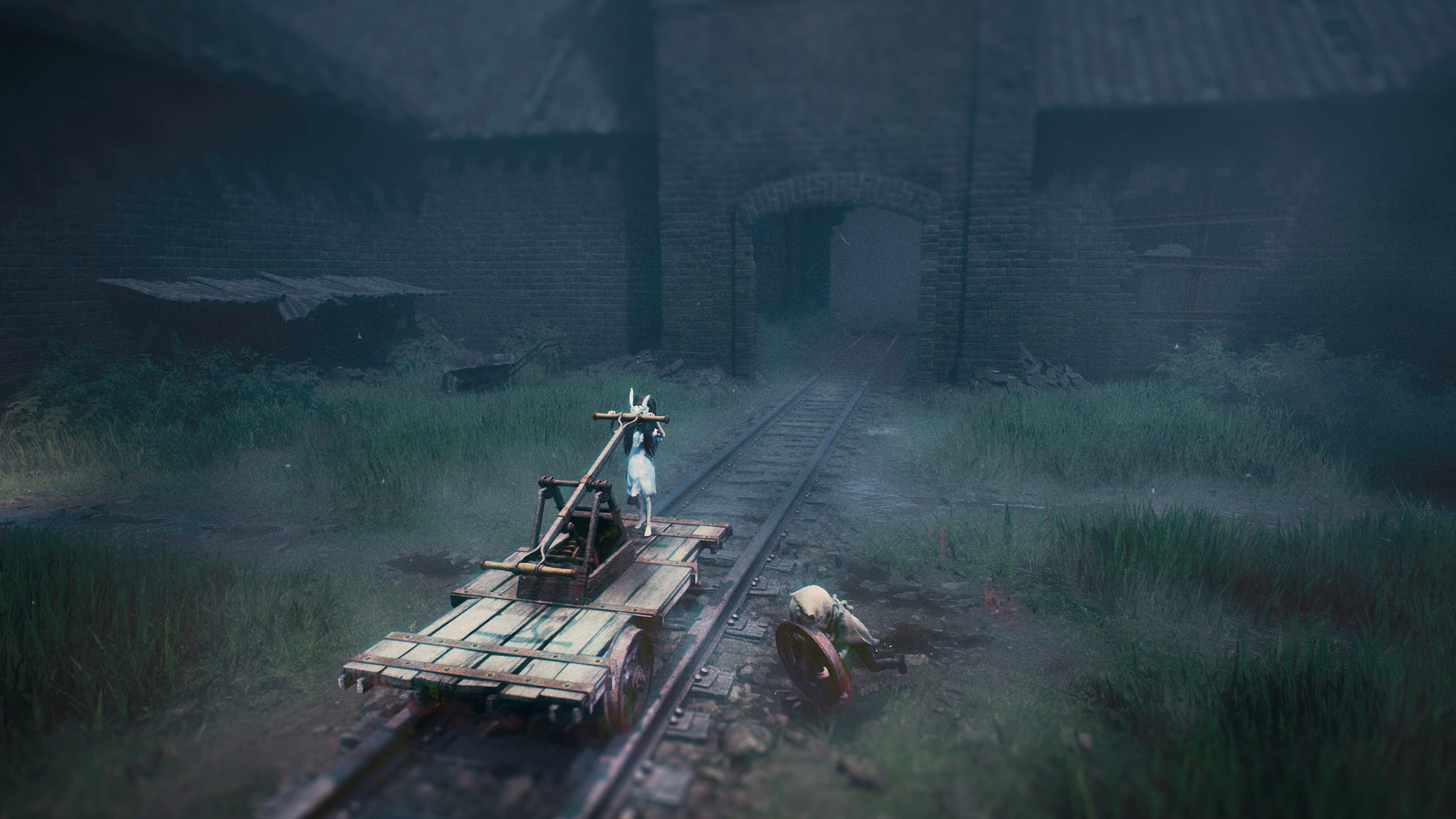
In a world that often feels hopeless, one might also say that giving these children a voice is also giving them hope. But whether there’s a light at the end of Reanimal's hellish journey is something players will have to find out for themselves.
"Kids always come with an element of hope because they've not given up yet, they've not given up on the world, they've not given up on themselves, and somehow they've not given up on adults," Mervik concluded. "Kids go through a lot nowadays, so this is a reflection of that for me, but this is not a fairy tale."
Reanimal releases on the Epic Games Store on February 13.