How Rightfully, Beary Arms reinvents the twin-stick roguelike
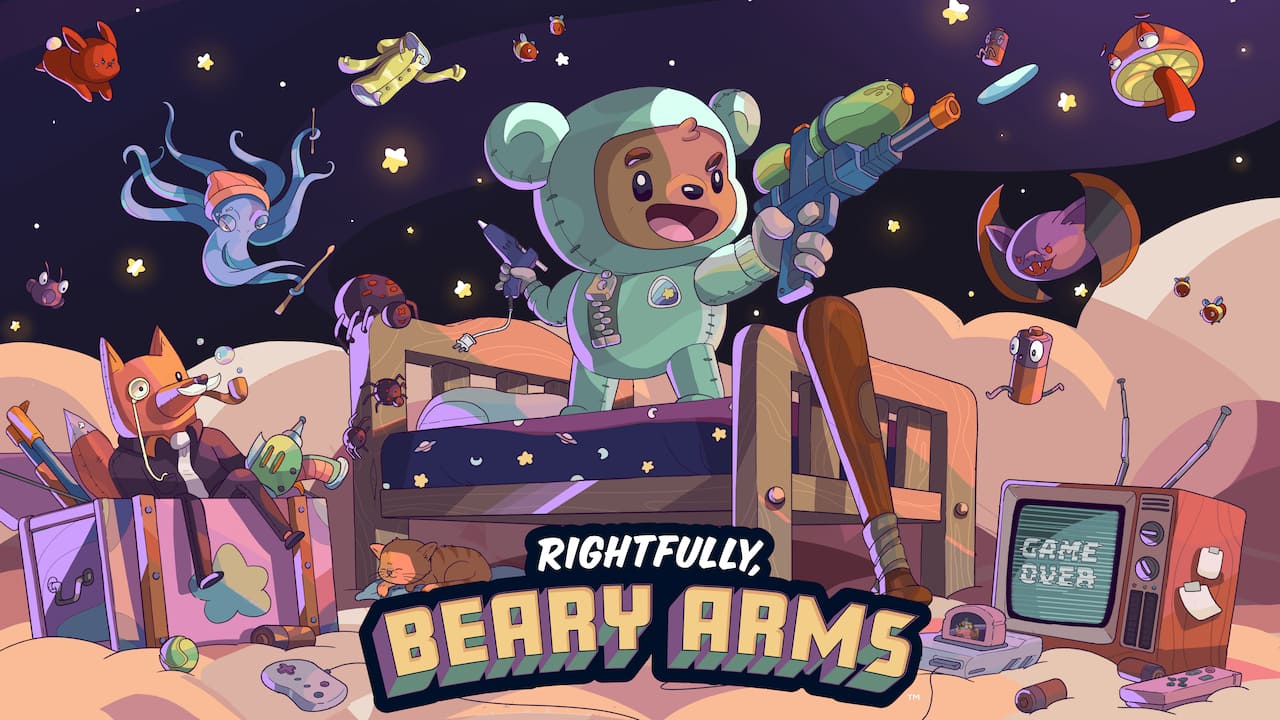
Rightfully, Beary Arms began as a combination of loose ideas rather than a blueprint. Early on, Daylight Basement Studio gravitated toward a familiar shorthand to capture what they had in mind: "Binding of Isaac, but twin-stick with guns."
It proved a useful framing device, one that immediately communicated the kind of fast and reactive gameplay the team wanted to build. Of course, games like Nuclear Throne and Enter the Gungeon had already proven how well that formula could work—but Rightfully, Beary Arms set out to approach it from a slightly different angle.
Jumping into the roguelike deep end
Developed by a small independent team, Rightfully, Beary Arms represents a huge step forward for its creators.
"Rightfully, Beary Arms was our first attempt at a full production game. In the past, we worked on a lot of hobby games but never took it to the professional level," said Designer Christopher Bischke. "The entire process of developing Rightfully, Beary Arms has been a big learning curve for me."
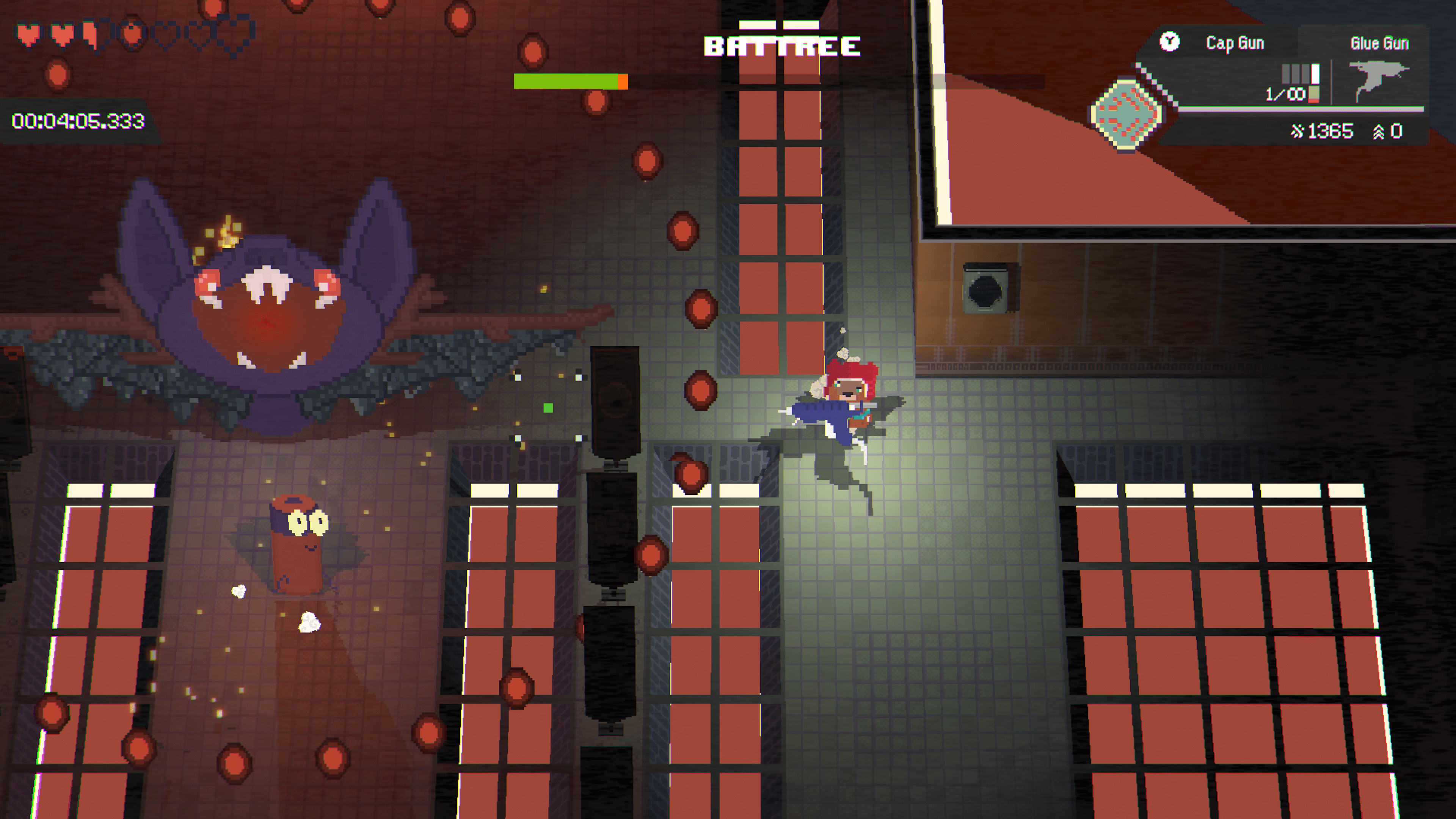
At its core, Rightfully, Beary Arms is a twin-stick shooter roguelike built around weapon experimentation and layered progression systems. Players move from room to room, clearing enemies, collecting weapons, and navigating a steady ticker tape of decisions that shape how each run unfolds. The visual tone is playful, but the underlying systems are designed to reward planning, risk assessment, and long-term mastery.
The game blends fast-paced shooting with a dense web of interconnected systems, encouraging players to think beyond moment-to-moment survival. Every run becomes a strategic exercise, where short-term power spikes and long-term progression are always in tension. The result is a game that feels accessible on the surface but steadily reveals its depth over repeated playthroughs, with each new revelation calling for "just one more run..."
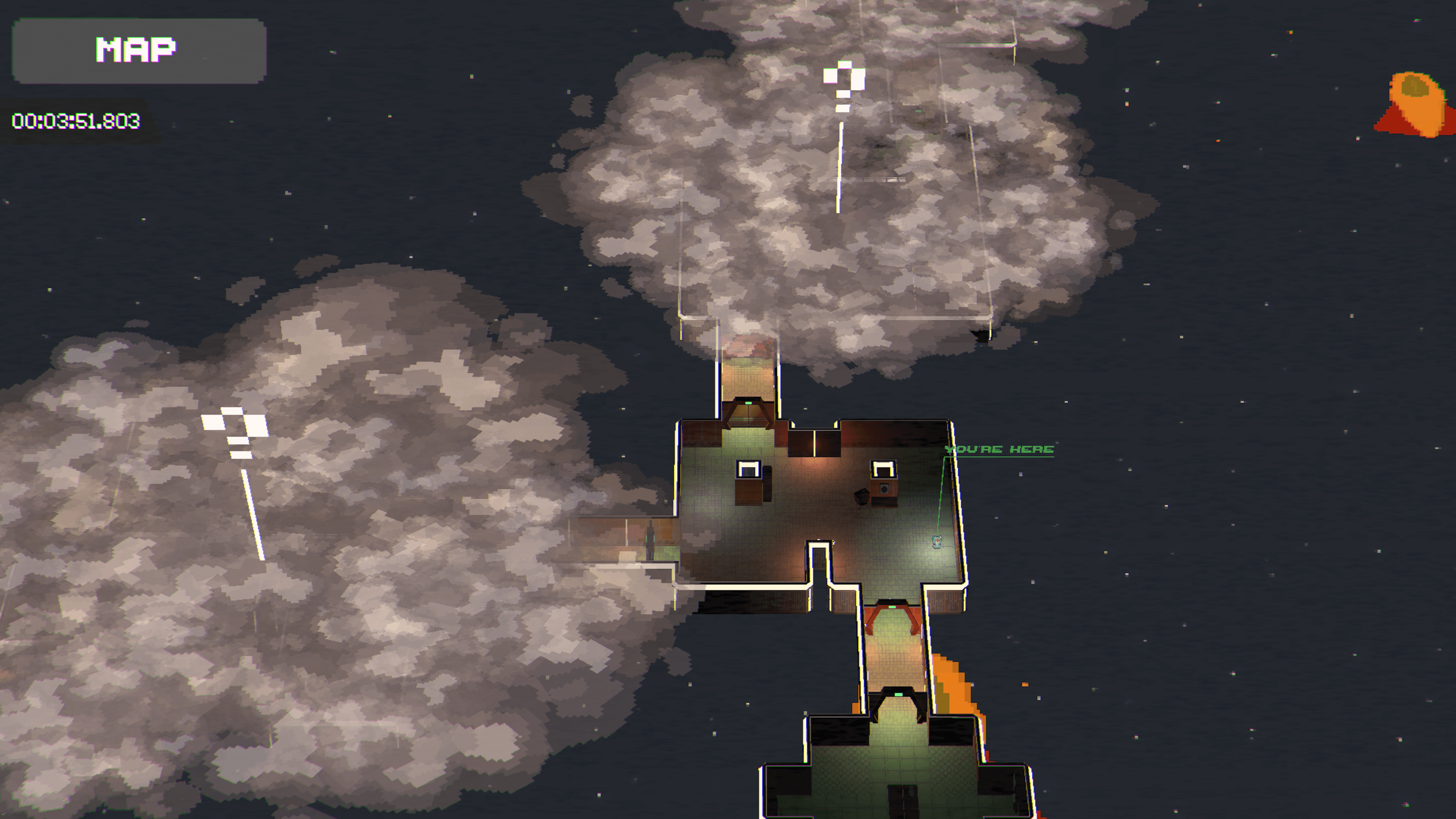
From the beginning, Rightfully, Beary Arms was designed around self-contained dungeon rooms rather than free-scrolling spaces. The camera remained fixed, combat was tightly framed, and everything existed in a 2D plane. That structure emphasized clarity and control, forcing every enemy placement, weapon pickup, and upgrade decision to matter within a confined space.
Stepping into full production meant confronting the realities of one of the most crowded genres in modern gaming, though. Roguelikes and roguelites have become a proving ground for experimentation, filled with massively popular releases that constantly mix (and remix) genres and raise player expectations.
From deckbuilders to action-heavy shooters, the space is packed with games that feature creative takes on procedural design, player choice, and progression systems—and each year, get ever more sophisticated. The challenge for Rightfully, Beary Arms was not just to learn from those games, but to apply their lessons in a way that felt purposeful rather than iterative.
Inspirations from every corner
Development for Rightfully, Beary Arms began in 2019, a period when the roguelike genre was experiencing a surge of high-profile releases and Early Access experiments. At the same time, influential ideas were emerging across other genres, and many of those concepts found their way into the team’s creative process as well. Rather than drawing from any single source, the team creating Rightfully, Beary Arms absorbed inspiration from wherever it made sense.
"Slay the Spire had just been released. I didn't play too much of this at the time, but I remember watching playthroughs and walkthroughs of the game," Bischke said. "Deep Rock Galactic was still in Early Access, and I remember playing that a ton at that time. When Hades dropped in 2020 that was big—the storytelling, gameplay loop, strategy of choices had me considering so much for Rightfully, Beary Arms. Faster than Light also lived rent free in my head. I really liked the idea of traveling and managing travel costs mixed into a twin-stick. I thought it would add another level of strategy."
Those influences helped shape how the team thought about player choice and progression. Slay the Spire demonstrated how readable systems and deliberate decisions could define an entire run. Hades showed how narrative and mechanics could reinforce each other without slowing the pace. FTL: Faster Than Light offered a model for strategic movement and resource management that extended beyond individual encounters.

Many of those ideas didn’t translate directly into features, but they informed the team’s broader design philosophy. The goal was not to replicate specific mechanics, but to build systems that interacted meaningfully with one another in combinations that felt satisfying—not only to discover, but to play over and over again. Weapons, upgrades, and difficulty modifiers all needed to feel like parts of a single ecosystem rather than isolated features.
Many of these lessons helped Daylight Basement Studios build around their core idea for Rightfully, Beary Arms.
As development continued, iteration became central to the process. Systems were tested, discarded, and rebuilt as the team gained a clearer understanding of what worked and what did not. Each lesson fed back into the core design, refining the balance between chaos and control that defines moment-to-moment play in Rightfully, Beary Arms.
Adding a unique spin to Rightfully, Beary Arms
Weapon customization emerged as one of the most important pillars in Rightfully, Beary Arms. Rather than treating guns as disposable tools, the game instead encourages players to invest in and experiment with them, shaping how they function over the course of a run. The entire weapon customization system, and different elements within it, stood out as a way for Rightfully, Beary Arms to add its own spin to the genre.
"The weapon customization is one of my favorite parts of Rightfully, Beary Arms. Designing weapons, Weapon Augmentations, and how they would balance with enemies, Runtimes, and Calamities was a really fun puzzle," said Bischke. "I really wanted Augmentations to feel like they made an impact with weapons like how Back 4 Blood made me feel with weapon upgrades. One incredibly hard line to walk is that usually the upgrades that make the most impact usually break the game and make it incredibly easy for the player to kill everything."
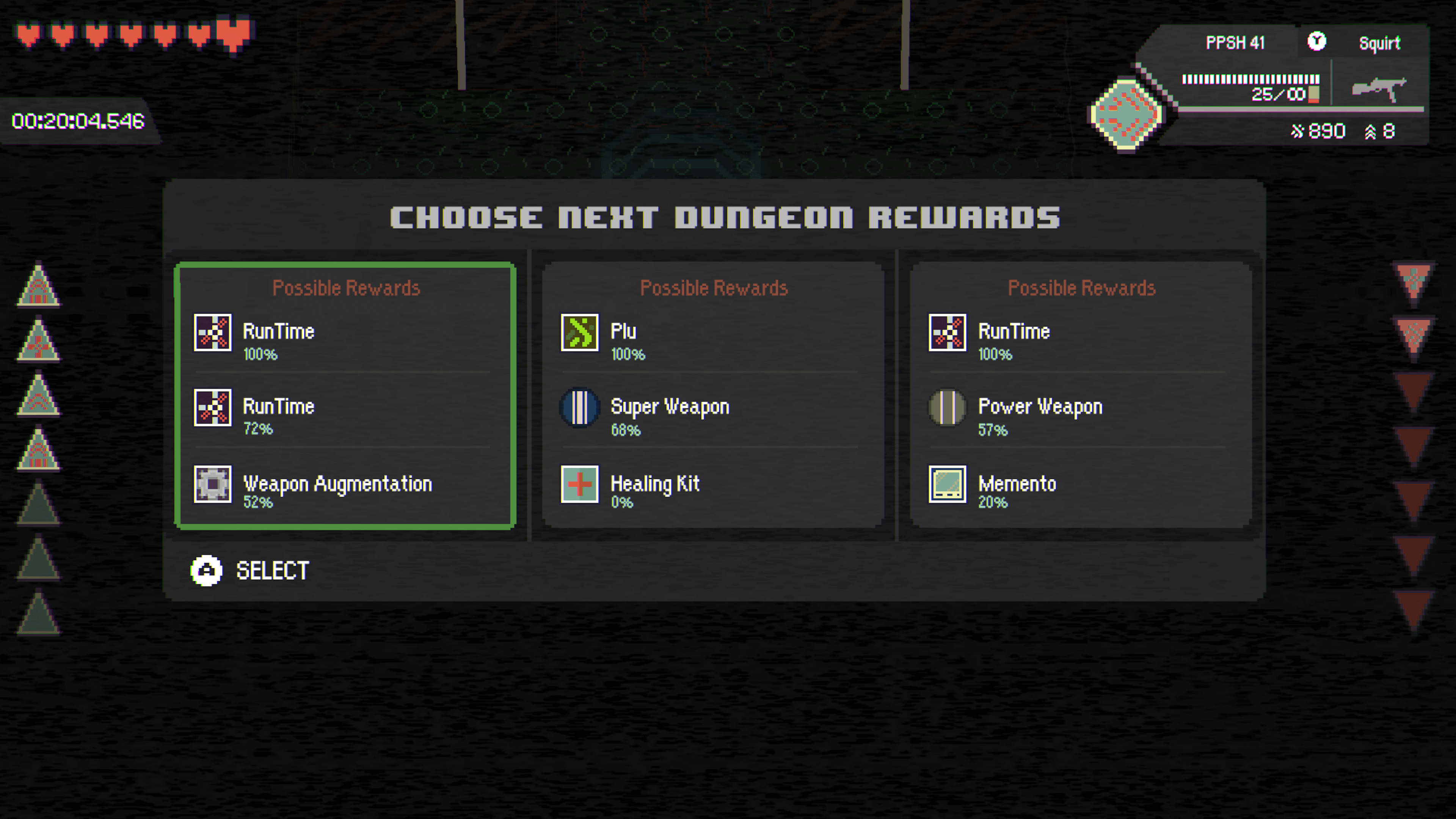
That's a major arms race in the roguelike genre. Developers create a fun and useful build and then players find a way to maximize it so that it breaks the game. Developers go in and tone down that build, only for players to move onto the next game-breaking mechanic. There often isn't an easy solution, but it's something Bischke considered.
"Another issue was lots of players would find one weapon—usually the starting weapon—and just stick with it 'til the end," Bischke said. "Just upgrading a single weapon over and over. A solution to that was categorizing weapons as Starter, Entry, Power, and Super, with Starter and Entry weapons being more likely to drop near the start of the game and Power and Super weapons being more likely to drop near the end."
The team then built on this classification, adding dedicated Augmentation quality (and Augmentation slots) to each weapon category. Starter and Entry weapons come with two to three Augmentation slots and a lower Augmentation quality, which limits both the number of upgrades available and how impactful those upgrades can be. Players can still carry these weapons through to the end of a run, and there are upgrades to increase the number of slots.
Eventually players are presented with a choice to pick up a Power or Super weapon, though. These weapons have four or five Augmentation slots, with far more impactful Augmentations available. At that point, the challenge becomes whether you can fully upgrade the Super weapon you just acquired before reaching the final boss. If you manage to do so, the payoff is significant, as that weapon becomes extremely powerful—or even borderline OP.
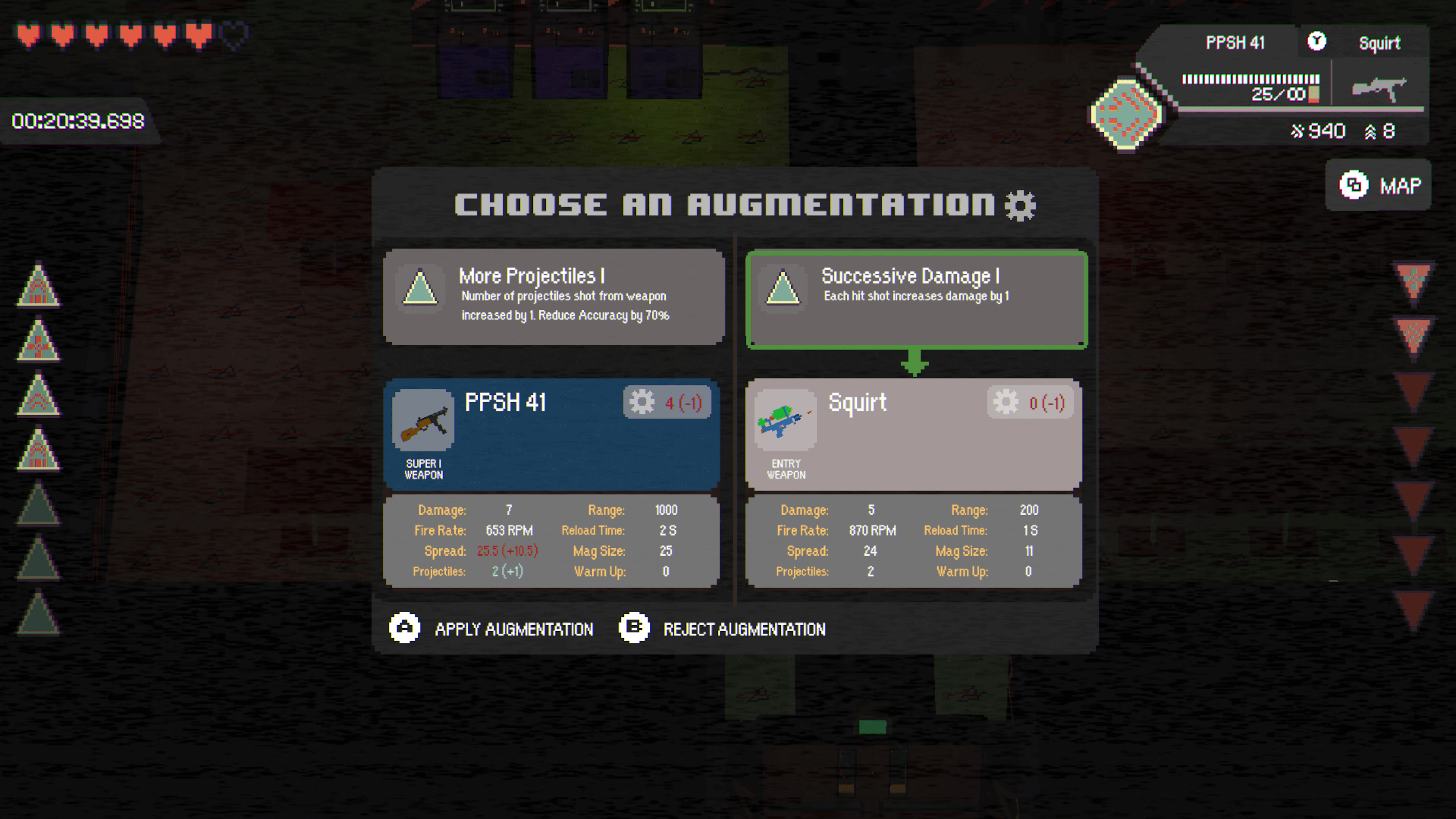
The categorization system subtly pushes players to reconsider their attachment to early-game weapons. While it's possible to carry a starter gun deep into a run (or even to the end), Rightfully, Beary Arms increasingly tempts players with higher-risk, higher-reward options. Choosing when to lose ol' faithful and commit to a new weapon becomes a strategic decision rather than an automatic upgrade.
Weapon Augmentations are only one layer of a much broader progression framework. Rightfully, Beary Arms combines temporary buffs, permanent upgrades, and player-selected difficulty modifiers into a system designed to reward experimentation.
"I think the interaction of Weapon Augmentations, Runtimes, and Calamities is what sets Rightfully, Beary Arms apart from other twin-stick shooters," Bischke said.
Weapon Augmentations upgrade the weapons you are currently using. Runtimes provide temporary buffs that last only for a single run. Calamities let players choose how the game becomes more difficult during that run, with a new set of enemy buff options presented after each boss is defeated. Finally, Prooves are permanent upgrades that carry over and gradually improve progress from run to run.
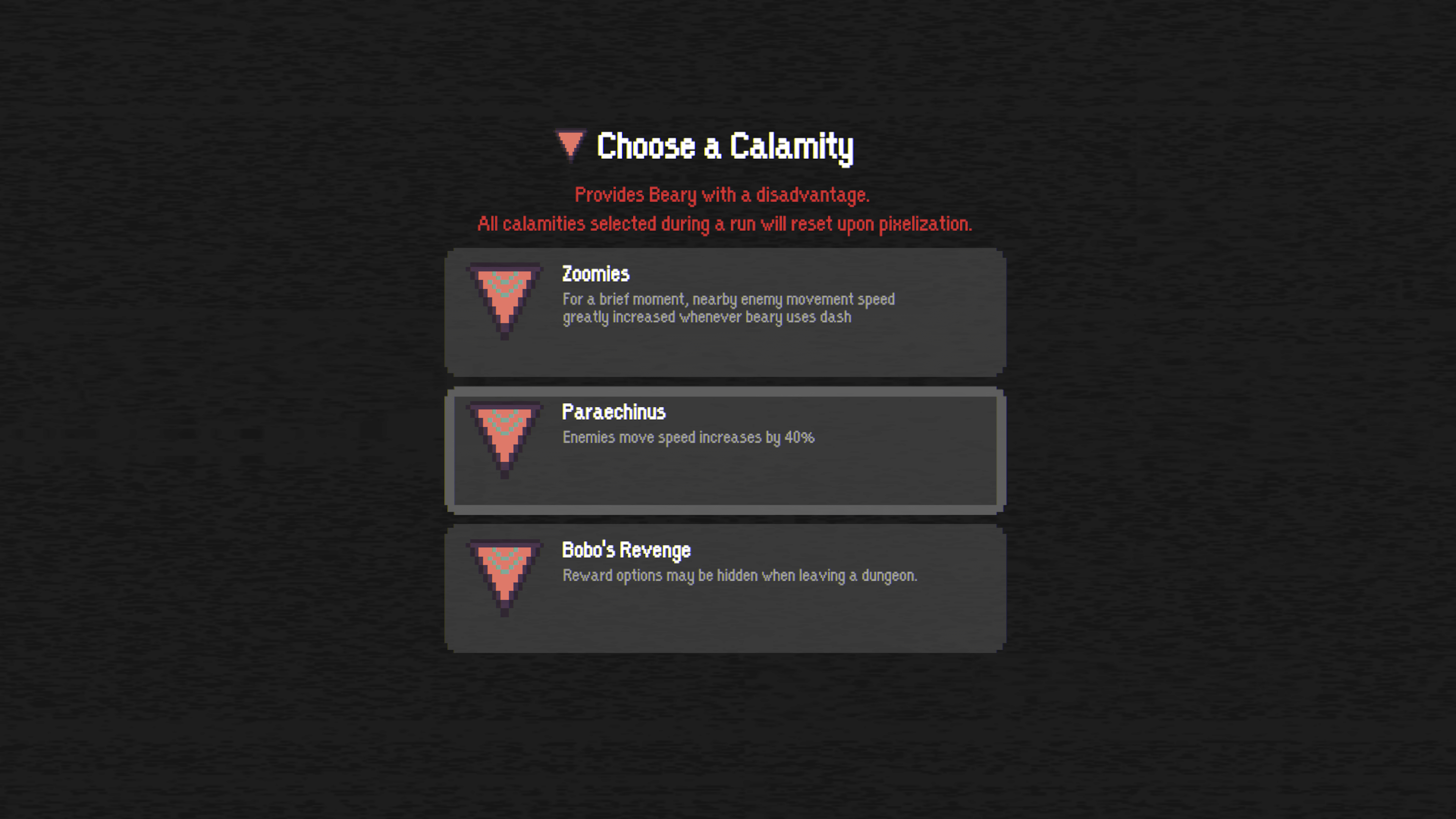
Calamities, in particular, challenge players to rethink difficulty. Instead of scaling passively, the game asks players to opt into specific enemy buffs, turning difficulty into another tool for shaping a run. Over time, these choices become opportunities rather than punishments.
Evolving inspirations
As development on Rightfully, Beary Arms progressed, new influences continued to shape the project.
"We started playing more Dead Cells, and some of its weapon pickup systems influenced how we designed weapons and weapon augmentations," said Bischke. "Maybe strangely, games outside the roguelike genre also had an impact. I have tremendous respect for Hunt: Showdown, specifically its Trait system and how its designers aren’t afraid to let Traits really impact gameplay. When designing the Runtime and Calamity systems, Hunt: Showdown’s Traits were on my mind."
This same philosophy carried over to how upgrades feel in the player’s hands. The team wanted every weapon and Augmentation to make a noticeable difference in the game. Back 4 Blood served as a model, showing how an intuitive upgrade system can make progression feel immediate and impactful. In Rightfully, Beary Arms, Augmentations were designed to deliver that same sense of meaningful change as soon as they are acquired.
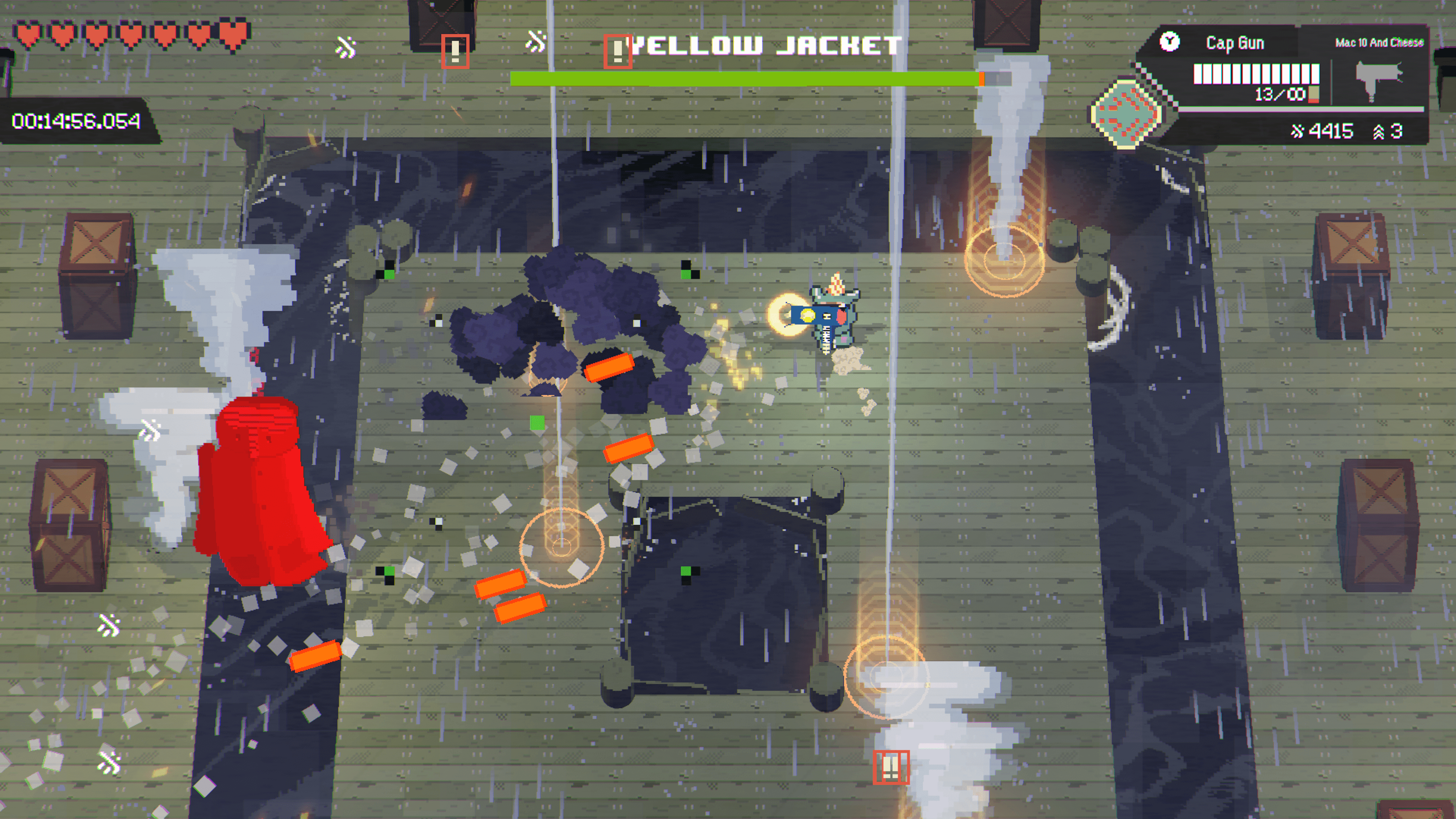
Comparisons to other roguelike staples were inevitable. Many players naturally compare Rightfully, Beary Arms to Enter the Gungeon and Nuclear Throne, and the team acknowledged those influences while making it clear the game draws inspiration from a wider range of titles. These comparisons helped frame expectations, but Bischke and team ultimately aimed to combine familiar elements with unique systems that encourage player choice and experimentation.
"We get compared to Enter the Gungeon a lot, which totally makes sense," Bischke said. "While those games helped establish a framework we could build from, we drew inspiration from a wide variety of games, even outside the roguelike space."
A roguelike design process
While developing Rightfully, Beary Arms, progress came through repetition, failure, and iteration. Systems evolved as understanding deepened, and early lessons continuously reshaped decisions later in development. In many ways, building Rightfully, Beary Arms mirrored the roguelike experience itself: learning, testing, failing, and refining.
"Scope creep wasn’t the only factor shaping the project," Bischke said. "We were constantly learning and reapplying what we learned, and that process takes time."
Wishlist Rightfully, Beary Arms on the Epic Games Store today ahead of its January 27 release.