Ruffy and the Riverside is a hand-drawn 3D platformer with a swapping twist
Despite their slow resurgence in recent years, 3D platformers remain a relative rarity in the gaming space. Even rarer are those that do something truly unique with their gameplay to stand out from the crowd.
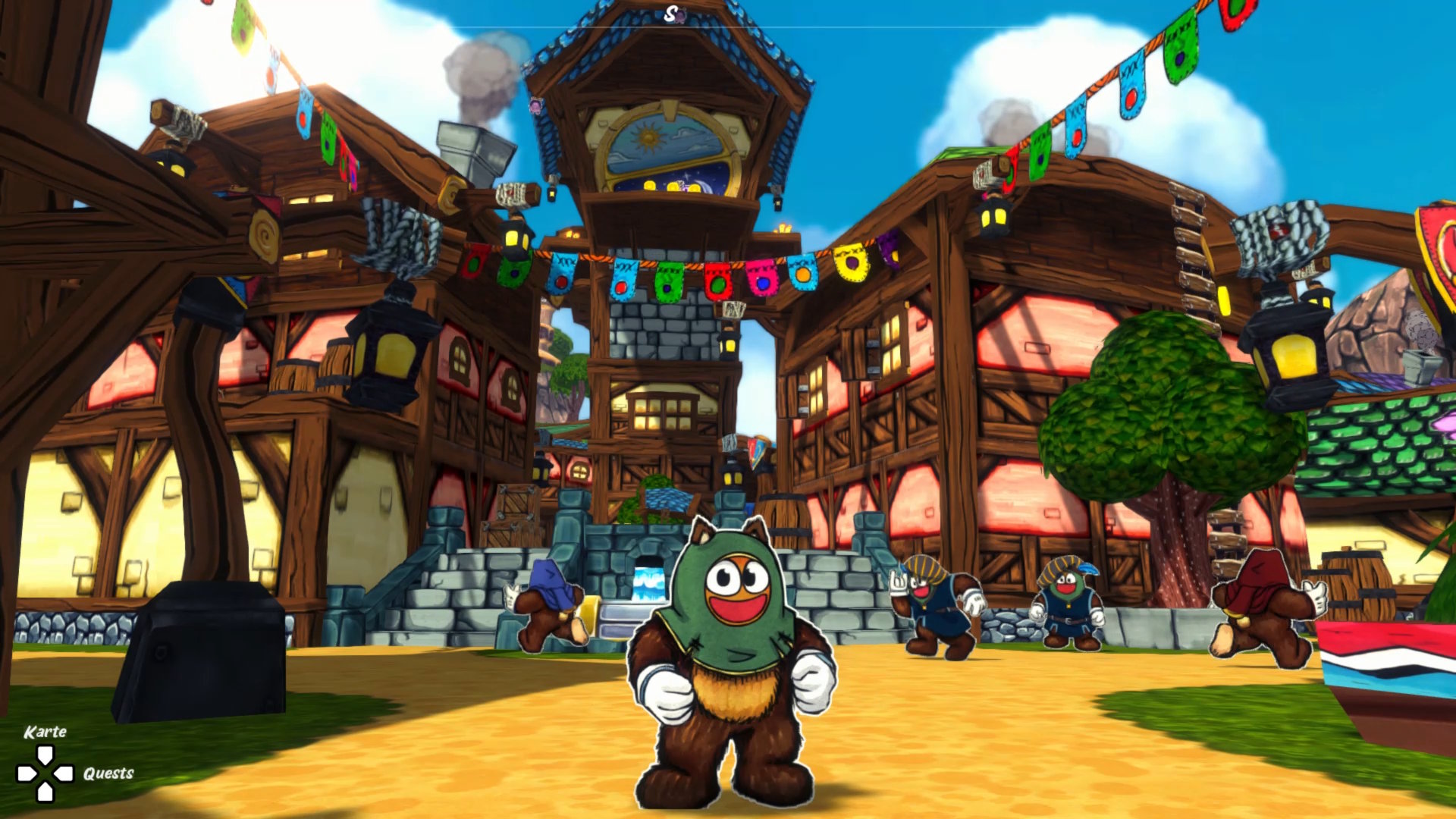
Ruffy and the Riverside is one such title. While giving off a similar look and feel to the genre’s greatest hits, it also features an interesting hook: The titular Ruffy can use his SWAP abilities to copy and paste one element onto another, adding a layer of puzzle-solving not typically seen in similar games.
Dr. Patrick Ruckdeschel, CEO of the Germany-based game developer Zockrates Laboratories, has always been a game enthusiast himself. And yes, in case you were wondering, his doctorate is indeed connected to video games. He even had a professorship for game design and video game art. “I wrote a book about how to analyze video games and how video games are different from, say, books or film, and how important it is that the player always knows what to do,” he says. “Keeping the player in the game by giving him hints on stuff, that was my Ph.D., basically.”
Given his vested interest in game design, it only seemed natural that Ruckdeschel try his hand at making a game himself. Thus, Zockrates Laboratories was born. An avid art enthusiast, Ruckdeschel decided to go for a hand-drawn look for the characters.
“Nobody does it, and there’s a lot of potential there,” he says. “We can make each animation different from another angle. Ruffy can do one thing when he's seen from the side and another from the front. You don't have that when you do 3D animation. Basically, an idle animation is the same no matter which side you look at it from. With the hand-drawn approach, you have more options, but it's much more work.”
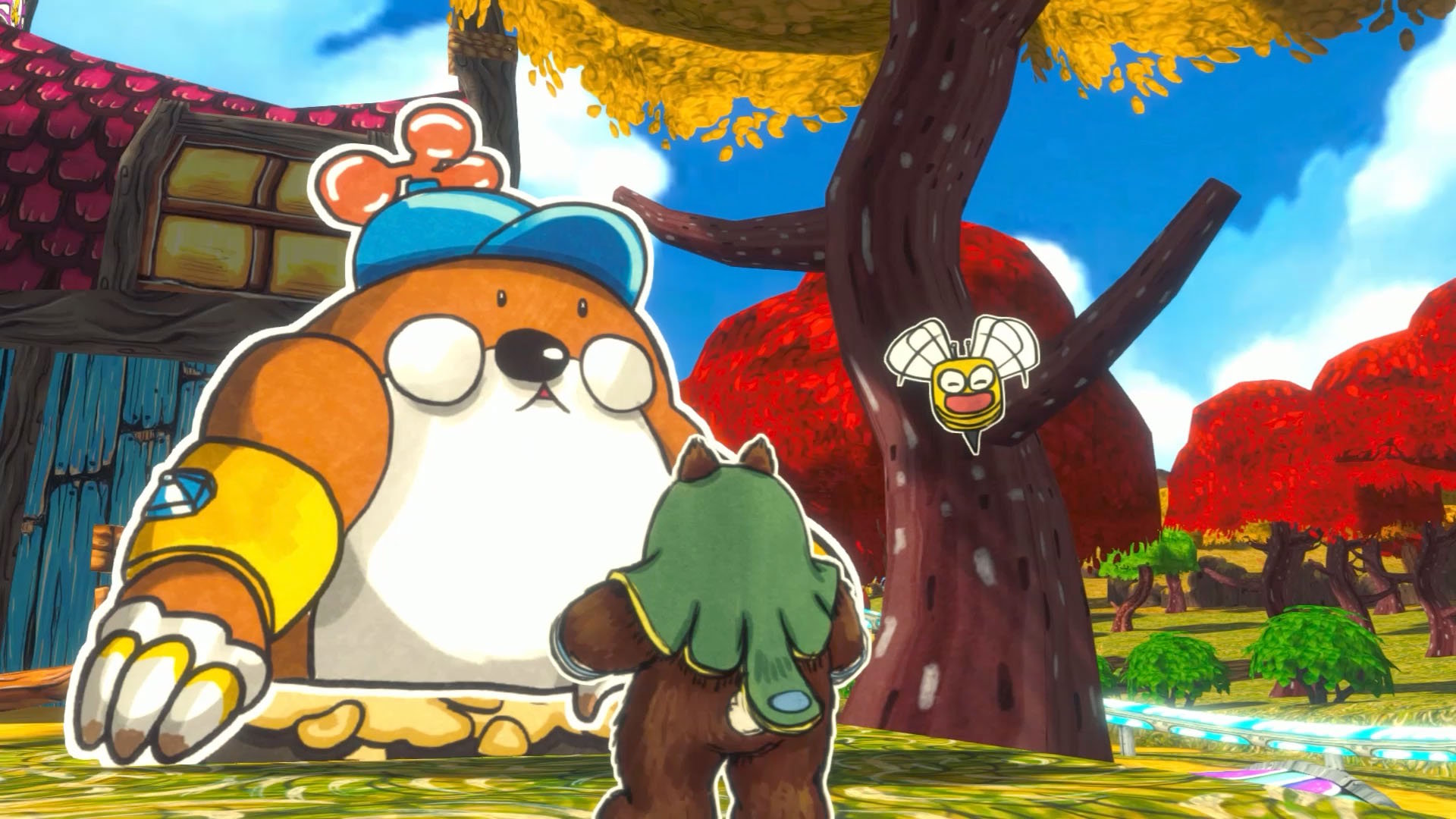
Ruckdeschel scribbled a number of drawings, including a bear character that he describes as a cross between an Ewok from Star Wars and a Gummi Bear from the classic ‘80s cartoon. He and his team grew to love the little guy and decided to make him the game’s protagonist. “I don't know why I came up with that design,” he says. “We had a lot of drawings, and he was the funniest one.”
The story of Ruffy and the Riverside focuses on the titular bear after he accidentally unleashes an ancient evil bent on destroying the world. Thankfully, Ruffy also happens to be the chosen hero destined to save the world. Now, he must traverse the land in search of the six letters needed to restore the sacred Riverside sign, thereby repairing the land’s power source: the World Core.
As a fledgling game developer trying to make a good 3D platformer, Ruckdeschel and his team studied the greats of the genre, like Super Mario, closely. In fact, most of Ruffy’s inspirations come from the Nintendo 64 era of gaming.
“There were so many ‘compact’ games,” says Ruckdeschel. “By ‘compact,’ I mean you get your mission and go there. But also, there were games like [The Legend of Zelda:] Ocarina of Time that were much bigger. We tried to combine a collect-a-thon with the world-saving, epic mission that you have in Ocarina of Time. That's why it's also an adventure with a deep story. There’s lots of narration in this game, but also it plays very simple like Banjo-Kazooie. You can collect a ton of stuff.”
Ruffy isn’t a 3D platformer in the most traditional sense. While there is some platforming involved, the majority of the game’s focus is on solving puzzles and exploring. The game greatly encourages the latter by rewarding players for examining every nook and cranny of the vast semi-open world, which is packed with NPCs and puzzles everywhere you turn. One moment, you might be catching a butterfly for your Butterfly Bible, the next you’re solving a graffiti puzzle or stumbling upon a warp hole to a small 2D platforming section.
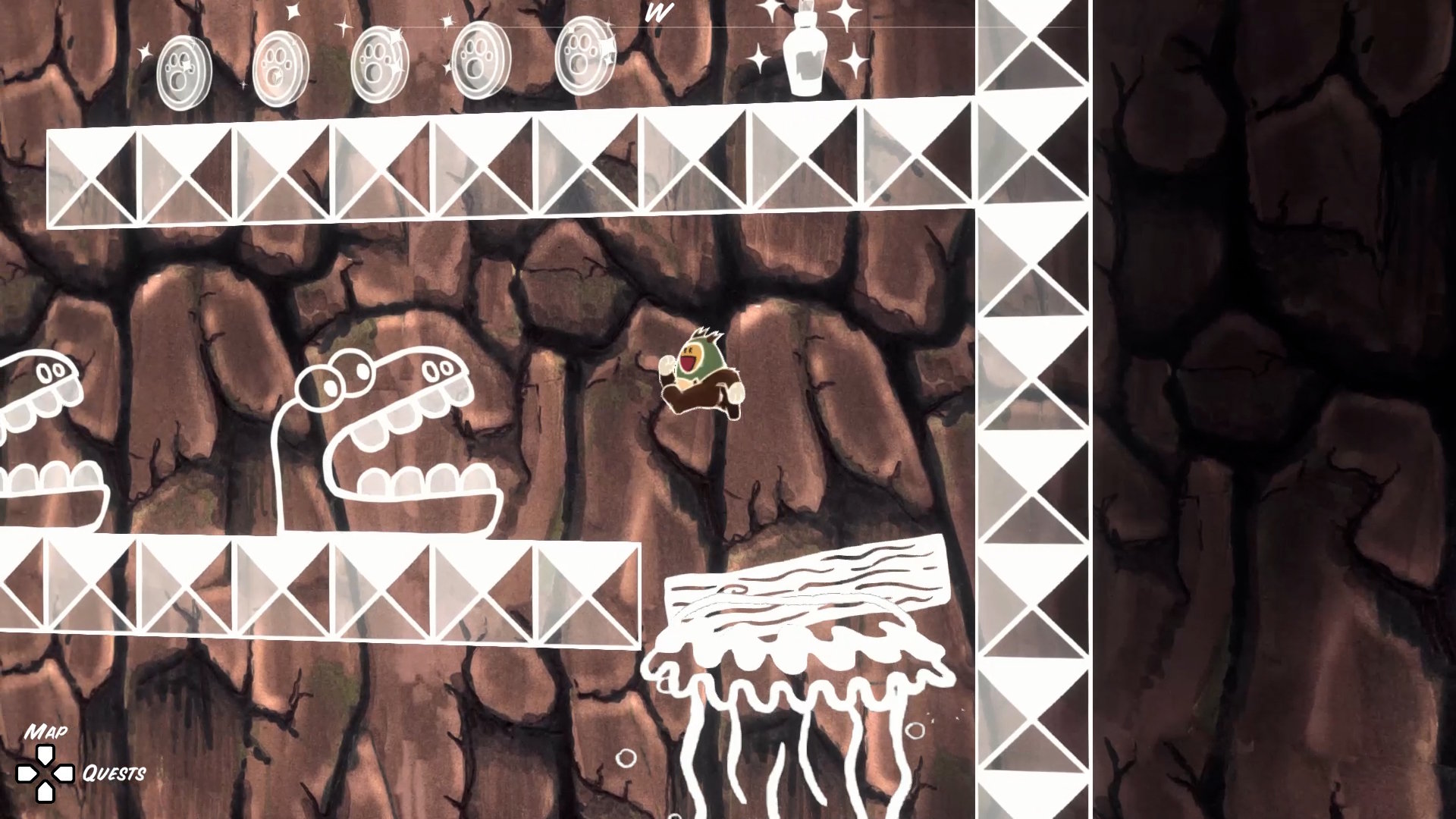
“Exploring is most important in our game,” says Ruckdeschel. “We really wanted the player, every few seconds, to be able to discover something, and that's what makes the platforming even more enjoyable. You’re not just finishing a parkour, but you also see and get stuff.”
Most of the game’s puzzle-solving comes from Ruffy’s unique SWAP abilities, where he can switch out one element with another. However, finding out how to implement the SWAP mechanic so that it was fun and snappy proved to be a considerable challenge.
“We didn't have that at first,” he says. “You could collect textures, and then you had an inventory and always had to go to the inventory, select the texture, and then throw it. That was very slow. Then, we had this idea: copy and paste. You grab something from the environment, and throw it back onto the environment. This was much faster and really improved the game.”
Need to climb a waterfall? Find some vines, “copy” them, and “paste” them onto the waterfall, transforming it into a wall of climbable vines. Unbreakable stone wall blocking your path? Grab a wood texture from a tree, turn the stone to wood, and tear right through it. There are no obstacles that Ruffy can’t overcome with a quick SWAP.
But Ruffy is about far more than simply swapping textures around. “At first, we didn't think of all the opportunities to use the SWAP,” Ruckdeschel admits. “We just thought about, like, stone, wood, lava, water…stuff like materials. Then, we wanted to bring more variation into it. We knew people could not swap lava and water all day.”
In addition to textures, Ruffy can also swap elements like colors, numbers, and even words. Some swaps rely on snappy wordplay and riddles, which weren’t easy for the developers to implement due to the game’s availability in multiple languages. One riddle about two brothers getting a haircut in one language was altered to be about them climbing a tower in another to make the puzzle understandable.
“That was the challenge, to make those rhyme riddles work, especially in eight languages,” says Ruckdeschel.
Players aren’t always limited to one solution when dealing with a SWAP puzzle. One area, for example, features a seemingly invincible Bully Shark that can’t be taken down with a traditional jump to the head or a punch to the face. Do you turn the water surrounding it into lava to burn it? Transform the water into ice to freeze it? Turn the shark itself to stone so that it sinks? Experimentation is the name of the game, and the developers wholeheartedly encourage it.
“Whenever you copy something and throw it, it's a little surprise,” says Ruckdeschel. “What will happen? Will it work? How will it look?”
The wide variety of swappable elements means players might stumble upon solutions that the developers never intended—ones that could potentially break the game. This required the team to be vigilant to make sure everything was strategically placed so that players couldn’t avail themselves of textures or other swappable items that would make things too easy.
“You always have to be careful,” says Ruckdeschel. “So we came up with a time limit so you cannot transport a texture through the whole environment. They’re all in place, and there's no other texture around to break [things]. We’re still making patches.”
For Ruckdeschel and his team at Zockrates Laboratories, Ruffy and the Riverside has been a seven-year labor of love—and he’s happy with the response so far. “It’s so much fun when you’re able to create something and then see other people like it too,” he says, hinting that there might be more Ruffy to come in the future. “We’ve invested so much time and work into the whole ‘cosmos,’ the code, mechanics, laws, and everything, and we can now build on it. This would be the next step for us. You can learn from what went well and what was not appreciated. That’s very valuable. I can’t think of starting from scratch again. Seven years of work…we want to build on it."