Screamer’s story-driven arcade racer pays homage to its retro roots
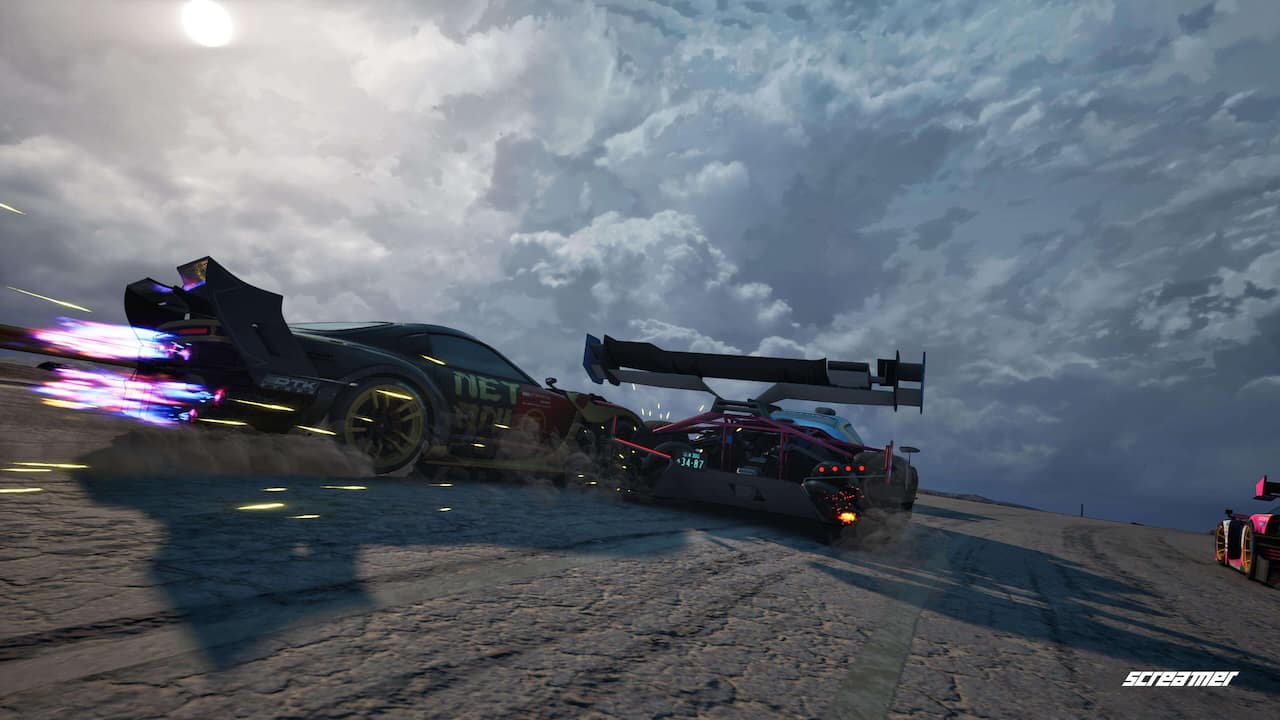
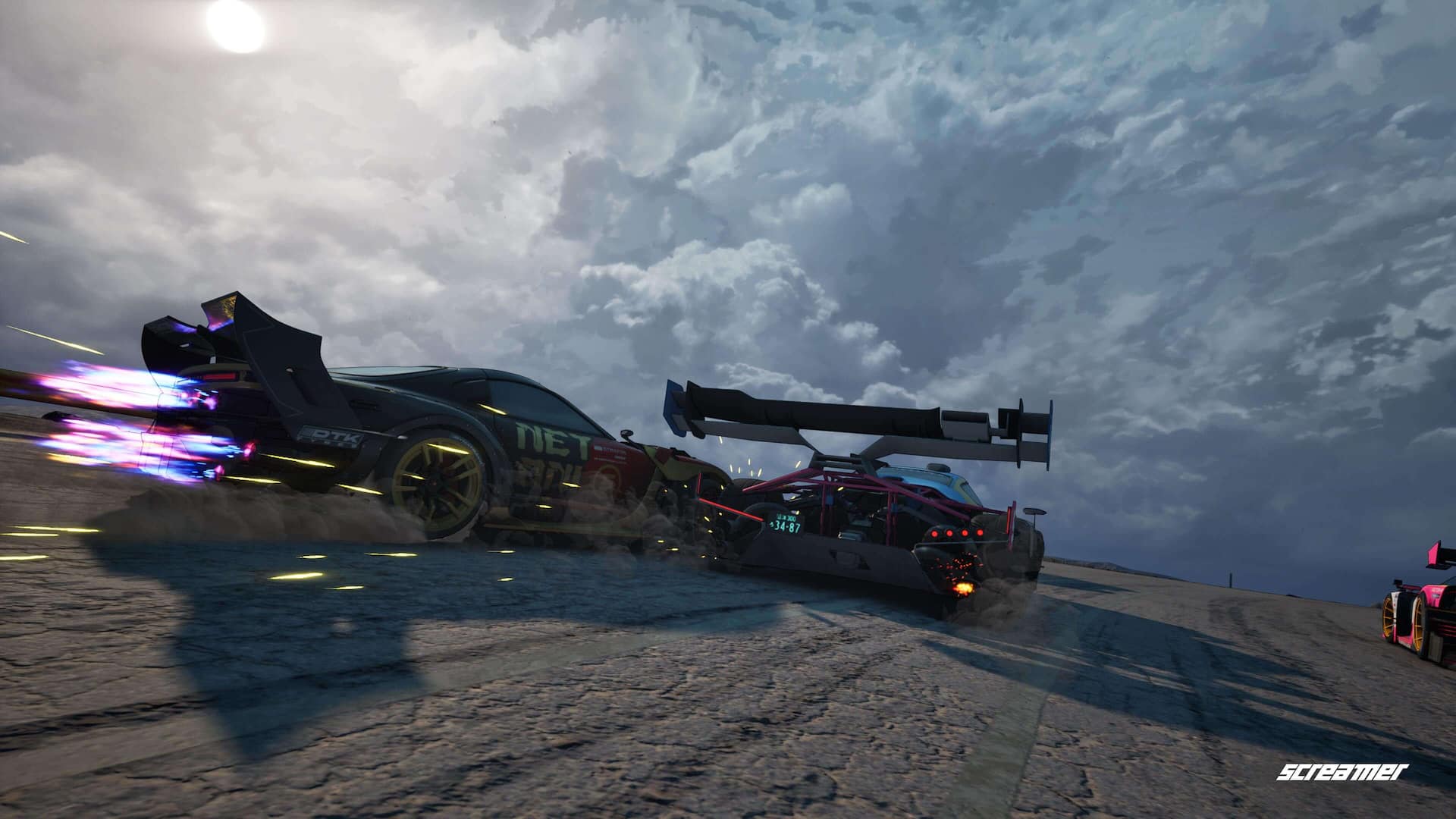
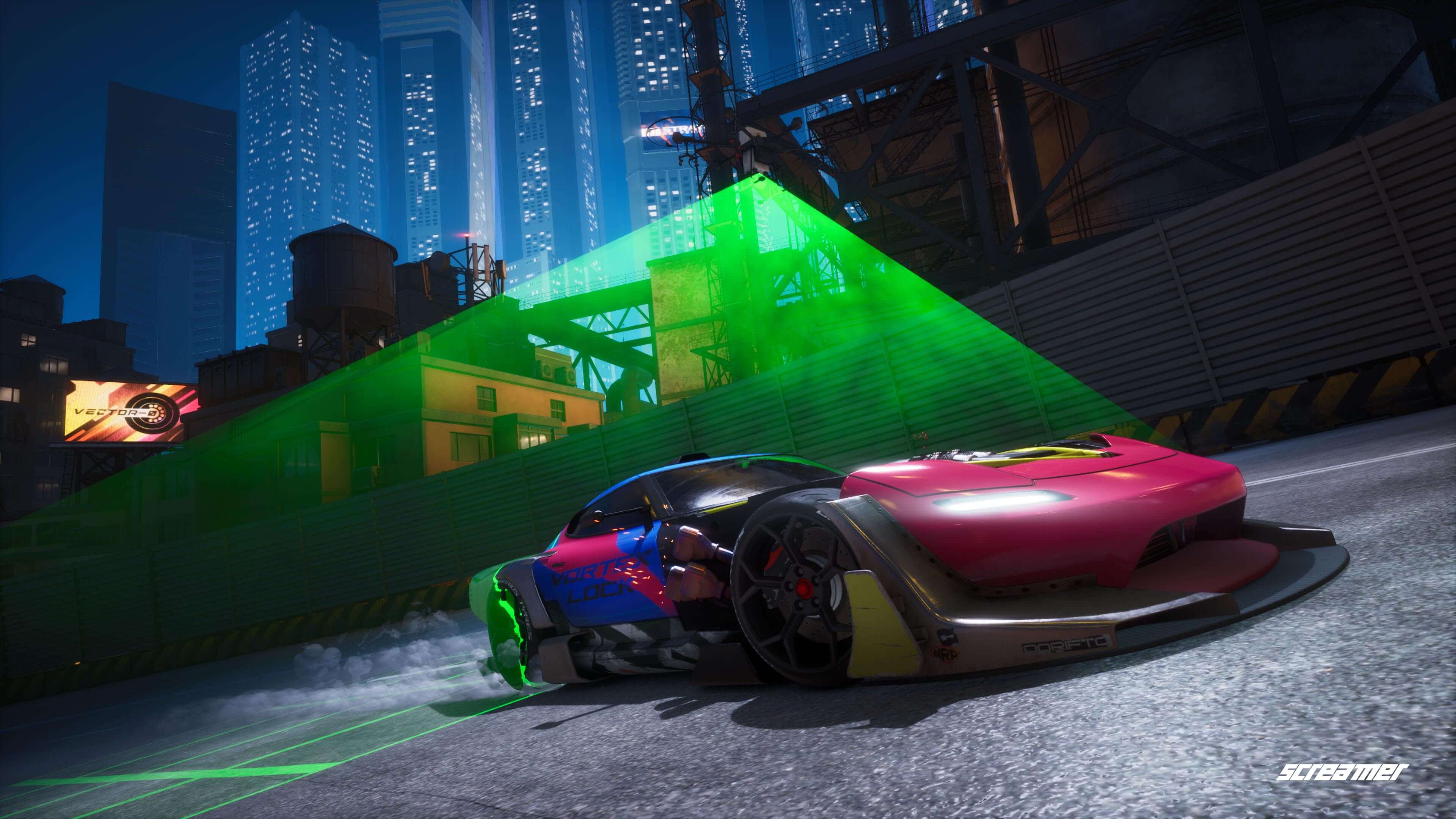
Peek the long curves, metallic sheen, and shimmering headlights of the cars in the Screamer reboot, set amidst ribbons of asphalt in a neon-lit city or the dusty street circuits of an industrial district. The very sight appears to be a far cry from the first Screamer released back in 1995, its polygonal environments and vehicles now smoothed into sleek lines of concrete skyscrapers and polished steel.
But according to developer Milestone, Screamer has yet to lose its steam over the decades.
“The original Screamer was a racing game focused on adrenaline-fueled races, and we felt like this is something that we could modernize for the contemporary gaming market,” said game director Federico Cardini. “While the new game might look different, we are sure that people who have also played the original will relive those sensations of euphoria that they had with the original title.”
What makes the new Screamer so distinct is that, unlike some reboots, Milestone is the same developer behind the original Screamer, as well as two of its sequels, Screamer 2 and Screamer Rally. The only exception was Screamer 4x4, an off-road game that focuses more on hauling heavy vehicles and hulking buggies on unpaved, muddy tracks—a part of the Screamer series seemingly in name only. The first Screamer is a Ridge Racer-inspired arcade racer that trades realism for adrenaline-fueled speed and slippery drifts, and this is the lineage of the Screamer series that the reboot is predominantly drawing from.
That said, the difference is palpable and more than skin-deep. Step into one of these hunks of metal in the rebooted Screamer, and the race feels immediately exhilarating and blistering. This is thanks to the game’s driving system, powered by an in-game device called the Echo.
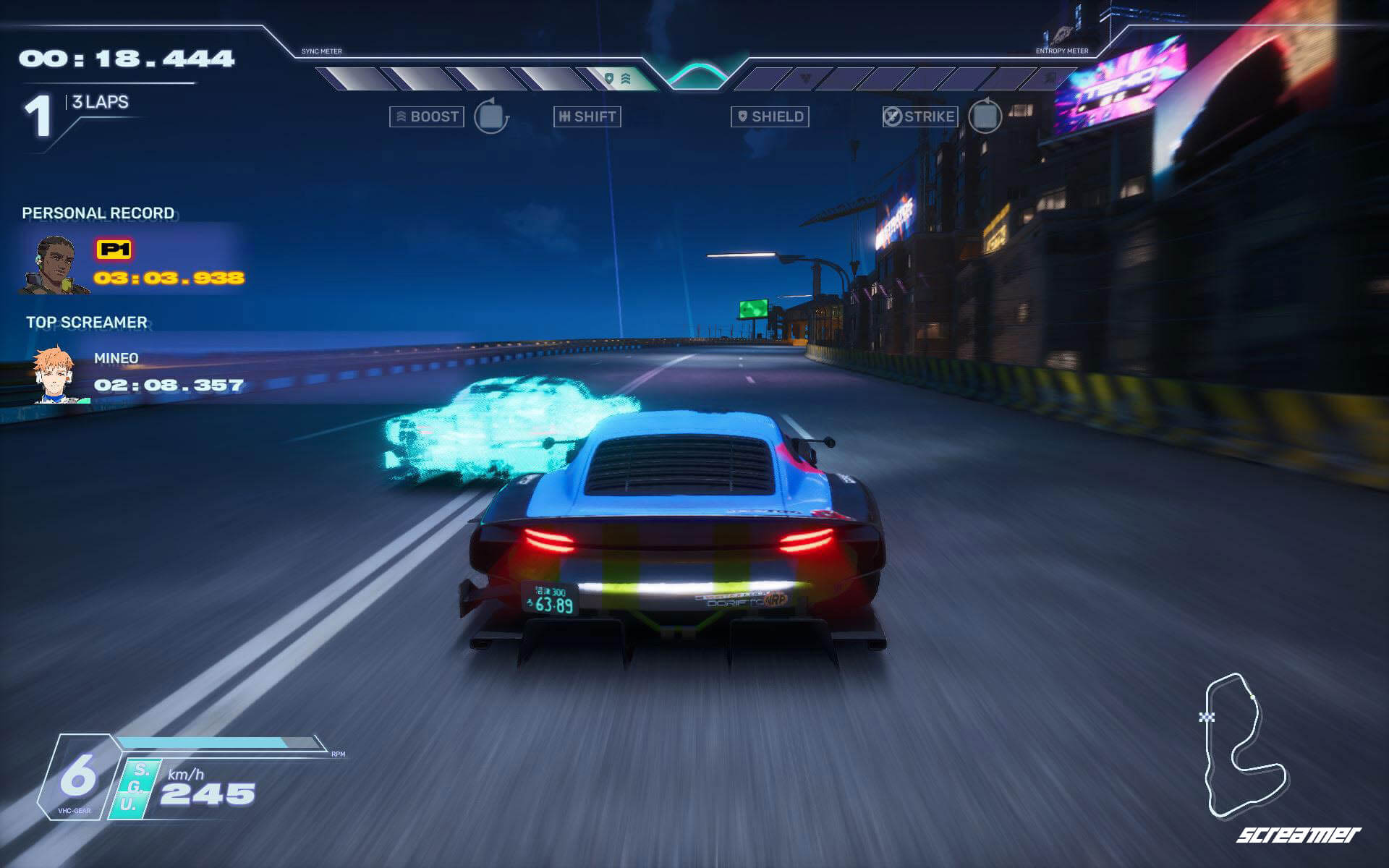
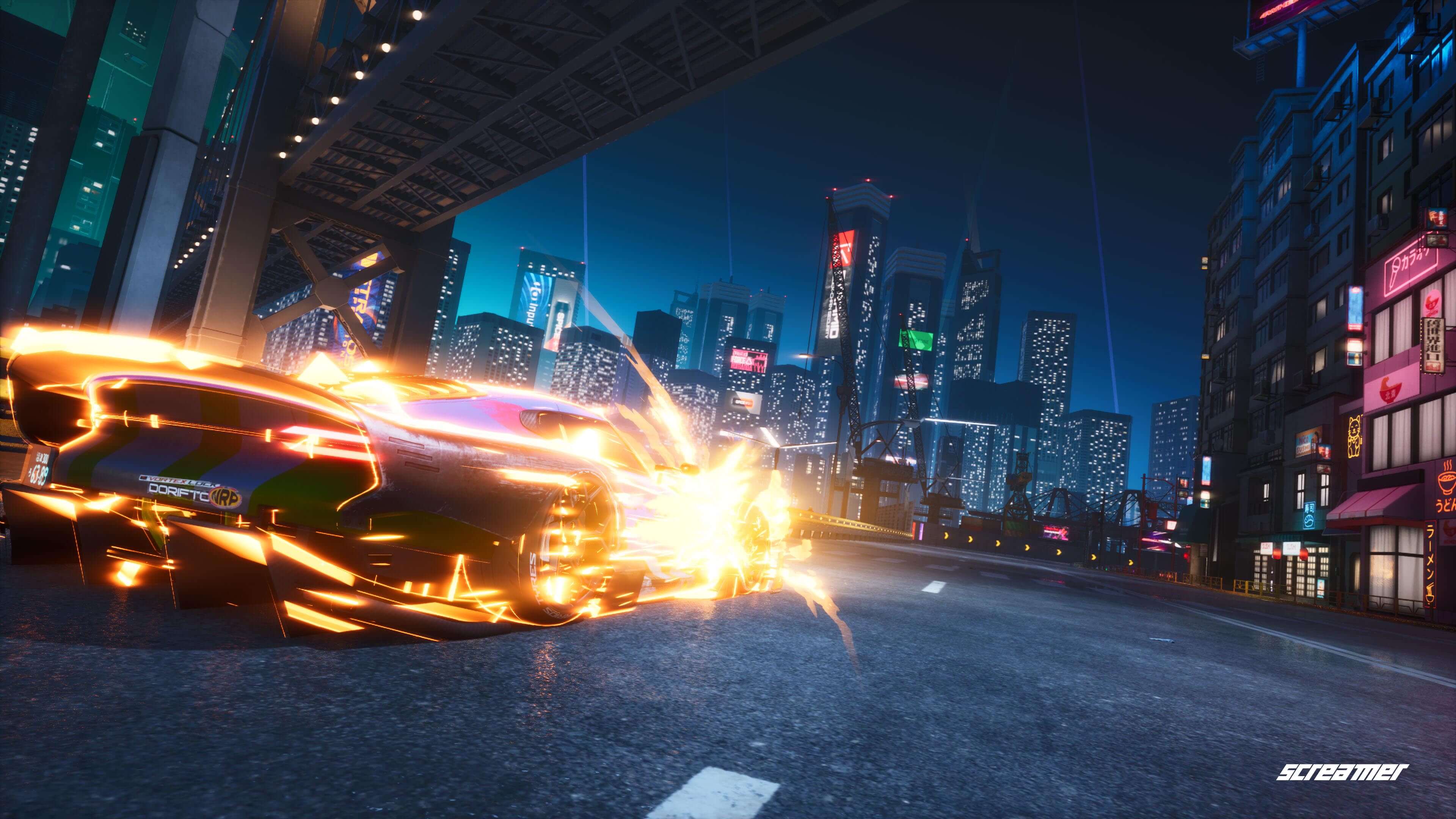
In short, you’ll be managing two resources as you blaze through the tracks: Sync and Entropy. Sync is gradually generated over time as you drive skillfully, and with enough Sync you can turn on Boost and Shield for a little, well, boost. The details are in the name; Boost gives you a temporary spike in speed, whereas Shield protects you briefly against unwanted nudges and hits. Meanwhile, Entropy is produced whenever you use Sync, with which you can activate Strike and the extremely overpowered Overdrive. Strike lets you speed up and ram into your opponents’ cars, exploding these vehicles and taking them out of the race for a while. Overdrive is essentially a souped-up version of Strike, as it makes your car faster while hitting other automobiles harder. There’s a caveat, however; smashing into any obstacle will take your own vehicle out of the race just as quickly.
It does feel a lot like trading fisticuffs in a fighting game, with Sync and Entropy offering both defensive and offensive capabilities that let you forcefully eject other racers off the tracks. All these are delivered via the game’s twin stick controls—a control scheme that may be familiar to Inertial Drift players—which offers players more precise handling.
Fighting spirit
This parallel to the fighting games genre is entirely intentional.
“The gameplay of Screamer has been greatly influenced by fighting games, which is another thing that we are big fans of. We knew we wanted to have some sort of fighting element in the game, but we needed a way to give players full control of the handling for this to work,” Cardini explained. “This is where the twin stick controls come in; letting players control steering and drift separately with the controller sticks gives a level of control that you simply cannot have any other way, while still letting you keep most of your fingers free for other actions. This really changes how you perceive the game.“
Adding a twist to the race are the teams of Screamers themselves, from the inexperienced but talented Green Reapers, to the clearly dastardly Anaconda Corp, each offering their own quirks and strengths on the tracks.
For instance, some Screamers can generate Sync faster, have more powerful Boosts, or reduce the costs of Entropy. These qualities potentially allow certain individuals and teams to become a specific archetype, such as close-quarters specialists or defensive tanks that can take a beating. As it turns out, this carefully calibrated system is the result of the studio wanting to meld the best of fighting and racing games together.
“Back in the ‘90s, the kings of the arcades were fighting and racing games, and we feel that this was due to their focus on gameplay and player expression. We took the mechanical challenge of racing and the resource management of fighting games and found out that blending these two things together really elevates the resulting blend,” Cardini said.
Yet, a conspicuous feature that’s missing in Screamer is car modding, which was a prominent tool in Screamer 2 and Screamer Rally. In these sequels, players could customize their vehicles to improve their performance on the track. These were realistic modifications to the vessels, from tire size and pressure to front and rear suspension, which can help players shave a few precious seconds off their lap time. Given that cars have to be handled differently depending on the terrain, from roads that are glazed with ice to sandy courses set in an arid wilderness, customization was a necessary aspect to these Screamer sequels.
Milestone, however, opted not to include these features in reboot, instead allowing players to modify their cars in a more aesthetic manner—one that befits the game’s glitzy veneer.
“We decided to avoid adding physics-based customization to the game for a couple of reasons,” Cardini said. “We created very cool customization sets, and we wanted players to use them to their liking without being afraid of the impact on cars’ performance. Also, we felt physics-based customization didn’t work well with the other systems present in the game, and we decided to instead focus on the individual feel of each car and their special abilities.”
Burning rubber
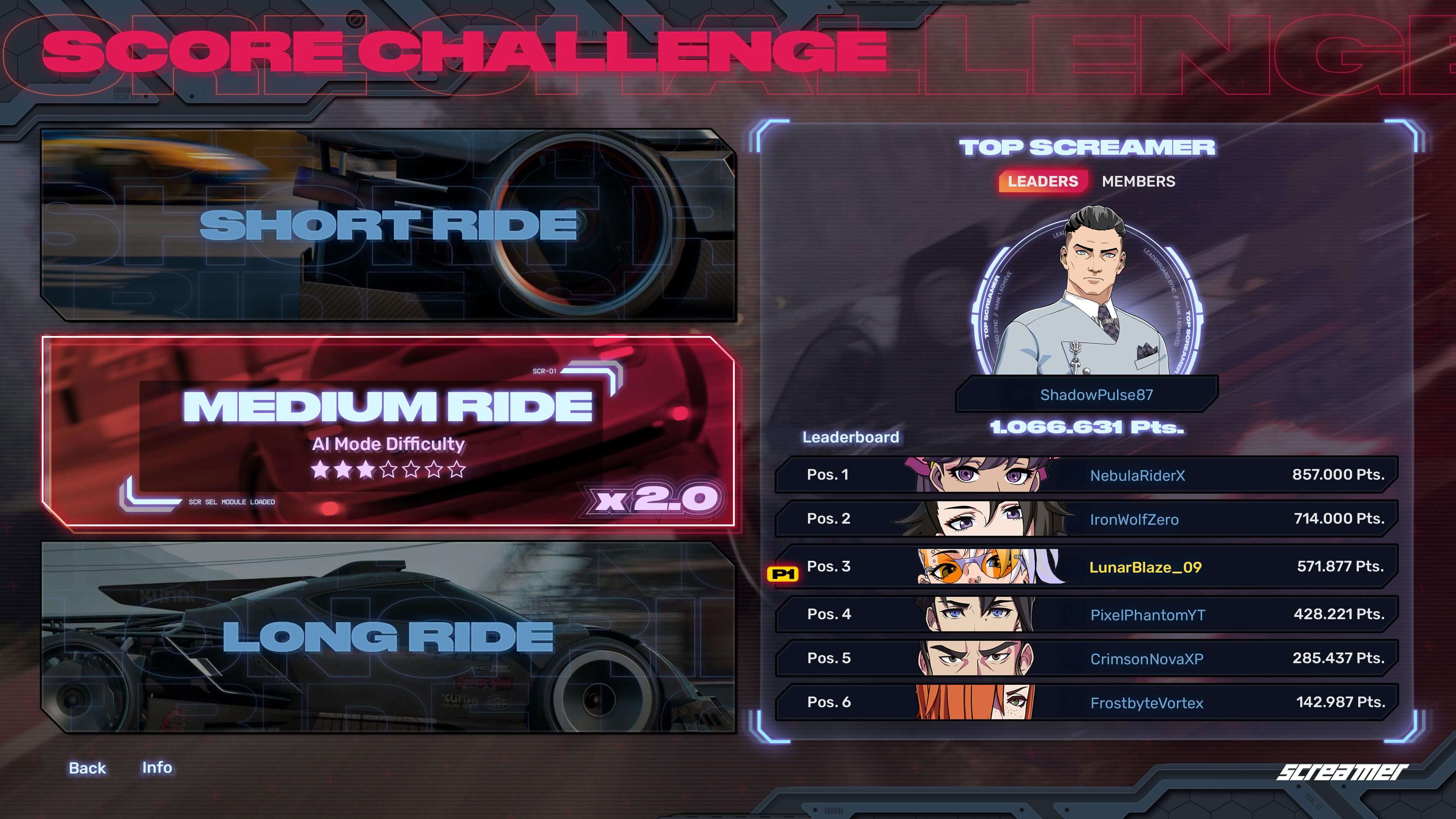
Making a return to Screamer are game modes, but with several tweaks unique to the reboot. There’s Race!, a custom mode where players can choose competition rules, modify the number of laps and participants, and tweak the races’ conditions to their liking. There’s Team Race, which lets you blaze through the tracks as a duo or trio against other teams. There’s the Overdrive Challenge, which lets you begin the race with a roaring, blazing automobile, while you attempt to clock your best lap time, hopefully without spectacularly crashing into a wall.While a litany of game modes awaits the intrepid racer who wishes to whip around the curves of the race course as rapidly as possible, the heart of Screamer is the narrative-driven Tournament mode. Rather than just burning rubber on its kaleidoscopic circuits, this mode, taking place across several episodes, also imparts the backstory of the tournament and the history of its numerous Screamers, with the race organized by one mysterious Mr. A.
To this end, Cardini has pointed out that Screamer’s Echo system is more than just a mechanical way for players to speed towards the finish line. Like its cars and cast of characters, there’s a narrative aspect to the device as well.
“From the very beginning, we wanted to approach this game a little differently compared to your usual racing games, and so we looked at creating characters first. We wanted a diverse cast that could inspire us to create original cars, and from that we started looking at how their personality [and] motivations [could be developed],” he said. “The story stemmed from these ideas, as it offered us the perfect way to make all these reach the players.”
All these, he promised, will eventually be unveiled through the events of the game.
 No better time
Of course, Milestone’s extensive repertoire in racing games doesn’t hurt in helping the developer refine the brand new Screamer.
“Our expertise in racing and physical simulation, on both cars and bikes, really helps us give a unique flavor to the handling of our games,” Cardini said. “The Screamer reboot benefitted a lot from this since I don’t think we would have managed to blend racing and fighting so seamlessly without our 30 years of experience in the gaming medium.”
The reboot lands at an opportune moment. It has been 31 years since the first Screamer, and 26 years since the last Screamer title was released. In particular, Screamer Rally has since become abandonware. Cardini believed there hadn’t been another racing game like Screamer since then, as racing simulations became exceedingly popular. Moreover, a groundbreaking arcade racer that replicated the heyday of the ‘90s racing genre hasn’t materialized either.
“We feel that the racing scene is sorely missing an arcade game with high production value, and as fans of racing games ourselves, we felt that bringing back Screamer was almost a duty we had to fulfill,” said Cardini. “The first Screamer was a one-of-a-kind game since there simply were no games like it on PC. While the new one wants to expand what racing games can offer as a genre: A deep story, new gameplay mechanics, different types of handling with the twin stick system, and much more have been developed to make this game stand out from other racing games.”
Milestone also believes that Screamer can reach players who aren’t traditional racing fans. It may prove to be a sizable challenge, given the racing game’s twin stick controls: left stick to steer, right stick to drift. I can imagine this unconventional control scheme taking a while to get used to, with the Echo system adding another layer of complexity to racing. This is the perennial problem the fighting games genre faces as well: the steep learning curve of most fighting games has gotten in the way of accessibility for new players.
The studio, however, is confident that this system would only become more intuitive in time.
“While racing fans will find many things familiar, we encourage people who are not usually fond of these types of games to give Screamer a try,” said Cardini. As for racing fans looking for something else that can sate their appetite for speed, he believes Screamer’s tactical depth will also appeal to them. “If you are bored with the current racing offerings or have ever asked yourself what racing games can do, give this game a try. We’re sure it will surprise you!”
Screamer’s intoxicating mix of fast cars, melodrama, and impeccable style makes the reboot seem like a distinctly different beast from the original. But the one thing that Milestone has still retained from the classic Screamer games is the way endorphins are still being spiked on the race tracks through over-revved engines, breathtaking speed, and skillful drifting. Having fun outracing your rivals is crucial, but so is the earned sense of accomplishment from doing so.
“This is a game that rewards repeated play without featuring any retention mechanics based on fear of missing out, just like arcade games of the ‘90s,” said Cardini. In other words, no logging in every day or so just to collect points or any sort of currency. ”It’s a feeling that’s been lost in recent years, and we want to bring it back.”
Screamer hits Epic Games Store later this month.