Știri
Seafarer: The Ship Sim challenges you to battle an angry ocean
J
Julian Benson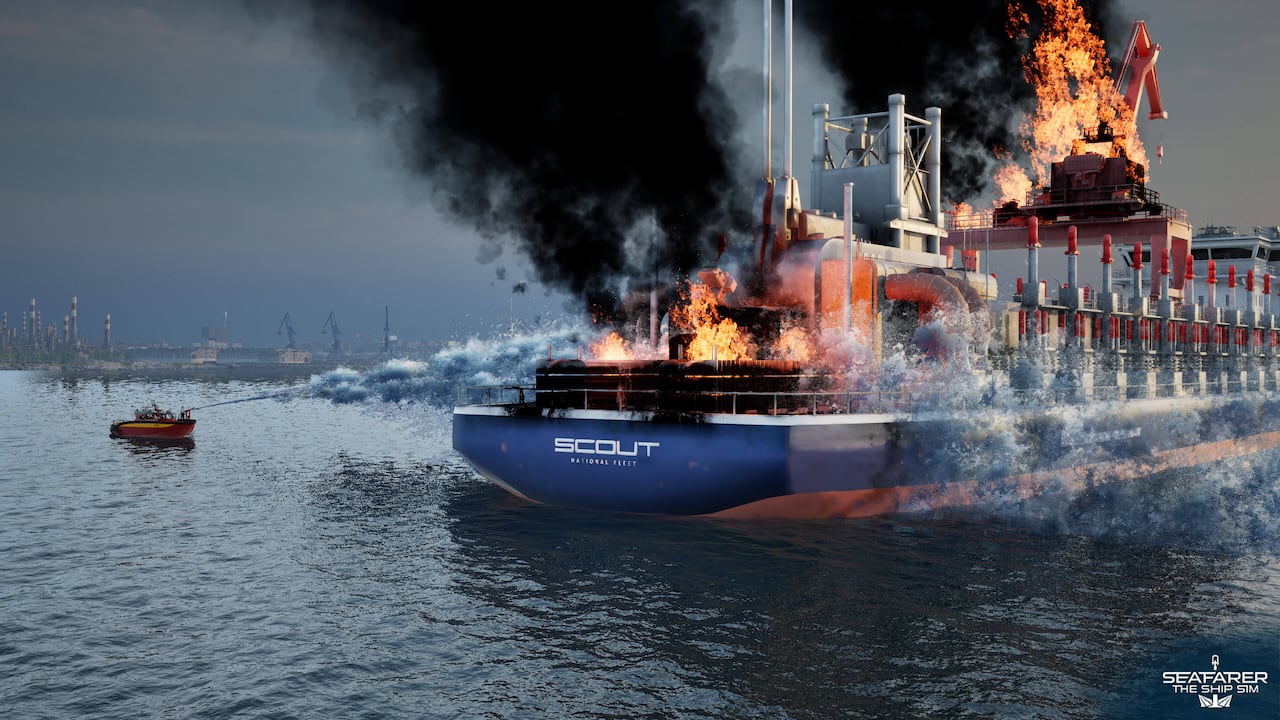
But, with only a slight twist of the atmosphere, a flat sea can become a rolling landscape of shifting troughs and peaks with no shelter from the winds. Suddenly, what is lying under the ocean becomes a fearful concern, with shallow waters threatening to leave your ship aground if you lose your battle with the strong billows.
The course of a road is fixed, whereas the sea is forever changing. That's what Astrogon Development is aiming to capture in Seafarer: The Ship Sim, a game that recreates the joys and dangers of life at sea.
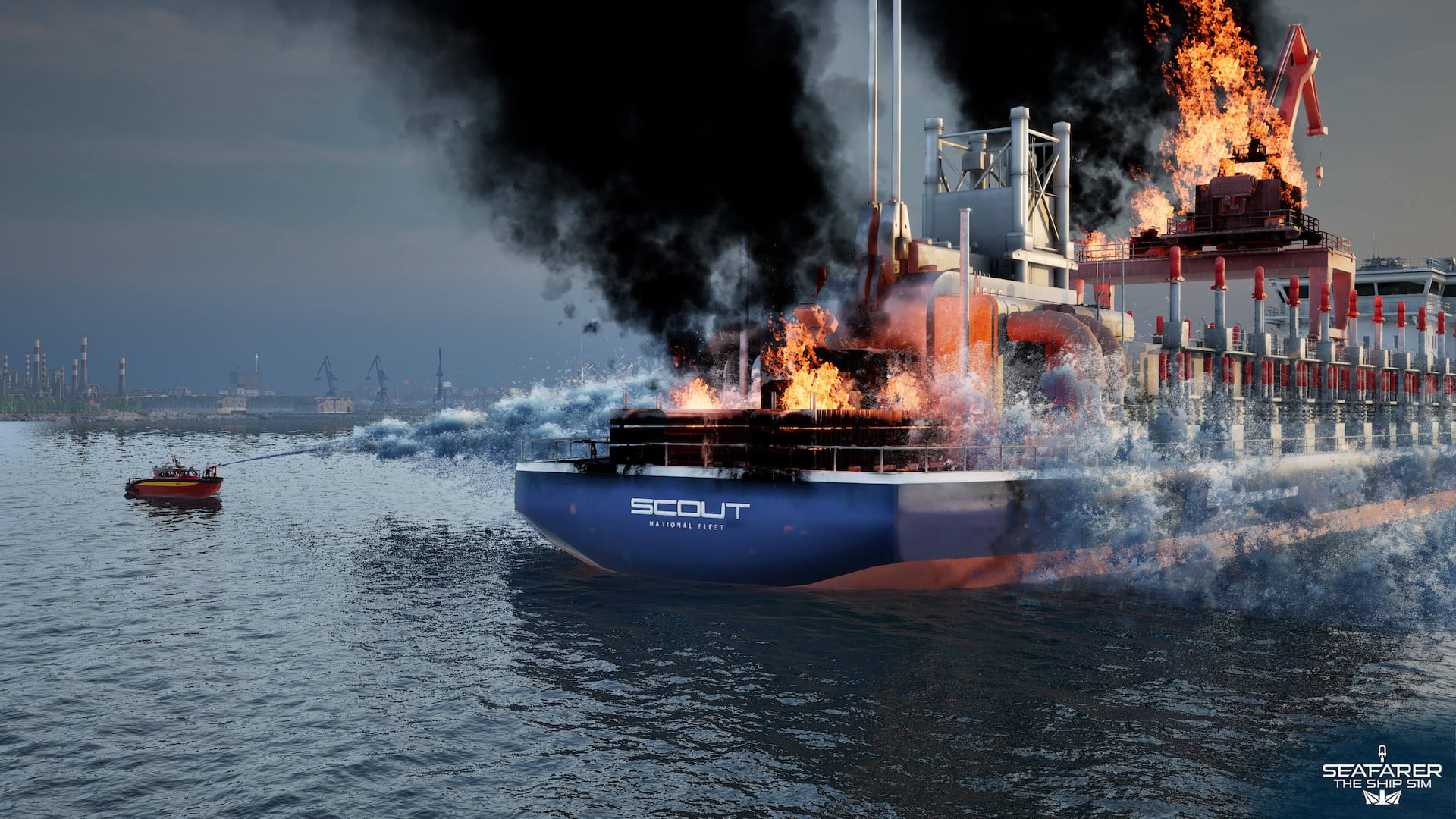
Having entered Early Access earlier in October, Seafarer offers a vast world to explore and multiple career paths to pursue. You're free to haul freight across the ocean in giant cargo ships, run down contraband in a police vessel, and take the helm of a smaller firefighting boat to put out blazes on drifting ships and oil rigs.
At launch, the Early Access version of Seafarer will have two biomes to explore: Craigshire and Dansbergen. "We drew a lot of inspiration from the real world—especially the Baltic Sea, the North Sea, and the surrounding areas and coastlines," Fotios Megas, Seafarer's Lead Level Designer, tells us. The Great British and Irish coastlines inspire Craigshire, so expect tall cliffs, rolling hills, and pebbled beaches. Dansbergen more resembles the shallow seafront of Germany, Denmark, and the Netherlands.
The team at Astrogon could have aimed for a 1:1 recreation of real-world coasts, but, as Megas explains: "A fictional setting enables us to bring together breathtaking parts of the world's oceans, [and] also create unique, awe-inspiring moments for players—for example, when they happen upon an eerie ship graveyard, an abandoned oil rig, or an impressive cloister island, while exploring our world."
As Lead Level Designer, it's the world of Seafarer that Megas is personally most proud of, but he also points to how its scale serves the simulation. It's "one of the largest static game worlds in existence," he says, because the team "wanted to simulate the feeling of spending extended periods at sea. The ability to travel longer distances is one of our greatest achievements."
Hauling freight, as we've seen in simulation games like Euro Truck Simulator and SnowRunner, demands constant attention, especially when the elements can turn against you. The challenge of that attention only becomes apparent when the journeys are long enough to test your limits.
Through Early Access, Astrogon plans to both expand the world and make it more detailed, adding new locations to explore. Each new area also means new possibilities for the missions on offer in Seafarer's careers.
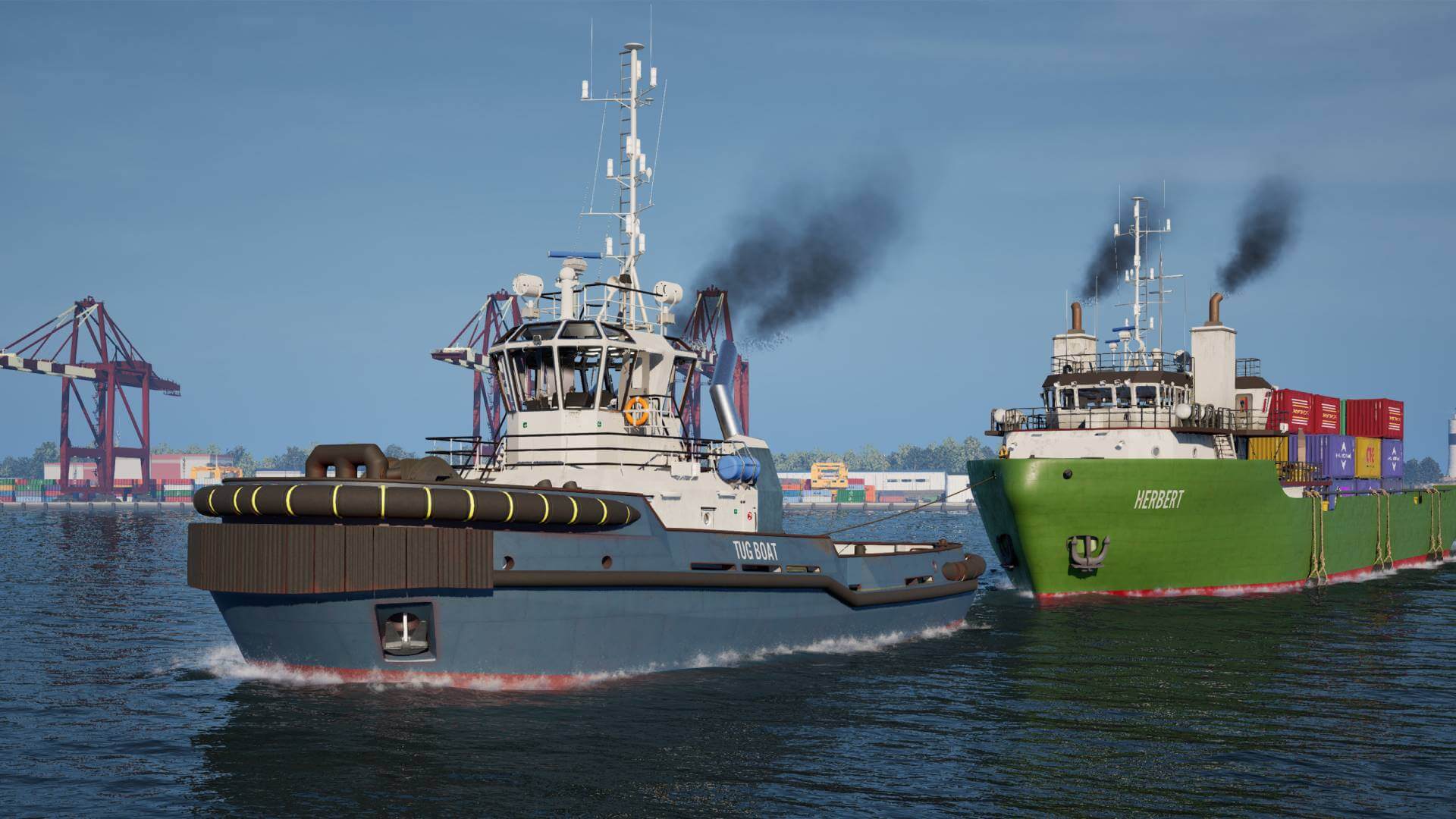
Megas describes the cargo delivery path as tailored for "players seeking a relaxed working simulation." You will be tasked with ferrying cargo between ports in large container ships. While you and your cargo can't fall overboard, rough weather still presents challenges to overcome in the more-relaxed career path.
Your vast vessel may be large enough to carve through the waves, but it can still sustain damage, particularly in shallow waters. Plus, the extra effort of climbing those rolling waves will ask more of your engines. It's all too easy to empty the tank when sticking to your course in rough weather. If you find yourself adrift without fuel, your ship broken beyond repair, or stuck in the sand of a shallow coastline, Megas says you will need to call for help, "which will tow your ship back to the safety of a harbor."
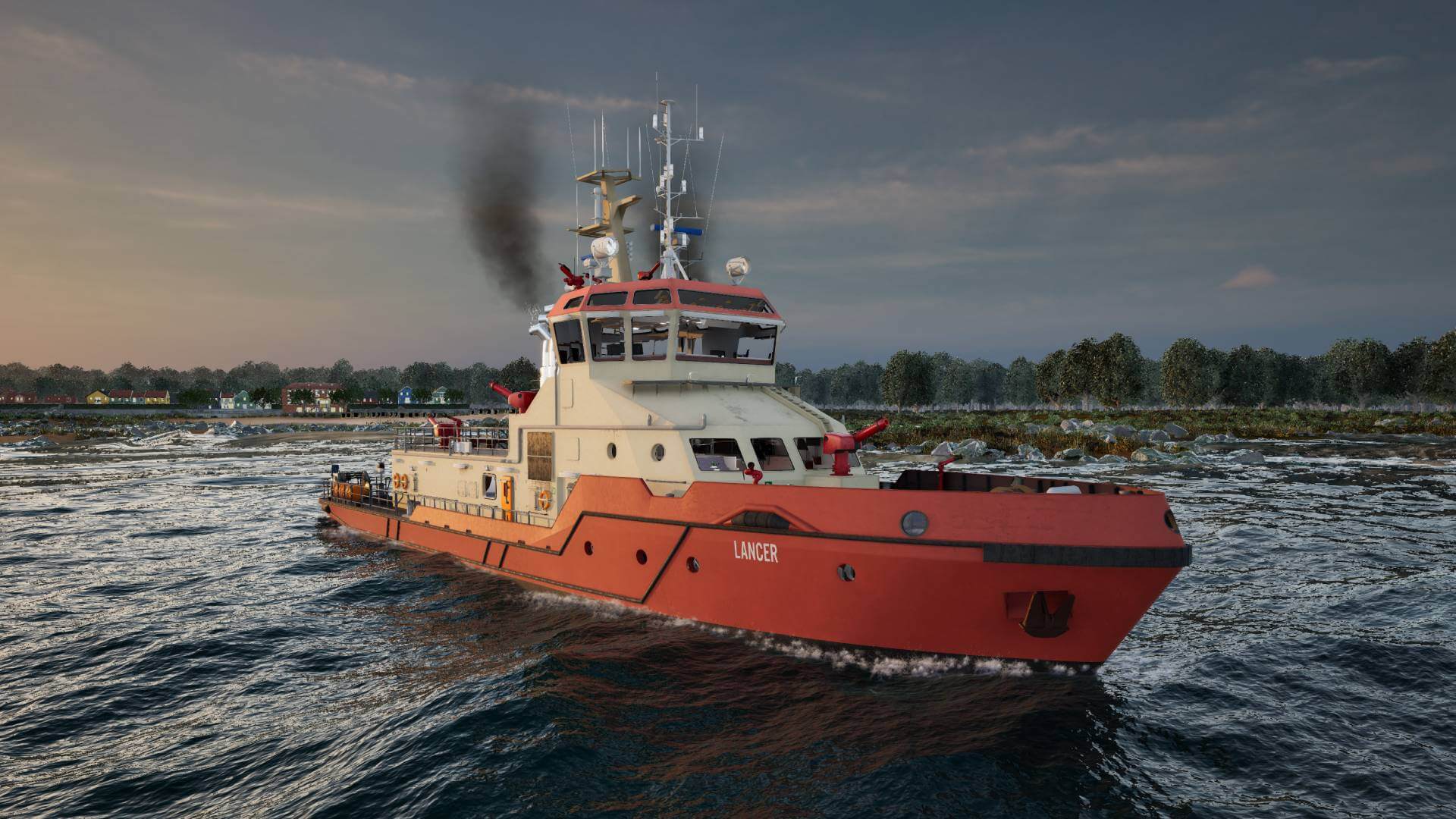
The Tide Guard career path, which encompasses firefighting and police operations, Megas says, "brings a more action-oriented approach to the table." Your missions will see you tackling fires on oil platforms, chasing down motorboats loaded with contraband, and rescuing crew stranded aboard ships in stormy weather.
It's in the Tide Guard path, where you captain smaller vessels than those heavy cargo freighters, where developer Astrogon's ocean simulation makes itself known.
"Seafarer’s look and feel is being supported by Unreal Engine 5 and NVIDIA WaveWorks 2.0," Megas explains. "We are aiming to be one of the best-looking ship simulators on the market." But this technology does more than make Seafarer's oceans look real.
"Different ships have different weights and speeds, which directly affect the way they react to the waves," Megas says. "The complexity rises exponentially when you add factors like dynamic weather changes and the size of the world."
While the large vessels, such as cargo freighters, can cut through the waves, the smaller rescue vessels face a much greater challenge. Even attempting to leave the harbor is tough; the rolling swells can send you straight into the unforgiving walls of the quay, damaging your ship before your mission's even begun.
Then when you get out to sea, you will need to pilot your weather-tossed vessel to stranded ships, storm-threatened oil rigs, and drifting lifeboats. The complex physics simulation creates a demanding challenge even for experienced sailors.
The career paths Megas describes are only the beginning. Not only is another career path set to be added in Early Access, but he also says that "Seafarer is basically an endlessly expandable game, a vast open sea of ideas." What is added to the game will be, in part, shaped by what players request.
Astrogon hasn't waited for release to start talking to its players. Among the eager fans who joined Seafarer's official Discord are professionals who work in these simulated careers. The team spoke with these fans on the representation of their careers in the game, making tweaks based on their feedback.
As well as speaking to pros, the team devoured books and documentaries about the careers they've recreated in Seafarer. "We had to become experts on this topic very fast," Megas says.
In addition to the professionally produced research materials, the team discovered a wealth of shorter videos uploaded by sailors themselves. "Most of the time [these were] captured by a phone camera from a professional on board," Megas says. These videos revealed the minute details that could be glossed over in a larger documentary production.
When Seafarer entered Early Access earlier in October, it was the first step of a mammoth maritime expedition—one where the end goal is to accurately simulate some of the most exciting careers at sea. Once you play, you will have the chance to experience the worst the elements have to offer and learn exactly what it takes to navigate an angry ocean.
And, as Megas says, getting in at this beginning will also provide you the opportunity to give feedback that shapes the future of the game.
Seafarer: The Ship Sim is available now on Epic Games Store.