Notícias
Seeing meaning through perspective in Possessions
A
Aron Garst
“The core idea was always about perspective,” Chopra, Founder of Possessions developer Lucid Labs, said. “I was interested in how the meaning behind objects changes depending on how you see them, and I wanted to turn that into a game mechanic.”
Early experiments leaned toward optical illusions and forced perspective tricks, but the breakthrough came from something quieter. Chopra and his team found that you could "fix" a mess by simply rotating how you looked at it. That single action became the foundation for Possessions, not just mechanically, but thematically.
“That moment felt like a metaphor for how we deal with memory, relationships, and emotional distance," he said. "Themes we wanted to explore without heavy-handed storytelling.”
Slowing down to find perspective
That restraint defines Possessions from the moment it begins. There are no text-heavy tutorials and no urgent pressure to move forward. Instead, the game asks players to stop, rotate the world in front of them, and pay attention. In a gaming landscape increasingly defined by speed, scale, and spectacle, Possessions stands apart by embracing stillness and observation as its core mechanics.
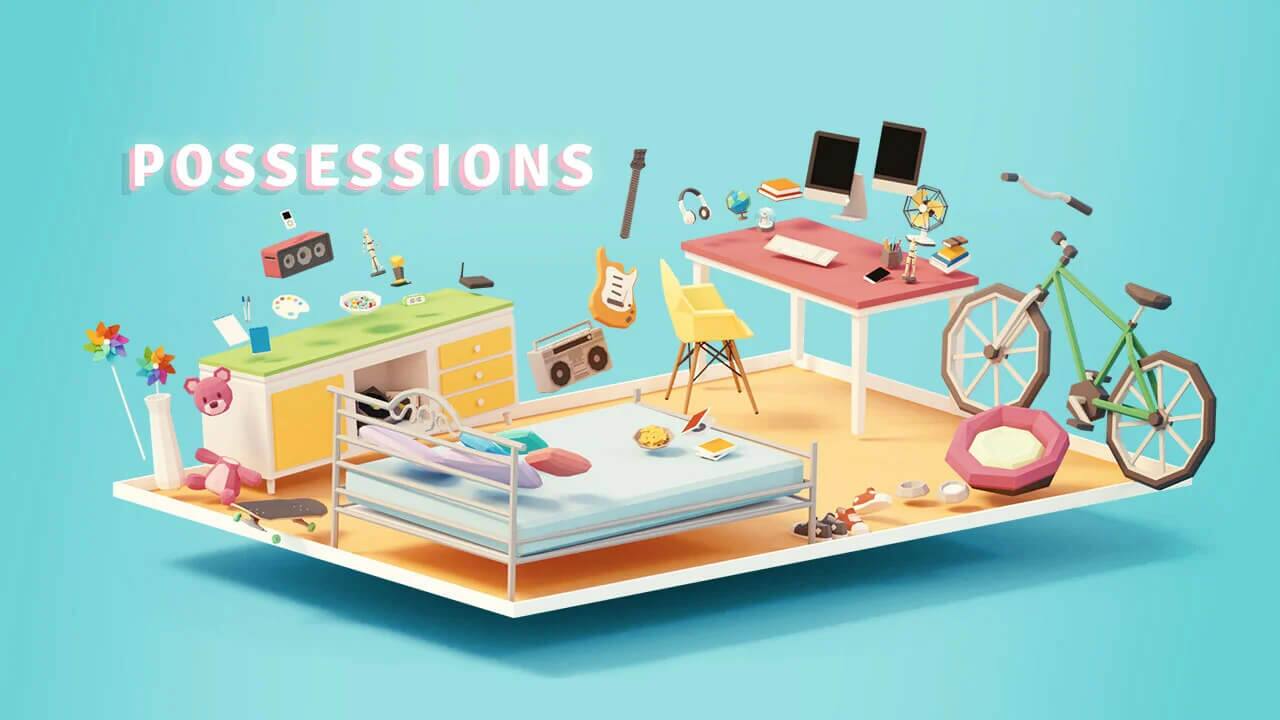
Developed by New Delhi-based studio Lucid Labs, Possessions is a minimalist 3D puzzle game built around a deceptively simple idea. Each level presents a room filled with everyday objects that appear scattered or misplaced. By rotating the scene, players realign those objects until everything visually clicks into place. When the puzzle is solved, the room freezes in quiet harmony, revealing meaning.
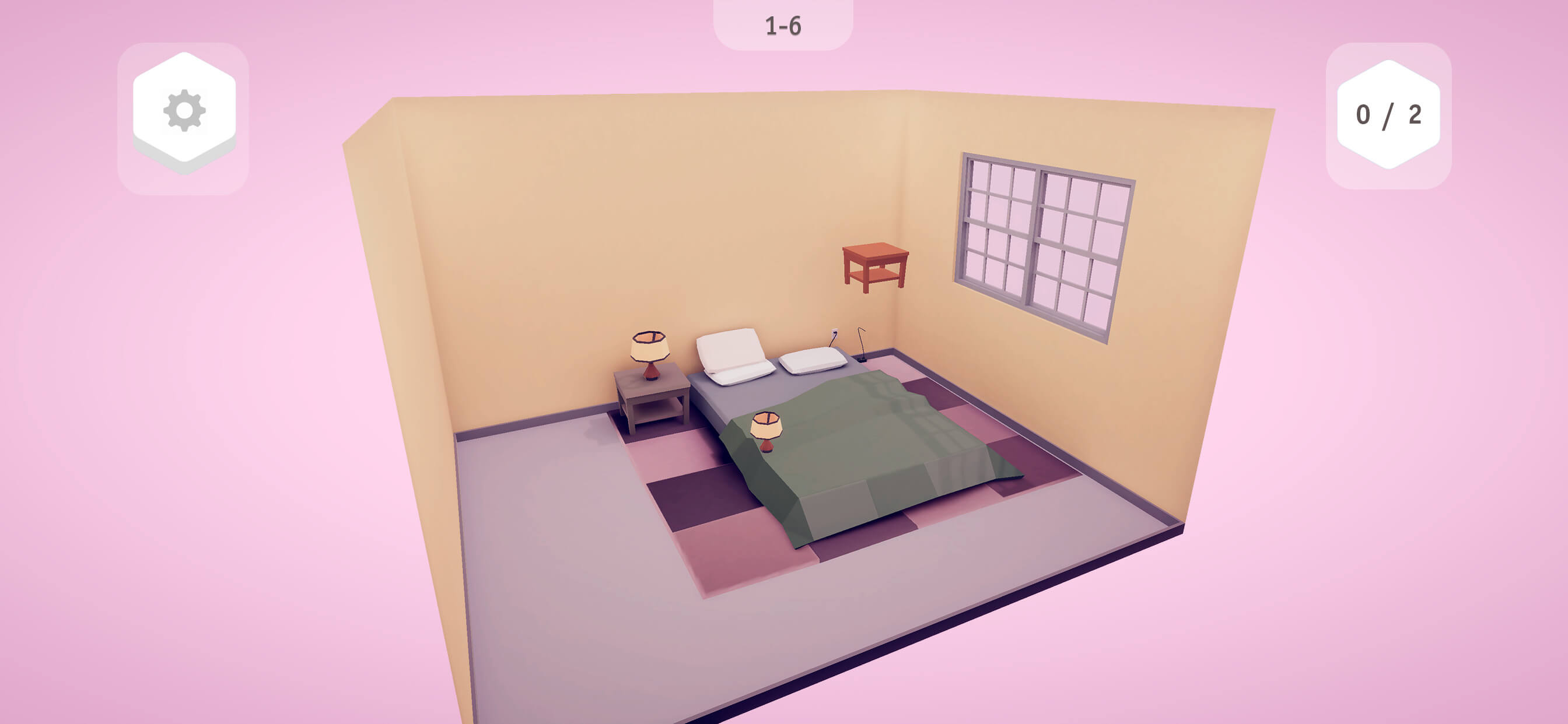
That sense of meaning is never spelled out directly. Instead, it emerges through implication: A photograph on a wall, a half-packed shelf, or a lone toy in a corner quietly suggests a story.
“We never sat down and said, ‘Let’s make a game about relationships,’” Chopra said. “We focused on making something gentle and welcoming first. The themes came naturally from the spaces, the objects, and how they relate to each other.”
Possessions first gained widespread attention when it launched on Apple Arcade, becoming the only Indian-developed game on the service at the time. For Lucid Labs, that opportunity marked a turning point. Chopra describes it as a moment of rare stability for a small independent team.
“For the first time in years, our studio felt stable, both financially and emotionally, giving us the confidence to follow our vision,” he said. That freedom allowed the team to avoid monetization pressures and focus entirely on clarity, pacing, and emotional resonance.
Building a simple foundation
The foundation of Possessions was laid remarkably quickly. The earliest prototype came together in just a couple of days.
“The first prototype was extremely ugly,” Chopra said. “Just grey blocks floating in empty space. No textures, no story, no mood. The moment when you rotate the camera and suddenly a shape makes sense, that was the ‘a-ha’ moment. That’s when we knew we were onto something.”
Even though those prototypes looked simple, the core mechanic remained similar throughout development. While the final game feels calmer and warmer, everything clicks the same as when those grey blocks were floating in space.
"The prototype solved shapes," Chopra said. "The final game solves moments.”
That philosophy of subtraction rather than expansion carries through every aspect of the design. Possessions is not complex, but it is precise. Each puzzle is readable at a glance, yet rarely solvable without careful observation.
Objects that seem misaligned from one angle suddenly snap into place from another. The player is not rearranging furniture so much as discovering the correct viewpoint. The goal was never to frustrate.
Frustration-free design
“The puzzles stay light so players feel relaxed, and the meaning stays optional," Chopra said. "If it resonates, great. If not, the game still works.”
There are no timers, no failure states, and no penalties for experimentation. Rotating a room is effortless, encouraging curiosity over optimization. That approach allows the experience to feel meditative rather than demanding. Players are invited to linger, to sit with each space, and to notice what feels off before trying to correct it.
As players progress, the environments shift subtly. Early rooms feel warm and lived=in, suggesting shared spaces and domestic comfort. Later levels introduce emptier rooms, transitional spaces, and moments of separation.
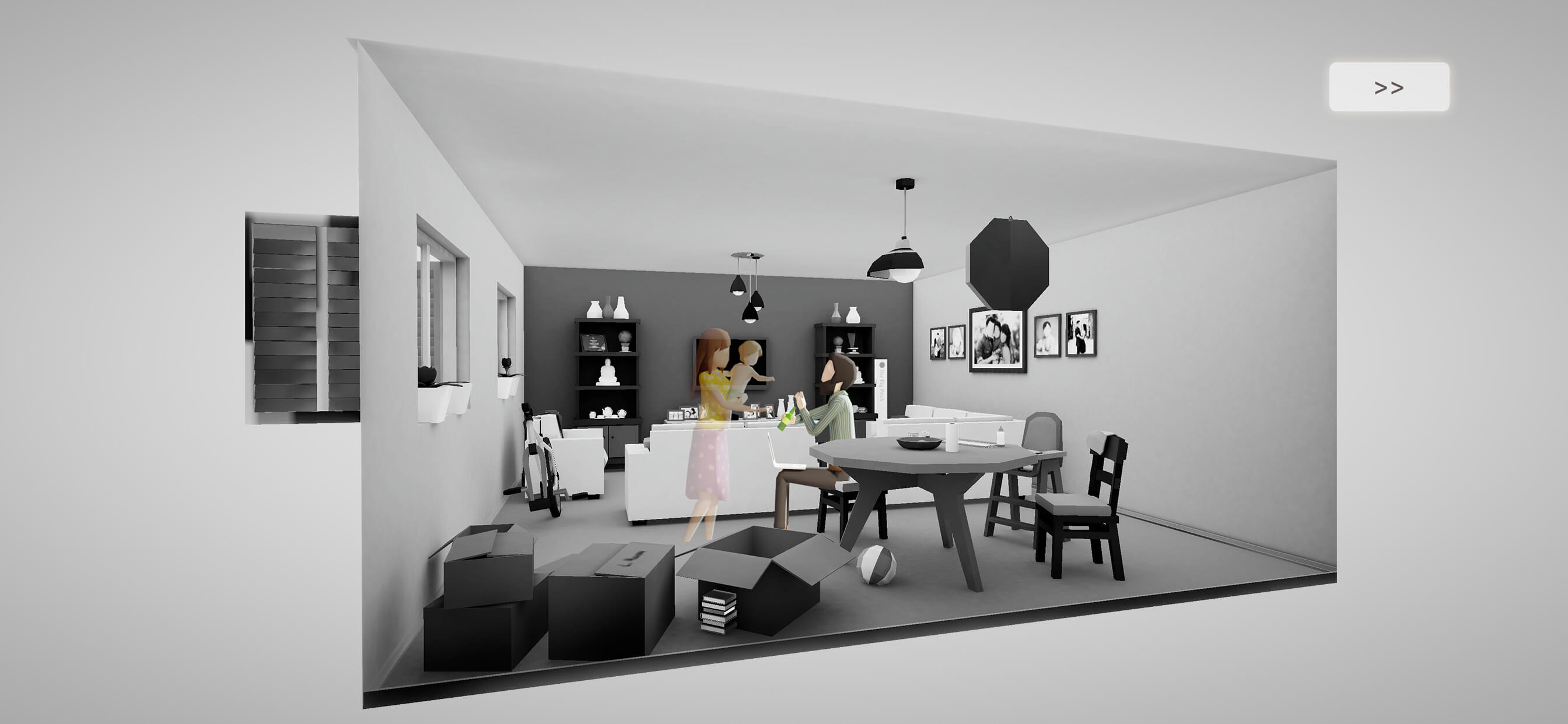
“We wanted players to feel like they were discovering something personal, not having a story told to them,” he said. “Players bring their own context to it, and that ends up being more powerful than anything we could have written.”
This balance between mechanical clarity and emotional ambiguity was carefully tested. Difficulty, pacing, and onboarding, as Chopra puts it, were designed so that the player never feels lost. The emotional story beats, though, are left to the player to interpret. Possessions is a game that guides the hands while leaving the heart entirely up to the player.
A charming home
Visually, Possessions reinforces that intimacy. Its art style is minimalist but tactile, with soft lighting, clean geometry, and muted color palettes. The absence of clutter makes each object feel intentional. Sound design plays a similar role, relying on gentle ambient tones rather than music to maintain focus and calm. Everything supports the idea that Possessions is a space to think rather than react.
Looking ahead, Possessions is preparing to reach new audiences on Epic Games Store. For Chopra, the hope is simple.
“We want it to find players who are open to thoughtful games,” he said. “If Possessions connects with even a small group of players and stays with them beyond the play session, that would mean the most to us.”
In an industry dominated by live-service models and endless engagement loops, Possessions offers something deliberately finite. It has a clear beginning and end, mirroring the emotional arc it quietly traces. Its accessibility lies in its visual language, allowing players of different ages and backgrounds to engage without barriers or explanations.
In 2025, Possessions feels less like a product chasing trends and more like a quiet constant. A game that rewards patience, observation, and reflection, one that trusts players to find meaning on their own terms. The solution is never to force the world into place, but to discover the angle where it already makes sense.
Possessions is coming soon to the Epic Games Store. Wishlist it today!