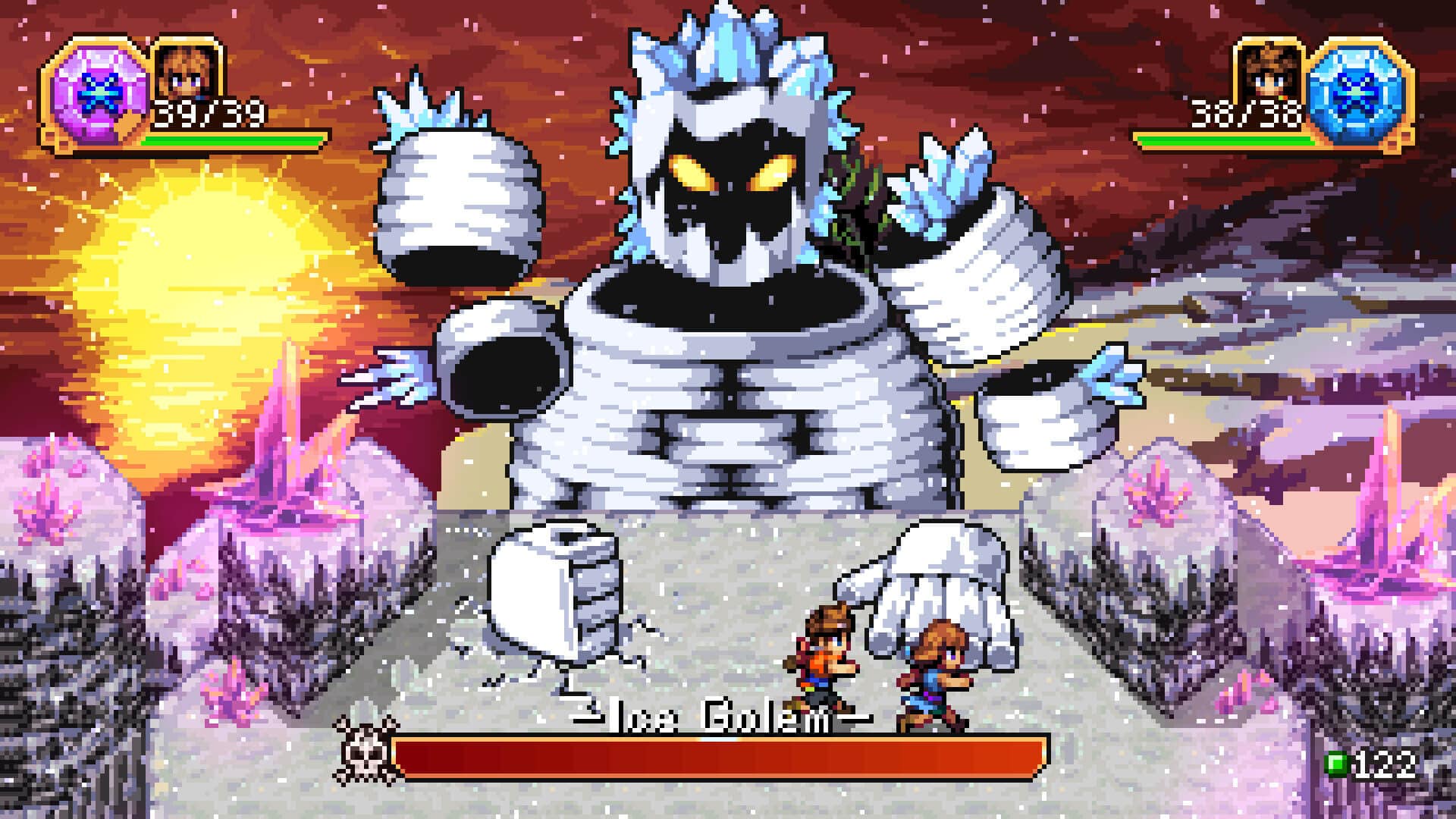
Shrine's Legacy is a 16-bit throwback that adds co-op to the classic SNES RPG formula
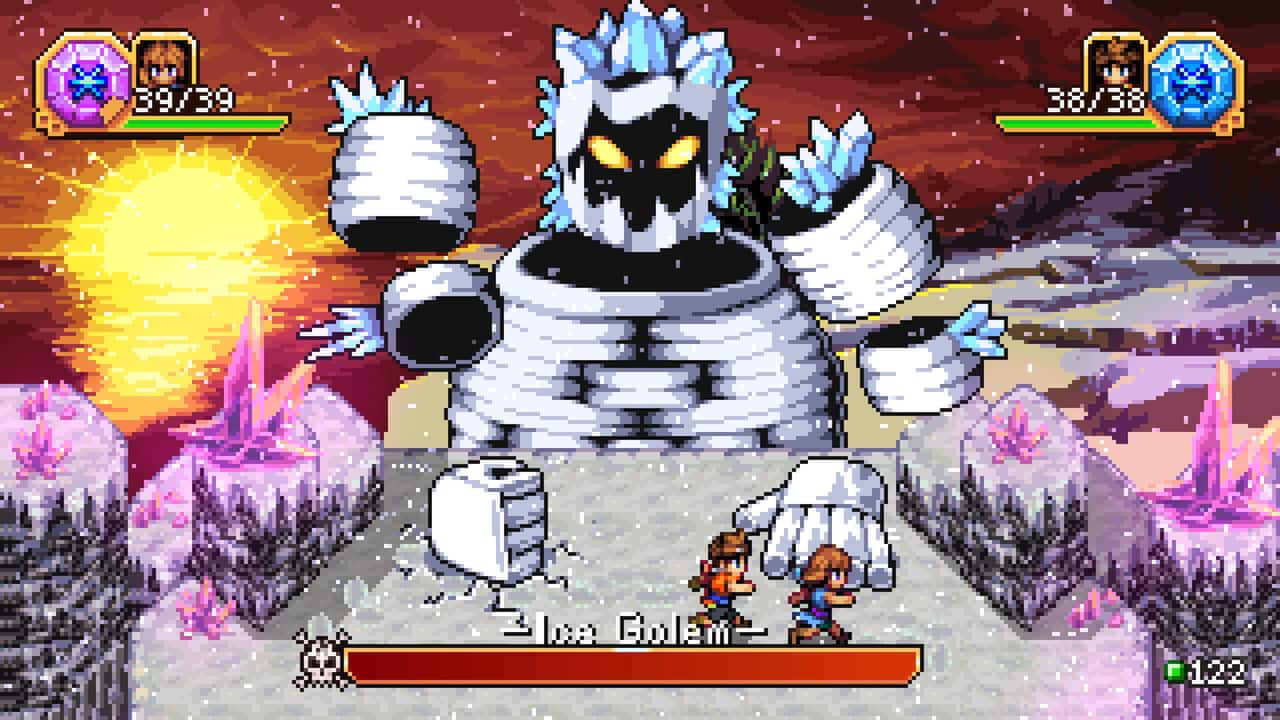
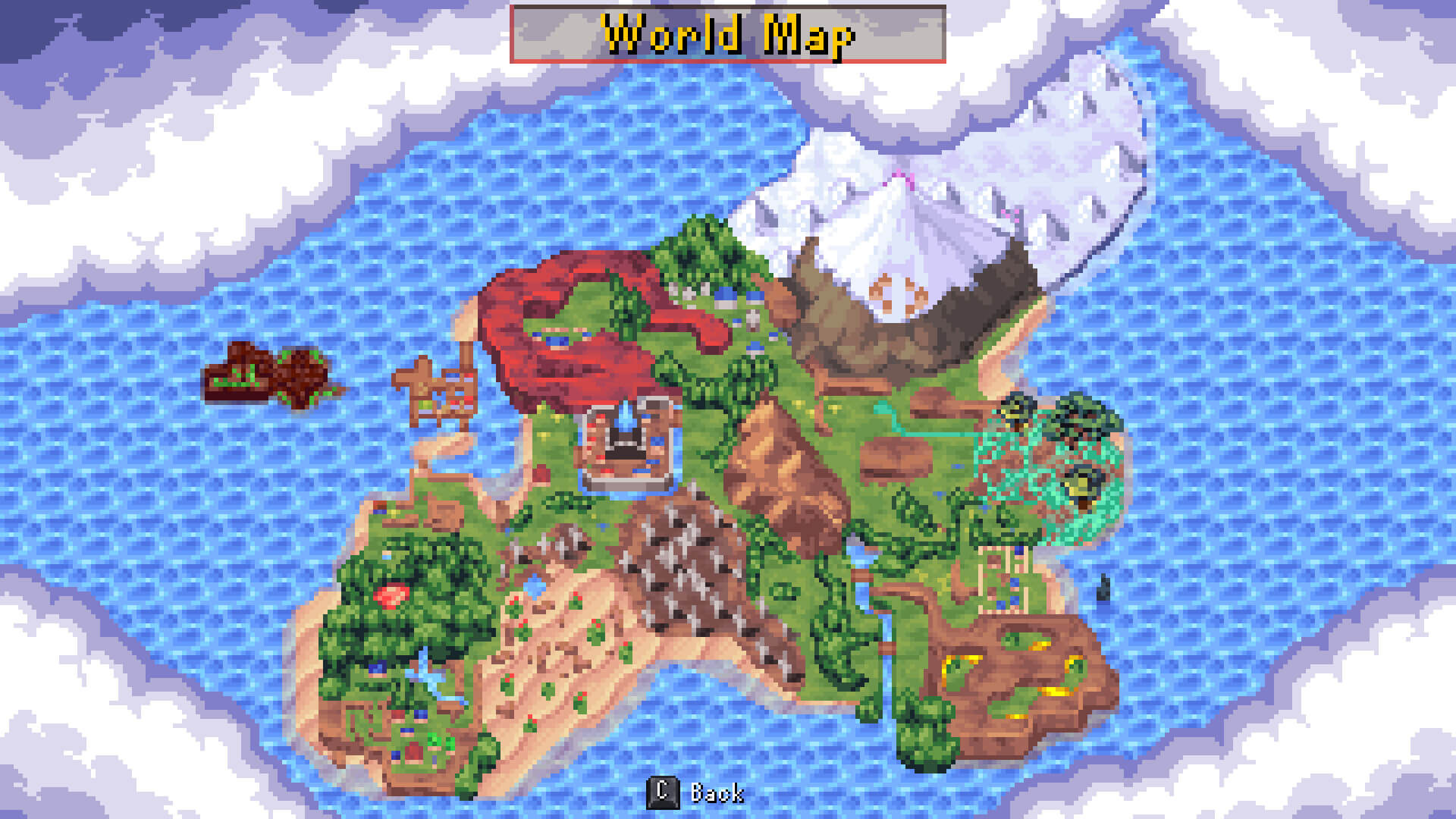
A plucky young hero, a mysterious mage, magic gems, and an evil lord decked out in so much armor you wonder how he can possibly move. Sound familiar? Shrine's Legacy, the debut title from Positive Concept Games, leans heavily on ideas that've defined role-playing games for decades. Its titular hero, Rio Shrine, embarks on a quest to collect eight elemental gemstones to restore the Sword of Shrine, the key to defeating the evil Aklor.
But it’s dangerous to go alone—and thankfully you don’t have to, as Shrine’s Legacy, unlike many of the RPGs that inspired it, offers both singleplayer and co-op modes.
Retro design, modern touches
If the premise of Shrine's Legacy sounds a little simple on the surface, that's by design. The idea for Shrine's Legacy began with a bedtime story that Creative Director Alan Gabbard used to tell his younger brother when they were growing up, taking inspiration from the writing and pacing of Final Fantasy games and Avatar: The Last Airbender.
Described by Positive Concept Games as an "SNES-inspired fantasy action RPG," Shrine's Legacy draws on many of that era's most memorable titles, blending dungeon-crawling with puzzle solving and mix and matching popular features from similar games.
Smashing through its Kickstarter goal with nearly $37,000 pledged, Shrine's Legacy is the latest in a string of successful indie RPGs, following in the footsteps of Something Classic's Quartet, Matthias Linda's Chained Echoes, and Sabotage Studio's Sea of Stars. There's a clear hunger for classic-style RPGs, whether they're turn-based in the style of Final Fantasy or, like Shrine's Legacy, action-puzzlers in the mold of The Legend of Zelda: A Link to the Past and Secret of Mana.
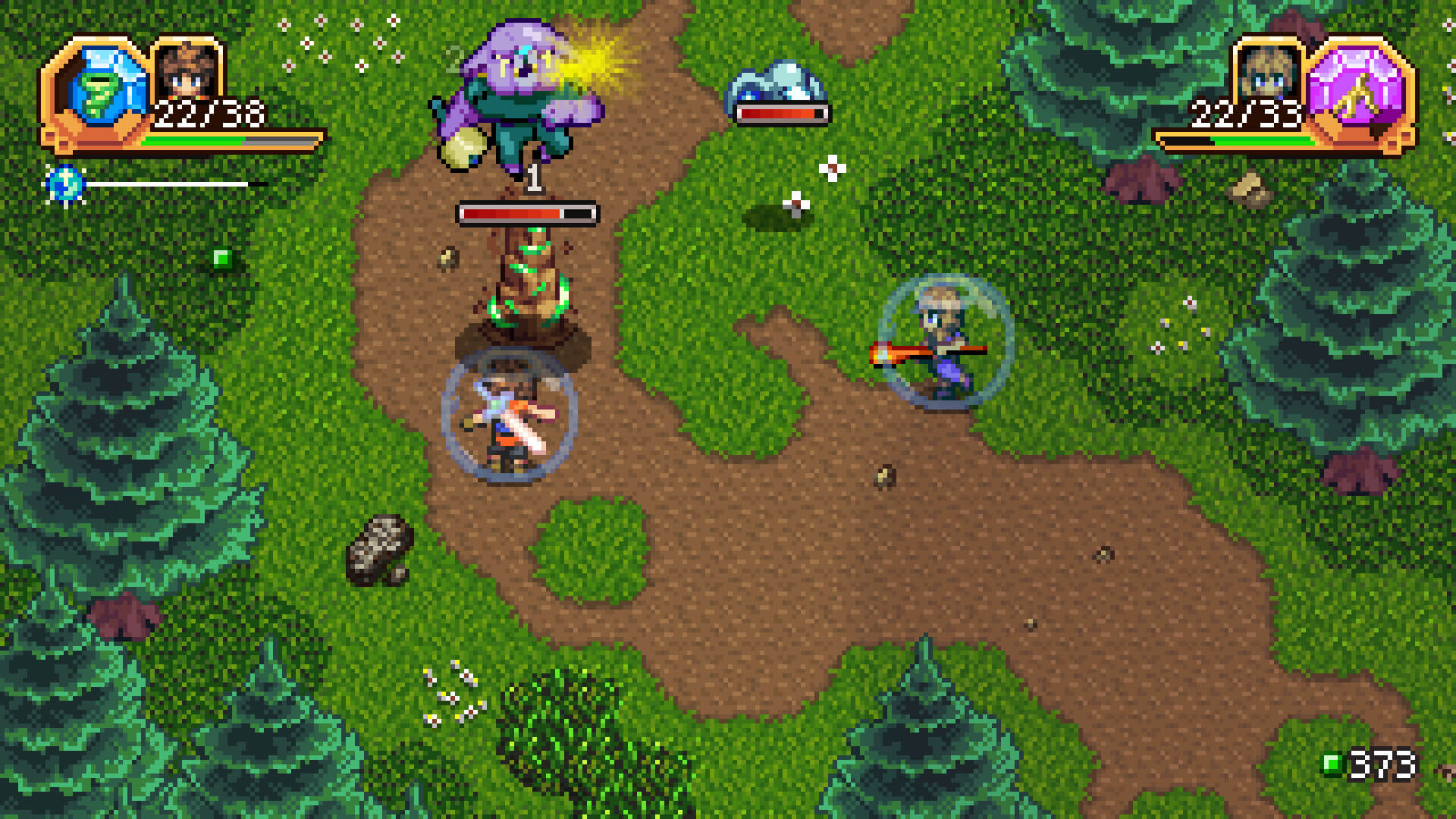
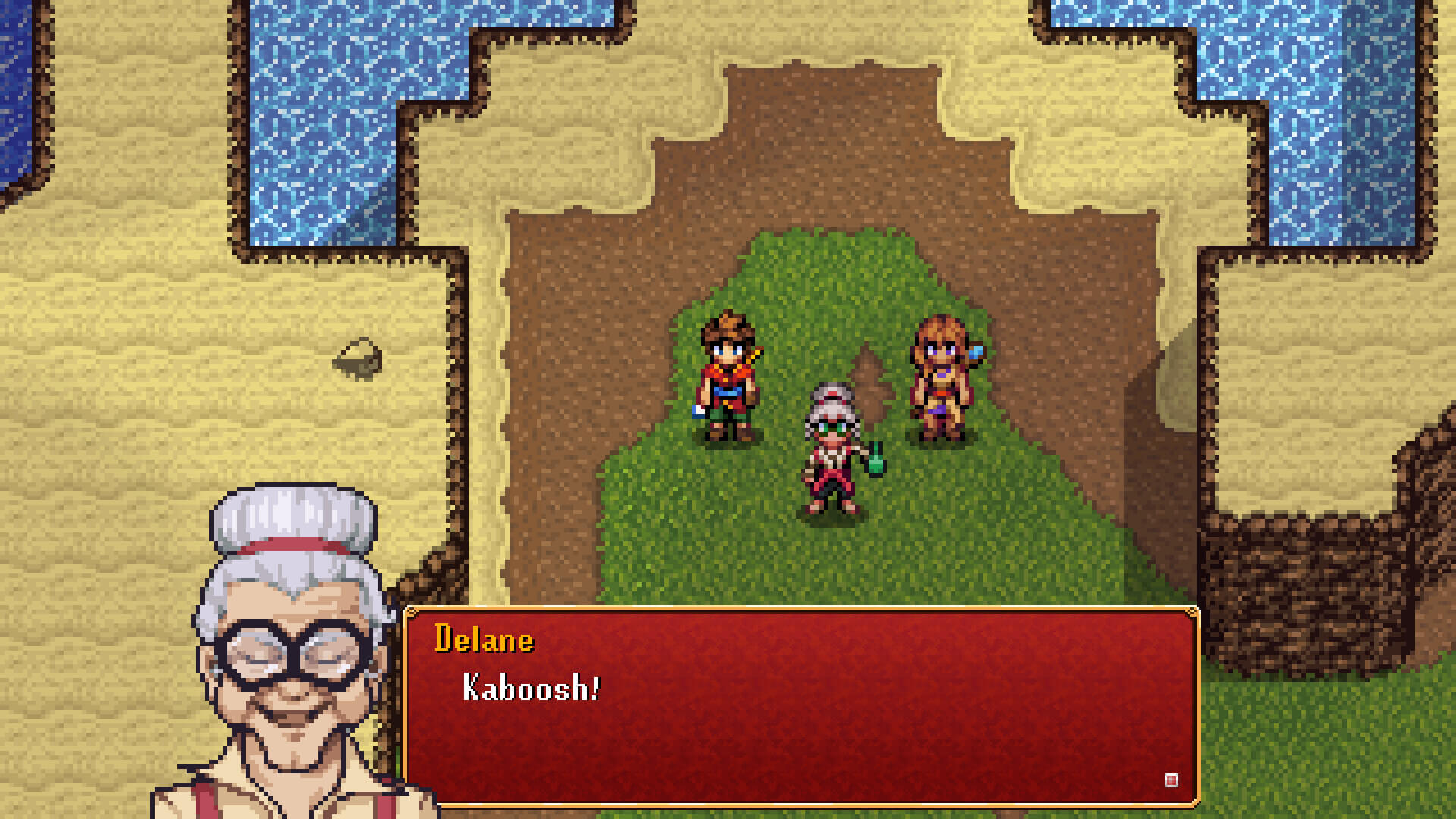
Like its fellow indie RPGs, Shrine's Legacy draws inspiration from classic games while also keeping things fresh by injecting modern influences and reimagining well-worn concepts. The result is a natural evolution of the popular RPG experiences of the ‘90s. The defining feature in Shrine's Legacy is its co-op gameplay, which allows two players to explore together—or a single player to swap between Rio and Reima and their unique skills and abilities.
"Given that so few RPGs have co-op as an option, it helps Shrine's Legacy stand out," said Joseph Duke, the game's technical director and co-creator.
"We've always enjoyed RPGs which let you play with a friend," Duke and Gabbard explained in the Shrine's Legacy Kickstarter campaign. "Frankly, we feel that not enough RPGs—and modern games in general—give you this valuable option. It wasn't easy putting co-op in an action RPG game engine, but it was important to us so we made it happen."
A mashup of classic influences
Thanks to its multiplayer action, Shrine's Legacy calls to mind Square Enix's resurgent Mana series. The most recent release, 2024's Visions of Mana features a similar blend of 3D action, RPG-like exploration, and light puzzle solving, while older entries like the classic Secret of Mana implemented co-op multiplayer.
But longtime RPG fans will likely notice many similarities to a long-defunct trilogy of '90s action RPGs developed by Quintet for the Super Nintendo: Soul Blazer, Illusion of Gaia, and Terranigma.
"We love that they are a unique set of action RPGs on the Super Nintendo with powerful stories about death/destruction and rebirth/creation,” said Duke, citing Terranigma as a major influence on Shrine's Legacy, particularly its combat.
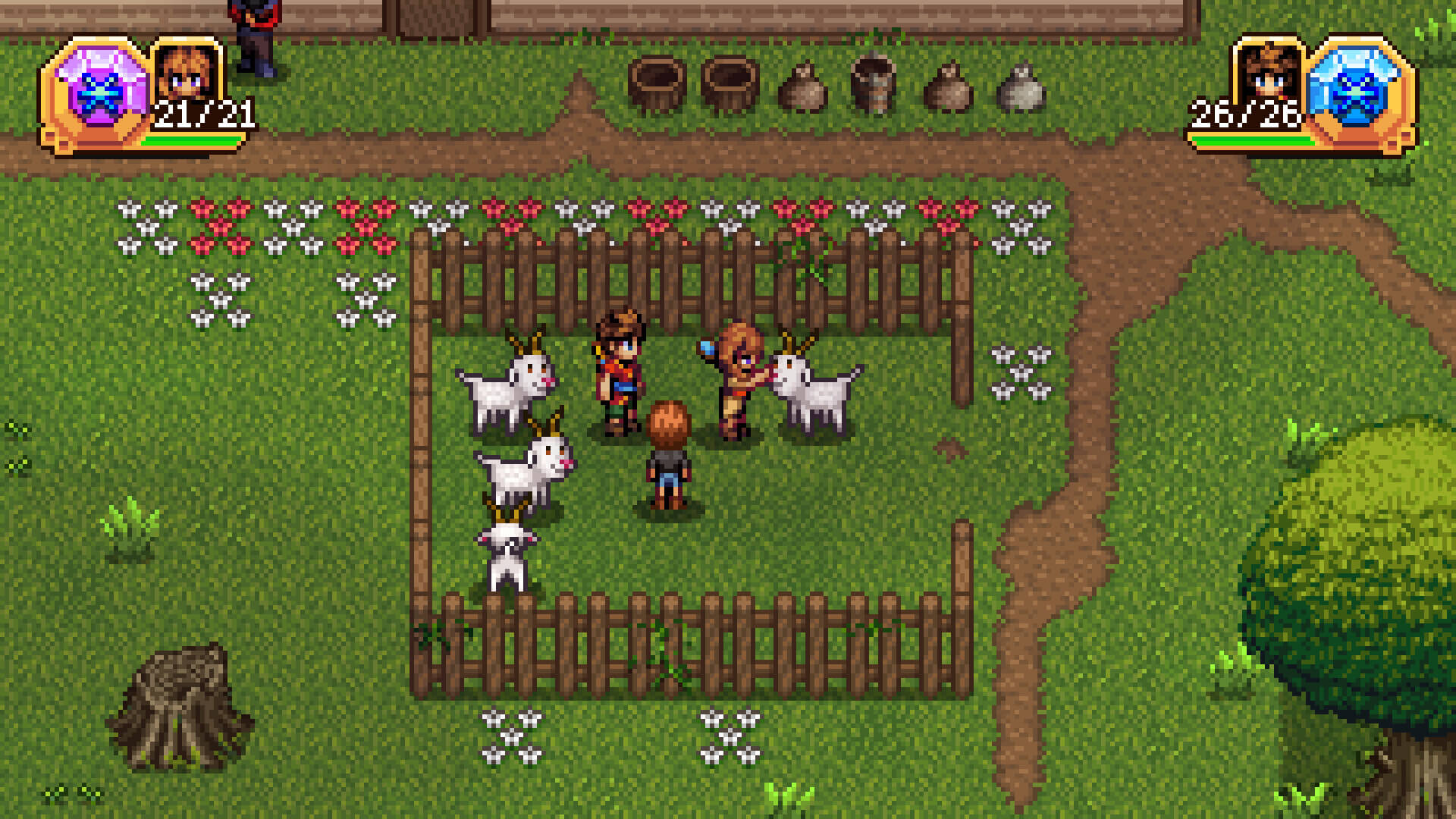
Fans of Quintet's trilogy will also immediately recognize a mechanic used heavily in those games: Being rewarded for defeating all the enemies in each room of a dungeon. In Illusion of Gaia, defeating a roomful of enemies rewarded the player with a stat boost, effectively doubling as the game's leveling up mechanic. In Shrine's Legacy, defeating enemies unlocks progress through the dungeons by destroying environmental barriers.
"[The idea for the barriers] came to us when we were thinking about how to make locked doors like in Zelda, but with more versatility so they can change based on the environment of the dungeon itself," Duke explained. "Since many of our dungeons are outdoors, this made it easier to make naturally flowing levels without needing to think of some kind of specialized door that made sense for every dungeon, including ones where such doors might start to feel kind-of forced."
But as Duke also joked: It's just fun to see stuff explode.
"RPGs got too serious for a while," he said, referencing a promise from the Shrine's Legacy Kickstarter to bring "weird back to games."
"I think they are doing a better job these past few years of bringing weird things to the table again, but there's a lot more risk that should be happening, especially with surreal humor and levity," said Duke. "That's why we included wild characters like the luchador trio of the Hiroshi Bros."
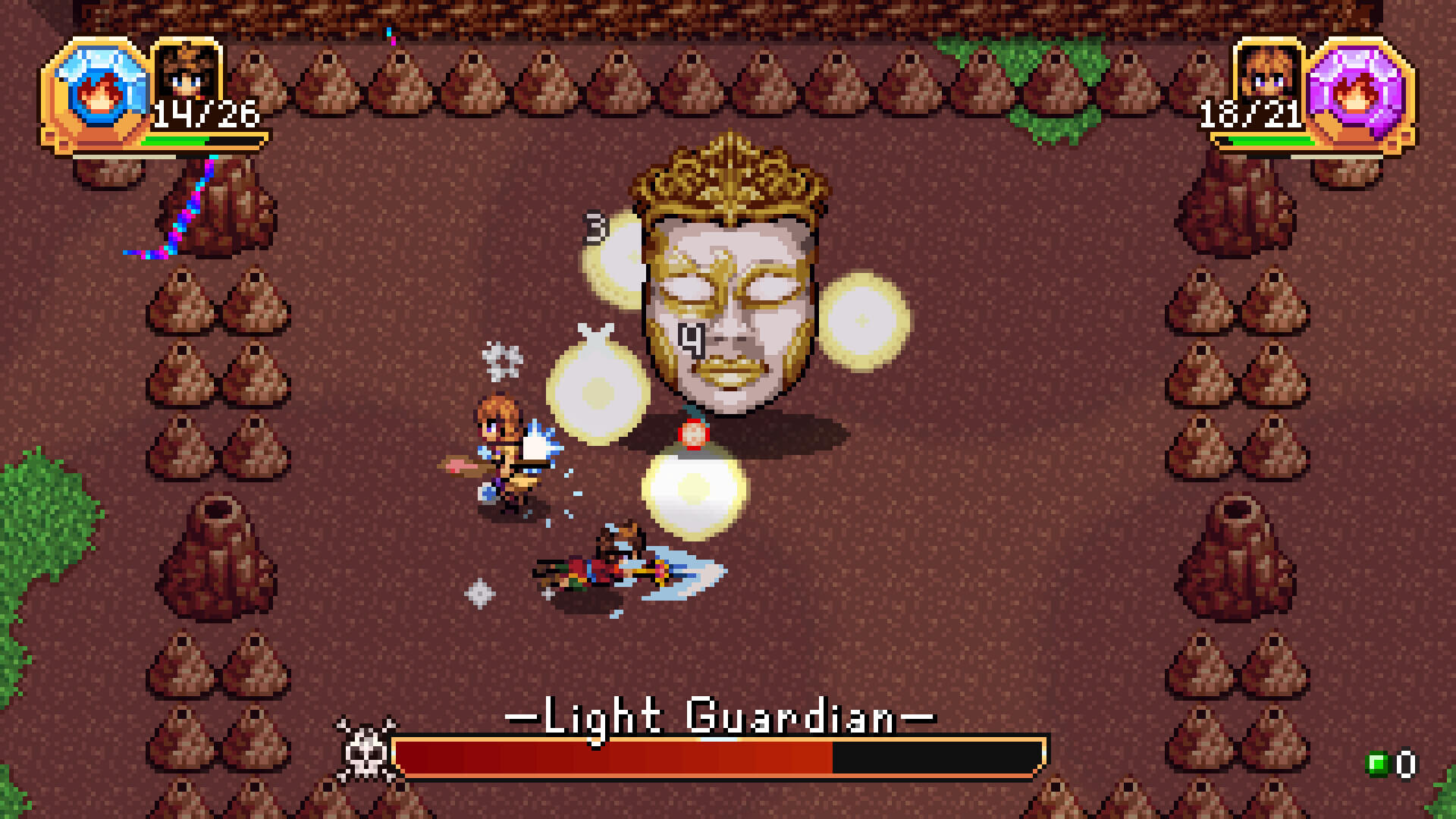
Duke also cited several other obvious inspirations, including The Legend of Zelda: A Link to the Past for its puzzle design—but also some surprises, like turn-based titles Final Fantasy IV and Final Fantasy V for their approach to tone and setting, and Super Metroid for its world design and tutorialization.
And the biggest influence on bosses in Shrine's Legacy? "Hollow Knight," said Duke, "but not necessarily difficulty—our game is intended to be easier than Hollow Knight.”
A retro RPG deluge
Shrine's Legacy joins the other throwback RPGs mentioned above as part of a massive surge in popularity and success for indie games. But why are these small-team, small-release titles suddenly blowing up?
Duke believes there's a simple explanation: The economy.
"People want to keep playing new games, but they can't afford $70 or $80 titles," he said. Instead, players are turning to indie for quality games at a price they can afford. With their lower cost of entry, indie games are being noticed by a larger and larger portion of the gaming community. Many of the most acclaimed games in recent years—Blue Prince, Balatro, Despelote, and UFO 50 among them—came from indie creators.
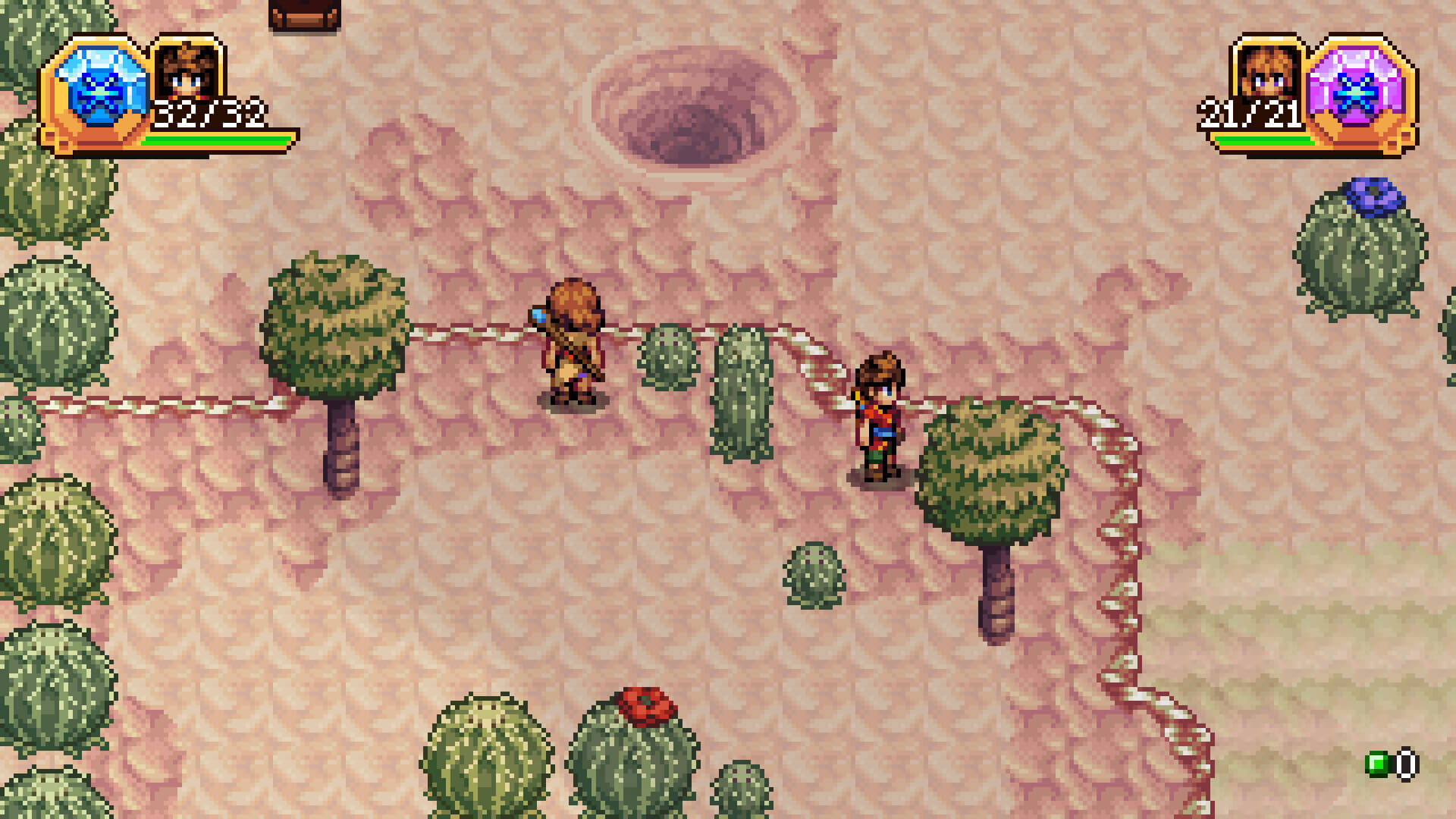
According to Duke, the acclaim stems from the fact that the indie space provides a lot more room for creativity and risk-taking. "More expensive productions are way less likely to take risks and build creative projects," said Duke. "We think the more time that passes, the more obvious the repetitive design patterns are becoming, and it leads to people craving something different and unique more often."
Many of these games were also made by "small" teams, which has led to a lot of discussion recently about how we credit work on games. Titles like Hollow Knight: Silksong and Clair Obscur: Expedition 33 were ostensibly made by small teams, but also feature a lot of outsourced and freelance work. According to Duke, who was quick to credit the work of freelance artists and mappers, there are two elements required to make a game with a small team: money and drive.
"Games like Clair Obscur and Silksong definitely have lots of the former," he said. "In our case, it was way more drive (with a pinch of insanity) than money. If we had more money, we could have done more. But we are proud of what we've made with extremely limited resources."
Without a lot of cash, the biggest cost for Duke and Gabbard's small team was time. "Even just counting when the game really started to form up, we've spent almost a decade of our lives on this version of the game," Duke said. "The path we took is not for the faint of heart or those that simply crave success."
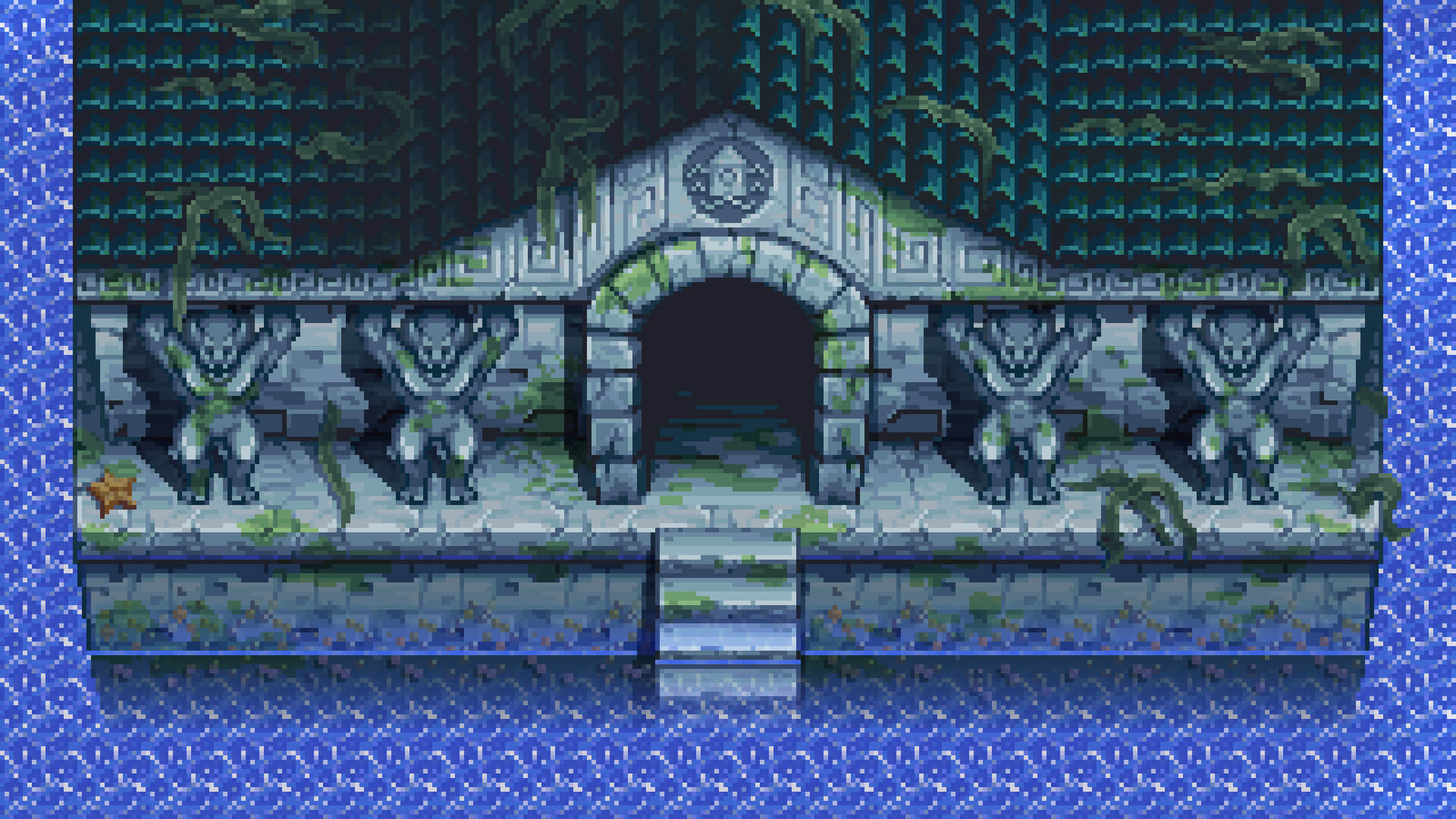
Hard work, good art, and passion are only the first step on the road to indie success, though. The rest of the journey? That's in the fan's hands. The primary way for fans to support Shrine's Legacy is to buy it, of course, but Duke pointed out many other ways to help your favorite indie games find the audience they deserve.
"Even before an indie game launches, it's super important to wishlist it," said Duke. "If you're a big fan of an indie game, support the devs further by spreading the word about how much you loved it! Make fan art, fan fiction, fan games, et cetera. Play the demo or beta and give feedback. Every one of these things helps tremendously."
Shrine's Legacy draws on many of the most beloved 16-bit action RPGs of all time, pulling them together into an experience that feels at once referential and respectful of its influences, while also chasing something vibrant and fresh.
"I think the fact that we've managed to bring it all together with a core team of two people is both insane and impressive," said Duke.
And when you're done with Shrine's Legacy, there's a vibrant community of creators making similar games. "Infinite Alliance [releasing in 2026] is the result of a slew of indie JRPGs (including Shrine's Legacy) collaborating on one cool turn-based project!" Duke said when asked about other indies that might appeal to his game's fans.
From Shrine's Legacy to Quartet, Kingdoms of the Dump, and Geo Mythica—all of which Duke shouted out—it's a great time to be a fan of retro RPGs.
Shrine's Legacy releases October 7 on the Epic Games Store.