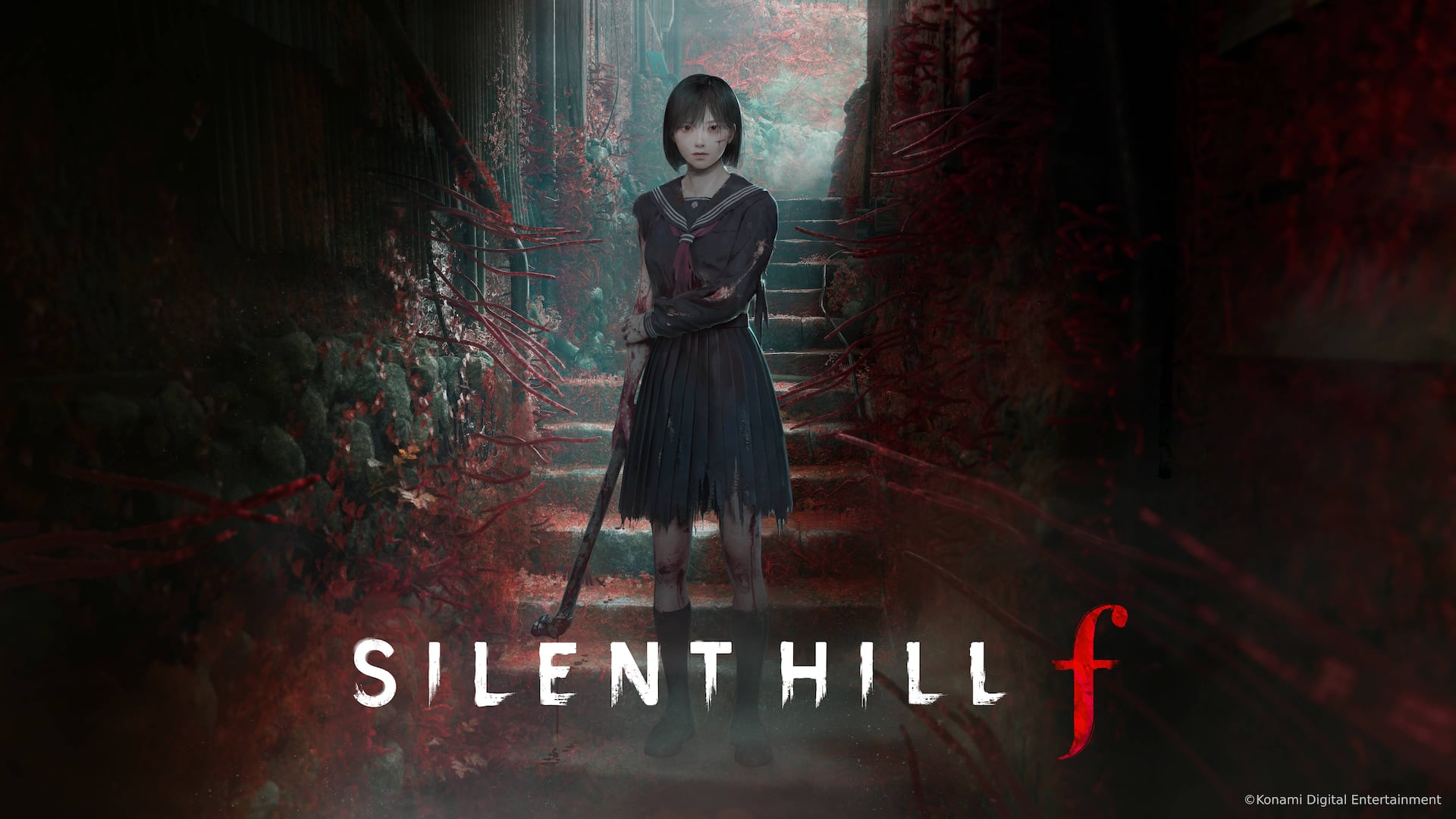
SILENT HILL f hands-on: A confident comeback for the iconic horror series
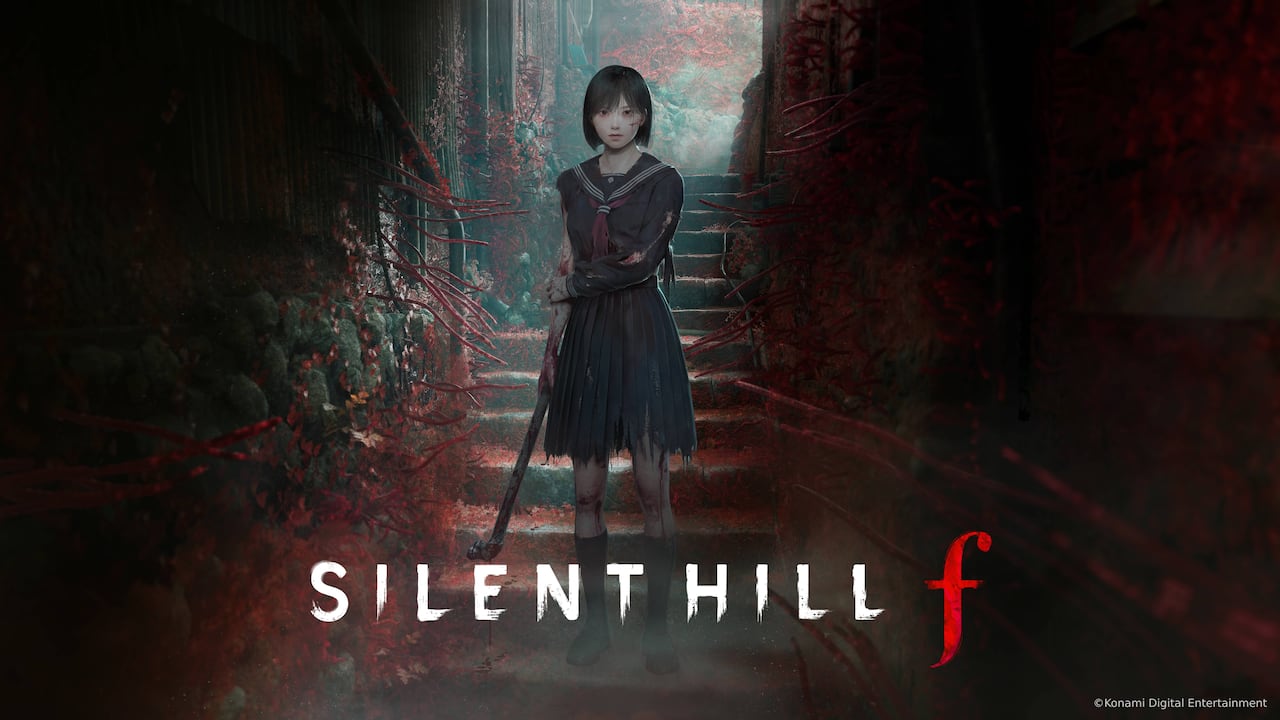
With SILENT HILL f's release date just around the corner, Konami invited a handful of media to go hands-on with the first few hours of a pre-release build at Gamescom. Even as a squeamish, peeps-through-shaky-fingers, sleeps-with-the-lights-on-after-a-scary-game player who doesn’t always do the best with horror, I’m really excited to see more—both because of SILENT HILL f's compelling story (and a surprisingly believable and well-written teenage cast) and because it's a cool take on the survival horror genre, marrying the resource-managing tension we love from the genre with clever lock-and-dodge combat.
Overstaying my three-and-a-half-hour appointment, I wound up putting in four hours at the beginning of SILENT HILL f. And even though I don’t think I scratched three hours' worth of progress—having accidentally led protagonist Hinako to a handful of gruesome deaths as I navigated its foggy, ethereal environments—I still left with plenty to chew on.
SILENT HILL f starts with Hinako rushing out of her family home, escaping an argument with her parents that ended with her being compared to a “perfect” older sibling, who isn’t around (though I don’t think she’s dead). As she runs downhill towards the main street of Ebisugaoka, her small mountain town, to meet with friends, a thick fog rolls in. Mysteriously, almost everyone in town, save for Hinako and a few of her friends, disappears in the mist.
Given SILENT HILL f's rural setting and its 1960s setting, I think there’s something more happening here than just a quick and easy narrative device to isolate these characters and their relationships.
See, like many superpowers involved in World War II, Japan experienced a rapid revitalization that eventually led to a massive economic boom. Compared to other countries that saw similar losses and destruction, Japan’s postwar economic progress was so extreme that it’s often referred to as a miracle by economists and sociologists. With a comfortably important place in the postwar order as the world's third-largest economy and a vital strategic partner for the US during the Cold War, Japan in the 1960s might seem like an oddly optimistic setting for a horror game, from the outside looking in.
But catching back up to and eventually surpassing its prewar GDP per capita—this time without a colonial empire—came at a severe cost. The island nation industrialized. Quickly. Government-subsidized companies needed workers to fill factories. And so they came, attracted by higher wages, labor protections, and an improved quality of life, thanks to the government’s establishment of social safety nets and its investment in urban amenities like public transit.
These moves boosted private profit and trade, while causing a rapid urbanization of Japanese society, which saw the population of major cities and production hubs nearly double from 37 percent to 72 percent between 1950 and 1970. Evolving technology helped offset the negative effects of declining rural populations on industries like farming, keeping agricultural production high enough to sustain the working population. But technological advancements didn’t insulate small towns (like the fictional Ebisugaoka) from shrinking rapidly, leaving rural areas underserved and at risk.
In isolating a small cast of four high school students, SILENT HILL f puts all the pieces in place for a clever commentary on the unseen horrors of the modern world. The game juxtaposes the characters’ confident resistance against demonic enemies with a place that’s already doomed, no matter who survives the scarecrow-like enemies that creep through Ebisugaoka's small streams, rice paddies, and drugstores.
I saw this sense of dread push SILENT HILL f's characters in different directions. Hinako plays foil to the woes of these changing times. She doesn’t fit the conventional standards for an ideal daughter to small-town parents, and her characterization therein is incredibly layered. Clearly traumatized by the absence of her “perfect” older sister, Hinako wears the weight of expectations with the resilient confidence that marked the second-wave feminist movement, which began taking root worldwide in the 1960s. She won’t—maybe can’t—be like this sister who manages to cast an immense shadow from far away.
But don’t mistake Hinako's confidence for that of an adult. Her relationships are still very juvenile, and keep her character grounded in the realities (sometimes horrors) of being a teenage girl. This made for believable dynamics between her and her friends, Shu, Sakuko, and Rinko, the only other people left in Ebisugaoka.
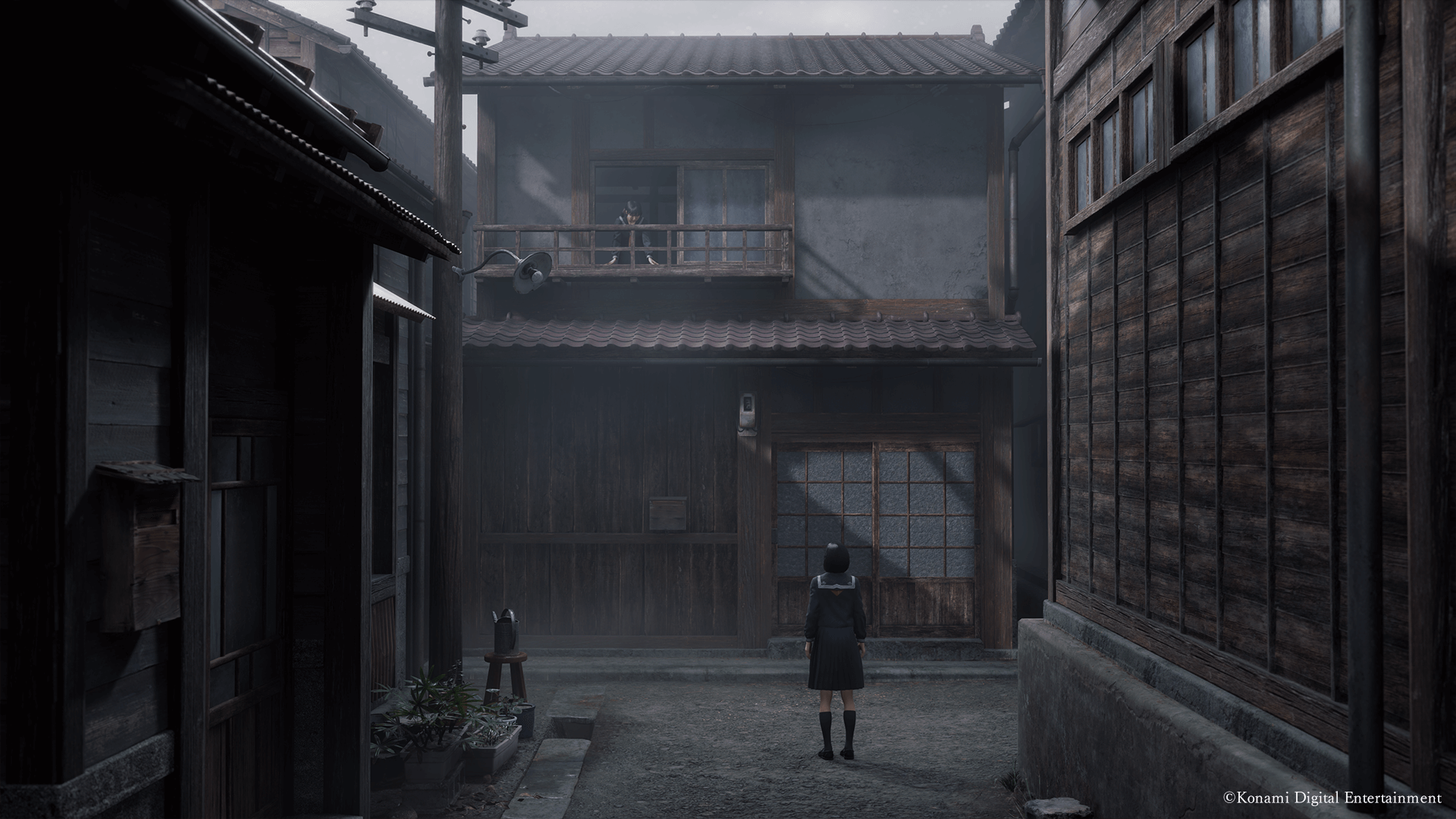
I didn’t get to see the full story, but the parts I saw set up a compelling web between Hinako, Shu, and Rinko that made it possible for SILENT HILL’s trademark cerebral, character-driven horror to creep through like a thick fog. Being from a small (and presumably shrinking) town, these three have known each other for a long time. Rinko feels trapped, constantly ignored by an uninterested Shu, who seems more interested in Hinako. She wants to get out. Like the workers who flocked to the cities, she tries, eventually betraying her neighbor to chase an unsustainable mirage.
Shu meanwhile has an ambiguous—sometimes even suspicious—presence. A childhood buddy of Hinako, Shu seems intent on pursuing nostalgia. He doesn’t really care that Rinko’s interested in him and, at first blush, it might seem like he’s crushing on Hinako, but he actually just wants to go back to the way things were when he and Hinako would play in the stream as kids. It feels appropriate that a male friend who unwittingly serves as the wedge between two young women is obsessed with what once was, both serving to critique the trope and to paint anti-feminist sentiment as a misguided product of nostalgia.
That’s not to say that Shu himself was revealed to be unkind or against Hinako’s independence. He’s just kind-of unaware, a teenage boy who happened to be in the wrong place at the wrong time…at least for now. He’s written and played in a way that makes me think Hinako shouldn’t trust him, though he was still on solid ground up to the point I had to leave my demo station.
The cutscenes where these dynamics play out lend an extra sense of dread to Ebisugaoka. Its eerie Japanese folk-meets-harsh noise soundtrack kept the hairs at the base of my neck tingling and my jaw clenched despite the noisy mish-mosh of different languages that hung over the busy convention center hall.
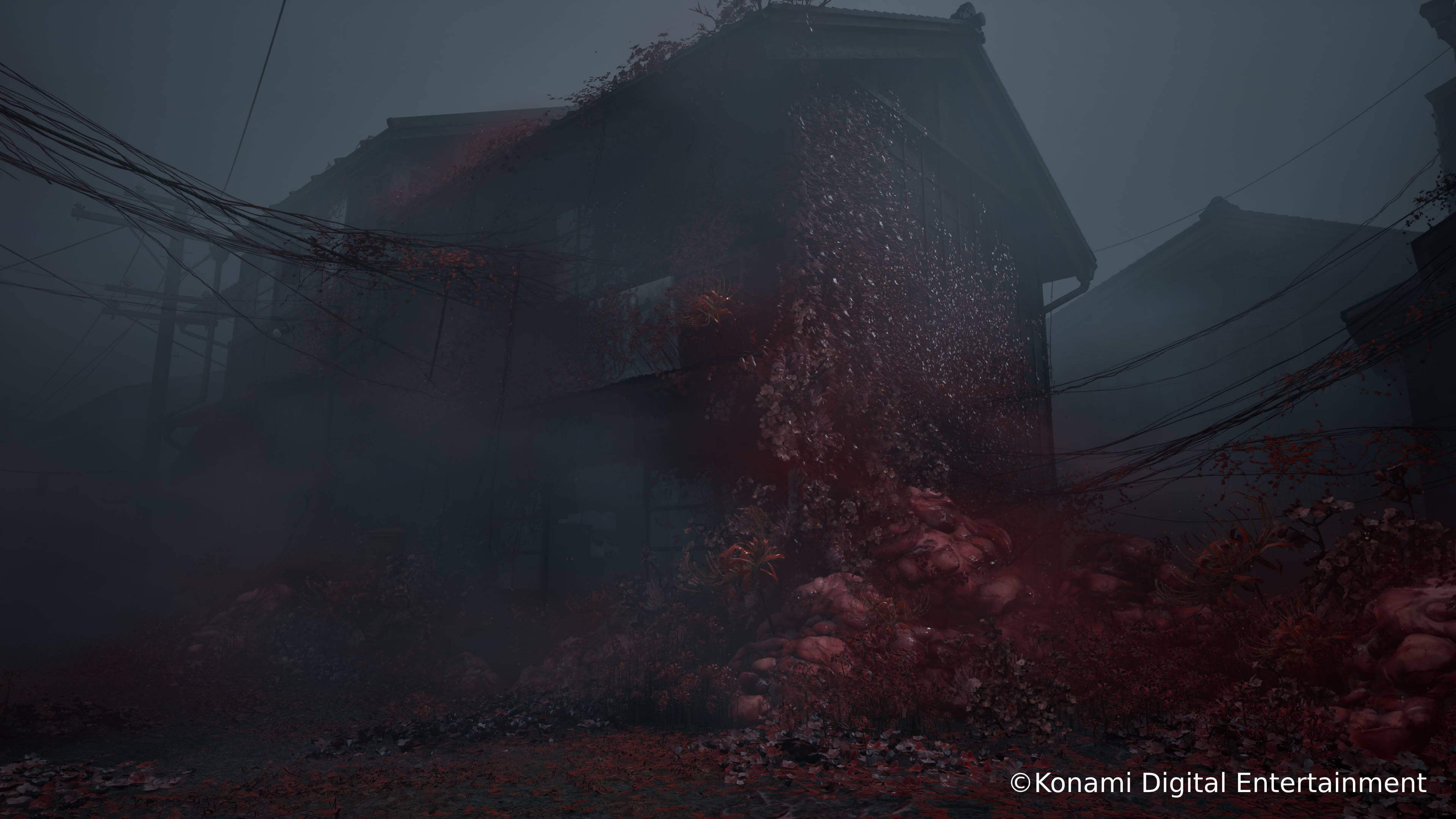
The camera work did a surprisingly good job of conveying unease during the demo, too. In cutscenes, the camera ditches the sometimes over-focused camera found in contemporary games for something a little more detached, painting a location or item before any characters come into frame—like using a convex rearview mirror to create an unsettling fisheye of Hinako as she navigates the fog.
Even some canned gameplay moments helped to add more tension, like the moment where a crevice-crawler (that thing some games do to disguise loading by having your character slowly shimmy through a tight space) gets interrupted and Hinako gets sent the other way, subverting your expectations and ratcheting up the pressure.
Most of my SILENT HILL f demo, however, saw Hinako alone with her thoughts. I was surprised at how much the demo focused on wandering the foggy streets of Ebisugaoka, armed with a lead pipe and smashing grotesque mannequin-like enemies until they lay down and died.
Combat has a surprisingly Souls-esque bent. Though SILENT HILL f is by no means a Soulslike—you won’t level up using the same currency you drop when you die—combat definitely has that same slow and methodical pace, forcing you to lock onto your assailants, dodge around their attacks, and try to get a swing or two in as you manage your stamina gauge.
The Focus mechanic does a great job of taking those ideas and melding them with the more conventional resource management you’d find in a classic survival horror game. Holding down a button puts you in Focus, which makes it easier to see when an enemy is about to throw out an attack you can counter, consuming the limited Sanity meter.
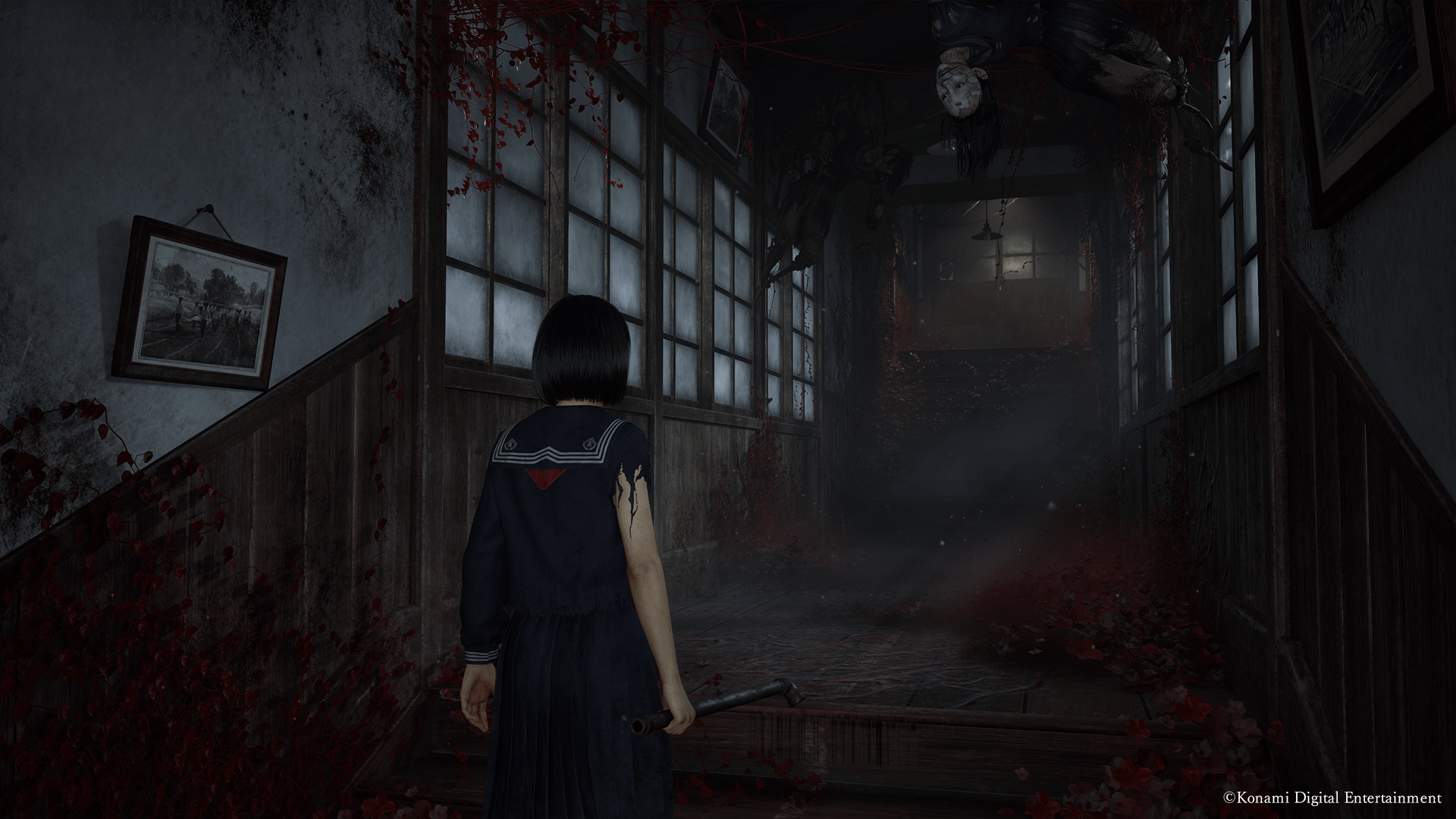
Sanity is (appropriately) a finite resource in SILENT HILL f, almost acting like bullets in a more conventional, stop-and-pop survival-horror game. Select healing items can restore Sanity, as can shrines scattered throughout the game. These shrines, which function as Hinako's save points, can also generate Faith, a resource earned by offering up various items found in Ebisugaoka and which you can spend on upgrades.
This marriage of lock-and-dodge combat with a survival-horror metagame makes for a potentially compelling system, though it didn’t evolve much during my demo. Aside from swapping between weapons, the only time a combat encounter really differentiated itself from “hit the bad guy a bunch” was a sort-of miniboss—or at least it felt like one, requiring me to drain all of my healing and Sanity-restoring items to win. I had to crank the winch of a well while dodging a lumbering, fleshy monster’s toxic belches and weighty swings. I eventually got the bucket from the bottom of the well (and the key inside) and defeated the big guy.
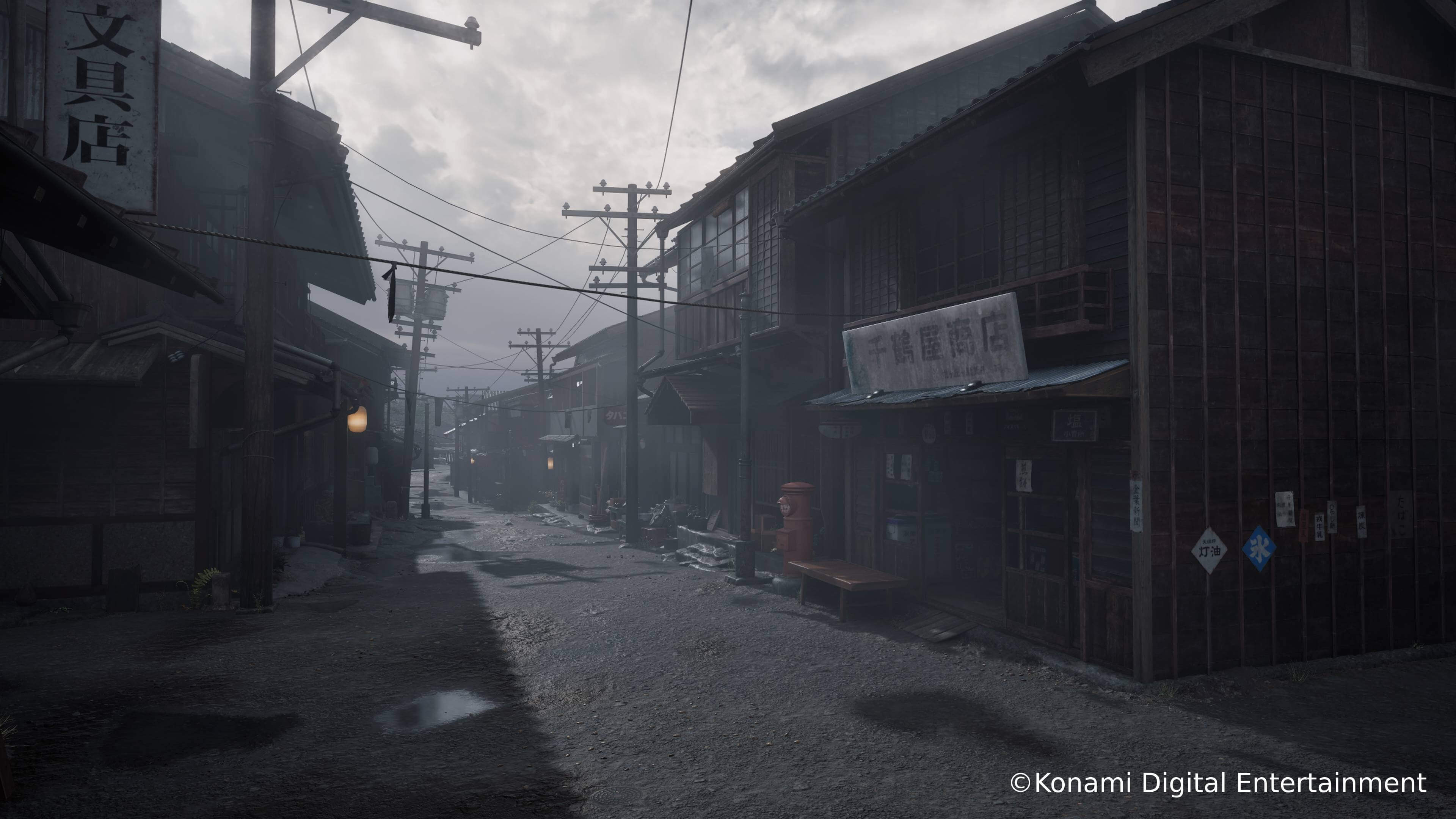
Running around Ebisugaoka, ducking into homes and through alleyways to find helpful items and dodge demons, really hammers home how much attention NeoBards Entertainment and Konami have put into recreating a Japanese town from this era. It may be empty, but Ebisugaoka is alive. Floorboards creak and mud squelches underfoot, fabric and plants dance in the wind. Everything’s designed and laid out at a realistic scale, and the town turns into a horrifying maze after the fog sets in.
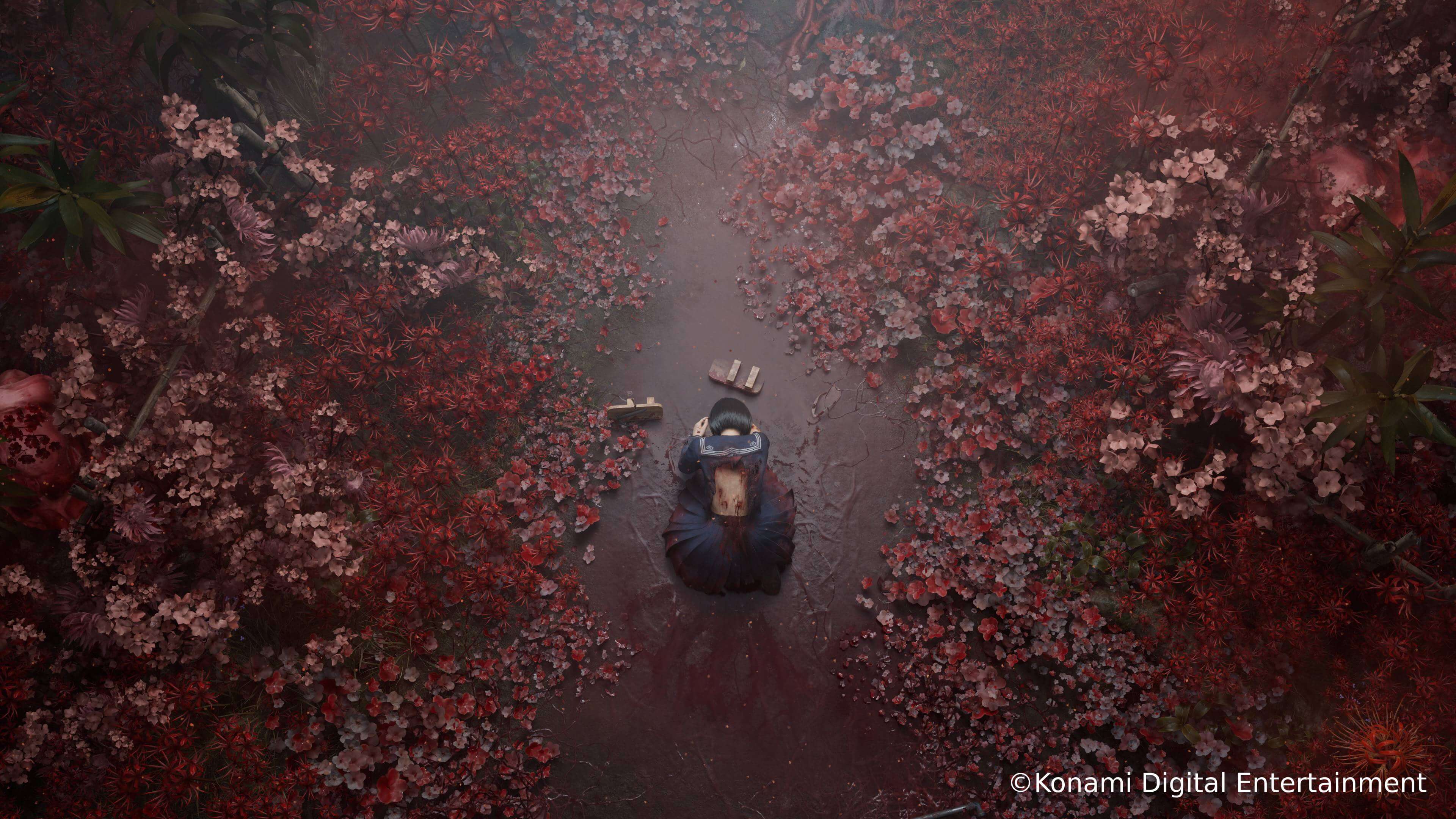
While most of our demo took place in Ebisugaoka and its nearby shrines and farms, some of it saw Hinako wandering a spiritual plane rooted in Japanese folklore. Trudging through gardens and forgotten shrines bathed in a dim, red light, this is where SILENT HILL f handled most of the cerebral horror you’d expect from the series. With visions depicting Hinako and her family in intriguingly horrifying ways, it did a great job of setting up sanity-testing intrigue for the young protagonist.
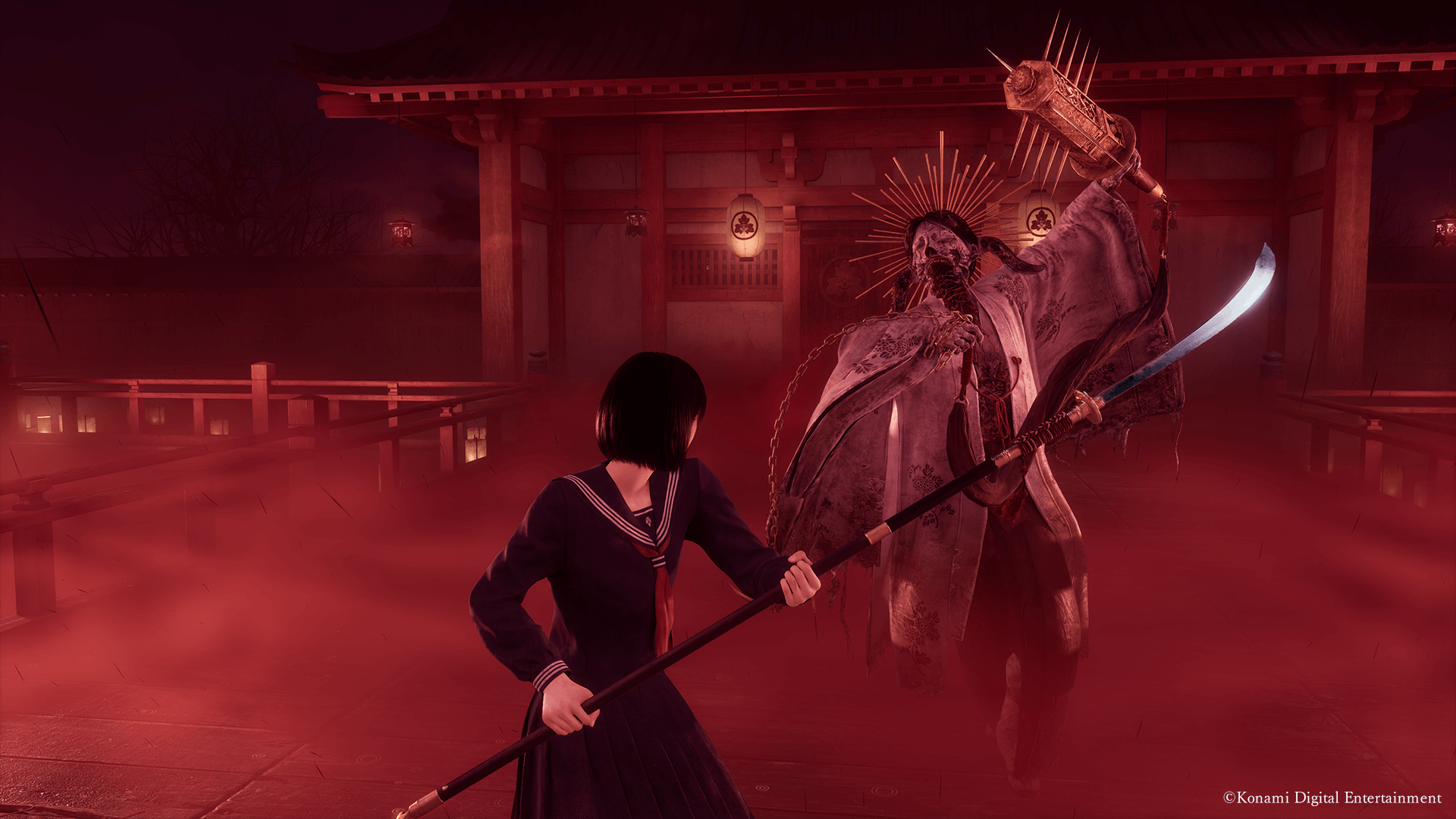
Teasing mild similarities with the real world, this dreamlike realm conveniently bookends major plot points, offering a place for Hinako to work out what just happened or set up something new. I didn’t see as much of this alternate reality, but I have a feeling it’s the secret to Hinako’s escape from what’s happened in Ebisugaoka.
SILENT HILL f puts a lot of pieces in the right places in its first few hours, and I think it will continue for the remainder of its runtime. I came away impressed and interested in seeing just how SILENT HILL f continues to put a mirror to this specific moment in Japanese and world history, and how its character dynamics play out. And even though the combat encounters that string together these strong story beats are pretty basic, the ideas tying them together leave lots of room for clever evolution.
SILENT HILL f releases September 25 on the Epic Games Store, and is available for pre-purchase now.