How Hazelight Studios makes Split Fiction's genre-bending gameplay make sense
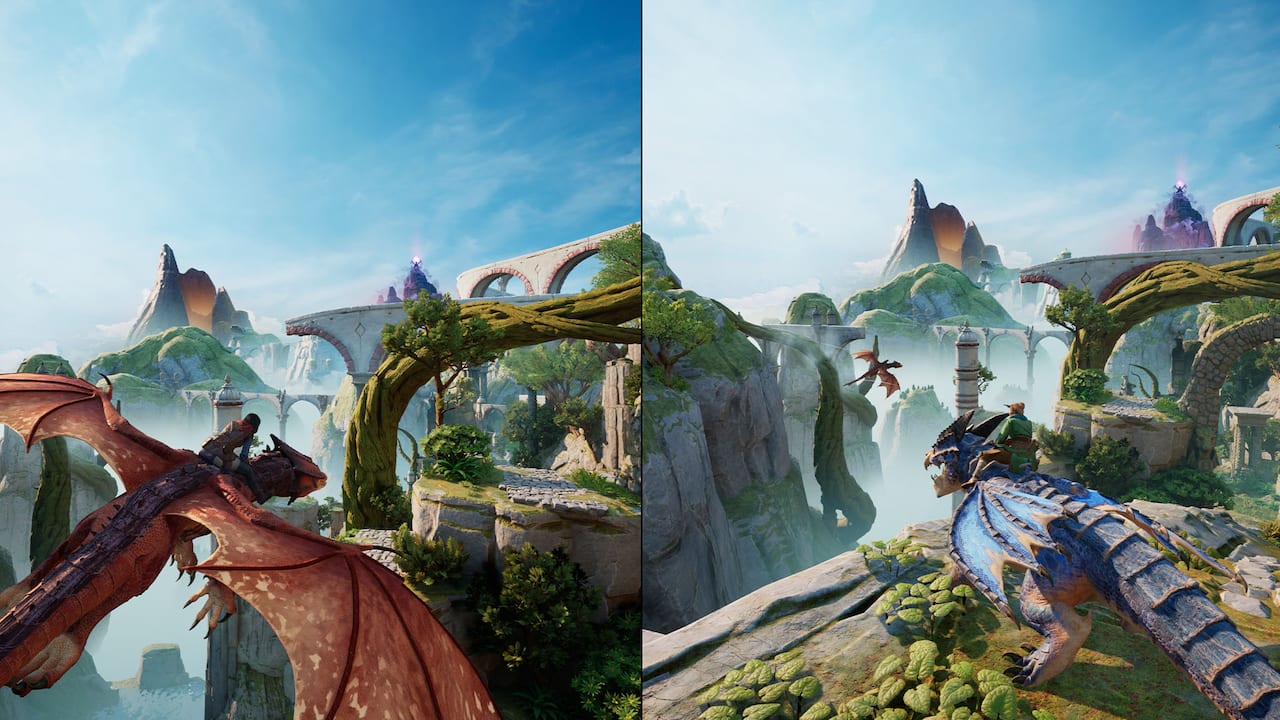
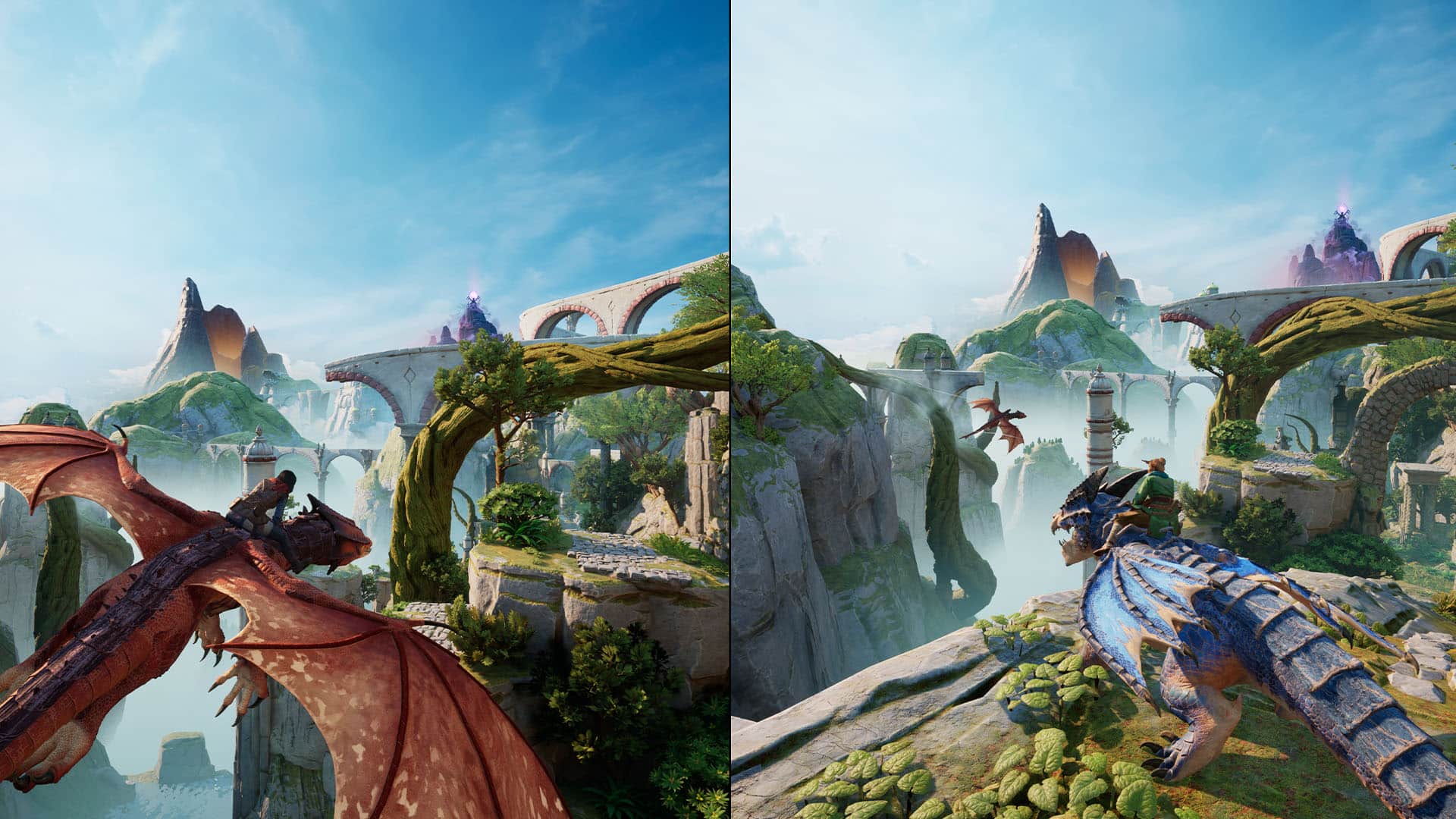
If you've heard anything about Hazelight Studios' latest title Split Fiction, it's probably that the new co-op action-adventure features a ridiculous amount of unique gameplay elements. Split Fiction's inspired set-up—which sees aspiring authors Mio and Zoe trapped inside their fictional stories—tosses players into a seemingly endless variety of science fiction and fantasy scenarios.
This dual-genre approach alone sets the stage for an experience that spends as much time in far away galaxies as it does among mythical monsters. But while you can expect to shoot blasters and cast magic in equal measure, these genre-specific inclusions don't even come close to scratching the surface of Split Fiction's unique one-off mechanics.
From surfing atop sandworms and evading exploding suns to speeding on light cycles and leading a conga line of primates, you'll rarely come up for air, nevermind grow bored.
But what about Split Fiction's storytelling and characterization? Does this unparalleled gameplay variety come at the cost of a cohesive and continuous narrative? Are Zoe and Mio mere pawns in a glorified mini-game collection?
On the contrary. Despite its seemingly scattershot approach, Split Fiction smartly leans into a few key, carefully crafted elements to make it all make sense.
It's really a puzzle-focused platformer
Across the game's eight chapters, Mio and Zoe harness a massive array of skills, abilities, and powers. Toss in a dozen side-story quests—all with their own unique aspects—and you can count on learning something new every few minutes in Split Fiction's rapid-fire world.
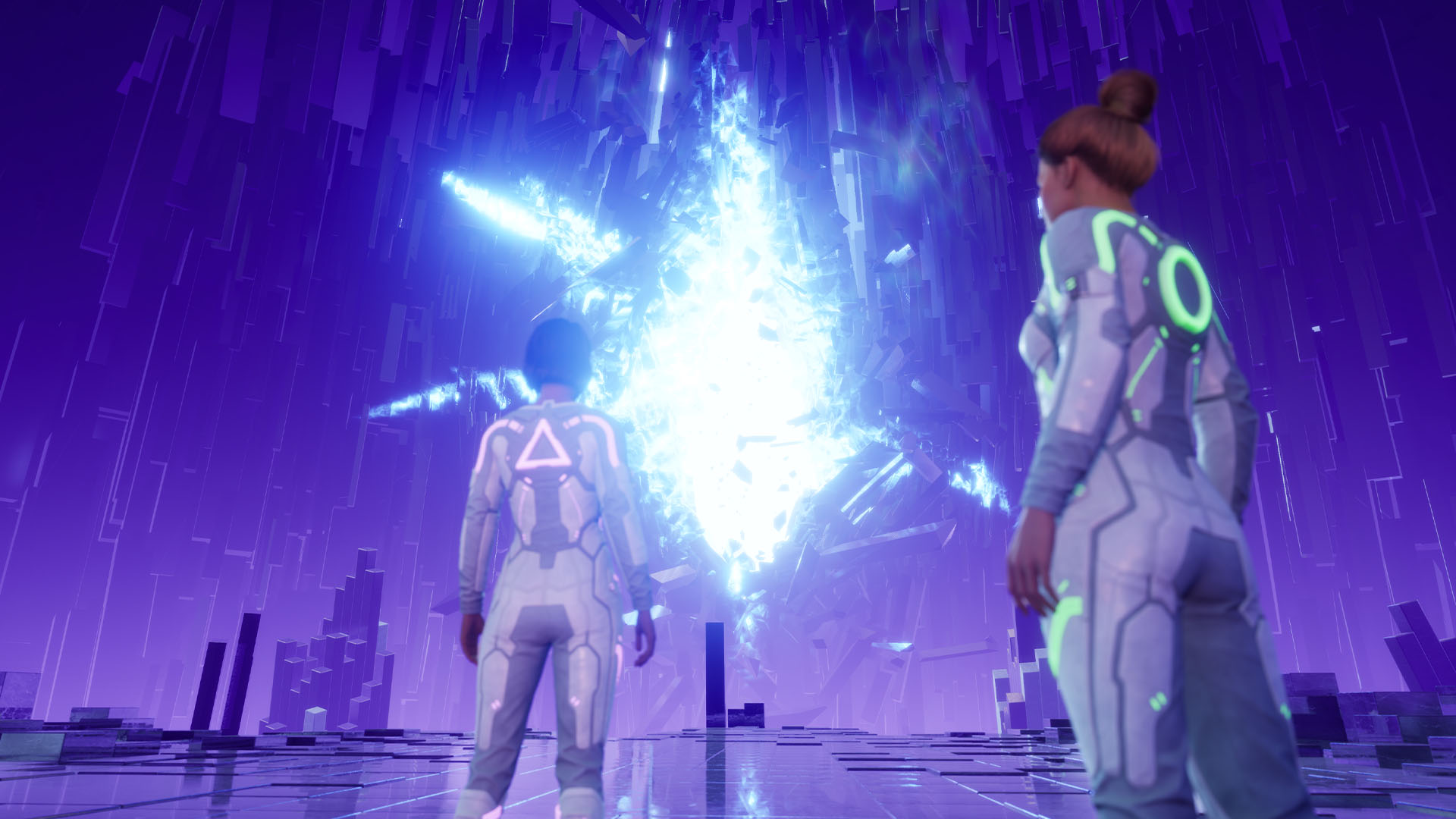
But while you'll find yourself controlling a flatulent pig within moments of leveraging a laser lasso against a hammer-wielding boss, you'll also discover these disparate scenarios have some things in common. Both of these challenges (and just about every objective in Split Fiction) call on your platforming and puzzle-solving skills.
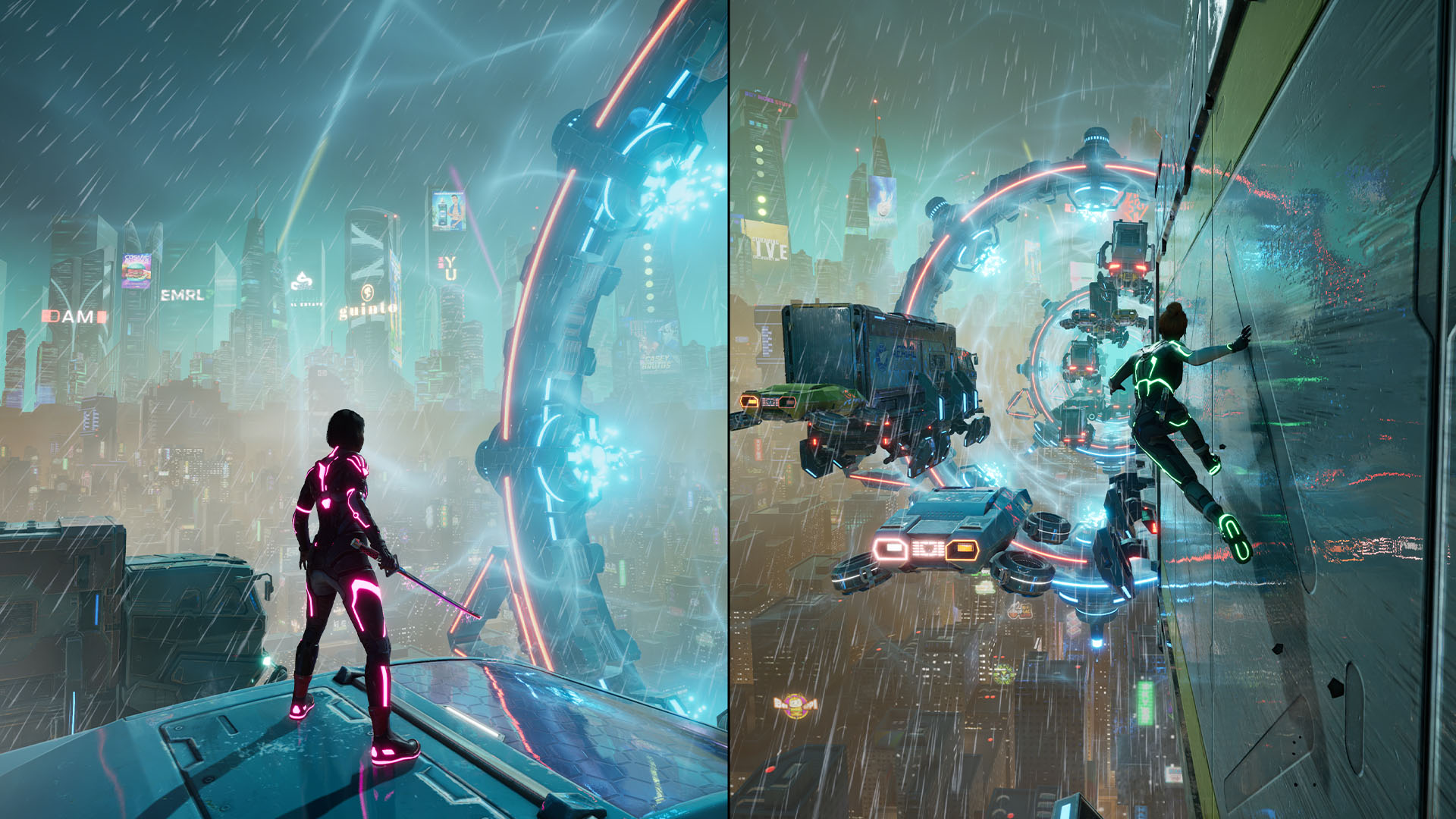
The former is a significant part of the loop, as you'll rarely take more than a few steps without running, jumping, dashing, or using your grappling hook. Further complemented by double-jumps and wall-runs, these acrobatic abilities are regularly used for everything from speedy traversal to more complex platforming challenges.
Puzzles are equally prevalent, frequently tasking you and your co-op partner with thoughtfully leveraging new or existing skills to clear obstacles, navigate tricky environments, and suss out enemy weaknesses. They're a constant part of the game. So while it can feel like you're always doing new things—especially when you go from badass cyber ninja to gassy swine—Split Fiction subtly grounds these seemingly disparate moments in two familiar genres.
The authors anchor the absurdity
If it wasn't for Zoe and Mio's banter, Split Fiction might indeed feel like a mini-game collection or random selection of challenges. The characters' frequent interactions not only serve as regular reminders of their unusual predicament, but also as context to whatever bizarre scenario they find themselves in.
There is, of course, the overarching narrative that finds them trying to escape their own stories after a tech-fueled publishing deal goes south. This main plot—which also explores their evolving relationship—serves as a through-line that's fleshed out with cinematics and in-game conversations. But it's often their small talk that organically helps players make sense of the fact that they, say, just fought a towering cat king in an ice castle.
If you listen carefully, you'll learn that everything you encounter—no matter how weird—is tied to the authors' lives or something that spilled from their active imaginations. That frosty-feline boss, for example, is the manifestation of a feisty kitty Zoe knew as a child. Many of the missions even include off-the-beaten-path benches where players can optionally take a seat and convene just to hear Zoe and Mio converse.
Zoe and Mio know what's up
Players are tossed into Split Fiction's chapters blind. One minute you're saving the galaxy, the next you're squirting mustard on your teammate-turned-hotdog. Zoe and Mio are just as clueless at the story's start, but soon wise up when they realize they're trying to survive their own stories.

Their awareness is another way Split Fiction roots players in its reality. As strange and random as their circumstances may seem from behind a controller, the protagonists feel right at home in the worlds they created. As mentioned above, Zoe and Mio's conversations will often add context to a world, character, or creature, but it's equally cool when the knowledge of their own art lets them know what's coming.
They will often express joy—or dread—upon realizing their creations may soon come to life. It's fantastic when Zoe gets to meet the sassy monkey she and her sister dreamed up as kids, for instance. It's just as fun (and a bit chilling) when Mio insists she and Zoe jump from an aircraft because only she knows it's about to blow up.
The "real" world exists within the story
Most of Split Fiction unfolds within the imaginative worlds conjured by Mio and Zoe. But it also anchors players in its reality with regular check-ins at Rader Publishing, the nefarious company responsible for the writers' predicament.
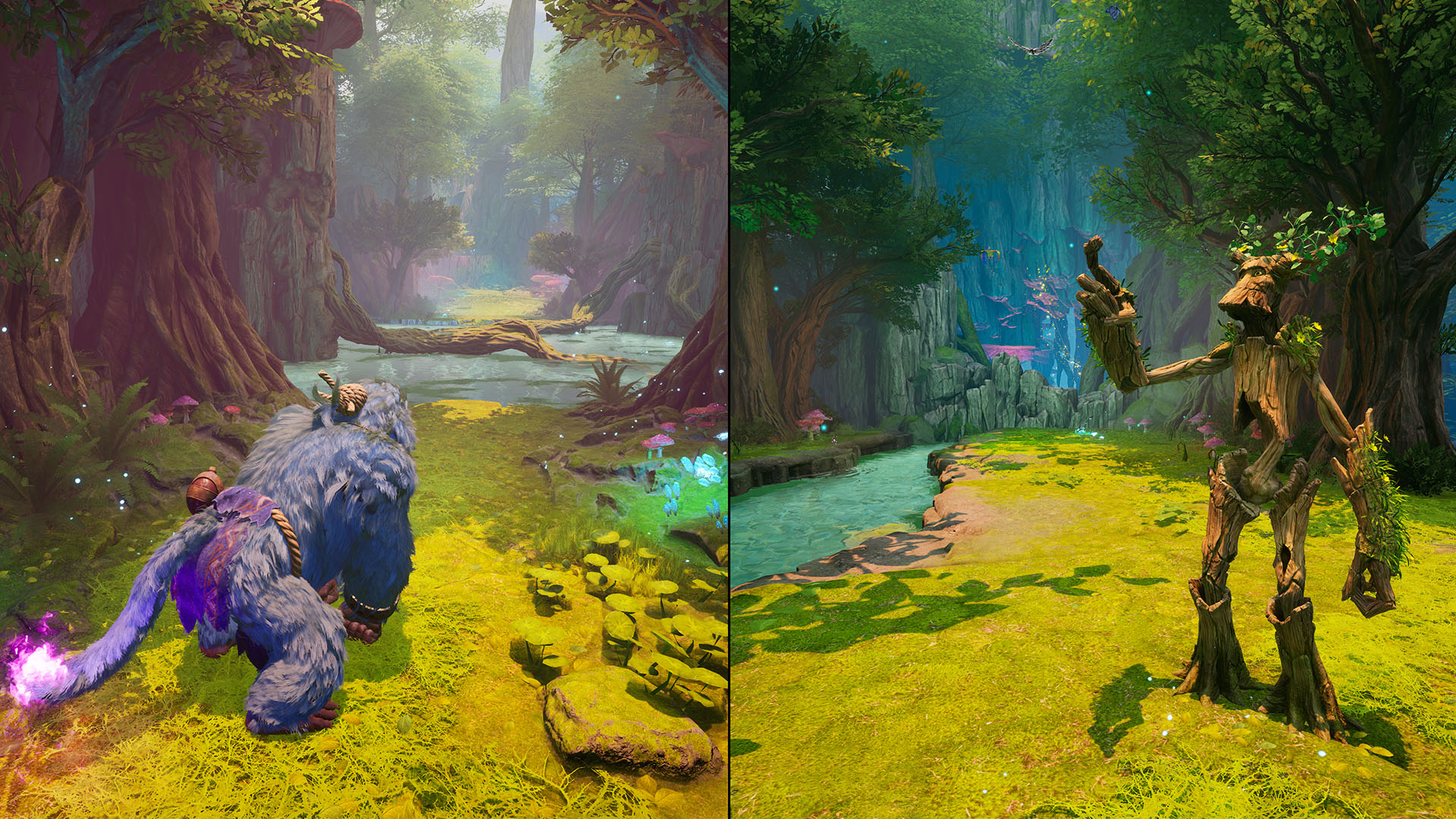
While you're continuously whisked off to whimsical fantasy worlds and dystopian sci-fi nightmares, the frequent peeks inside Rader—where the protagonists' misadventures began—remind us that everything's connected to the game's "real world." Even as Mio and Zoe are scaling giants and participating in life-or-death game shows, the shady folks who initially lured them into this mess are living in a real (albeit futuristic) world much like our own.
Split Fiction is available now on the Epic Games Store.