Star Wars Zero Company hands-on: Attack Astromechs, permadeath, and delightfully fatal Rube Goldberg tactics
Spread out across a dusty red courtyard in an unnamed backwater on Anaxes, my team of four hunkers down behind steel crates and the stucco walls that make up this little village.
Trick, a clone trooper on the team, just blew three outlaws into the air with his rocket launcher, somewhat leveling the playing field, and setting it a bit on fire.
That’s when our Tognath Jedi Padawan, Tel-Rea, gets antsy. She runs around her cover and flips, landing behind a hiding outlaw striker, slashing him with her glowing red and blue lightsabers. He crumbles to the ground, still very much alive. Annoyed, she Force pushes him across the courtyard into the fire from Trick’s earlier attack.
The striker flails into view of Eran Luca, a Neimoidian sharpshooter just waiting for something to cross in front of his scope. He pops off a shot from across the map, killing the enemy.
This exhilarating moment in the mission is an excellent example of the Rube Goldberg death traps you can tactically set up in Star Wars Zero Company and one of the many reasons you should be anticipating the turn-based tactical game’s release.
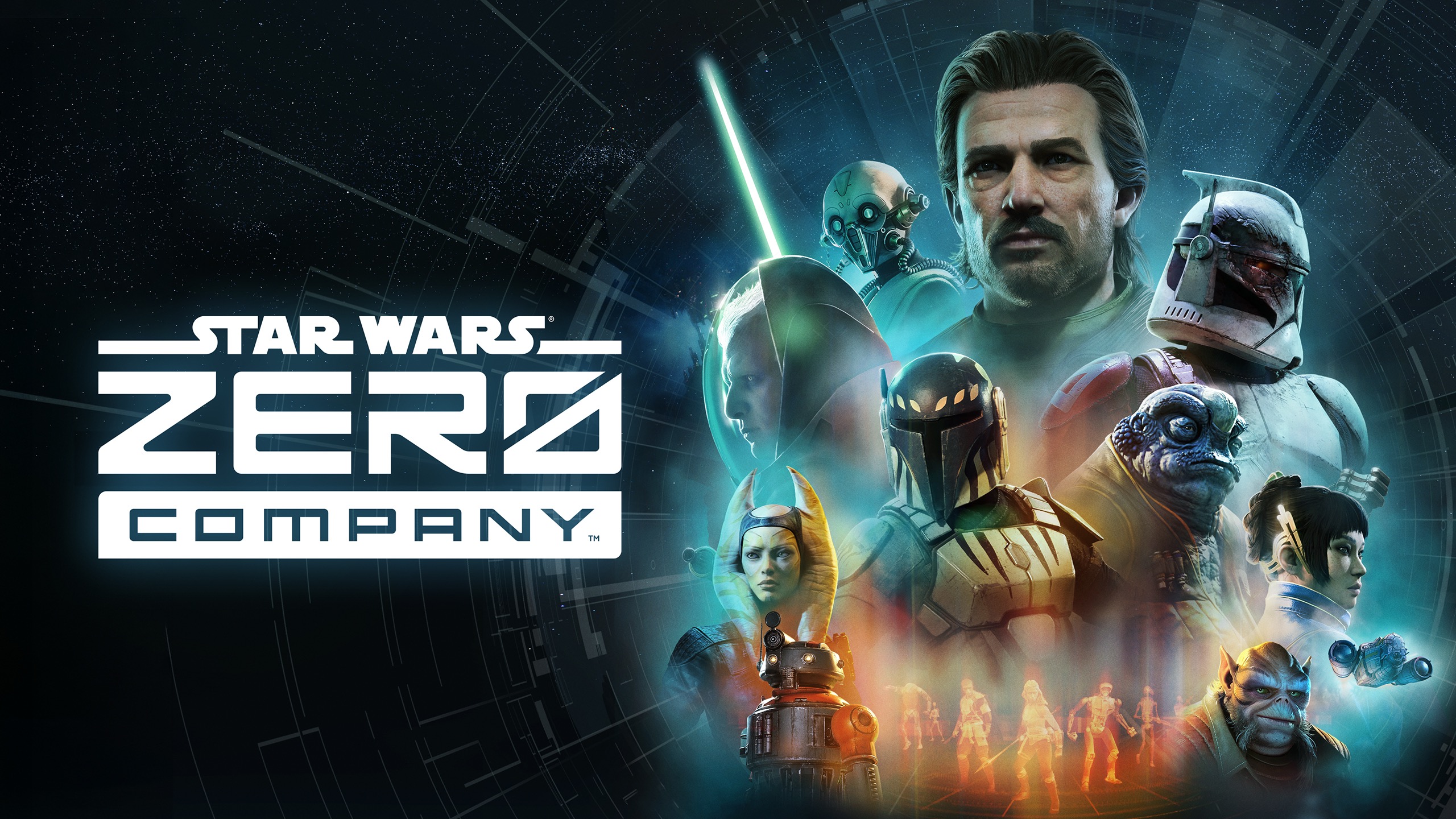
In Star Wars Zero Company, you take on the role of Hawks, a former captain in the Grand Army of the Republic who now leads Zero Company as they are recruited for an operation that has them taking on a new threat in the twilight of the Clone Wars.
Bit Reactor wants to evolve turn-based tactics
As a long-time fan of classic turn-based tactical games like X-COM and even XCOM, I was delighted to see that Bit Reactor developed this game for Electronic Arts, with Lucasfilm riding DC-20.
Bit Reactor was founded in 2022 and includes a mix of staffers from Firaxis Games who worked on XCOM.
“We have a rich history of strategy games with the belief that the tactics genre has the most potential to be innovative,” said Greg Foertsch, founder of Bit Reactor and the game’s director. “It simply has the most room to grow. It can have high presentation values, deep gameplay, and immersive stories.
“All of these things, when working together, should enhance the gameplay experience for players.”
“It's truly the perfect pairing.” - Greg Foertsch, founder of Bit Reactor
Foertsch said Zero Company was born out of that belief. He left Firaxis Games after 22 years, hungry to make something that would continue to push the boundaries of turn-based tactics games.
“I really felt like we were just scratching the surface on some of our previous work,” he said.
Vince Zampella, the founder of Respawn Entertainment who later died in a car crash in 2025., called Foertsch one night to chat.
“We talked for a while about things and the potential for the genre I love, and eventually he asked, ‘Can you make this game into a Star Wars game?’”
“So here we are a few years later with Zero Company. We created an experience where the deep history of the Star Wars galaxy is married with the engaging gameplay of turn-based tactics, where you're not just playing systems, but you're playing complete packages.
“It's truly the perfect pairing.”
Welcome to The Den
While the game centers around the turn-based combat your team gets into in every mission, there’s a lot that feeds into those missions and your chances of succeeding.
The hub of Star Wars Zero Company is Zero Company’s Den, a massive hangar on The Ring of Kafrene that features a plethora of stations, support team members, your Operators, and even some places to hang out..
The most striking thing you’ll notice when you start the game is that The Den and your movement through it as Hawks is shown through a third-person view. You launch into Hawks office, often with his feet propped up on his desk.
You can hop to any location in The Den by pulling up the map, but what’s the fun in that? Traipsing through the halls of the hangar lets you do things like trying out a lute found in your office, chatting with other team members, and admiring the level of detail developer Bit Reactor put into the space.
Recruitment is pretty straight forward, a little station that lets you look over a number of Operators to see if you want to hire them for your team. The Armory lets you modify weapons through mods you receive over the course of play or purchase on the black market. You also come here to equip utilities, like stim packs or grenades, to Operators.
"Don't worry, if you're a big baby you can turn permadeath off."
Upgrades is where you go to upgrade The Den, adding new features, expanding different stations, or improving how different they impact you and the rest of the team. Customization is where you can go to tweak the appearance of your Operators and their outfits. Personally, I found giving my Devaronian Hawk a handlebar mustache really pulled his look together.
The Pit is where a lot of your Operators will hang out. You can go there to catch up and sometimes find hero missions. Personnel lets you manage your roster by spending focus points to improve and unlock abilities and get Operators to train together as their bonds increase.
Bonding is actually one of the big tweaks to the genre. During missions your team’s bonds with one another can go up and down depending on your actions and how the mission goes. Those bonds then lead to special unlocks that can impact everything from tactical abilities during a mission to an Operator's health. It gives even more gravitas to the death of an Operator in a game that, by default, has permadeath on. (Don’t worry, if you’re a big baby you can turn it off.)
The medbay allows you to slowly or quickly heal your teammates, depending on how upgraded it is. Of course there’s also a Memorial where you can go look at all of the Operators you lost over the course of the game.
The four pillars
To create the game, Foertsch and the rest of the team established four game pillars.
The first pillar, staying true to the Star Wars franchise, was how they settled on the game’s setting inside the vast Star Wars canon.
“While there were lots of great options, the Clone Wars era was really the perfect fit for us,” he said.
The next pillar was meaningful choice, ensuring that thoughtful decisions impact gameplay.
“The best games are a series of meaningful choices,” he said. “The decisions you make, what jobs you take, who you assign to your squads, how you fight in the field: The choices you make will have pivotal consequences in every mission and playthrough.
“Every player will have a different gameplay experience because players will make different choices. Choice with consequence is completely at home in Star Wars.”
The third pillar used to create Zero Company is one that Foertsch said is where the genre can “really be great. And until now, it’s just scratched the surface.”
He believes that previous turn-based games have only scratched the surface of being cinematic.
“Turn-based tactics games should be able to tell better stories, have better visuals, and of course, have deep gameplay loops,” he said. “The thing we live by is that depth of the game shouldn't cost you elegance. Depth and immersion are not mutually exclusive and in Zero Company, players can and should expect both.
“Our tactical gameplay is cinematic. Everyone on the battlefield has a specific personality, and the dialogue and combat chatter immerse you in the tactical gameplay experience.”
The fourth and final pillar is one that, initially, sounds like something that should be in all games of this genre: strategy and combat.
“Now, what I mean by this, is most games in the genre have two separate but equal halves: strategy and combat,” he said. “Now with Zero Company we set out to create a game that delivers both the strategic layer and the combat layer where they work together as a cohesive experience.
“When you put all these things that I've discussed together, if you've done it right—and I think we've done a pretty good job here—it results in a core loop of engaging gameplay with meaningful decision-making coupled with an amazing original Star Wars story. That shouldn't cost the player elegance in gameplay.”
Gather around The Holotable
All of that design work often comes to a head at The Den’s central Holotable, the largest and most interactive galaxy map that has ever been in a Star Wars game.
The Holotable is where you will map out not just your missions but also check out the influence you have in zones and deal with possible operations that pop up.
Zone influence is something that changes as you complete Operations and Tactical missions in the game. The higher you get it the more rewards you unlock. Operations are typically brief assignments that don’t require combat. You assign Operators to them and then go out and return to let you know how it went. Often the Operations end with rewards for use in The Den, though they can sometimes go sideways.
Tactical missions are the ground combat that you’ll be itching to get into once you’ve mastered the art of prepping and upgrading your Operators. These missions can be tied directly to the story, or be side missions that don’t move the bigger campaign forward, but do let you rack up some rewards, if you succeed.
"You can visit your dead at the Memorial wall."
When you go on a mission it automatically advances you to the next Cycle, which is how the game keeps track of time.
I don’t want to get into spoiler territory, but I believe it’s safe to say that the story has you taking on a paramilitary cult called The Infinite Coil which is led by Kundri Fathom. She and her followers come with their own challenges, but you’ll also be fighting against a mix of other baddies including outlaws, droids, and Separatists.
After being briefed you have to assign your team (often four, but there are missions with as few as one). While deciding who to take you’ll want to look at their weapons and utilities, but also a few other things. Each operator has a primary weapon that defines their role on the battlefield. Blaster Pistols are fast low damage weapons. Repeaters are larger heavy weapons. Blaster Rifles are a nice-mid range weapon and the Longarm Blaster are essentially sniper rifles. Each Operator also has a talent and a specialization. Talents include things like giving an Operator damage bonuses, taunt, more health and defense or even the chance to steal credits during a mission. Specializations are essentially like a character class. So you have things like Assault, Gunslinger, Heavy, Medic, Sharpshooter and Scout.
Once your group is formed you’re taken planetside for the mission. Sometimes you’re dropped directly into battle, with the view switching to a beautifully detailed isometric view, other times you control your lead Operator in a third-person perspective through the area until you find the combat zone and it switches then. When you’re allowed to walk about a bit before combat you can usually find bits of intelligence lying around, or by talking to people.
Once the battle starts, though, you drop into what feels like a tightly developed turn-based tactical game layered with some neat new ideas and absolutely slathered in Star Wars everything.
The game grants each Operator three action points which can be used to move, attack and use abilities on each turn.
During your mission you’ll most likely want to stay behind some sort of cover to reduce the chance of being hit by enemies. They’ll be doing the same thing. You can also use your AP to do things like setting up Overwatch on a designated area, which means if someone walks into it you automatically fire on them.
On top of this basic gameplay you have the ability to call for backup from other Operators, this allows you to do things like have two Operators fire on the same target at the same time. It also increases the Bond between Operators. While you’re playing through the mission you’ll be gaining Advantage points, one for each enemy damaged. The Advantage points can be used by anyone on your team to perform Ultimate Ability. So, for instance, once you gain ten Advantage points, you can get Trick to fire a rocket launcher at a group of enemies. Each Specialization has its own Ultimate. They’re all pretty amazing.
Inevitably, one of your Operators will be downed, with their health hitting zero. If you can move a teammate up to them they can use an AP to rally a downed Operator. You can do this twice to the same Operator, but if they’re downed a third time they’re killed in action.
Don’t worry, you'll still be able to visit them at that fancy Memorial wall.
The war beneath the war
After spending more than 30 hours with the game, and definitely wanting more, I feel like there’s still so much I haven’t explored. I’m delighted that this is a game that is impossible to 100 percent on a single playthrough.
I’m looking forward to coming up with strike teams of only weaponized astromechs (yes, you can do that), to playing ping pong with a distant enemy using an Operator’s Force powers, to going melee only with a team guided by the robotic fist of Kabb Uppercut (real name).
And, so help me, I’m looking forward to finding out what happens in the story, a story that explores what Orion Kellogg, executive producer at Lucasfilm, calls the “war beneath the war.”
“It's one shaped by conflicting loyalties, uneasy alliances,” said Kellogg. “Along the way, the story explores corners of the Clone Wars timeline that we haven't seen before, and introduces an all-new cast of characters that will appear for the first time in Zero Company.”
And while you can turn permadeath off in the game, Kellogg sees it as appropriate.
“We all believe that [permadeath] is part of the fabric of Star Wars storytelling,” he said. “Choice with consequence, pushing through an emotional loss. And as we always say in Star Wars, no one's ever truly gone in a manner of speaking.
“So I know I would encourage players to embrace the consequences.”
Related Links

Fortnite on PC: Best settings for competitive play in 2026