Hírek
Stranded: Alien Dawn’s Regions and Their Challenges
F
Frontier Developments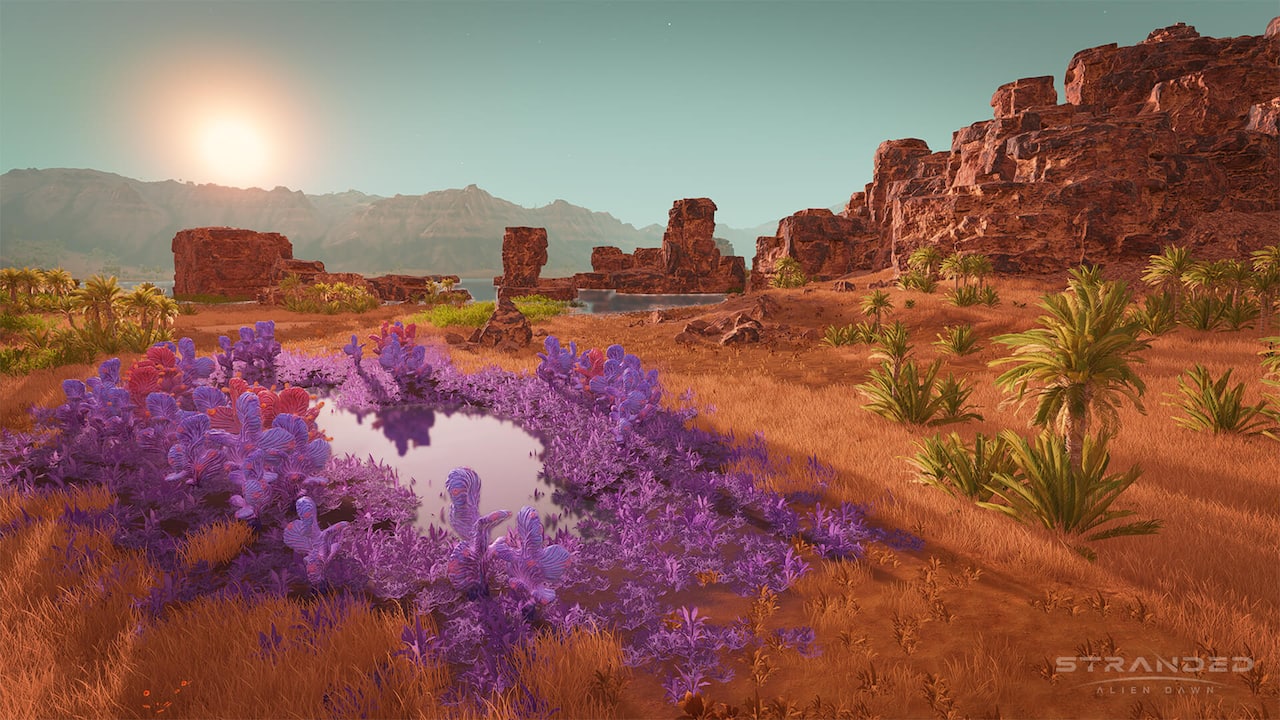
In this blog, we will delve into Stranded: Alien Dawn’s two distinct biomes, which we call regions, and delve deeper into how they impact the way you play the game.
Each biome consists of multiple maps, that both have multiple starting locations, often referred to as crash sites. Players must devise innovative strategies to maximise their group’s chances of survival in their unfamiliar new surroundings.
The Sobrius Biome:
The stunning temperate region of Sobrius is characterised by mountains and large meadows. Its mesmerising landscape boasts a vibrant array of native flora and fauna. As your survivors crash land on a vast uncharted planet, they must explore this earth-like biome, characterised by its lush vegetation, vibrant colours, and extraordinary creatures.
Sobrius is home to a wide range of plant species, unlike anything seen on Earth. For example, the ground is covered with colourful flowers and mushrooms that possess remarkable properties – these will provide your survivors with essential resources for survival, such as food and medicine. Not only do these plants offer beautiful visuals, but they also play a crucial role in the game mechanics, offering you a chance to harness the power of nature to overcome challenges.

Sobrius is also teeming with a plethora of mysterious creatures, each with distinct behaviours which can pose a threat to your survivors as they work to establish a safe and thriving base. By observing the native fauna, survivors can discover how useful they can be, providing resources such as meat, and hides. Each game year in Sobrius consists of Spring, Summer, Fall & Winter, each with fitting weather and temperature. Temperature and weather have a significant impact as suitable shelter, clothing, and food are required to survive heat waves, cold snaps and the winter, so make sure you plan ahead!

The Desertum Biome:
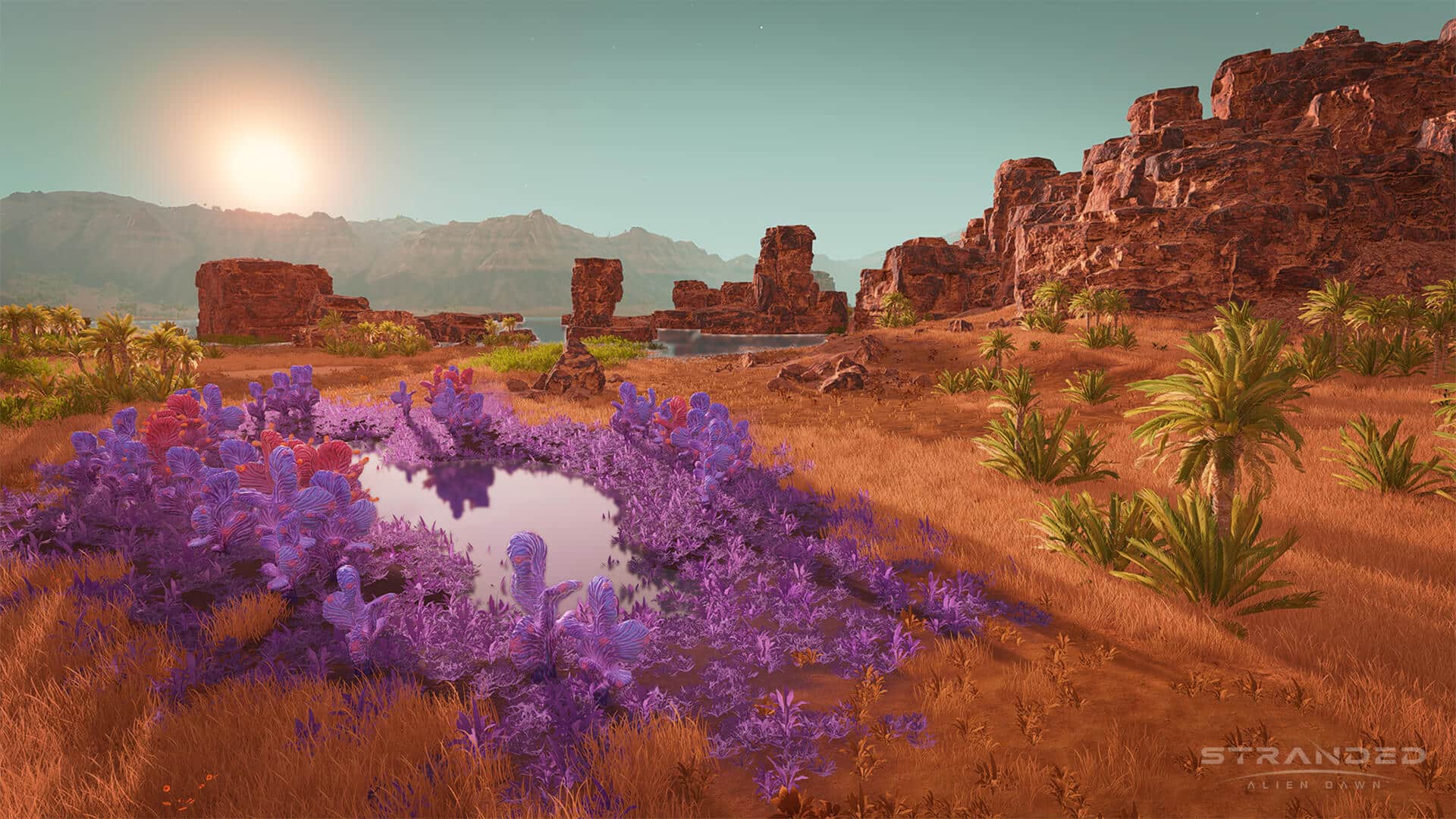
Desertum is a harsh arid environment characterized by scorching heat, with vast stretches of sand dunes, mesas, buttes, and occasional oases. It presents a stark contrast to the Sobrius biome, with its dry and barren landscape posing a set of new challenges for your survivors.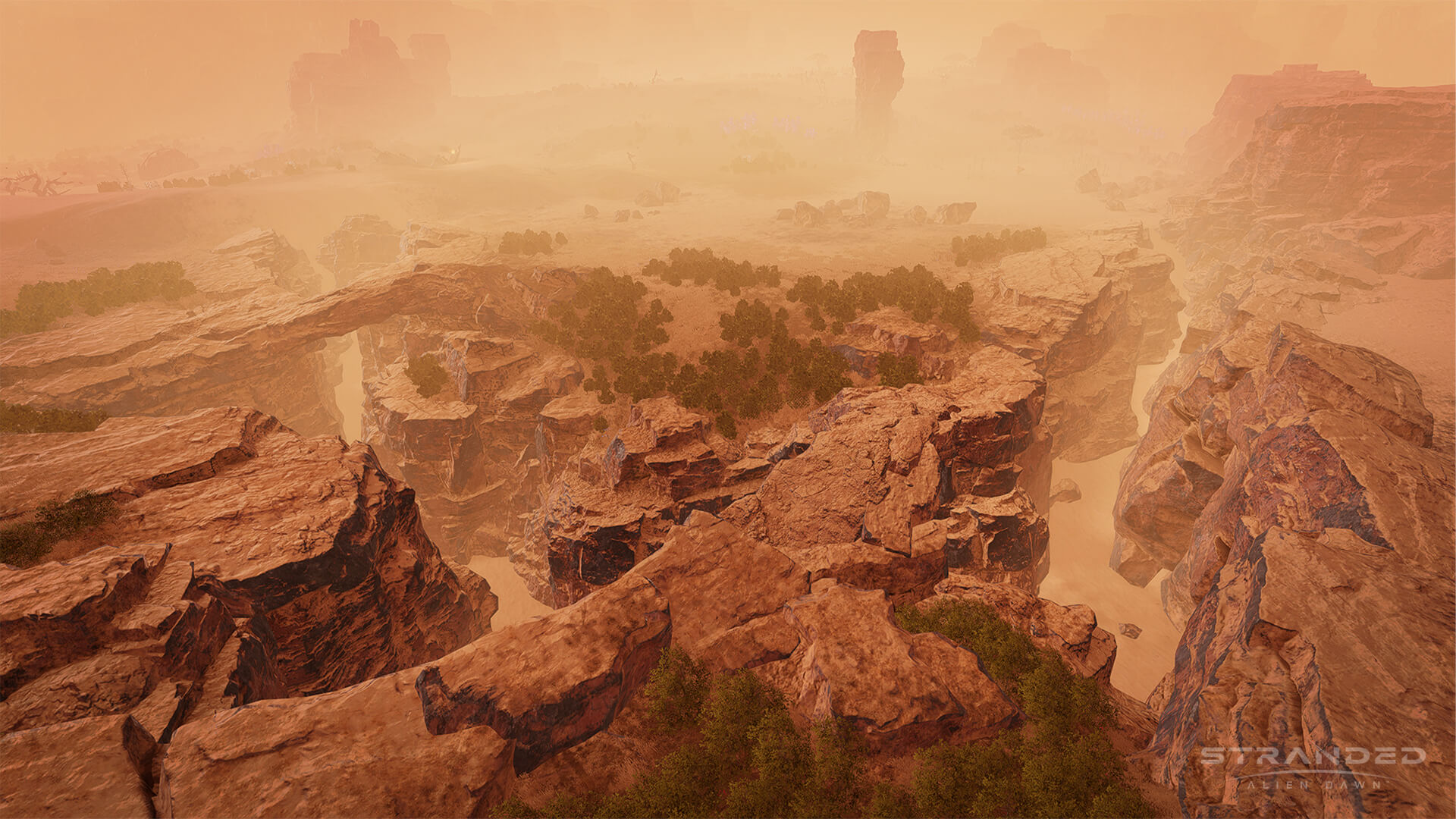
The Desertum region is visually distinct and has a tangible impact to how the game might be played.
The abundance of naturally occurring primary resources varies and depends on where your ship lands on the planet. Desertum features several unique plants and two native animals; Tecatli and Dromadda, complimented by flora and fauna that may also be found in Sobrius.
In Desertum, trees are scarce, and the soil quality makes it harder in general for things to grow.
There are just two seasons in Desertum, with the Wet/Dry seasons each having applicable impacts to weather and temperature.

Temperature and weather have a significant impact on gameplay as suitable shelter, clothing, and food are required to survive heat waves, and cold snaps. The extreme heat of the desert poses a significant challenge with the decomposition of resources left to the elements and the carcasses of deceased fauna. You should also look out for weather events, dust storms are unique to this region, but also rain, thunderstorms, and entirely alien events including toxic ash, and meteor rain that you will also see in Sobrius.
Despite the harsh conditions, the desert biome also offers its own opportunities for survival – embrace the flora and fauna to maximise your chances of survival in this region.

Stranded: Alien Dawn’s biomes/regions not only offer different challenges, but also significantly impact the game's mechanics and gameplay. You must adapt your strategies and playstyle accordingly to secure the group’s survival.
We hope you've enjoyed this look into the world of Stranded: Alien Dawn. With a fully realised 3D world, there's always something new to discover just beyond the horizon. Each playthrough will be an unforgettable experience. How would you approach starting a base in each of these regions? Which will you be diving into first?