ニュース
Strange Horticulture sequel Strange Antiquities puts you behind the counter of an even more extraordinary shop
J
John Walker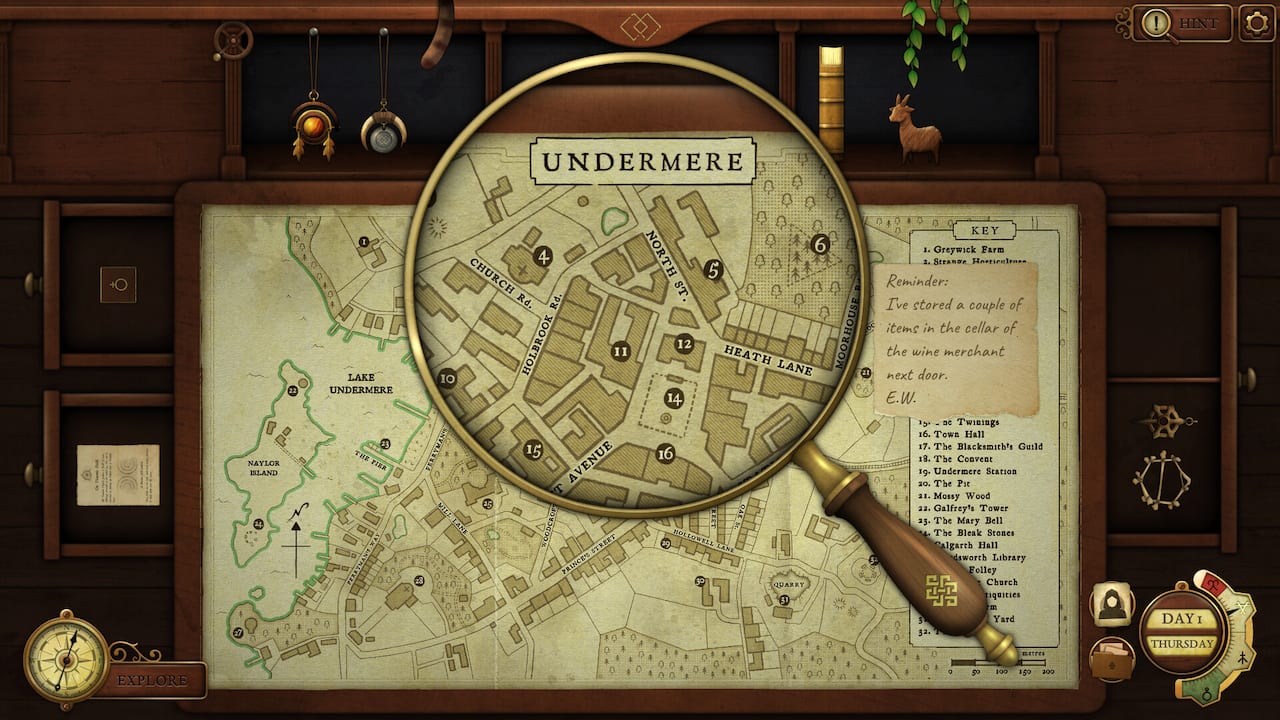
If you played Strange Horticulture, you’ll remember a game about identifying a vast array of fictional plants and flowers from esoteric descriptions and customer requests. By following clues and noticing tiny details, you could work out which specimen they desired, all while becoming enveloped in the stories of your clientele’s lives. If you didn’t play it, fix that! It’s very lovely, and splendidly odd. And once you do, you’ll certainly feel compelled to pick up the new sequel.
Strange Antiquities also takes place in the fantasy city of Undermere, in a shop far on the other side of town, which sells customers…things. Special things—odd, sometimes magical, often arcane things that perhaps smell peculiar, or cause the person holding them to tingle. Some items, when held near a candle, turn the flames blue. Others are perhaps a bit more alive than you’d usually like your objects to be. When people come through the door asking for something that can help with their failing hearing, or burning with a desire to change their bad habits, you’re going to need to use a lot more of your senses to identify the ideal product compared to simply looking at a plant.
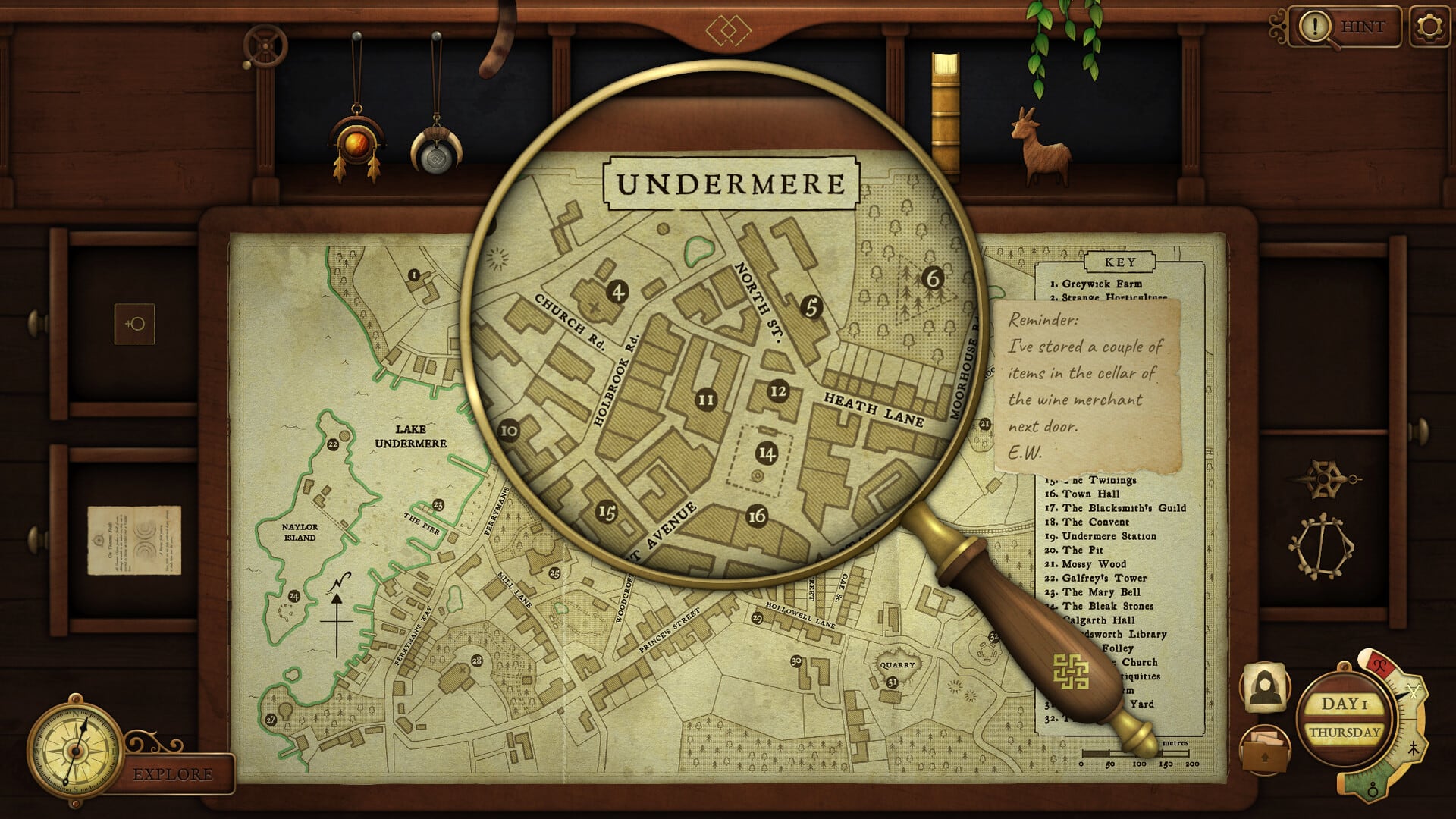
As such, it ups the range of ways you can get to know your store’s stock—not just looking at items, but touching them, sniffing and listening to them, and even using your deeper senses to gain inner perception. By doing this and reading through the dusty tome of antiquity types, you’re able to deduce which item has which properties and label them as such. At the same time, the game also develops many other ideas, including featuring multiple maps of locations to “visit” (all delivered through sketch drawings and text), from the entire town to the insides of specific buildings, or even underground tunnels.
Having spent many extremely happy hours with this year’s sequel, I felt compelled to get in touch with the two developers at Bad Viking, John and Rob Donkin, to learn more about the creation of the games. Firstly, I wanted to know what drove them to make another game set in the same world, rather than venture off into something else entirely.
“We had no idea Strange Horticulture would be as successful as it was, so we weren’t looking too far beyond it at the time," said the pair. "After launch, it was soon clear that people wanted more of this style of gameplay, and there really aren’t many other places to find it! The only real decision we had was whether to do Strange Horticulture 2 with plants again, or try something a little different this time.”
Feeling that the potential for plants had already been reached, they say, “'occult artifacts' was at the top of a short list, so it didn’t take us long to settle on Strange Antiquities for the follow-up.”
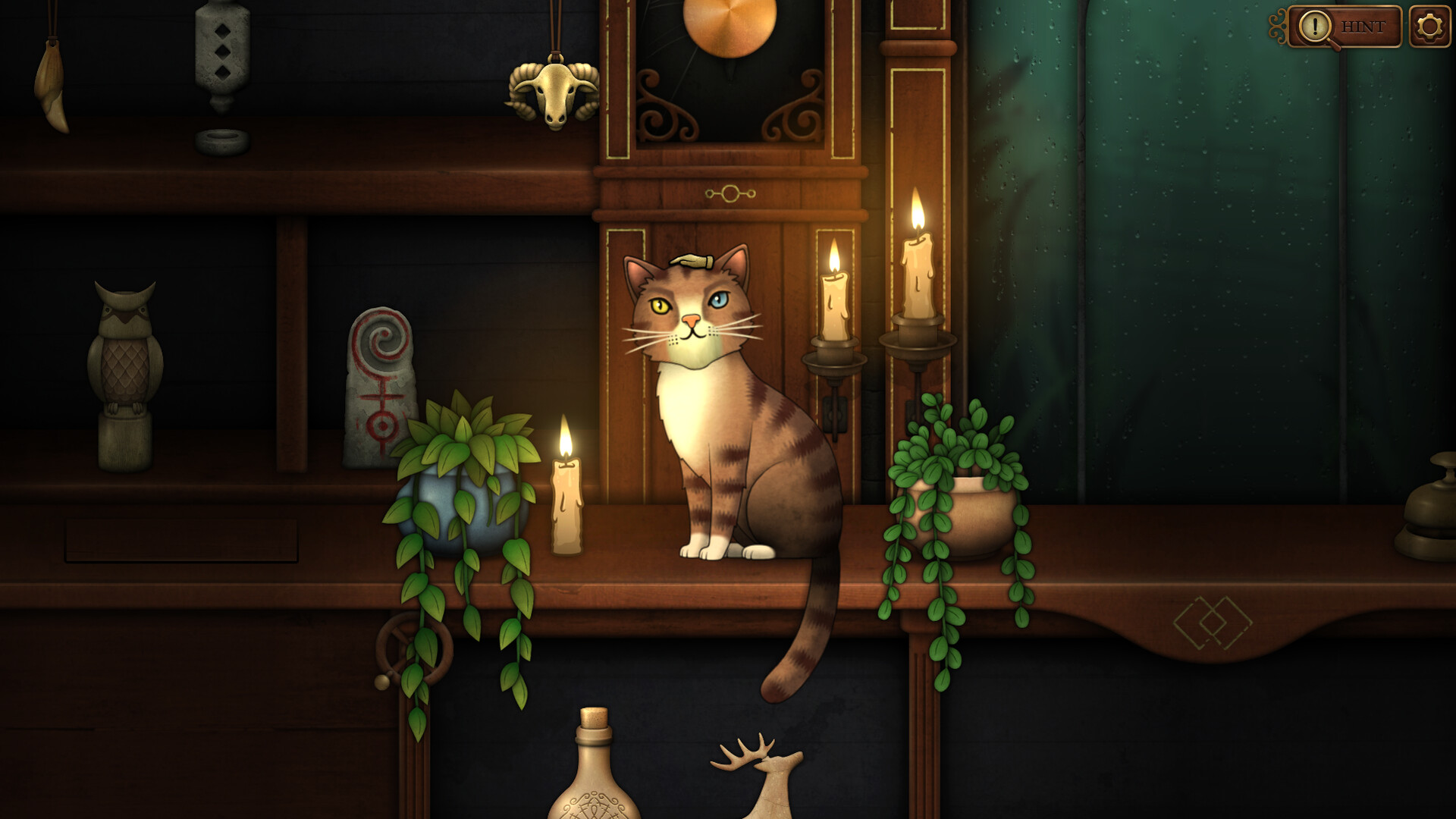
Where these games could easily have just gone for a pure cozy vibe, just a regular plant or antique shop, instead things take a stranger turn. That’s even more the case in Antiquities, where the sinister nature of some of your stock is reflected by the potentially dubious purposes some clientele may have for them. And when an object gives you the heebie-jeebies just by holding it, you know something’s up. Yet, all the while, it’s a lovely shop, and you know nothing terrible is going to happen. “Our aim was always to create a warm and inviting atmosphere within your shop,” John and Rob told me, “but then to juxtapose that against the dark and sinister goings-on outside, almost as though you’re in a cozy protective bubble.”
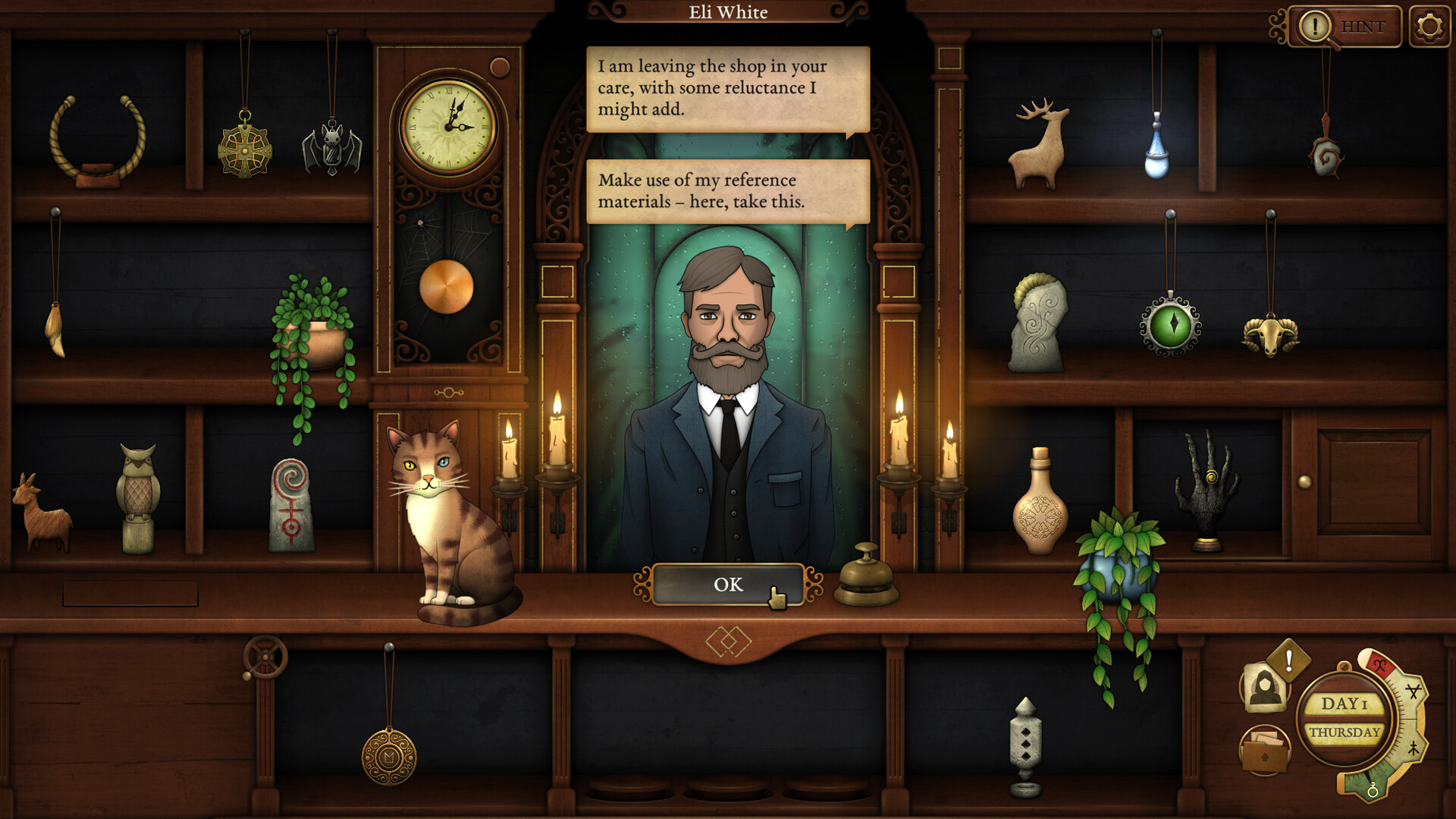
“The story slowly developed over time alongside the game and went through a lot of iterations,” Rob continued. “For a long time, we were trying to tie it to a minor faction that you meet at the end of Strange Horticulture, the Order of the Black Veil, until we realized that we were making life harder for ourselves than it needed to be! The game’s main map this time is the town of Undermere, so once we dropped the idea of involving this faction in some distant place and focused our story more closely on the town, everything started falling into place.”
This is something that really works. After two games, Undermere feels very established—not just a name on a map, but a properly tangible location, one that plays a significant part in establishing the atmosphere of the game despite your screen never leaving the store itself. Obviously, Bad Viking’s focus is on Strange Antiquities at the moment, but they agree with my suggestion that it feels like a place that merits more exploration. “We agree—there’s a lot of potential to do some other fun stuff there!” John says.
A fascinating aspect of both games is how much the player is left to fathom for themselves. Both are set in a single store, with a screen full of shelves and drawers, filled with little secrets and elements to poke around. I wondered if this meant there were issues with players entirely missing key aspects, given the lack of an overt tutorial, and the requirement that the player be actively nosy.
“Yes!” said the pair. “It’s a delicate balance, and we don’t always get it right, but we’ve learned a lot from Strange Horticulture and also from watching people play Strange Antiquities. We’ve already made quite a few tweaks, particularly to the early game to try and ease people into it a little better. We don’t mind if you don’t find something right away, but we also have to be careful that we don’t make it too frustrating. Ultimately though, that’s why we have the hint system—it’s like a built-in difficulty balancer for players that want to use it.”
It’s certainly true that Antiquities' layout is easier to parse than Horticulture’s, despite having more elements and hidden aspects. In fact, the more I played the sequel, the more I noticed the careful streamlining—little details like books reopening on the page you last left them on, and the removal of cooldowns on elements like exploring. Despite being a more-involved game, it feels less fiddly.
“We’re delighted to hear that, because it is something we have worked hard on!” says John. “Removing the explore timer was very much in response to player feedback, and also we realized that we didn’t need it after all. The goal of it was to prevent players from being able to brute-force the map puzzles, but for some players it felt heavy handed and frustrating having to wait for it to fill back up. Lots of other improvements came from watching people play, both Strange Horticulture and Antiquities—we’re a little obsessed with watching streams of the demo and trying to improve the game! It’s incredibly valuable feedback watching someone struggle with something that you had no idea might be a point of friction.”
Strange Antiquities, with its intricate detail, careful construction, and involving atmosphere, feels like it was created with a lot of love. “We’re really pleased with how the shop itself has turned out,” both developers tell me, “from the visual design with lots of extra little touches like the candles and the rain outside the window, to the fact that there is more to it than first meets the eye and there are lots of buttons to press and mechanisms to play with.”
Adding all these new details impacted the game itself. They were delighted when they realized they could use those features in identification puzzles. “We won’t say any more on that,” the developers tease, “but those are some of our favorite puzzles in the game!”
Strange Antiquities is now available on Epic Games Store.