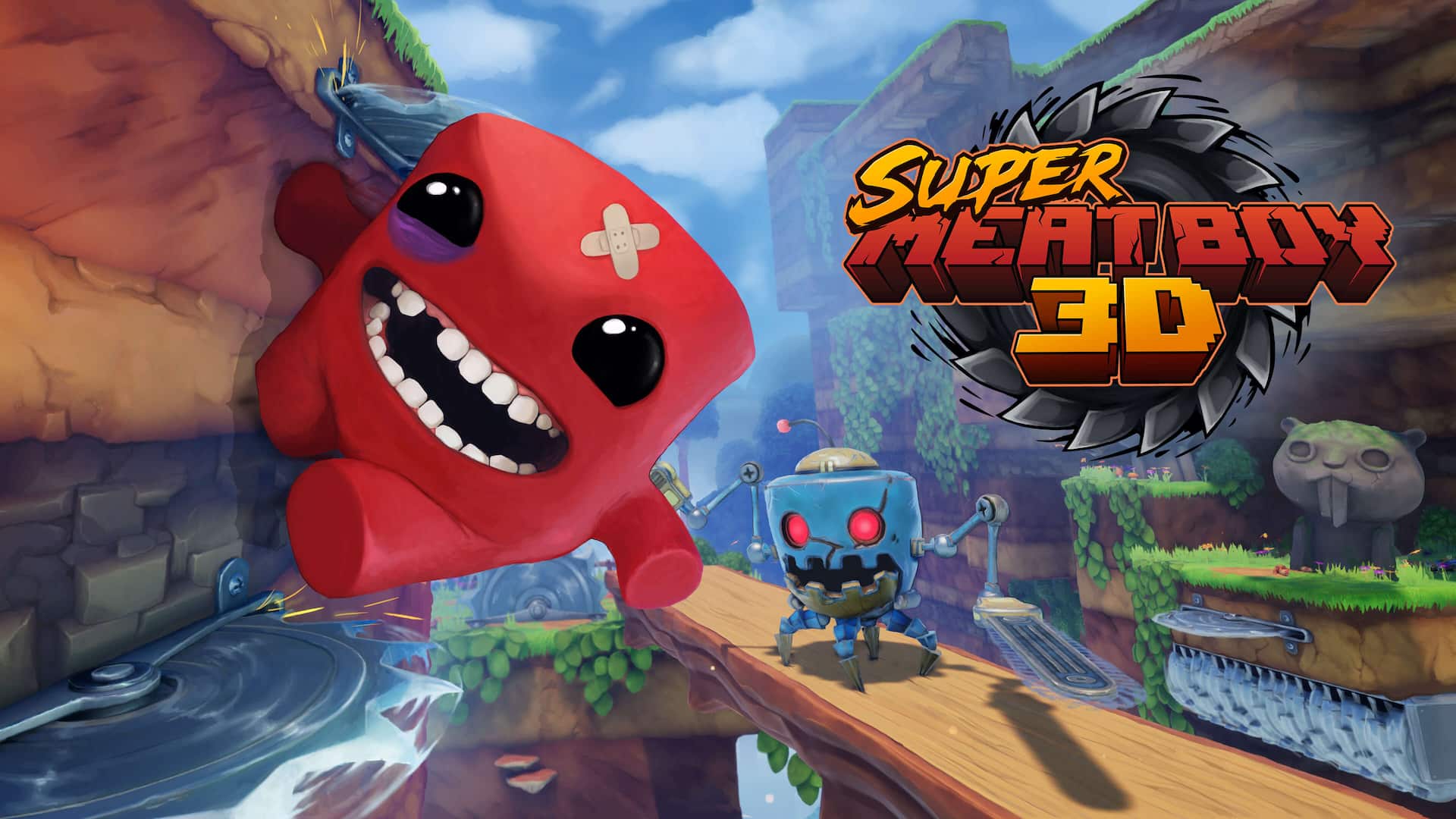
How Super Meat Boy 3D brings the ultra-hard indie platforming classic to a new dimension
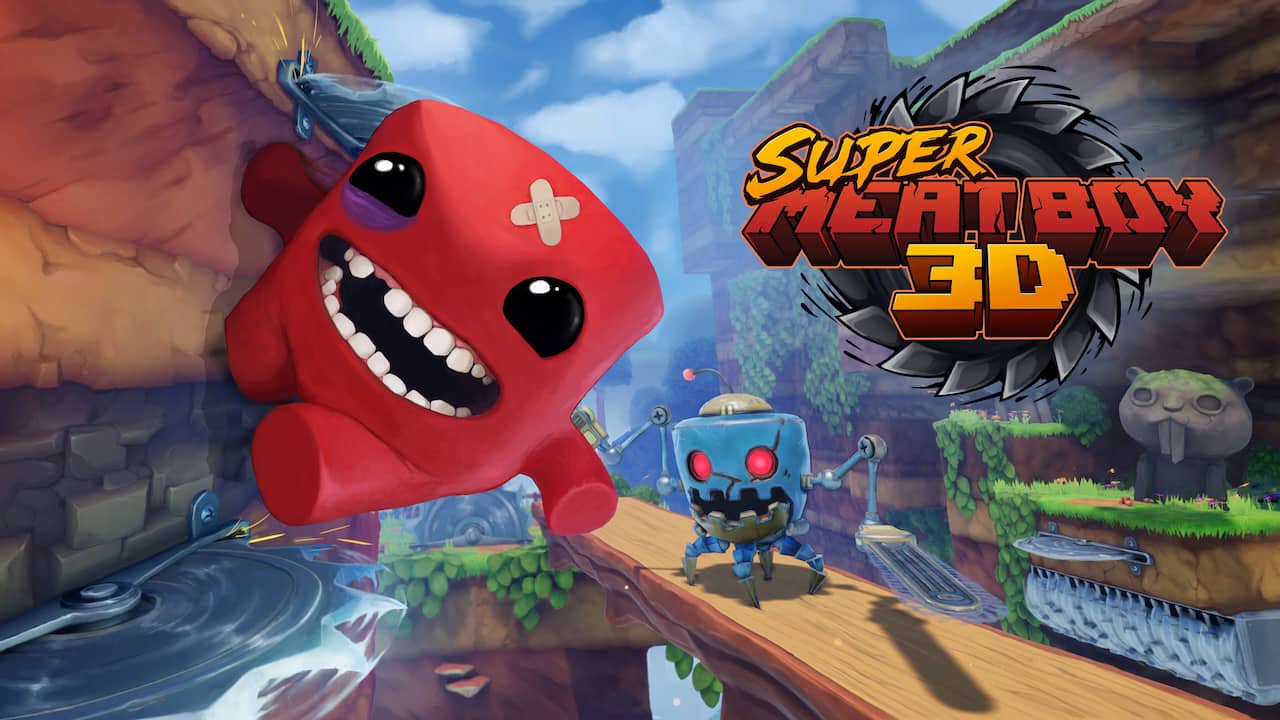
Super Meat Boy 3D developer Sluggerfly's two co-founders—Art Director Dominik Plassmann and Level Design Lead Christian Patorra—have known each other since they began studying game design more than two decades ago. Their graduation in 2010 coincided with the original release of Super Meat Boy, which was then among the new wave of indie games that revolutionized the landscape of the games industry.
"There was a big shift in the industry basically, because before Super Meat Boy, indie games just weren't really a thing," Plassmann told the Epic Games Store. "So it was a really interesting time as a younger game developer seeing those developments, especially seeing Indie Game: The Movie and just seeing it is possible to make smaller games and to have success with that."
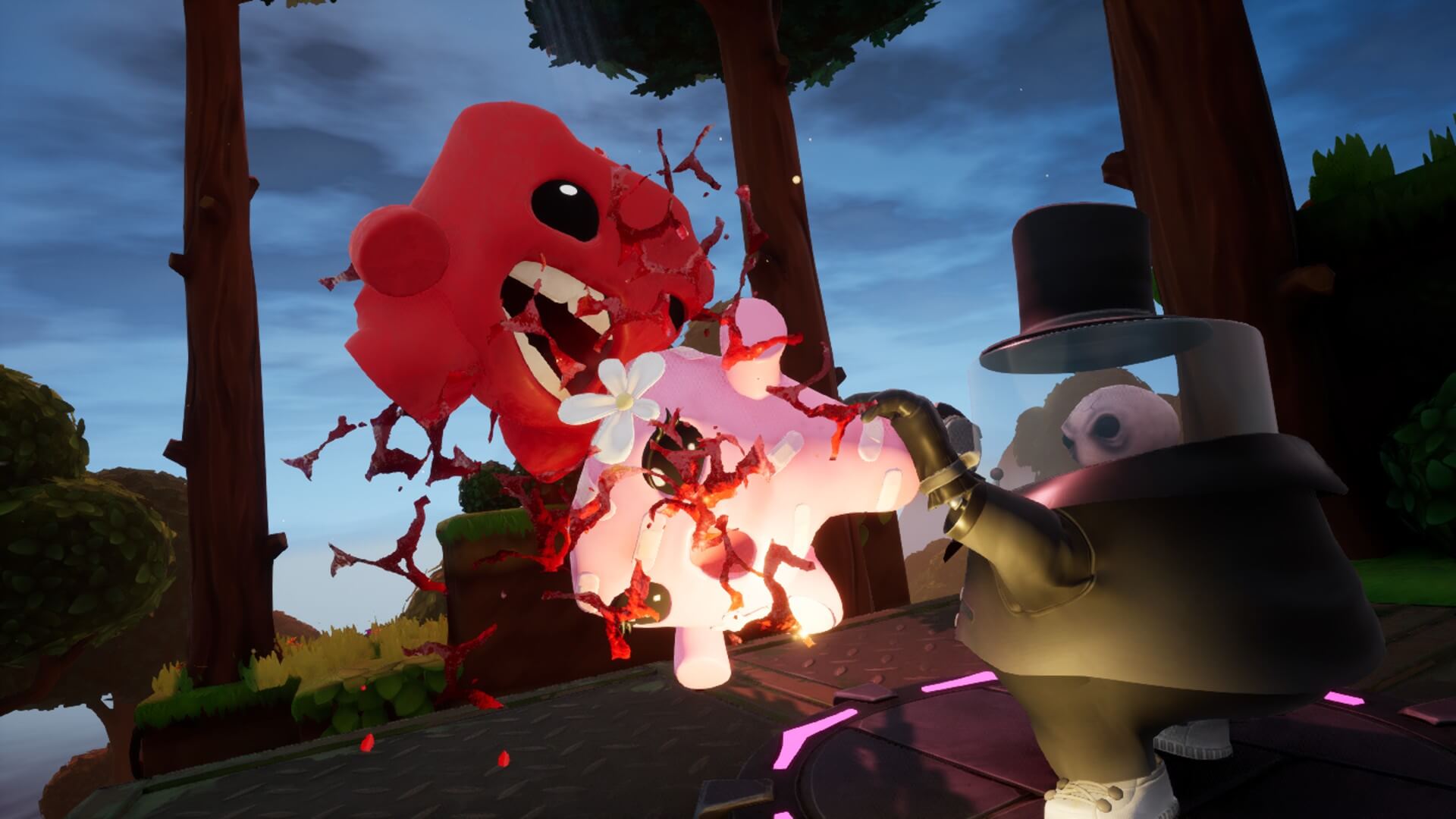
Even so, both admit to not being as well-versed in the game's tough-as-nails 2D platforming when they first signed on to develop Super Meat Boy 3D. Since its inception around a decade ago, Sluggerfly has focused on developing 3D platformers—from Ben and Ed, where you play as a zombie trying to survive a grotesque game show, to Hell Pie, inspired by the collectathons of the Nintendo 64 era.
Still, their expertise led to Super Meat Boy co-creator Tommy Refenes and publisher Headup approaching the pair with the idea of creating a 3D Meat Boy game—an idea they were both admittedly skeptical about. Bringing 2D games into 3D has always been a challenge. For every Super Mario 64, there have been many more that fell short of capturing the original's essence in a new perspective.
"Translating a 2D game to 3D is always a challenge, especially a game that's as fast and precise as Super Meat Boy,” Plassmann said.
3D prototyping
With that in mind, they first set out to prototype a proof-of-concept to figure out whether Meat Boy could even work in 3D. The first prototype, which Patorra said still sits on the team's hard drive, was actually named Super Meat Boy 64.
"The first idea was to base it on Super Mario 64 and have a more open game with a free camera," Plassmann explained. "We found out pretty quickly that this was probably not the best idea for Super Meat Boy because you have to really concentrate on the movement of a fast character and you have a lot of stuff happening on the screen."
Nonetheless, they continued to take inspiration from Nintendo's platforming mascot. They eventually opted to implement the fixed camera introduced with Super Mario 3D World, meaning that Super Meat Boy 3D’s levels are designed at a 45-degree angle perspective.

"Super Meat Boy was never about, 'Where do I need to go?' It's more about, 'How do I overcome these obstacles?'" said Patorra. "It wasn't really us who decided, as we sent out a prototype with three or four different camera angle versions that we tested, and then talked with Headup and Team Meat about what was the best approach. Luckily, we all agreed on the one that we have chosen now."
"It makes everything a bit easier for the player because they just have to concentrate on the movement, and we are a bit closer to the first Super Meat Boy regarding the feel of the game," Plassmann added.
When we got hands-on with Super Meat Boy 3D at this year's Gamescom, we came away feeling like the short-but-punchy (and punishing) demo faithfully translated the classic platformer to the third dimension. Just like the original, you play as a diminutive block of meat who must quickly run and jump through a level to reach Bandage Girl at the end, before moving swiftly onto the next level. That same brisk platforming pace is intact in Super Meat Boy 3D, as is the blood red trail that Meat Boy leaves behind. And if your life is cut short by one of the many deadly traps in your path, restarting is just as instantaneous as it was in the original, helping alleviate any frustration.

"Our level design rule basically is that they should be completed between 15 and 25 seconds," Patorra explained. "To be fair, they are a bit longer compared to Super Meat Boy because it's 3D and we do have much more space. But most of the time, we want to keep them as short as possible."
That snappiness similarly extends to the level selection, although Sluggerfly has also added a world map you can walk around. Plassmann clarified that this is purely down to player preference. "We wanted to keep the flow that you have in Super Meat Boy, so you don't need to walk around the world, you can go into the game, complete a level, go to the next one. It's basically the player's choice."
Fresh meat
While Sluggerfly is developing Super Meat Boy 3D, close collaboration with Refenes and Team Meat ensures the new game retains the original Super Meat Boy’s essence. That includes the look of the titular character, who has come a long way from his humble Flash animation. Redesigning Meat Boy in 3D required a number of iterations, including a first draft that Sluggerfly confessed was a bit weird—or as Patorra described, "He looked a bit human!"
"Yeah, a bit more human, a bit more creepy, a bit more detailed," Plassmann elaborated. "I think it was a good idea by Team Meat to bring him a bit closer to the original look. The one we have right now is very close to the vision of Meat Boy in the first game."

Patorra said that they have been pretty free with their approach to Super Meat Boy 3D, though. "Obviously, we need to stay true to the IP, but I would say there is a lot of wiggle room especially because it's not this super set universe. If something fits the overall feel of the game or franchise, then why not?"
The team looked to past games as a reference. Using Unreal Engine 5 to bring Meat Boy to 3D meant being able to create more detailed levels than were possible with the original’s simple-but-charming visuals. Too much detail could also affect a level’s readability though, especially since Meat Boy is still a relatively small cube in the camera’s overall view of the scene.
"I would say luckily, in between, there was Super Meat Boy Forever, which was much more detailed," Patorra said. "Our attempt was never to copy the Forever style, but since it had a lot more detail, we could adjust our 3D style a bit more." Another obvious change for 3D is that the iconic circular saws of the original have become cylindrical meat grinders that stretch the width of a path.
While there were challenges in adapting Meat Boy's move set to 3D, there was always a solution at-hand, such as adding a ground circle to counter issues with depth perception while platforming. And in some respects, Super Meat Boy 3D arguably has a more expressive moveset than before. You're able to dash in the air (a mechanic introduced in Super Meat Boy Forever) as well as perform a quick vertical drop, both helpful when navigating 3D space. Wall-jumping can also be performed dynamically as opposed to just jumping back and forth.
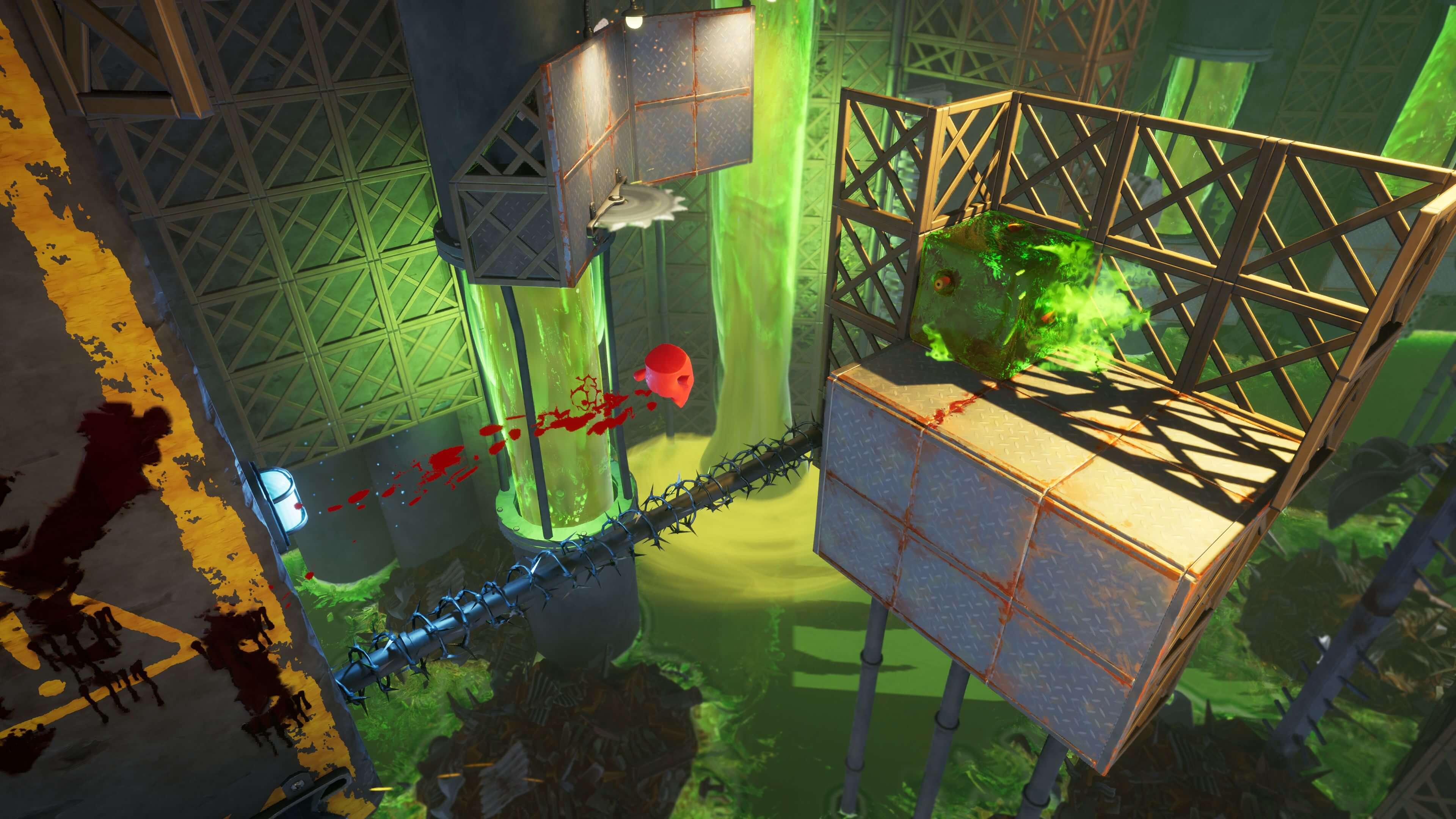
The new dimension also allows for wall-running, which was trickier to implement. "Most players know wall runs from other games, but in most cases it's not very dynamic—you just attach to a wall and then run in a certain arc and then can jump off," said Plassmann. "But we had to tweak ours a lot. The angle where you approach the wall and the speed is important, and was pretty tricky to get right, so we had to do a lot of testing."
While the team tried out a bunch of other moves, particularly during the Super Meat Boy 64 phase, they ultimately decided that Meat Boy's moveset shouldn't stray far from the existing games.
"We ended up just keeping it simple," Patorra said. "To be honest, we already have this super mighty move set—Meat Boy can basically climb everywhere endlessly. He doesn't need any other super-fancy moves."
Hardcore completionists can attempt to master additional challenges in each level, such as trying to get the A+ rank by beating each level's pre-set time as well as finding collectible bandages. Plassmann also confirmed the return of Dark World levels, extra-fiendish versions of levels that players could unlock in the original Super Meat Boy.

Sluggerfly did add some additional structure to Super Meat Boy 3D though, hoping to make it a little more approachable for newcomers who might otherwise get frustrated by the difficulty as things ramp up over the course of the game.
"There are currently 15 levels and a boss level in each world, and it's not linear. You can freely select on the world map," Patorra explained. "So if there is a specific level you really can't finish, then just leave and try out the next level and then maybe come back the next day. You only need to beat at least 10 levels per world to unlock the boss and then defeat them to move to the next world."
So far, early reactions to Super Meat Boy 3D have been positive since its first public showing at this year's Gamescom. 15 years on from the indie classic's release, there's a two-fold scrutiny, as it's not just about keeping longtime fans happy but also bringing in a new generation of players who may have never played the original, let alone are aware of its Flash origins.
Plassmann thinks there's a simplicity to the platformer that nonetheless makes it recognizable. "We of course talk a lot to developers and to people who are into gaming and most of them know Super Meat Boy,” said Plassmann. “I think the essence of Meat Boy is pretty approachable. I mean, the story is not the most complex, you see the character, you remember the character. So there's a lot of stuff that I think works for new people that don't know the game because the concept is just one that works in itself."
During Gamescom, there was also a speedrunning challenge organized in cooperation with Games Done Quick, which is a good sign that there will be plenty for the hardcore side of the community to engage with. As Patorra added, "People will become really creative finishing these levels—some that are expected by us, and a lot we will also be surprised by!"
Super Meat Boy 3D releases on the Epic Games Store in early 2026.