Nieuws
Survive and adapt like an octopus in Darwin's Paradox!
A
Alan Wen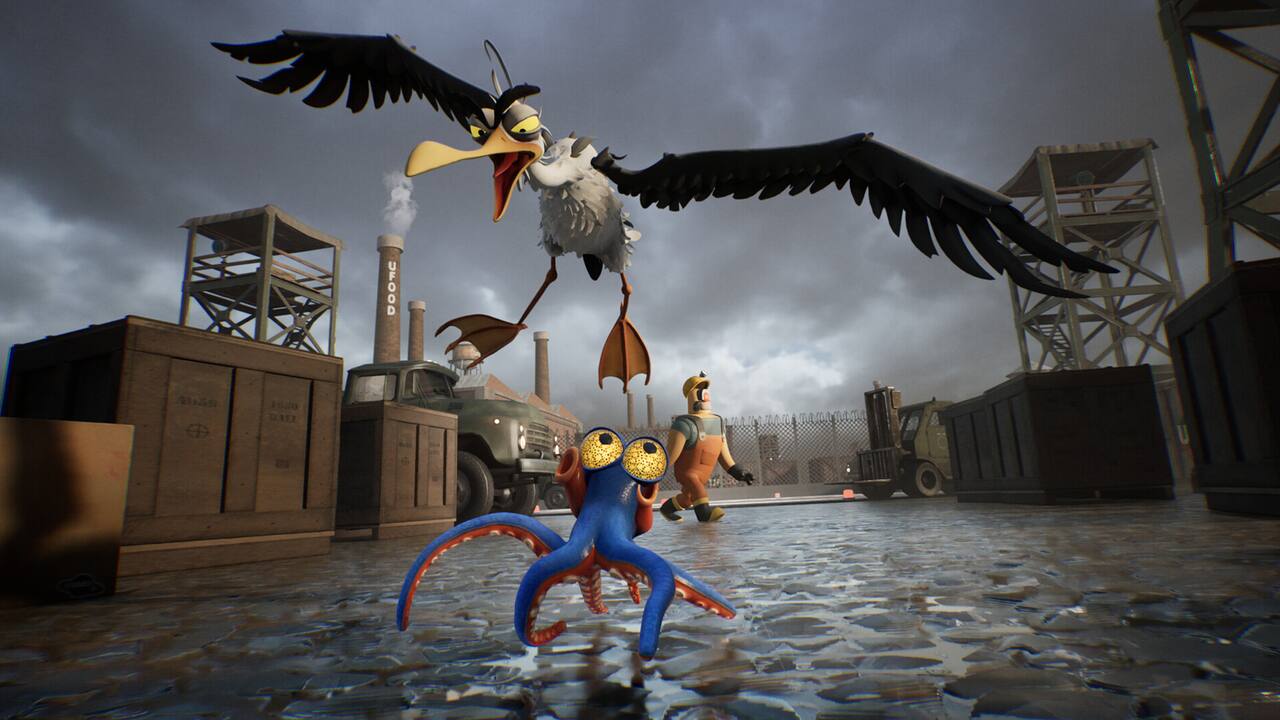
"Charles Darwin is very much in there," says gameplay director Gilles Aujard. "Our Darwin is alive because of his capacity to adapt—it's a quiet nod to natural selection, and to the idea that resilience and ingenuity are their own kind of superpower."
While these eight-limbed molluscs aren't complete strangers in gaming, it's rare that they take a starring role or are as directly inspired by their real-life counterpart. But even though the game takes a cartoonish approach that bears similarities to a big-budget animation, studying real octopi was a revelation for its game design.
Aujard explains: "Its biology gave us a treasure trove of mechanics that a humanoid hero simply couldn't offer: 360-degree climbing, dynamic camouflage that mimics surrounding textures, ink with real ballistic behavior, the ability to squeeze through tight spaces. Every ability felt organic and grounded in real octopus behavior. Darwin didn't just define the game's personality—he defined its entire design language."
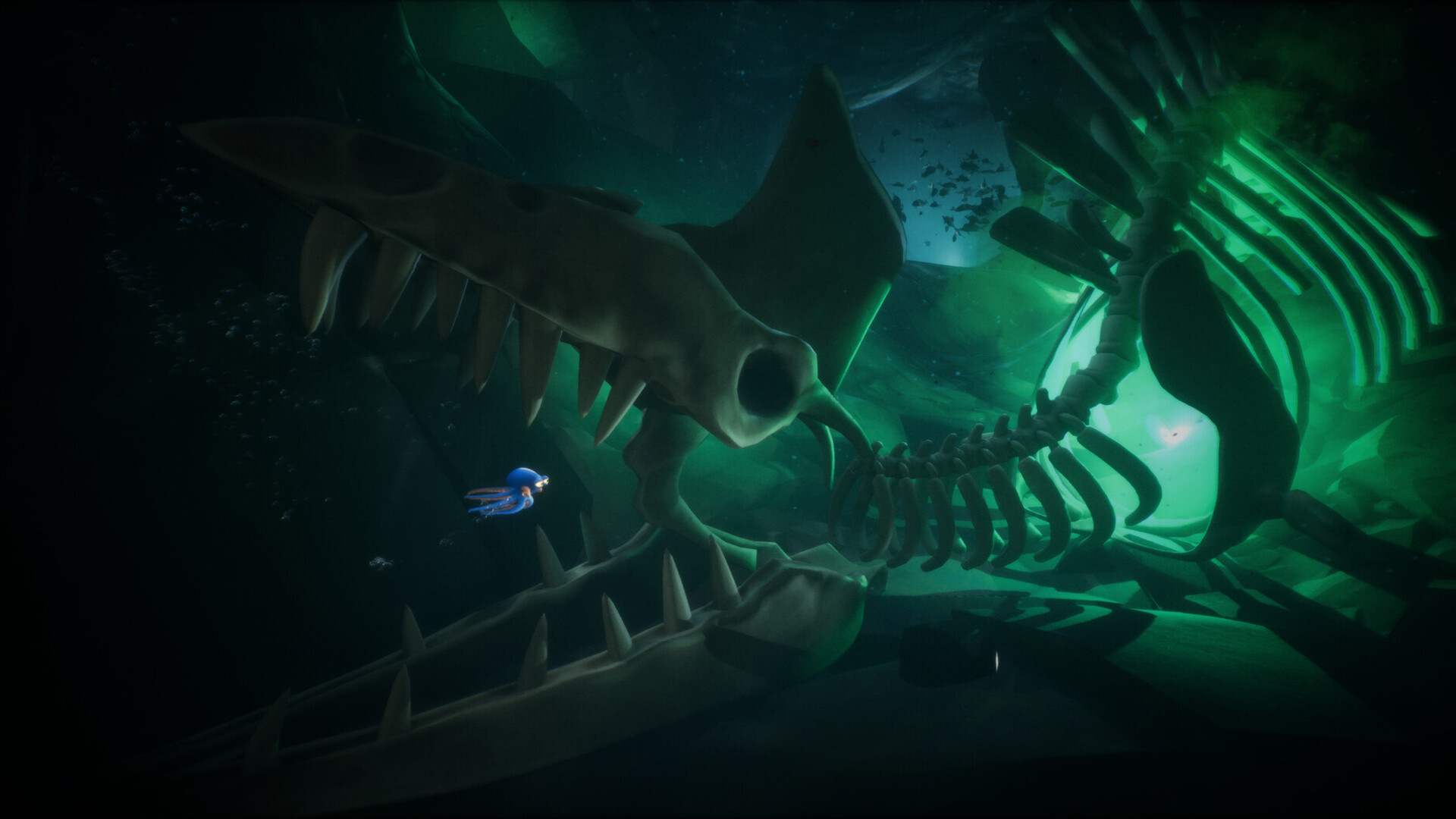
You begin the game in the ocean, where you're captured and thrown into a vast industrial complex on the surface. You gradually reawaken Darwin's natural abilities as he encounters one escalating danger after another, such as the need to camouflage to avoid being alerted by patrolling guards, who aren't quite as human as they appear to be. The team undertook careful research to make these abilities authentic.
"Darwin's camouflage isn't just an invisibility toggle: He physically mimics the textures around him, just like a real octopus does, and his ink behaves differently depending on whether he's underwater or in open air," Aujard explains. "The goal was always to make players feel like they were embodying a real creature, not controlling a mascot. That distinction drove every design decision."
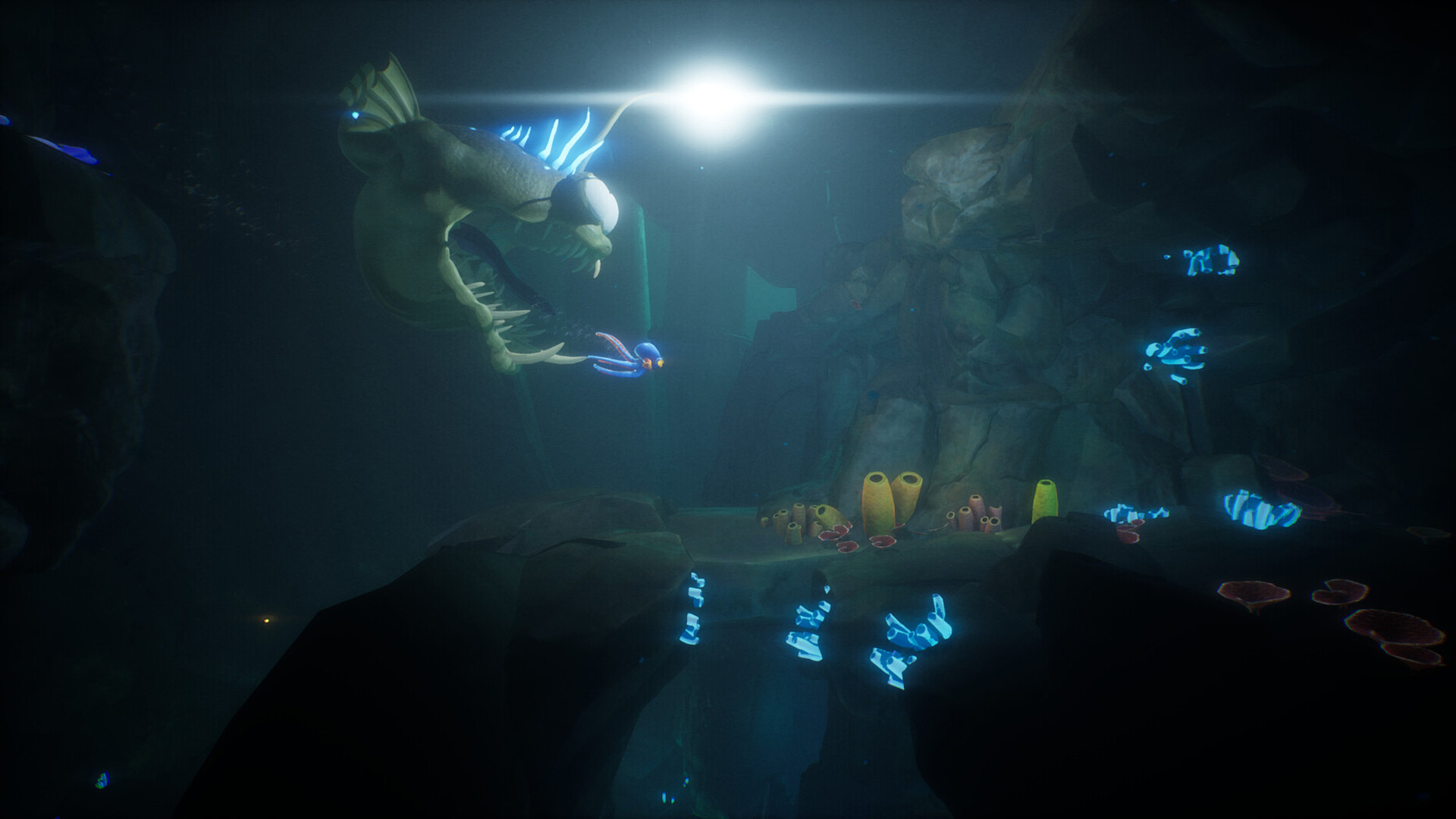
Darwin's tentacles also created new gameplay possibilities different from other 2.5D platformers. Besides using them to push and pull objects (including from different sides during underwater sections), he can also stick to different surfaces in 360 degrees—not just walls or ceilings, but any kind of shape, allowing the team to rethink level design in terms of verticality and freedom of movement.
"Most platformers think in terms of left-right and up-down, we think in terms of wrap-around," says Aujard. "Combined with camouflage, ink mechanics, and the absence of any traditional UI, it creates a very different feel. You're not managing a HUD—you're reading Darwin's body language, his color shifts, his reactions. The game communicates through him, not around him."
While that might also have made designing levels a daunting prospect, this small indie team adapted to the challenge, and Unreal Engine's tools were integral to this, from using Sequencer to direct in-game cinematics seamlessly to working efficiently with Blueprints.
"It let me prototype fast, test ideas, and throw away what didn't work without having committed to weeks of code," Aujard explains. "It kept the team agile. Game designers and level designers could adjust narrative beats and event triggers directly without waiting on a programmer. That kind of creative autonomy is invaluable on a small team."
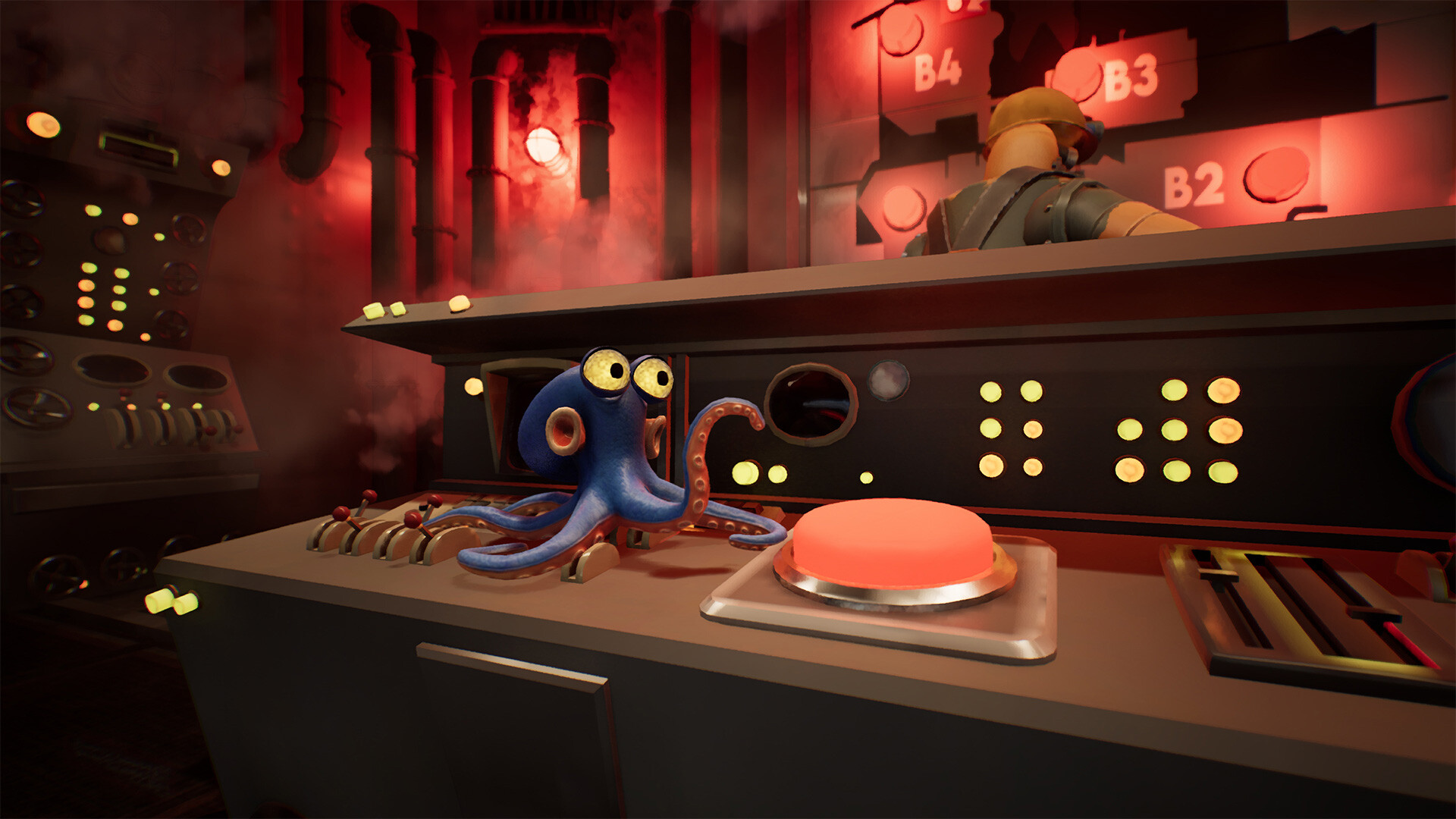
At the same time, Darwin's unusual form also gives a comedic tone to Darwin's Paradox! It's a natural fit that's not usually seen in similar games in this genre, even though you're still navigating many dark and dangerous areas.
"Darwin isn't a soldier or a spy, he's a small, soft, clever animal who got abducted and just wants to go home, and that premise calls for humor," says Aujard. "He survives not by being powerful, but by being resourceful, and a little ridiculous. The comedy reinforces the character."
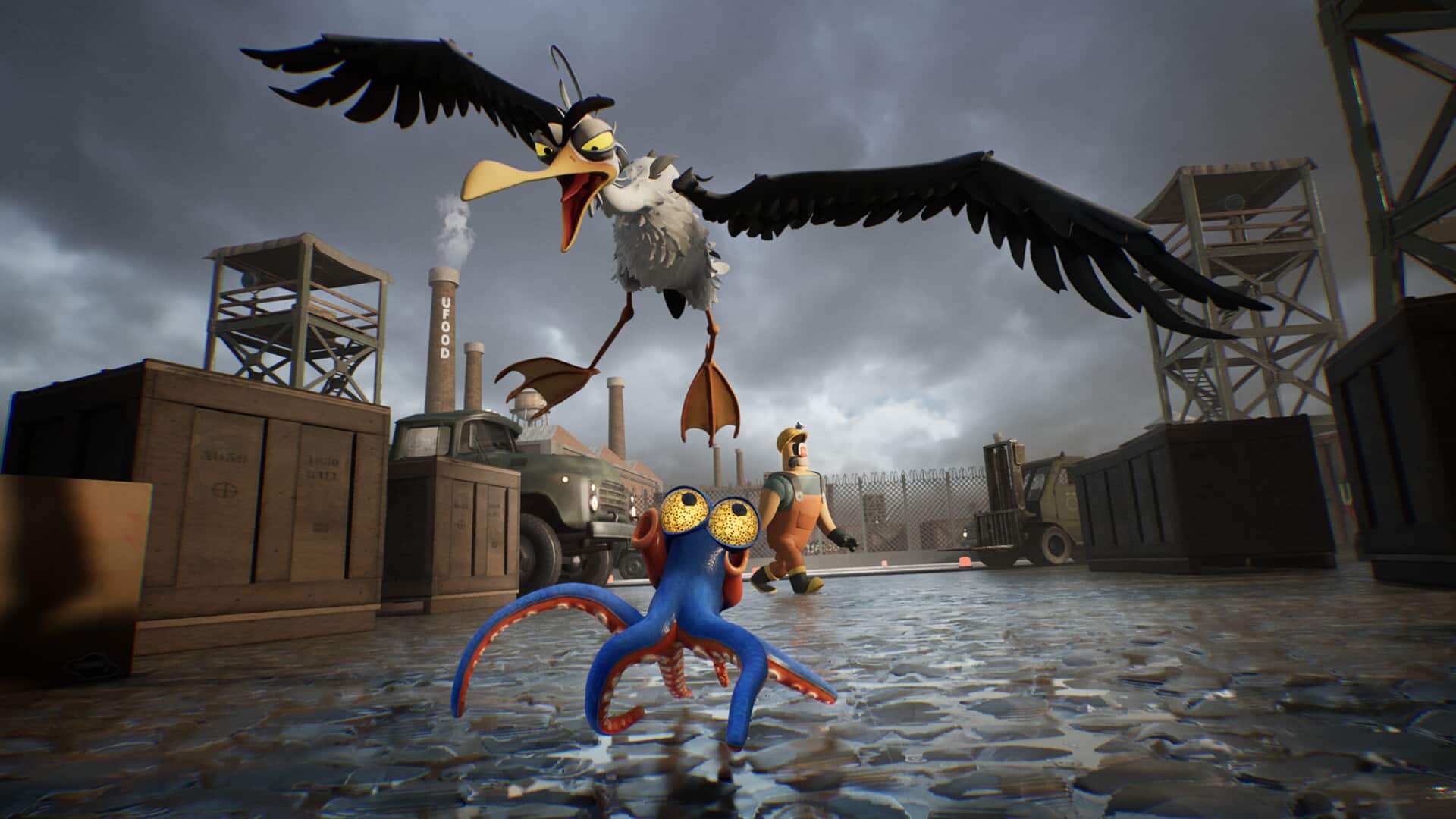
There's certainly many hazards Darwin will have to navigate and evade, from the environment to sentient threats, including a particularly stubborn seagull eager to have octopus for lunch. But the cartoon effects of seeing Darwin pop like a balloon when squished by machinery or burning to a crisp from red hot pipes—save his big bright eyes dangling in the air for just a few more frames—helps take the sting out of failure before you try again.
"Failure exists, stakes exist—but they’re never expressed through brutality," says Aujard. "And honestly, some of our biggest inspirations—Oddworld, or the LucasArts point-and-clicks—understood that humor and tension aren't opposites. They amplify each other. A funny moment makes the next tense moment hit harder."
Grab Darwin's Paradox! on Epic Games Store.