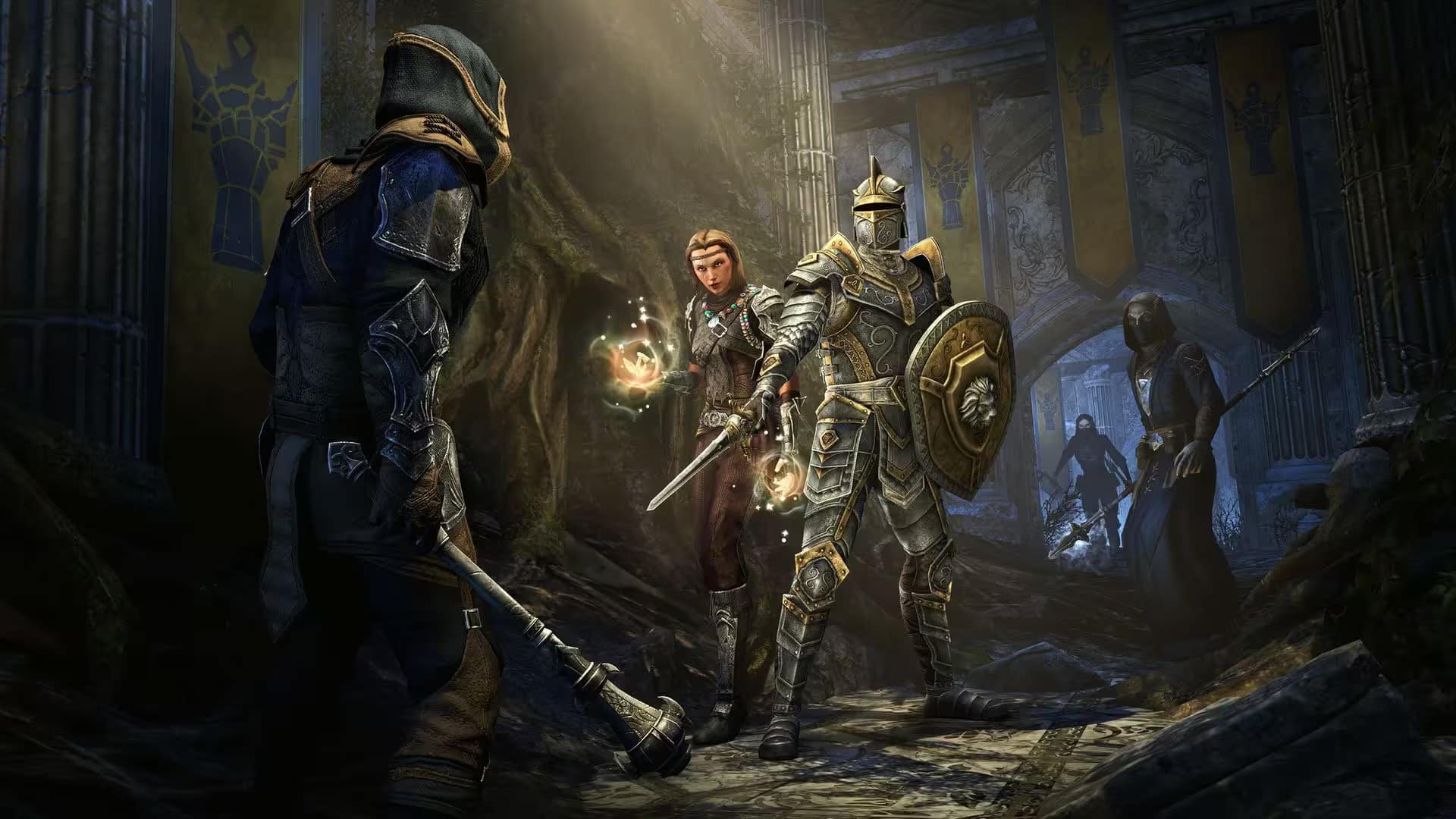
The rise, fall, and rise of The Elder Scrolls Online on its 10th birthday
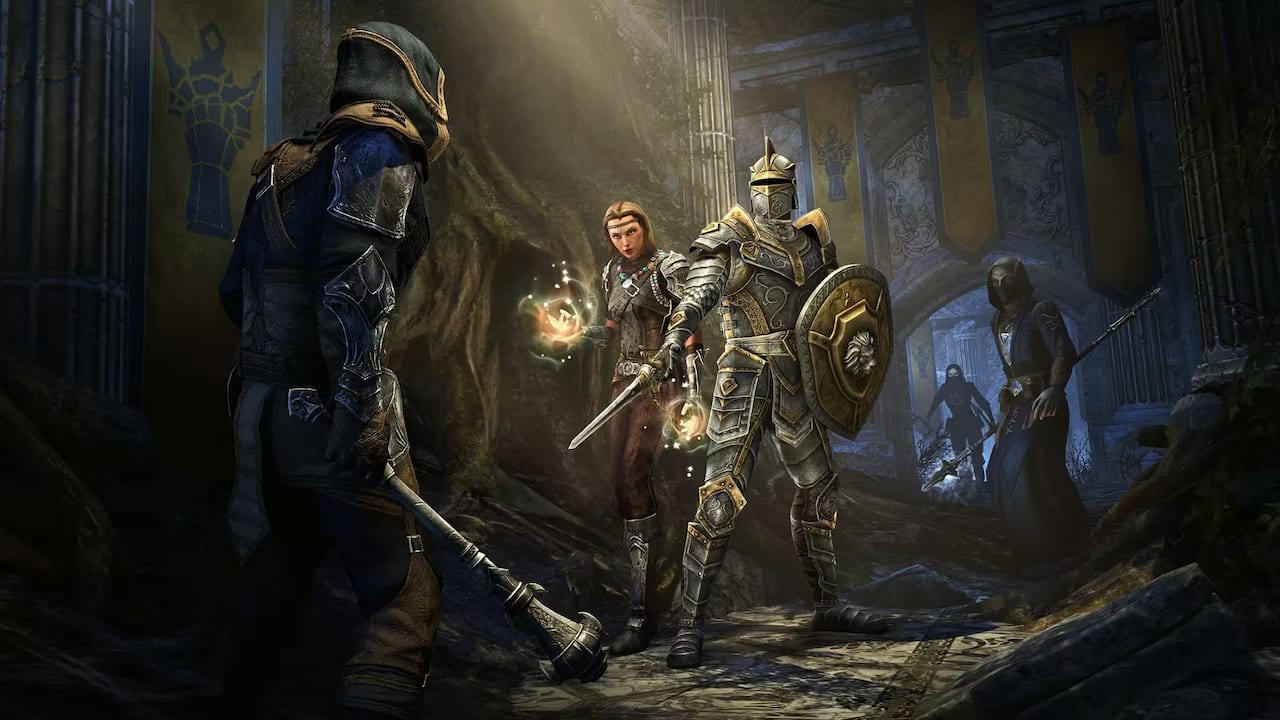
It’s August 1, 2007, and Matt Firor is starting a new job. He doesn’t know it at the time, but he’s not going anywhere for at least the next 17 years.
He’s at ZeniMax, the parent company of Bethesda, the developers behind The Elder Scrolls series. And while today those words might conjure up genre-defying mega-hits like Skyrim and Fallout 4, those games are years in the future as Firor settles in at his new employer.
The folks at ZeniMax brought him on board in part because of his previous work on games like Dark Age of Camelot, which he describes as part of “Gen 2” of massively multiplayer online role-playing games (MMOs)—titles like Everquest, for example.
They hired him to make a new Elder Scrolls game. Only this one would be online. The only thing to do now was figure out what in the world that meant.
Finding that answer would take another seven years.
And they’d get it wrong. In public. Quite clearly, both to the game’s players and its creators.
But they wouldn’t give up, and they’d fight to get it right.
And they did.
Today, Firor is the head of ZeniMax Online Studios. For the last 17 years—though he can hardly believe it’s been that long—he’s been working on a single game: The Elder Scrolls Online.
And it’s time for a little celebration.
What’s an Elder Scrolls game?
Rich Lambert was part of what he calls the “founding group” of developers tasked with figuring out what an online Elder Scrolls game would be. Back in 2007, when he started, that group was small enough that he could take everybody out to lunch in his minivan.
“We spent a long time kind of iterating over what it could be, what it should be, how it should be,” Lambert told the Epic Games Store in a recent interview. “And you know, the initial goal was kind of Elder Scrolls with friends.”
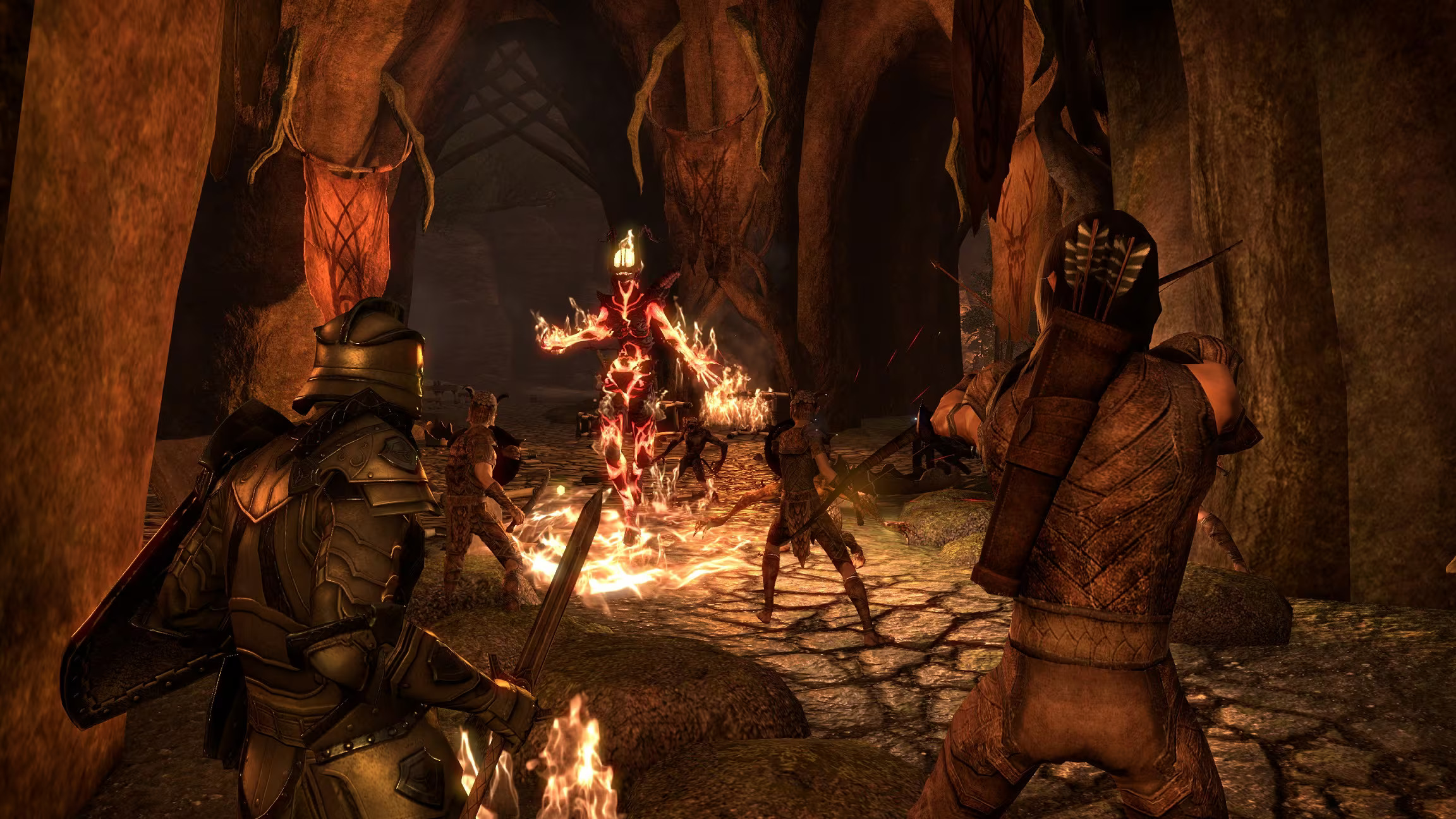
That makes sense from a modern perspective in the wake of games like Skyrim, but the developers of what would become ESO were operating in a world where what defined an Elder Scrolls game was evolving. The most recent entry in The Elder Scrolls series when Firor joined the team was The Elder Scrolls IV: Oblivion. The Elder Scrolls V: Skyrim was four years away.
So what makes an Elder Scrolls game? In some sense, it depends on whom you ask.
Lambert said developers spent years refining an answer in the context of a series that was still in active development outside of ESO. They didn’t quite figure it out until two years after the game’s launch with the huge One Tamriel update.
“There’s a whole other topic that we could talk about,” Lambert said, “where you can get 10 or 15 people together and ask them how they play an Elder Scrolls game, and they all play differently. But ultimately, the core really came down to exploration and freedom of choice. And so we doubled down on those. That was the basis for One Tamriel—being able to go anywhere, do anything, but also the freedom to kind of build your character any way you want. And, you know, really live in the world and experience the world. Those were like the big core kinds of pillars of our game, and what Elder Scrolls kind of is for a lot of people.”
Other Elder Scrolls hallmarks are what Firor describes as a combination of story, characters, and exploration.
“I can go talk to people, and they give me stuff to do,” he said. “And the writing is always excellent. And I can go another 50 feet, and then there’s another great story. That’s great when part of The Elder Scrolls experience, but what’s also part of The Elder Scrolls experience is just wandering off into the woods or across the landscape and just living in the world. And it’s hard to explain. It’s like an emotion, more than it’s a system. But you kind of know it when you see it. And it’s like just being able to go out across the map of the game and finding things to do that no one has told you are there. And you’re exploring and finding things for the first time. That’s the magic.”
Firor adds another ingredient to the mix: the people building the game.
“I think the ultimate arbiter of that question is Todd Howard, right?” Firor said, referring to the designer, director, and producer of The Elder Scrolls and Fallout series at Bethesda Game Studios. “Because he, and I’m doing air quotes, he ‘owns’ The Elder Scrolls IP, right? And we work very closely with him on ESO, and he’s definitely been part of the team—and definitely in the early days when we were setting up the systems and how the game world works.”
Missing the Magic
Firor can describe these ineffable qualities after nearly two decades of work on the franchise and ESO in particular, but as the game approached its early 2014 launch on Mac and Windows PC, that recipe wasn’t fully baked.
“At launch, that was kind of where we were, right? This kind of weird, hybrid half-and-half-type thing,” Lambert said. “And it didn’t really hit, right? Like, there were some players that absolutely loved it. You know, that was kind of our core. But a lot of players were like, ‘This isn’t really an MMO. This isn’t really an Elder Scrolls game.’ And so we had to decide: Did we want to go full in? We wanted to go full in. And we chose, right around launch, just for launch, that this was going to be an Elder Scrolls game first. And once we did that, that really kind of solved a lot of the, ‘What kind of game is it?’”
That decision to stick it out brought the game to PlayStation 4 and Xbox One in 2015, the year after launch. And it also led directly to One Tamriel, a major update to the game released in late 2016. It effectively dismantled much of the launch version’s limitations in favor of a more open experience.

“One hundred percent, it was absolutely a relaunch,” Lambert said.
Among other improvements, it generally removed player restrictions, leveled up characters so that they matched whatever the difficulty they were facing in context, and allowed everyone to travel freely throughout the world. It was a do-over.
“It went from kind of that traditional MMO-type game where you were locked from exploring, because it was all based on levels, to you could just pick a direction and go, and you could play with anybody—you could kind of do anything,” Lambert said of the change from closed to open content. “And that’s when the game really started to feel like an Elder Scrolls game. And then we slowly started adding more and more and more to it, which was really cool to be able to do that. You know, not a lot of games get that opportunity.”
That’s the thing about an online game. It’s alive, in a sense. It’s in a dialogue with players, who are often more than happy to tell game makers what they like and what they don’t. And the creators of ESO were listening and changing. Those changes altered the core of how players on every platform would experience the game, and they were inspired, in part, by watching console players.
“When traditional MMOs add new content, typically it was only if you completed all the other content could you actually go into the new content,” Firor said. “And so we had these two diametrically opposed philosophies.”
Some people thought they should cater to hardcore fans, while others thought that it was better to cast a wider net.
“ESO on console,” he said, “was veering much more towards the ‘just log in and play and have fun world’ and veering away from the traditional MMO model. So we thought long and hard about that. And that’s why our first big expansion, DLC—whatever you want to call it—Orsinium, was not level-based. You could just go in and play no matter what level you were. Because we knew it was great content, we wanted lower-level players to be able to go in and have fun. But we wanted max-level players to go in and continue their journey. And so we just made level scaling work in that zone, and then suddenly everyone could play together. And it was probably the best decision we made in the game up to that point, because then we realized, ‘Oh, my God, level scaling is the way to go, because it makes the game much more social.’”
ZeniMax Online Studios pivoted to save a game that wasn’t working. It was willing to throw almost everything, including the price, away and replace it with a better experience. And part of the pivot was to launch the base game as a paid product. They’re not monetizing players monthly. They’re expanding the game with paid Chapters, ESO’s version of expansions. They’re designed for everyone, and they’re fueling the game after a rocky first couple of years.
Defining The Elder Scrolls
Lambert is still having fun, still in love with online gaming. He’s quick to point out that he met his wife of 22 years playing EverQuest, and he loves the idea that he’s creating something that could provide that kind of opportunity to others.
“Being able to have that kind of experience with meeting somebody so special and having this really cool community that I was able to kind of hang out with and got me through a lot of hard times, being able to build a game, build a world where we get a lot of that same kind of feedback from our community,” he said. “‘Hey, I get to hang out with my brother who has been deployed overseas, and we play ESO together when he’s got time.’ That’s just cool. And it feels almost in a way like kind of giving back, which sounds weird, but it's just really, really cool to be a part of something that’s as big as this is and be a part of that community.”
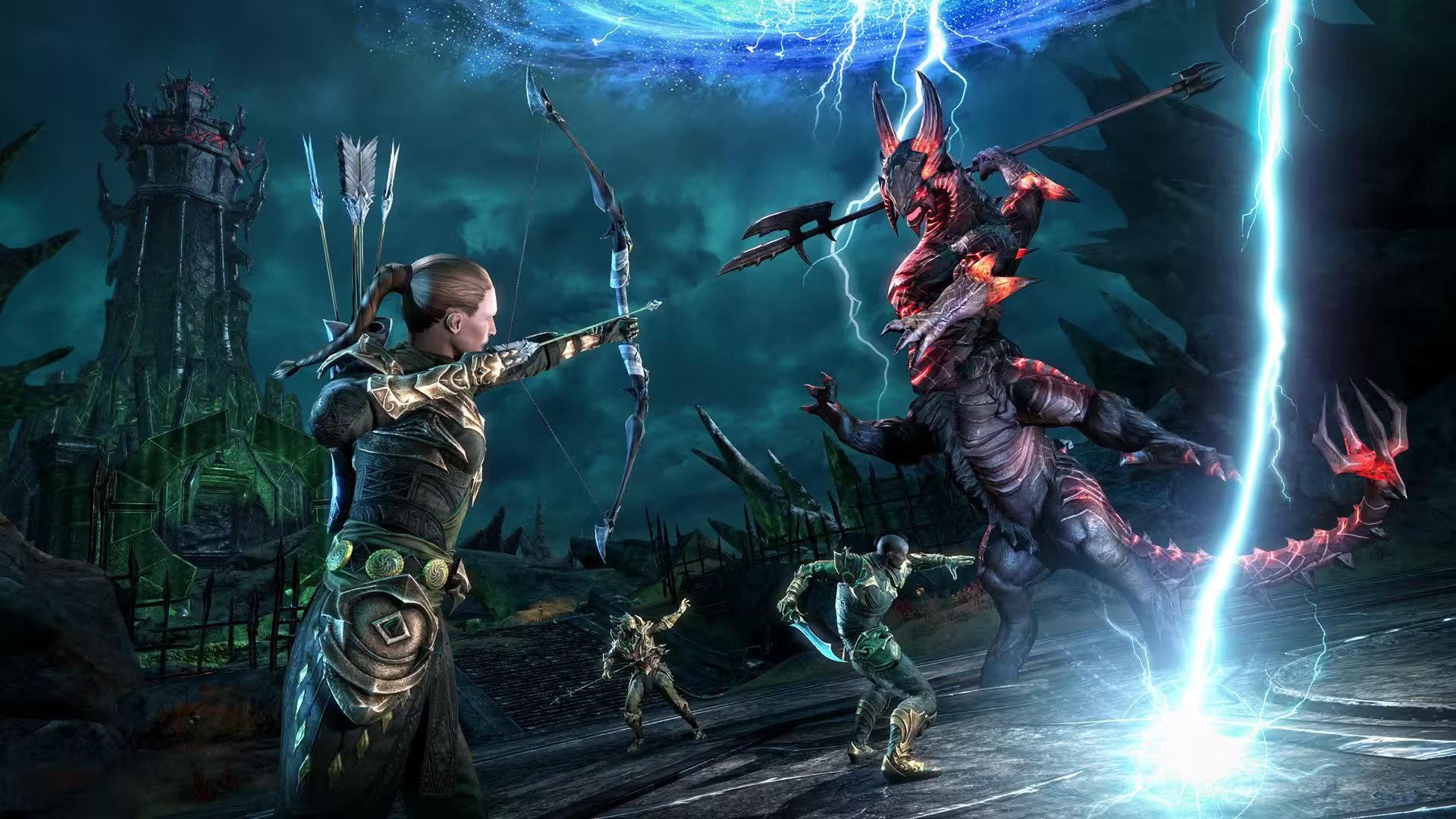
And Firor has shipped exactly two games since 2001. Both of those have had extraordinary longevity and player bases and enormous communities. He says that more than 24 million players have traveled through The Elder Scrolls Online. And he thinks that’s because it’s not your typical MMO. In fact, if you ask him, it’s not an MMO at all.
“We’ve wanted to evolve away from that, so that people coming into the game wouldn’t hear the term MMO and think they were playing a super-grindy, Dark Age of Camelot-type game. They were playing an Elder Scrolls game.
“I will say that that term—online role-playing game—was just as much for our internal developers as it was for external because we had a bunch of hardcore MMO designers. And we had to keep reminding ourselves, you know, don’t just do the tried-and-true system, because everyone else does it. This game is different.”
You can download The Elder Scrolls Online from the Epic Game Store today. There will be tons of celebrations for players, both in-game and in-person, throughout the year. It kicks off in Amsterdam with the 10th Anniversary Celebration, where the folks behind the game will discuss where it came from and where it’s going. You can watch it on April 5, 2024, at 8 a.m. EST on Bethesda’s official Twitch channel.