Tony Hawk’s Pro Skater 1 + 2 shreds by carefully innovating on nostalgia
It can be daunting to return to a game long after you’ve beaten it, and this process is further complicated when it’s a remaster of something you played in your youth. You’re surfing two competing waves of nostalgia while relying on some serious muscle memory. Yet every time I come back to Vicarious Visions’ remake of Tony Hawk’s Pro Skater 1 + 2 to collect letters and smash high scores, I find new things to love about the studio’s unique approach to nostalgic adaptation.
I would’ve settled for a one-to-one remake, but THPS 1 + 2 strives for more than that. I’d argue it’s part of a recent wave of self-aware remakes, tongue-in-cheek games that benefit veteran players by acknowledging their legacy while sanding down the sharp edges for newcomers. Final Fantasy VII Remake Integrade executes a similar dance by modernizing the battle system while tactfully toying with the established canon.
1999’s Tony Hawk’s Pro Skater didn’t include the revert and manual systems introduced in later games, but given that these inputs quickly became staples of the series, Vicarious Visions retroactively added them into the remake without breaking the original maps. Purists can turn this off if they wish, but it means that — by default — newbies won’t have to literally cut their teeth on concrete without such fan-favorite combo-extending maneuvers.

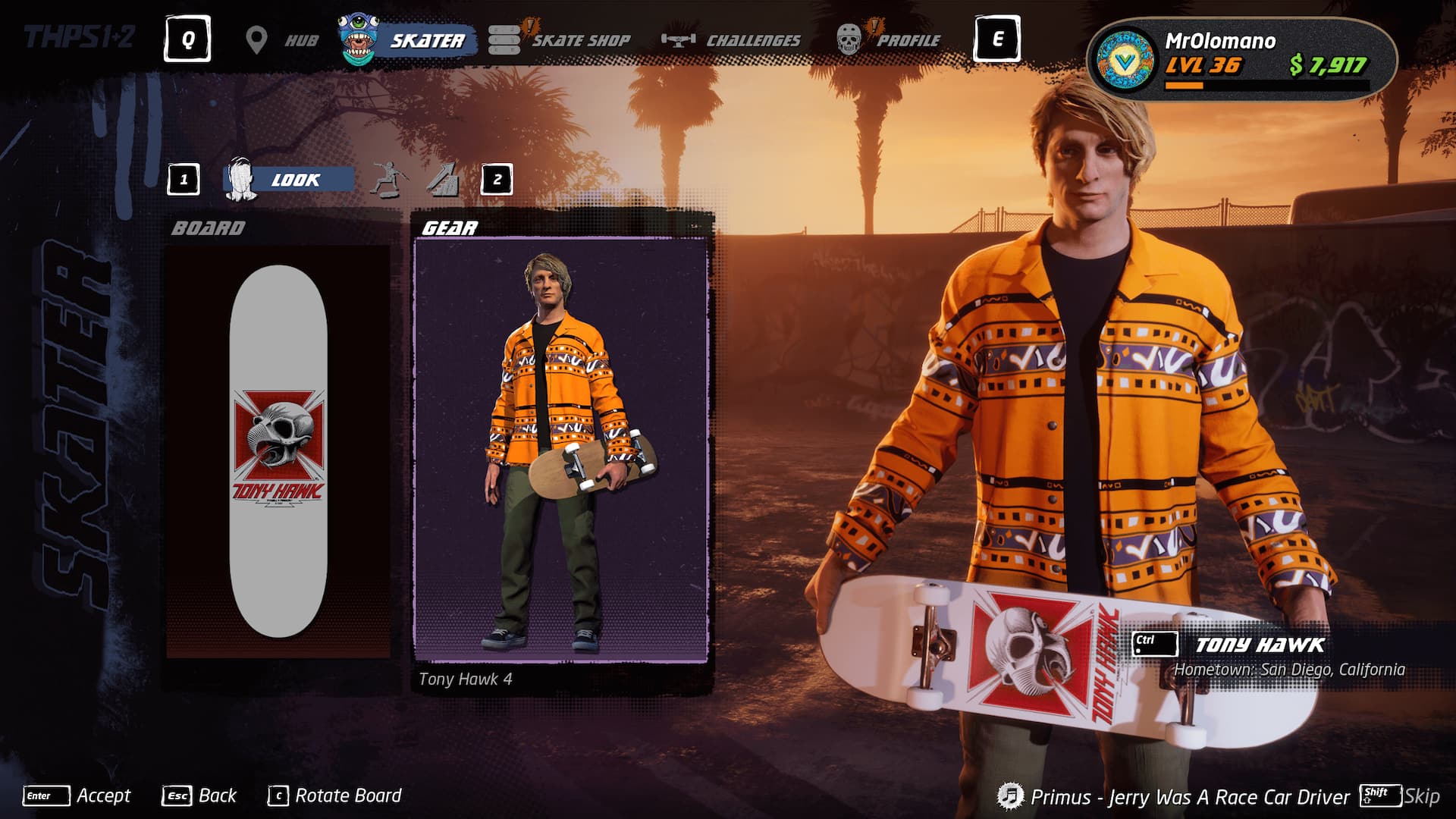
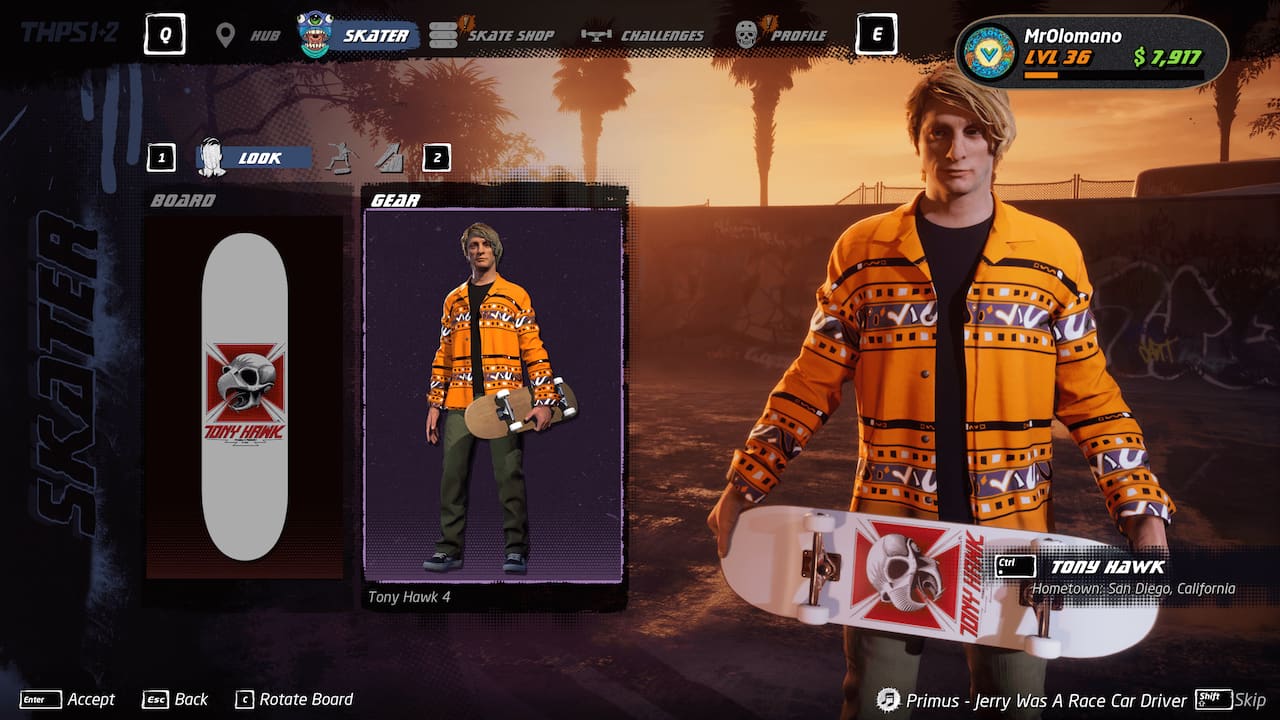
But the subtle, somewhat existential tinkering brings me the greatest joy. Unfortunately, the original pantheon of skaters are getting on in years now, and their aged character models reflect that, even if they all still have virtual knees of steel. Committing to the bit, the deluxe edition of THPS 1 + 2 comes with alternate outfits for the OG pros that harken back to their Bones Brigade days. Tony Hawk gets his quiff back, and Rodney Mullen loses his Rodney Mullet but dons a pair of high-waisted shorts.
This knowing throwback initiative is offset by the tasteful introduction of contemporary pro skaters like Leo Baker and Tyshawn Jones along with the modernized streetwear available in the Create-A-Skater apparel shop. Even the soundtrack is a counterbalance of old and new, blending beloved Primus and Dead Kennedys tracks with songs from Screaming Females, Skepta, and Viagra Boys. It is impossible to get a holistic read on a culture made beautiful by its evolutionary fluctuations. Still, the breadth of music in THPS 1 + 2 makes it feel like a passion project that has grown with the ongoing influence of skate culture rather than a dusty, hermetically sealed microcosm that is off-putting to a new generation of players.
Yet regardless of its forward-thinking outlook, it’s hard not to adore THPS 1 + 2’s penchant for adapting old-school unlockables. The Stat Points, Secret Tapes, and Hidden Areas return from the original games, tempting you into death-defying gaps and increasingly technical maneuvers that, regardless of the outpouring of video guides online, are still surprisingly hard to explain and replicate. Without being too navel-gazey, it harkens back to an early internet era where players would have to huddle together in forums to figure out puzzles and theorycraft about locked doors and secret character criteria.
The fantasy sandbox level design of THPS 1 + 2 is ideal for teasing out those “What if?” moments that will goad you into grinding the blades of a helicopter or hurtling into a hidden portal at the bottom of a steaming volcano. Yet rather than rely solely on the original placement of collectibles, the remakes bring their own additions, including mysterious Alien Plushies and Vicarious Visions’ Logos that you can stumble upon in each level, ushering in a new wave of viral crafty skating techniques.

One nostalgic aspect of THPS 1 + 2 that didn’t require any innovation was the bite-size, two-minute run timer, a sense of brevity that decades of attention-destroying content have been kind to. The allure of one more attempt is enough to keep you up past your bedtime, and the tactful addition of a Speedrun Mode in the remake enables you to try and string together all of the goals into one perfect blitz, inevitably sustained by dodgy overtime manuals.
A post-launch patch enabled individual progression per skater, which quickly revitalized my interest in the game after peeling through it quickly upon its release. As much as I adore the soundtrack, there’s a meditative bliss to sticking to a new album and figuring out a pro skater’s special tricks. My aging memory adds to the excitement here as I often forget the park goals entirely and surprise myself when my lizard brain compels me to kickflip the roof gap on School II. And if I do end up mastering every skater in the roster, I’ll still have additional criteria to meet thanks to the moreish Challenges system introduced in the remake. Even after seeing the game through a few times, I’ve still only reached Level 37, with plenty of combos to conquer and quirky grip tapes to claim in the months and years to come.
Thankfully, there’s also nothing fiscal or sinister about THPS 1 + 2’s approach to unlockable cosmetics and experience grinding. The Challenges system is simply there to test the boundaries of your skating skills and compel you to take a tour through all of the game’s modes. This includes the surprisingly deep Create-A-Park system, which is flush with quality user-generated content.
Good, meaningful nostalgia is hard to find in a culture of endless reimaginings. So much can go wrong in the arduous process of trying to bottle lightning that struck over 20 years ago. But Vicarious Visions put self-awareness ahead of stuffiness, resulting in one of the most innovative revivals in recent years.