War is Pyrrhic in The Great War: Western Front
The Great War: Western Front is a very different sort of strategy game from a studio known for making some of the best.
Where often war in video games is boiled down to its broadest, simplest black or white dichotomy of live or die, win or lose, The Great War: Western Front is a game of greys which explores the nuance of conflict from both the perspective of the trench-rutted battlefields and that of the national will, cost in gold, and politics of the greater war set on a global stage.
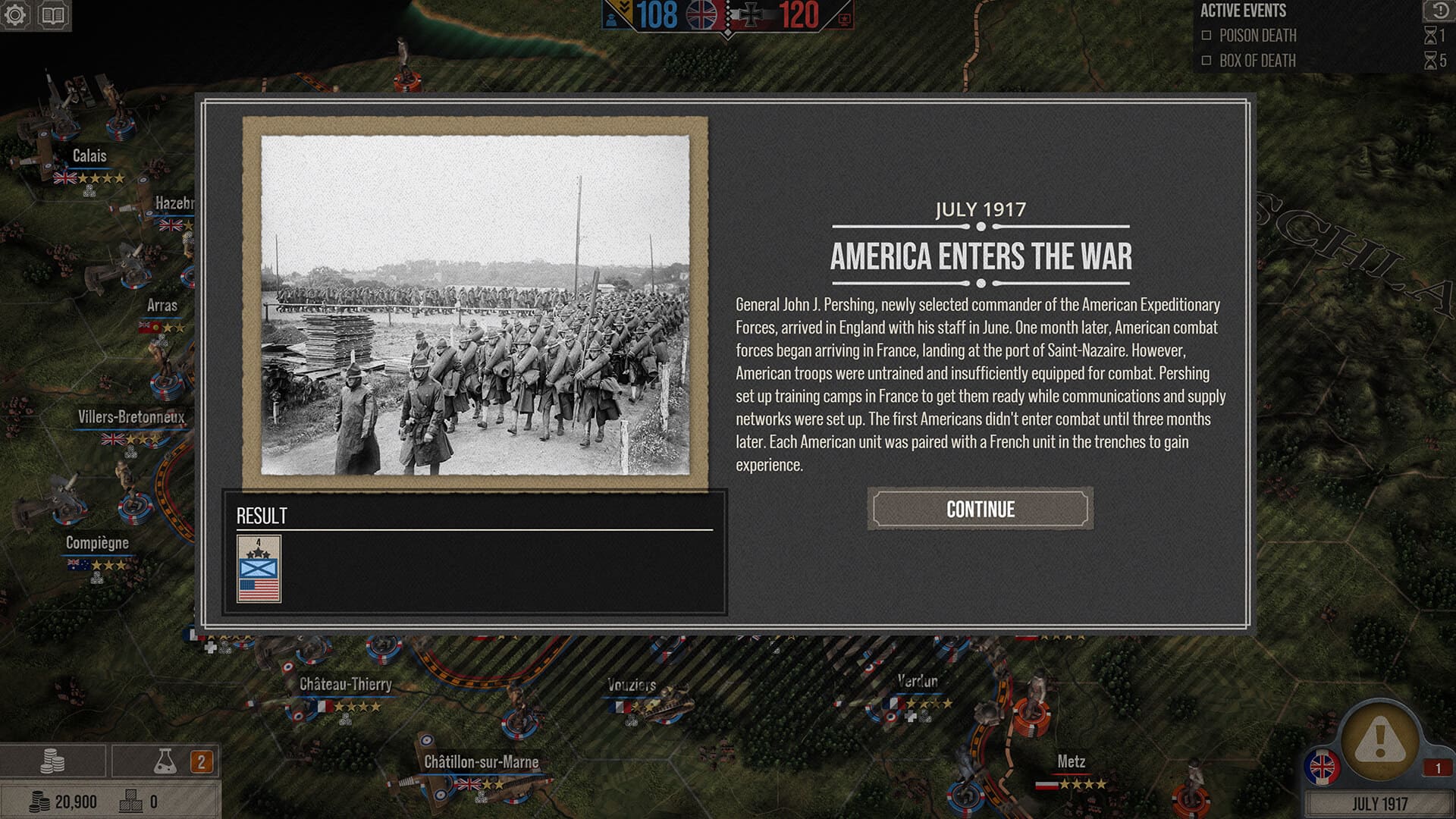
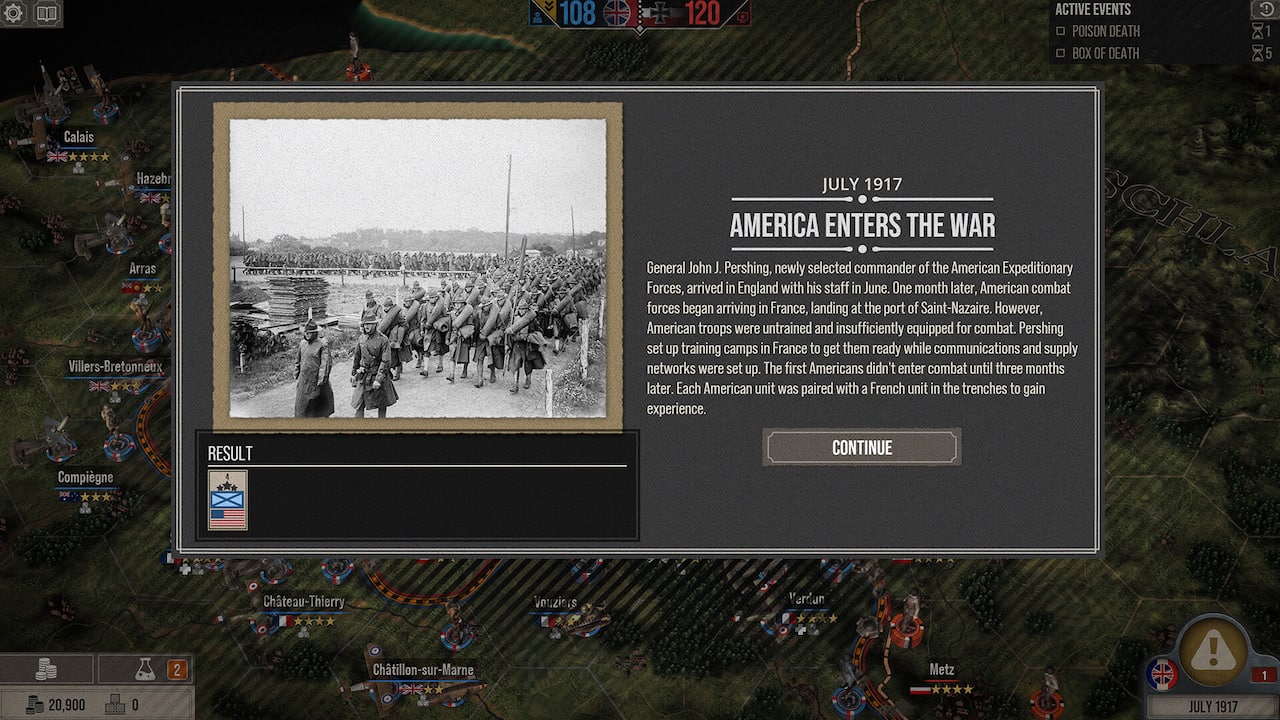
Both victory and loss comes with a cost, and winning the battle rarely leads to victory in the war. Developer Petroglyph Games worked closely with the Imperial War Museums to ensure it could capture the reality of World War I’s iconic Western Front through archival images and a deeper understanding of what would eventually be known as the War of Attrition and Battle of Inches.
Lead designer Chris Becker said that the team at Petroglyph – perhaps best known for its work on strategy game Star Wars: Empire at War – was drawn to the idea of creating the game in part because of the interest many had in history and other historical games.
“World War I saw the scale of warfare and the technology involved change drastically from anything the world had seen before,” he said. “With our legacy in creating strategy games, the tactics of trench warfare presented us with a chance to capture a unique perspective which challenges players to react to these changes, in both turn-based grand strategy and real-time strategy. The opportunity to make The Great War: Western Front was very exciting for us, giving players a chance to relive or redefine this pivotal moment in history.”
Most notably, the game plays out in both turn-based and real-time conflicts. Players assume control of either the Allied Forces or the Central Powers. Each turn consists of research, purchasing from a relatively small selection of units, and moving units to reinforce, defend, or attack locations as a Theater Commander. When an attack occurs, players have the option to have the outcome determined automatically based on the odds of victory or loss, or to drop into the battle as a real-time Field Commander.
In your role as Field Commander, the game becomes a much more traditional looking real-time strategy title, albeit with some interesting tweaks. The units are all based on the historic realities of World War I and the sort of research you’ve invested in as a player. So, for instance, you may have already unlocked mustard gas or tanks, which can have a significant impact on the battle.

A conflict kicks off with the player having the opportunity to dig out trenches. These fundamental elements of the war stay throughout your game. So if you return to a battle at the same location – a very high likelihood – you’ll find those same trenches, though some may have been pocked with mortar fire or undermined with explosives. The deeper you get into the war, the more intricate the maze of trenches you can use and will have to face in any attack.
Air balloons play another important role, raising them gives you a clear view of sections of the battlefield and the armaments, and men located there. As the game progresses and planes become more significant to the game, you’ll have to raise and lower your balloons to avoid having them shot down.
You’ll also find that artillery and machine gun nests are important to defending and attacking trenches. Finally, you place your units, which include different sorts of perks based on everything from their nationality to how you’ve researched and upgraded units.
The object of every battle is to try to capture and hold as many of the key positions on the map as possible. You start with half, as does the enemy. Both sides also have a base which, if captured, essentially ends the battle.
But a battle won rarely leads to a clear victory. Every location has stars, each of which have to be removed before it can be captured. This usually means you’ll have to attack and win multiple times. If you wait a turn, the location gains back a star, so capturing a piece of land in the Theater of war is surprisingly difficult.
There’s also the fact that your pool of soldiers, the backbone of an army during WWI, doesn’t change much from start to finish of the war. While you can purchase tanks, planes, and artillery, and upgrade, you can’t simply buy more soldiers. Instead, at the end of every battle, all of the soldiers lost are either healed or replaced with new recruits. This is done automatically as part of the cost of warfare and requires Gold Reserves.

Gold in The Great War is one of the most important factors. Without Gold Reserves you can’t buy units or attack. You earn gold automatically at the start of each turn and from some world events.
You’ll also have to worry over your supply, which is what funds your purchases during a battle. Where gold is used for theater purchases to fortify positions, during a real-time battle, the number of units you can field and how many you can call in from reserves are all dictated by your supply.
The game’s most important factor, though, is National Will. While it’s possible to win the game by capturing the enemy home region (Paris or Kreuznach), it’s unlikely you’re going to win that way. Instead, your victory will likely come through war fatigue. This means wearing down your enemy’s National Will to zero. National Will for both sides is lost and gained through battle victories and world events. At the end of every battle, the game decides the winner based on your total score and the enemy’s. The bigger the difference, the better your loss or victory. Outcomes range from a Great Loss to a Great Victory. Each reduces or increases National Will.
While battles are the key way to impact National Will, you can also research things that will help boost your will. Also, at some point, both sides just start losing National Will automatically because of War Fatigue. If strategy and gameplay don’t wrap up the game by 1920, War Fatigue does.
There are other interesting elements woven into the game, like weather, eroding terrain, random events, the interplay of nationality on the battlefield, and different forms of espionage as well, but in general, this is a game about attrition, fortitude, and avoiding loss or Pyrrhic victory.
Becker said this was one of the key reasons the team decided to base a game on World War I.
“World War I and the style of combat which was seen across the Western Front presented unique tactics that we wanted to take on in a strategy game,” he said. “Known as a ‘War of Attrition’, and a ‘Battle of Inches’, the outcome of each battle wasn’t as clear-cut as anything that had come before this, with repeated offensives and morale-sapping victories achieved at a considerable cost. Not only that, but the rapid implementation of technology meant that tactics were evolving throughout the war. Replicating this manner of conflict, where the player is called upon to make difficult decisions to achieve their goals, and by adding in the unique mechanics of trench warfare, we feel this has created a unique experience.”

The decision to focus the game not just on WWI, but specifically the Western Front (which was active from 1914 to 1918) was because the scale of those conflicts led to some of the war’s most significant technological advances, which in turn makes for compelling gameplay.
In developing the game, the team at Petroglyph worked to design a title that would capture the realities of war in an authentic manner, focusing on making sure players have a sense of progression and agency over the choices they make in the context of WWI, to ensure they feel the weight of those decisions, Becker said.
The journey from ideation to launch this month included exploring a number of interesting avenues, but it was the concept of a dual-role commander position that gave the team a strong starting point, he said. Trench warfare was the next big development.
“Trench warfare is very unique, and we wanted to make sure it was impactful - our focus then was planning and strategy in the pre-battle phase so that players' decisions would have a meaningful impact on the battles themselves,” said Becker. “The trench networks which players will design and the visual impact of the war on the very landscape are retained across individual battlefields, so returning to the scene of a previous battle provides unique opportunities for them to build on their earlier decisions.
“As Theatre Commander, we wanted players’ decisions to hold weight across the Western Front, presenting them with difficult decisions to make which will impact their overall war effort. The choices which they make will impact their National Will, which indicates the support they have for the war in their own territories, or their reserves of gold, allowing them to replenish the losses incurred by the conflict and supporting their economy. Even in victory, everything has a cost that the player must consider, both on and off the battlefield.”

Capturing the heart of World War I also meant ensuring that the game reflected a war of attrition, but did so in a way that would remain interesting to players.
“It’s important that players always have a sense of direction and progression,” he said. “What was important to us was tying in the cost of that progression. Players can win battles at a large cost which can be a Pyrrhic victory, achieving victory is one thing, how you achieve it is another. Players have to consider National Will, Gold Reserves, Supply, Replenishment costs, and more as they make their decisions.”
Petroglyph also added in the option to surrender or cease fire in a battle, both are part of a concept the team calls marginal victories.
“The idea is that during the war, victory wasn’t clear-cut or binary,” Becker said. “Whilst players are considering the cost, they can make decisions to continue to push (increasing the cost, but possibly securing additional objectives) or holding back (cutting their losses). This is a very real decision with real consequences that commanders had to make in WW1, and both ceasefires and surrenders will play a key role in a player’s overall strategy.”
The end result is a game that forces players to consider the cost of each battle, whether won or lost.
“We focused on tying the costs to players' actions, attributing a direct cause and effect,” he said. “For example - obtaining a great victory in battle can gain national will, but the casualties in the battle will not only cost national will, but also gold reserves as replenishment costs. There are also events, objectives and hard choices the player will face throughout a campaign - and these will all have varying outcomes which the player will have to consider and reflect upon.”
The game, which is available for purchase on Epic Games Store now, also features quick skirmishes, the ability to play through historical battles, and a multiplayer mode.