‘It would doom us’: Why Warframe’s massive Tau update isn’t a sequel
It’s been 13 years, but Warframe is finally leaving home.
For the first time in Digital Extremes’ free-to-play sci-fi action, looter-shooter history, players will be venturing out of the Origin System. An all-platforms Dec. 9 update opens up the Tau star system, finally delivering on more than a dozen years of lore and teasing narrative.
The Tau update is the sort of massive leap in a game that would typically be tied to a sequel, but not with Warframe.
“I think in many ways, it's sort of a banner moment for just how much more Warframe we're going to be making,” creative director Rebecca Ford said during a press preview. “I think by now this would have been Warframe 2, but we're just going for it. We're building another solar system brick by brick.”
During a one-on-one interview later that day, Ford was a bit more blunt about why this isn’t Warframe 2: “I really think it would doom us.”
Welcome to Tau
When it hits in early December, Tau will bring with it the ability to fall to your death in the system’s dizzying heights, a two-hour quest and two playable regions.
Fornax is the rain-swept ring city of Sentients built around three connected hubs: the Lastbloom Lounge casino, Manifold 90-BF, and the Elder Rustgarden, which Ford and her team aren’t talking about yet. Perita, the second playable region, is a volatile desert world and home to descendants of the reptilian Dax.
Tau's weather isn't just for show, either. In Fornax, Ford said, "the black rain falls and the dead rise from the floorboards," with weather that switches on and off mid-mission and changes which enemies spawn. Perita has sandstorms.
Ford said the launch, while robust, also paints a picture of the future of Tau.
“So you're going to see these two regions you can go to,” she said. “Then you're going to see three that you can't. One of them you will be able to go to sooner than you think. And then the other ones will have the expected [announcement] splendor and shock and awe, perhaps through a TennoCon scale production.
“So we'll be going really deep into Tau's unknown territories. Some of it will be alluded to, lore sharks will find more and more.”
The Tau update’s quest stars Brysko, a noir detective Warframe voiced by Matthew Mercer. In it, Brysko travels to the Tau System to find out what’s become of the Sentient ring city of Fornax, a grim, crime-ridden city made bleak by the constant black rain. It’s a place packed with casinos, docks, and slums.
Brysko, a Sentient Warframe brought back to life by Albrecht Entrati, sets about trying to infiltrate the inner circle of organized crime lord The Hunra.
The update also brings with it the return of the Spy mission type.
“Spy is a very environmental game mode,” Ford said. “Players who play Spy have to look, figure out, kind of deduce what might make this the most efficient or more interesting way to navigate the traps of Fornax. Thematically it makes sense because we're going for a little bit more of a heist and gambling and crime so breaking into vaults for crime purposes is happening here. You have to memorize some codes, figure out some passwords, all to get the Spy objectives. So it is Spy with a little bit of a flavor twist and a fully, fully brand new environment.”
The Steel Path, Warframe’s hard mode, is also available in Tau, on both Fornax and Perita. Tau’s Steel Path will have the five Hokra Brothers hunting you down as you play the missions.
“These guys are basically sent by the mob,” Ford said. “There’s five different brothers, each with a variant, and they all have their own personalities.”
Players can move seamlessly between Fornax’s three hubs by running bounties, driving or through a new mode called Night Walk, which Ford describes as a “low-stakes, non-combat way to play,” or, “taking the dog out for a walk.”
“Brysko has a dog, he has a hound,” she said. “And this is the way that you can experience Fornax in first-person night mode. You can go to the hub of your choosing and this is where you can see citizens, you can hear a lot of the ambiance of Fornax and what might be going on with the Bloom. You can discover some clues here, you can discover some resources.
“It’s really, really just a low-stakes, very chill way to play this update.”
Another new way to chill in Fornax is by visiting the Lastbloom Lounge casino and trying your hand at Portau, Warframe’s first card game. Roulette will be added early next year.
Ford added that a third sort of non-combat experience is coming to the game later, but she declined to say what it was: “It’s literally a kind of fun piece.”
The update also includes a full album of new, original music.
“You’ll experience lots and lots of different tracks,” Ford said. “We were really going for an EDM meets trip-hop meets acid-wash music.”
Finally, Tau will launch with the Kullervo Prime Warframe.
“This has been a six-month-long idea to execution,” Ford said of a combined Prime trailer that also features Styanax, whose Prime version arrived in June. “So this has been the hardest secret to keep since Styanax came out.”
Never Warframe 2
Tau coming to Warframe is a huge deal. And not just because of the mass of new content it delivers, but because of the way it pulls forward more than a dozen years of in-game storytelling.
But despite that, folks at Digital Extremes never seriously discussed the idea of releasing it as a sequel, as Warframe 2.
“Never with an ounce of sincerity,” Ford said. “It was always under the guise of ‘It would destroy us to do a sequel.’ The way we work, the way we plan, the way we update, the speed at which we work. There is no cavalry to make a sequel and release it and do anything about it.”
Ford added that the sequelization of live-service games has proven “extremely experimental.”
“Depending on how far you swing from your original, it's quite worthy,” she said. “You know, our friends at [Grinding Gear Games] with [Path of Exile 2] have a totally different game and are supporting both still. They have a very different philosophy on it.
“In this case, we were very, very apprehensive about calling it Warframe 2. And we never would. And we're not going to. We call it Warframe because we work on Warframe and we want this game and what it offers you to be one cohesive … one piece. It has seasons, seasons like TV seasons, not in-game seasons.
“We probably could have gotten away with it. But we're not going to because the whole game is required.”
Lost players
Ironically, one of the upsides of releasing a sequel is that it could solve one of the biggest issues Ford sees facing Warframe: bringing back players who walked away from the game.
“Returning players is the biggest white whale I have right now because if a player leaves Warframe and they come back for Tau, they're going to be back exactly at the point that they decided to quit,” she said. “So it's kind of like waking back up and being like, oh, I left this for a reason because I hated the grind I was doing or something.”
Next year, Ford hopes to focus on that issue.
“When you're as old as Warframe is, you have almost more inactive accounts than anything else at a certain point,” she said. “People tried in 2015, right? 2017. Tau is a highly motivated spectacle.”
So the team is going to be looking at some technical and systemic things to do if a player hasn’t logged in in a while and suddenly returns.
“You almost want to treat it like an exit interview at a job,” she said. “If you left Warframe, why did you leave? What would it take for you to come back?”
She also acknowledged that some players are probably permanently lost to the game.
“If our stats team tells me, ‘Hey, Rebecca, I know you really want that player that quit five years ago to come back, but statistically, they’re never coming back. They don’t.’ Get over them. Like get over your ex. It’s over.”
Instead, the team wants to focus on those players who do have a chance of coming back.
“You have to kind of build like a player journey, a story,” she said.
Among the things the team is looking at include in-game grinding to level up and the onboarding. They’re not entirely sure about building out a catch-up system for those players, though.
“We’d be very careful about catch-up mechanics because being fair is part of our ethos,” she said.
Could launching the Tau update as Warframe 2 solve a lot of these sorts of problems for the game?
“A hundred percent, yeah,” Ford said. “I think we would really **** it up. I really think it would doom us. A sequel decision would perhaps be a windfall for some amount of time. It would get rid of all of the baggage that comes with a game of such lengths as ours. But I don't think we'd be good at it for Warframe.”
Tau and addiction
The new solar system brings with it a new theme: Addiction.
The theme was influenced, in part, by the fentanyl and opioid crisis currently plaguing the real world, but for the citizens of Tau, their society has devolved into what Ford calls “their own Great Depression.”
“In place of Prohibition and alcohol there's synthetic drugs and there's gambling and all of these things,” she said.
The idea of using gambling as a form of addiction predates the recent real-world boom in betting apps, she said.
“It has gotten worse in real life,” she said. “We didn’t go far enough in the game.”
A free-to-play game with a cash shop that uses gambling as a way to explore the theme of addiction raises an obvious question: How is it different from the gambling it claims to examine?
Ford said the studio has always tried to stay on top of removing anything they believe is toxic to players and the game. For instance, the studio once pulled a randomized paid cosmetic from the store when they saw how it was being used.
“We saw one person use it like a hundred times and we took it out of the game immediately,” she said. “Any time we ask for money, it’s in exchange for time only, not chance or not any type of power advantage.”
The casino’s chips have no cash value and no connection to the game’s premium currency, platinum.
“Nothing, nothing, nothing like that,” Ford said. “We had no interest in that. There’s no reason to expose ourselves to that insanity. It’s purely flavor fiction for going to a vendor and buying a cool poster, that kind of thing.”
The money maker
Warframe sells platinum, its premium currency, for real money, though players can also earn it by trading with each other. Platinum buys Warframes, weapons, boosters, upgrades for your load-outs, inventory slots, and cosmetics.
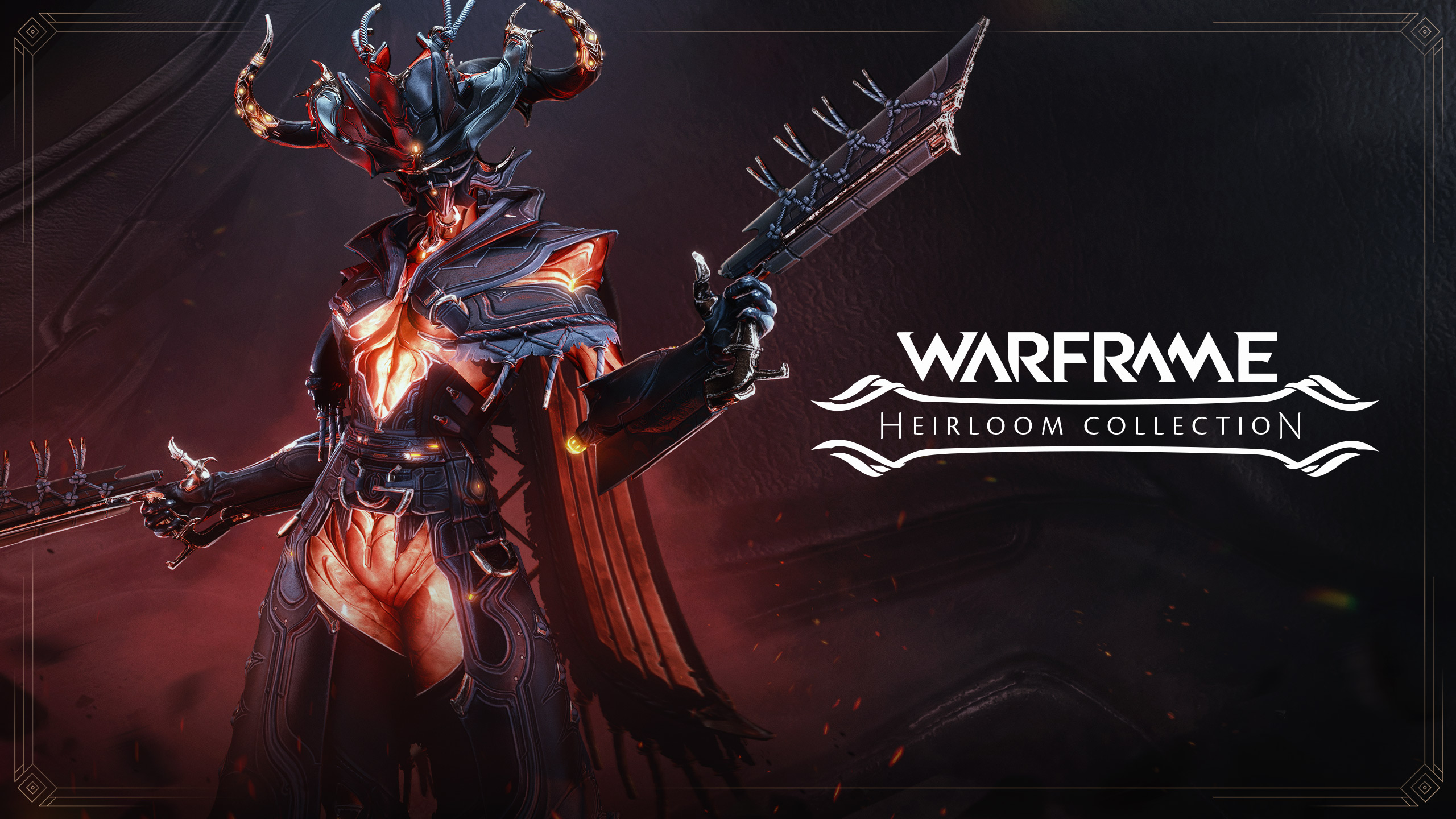
One of the biggest money makers is the game’s Heirloom skins, Ford said. Heirlooms are Digital Extremes’ premium cosmetic line that began as limited drops that Ford compared to a “three-day pop-up to get a Supreme Labubu jacket.”
“You know, like standard fashion industry stuff like the spring summer 2026 jacket exclusive.”
But players were annoyed with the limited nature of the drops, so the developers redesigned the program to make the Heirloom drops permanent.
“When we drop Heirlooms they are so stylish,” she said. “We really give them the runway presentation.”
The heirlooms generate so much revenue for the company that any month they hit it’s a “solid month of not having to worry,” Ford said. “Their launch month is just a very, very great month for DE because we can focus on other things … we don't need to plan the monetization of XYZ because we got an Heirloom.
“The best thing I can do for our team is not have them worry about the state of the industry and if Heirlooms are a way to do that, we will do it because you see the way live-service games, games in general are just being rusted away at their very core.”
Heirlooms and Prime Access, which sells new Prime Warframes as an alternative to farming for them, are the game’s financial foundation.
“Primes and Heirlooms are effectively what keep the lights on,” Ford said. “In every measurable, every meaningful way.”
Tau will continue to use the same financial model, with no plans to introduce new ways to monetize the game.
Two solar systems, one team
While the big focus right now is the new Tau solar system, that doesn’t mean it’s the last we’ve heard of the Origin system.
Work will continue on the launch solar system as well, and it will be the same team working on both. While the team no longer published a roadmap (Ford said she finds them “too sanitary and demystifying for what an entertainer ought to do.”) The team still works off an internal one.
For the Origin system, next year’s story will follow the repercussions of the destruction of Eris, an event that led to Tau. Now, the Infested will respond.
“The Infested are not going to be happy about this,” Ford said. “So if Tau is not your thing, we have 2027 ready to go with an Infested deep dive in the Origin system.”
In Tau, developers are rolling out the early footsteps in a new solar system.
“This will progress,” Ford said. “Cause and effect along the way. We’ll adapt if players don’t like a certain thing or choice, but we have pre-production and story briefs and all of the things going for next year’s offerings, which I am pretty excited for.”
Looking back at 2026, Ford noted that there have been some missteps.
“It has been a great year for a lot of on-paper things, like records broken everywhere, but there was some player sensitivity around some of the experimentation we did.”
That included combat that left players underpowered and a return to Railjack without a rework.
Why Brysko?
You might find yourself wondering, as I did, where the name Brysko came from for the lead Warframe in Tau’s story.
It turns out it’s an homage to Lenny Briscoe, the long-running detective on Law & Order played by actor Jerry Orbach.
Ford said the idea for Brysko came to her when she was watching the complete TV series on a DVD set.
“Every time Lenny was on screen, I’m like, ‘Oh, man, it would be so cool to do a detective Warframe,’” she said.
She joked with Warframe design director Pablo Alonso so much about it that one day he wrote up a concept for Brysko’s abilities in the game.
“It worked so well,” Ford said. “We're like, ‘Oh my god, we can start Tau off from a really noir detective angle,’ and this suits the quest so perfectly because the detective would know things but then we can treat things as clues and that Law & Order binge I did ultimately gave us the pieces to make Tau happen.”
She added that Briscoe is also her dad’s favorite character.
“And my dad has supported my career since I was six and wanting to do game stuff,” she said.
Had Orbach been alive, she said, she would have definitely tried to cast him as one of the characters Brysko meets in the quest.
“I just love, love Lenny Briscoe,” she said. “I think the way he deals with his addiction, with his drinking, and his whole arc with that, and his daughter. He is the heart and soul of Law & Order.”