Welcome to the multigenre realms of SteamWorld
To celebrate the 10th anniversary of the breakthrough success SteamWorld Dig, the Epic Games Store is welcoming the arrival of the entire multigenre SteamWorld franchise of mining robot societies. From Dig’s Metroidvania platform mining expeditions to the brand new mining-town-builder SteamWorld Build, Thunderful’s series is constantly trying something new. We spoke to SteamWorld’s longtime project director, Brjann Sigurgeirsson, as well as Build’s director Andreas Persson and producer Adam Vassee to dig into how they explain the longevity and lasting appeal of an ever-changing franchise.
SteamWorld Dig was a very well-timed release. In 2013, digging for gems was big business. Minecraft was booming, and Spelunky was a break-out success on consoles. “There was also Terraria,” adds franchise director Sigurgeirsson. “I think SteamWorld Dig came out at exactly the right time.”
Dig, which was developed by the Sigurgeirsson-led studio Image & Form before he co-founded Thunderful, was strikingly unique, even if it was built Frankenstein-style from the parts of other games. As a post-humanity robot digging on a water-starved planet, you drilled downward through enormous vertical levels, crafting your own platforming routes back up again with the goal of excavating far enough to unlock new aspects, weapons, and areas of the game. It had roguelite vibes, but it was set in a persistent world where progress was ever-dangled in front of you. Enormously compelling with great characters and a sweet storyline, it proved extremely popular.
“Our proprietary 2D engine was extremely fast,” adds Sigurgeirsson, “and Dig had all the ingredients of a classic game loop: Dig, find, sell, upgrade, rinse, repeat, and bring the story forward one gem at a time.”
Something very interesting about that original game was the way its Metroidvania elements didn’t become apparent until after you’d played it for quite a while. “I think many Metroidvanias do that,” says Sigurgeirsson. “They spring the ‘Metroidvanianess’ on you in the latter stages of the game!”
This came about quite naturally in this instance. At first, the developers tried to force players to dig in zigzags, so they could climb up again and not reach the bottom too quickly. But playtesters hated it, and they became too hesitant to dig. “So we changed it: We made the ground tougher as you dug down, which made realistic sense,” he explains. That way you had to find gems to sell, so you could upgrade equipment. And then the story darkens, and finally it’s time for the big showdown.”

It must have been tempting to follow Dig with a direct sequel given the game’s popularity on both Nintendo and PC (it began life as a 3DS game). However, instead, the next game to appear was SteamWorld Heist. As the name suggests, it was a game about thievery where you played as the leader of a band of robo-pirates, boarding spaceships and stealing all their loot. It was a bold change of direction.
“In hindsight,” says Sigurgeirsson, “making SteamWorld Heist instead of Dig 2 is one of the decisions I’m most proud of. It was risky but very, very important for us to do that. [However], the reasons behind it may not be as bold as you’d think.” Prior to Image & Form’s SteamWorld series (beginning with the 2010s Nintendo DSi and 3DS game, SteamWorld Tower Defense), the company had developed “dozens and dozens'' of edutainment games in the same series, and creatively, Sigurgeirsson says, they were “starving to death.”
“So when Dig became a hit, it was easy for us to see that immediately making a sequel was a path that didn’t branch out,” he continues. “We would have to make Dig 3 after that, and then perhaps Dig 4, and fairly soon the franchise would fizzle out and die. We wanted to ensure that we’d be able to create any game we wanted at any time. So, if we could make Heist into a great game, we’d be forever free to do what we wanted.”
After Heist, Image & Form did make a sequel to Dig: SteamWorld Dig 2. However, this wasn’t a reluctant choice. “I think we always wanted to make a sequel,” says Sigurgeirsson, “...just that we definitely didn’t want to do it right away.”
The motivation came from a sense of unfinished business. SteamWorld Dig was released not because they were done innovating, but because they’d run out of money. “We were staring into a financial abyss,” says Sigurgeirsson. “If it hadn’t been a hit, we would’ve quietly gone out of business. The rush to wrap it up meant we still had a number of good game mechanics lying around that never got implemented in the original.”
This meant Dig 2 already had a head start, including picking up on the first game’s open ending where hero Rusty went missing. This time, players dug while playing as Dorothy on a quest to find Rusty, equipped with all the neat ideas that hadn’t made it into the original game. “Still,” adds Sigurgeirsson, “I didn’t think Dig 2 would be as good as it eventually became. In terms of tightness, it’s a masterpiece.”

Following this, 2019 saw yet another genre arrive in the series with SteamWorld Quest: Hand of Gilgamech. Once again matching the zeitgeist, this was a deck-building RPG, and once again, it was a really good one. How does Sigurgeirsson explain the developer’s ability to keep hitting strikes across so many types of games? “The gameplay comes first,” he says. “If we can’t see that the gameplay will be great in a prototype, we move on to something else.” As well as commending the talents of his developers, the director adds that taking their time is vital too. And also: “We iterate like it’s a joke. When a game is done, we have iterated numerous times on every little detail. You’d be disgusted if you knew how much stuff gets left ‘on the floor in the cutting room.’ But it typically means that the stuff that stays in the game is amazing.”
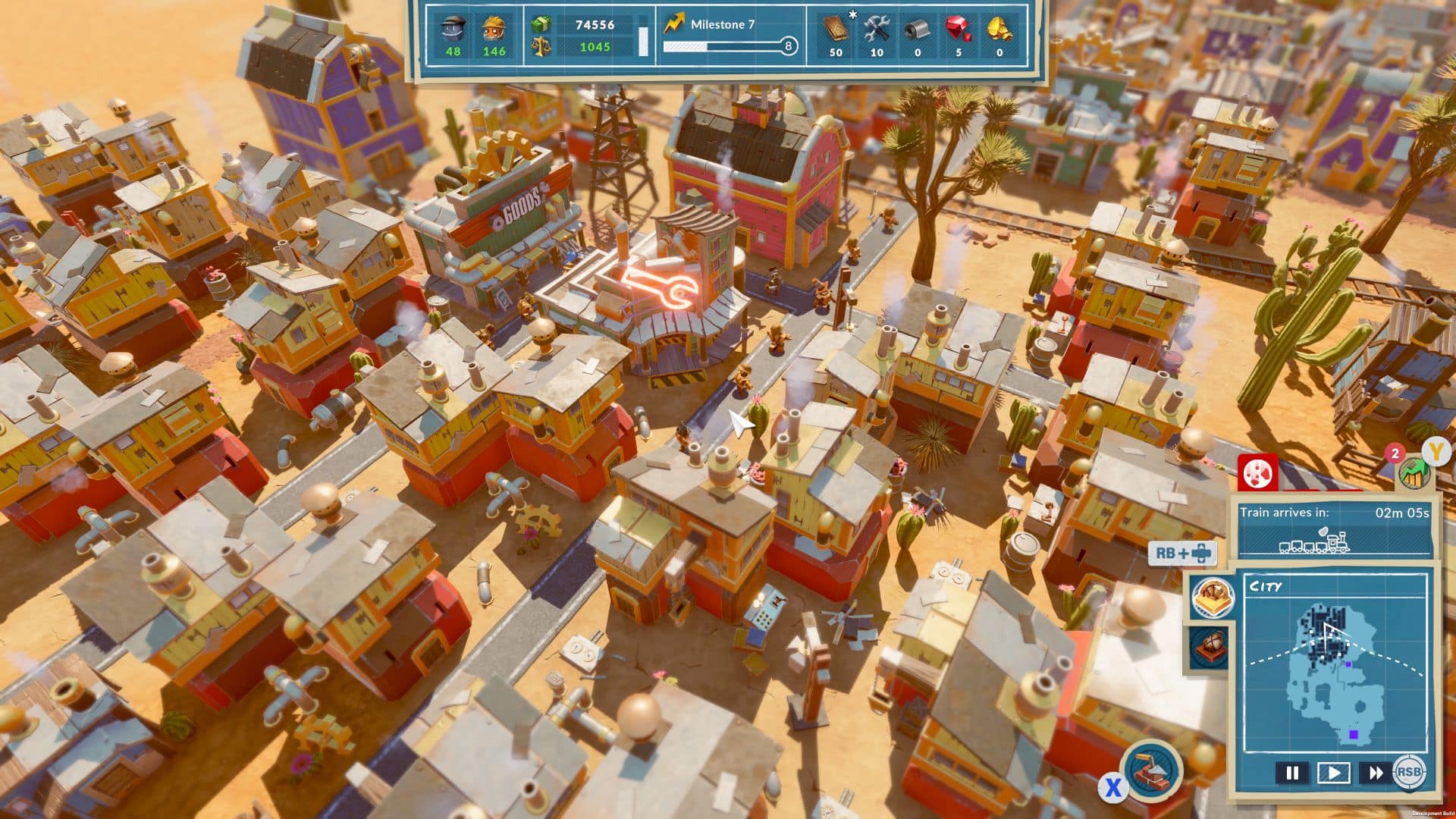
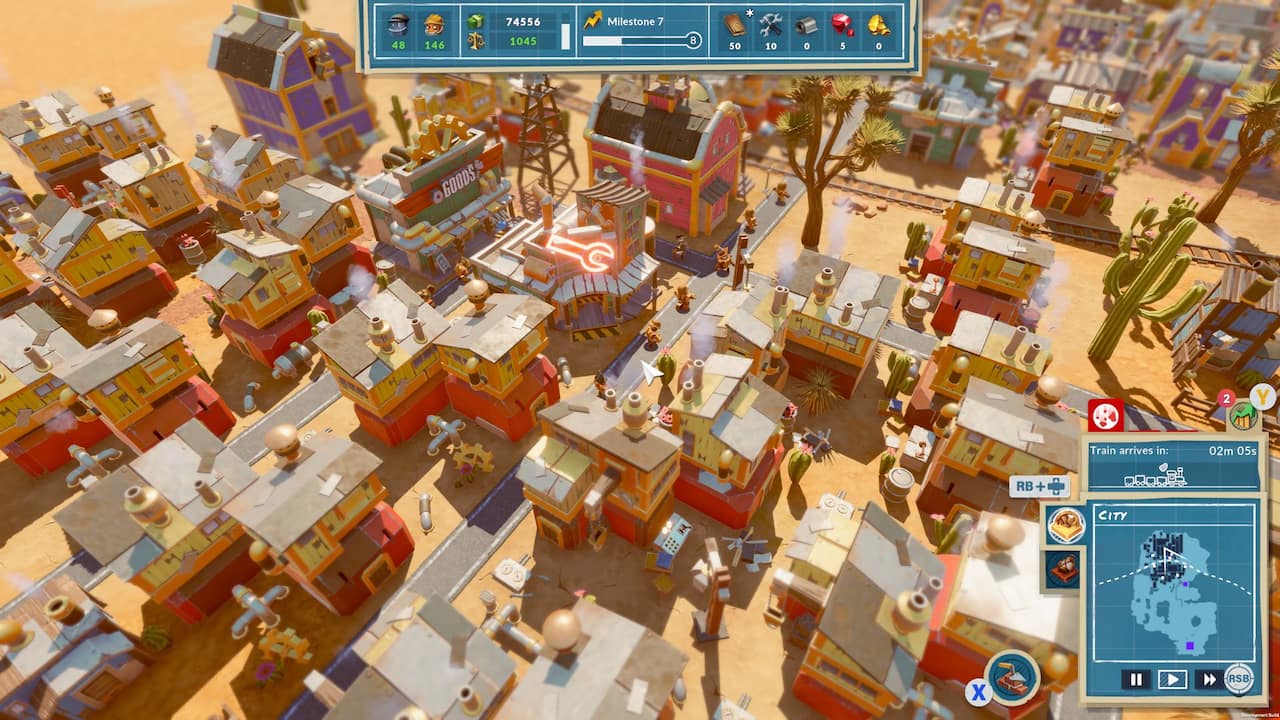
Four years on, in the biggest gap between games since the franchise began, 2023 brings us SteamWorld’s fifth new genre with SteamWorld Build. However, unlike the previous entries, this doesn’t feel like it’s surfing on the zeitgeist. Build is a city-building game that is set both above ground in a hand-crafted robot town and belowground in an exploratory network of mines. “We wanted to create something that no one was expecting from the franchise,” says Vassee, the game’s producer. “The best case scenario for us was...something no one knew that they were missing until they saw it.”
There’s another big change with Build. Image & Form, the developers of the previous games, was absorbed into its self-spawned owner, Thunderful, in 2020. Build comes from a whole new team at the publisher, The Station, albeit under the guidance of Sigurgeirsson. Vassee explains that they weren’t interested in trying to put their mark on a beloved title in the series, but rather go their own way. “We were leaning more towards developing system-driven games, and the mix of [a] city-builder...with the classic Dungeon Keeper could be a fun mixture.”

Build’s director, Andreas Persson, adds his thoughts: “When looking at the previous SteamWorld games, we quickly identified digging as a key component. The big question was whether we could do this without confusing the player. Our goal was to ensure the two different gameplay layers interconnect as much as possible.”
The result is a game where aboveground development provides the workers with housing, transport, commerce, and entertainment, while belowground mining provides the resources required for everything above. Then, in turn, the better the factories above, the better mining equipment you can create to further explore below.
“We wanted the player to go back and forth between the city and the mine to make progress in the game,” says Persson. “We’ve all played that city-builder where you have to wait for something to finish or for your money to increase before you can continue playing. Here, you can always switch between layers, and continue playing while you’re waiting.”
While Thunderful doesn’t yet want to talk about other forthcoming SteamWorld ventures into yet more genres, like the announced action-adventure SteamWorld: Headhunter, they’re deeply enthused both about where they’ve been and where they’re heading now. Regarding Build, Persson concludes: “As we further developed the game, it felt like we had really struck gold and created a unique blend of genres that was a perfect fit."