What is the video game rating system?
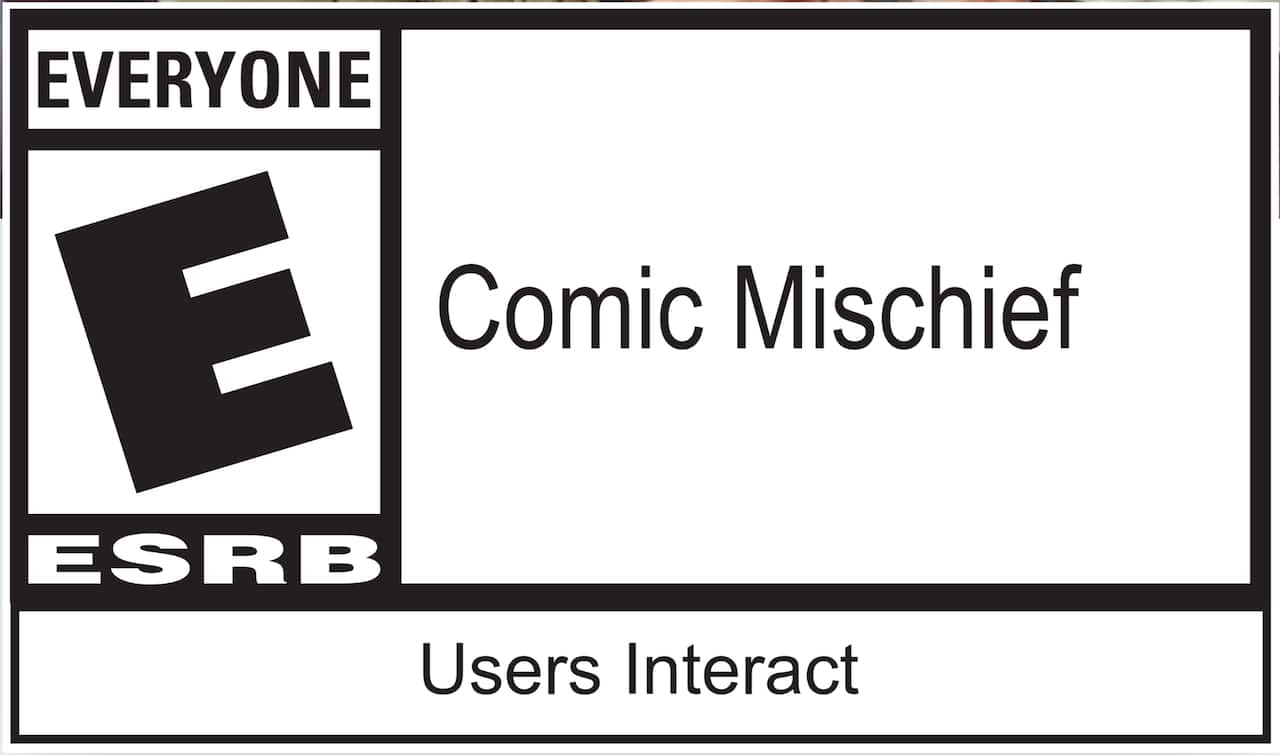
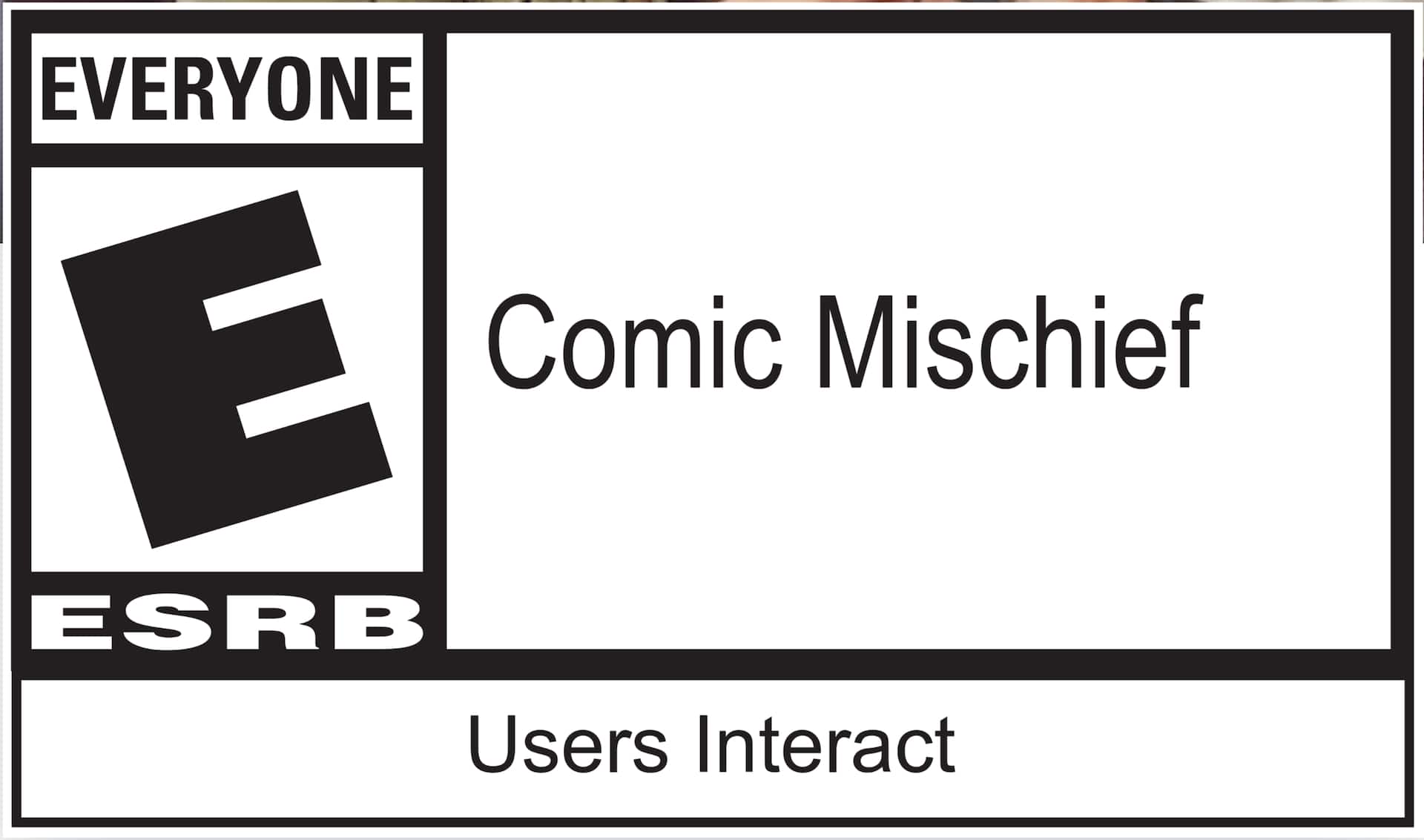
Whether buying a game in a physical shop, through a console’s digital storefront, or here at the Epic Games Store, you’ll find video game ratings almost everywhere you look. These straightforward icons help you make an informed decision about the content you can expect in the game and suggest how old someone should be to play them. In the US, for instance, ESRB classifications range from Everyone through to Adults Only.
Many rating boards exist, including the ESRB in the US, PEGI in Europe, ACB in Australia, and CERO in Japan. Though each has its own set of classifications, they have similar approaches to rating games—and thanks to the International Age Rating Coalition, age ratings in one region mirror those in another.
Read on for a deeper look into how age ratings began, what they tell you, what the different rating boards mean, and (most importantly) how they appear in the Epic Games Store.
History of video game ratings
September 13, 1993 is one of the most significant days in video game history. Otherwise known as Mortal Monday, it’s the day that the original Mortal Kombat went on sale in North America on the Sega Genesis and Super Nintendo Entertainment System. The release of Mortal Kombat shifted how games were perceived and started a cascade of changes in how they’ve been marketed and sold ever since.
There had been violent games before Mortal Kombat, but never at this fidelity. For decades, computers and home consoles could only handle limited pixel counts and color palettes, displaying simple blocky shapes in just a few different hues. But by the ‘90s, that was changing. The Genesis and SNES allowed for greater numbers of pixels on screen and a wider variety of colors, making for more vivid and detailed art. Alongside this, the advent of high-capacity CDs enabled games to use video of real actors, like an interactive movie. These advances caught the attention of Senator Joe Lieberman.
“Gone are the days when video games were just Pac-Man and other quaint characters,” Lieberman wrote in a letter to his colleagues, as cited in Content Rated By: An Oral History of the ESRB. “Advances in technology permit the latest video games to use real actors and actresses to depict murder, mutilation and disfigurement in an extremely graphic manner. And the technology is rapidly becoming ever more realistic.“

SEGA and Nintendo both had recognized Mortal Kombat could cause controversy and sought to preempt it. Nintendo had long projected the idea that if you could play a game on its consoles, then it was family-friendly. It insisted publisher Acclaim change the color of the blood in the game from red to green and make some fatalities less violent. SEGA wanted the game unchanged, but it created a classification board called the Videogame Rating Council (VRC) and put an MA-13 rating on the box, saying “Parental Discretion Advised.”
In a letter to his counterpart at Nintendo, SEGA of America president Tom Kalinske urged the company to join the VRC, echoing Lieberman’s concerns. “Your guidelines were probably appropriate for this business when it was less sophisticated, and when over three-quarters of the user base was under 17 years old—in the late 1970s and early 1980s. Now, when our technology is so much more sophisticated, and increasingly attractive to adult audiences, it seems to me an industry-wide rating system is the type of responsible self-regulation you and your company should join us in adopting.”
In 1993, SEGA was contesting Nintendo’s earlier dominance of the home console space, so the SNES creator wouldn’t consider joining a rating board created by its fiercest competitor.
However, Nintendo and SEGA’s attempts to defuse any potential controversy were unsuccessful, partly because their efforts proved the problem: Buyers on Mortal Monday didn’t know what each version of Mortal Kombat contained. Some returned home with the unedited version of Mortal Kombat they’d been playing in the arcades, and others had the censored version.
As Lieberman wrote in his letter, the problem is that “parents have a very difficult time knowing which video games are slightly violent and which are truly repugnant. No uniform system exists for warning a concerned parent about the violent content of a video game, which she is buying for her child.”

While Nintendo wouldn’t agree to join the VRC, it soon realized it needed to be part of an industry-wide solution. When Lieberman and fellow senator Herb Kohl first brought Nintendo and SEGA before Congress, the two companies' representatives pointed the finger at each other, saying their competitor was to blame for releasing games irresponsibly. Lieberman threatened to establish a government commission to create a game classification system unless the video game industry could develop its own. While SEGA and Nintendo didn’t see eye-to-eye on many things, a government ratings board with the power to ban games or limit where they could be sold could dramatically impact the industry.
Over the next four months, Nintendo, SEGA, and the heads of major publishers in the US established the Interactive Digital Software Association (which later became the Entertainment Software Association), an organization that presented a united front for the US video game industry. One of the first acts of the IDSA was to create the Entertainment Software Rating Board (ESRB).
For a game to be sold in a physical US store, it needed to have an age rating provided by the ESRB. When Microsoft, Nintendo, and Playstation later launched digital stores, they also required an ESRB rating. In this way, the industry managed to push the majority of publishers and developers to get their games rated and largely stayed on the right side of potential government oversight.
Thanks to games like DOOM and Mortal Kombat, games came under greater scrutiny around the world during the early ‘90s. Germany created a self-regulating body, the USK, similar to the ESRB. The Australian Classification Board, which was formed to rate films, began rating games too. And while Britain’s BBFC had been classifying games since the ‘80s, in the ‘90s it took a more active role in what could be sold in the UK, refusing to classify violent games like Carmageddon and Manhunt 2—effectively banning them from sale.
How video game ratings work
Unlike films, which you can watch in a couple of hours, many video games take tens or even hundreds of hours to complete. Rating boards rely on developers to share an honest summary of their game’s content, both through detailed questionnaires and footage of the content in action. Game raters then assess the material and decide what classification is most appropriate.

Since this process relies on trust, there are harsh punishments for hiding game content that would otherwise earn a higher age rating. For instance, the ESRB can fine publishers found to have hidden content from its raters—and the game may even disappear from store shelves, as happened during the infamous Grand Theft Auto: San Andreas "Hot Coffee" incident in 2004.
So, while raters don’t necessarily play the games they are rating, the cost of a mistake is so high that it motivates publishers and developers to be as open as possible when their game gets a classification.
Does the Epic Games Store show game ratings?
The Epic Games Store is an international storefront, so you will see different ratings depending on which region you are shopping from. For instance, you will likely see an ESRB rating if you shop in the US, whereas European shoppers will likely see a PEGI rating. However, most major classification boards have broadly similar categories—partly because, in 2013, a group of rating authorities collaborated to create the International Age Rating Coalition (IARC).

Game developers can submit a questionnaire to the IARC explaining what content appears in their game and receive a rating for all participating countries, as well as a generic worldwide rating. Australia’s ACB, Brazil’s ClassInd, the US’s ESRB, South Korea’s GRAC, Europe’s PEGI, and Germany’s USK are all members of the IARC. This only works because the participating rating boards have similar rating bands.
You can see the individual details of each board’s ratings by following the links above, but here is how the ESRB classifies games:
- Everyone: Content is generally suitable for all ages. May contain minimal cartoon, fantasy or mild violence, and/or infrequent use of mild language.
- Everyone 10+: Content is generally suitable for ages 10 and up. May contain more cartoon, fantasy or mild violence, mild language, and/or minimal suggestive themes.
- Teen: Content is generally suitable for ages 13 and up. May contain violence, suggestive themes, crude humour, minimal blood, simulated gambling, and/or infrequent use of strong language.
- Mature 17+: Content is generally suitable for ages 17 and up. May contain intense violence, blood and gore, sexual content, and/or strong language.
- Adults Only 18+: Content suitable only for adults ages 18 and up. May include prolonged scenes of intense violence, graphic sexual content, and/or gambling with real currency.
In addition to the rating, most classifications in the Epic Games Store also provide detail as to what kind of content earned the game its rating, such as “violence” or “bad language.” You may also see other details, such as “In-game purchases.”
How age ratings impact the Epic Games Store
A game’s rating can change how it appears and behaves in the Epic Games Store.
If you share your account with a minor, for instance, you can use Parental Controls to restrict what they can access—a feature enabled by game classifications. With Parental Controls, you can select a maximum age rating for your account, preventing anyone from purchasing or playing a game above that rating until they enter the correct six-digit pin. You can also limit certain features, such as voice and text chat. For more information, here’s how to set up Parental Controls for the Epic Games Store.

While Epic doesn’t require games submitted to the Epic Games Store to have an age rating, games without ratings may not appear in your region. Players in Australia or South Korea, for instance, will only see games with ratings. Unrated games on the Epic Games Store are also treated as having the highest-level maturity rating, so if you set your Parental Controls to restrict games rated higher than Teen, you wouldn’t be able to buy an Unrated game without first entering the correct pin.
And while you can find many Mature games in the Epic Games Store, such as Red Dead Redemption 2 and Mortal Kombat 1, you won’t find any games with the more extreme Adults Only rating.
Adults Only games are not banned, but major retailers in many countries refuse to sell games above a Mature rating, so most major developers and publishers avoid making games that would receive the classification. In 2007, for instance, Manhunt 2 received an Adults Only rating from the ESRB, and developer Rockstar Games made adjustments before release to bring its rating down to Mature.
For more than 30 years, rating boards have been classifying video games and doing their best to provide information to customers. These organizations often detail why they gave a game its rating, so you can find out precisely what is in a game and judge for yourself if you think it’s suitable for anyone with access to your Epic Games Store account—and use Parental Controls to ensure only appropriate content is accessible.