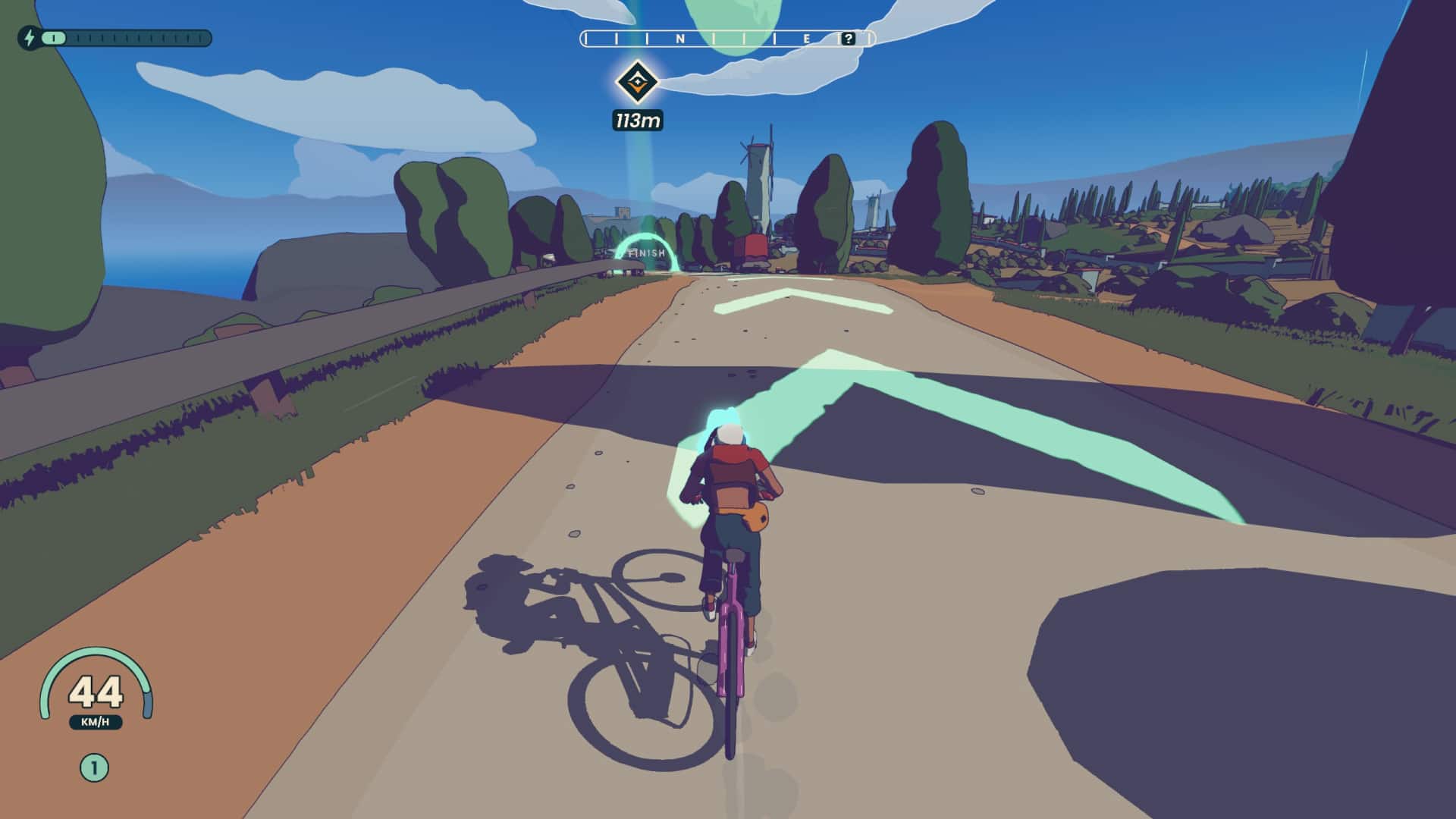
Wheel World is a cheekily worded love letter to the gear-obsessed hobby of cycling
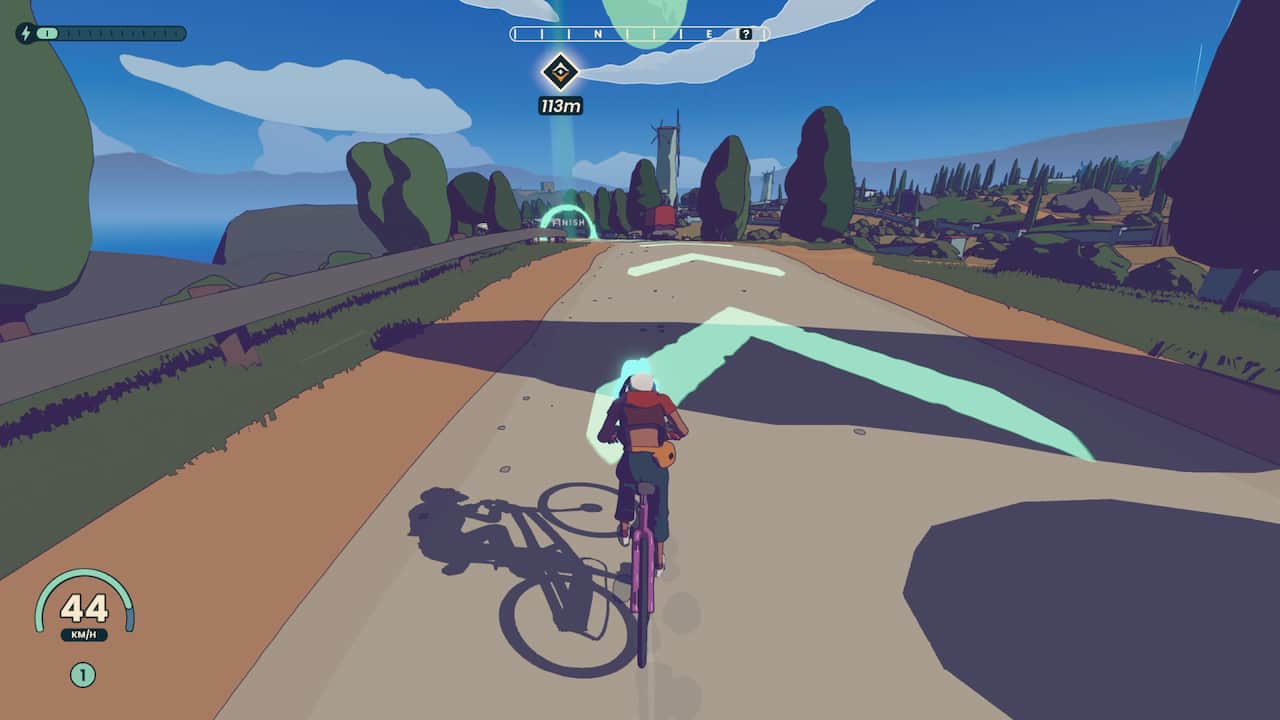
Mark Essen likes to ride his bike along the beach. And when he does, he’ll often find that another cyclist is following him. After a while, they’ll shoot past him, pedaling like blazes, silently goading him into competition. “Some middle-aged folk get pretty serious about their bikes sometimes,” he says. “It’s clearly meant to be a race. Like, ‘Oh, can you keep up?’ It’s this little battle, and it doesn’t really matter who wins.”
It’s been a regular enough occurrence that it inspired a mechanic in his studio Messhof’s open-world cycling game, Wheel World. Ride up behind a lone wolf cyclist on the trail, ding your bike’s bell, and you’re straight into an impromptu face-off. “I like that intersection mechanic in Burnout Paradise,” Essen says. “But I was also playing Ghost of Tsushima at the beginning of development and liked the idea of you seeing NPCs nearby, like foxes, and then following them somewhere surprising.”
It’s an approach that shapes Wheel World as a whole. Messhof’s game is equally inspired by the most freeing and explorative open-world adventures ever made, along with the gently comedic charm of real-life cycling culture.
“In pro racing [like] the Tour de France, you can’t ride any kind of bicycle there,” Essen says. “It has to be a diamond frame bicycle, and your socks have to be a certain height. Everything is driven not just by performance, but also aesthetics and branding. And I think it trickles down to every level, even people that aren’t involved in cycling as a sport. It just ultimately becomes this gear-obsessed thing. It's fashion, in a lot of ways.”
In Wheel World, where almost everyone rides a bike, the locals form into gangs to express their allegiance to carbon saddles or vintage parts. All are convinced that they’ve found the one true way to ride with the utmost efficiency, power, or style. And it’s up to you to prove them wrong on the track.
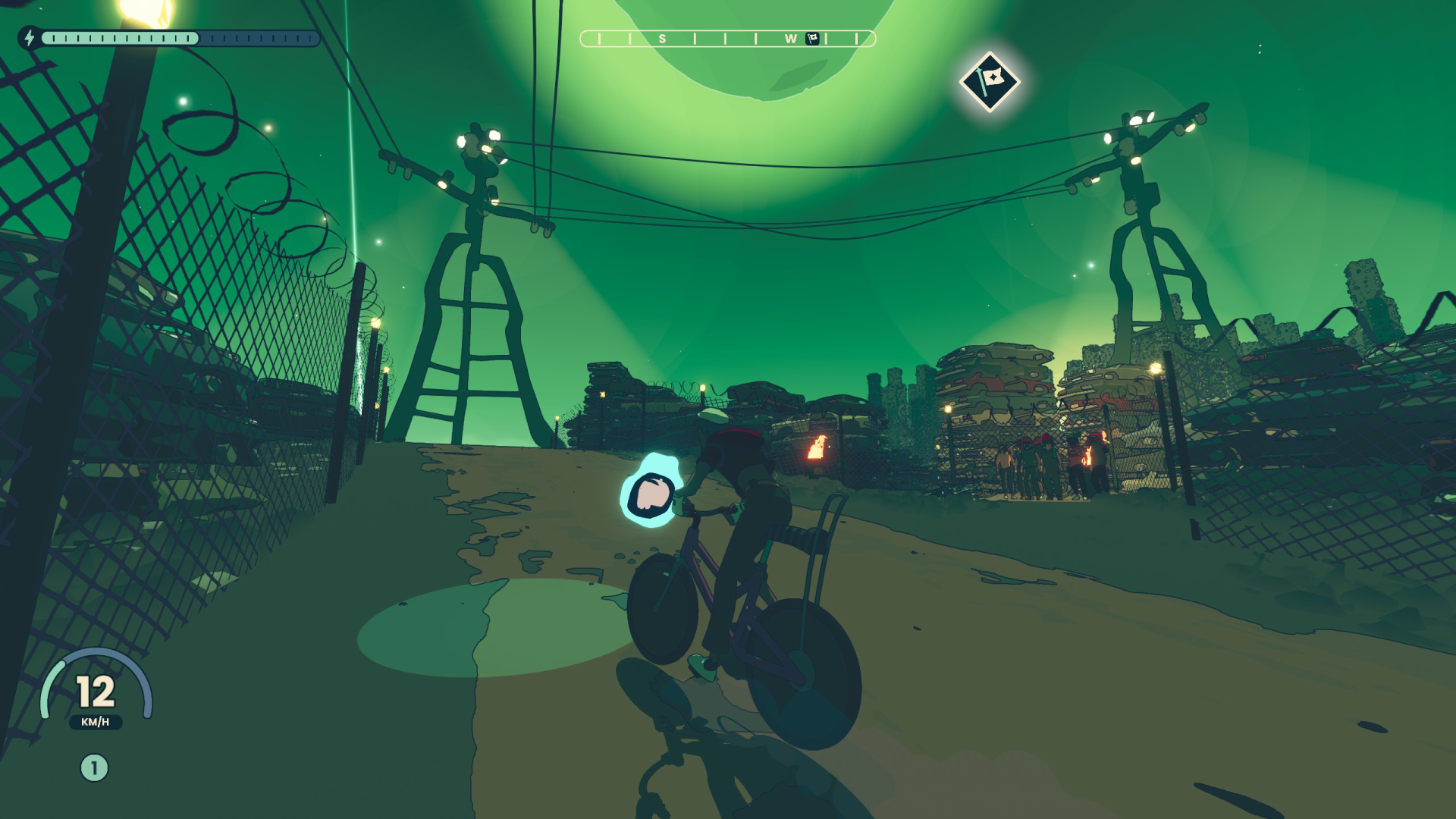
“If you get into cycling, you end up going on rides not for pleasure,” Essen says. “You’re just watching the numbers, and the more you watch your stats, the more you think about incremental improvement or embracing marginal gains. So then you buy stuff, and then you have to justify to yourself and the world around you why you bought it. Weird cultures come out of that.”
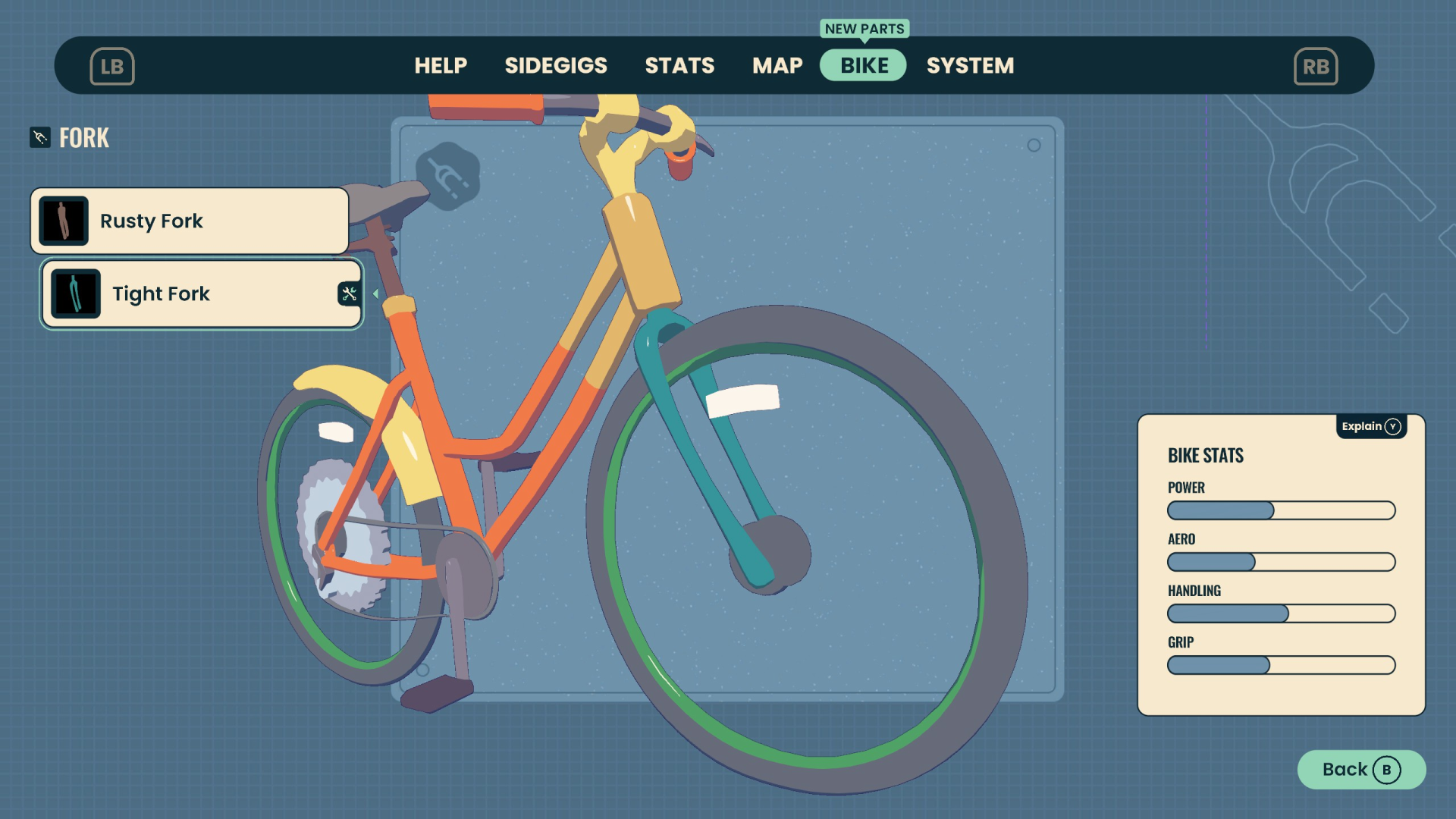
As you explore the Italianesque map of Tramonto and its adjacent corporate wasteland, finding parts and winning races, you’ll end up with plenty of spare bike parts, which you can swap between to determine your ride’s overall feel. “Each stat is touching a number of things in the physics system,” Essen says, “and we wanted to make it a little bit vague what those were.”
You might tilt the strengths of your bike towards Aero or Grip to emphasize speed or turns, respectively. But Messhof doesn’t give players access to the raw numbers, so you’re unlikely to ever figure out a perfect build.
“We wanted to model that from the cycling world, where people argue about materials all the time,” Essen says. Real cyclists dispute the relative benefits of a springy steel frame versus the lightness of titanium or the stiffness and power transfer of carbon. “So we wanted to get people a little confused and run around in circles in their heads trying to figure it out,” he adds. “Maybe getting stuck in this optimization trap that doesn’t actually have a solution. It’s just sort of what you feel like.”
This shrugging, vibey sensibility is reflected in Wheel World’s story. The game was first announced as Ghost Bike—named after the memorials placed by roadsides where cyclists have been killed—but became gradually lighter in tone as development wore on. It’s a change Essen puts down to his inexperience with narrative-led games.
“What I ended up doing was putting too much narrative in, and then having it drive the game too much,” he says. “Gameplay was kind of secondary: ‘How do we make this more like Uncharted or something?’ It just wasn't working.” When Messhof pushed the plot aside to let its buoyant open world take shape, the story began to feel like an inappropriately heavy accompaniment. “We’ve morphed it a lot, which I think I’m okay with,” Essen says. “I think it’s a normal way to design things as a small team.”
The story of Wheel World still ultimately concerns the passage of souls to the afterlife, but it’s less interested in spiritual transformation than the spirit of cycling. “There's some silly lore in there, and there's a creation myth, and deities people pray to, but it's like, take it or leave it. You don’t have to know about that stuff.”
If Wheel World is about any kind of religion, it’s the fervently observed hobbyism that defines cycling, which Messhof captures with playful fondness. “The freedom of biking can be found on any kind of bike,” Essen says. “But people get obsessive.”
Hop on Wheel World on the Epic Games Store today.