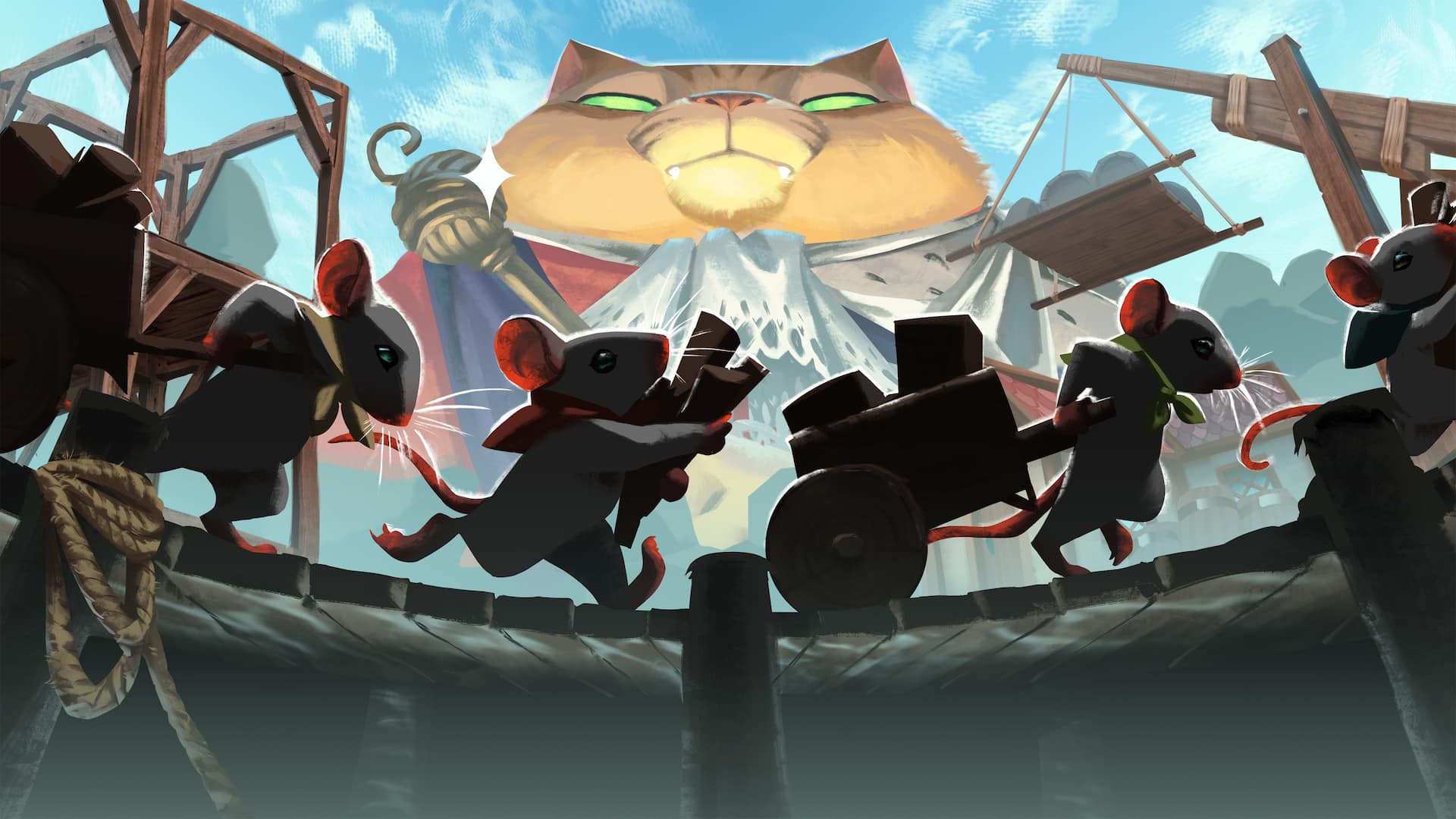
Whiskerwood is a sandbox city-builder where mice pay taxes to cat overlords
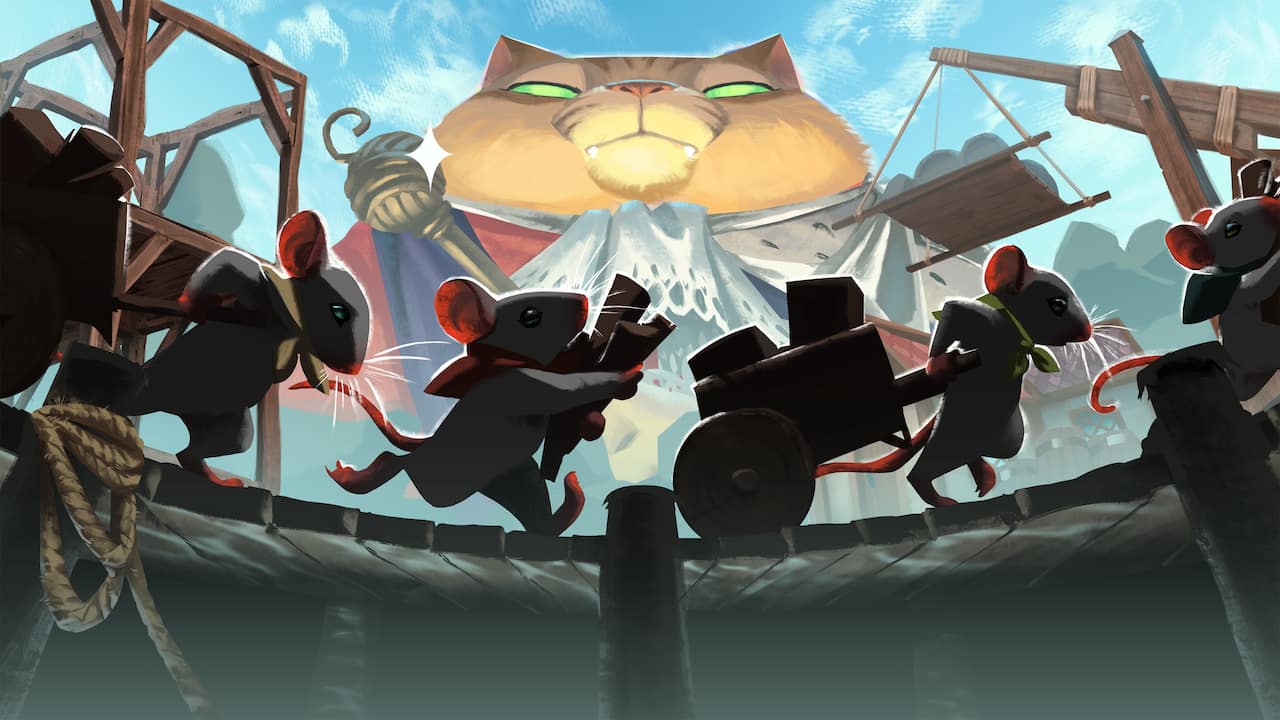
Whiskerwood, despite what its name might imply, didn’t begin with a cat-and-mouse dynamic. The core of the game originally centered on deep gameplay systems and flexible sandbox mechanics. The classic, cartoon-like aesthetic with rodents and felines came later, though now it’s hard to imagine the game without it.
“To be honest, the true origin might be lost to the sands of time,” said Daniel Dressler, lead programmer and studio head at developer Minakata Dynamics. “The mice and cats feel so natural, it has overwritten all past memories. I believe we had placeholder NPCs early on, generic blobs shaped like board game pieces. Those were never meant to be final.”
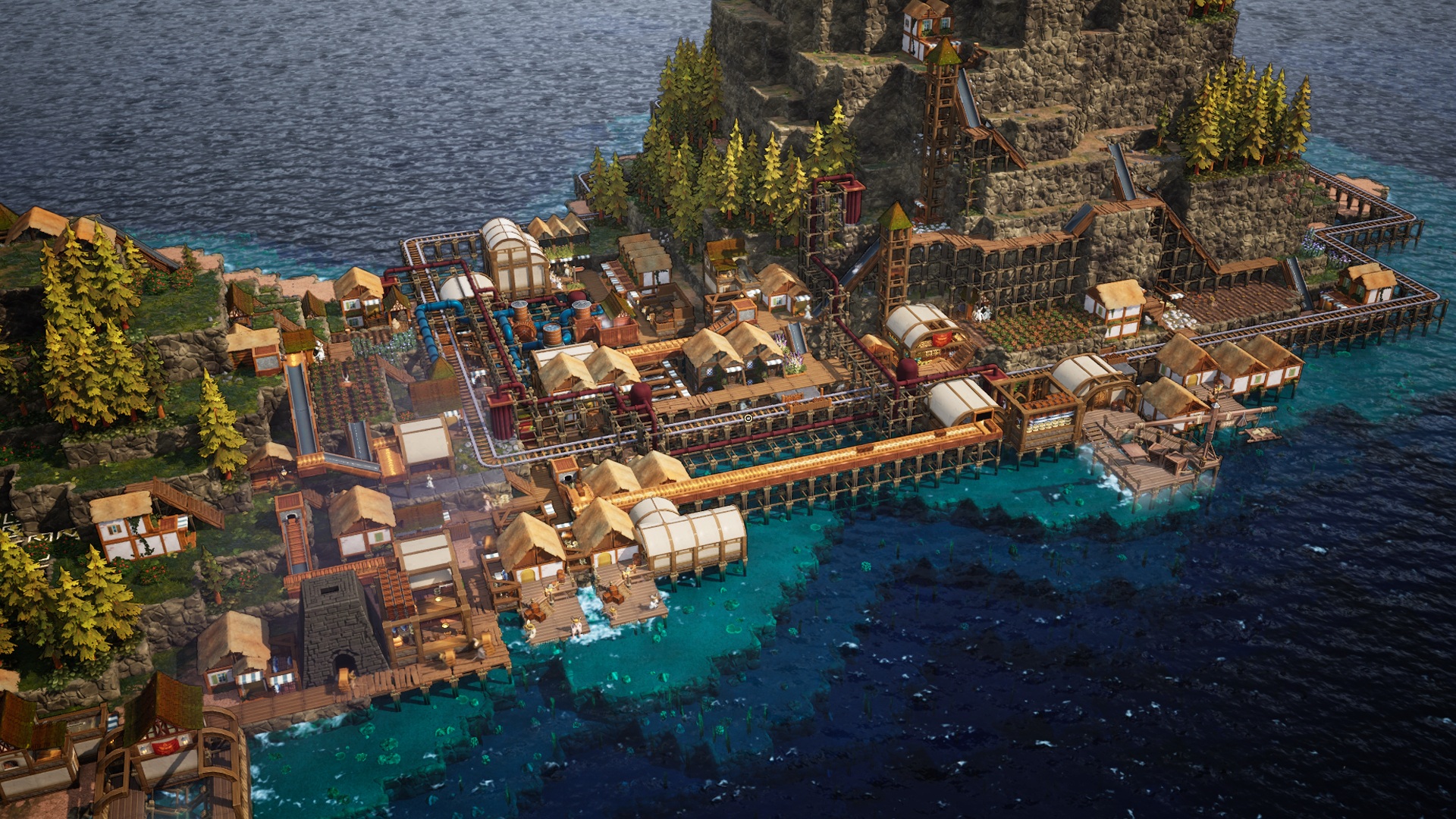
Whiskerwood is a colony-building sim published by Hooded Horse that puts players in charge of a community of industrious mice living under the rule of demanding cat overlords. Set on small, resource-limited islands, it challenges you to build vertically, automate production chains, and balance the needs of your rodent citizens while keeping your feline masters satisfied. You can play the game in Early Access on the Epic Games Store now.
Duo design work
The studio had begun experimenting quietly before the full launch of their previous game, Railgrade. With design work winding down, Dressler encouraged the programmers to explore new ideas.
“At first, we kept the ideas a secret from each other, working in two groups," Dressler said. "Once we revealed our prototypes, we realized everyone was working on survival city-builders.”
One group had made significant progress on core gameplay, while the other had developed richer simulation systems. The team decided to build off the prototype with stronger core gameplay and then bring in the simulations later on.
“We decided to base our work on the project with further developed gameplay, and bring in the simulations as we developed the core loop,” Dressler said. “Simulations like pollution, heat, and ocean came from the second abandoned prototype.”
Verticality became a guiding principle early on. Railgrade, an RTS game about building dense networks of trains, had limited stacking to prevent industrial clusters from collapsing into giant blobs, but Whiskerwood presented an opportunity to explore true vertical city-building.
“We started Whiskerwood with a core set of goals. We wanted to further explore true vertical gameplay,” Dressler said. “With Whiskerwood, we had a chance to design true stacking. We pulled in systems like heating and logistics to give verticality a push and pull. Push too high up, and travel times increase. Expand too flat, and your town is harder to heat.”
Iteration became the backbone of development. Once the core gameplay loop was established, the team playtested relentlessly, constantly asking themselves what the game felt like it was missing.
“For a long while, we had a core problem of player motivation. Once we landed on the idea of taxation, the entire experience changed," Dressler said. "Now players had a reason to care about expanding.”
Appeasing feline overlords
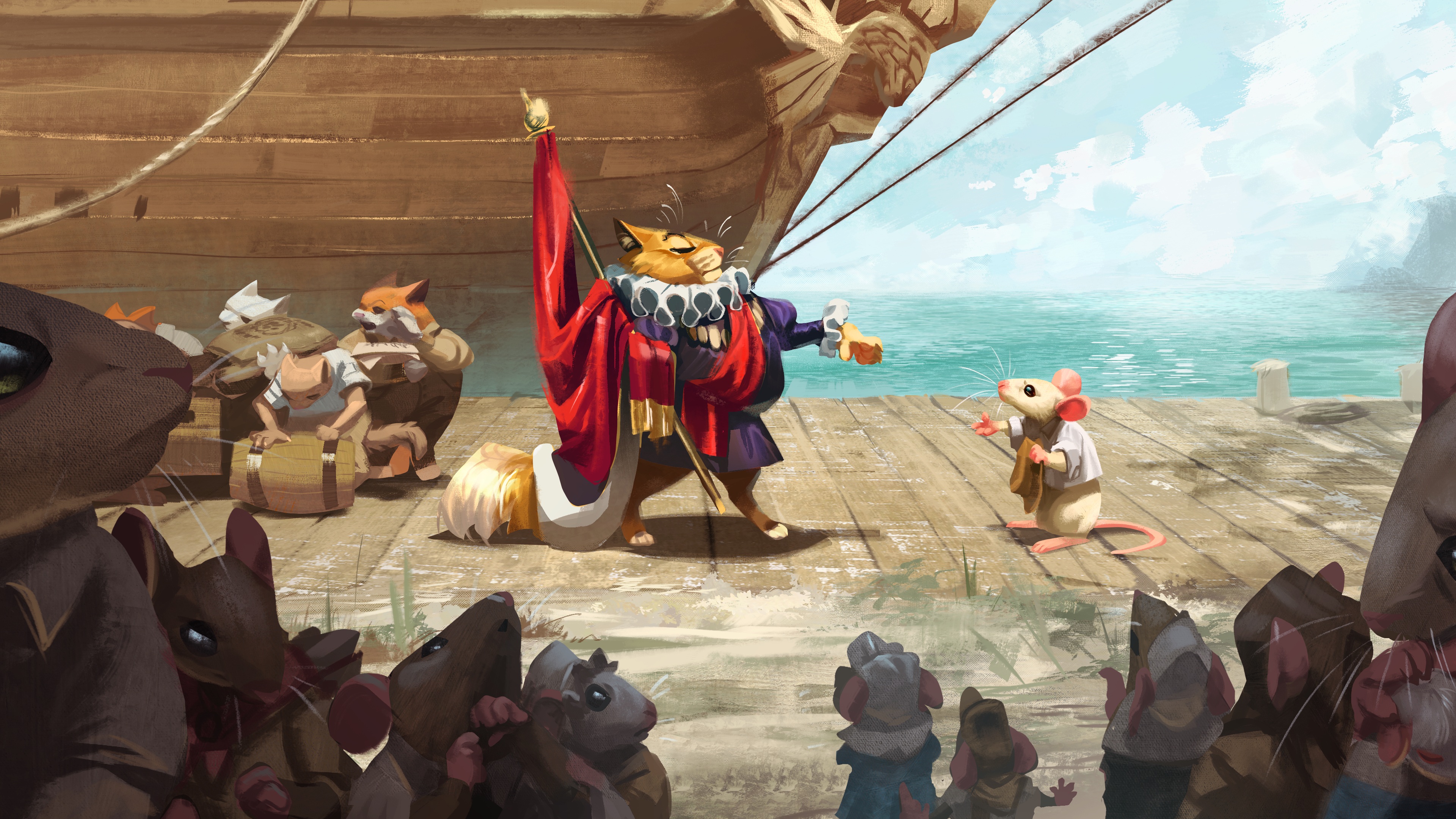
Villains also became a natural tool to push both the gameplay and story forward. Railgrade had incorporated similar concepts. The team saw them as a way to create dynamic tension in the world.
“Villains are perfect for this since their demands do not need to be reasonable,” he said. “By their nature, they have desires contrary to the player, and that conflict opens tremendous room for blending narrative and gameplay.”
The introduction of the cat overlords coincided with the implementation of taxation, and the thematic alignment was immediate.
“It felt so perfect,” Dressler said. “Mice and cats are natural opposites, like red vs. blue. Cats are by their nature disinterested overlords. In my designs, I prefer to avoid exposition to explain the world. No one in real life introduces themselves as ‘Daniel of the Humans of Earth,’ yet you’d think otherwise playing most games. You should be able to start playing with as little preamble as possible.”
Even as the whimsical theme of mice and cats took hold, authenticity remained a guiding principle. Dressler wanted the world to feel real, grounded in believable behavior.
“Even with the mice vs. cats theme, we had to be careful not to destroy the authenticity of the world," Dressler said. "With fiction, the player is putting effort into suspending their disbelief. As a writer or world builder, it is your job to help with this suspension; it is not yours to take for granted and undercut."
Of mice and cats
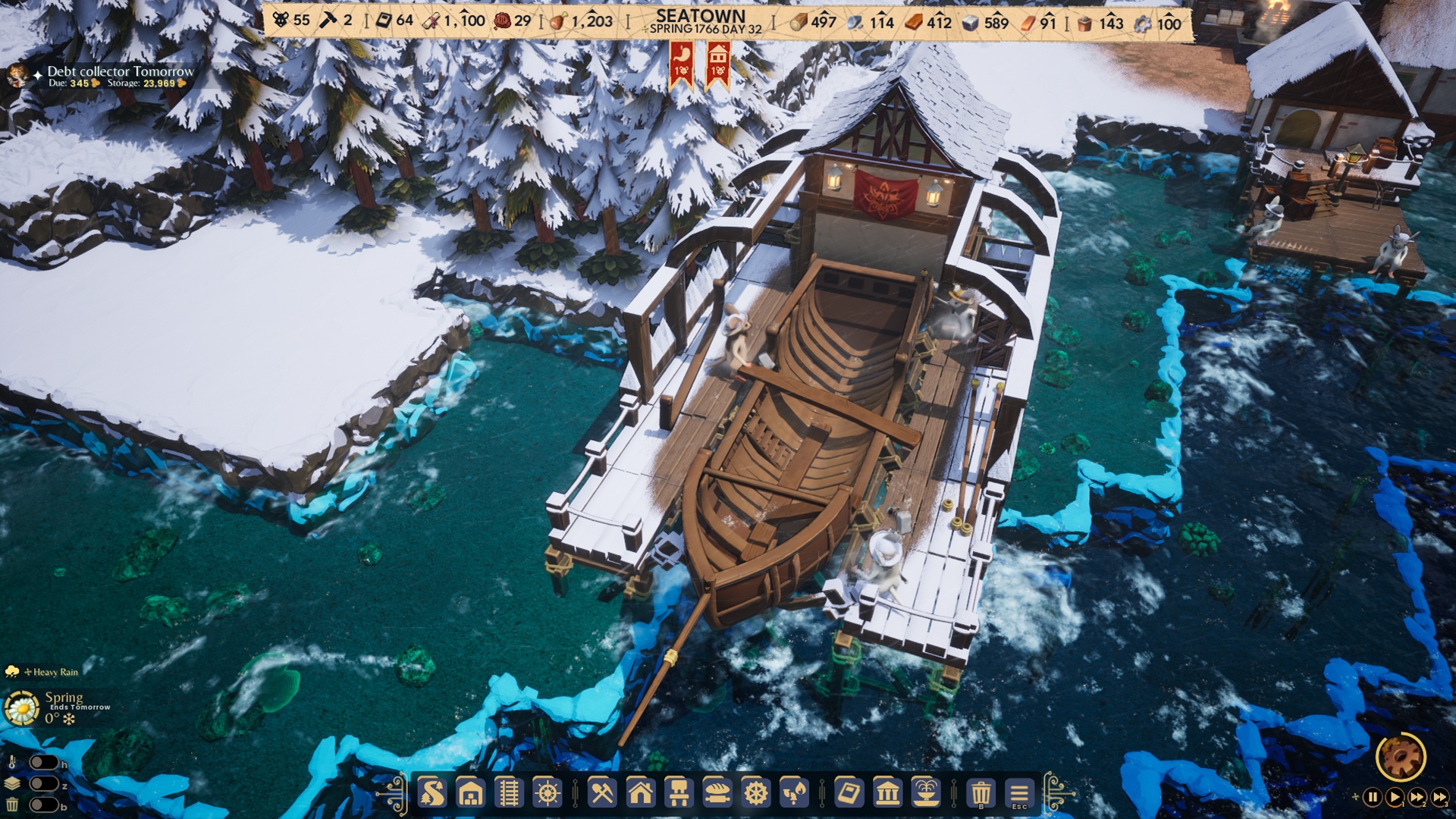
Real-world mice behavior heavily influenced both gameplay and narrative systems. Mice burrow, they work together to raise families, and they are fairly honest creatures.
Gameplay mechanics reflect these behaviors: the mice, a.k.a. Whiskers, dig tunnels, build nests, and prioritize productivity. Narrative milestones, like overcoming the Claws, the name the cat-ruled empire goes by, follow the same naturalistic logic.
"Real mice do not attack or scheme," Dressler said. "Real mice cannot eat cheese."
To ensure players felt invested in their towns, each mouse was given unique traits that impact gameplay. Mice come fresh off the boat to their new island homes with personalities of their own.
“We wanted traits, which had unique gameplay impacts,” Dressler said. “For example, the Rude trait is my personal favorite. Players often find it annoying for the exact reason I love it. A Rude Whisker will at times say something inappropriate, which hurts the feelings of other Whiskers. It speaks to how the Whiskers themselves are not a monolith. They are not automatons. They have thoughts and feelings, which the player cannot micromanage or predict. The Whiskers do not exist as tools to be used, but as charges the player must care for, warts and all."
Those NPC personalities are just one part of a larger sandbox system that's packed with overlapping and interworking systems and mechanics that make up Whiskerwood. The ultimate goal for players is somewhat nebulous. Players have the freedom to pursue multiple goals, although the oppression placed on the Whiskers by the Claws is always top of mind.
The path to rebellion
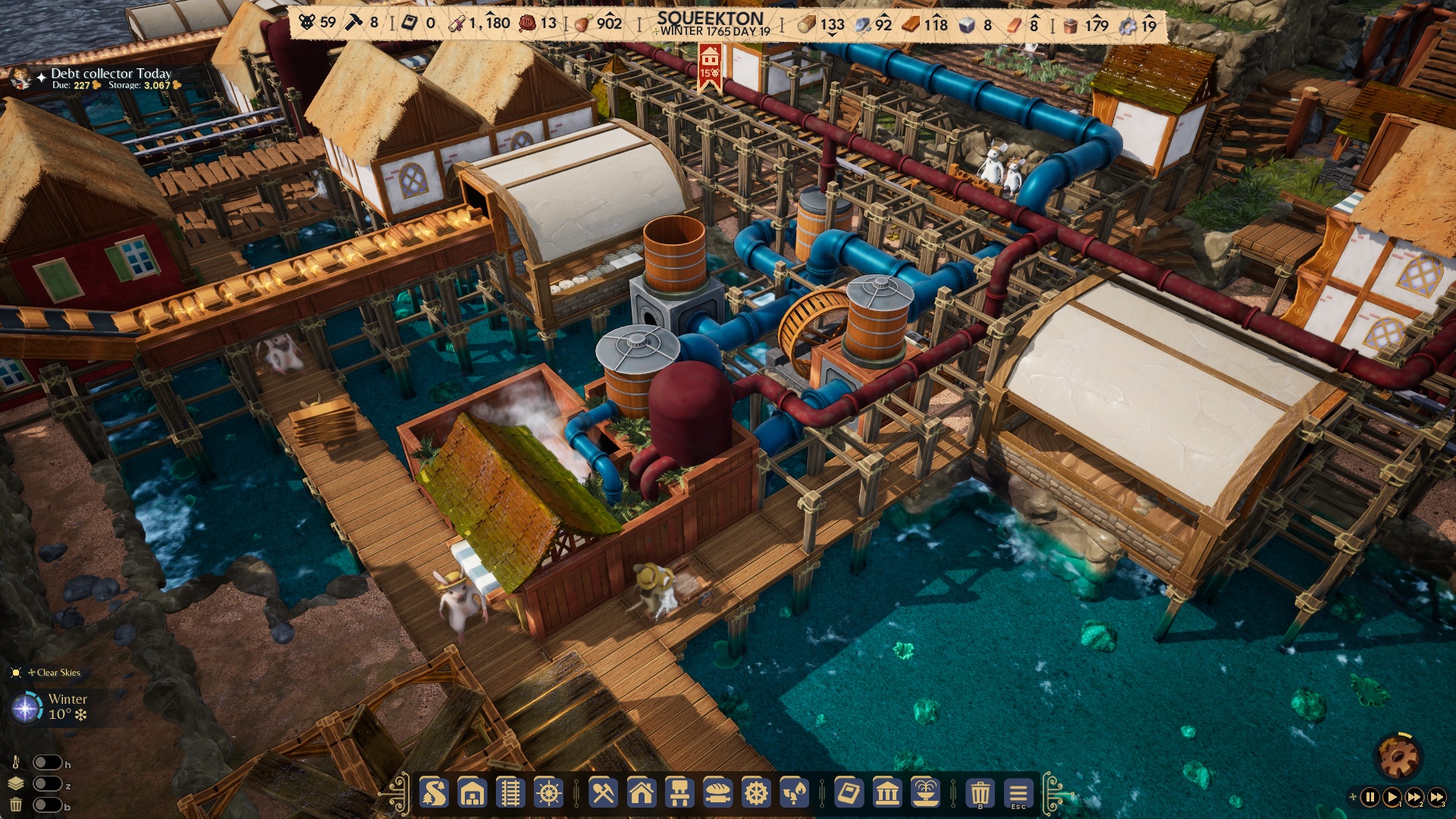
Before contemplating rebellion, players must build their own war chests and armadas by focusing on economy-building, research, and logistical planning. Smuggling to reduce the burden of taxation and other methods of skirting the boot on the player’s throat will be key to survival.
"Only then can you allow yourself to consider the sweet temptation that is freedom," Dressler said.
Whiskerwood is filled with intricate design choices that showcase Minakata Dynamics' insight into the city-building and simulation genres, from deep caverns to beautiful island coasts. Even minor gameplay moments illustrate the care taken in design: a single Whisker digging tunnels may open new production paths, while a Rude Whisker can temporarily disrupt morale, forcing players to rethink their strategy. Vertical stacking demands careful attention to logistics, making city expansion a delicate balance of efficiency and accessibility.
Once Whiskerwood has its claws in you, it will have you building elaborate island production colonies that put each mouse's work ethic on full display. Mice are resilient creatures, and it’s up to the player to decide how to put that resilience to work.
Whiskerwood is out now in Early Access on the Epic Games Store.