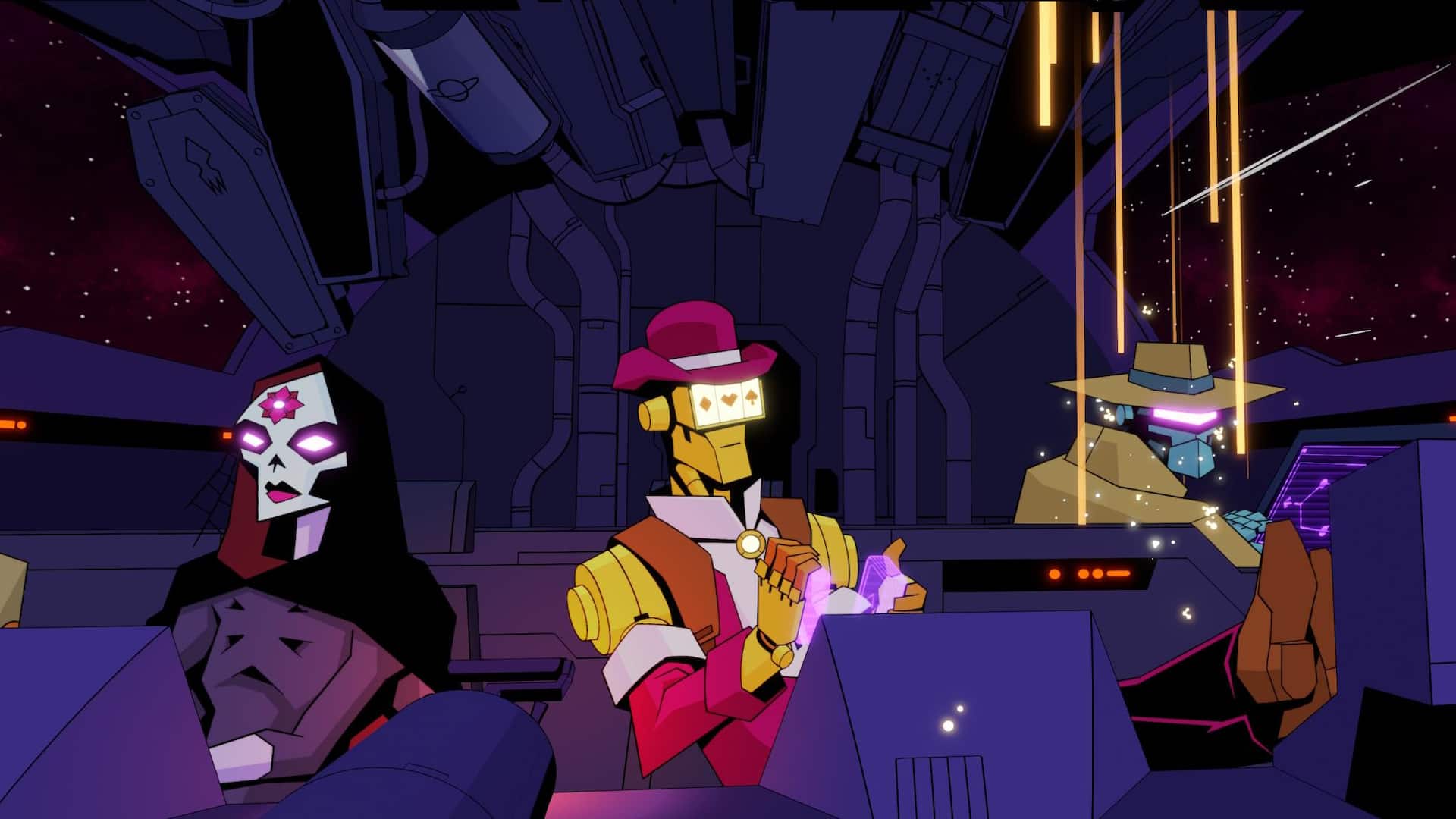
Wild Bastards’ developer Blue Manchu schools us on characters, game design, and how to not be poisoned
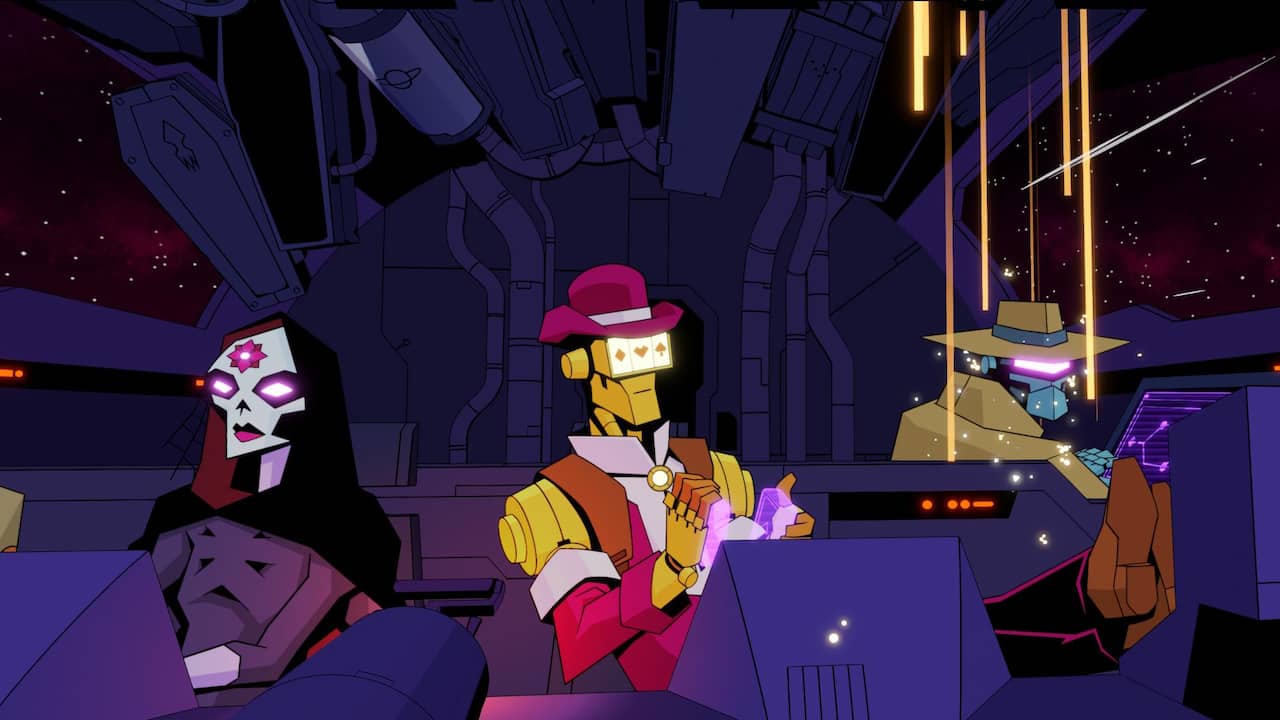
Wild Bastards, the spiritual sequel to 2019’s Void Bastards, had us hooked from its short preview build. The combination of rogue-lite strategy and FPS battles with a bonkers cast of misfits on a journey through space instantly pulled us in and left us desperate for more. The full game, out now, will finally fulfill our wishes, and we spoke to developer Blue Manchu to learn more about the process of the game’s creation, the similarities and differences between the two titles, and how sound plays such a crucial role in its combat.
In Wild Bastards, you control an ever-growing crew of peculiar characters (a four-armed cannibal, a gambling robot, a burning skeleton, and so on) on a quest to recover their fallen friends and reach the promised land of the Homestead. On the way, you land your crew in paired teams (switching between each on the fly), and explore tactical maps on planets, encountering first-person battles in remote towns alongside stores, bonus items, and roving enemies.
Void Bastards was also a game about exploring space on a tactical map, and then entering locations for FPS battles, which superficially makes the two games sound very similar. However, the experience of playing either is strikingly distinct. From a tactics and narrative sense, they’re very different games. Wild Bastards is more involved, seeing players juggle multiple battles per planet and control several characters simultaneously while putting aside its five-year-old predecessor’s focus on crafting and upgrading equipment. So I asked Blue Manchu about the relationships between the two games and how they overlap.

“With Wild Bastards,” says Jon Chey, co-founder of Blue Manchu, “we wanted to take some ideas we had developed in Void Bastards and push them in a different direction.” While both games have rogue-like elements, wherein death means returning to the beginning of the last major milestone, and focus on the impermanence of gathered resources, the nature of the player characters is key to the divide.
“Whereas Void Bastards was a desperate struggle for survival featuring a cast of disposable protagonists, Wild Bastards is a fantastic adventure with a group of bickering but ultimately cooperative outlaws,” says Chey. But the developers are keen to make clear the new game is not a sequel: “Rather it’s a move in a different direction.” Oh, and given the similarity in art style and writing, I had another question about an overlap. “No, that move does not take place in the same universe,” Chey replied. “There’s a lot less bureaucracy in Wild Bastards, but a lot more horses.”
As much as the differences are crucial, there’s no question that Wild Bastards is heavily influenced by the team’s experience working on the previous game. “We decided to try out building a first-person shooter inside a strategy game to explore that notion,” explains Chey, “and we were pretty happy with the result. In doing so, we learned a lot about how complex that strategy game needed to be, how long the action sequences could be, and how the two elements could feedback to each other.” At one point during development, Void Bastards had far larger levels, but they discovered “spending 20 to 30 minutes in the action part of the game didn’t give the strategic component enough time to ‘breathe.’ So we were able to apply these sorts of lessons to Wild Bastards, even though its strategic game is very different.”
One of the most compelling aspects about Wild Bastards is the characters. Each is so distinctive, and they arrive fully developed—not least because of the quality of the art. You’re left in no doubt about Spider Rosa, for instance, thanks to her vampish, Burtonesque design and declaration at the end of some shootouts that she has to decide which victims to eat first. Meanwhile, Judge’s slow, growly drawl and hulking form point you directly to the cowboy movie archetype with an attitude to match.
“This was one of our major foci for the game,” says Chey. “We started with the gameplay archetype for the character, then did a pass on their names and a brief bio of the character (including their motivations). This then led into a visual concepting pass where a lot of the final character was developed, and then to a build out of their weapons and skills.” Finally, writer Jerry Holkins wrote the story and the barks, “and we used those to fine-tune and further develop their gameplay skill to align with their character.”
To give an example and some fantastic insight into the process, Blue Manchu showed me an early version of one of the initial characters, Doc Casino. He was originally called Gambler, with a visual design that made him look more like the game’s Judge. Writer Cara Ellison did a pass at this point, renaming him Henri Legite, or Doc Legit for short, along with this bio:
“Doctor who loves to gamble. Got lucky his first time out and gambled into medical degree upgrade software, and he’s been looking to be lucky ever since. Motivation: Interested in taking prisoners? Or perhaps he is interested in upgrading himself constantly, changing or charging himself up.”
Subsequent passes saw his motivation switch to fleeing gambling debts and not being a real doctor at all. Then, when the decision was made that robots were low status in the game’s universe, his name was downgraded accordingly, becoming Casino Finance Unit 7103 with the alias Casino. The bio then became:
“Casino is a former financial planner robot who excelled at fiscal projection almost as much as he did at losing money gambling. His motivation: tremendous debts with deadly criminals keep Casino hopping from big score to the next card game, losing money faster than he makes it.”
With this all in place, the team then went on to focus on his skills (money, armor, and reload speed), and then plotted his upgrade route through the game. And this really explains why the characters feel so complete: the personality defined the nature, rather than the other way around.
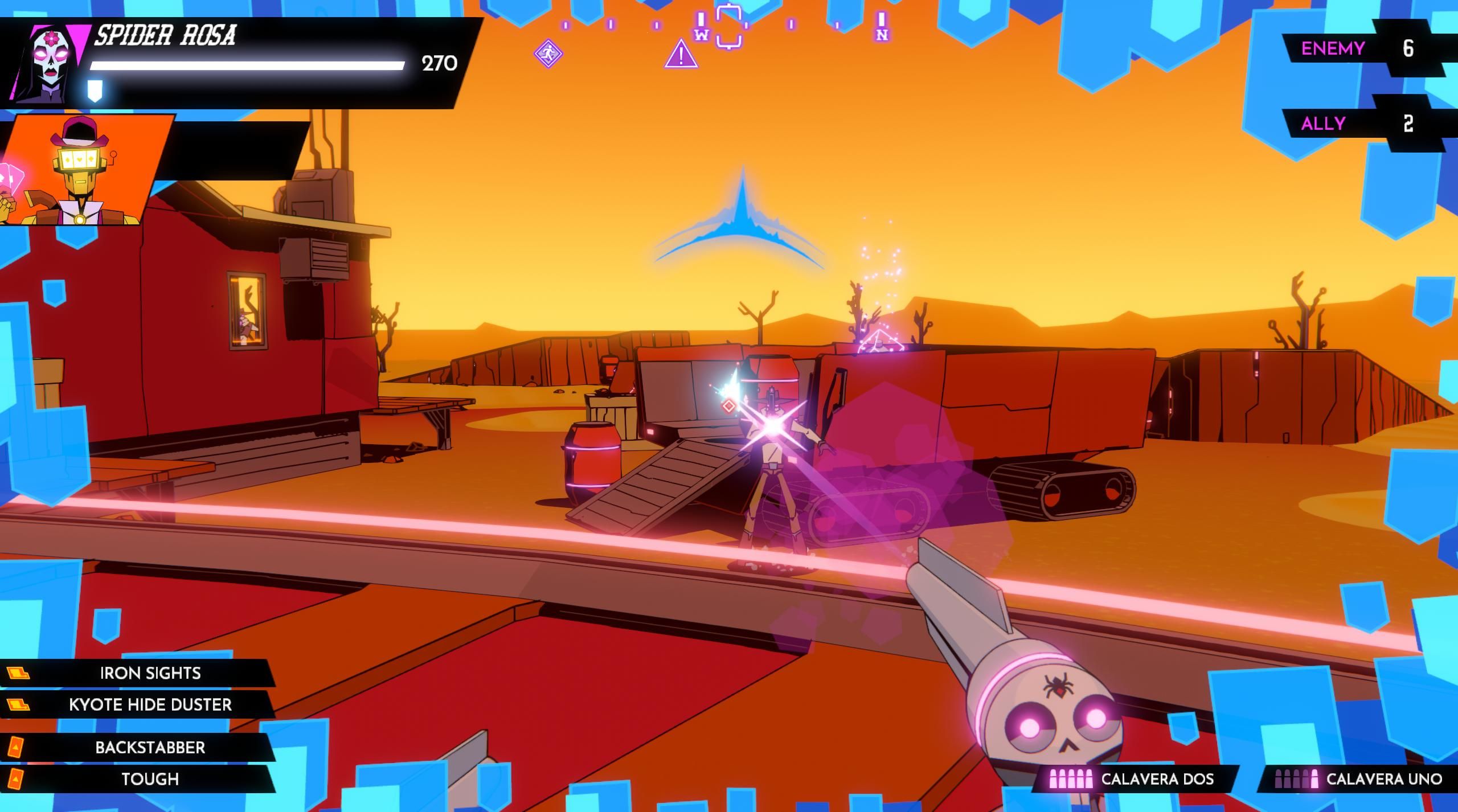
Another really outstanding feature of Wild Bastards is how it uses sound to direct the player. In the FPS sections, many enemy types use a lot of cover or hide inside buildings, which could make for a frustrating break to the flow of the action. But rather brilliantly, none of them can keep their mouths shut, and so they endlessly yell out to one another or mock the player. Once they yell, the direction of their noise is marked on your compass.
But it’s the nature of the yelling that makes this feel so valid, the silliness of their barks, the hubris with which they yell about you. “We believe in using sound to inform gameplay as well as to build immersion and emotion,” explains Chey. “That’s why we spend a lot of time on things like enemy barks and sound propagation. Paying attention to sound is vital to being successful in Wild Bastards as the enemies will constantly call out and taunt you, giving away their position. In addition, they will often comment on what they perceive or their plans.”
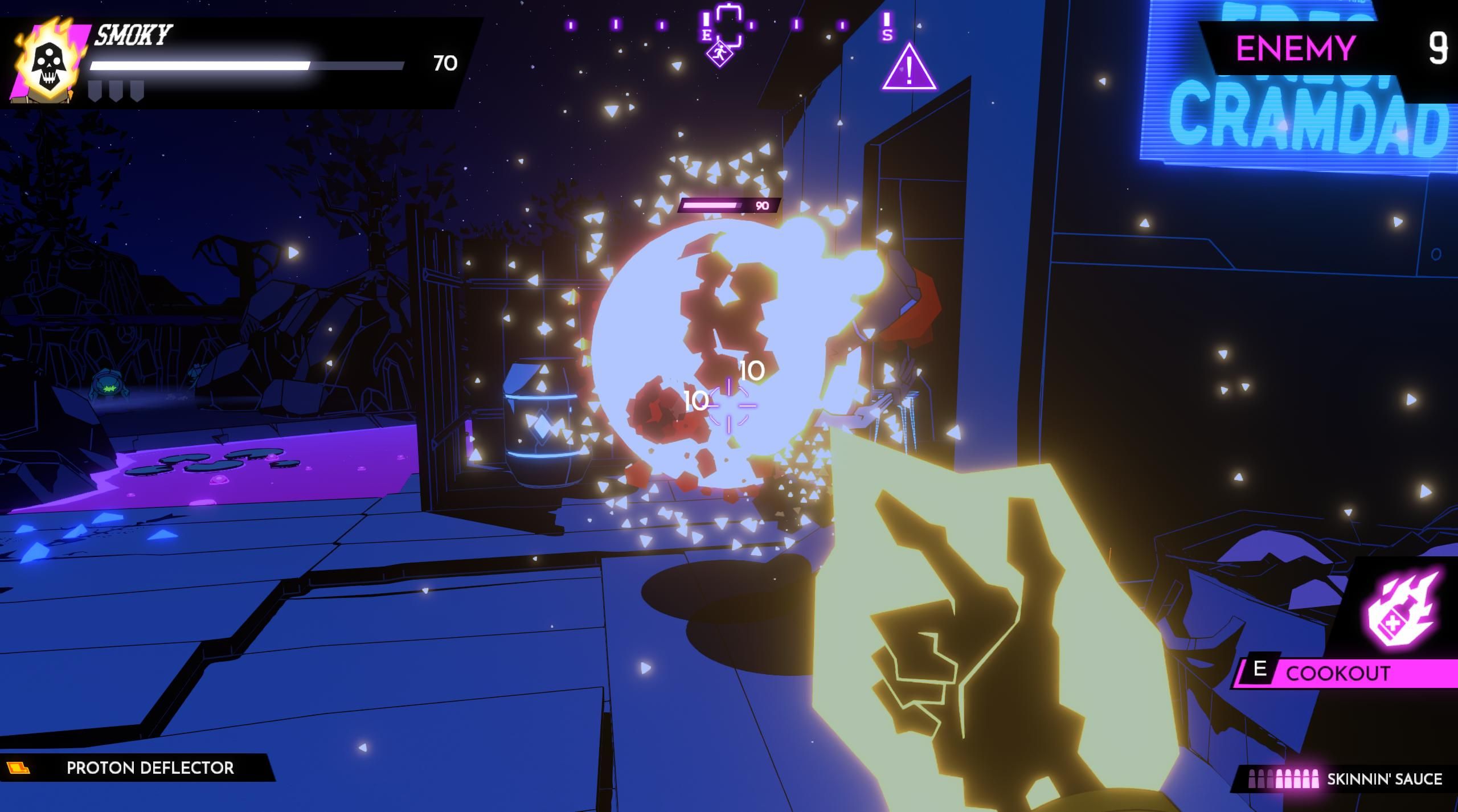
My final question was a slightly rude one given how frustrated I’d become at my own failure to deal well with enemies that use poison attacks. Poison really hurts and chips away at your health long after you’ve been hit. But Blue Manchu’s answer to my cheeky inquiry about whether they’d agree with my sulking that it was far too OP really revealed the complexity and malleability of the game.
“Poison is a pain, but there are ways of dealing with it,” says Chey. “Firstly, most poison attacks are quite slow, so you can make good use of cover—ducking or dodging the attack. Secondly, armor stops all damage, including poison, so it can be advantageous to take heavily armored outlaws instead of outlaws who simply have high health. Thirdly, the swapped-out outlaw does not suffer any poison damage until you swap them back in. So if one outlaw gets poisoned, swap them out and use the other. If they’re both poisoned, you can juggle them to try to keep both alive. Fourthly, if you can find a health pickup, it removes any poison. Finally, if it looks like you’re going to be overwhelmed by the poison, you can retreat from the showdown and, when you come back, your poison status will be cleared.”
Oh. Okay. Fair enough then.
Wild Bastards is available now on the Epic Games Store.