News
MotoGP 26 guide: Learn how to stay on the bike and corner effectively
P
Phil Iwaniuk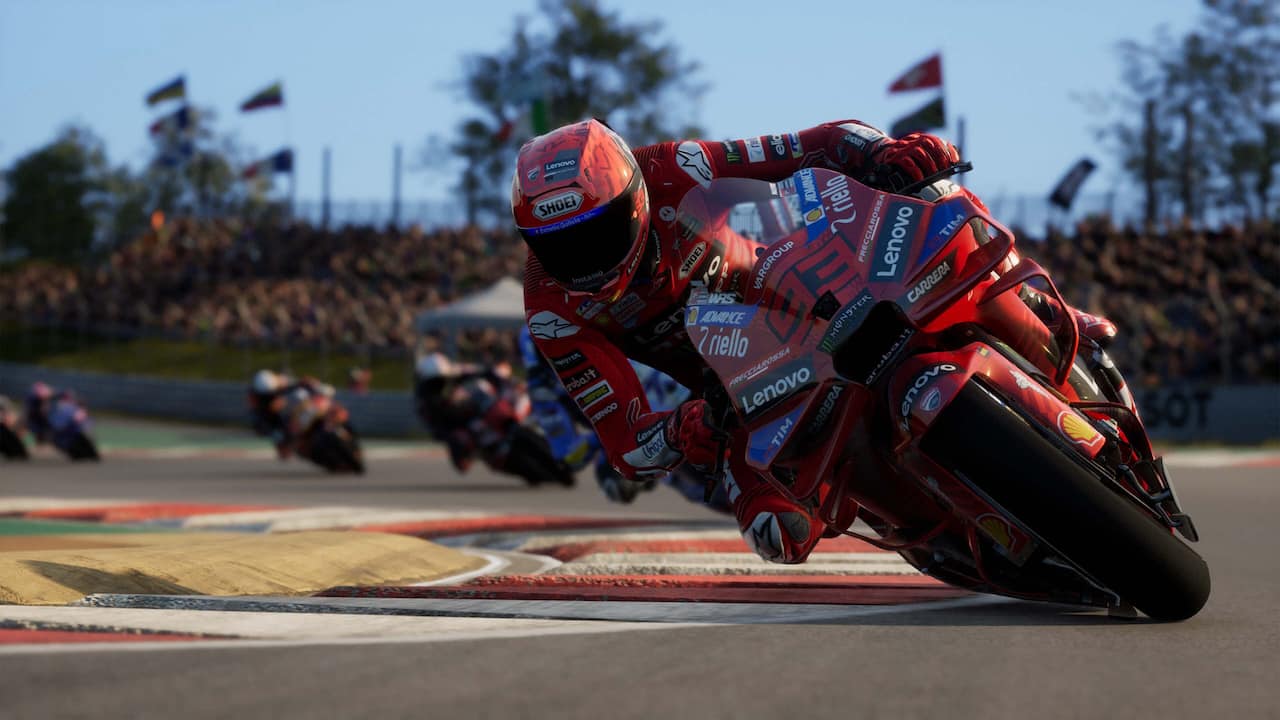
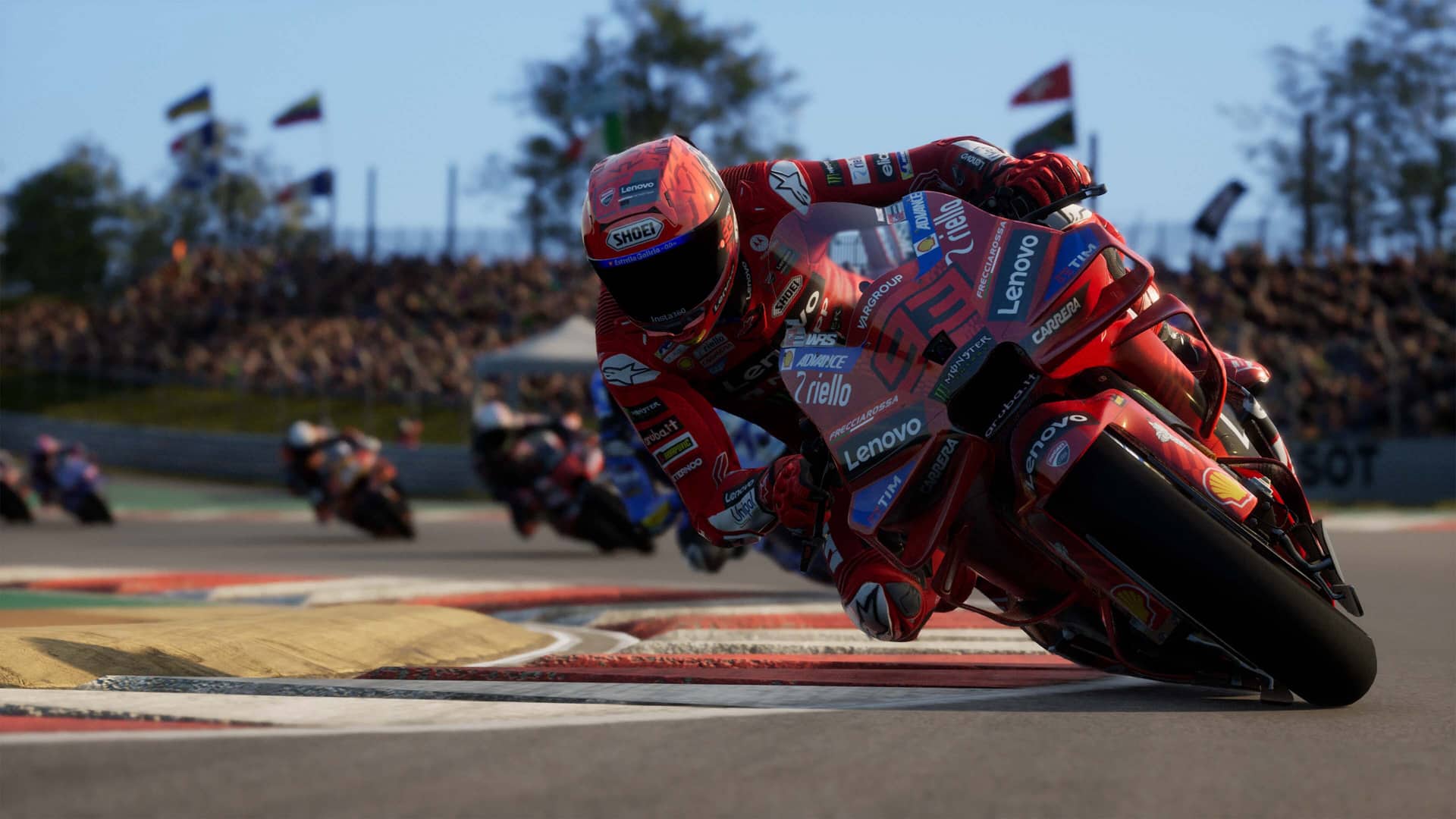
MotoGP 26 captures the danger and finesse of modern MotoGP racing in its stern, substantial handling model. It really does feel like controlling a 1000cc motorbike using a gamepad—an endeavor that requires a lot of patience, timing, incredibly smooth inputs, and (above all) practice, even for series veterans.
This year’s physics changes focus on "rider-based handling," i.e. the idea that you’re not controlling the bike directly, but in charge of the rider’s movements and inputs. That means that even if you were competitive in MotoGP 25, you’re going to want to read this guide for tips on how to stay on the bike this year.
Set your brake input max to 50%
Spend exactly three seconds racing in MotoGP 26 and you’ll learn that going fast isn’t difficult—the challenge lies in stopping again. The game does feature "neural braking" assist and an arcade physics model for those who don’t want to undertake the significant task of mastering the untamed, full-bore physics model. But if you’re reading this guide, you’re not one of those people.
You should start by setting your front brake input to 50% max, either by applying the trigger lock on your gamepad (if you have one) or adjusting your controller input parameters in the in-game settings. When you apply 100% brake pressure to the front brake for more than a half-second, you’ll actually negatively impact your stopping power, turn-in, and potential lean angle.
To make a corner, your front tire needs to be able to rotate freely. If it locks while you apply lean angle, you’ll tuck the front and crash. But here’s the odd nuance of MotoGP 26: Since you’re controlling the rider, not the bike, instead of a simple lock-up and a crash your rider sits the bike up and doesn’t apply as much lean angle. It’s like he’s riding in the wet all of a sudden.
This is quite a subtle cue, and it might not make sense until you understand the underlying systems, but it’s telling you that you’re squeezing the front brake so hard that the front tire can’t rotate optimally—and thus the rider can’t stop or lean into the corner optimally.
Giving yourself half the total braking power available sounds like a massive handicap, and it’ll feel that way at first when you see AI riders soaring past you in braking zones, apparently able to achieve much better stopping power in a shorter distance. But when you’re starting out, this is the best way to train yourself into trusting that 100% pressure is never needed.
After you internalise this principle, you can disable the trigger lock or return the controller input values to default, and start to practice applying 50-75% brake pressure on the left trigger manually.
Lean back before leaning over
The good news is we’ve already covered the hard part. The, er, other news is that it’s all the hard part. Next up: taking full control over rider movement.
As anyone who resisted sleep’s sweet embrace during physics class will know, hitting the brakes on a machine like a racing bike will push a lot of weight forwards. If you happen to be sitting on the thing while that’s happening, that’s a bad thing.
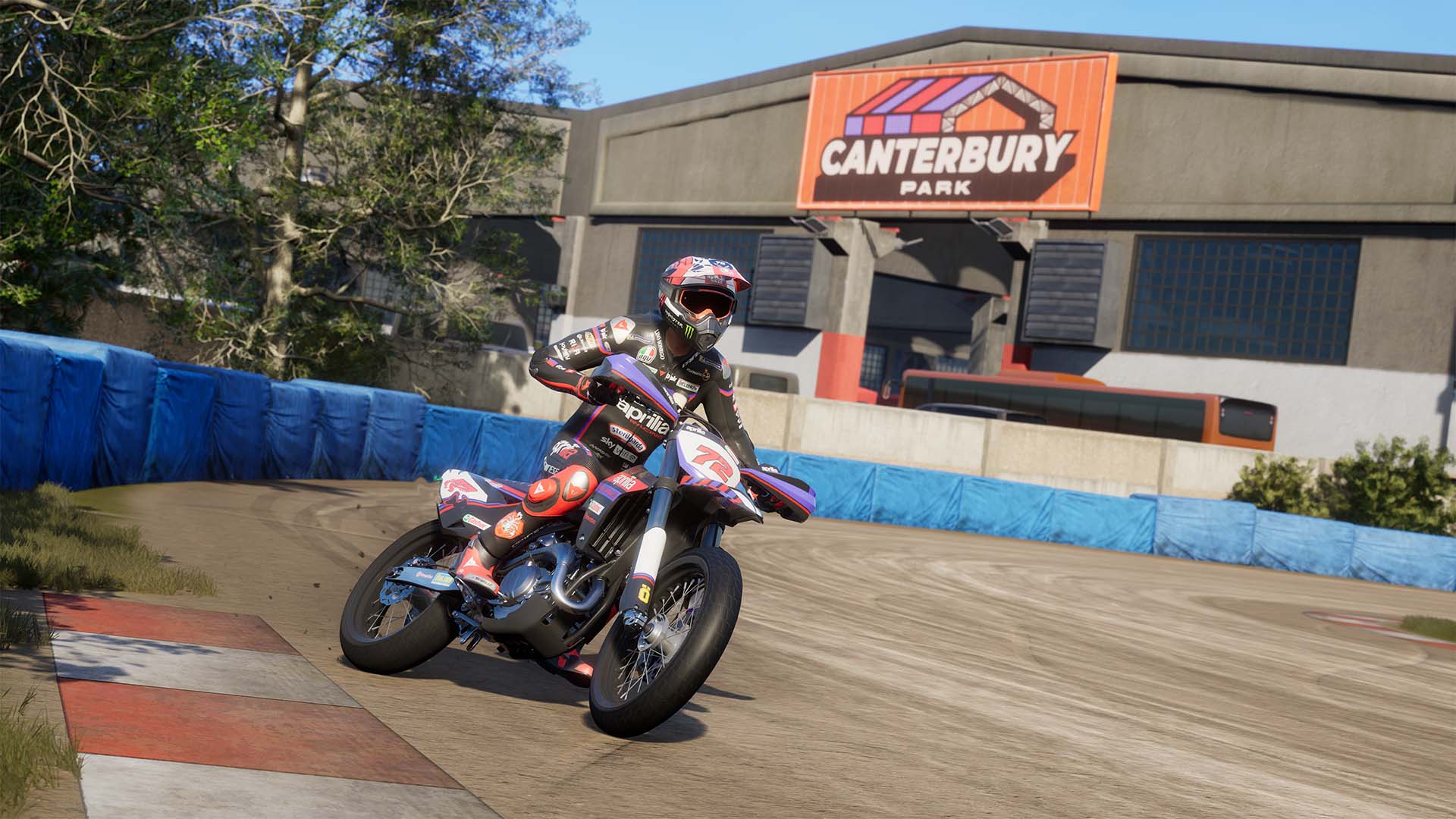
Therefore, the best way to settle your bike and avoid inadvertent stoppies in the braking zone is to shift your weight backwards before dropping the anchors.
Commit this input sequence to memory as you approach your brake marker: off throttle, pull the left stick back, apply brake pressure, rotate left stick from six o’clock to nine or three. That’ll ensure smooth rider movement in the most crucial part of the lap, the braking zone.
Use the rear brake input in short stabs
There is, to quote the great Peter Falk, just one more thing. And that thing is the rear brake.
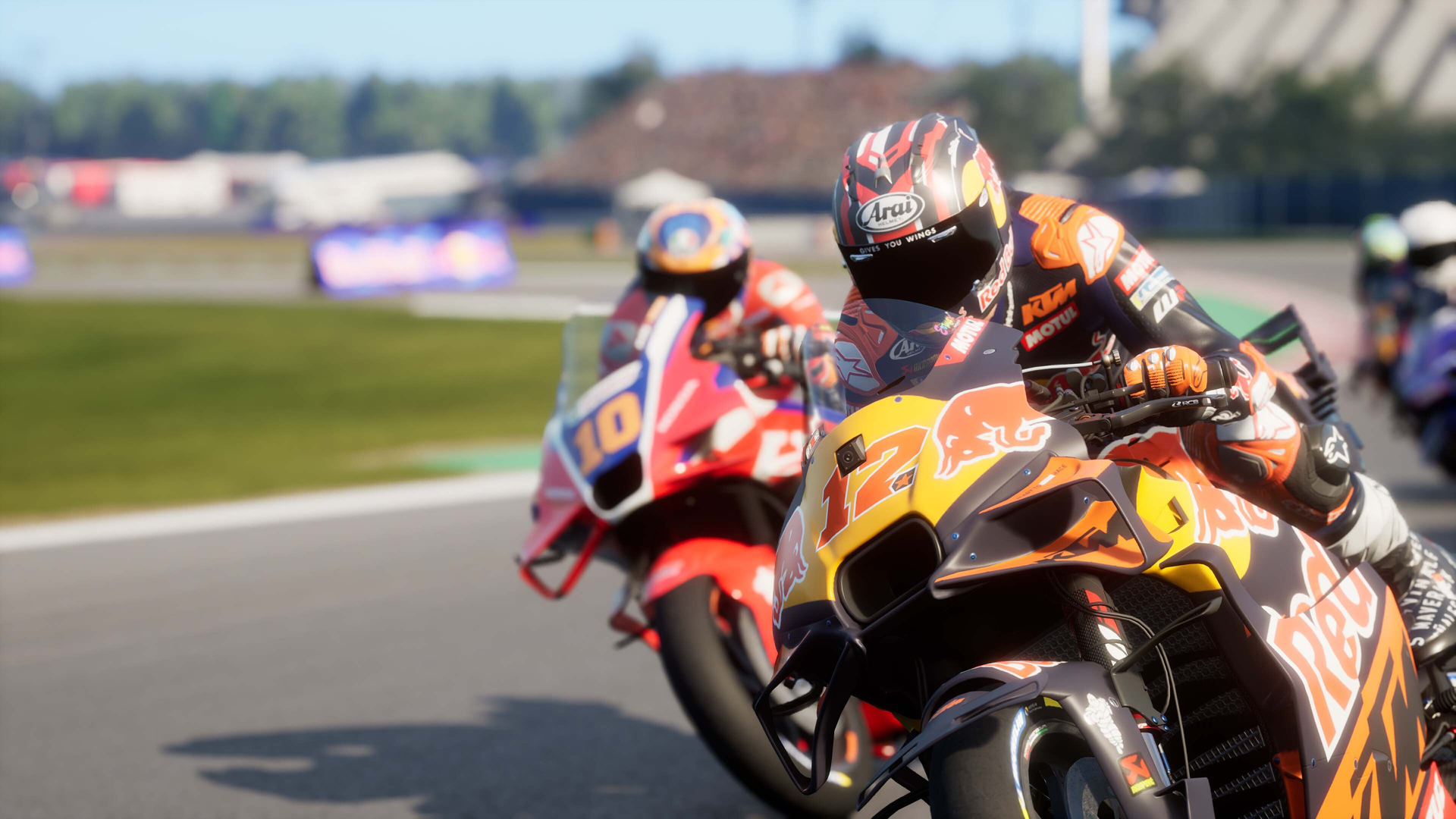
Human instinct is to approach MotoGP’s dual braking controls by slamming both front and rear on and holding them until the bike’s going slowly enough to make the corner, but as we’ve already covered, the front brake hates this and the rear brake isn’t a hold-to-stop device either.
In the real sport, riders use the rear brake to deliberately lock the rear wheel and create some slip angle, allowing them to enter the corner at an aggressive turn-in angle while carrying more speed. They then modulate the release of the rear brake, coordinating it with front brake pressure, gearing, and body position to let the bike right itself when they release the rear brake and the rear tire bites the tarmac again, resuming its revolutions.
Feel free to try this technique too if you want to emulate rear-brake demons like Brad Binder and Ai Ogura. But if you’d prefer to leave that advanced technique for later, use the rear brake instead in a series of short taps for some added stopping power.
Do this when the bike’s lined up straight in the braking zone, before applying lean angle.
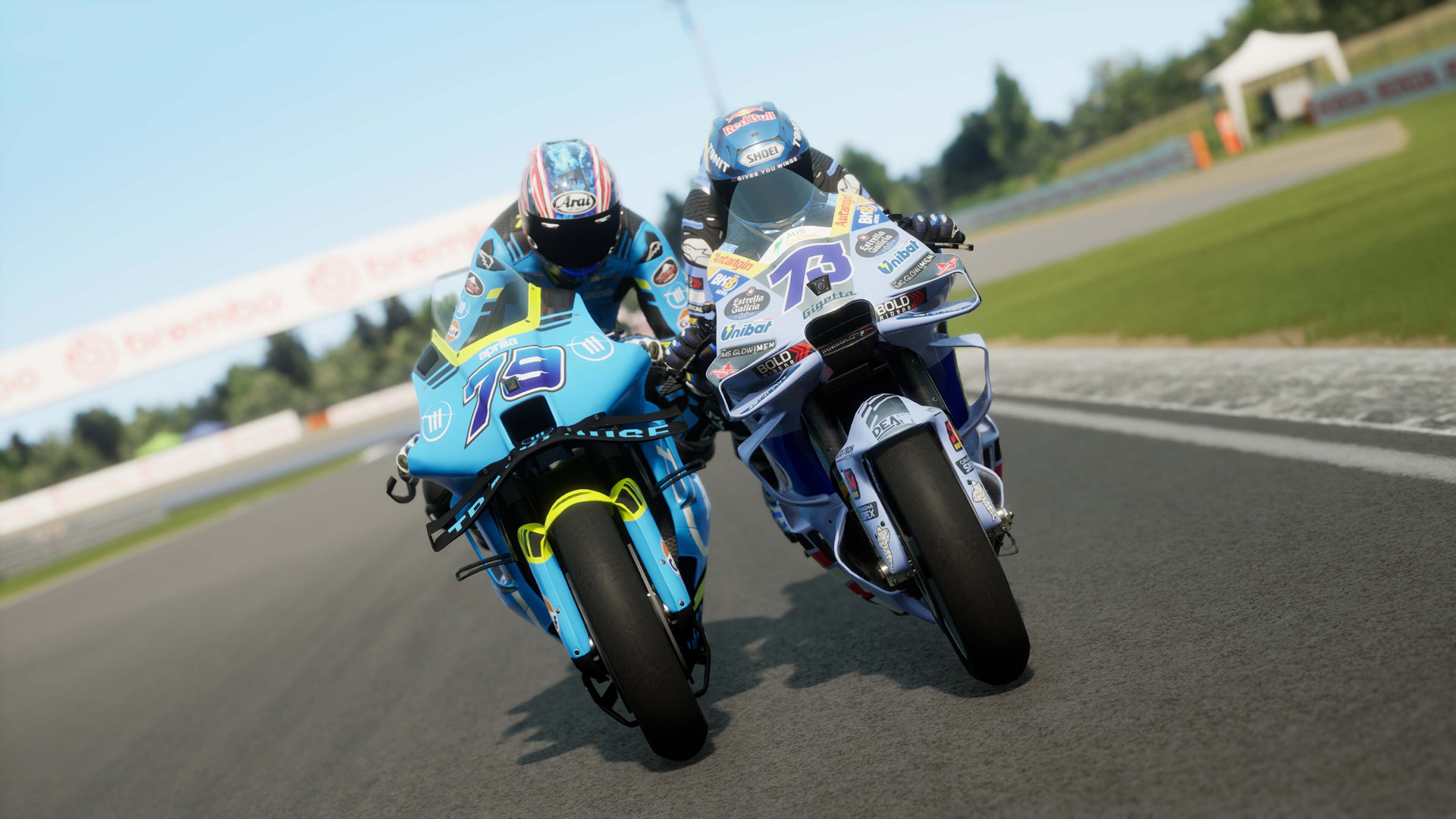
The throttle picks the bike up
Now that you’ve bombed along a straight, successfully slowed into a corner and leaned in towards the apex, you’ve got nearly all the tools you need to be quick in MotoGP 26. Nearly.
Now you just need to master corner exits. And there’s a simple principle to keep in mind for this: applying throttle picks the bike back up after you’ve got your knee down.
Think about it: MotoGP bikes weigh about 157kg. Could you lift an upturned 157kg wardrobe to a standing position by straddling it and hurling your weight from one side to the other? No, and neither can Marc Marquez.
Instead, the motorbike does the work. When you apply more throttle, you shift the weight to the rear of the bike and prompt the tires to revolve at a faster rate, forcing them onto the wider, fatter part of the contact patch. You also increase centrifugal force, meaning less lean angle is required to achieve the same corner circumference. All of these physical phenomena happening in tandem means the bike wants to stand up straight again.
So be aware that whenever you increase throttle during a corner, you’re widening your corner circumference. You’ll take a wider line. Therefore, the fewer throttle modulations through a corner, the better. Wait until the corner opens out to reveal the next straight, then apply throttle to send yourself out wide, away from the apex and towards the outside apex. That’ll line you up nicely for the straight. Do hold on tight.
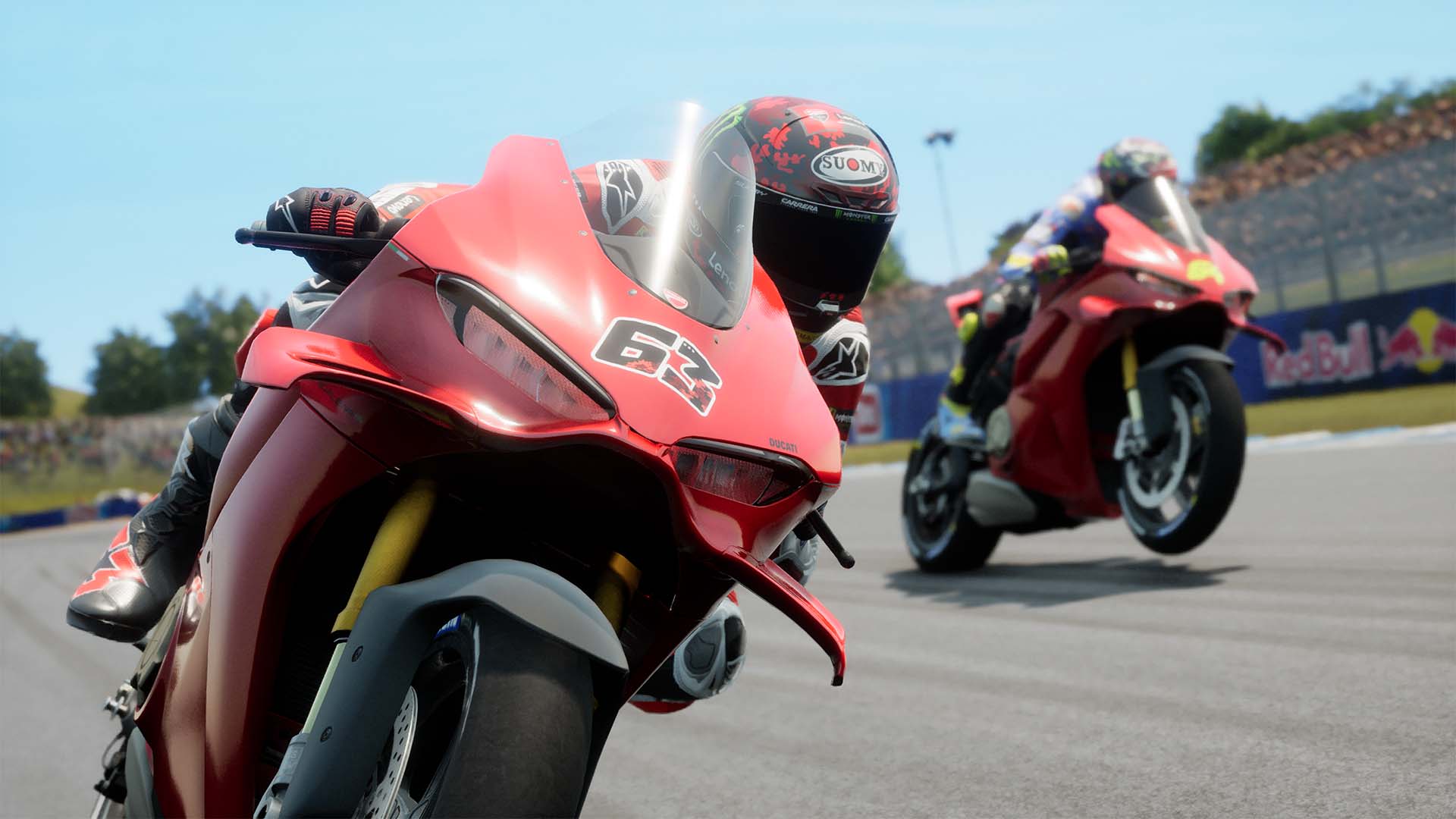
Try different brake discs to suit your preferred feel
Congratulations, you’ve now got enough of the basic principles of MotoGP 26’s rider-based handling to get round the track. The next step is to start tweaking settings to your taste.
Overall, bike setup matters less in this game than in popular four-wheeled racing sims like Project Motor Racing, but two variables in particular are worth experimenting with: brake discs and tires.
There’s an important distinction between those two. Picking brake discs is largely about feel, and picking tires is not.
Tires work within a temperature operating range, so picking soft, medium, or hard compounds depends entirely on track temps. If you notice after two or three laps that one or both of your tires are overheating (check the bottom-right of your HUD), you need a harder compound. If they’re cold, you need to go softer.
Brake discs give you a little more room for personal preference. The nature of the circuit is definitely a factor, so tracks like Sepang or COTA with long straights into tight corners need bigger discs to cope with the temperature generated by all the braking. But the size, weight, and material of the brake also affects its handling properties. You might find that you can live with weaker stopping power in exchange for more agility on the turn, or that your riding style benefits from a sturdier brake with heavier anchors and a more gradual turn-in.
MotoGP 26 is available now on the Epic Games Store.